Architect. This word still sounds masculine, as if it implies strength and monumentality. Even today, women's choice of this profession causes surprise, and sometimes even doubt. However, history knows many talented architects who destroyed stereotypes: from Katherine Briçonnet and Plautilla Bricci in the Renaissance to Zaha Hadid and Kazuyo Sejima in our days. Ofelia Aydinova and Firuza Khairutdinova contributed to the development of architecture in Uzbekistan. On the eve of March 8, I will tell you about three outstanding women for whom architecture has become not just a profession, but a matter of life.
Each of them is a master of their craft, an architect who creates not just buildings, but unique spaces filled with soul. Historically, women have created comfort from ancient times, transforming any place into a work of art. Today, they continue this great work – only now on the scale of entire cities.
I had the honor of meeting them at different stages of my life. Every meeting was special, every story was inspiring. And today, when the air is filled with spring freshness, and a celebration awaits us ahead, I will gladly share these stories with you.
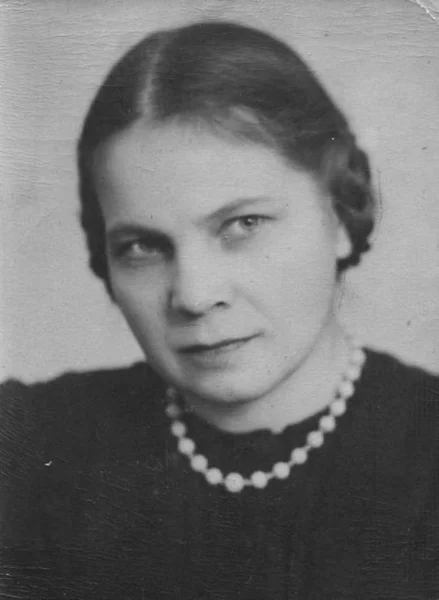
Marina Borodina: architect, artist, mentor
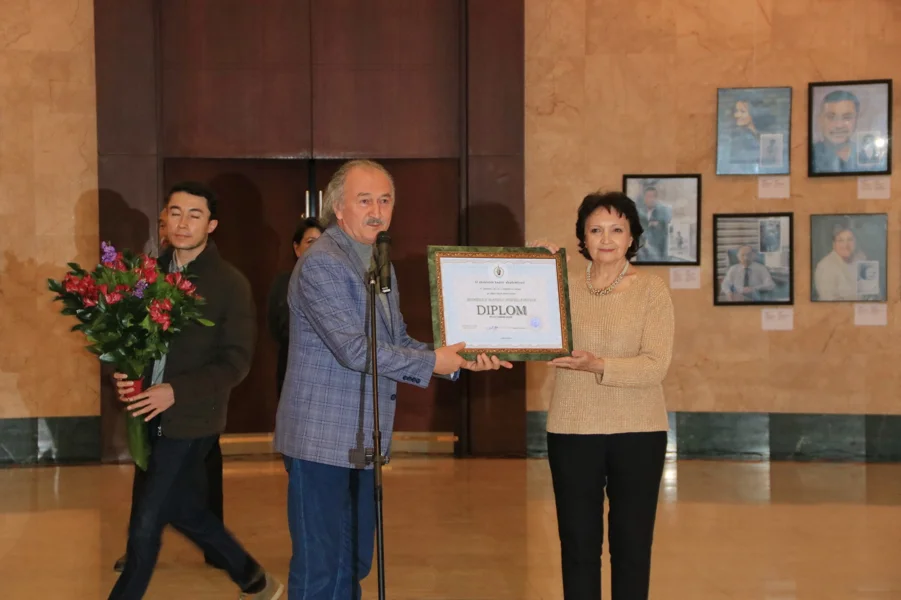
The first significant meeting took place in 2013, at a time when I myself was standing at the crossroads. I dreamed of becoming a journalist and was preparing to enroll in the university for this specialty. However, in my family, everyone was an architect, and my grandmother gently directed me to another opportunity – to try myself in architectural space design. It was she who brought me to the Tashkent Institute of Architecture and Civil Engineering (TIACE) and introduced me to Marina Rostislavovna Borodina, the head of the design department.
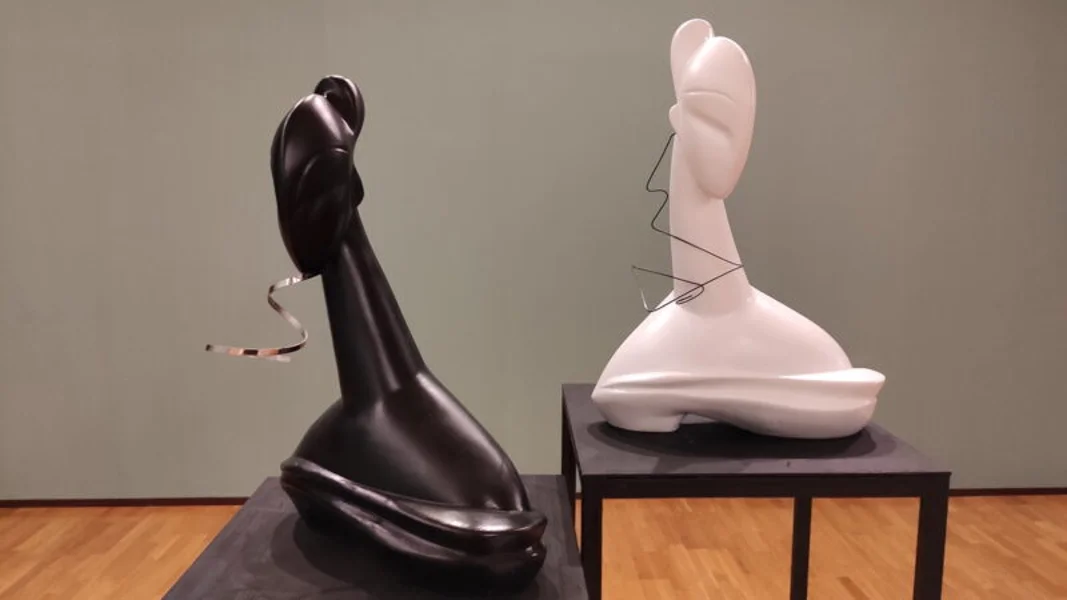
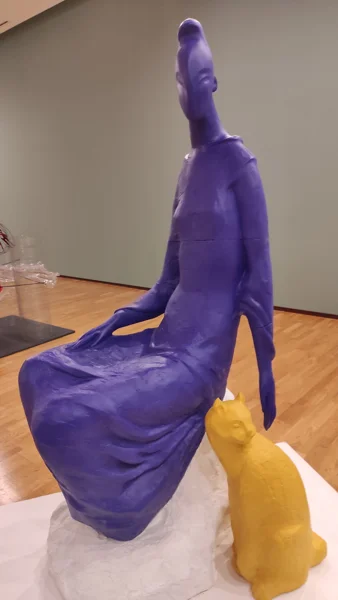
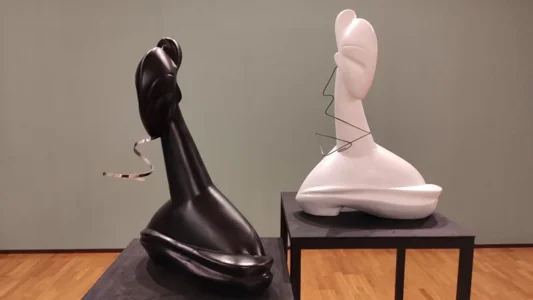
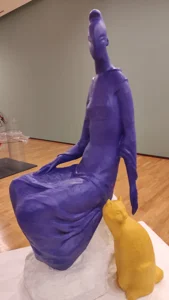
Marina Borodina is a teacher, sculptor, artist, and designer. Academician of the Academy of Arts of the Republic of Uzbekistan, holder of the "Dustlik" Order, the "For Contribution to the Development of Russian Culture in Uzbekistan" Honorary Badge and the "Heritage for the Future" Prize of the International Society for the Preservation of Cultural Heritage, member of the Expert Council of the Academy of Arts of Uzbekistan and the Expert Council of the Republican Agency "Cultural Heritage," chairman of the "Architectural Environment Design" section of the Union of Artists of Uzbekistan.
Marina Rostislavovna turned out to be an amazing woman – elegant, intelligent, with a warm, sunny smile. Together we walked around the department, studying students' works, and with each new step, I felt something new brewing within me. My interest in architecture ignited unexpectedly, but so brightly that I decided to enroll in the Tashkent Architecture and Construction Institute.
After this fateful choice, I began attending preparatory courses led by Marina Rostislavovna. I remember our small group gathering at her house. She created a cozy atmosphere, brewed tea, and then explained the basics of the drawing to us with incredible patience and attention to detail. Thanks to her mentorship, I mastered academic drawing and watercolor painting at such a level that I was able to successfully pass the exams and enter TIACE on a budget.
Studies opened up the world of art before me, and Marina Rostislavovna became our guide to its depths. She taught several specialized subjects, but I especially remembered color theory and composition basics. It was then that I realized that shadow has color, and black visually occupies more space than white, even in equal proportions. Softly but captivatingly, it taught us to see beauty in details and understand the harmony of color, texture, and form.
Only at the institute did I truly understand how versatile Marina Borodina is. She is not just a teacher – she is a sculptor, artist, designer, and now she is also a specialist in the protection of Uzbekistan's cultural heritage. Then, as now, I admire her boundless dedication to art. All that remains is to strive for the same depth of involvement in this amazing world.
Olga Rakhimova: nature guide in the city
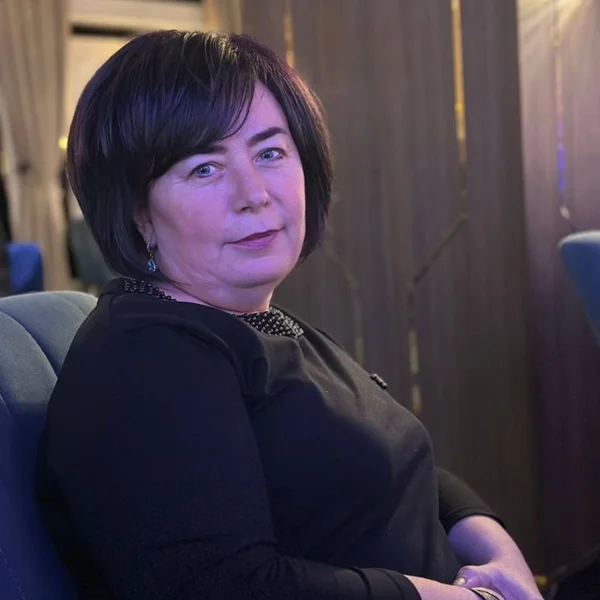
The meeting with my second mentor took place in 2021, after returning from a two-year trip to India. By that time, I had graduated with a degree in landscape design, but before the trip, I was more interested in interior design. However, living in harmony with nature, I took a new look at my profession and understood how important and exciting it is to greet my native city. That's when I learned about Olga, and we started working together. In essence, this became a practice I missed so much during my studies at the institute.
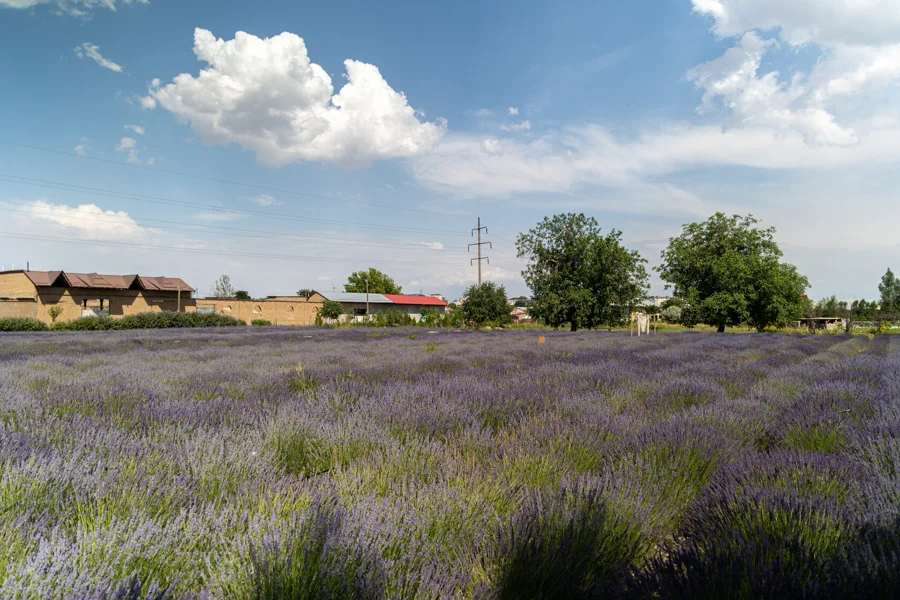
Olga Rakhimova is an experienced landscape designer with 25 years of experience, the director of landscape support for the Anhor Evolution holding, and the founder of the Association of Landscape Designers of Uzbekistan. Additionally, she is actively involved in public activities and has become one of the key volunteers who managed to preserve the boulevard on the Blue domes.
Working with Olga Vladimirovna opened up a new, fascinating world for me. We visited various facilities together – from small gardens near offices to large-scale projects in the mountains and other cities of Uzbekistan. She not only taught me the basics of landscape design, but also immersed me in the nuances of botany, helping me to see how profound and complex this science is. We studied nurseries, explored parks, visited suburban areas, and familiarized ourselves with the layout of orchards and vineyards. Together with the gardeners, I loosened the soil, pruned the vine, and participated in planting aquatic plants. At the same time, in addition to practical skills, I felt like a real specialist, working with measurements, zoning, and drawings.
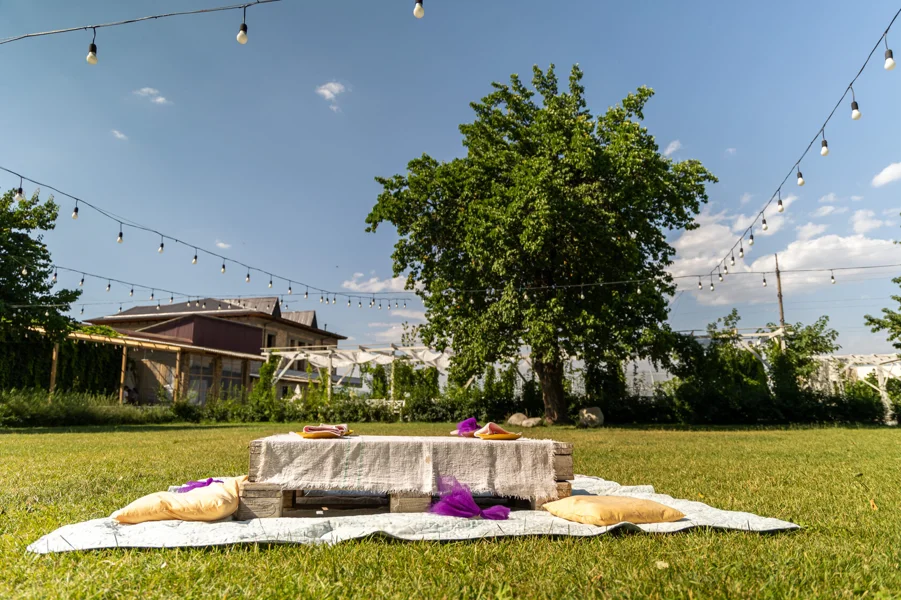
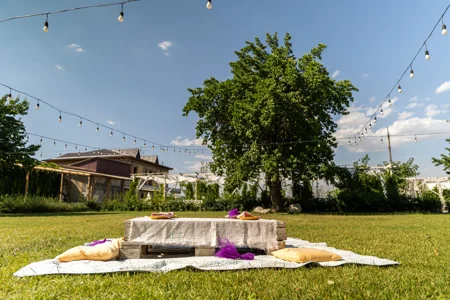
One of the most interesting projects was the creation of a lavender farm. On the spacious territory, we designed wedding ceremonies, an open-air restaurant, gardens, a waterfall, greenhouses, a plant nursery, and even a contact zoo. But the main decoration was a vast field with fragrant lavender. This unique project was implemented in Samarkand, and I am proud that I was able to contribute to its creation together with Olga Rakhimova.
Takhmina Turdaliyeva: bold solutions in architecture
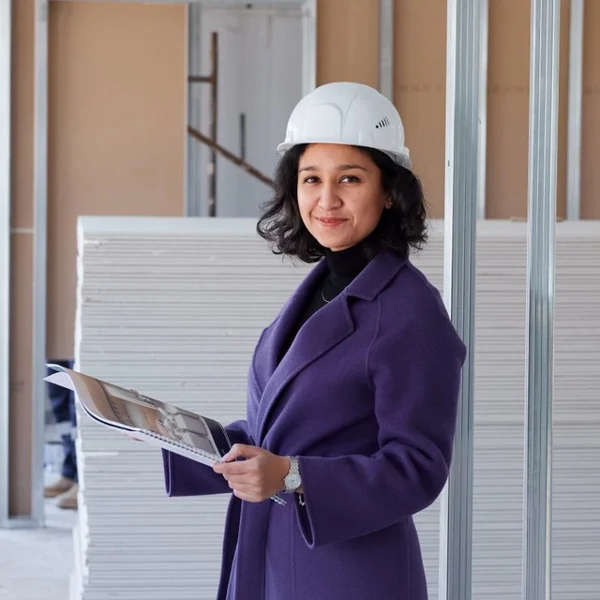
I became acquainted with the third diva of the architecture thanks to a publication in the media. I learned about Takhmina Turdaliyeva when her name was included in the "100 Leading Women Architects Worldwide" book published by the Royal Institute of British Architects.
Takhmina Turdaliyeva is the winner of the international architecture competitions Better Together Challenge 2019 (Republic of Korea), Turkistan Architect Awards (Kazakhstan). She works in China and Italy, and today she leads her own architectural studio, TT Design Lab, in Tashkent.
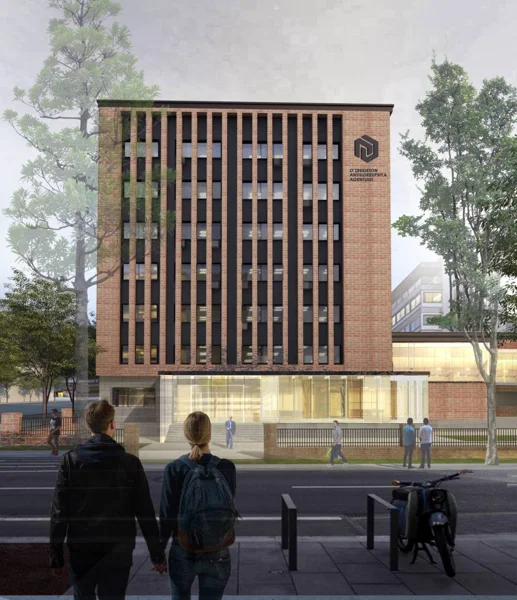
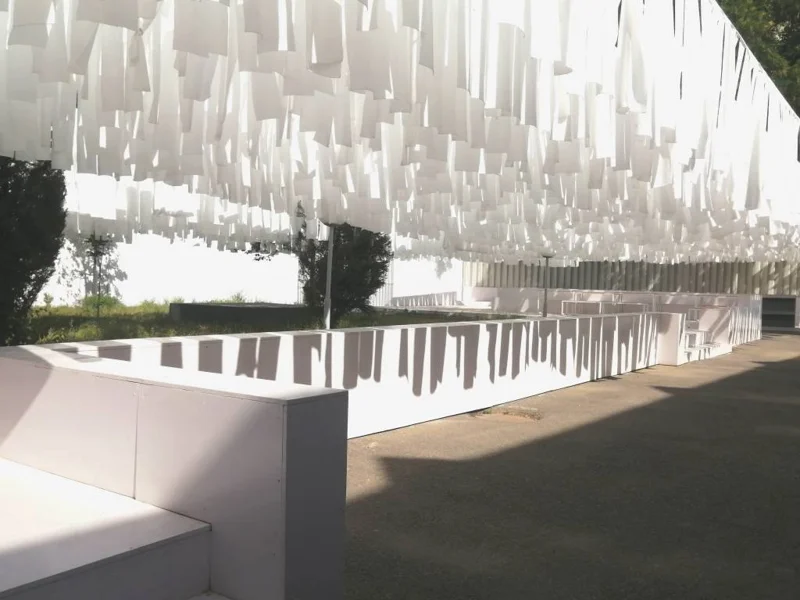
Takhmina's name was included in the book thanks to her two projects: the reconstruction of the Anti-Corruption Agency's administrative building on Shota Rustaveli Street and the installation in the inner courtyard of the Center for Contemporary Art. I was impressed by Takhmina's determination, her ability to find unconventional solutions, and most importantly, her feminine wisdom in behaving at the construction site while remaining the leader in the men's team.
That's when I had the idea to interview her. I was interested in communicating with a young and ambitious woman who, being only a few years older than me, had already reached significant heights.
Here's what she told me in an interview published on the Tashkent Memory channel:
"The Anti-Corruption Building is my first author's project in Uzbekistan. Its facade is dominated by a brick-textured finish. Initially, fiber-cement facade panels were planned, but due to customs procedures, the project budget was not included in the estimate. This has become one of the main problems. I even considered a new design option. However, in the end, we found an alternative - we manually drew a seven-story brickwork on the entire facade. It sounded crazy, but we managed to implement this idea. The installation in the inner courtyard of the Center for Contemporary Art was created as a shady canopy. It's very hot there in summer: there are no trees, and the sun is scorching mercilessly. At the same time, the center wanted to use the site for events - cafes, film screenings, and other activities. The task was to create a multifunctional structure for the summer season with a limited budget. The solution proved successful: light fabrics created a play of light and shadow, providing comfortable coolness, while construction costs remained minimal."
In conclusion, I would like to note that each of these remarkable women is an example of true professionalism and inspiration. Marina Borodina, Olga Rakhimova, and Takhmina Turdalieva demonstrate how important versatility, passion, and dedication to one's work are. Their achievements in architecture, landscape design, and art confirm that women's strength manifests itself in the ability to create, inspire, and change the world around them. These stories are about true leaders who shape the future.