
Dawn after a long night
Navruz (meaning "new day" in ancient Persian) has long been celebrated on the day of the spring equinox—usually March 20 or 21. At this moment, the Sun crosses the celestial equator, and its rays fall on Earth at a right angle. The solar calendar, in which Navruz symbolizes the beginning of the new year, is the result of centuries of observations of the Earth's movement and the change of seasons.
Unlike the Gregorian and Muslim calendars, which are counted from historical events—the birth of Jesus Christ or the migration of the Prophet Muhammad from Mecca to Medina—Nowruz is not tied to a specific date or person. Mentions of it are found in the Zoroastrian sacred book "Avesta," and the holiday itself dates back to Zoroastrian dualism of summer and winter, sun and moon, light and darkness.
Symbolically and ideologically, Navruz is a holiday celebrating the triumph of the first over the last. Perhaps it is this eternal narrative that allowed Navruz to coexist with Islam and, in the case of the countries of the former USSR, to circumvent and survive ideological prohibitions.
In Iran and Afghanistan, where the solar calendar is still used, Nowruz is celebrated as the beginning of the new year. In Tajikistan, Uzbekistan, Turkmenistan, Azerbaijan, Georgia, Albania, Kyrgyzstan, North Macedonia, Turkey, and Kazakhstan, Nowruz is an important state holiday. Nowruz is also celebrated in Iraq (especially in Kurdistan), Pakistan, among the Parsi community in India, as well as in some regions of Russia, such as Dagestan, Tatarstan, and Bashkortostan.
How is Nowruz celebrated?
To understand how the modern ritual of celebrating Nowruz began to take shape, an interesting source can help – "Nowruz-nama" by Omar Khayyam (1048–1131). A great poet, philosopher, and astronomer, he oversaw the creation of a new Muslim Persian calendar during the time of the Seljuk ruler Malik-Shah. For this purpose, the ancient Persian calendar was revised, taking into account the astronomical achievements of that period and adapted to the new political and linguistic situation – for example, Persian month names were given new Arabic ones. Omar Khayyam's calendar, named "Jalali" after Jalal ad-Din Malik-Shah, was used in Iran until the beginning of the 20th century.
In the "Nowruz-nama," Omar Khayyam describes how Nowruz was celebrated in the courts of ancient Persian kings. On the first day of the holiday, the ruler was presented with seven symbolic gifts: a golden cup of wine, a ring, a dirham, a royal dinar, a sheaf of sprouted barley, a sword, a bow and arrow (as a sign of military strength), and an inkwell with a pen (as a symbol of knowledge and just rule). The number seven has retained its sacred significance in Nowruz traditions throughout the centuries.
 © Tamanna Rumee / Unsplash
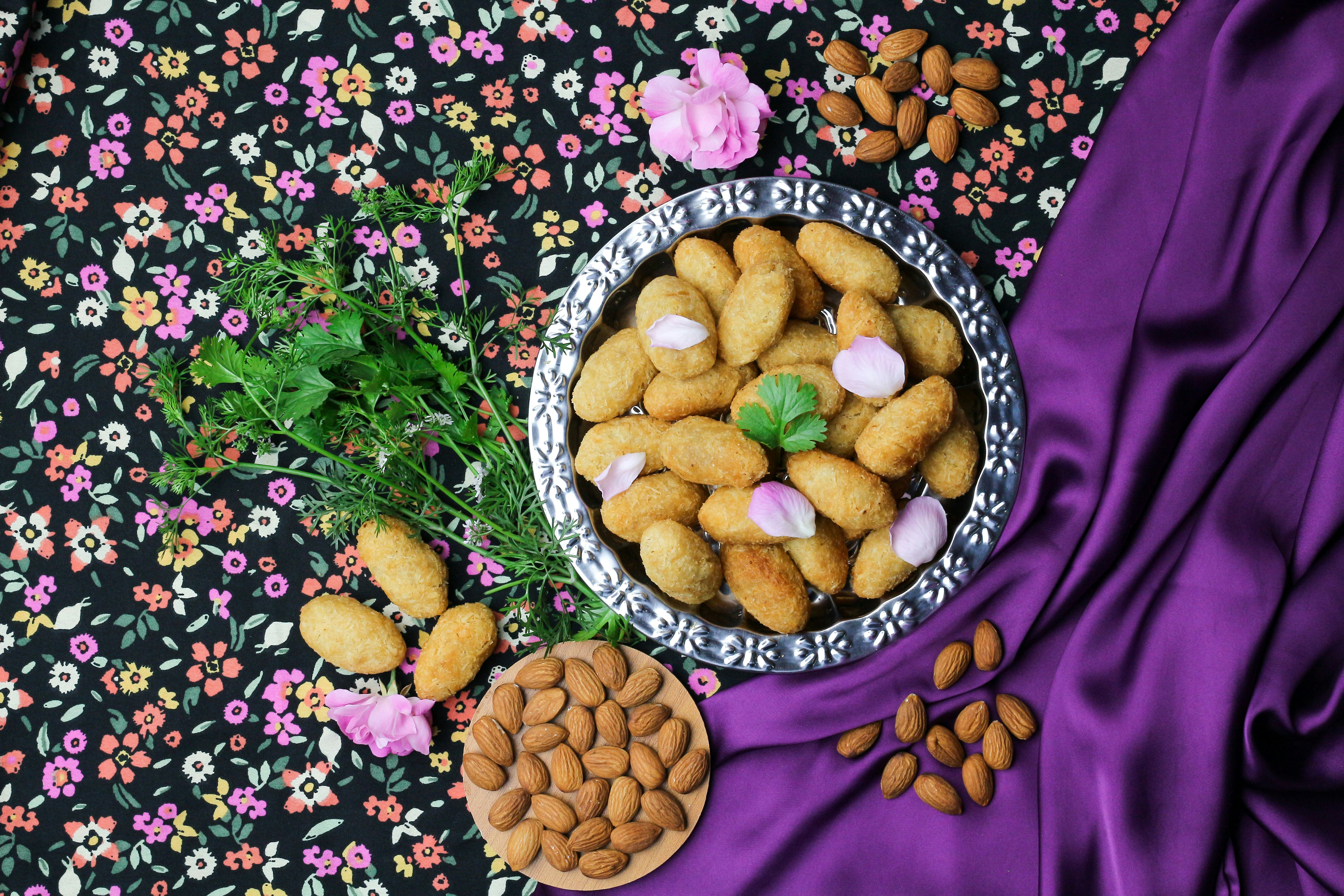
For example, in Azerbaijan, even today, seven foods whose names start with the letter "s" are placed on the festive table: sumac — a spice, süd — milk, sirkə — vinegar, səməni — sprouted wheat, sabzi — greens, and others. Besides food, a mirror, candles, and painted eggs are placed on the table. In Kazakhstan, the main ritual dish of the holiday is "Nauryz-kozhe" — a soup traditionally prepared from seven ingredients: milk, meat, butter, millet, barley, corn, and water (sometimes rice or other grains are added). In the pastoral cultures of Kazakhstan, Kyrgyzstan, and Southern Siberia, Nowruz coincides with the spring calving of livestock and the appearance of the first milk.
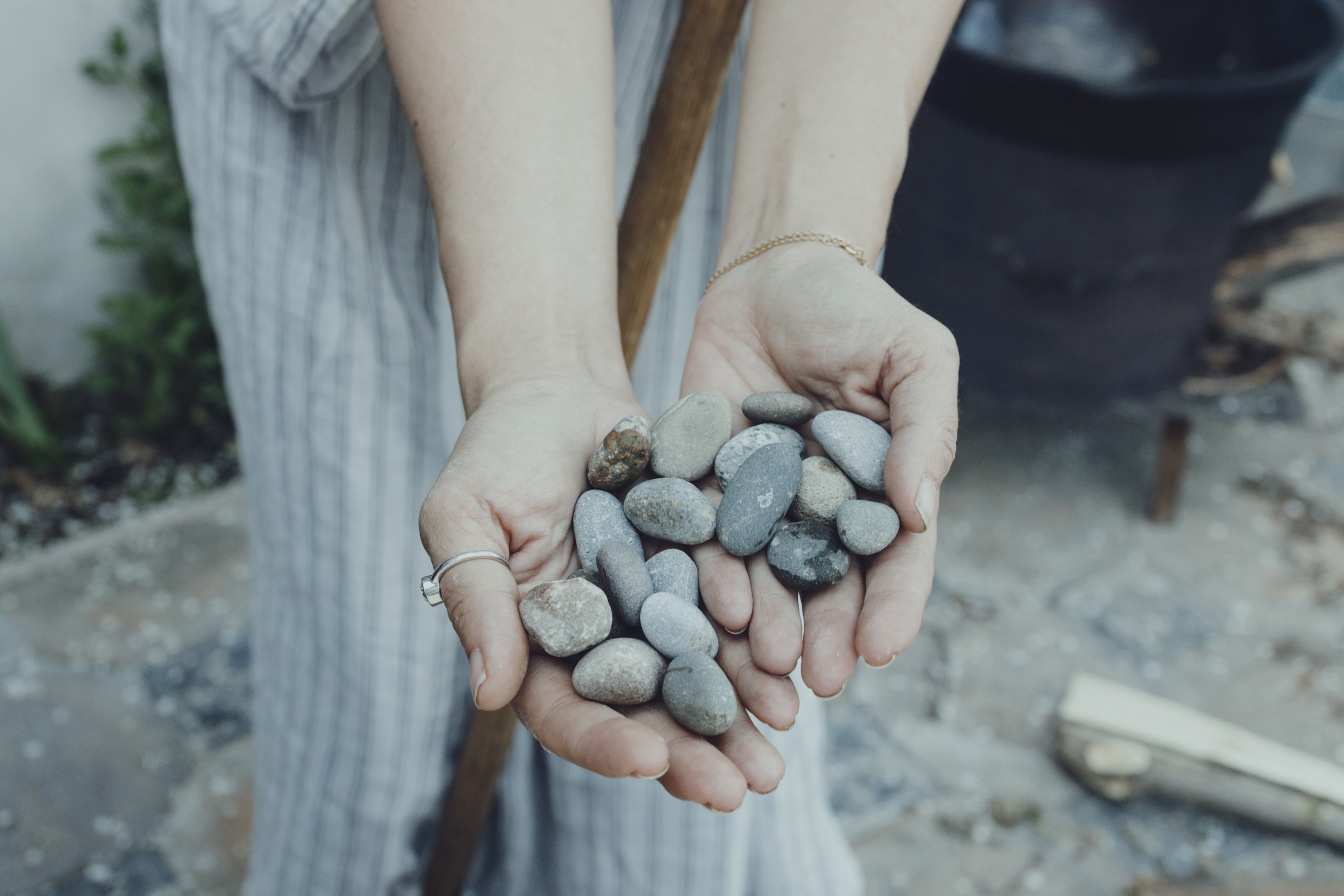
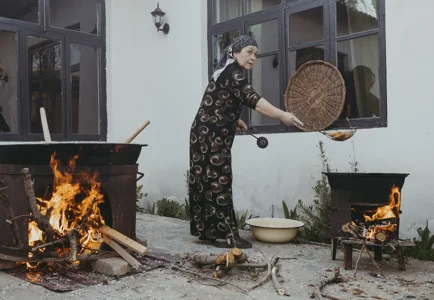
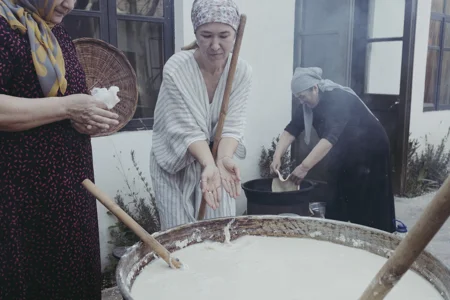
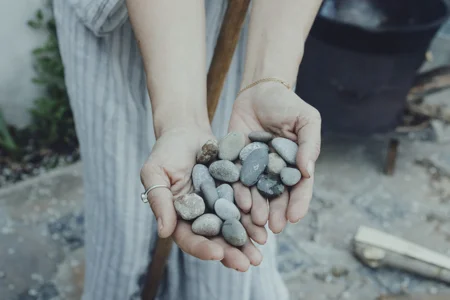
In Uzbekistan, one of the main symbols of Navruz is sumalak — a thick, sweet paste made from flour and wheat, symbolizing abundance and hope for the future harvest. Preparing sumalak is a labor-intensive and lengthy process. Sprouted wheat grains are ground and pressed to obtain a thick white liquid. This extract is mixed with boiling oil and flour, and to prevent the paste from burning, small stones are placed at the bottom of the cauldron. The mixture is then stirred in a large cauldron, with the cooking often stretching well past midnight. As with bread starter, it is better to prepare sumalak in a good mood — it is believed that this makes it tastier and brings luck to all who partake.
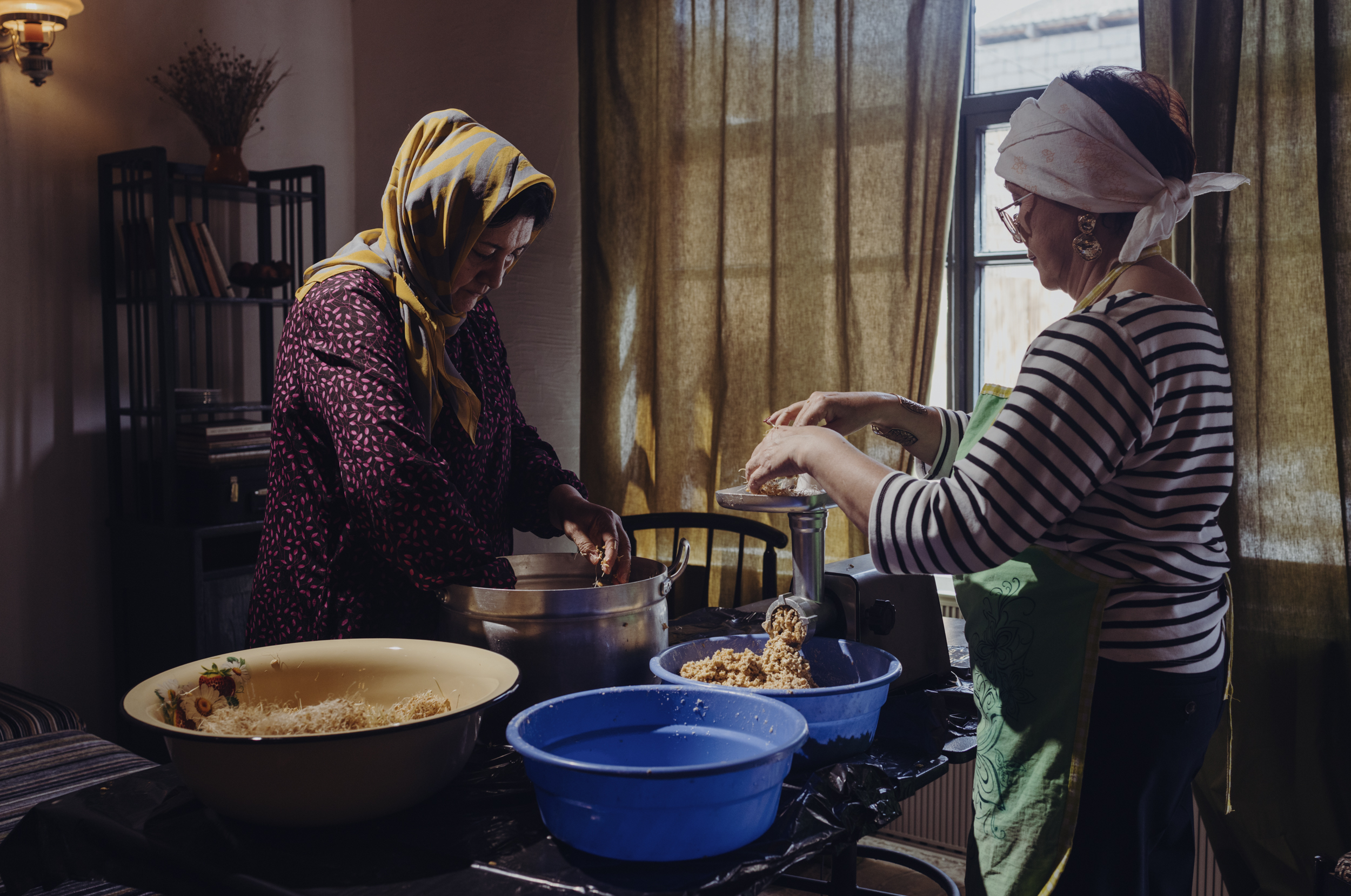 Cooking Sumalak © Roman Fedotov
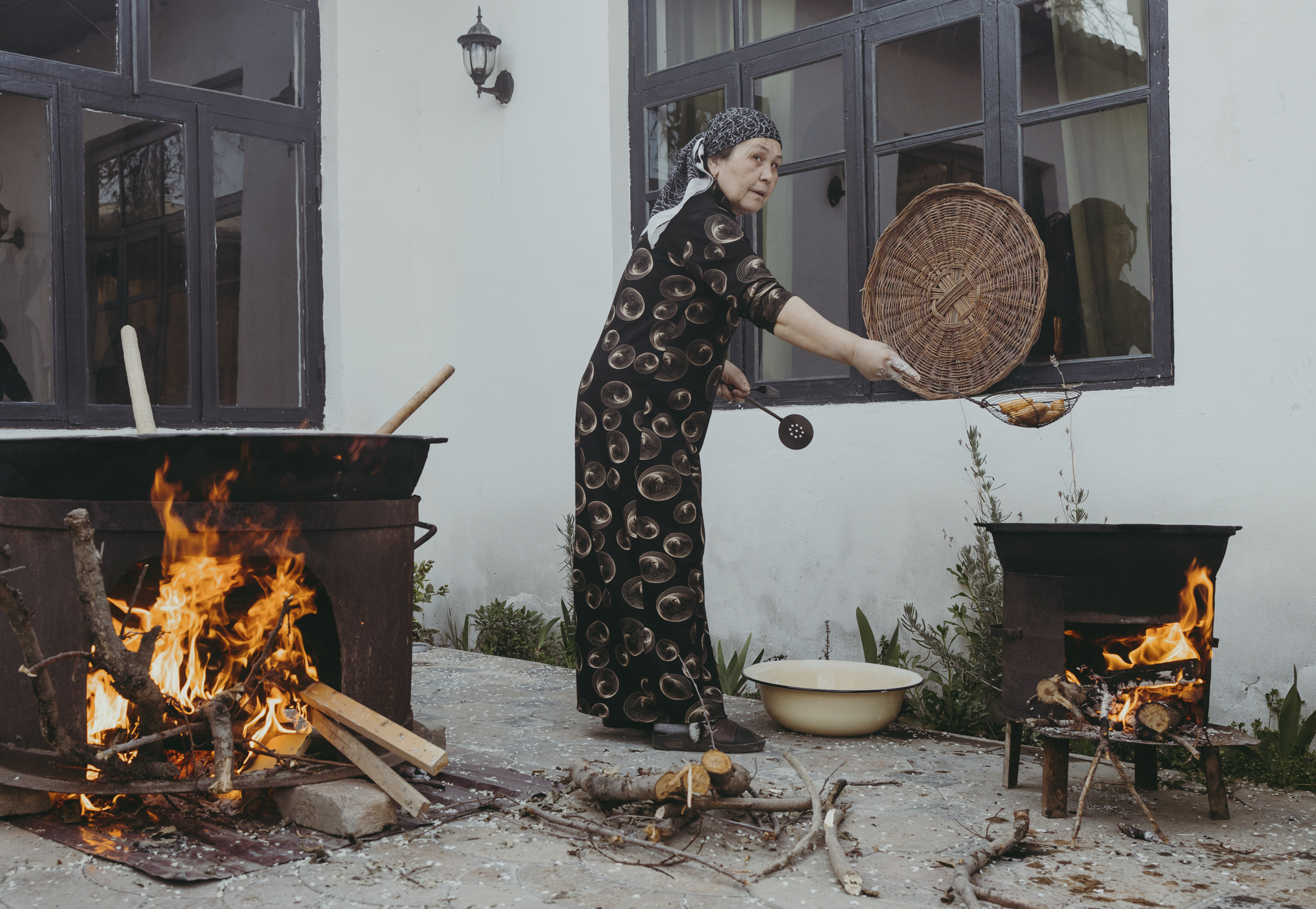 Cooking sumalak © Roman Fedotov
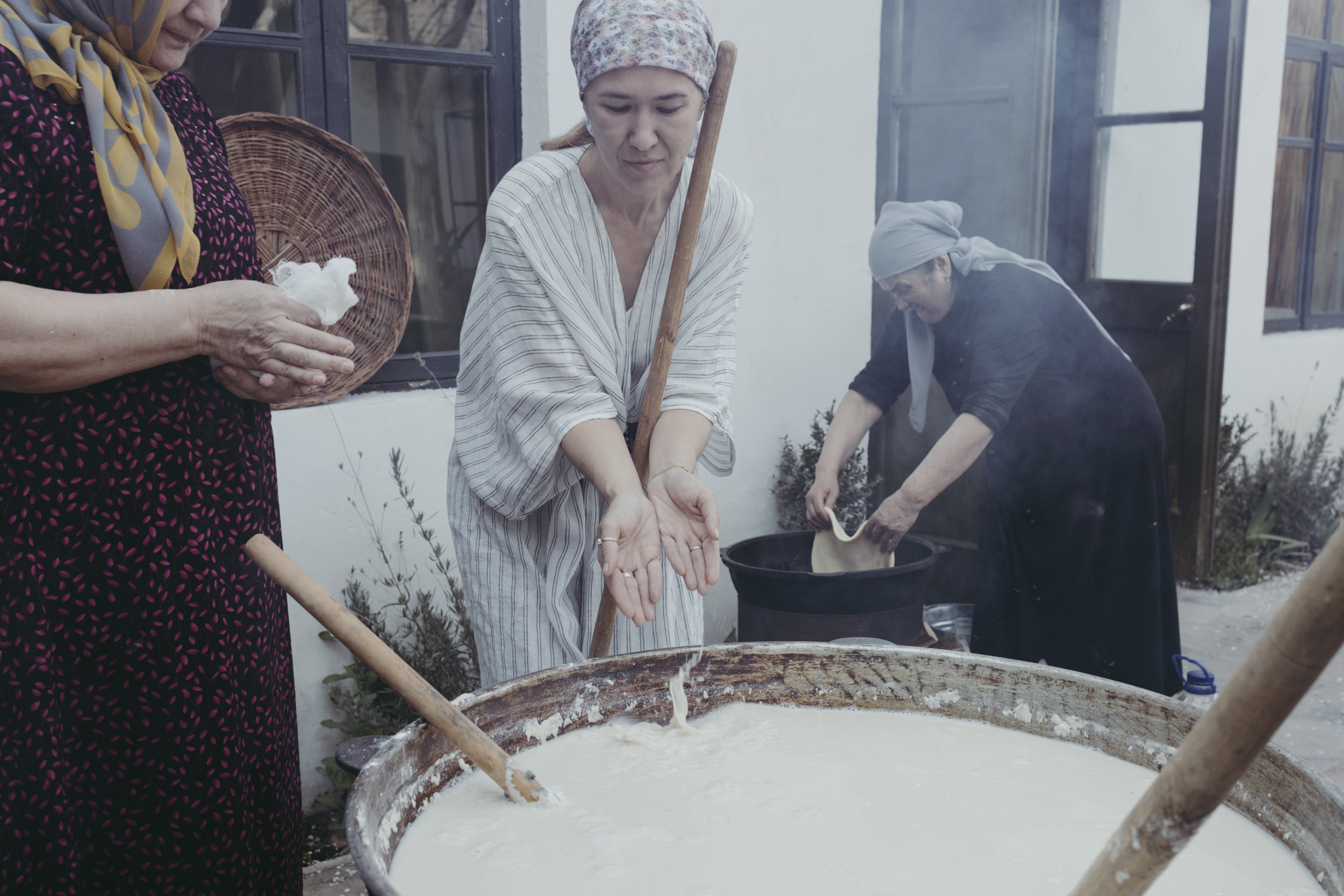 Cooking sumalak © Roman Fedotov
 Cooking sumalak © Roman Fedotov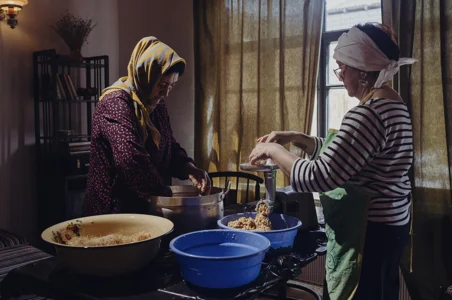
Fire, Dance Floor and Mickey Mouse: A New Interpretation of Nowruz
For Iranians, the eve of Nowruz is akin to the pre-New Year's general cleaning in post-Soviet culture. In Iran, this decluttering practice is called khoone takoone — translated from Persian as "a house turned upside down." The main goal is to welcome the new year in a clean house and with a clear state of mind. On the night before Nowruz, both young and old jump over an open fire to cleanse themselves of the previous year's misfortunes.
Interestingly, Navruz is gradually becoming part of the global mainstream: recipes for holiday dishes can be found in The New York Times and National Geographic. In 2023, Disney released a video in which Mickey Mouse explains how to properly celebrate the "Persian New Year," and Disco Tehran – a music project of the global Iranian diaspora – is hosting a "Navruz party" this year in London, Berlin, Paris, and Hamburg.
Navruz reminds us that winter inevitably ends, no matter how long it may be. In an age when climate change is altering the planet's appearance and geopolitical conflicts are multiplying violence, this is perhaps one of the few pieces of good news that doesn't require fact-checking.
In Tashkent, Navruz will be celebrated at several venues – we at HD magazine have made a selection of the most interesting places and events.


