Guide
What is the Aral Cultural Summit and why should you go there
We tell about the Aral Cultural Summit and its program.
When: April 5–6, 2025
Where: Nukus, Karakalpakstan, Uzbekistan
Cost: free, but you need to register
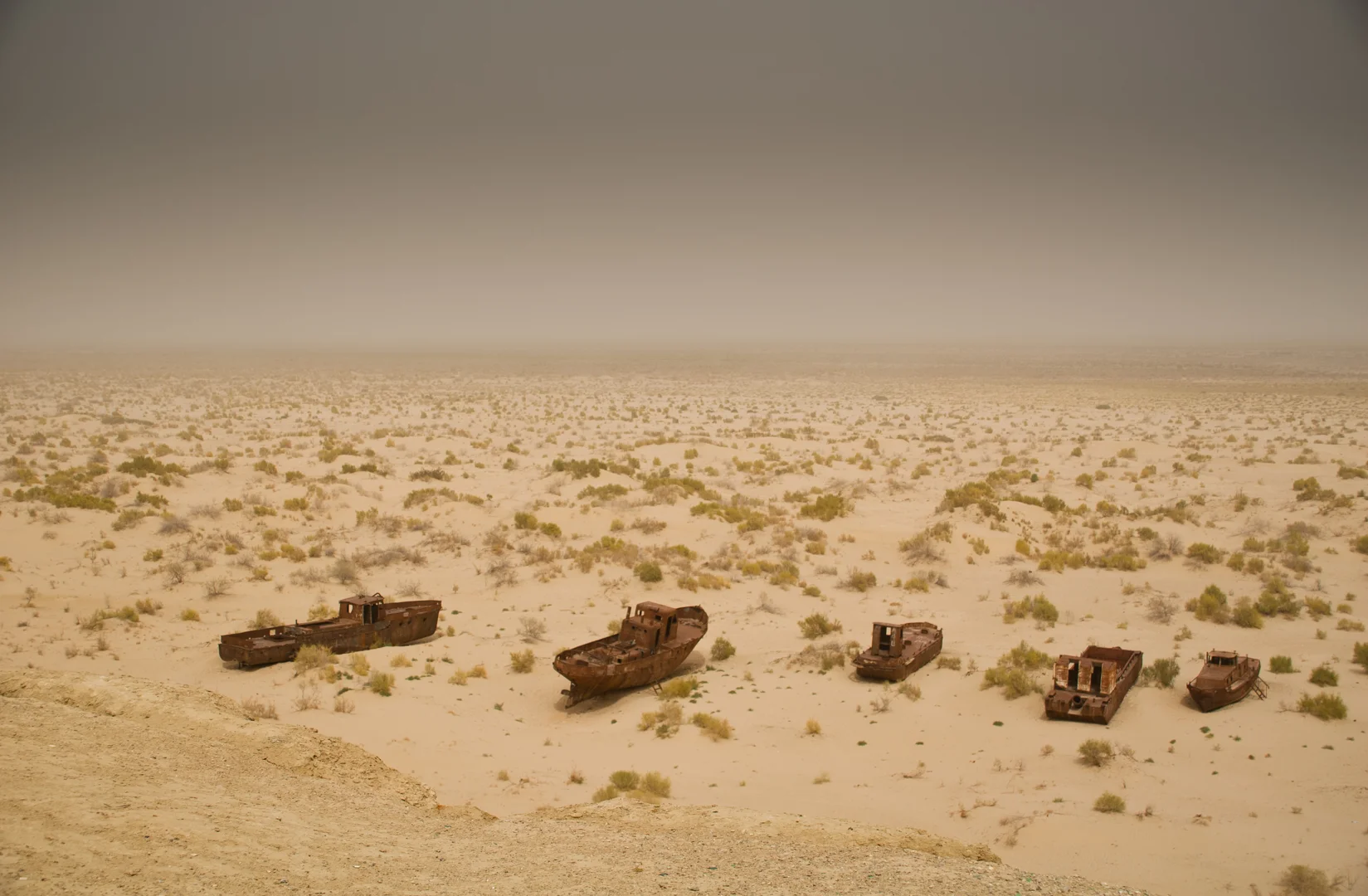
Aral Cultural Summit is not only about ecology. It's about how a cultural scene can emerge at the site of a global catastrophe. The meeting location is not chosen by chance: Nukus is a city located near the former shore of the Aral Sea.
This is an attempt not only to comprehend the tragedy of the Aral Sea's disappearance but also to find a language for talking about climate—through art, science, landscape, and collective creation.
Why is this important
The Summit is a conversation about water, ecology, trauma, and care. But not in the format of dry reports—here, they work with space, culture, and communities.The goal is to connect scientific and artistic thinking, to create an environment where not only problems are born, but also solutions.
And most importantly — you can attend as a listener by filling out a special form.
Who will be performing
- Antonina van Lier is an eco-art activist and researcher from Kazakhstan. Co-founder of Artcom Platform — a space where contemporary art meets work with local communities. Antonina also leads the project Care for Balkhash, where artists, ecologists, and local residents seek ways to preserve the fragile aquatic ecosystem of Lake Balkhash. She speaks about climate not through fear, but through shared knowledge and participation.
- Wael Al Awar — an architect based in Dubai and Tokyo, winner of the Golden Lion at the Venice Biennale for the project Wetland. In his work, he explores natural materials and sustainable architectural practices, drawing inspiration from traditional structures and natural phenomena. Currently, Wael Al Awar holds the position of Creative Director for the Bukhara Biennale, which will take place for the first time in 2025.
- Maurizio Montalti is a biodesigner and founder of the Officina Corpuscoli laboratory in Amsterdam. His materials are grown from fungi — literally. Montalti works at the intersection of biotechnology, ecology, and culture, creating innovative artifacts capable of replacing plastic, concrete, and other destructive materials.
- Mu'tabar Khushvaktova, known as Urikguli, is an eco-activist and author of educational projects from Uzbekistan. She makes ecology accessible and personal through digital content.
The list is not limited to the mentioned speakers.
What to see besides the summit
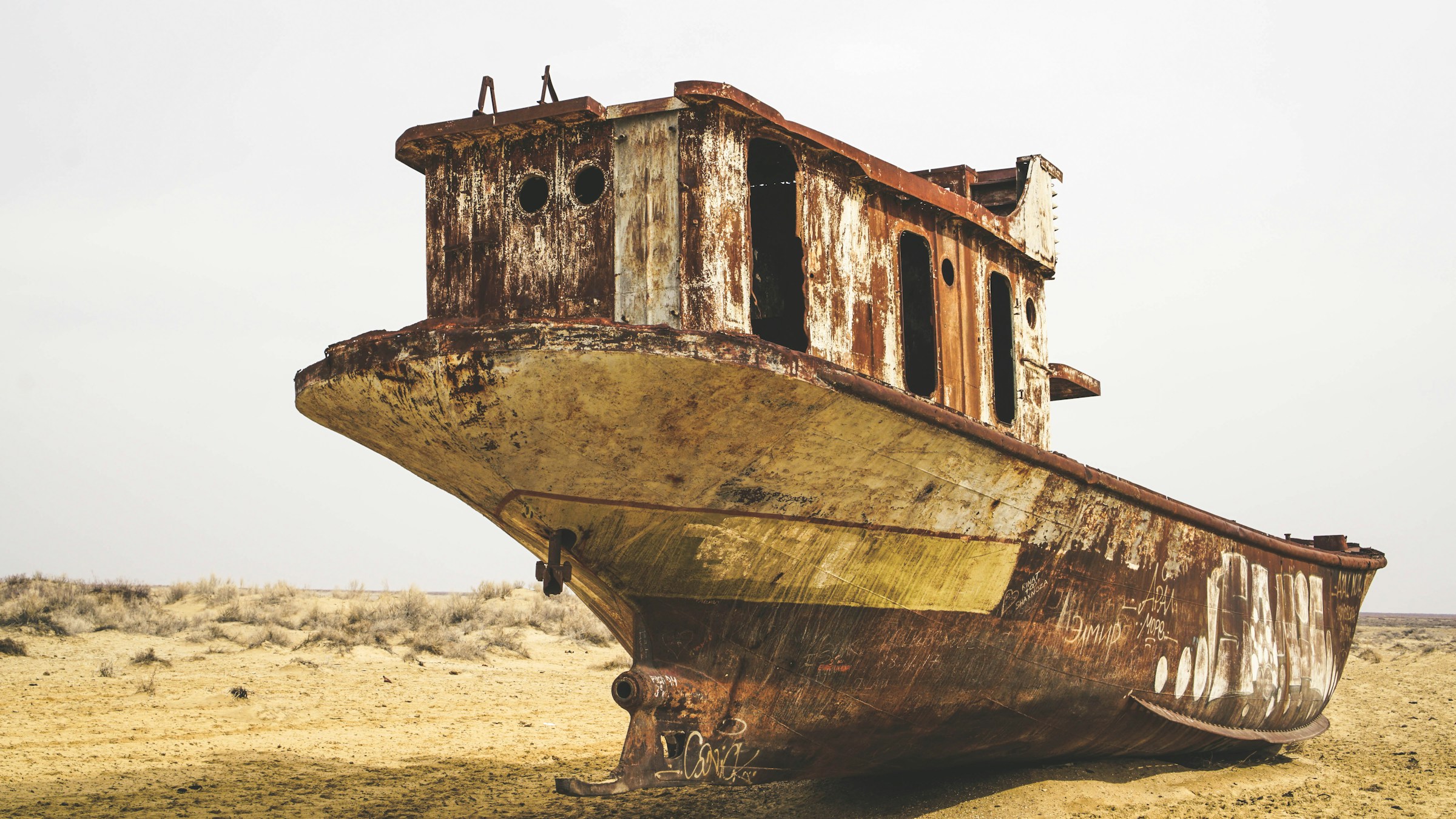
Remains of a ship at the bottom of the Aral Sea. Photo: Artem Asset
If you have time, we highly recommend visiting Muynak — a ghost town that was once a port. Today it is a territory of memory:
- A ship graveyard on the former seabed — an iconic place where the metal skeletons of ships stand upright in the sand.
- The Museum of Muynak History — an exhibition about life before and after the Aral Sea.
There's also plenty to see in Nukus itself:
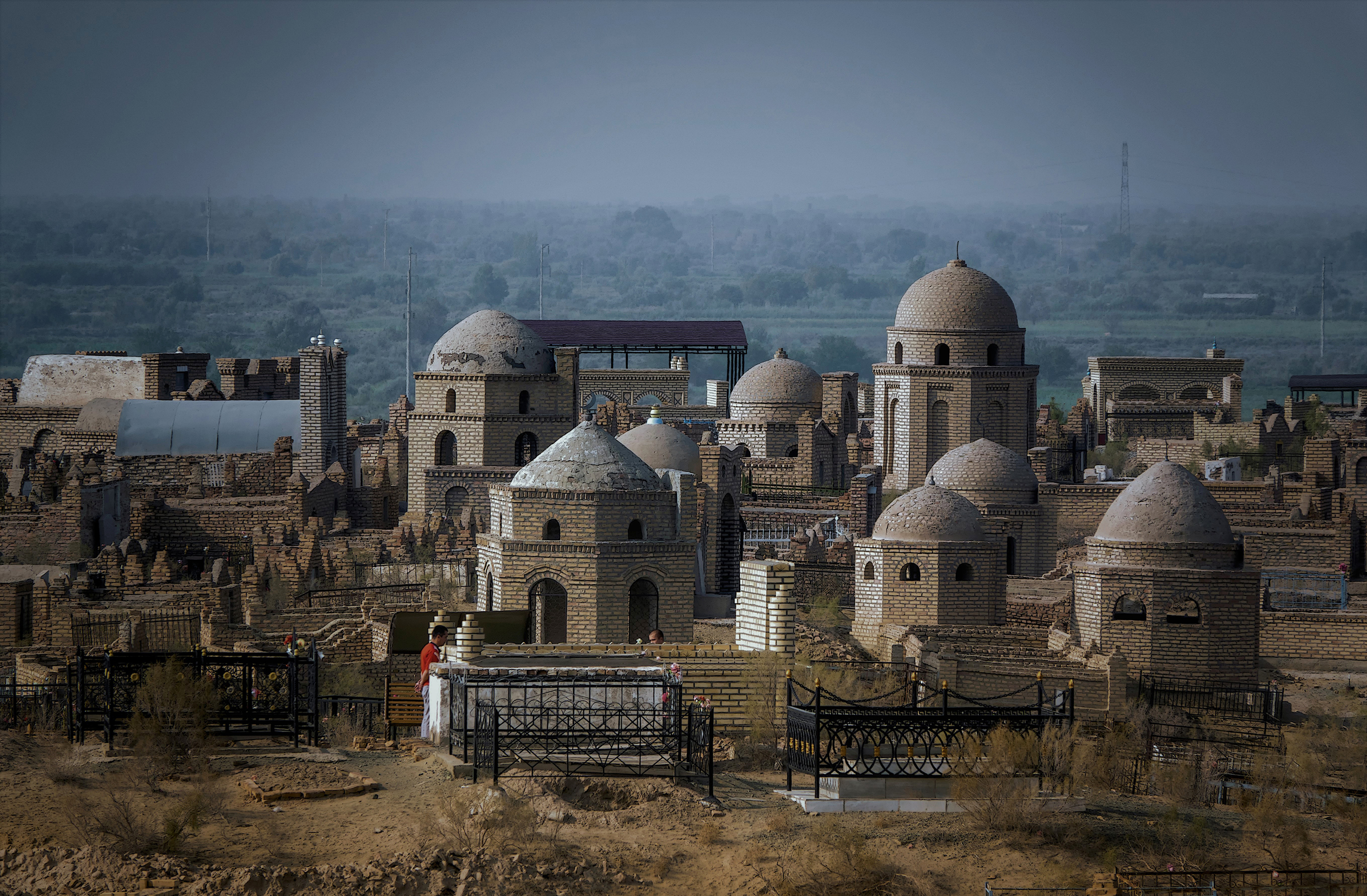
The Mizdakhan Archaeological Complex. Photo: CitizenFresh
- The I.V. Savitsky State Museum of Art — a legendary collection of Russian and Soviet avant-garde, Karakalpak decorative art, and archaeological finds.
- The Misdahkhan Necropolis is an ancient settlement and one of the most mysterious cemeteries in the region. A place where archaeology, superstition, and silence merge into a unique atmosphere.
- Chilpyk Tower is a Zoroastrian "tower of silence" (burial tower) atop a hill, offering a panoramic view of the Amu Darya valley. It is believed that it was here that the souls of the deceased returned to nature.
How to get there
The most convenient way to get there is to fly to Nukus. Two flights depart from Tashkent daily—one in the morning and one in the evening. But if you like adventure, you can choose the train. The journey will take at least 16 hours, but what unforgettable views…
Where to follow the event
On the official website and Instagram page.
Finally — about gentleness
The Aral region is a fragile space.
Follow environmental standards: do not leave trash behind — even if everything around seems deserted.
Take care of water: it's a resource that is literally worth its weight in gold in this region. Try to save it wherever you can.
Respect the local residents and their space: you are a guest in a place where people continue to live, preserve traditions, and seek new meanings. Let's not turn it into a mere backdrop.
Every small action is also part of cultural transformation.
Newsletter
A letter from the HD editors
Once a week, we send the best stories, events, and cultural discoveries from Central Asia.