Cinema and Performing Arts
Tashkent-Cannes: Uzbek cinema worthy of the festival

The Cannes Film Festival is a space where legends are born. In this article, we present films from Uzbekistan that, according to experts and our editorial team, could have become part of this history.
International film festivals are not just screenings. They are platforms where trends are born, names are discovered, manifestos are formed, and the very boundaries of the concept of "art" are expanded. Each festival has its own character, rituals, and atmosphere: Venice is famous for its traditions, Berlin for its social sensitivity, Toronto for its love of the audience, and Sundance for its freedom.
But Cannes is a special league. Here, status, media presence, and refined taste converge. These halls have witnessed discoveries, launched film careers, and transformed perceptions of beauty, pain, and truth. What if, one day on the Côte d'Azur, a story born in Uzbekistan graced the screen? We asked those who know the film process from the inside: which Uzbek films could—and should—make it to Cannes? And we've supplemented the list with our editorial picks.
From "The Cranes Are Flying" to "Chai": How Post-Soviet Cinema Paved the Way to Cannes
Films shot on the territory of the former USSR have repeatedly made it into the Cannes Film Festival program—and have even received its highest awards. Among them are The Forty-First and Ballad of a Soldier by Grigory Chukhray, The Cranes Are Flying by Mikhail Kalatozov, Solaris by Andrei Tarkovsky. After 1991, the former Soviet republics began to appear on the world stage under their own names. Russia was represented by Burnt by the Sun by Nikita Mikhalkov and The Wedding by Pavel Lungin. Central Asia also gradually became more visible: for example, the film The Light Thief by Aktan Arym Kubat from Kyrgyzstan or Mama, I'm Alive!from Kazakhstan.
Uzbekistan began to make its presence known at the Cannes Film Market in 2018. It was then that the country's national pavilion first appeared at the Marché du Film—an important step, primarily in terms of positioning Uzbekistan as a territory with cinematic potential: filming locations, co-productions, scripts. The pavilion returned in 2022 but remained part of the industry segment—no films were presented in the official program. The Cannes Market is a space for negotiations, not for applause in the theater.

Nevertheless, Uzbek films have already begun to receive recognition and awards. The documentary "Dreamers" by Ruslan Saliev, dedicated to the history of Jadidism, won an award at the World Film Festival in Cannes in the "Best Educational Film" category. And the short film "Tea" — the graduation work of Shakir Holikov — won the Grand Prix at the Entre 2 Marches festival, which runs parallel to Cannes and gathers strong short films, including those on social and inclusive themes.
From Pavilion to Premiere
UPD. Correction: The film "Tamerlane" will be shown outside the main program.
In 2025, Uzbekistan takes another step onto the world screen. For the first time in the country's history, a film created with the participation of an Uzbek team will be shown in Cannes cinemas during the festival, film critic Eldar Yuldashev told HD magazine. He is referring to the film "Tamerlane" — an international project filmed in collaboration with American producers, for which Yuldashev is the distributor.

The film's first premiere took place in Los Angeles, on the eve of the industry forum CinemaCon 2025, and by the end of the year, the movie is planned to be released in several countries at once. This project is an important precedent: Uzbekistan is no longer just participating in negotiations at the film market but is stepping onto the main stage.
Perhaps the day is not far off when a film shot in Samarkand, Nukus, or Tashkent will receive a standing ovation in the Grand Théâtre Lumière.
Which films made in Uzbekistan could seriously and meaningfully make it into the Cannes Film Festival program? HD magazine asked this question to directors, actors, and film scholars who are well-acquainted with both the history and the current state of local cinema. There weren't many answers, but each one came with a personal story, respect for the director, and a belief in cinema that could be heard far beyond the region.
Here is their selection. And also — our editorial additions: films that, we think, could very well have been in Cannes.
Aziz Beishenaliev
Actor and director, studied at Tashkent University and the School-Studio at the Theater and Art Institute, debuted in the film "The Great Amir Temur" (1996). Since then, he has been closely following the development of cinema in the region.
"The happiest years of my life were spent in Uzbekistan. And ever since, I have been convinced: the films made here deserve the highest awards—they are subtle, emotionally honest, and very much alive."
"The Lovers" (1969)
Director: Elyor Ishmukhamedov
The story of three young people united by friendship, love, and a desire to live authentically.
Why Cannes: "A very subtly made, bright film about youth. Such a film could be understood and accepted at any festival venue."
Awards: Prize of the All-Union Film Festival in Minsk.
"Farewell, Summer Green!" (1985)
Director: Elyor Ishmukhamedov
A drama about forbidden love and the choice between the heart and the will of one's parents.
Why Cannes: “As in other films by Ishmukhamedov, the main character here is love itself. The film poses an important question: what would have happened if they had simply been allowed to love?”
Awards: "Golden Peacock" award (Delhi), prize at the All-Union Film Festival in Alma-Ata.
"The House Under the Hot Sun" (1977)
Directors: Zinovy Roizman and Georgy Bzarov
A family drama about inner loneliness, intimacy, and growing up.
Why Cannes: “The film was a true discovery — thanks to the powerful performances by Nazim Tulakhodjaev and Dilarom Kambarova. It is still perceived as a vivid and sincere story.”
Awards: Prize at the All-Union Film Festival in Yerevan (1978).
Eldar Yuldashev
Film scholar researching contemporary Central Asian cinema. Believes that international festivals primarily value "honesty of expression and directorial tone, rather than budgets."
"Uzbek cinema has a voice, and that voice is becoming increasingly confident."
"VATA" (2024)
Director: Rashid Malikov
A visually powerful social drama about fractures within society and the invisible violence of everyday life.
Why Cannes: “The film is honest, unsettling, very visual. It has every chance to be noticed at the major film forums.”
Awards: (awaiting premiere — already submitted to several international festivals).
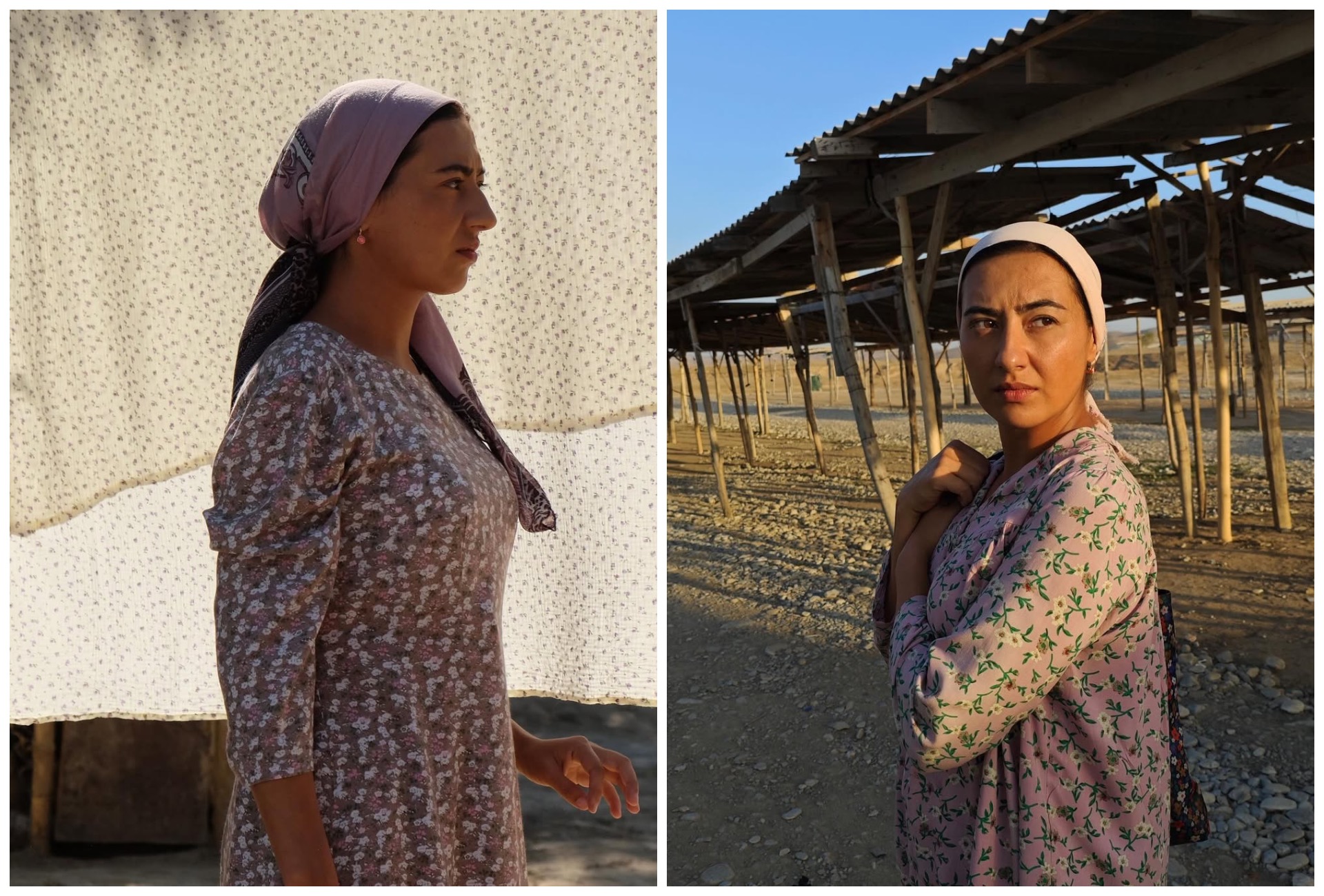
Footage from the filming of the movie "VATA"
"Sunday" (2023)
Director: Shakir Kholikov
The story of a day spent in the city — without words, but with deep inner movement.
Why Cannes: “One of the most award-winning regional debuts. Intimate, expressive, profound — absolutely festival-worthy cinema.”
Awards: 30+ awards, including the Shanghai International Film Festival and the International Film Festival of Asian Cinema. Screened at three Category A festivals.
Nozim Tolipov
Director and cinematographer. Believes that humanity is the most important aspect of cinema, and that the true power of a film lies in emotion.
"You Are Not an Orphan" (1962)
Director: Shukhrat Abbasov
Description: During the war, an Uzbek family takes in 15 orphans of different nationalities. A story of compassion, love, and hope.
Why Cannes: “This is a timeless film. It is truly touching and can be understood anywhere in the world.”
Awards: Prize at the International Film Festival in Frankfurt am Main (1963), award at the 1st All-Union Film Festival (1964), State Prize of the Uzbek SSR named after Khamza.
The editorial board of HD magazine has also prepared its own list — films that, in our opinion, could well contend for the top awards at the Cannes Film Festival.
"Two Thousand Songs of Farida" (2020)
Director: Yolkin Tuychiev
The beginning of the Civil War in Russia. Retired General Komil lives with three wives in a mountainous Turkestan village and thinks about politics the least—he is troubled by the lack of an heir. In the hope of gaining a son, he takes a young girl as his wife.
Why Cannes: The film tells the story of a patriarchal family living at the turn of an era, trying to shield itself from the "hostile whirlwinds" of the first post-revolutionary years in the mountains near Bukhara.
Awards: "Best Feature Film" at the Moscow Premiere festival (2020); the audience award "Snow Leopard" at the Asian World Film Festival in Los Angeles (2021).
"Berlin-Akkurgan" (2018)
Director: Zulfikar Musakov
Description: The film's action takes place in the pre-war period and in the present day—in Berlin, Moscow, and the Uzbek kishlak of Akkurgan. At its center are two love stories: that of the Uzbeks Kuzybai and Gulshoda Shadievs, and that of the German Klaus Köstlin and the Jewess Deborah Leichtman.
Why Cannes: A story about faith, love, war, intimacy of souls, and betrayal. About how to survive all of this and not break. The most poignant moment: the elderly Kuzybai's declaration of love to Gulsode to the joyful voices of the souls of his fallen comrades. This is not just a victory in war—it is a victory over pain and everything that had to be endured.
Awards: Nomination for the Nika Award (2019) — "Best Film from CIS and Baltic Countries".
The films we've discussed are just a part of the cultural layer that deserves to be seen at the world's largest film festivals. They possess honesty, expressiveness, inner strength, and a human tone. This means they can be understood and accepted—anywhere on the planet.
Read also

Newsletter
A letter from the HD editors
Once a week, we send the best stories, events, and cultural discoveries from Central Asia.