
Souvenirs, street food, and a few exhibits
This year, food stalls, food pavilions, and beverage refrigerators have begun appearing on the grounds of the Museum of Railway Technology in Tashkent. The street food business scaled so quickly that some bloggers predicted the unique museum would turn into a «TRC Sosiskahona-bekati».
In Samarkand, on Registan Square, right inside the cells where students of the madrasah once lived and studied, a brisk trade unfolds today—ikat, ceramics, magnets, antiques, and national headwear are sold here. Tourists are offered bright dresses for rent to take photos against the walls adorned with tiles. Some shops are equipped with lighting, plastic mannequins, and hangers—only fitting rooms are missing.
Meanwhile, the entire ensemble of Registan Square has been inscribed on the UNESCO World Heritage List. In essence, it is a museum exhibit belonging not only to the people of Uzbekistan but to all of humanity.
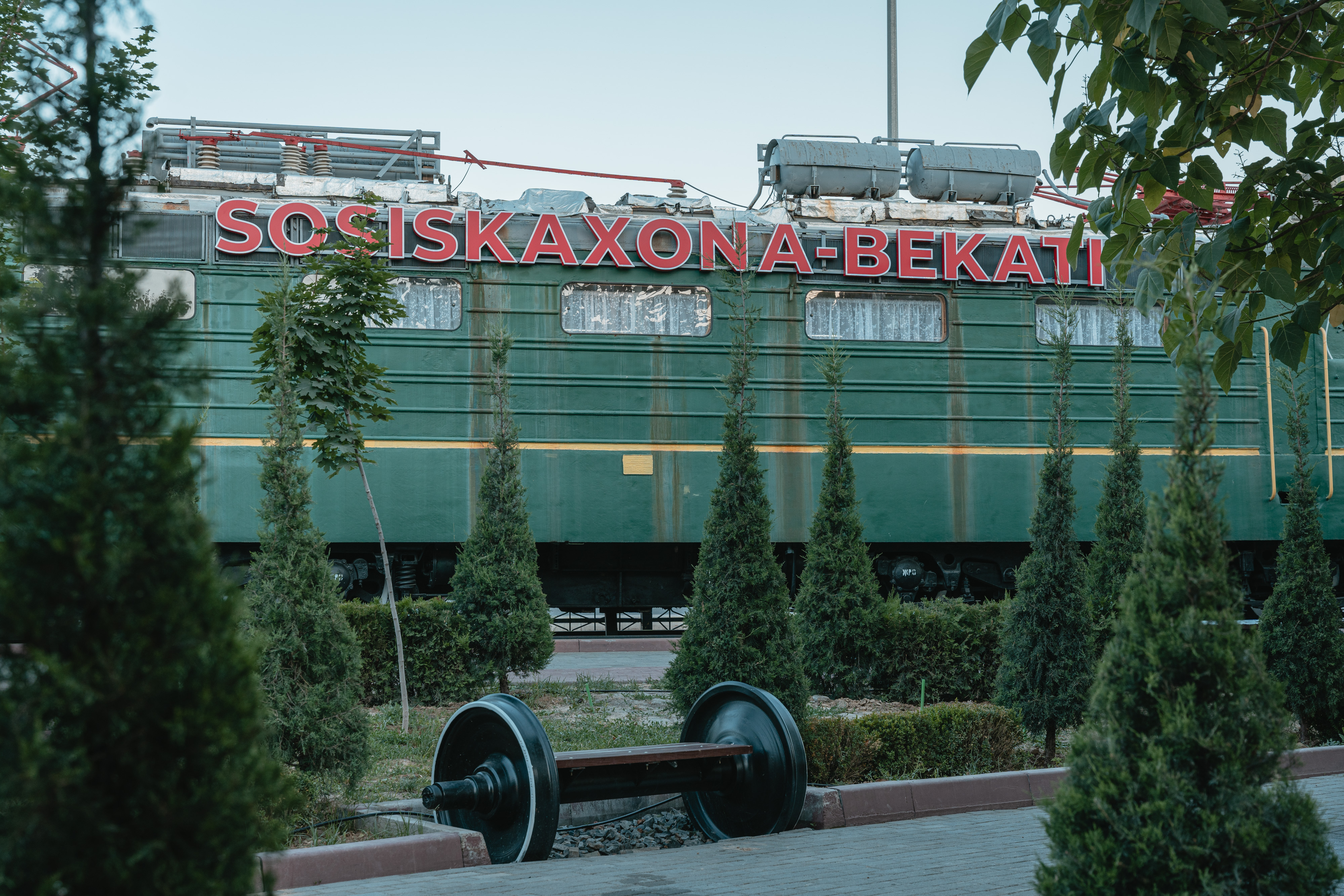
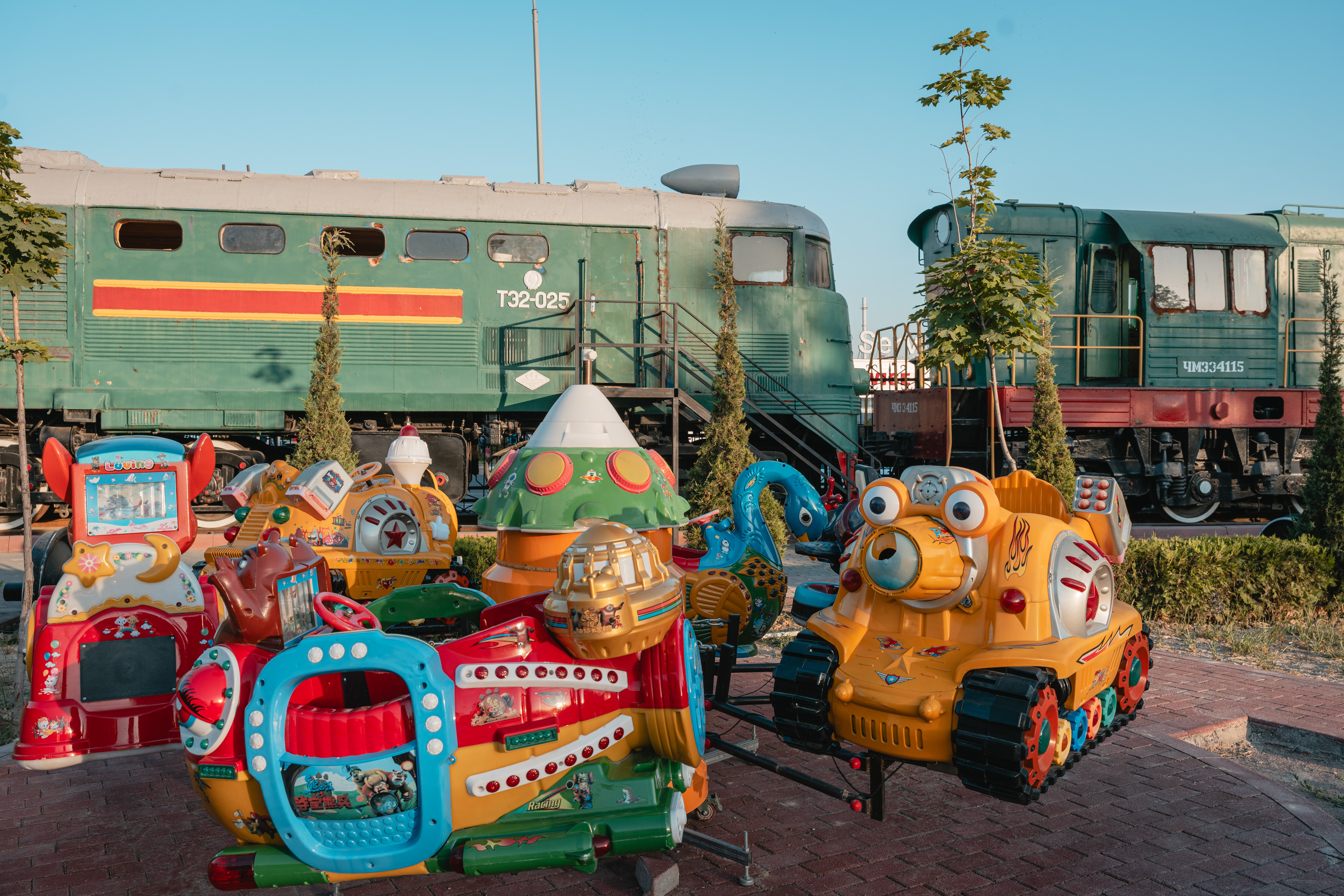
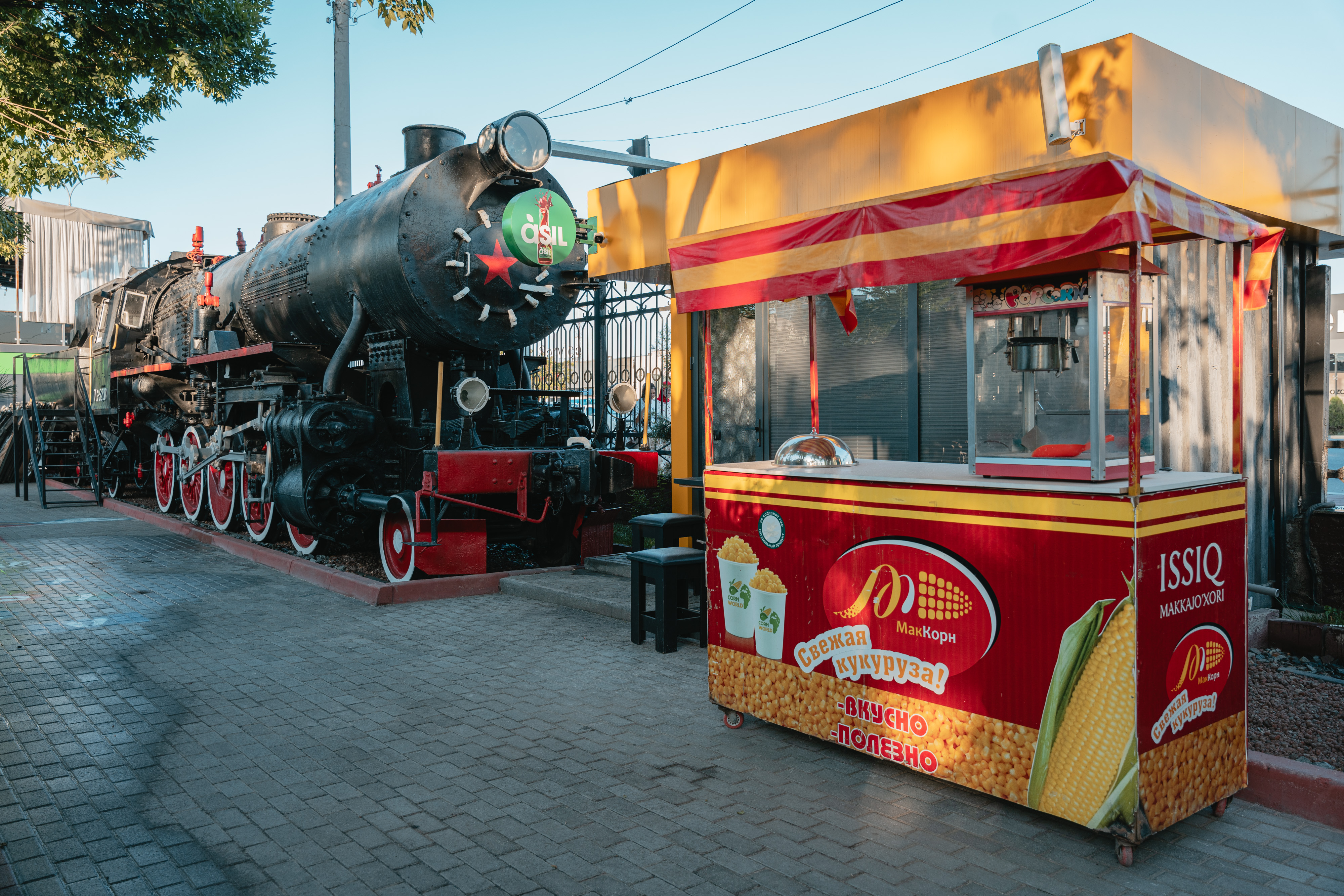
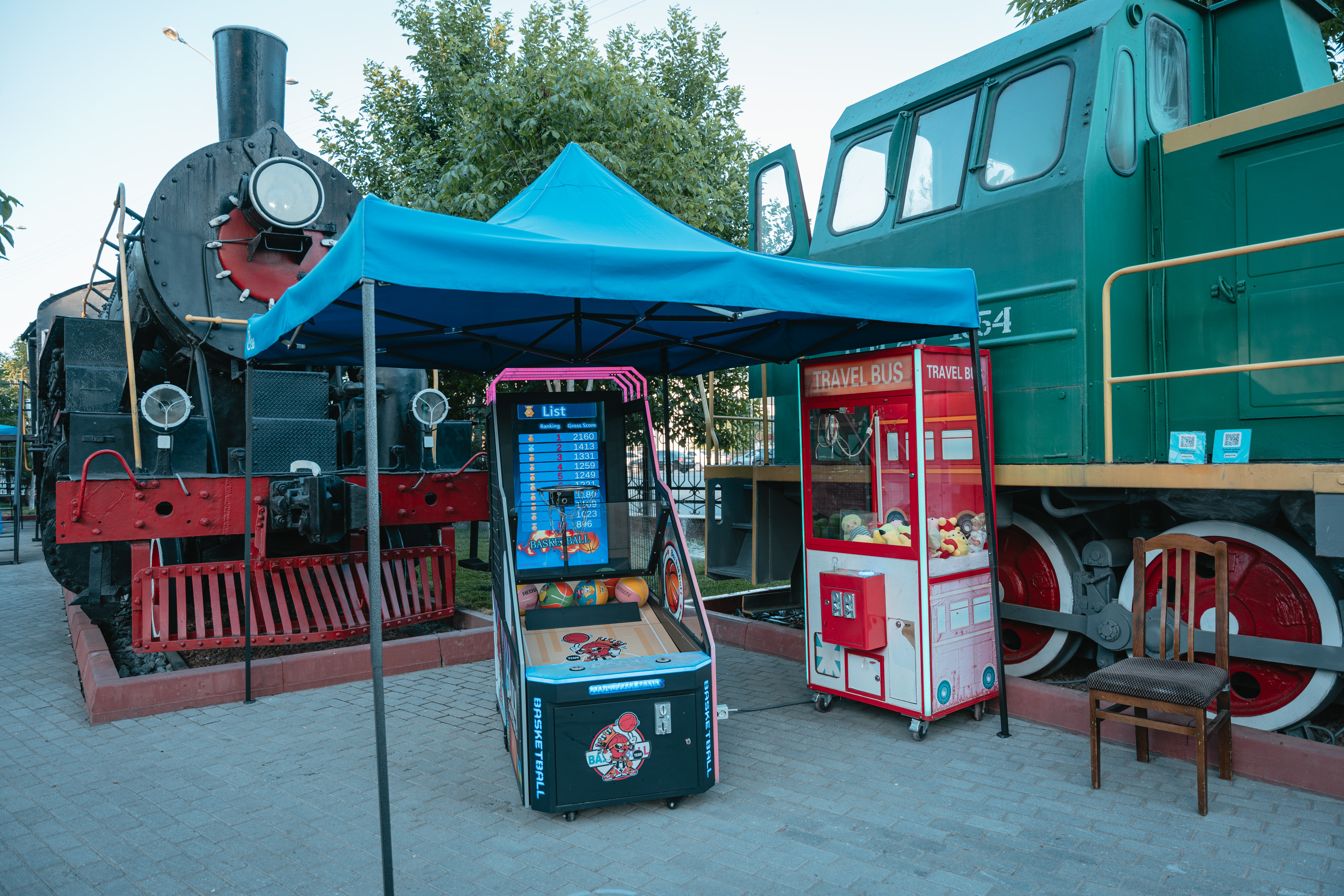
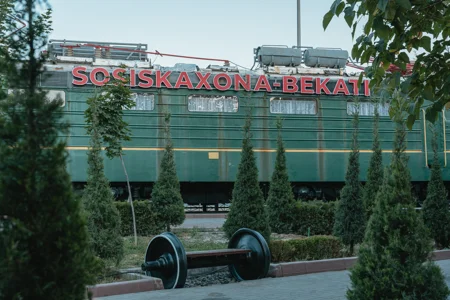
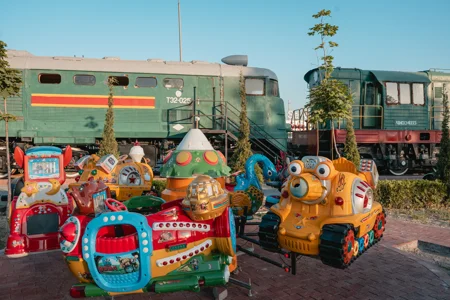
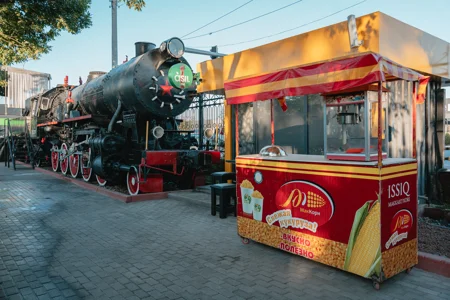
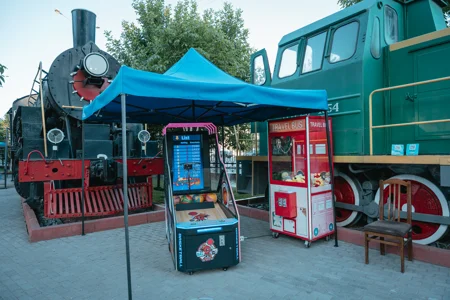
Railway Technology Museum in Tashkent (2025). Photo: Katerina Kuznetsova
Retail trade around and inside historical sites creates visual clutter and hinders thoughtful perception of cultural heritage. Moreover, economically, such activity brings little benefit: typically, goods of low quality and unrelated to the specific location or exhibition are sold. And this is not just about souvenir mass-market goods—the approaches to a number of museum sites and architectural monuments are literally cluttered with beverage refrigerators and street food stalls.
Doctor of Arts and Editor-in-Chief of the journal "SAN’AT" Binаfshа Nodir notes that the main reason for the proliferation of cheap goods lies in their cost price: "Surrogates of Chinese and Indian production are significantly cheaper than genuine Uzbek textile products."
Today, almost all tourist locations in the country are flooded with pseudo-adras—factory fabrics imitating national patterns and machine-embroidered products made outside of Uzbekistan. However, genuine handmade work, wherever it is created, by definition cannot be cheap, emphasizes the expert.
"Dozens of highly qualified specialists are involved in the creation of a single piece. The cost of authentic fabric is many times higher than the price of factory imitations. And not every resident of Uzbekistan, nor even every tourist, can afford such an item. This is precisely the reason: tourist demand shapes the supply. Hence—the abundance of cheap consumer goods on the shelves not only at Registan but also in many other historical sites across the country."
"Only certain forms of trade should be permitted. For example, when artists create works on site and sell them immediately, or embroiderers offer hand embroidery done right before the visitors' eyes. Everything else should be moved outside cultural venues — to market rows and bazaars," believes Shirin Tasheva, director of the Museum of Modern Art in Urgench.
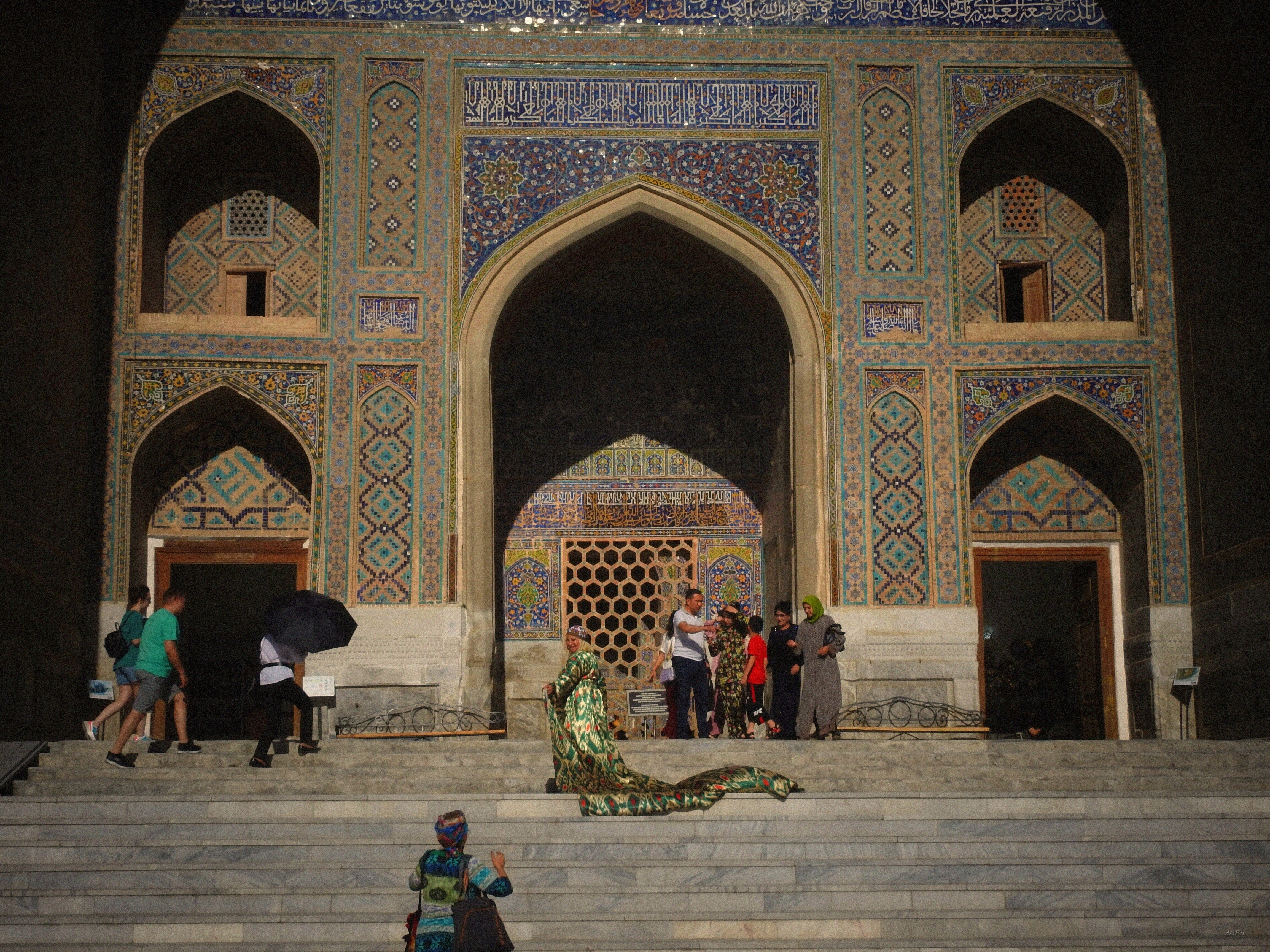
Registan Square in Samarkand. Photo: Ildar Sadykov
What is happening with museum funding?
The volume of state expenditures on culture in Uzbekistan remains relatively modest compared to the country's overall budget. This year, the Ministry of Culture will receive over 1.2 trillion soums from the state budget — this is the maximum allocation. Meanwhile, the total volume of state budget expenditures will amount to 290.4 trillion soums. The Ministry of Finance forecasts that 4 trillion soums will be spent on culture in 2025.
Although this amount is not the lowest (for comparison: projected expenditures on sports are 3 trillion, on science — 2 trillion), direct costs for museums, exhibition and exposition halls constitute only a small share of the total volume. In 2025, 147.7 billion soums will be allocated for 50 museums and exhibition halls operating in the country (in 2023 — 112.6 billion). For improving the material and technical base of state museums under a separate state program, 6.7 billion soums are allocated (in 2024 — 6 billion).
It's difficult to understand from dry statistics whether this money is enough for museums. One thing is certain: any museum institution spends an order of magnitude more than it earns.
"A museum is a complex of very expensive infrastructure: security, maintaining temperature and humidity conditions, special lighting, equipment," explained in a conversation with the editorial board Doctor of Art History, former director of the Savitsky State Museum of Art Tigran Mkrtychev.
Meanwhile, the country's museums have much to show. Today, their collections hold approximately 2.5 million exhibits, while non-state collections contain about 25 thousand items. With a properly structured system, such cultural spaces can generate significant revenue and ensure a steady flow of visitors.
"Due to a number of historical reasons, Uzbekistan possesses an incredibly rich museum fund. These are unique monuments of ancient art, discovered during archaeological excavations; distinctive works of decorative and applied art, reflecting the traditional culture of the many peoples living in the country's territory; works of fine art from the 20th century, including both works by local artists and a unique collection of Soviet nonconformist art assembled by Igor Vitalyevich Savitsky," noted Mkrtichyev.
How can museums generate passive income?
Museum collections need to be shown to the public—this requires special conditions and careful preparation of exhibitions. "I am stating completely obvious things, but even to solve these elementary tasks, serious financial investments are required. And it is important to understand here: a museum is fundamentally incapable of recouping these costs," Mkrtchev is convinced.
"You cannot monetize [museums] in any way, because no museum in the world generates revenue."
Museums cannot "recoup" such expenses through attendance, if only because high ticket prices would deny access to many."Secondly, there are certain sanitary standards and rules for operating public spaces that are still better not to violate. For example, you cannot cram 200 passengers into a train that has, say, 100 seats," he believes.
Museums have several ways to obtain funding for their operations. State museums are primarily financed from the budget, but they can also receive funds from other legal sources. For example, both state and private museums can conduct paid tours and workshops, rent out premises, seek sponsors, participate in grants, and accept charitable donations.
Read more:

In Bukhara, the museum-reserve located on the territory of the Ark Citadel has begun developing additional directions: holding exhibitions, supporting artisans, renting out spaces, and attracting sponsors. All funds received were directed towards restoration, development, and educational programs.
Local scholars have proposed rethinking the very approach to museum work: a museum is not just a repository of artifacts, but a living cultural center capable of influencing society and the economy. The idea of so-called "mixed-use" is increasingly being voiced, where cafes and souvenir shops can operate within the museum, but the primary role is given to its educational mission.
"As I have already said, the museums of Uzbekistan possess phenomenal collections. On this basis, new exhibitions, displays, and tour routes should be created. And for this, personnel are required—everyone understands that a layer of professional museum workers needs to be formed. It must be said that people in museums receive very low salaries, meaning they are not motivated to work," concluded the former director of the Savitsky Museum.
A Billion for Louvre Restoration
The issue of financial sustainability for museums is not unique to Uzbekistan. Even the world's largest institutions do not always manage to find a balance between fulfilling their cultural mission and keeping themselves afloat.
So, the Louvre — one of the most famous museums on the planet — announced in 2025 a fundraising campaign of 1 billion euros for the restoration of the building. As writes The Art Newspaper, visitors complained about overcrowded rooms, poor navigation, low-quality rest areas, outdated toilets, and deteriorating infrastructure. The publication mentions "structural damage" that could threaten the collections.
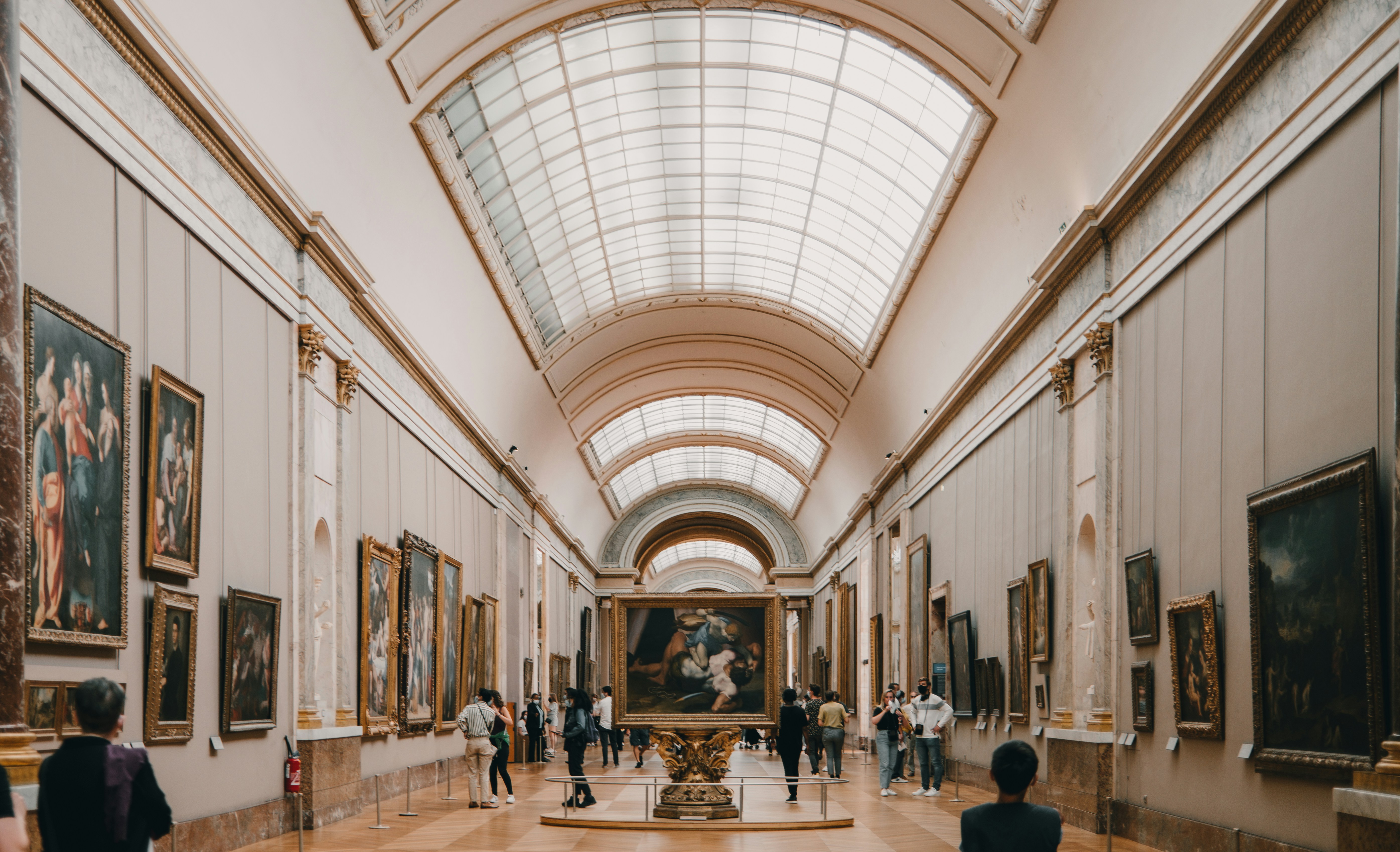 © Dat Vo / Unsplash
The situation in the UK is no better: according to data from the BBC, from 2010 to 2023, state funding for cultural institutions decreased by 18%. Even the British Museum and the National Gallery are forced to compete with smaller institutions for grants totaling 120 million pounds.
The British Museum itself relies heavily on donations and sponsorship. The museum actively raises funds from private individuals and corporations, forming a sustainable model of additional financing. For example, in 2023, the museum secured a £50 million sponsorship deal with the oil company BP. The donations went towards modernizing the museum, updating its infrastructure and galleries. Additionally, the British Museum's website offers the option to purchase membership, which provides unlimited access to all exhibitions, the opportunity to attend special events, receive the «British Museum» magazine, and enjoy special discounts.
In the United States, museums have always been linked to business from the outset—they do not trace their lineage from private royal collections and do not receive state support as in Europe. Despite their status as non-profit organizations, they have always been forced to generate revenue. The 501(c)3 status exempts museums from income taxes, but it does not prohibit earning a profit—the key is that the profit is used to pay employee salaries, maintain buildings, and develop educational and scientific programs.
Any museum in the USA has three main sources of income. The first of these is regular donations (about 60%) from a small number of wealthy and devoted donors. Tickets and tours are an important, but far from key, source. For example, tickets bring the Metropolitan Museum only about 2% of its total income. Commercial activities (up to 40%): shops, licenses, educational courses, venue rentals.
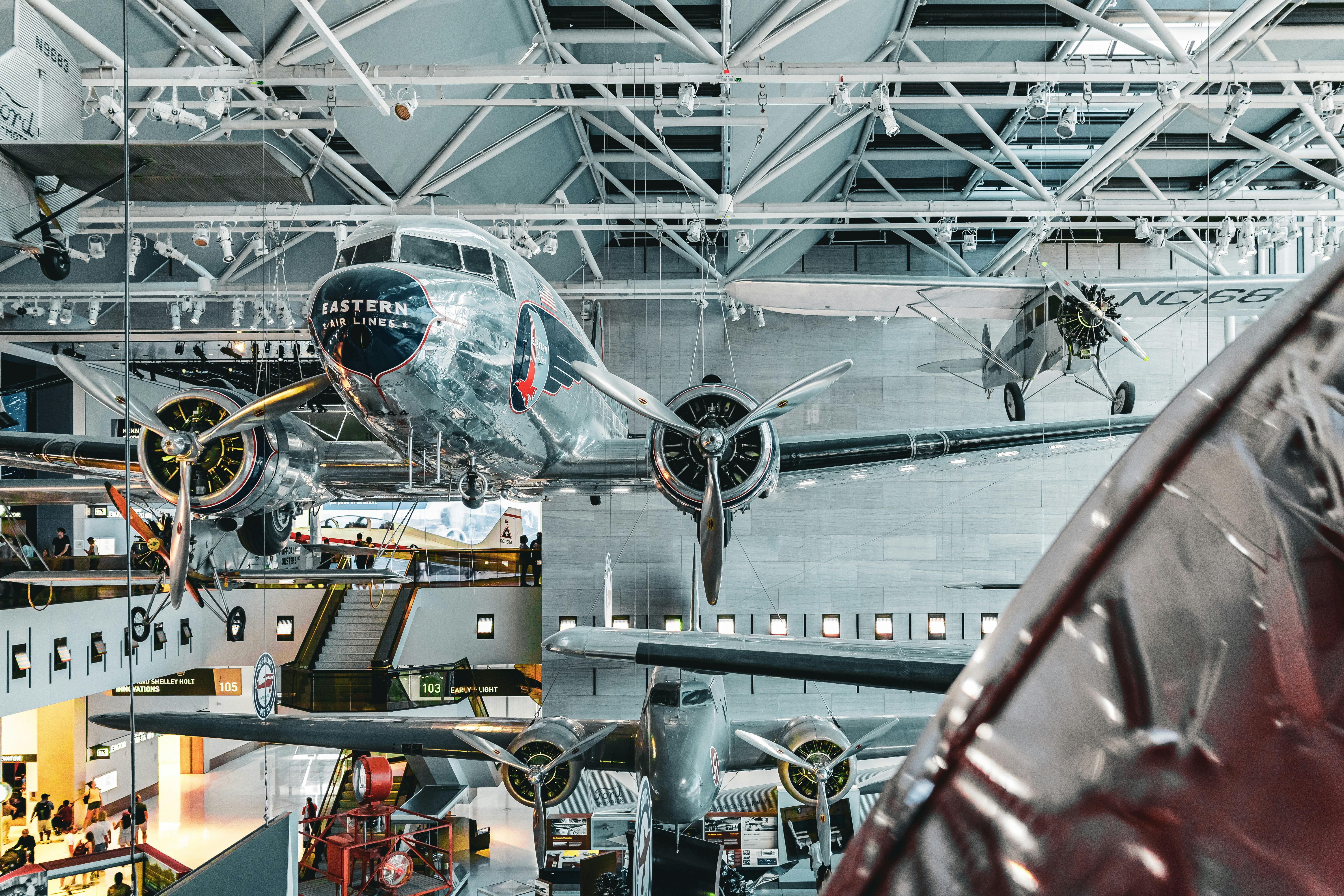
Exhibition at the Smithsonian National Air and Space Museum. Photo: Nils Huenerfuerst / Unsplash
One of the world's most famous museums, the Metropolitan Museum of Art in New York, in 2016 announced a budget deficit of $10 million (this amount could have grown to $40 million). In 2020, the museum lost over $150 million in revenue and even considered selling part of its collection to cover operating expenses, including salary payments. Thomas Campbell, the former director of the Metropolitan Museum, predicted that selling artifacts could become the new norm.
The Smithsonian Institution, the largest museum complex in the United States, is also facing cuts in federal funding. In 2024, its budget allocated for capital projects was reduced by $54 million, affecting plans for modernization and the construction of new facilities. This year, the institution has encountered other problems: the Donald Trump administration signed an executive order that cuts funding for institution programs promoting "incorrect, controversial, and anti-American ideology."
A museum is not a backdrop for souvenir shops. First and foremost, it is a space that cultivates taste, shapes thinking, and fosters respect for the past. When the authentic gives way to the profitable, we risk losing not only culture but also our bearings. A museum must remain a place where what matters is not the flow and scale, but the depth of perspective.


