
Disclaimer
Kupkari (Uzbek name) — a traditional equestrian power sport of Turkic peoples, which has recently been revived in Central Asia. In Kyrgyzstan, where there is advocacy for including the game in the Olympic program, it is called "kok-boru", in Kazakhstan — "kokpar", in Tajikistan and Afghanistan — "buzkashi".
Kupkari is similar to rugby, polo, and football simultaneously: two teams of horsemen (with four players each) meet on a field measuring 200 by 70 meters. Instead of a ball, they use a ram carcass called "ulak," and instead of goals, there are two large "kazans." This is a round pit lined with bricks, cement, or even old tires.
To score a "goal," you need to throw the ulak into the kazan. The opponents' task is to prevent this. You can play not only as part of a team — for example, in the Jizzakh region of Uzbekistan, individual races are practiced. In this case, hundreds of riders participate in the game, and it can last for hours. Instead of a sheep carcass, a goat carcass is sometimes used, which is where the Russian name for the game — "goat-dragging" — comes from.
Chingiz Aitmatov in the novella "Farewell, Gulsary!" explains: "A goat is convenient because its hair is long and strong, and it can be grabbed from a horse by the leg or by the hide." Historically, a wolf carcass served as the trophy — Turkic peoples traditionally hunted wolves on horseback. The one who killed the wolf would place its carcass across the saddle. His comrades would try to wrest the prize away on the way to their village — thus, according to legend, kupkari was born.
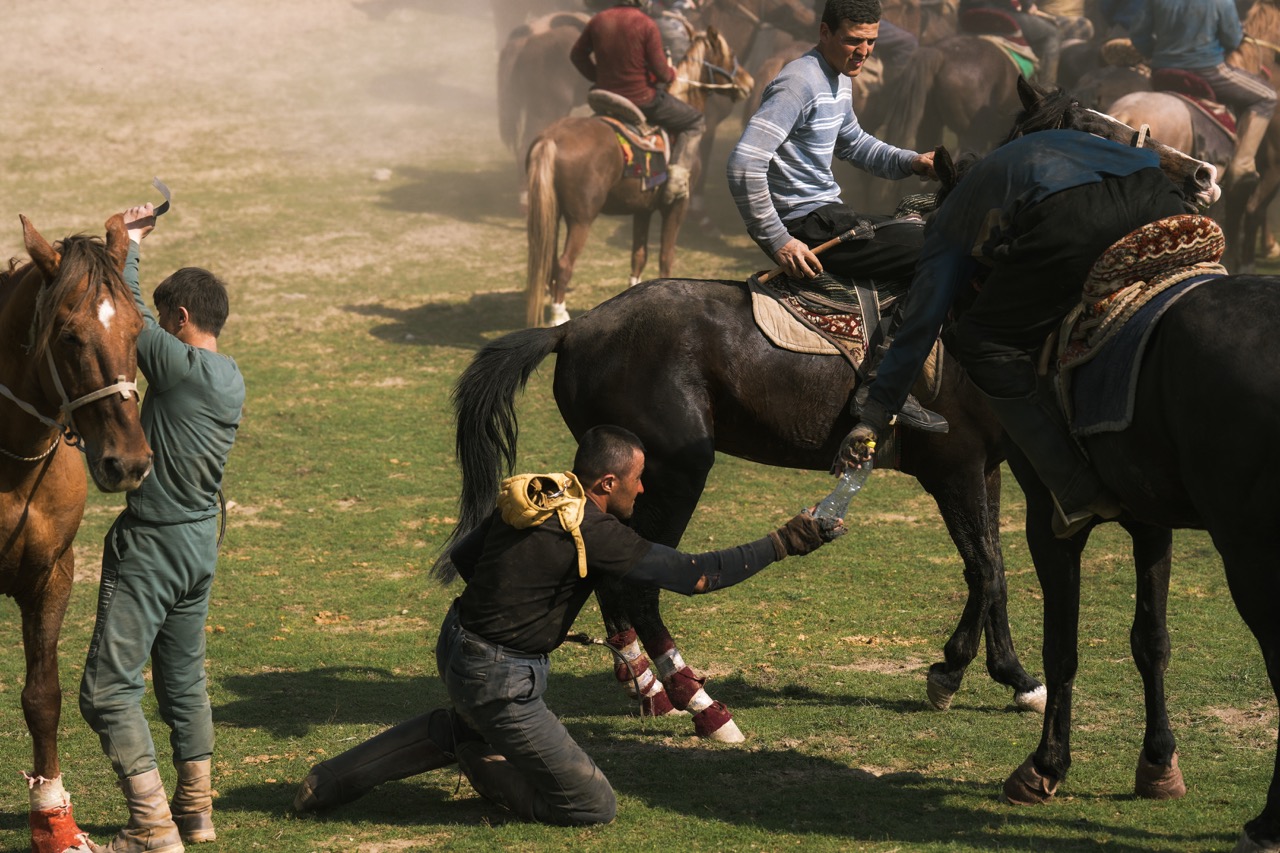
Special attention is given to preparing the horses for the races. Documentary photographer Ildar Sadykov, who captured one of the kupkari matches in the Baysun district, explained that the horses are given a special kind of massage to warm them up before the game begins. The massage is important — the horses are brought in truck beds, where they spend a long time without moving.
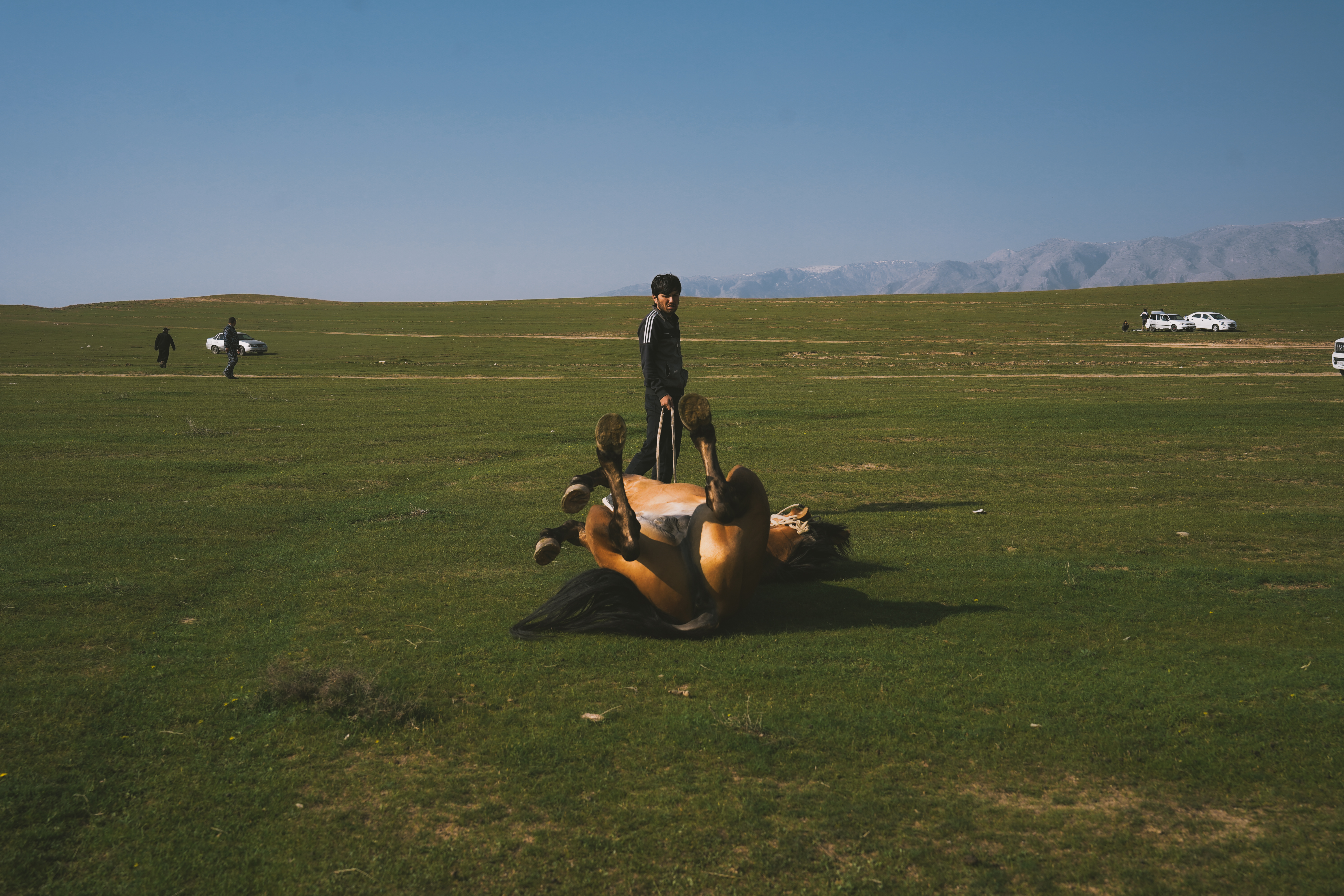 Kupkari competition in Boysun© Ildar Sadikov / Instagram: ildar.sadikov.52
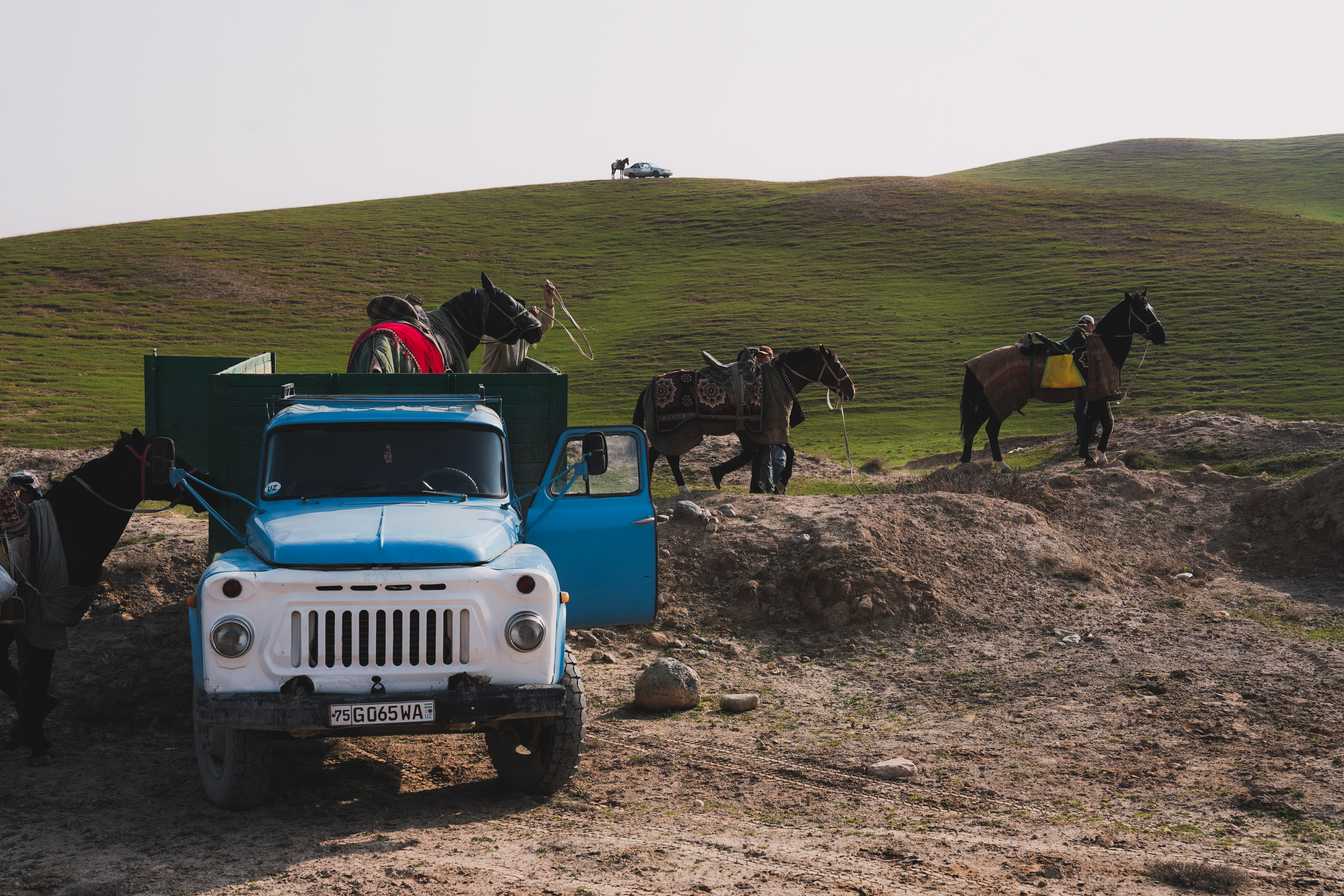 Kupkari competitions in Baysun © Ildar Sadikov / Instagram: ildar.sadikov.52
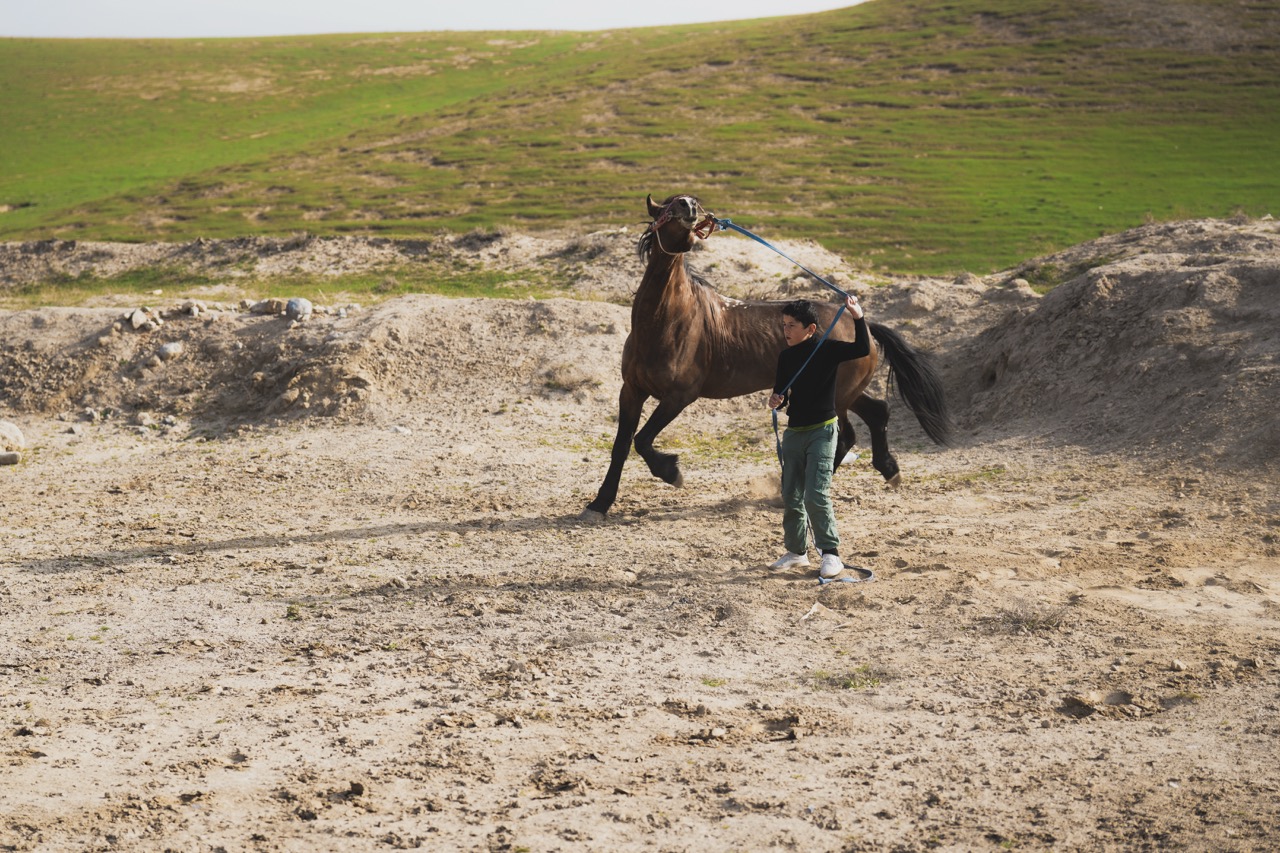 Kupkari competitions in Boysun © Ildar Sadikov / Instagram: ildar.sadikov.52
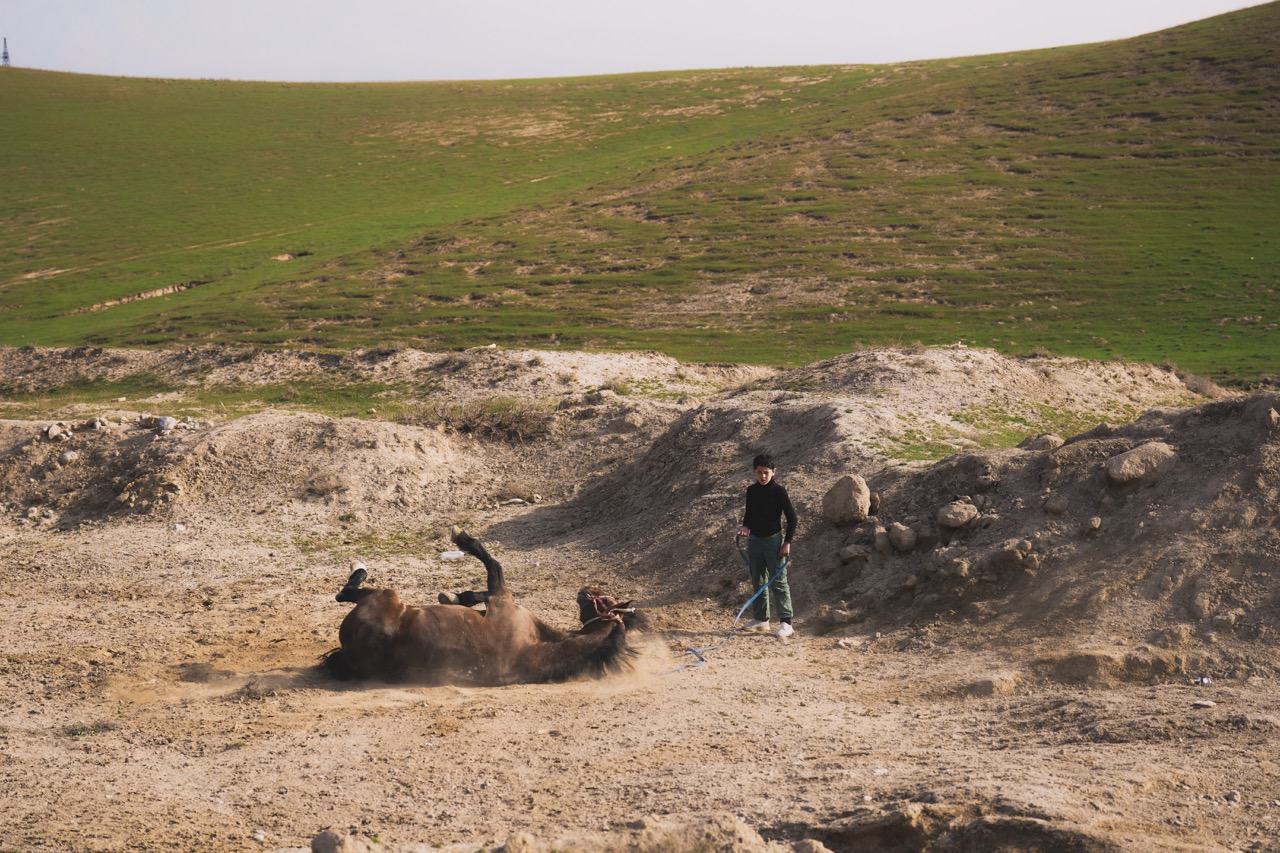 Kupkari competition in Boysun © Ildar Sadikov / Instagram: ildar.sadikov.52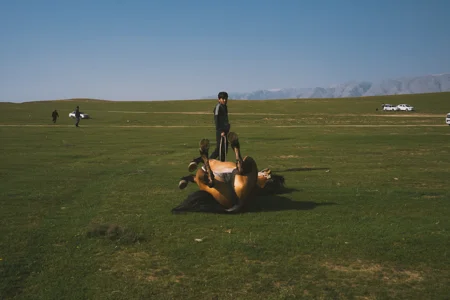
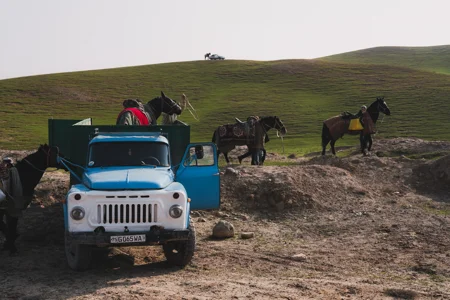
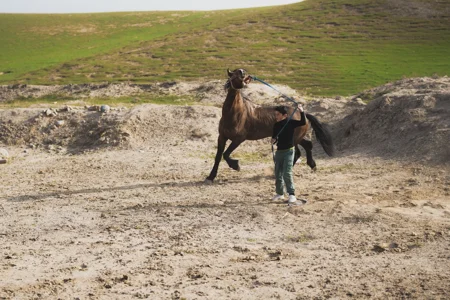
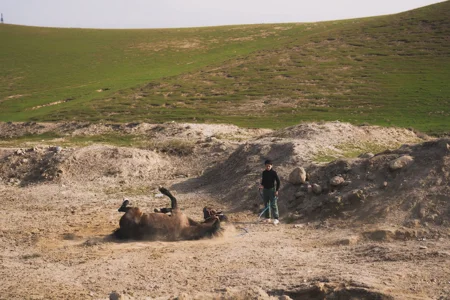
"Gulsary did not understand why Tanabai was holding him back. But Tanabai knew it was necessary to let the Kazakh horseman break away from the avalanche of pursuing riders, to get farther away from the crowd of kinsmen rushing to his aid. If they were to surround the bay stallion with a galloping barrier, then no force could wrest back the lost quarry. Only in single combat could one hope for any success."
Chingiz Aitmatov, "Farewell, Gulsary!"
Kupkari is a dynamic and spectacular, yet at the same time very rough and injury-prone activity. In the USSR, goat-grabbing was banned precisely for this reason. Due to the lack of strict rules and proper refereeing, riders could whip their opponents, pull each other off their saddles — in short, they behaved as if at war.
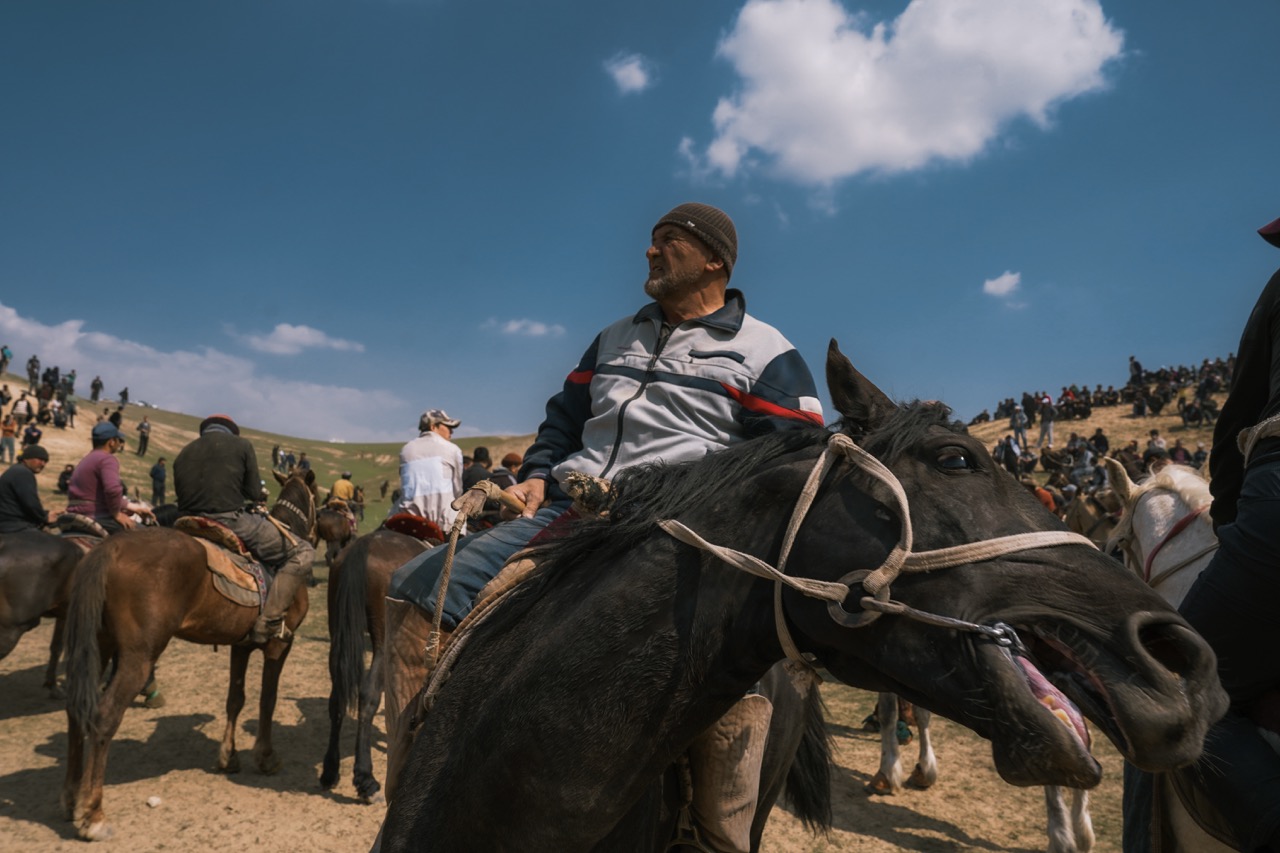
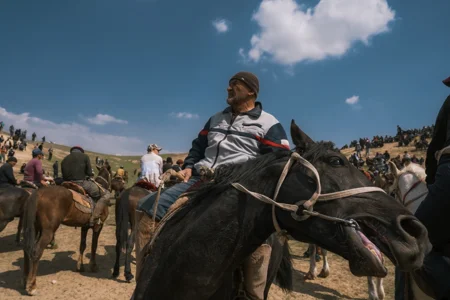
Now the rules of the sports kupkari have become stricter: the time has been shortened, and participants are required to use equipment. Riders wear thick clothing, pads, and some — even Soviet tank crew helmets to protect their heads. And still, bruises, fractures, and lacerations are not uncommon, though this does not stop the true batyrs.
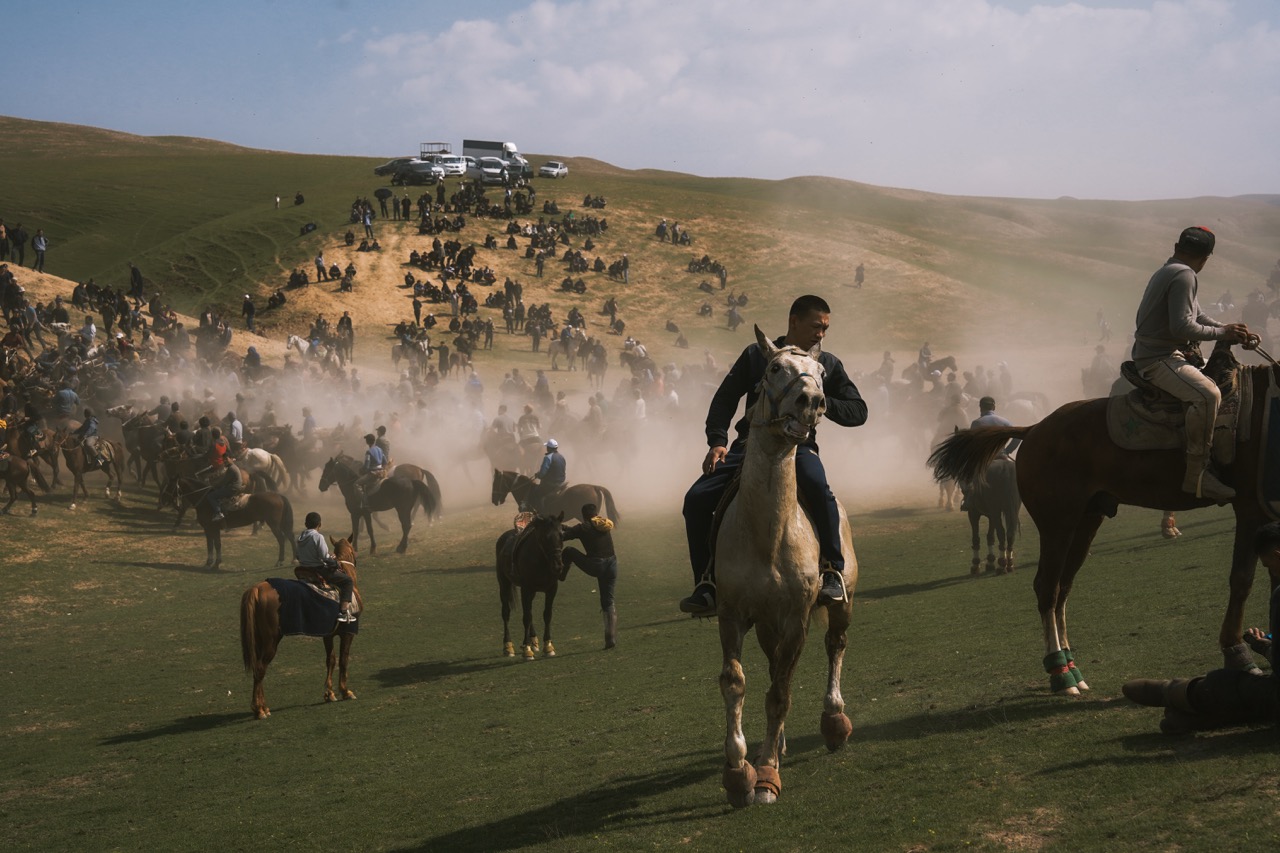 Kupkari competitions in Boysun © Ildar Sadikov / Instagram: ildar.sadikov.52
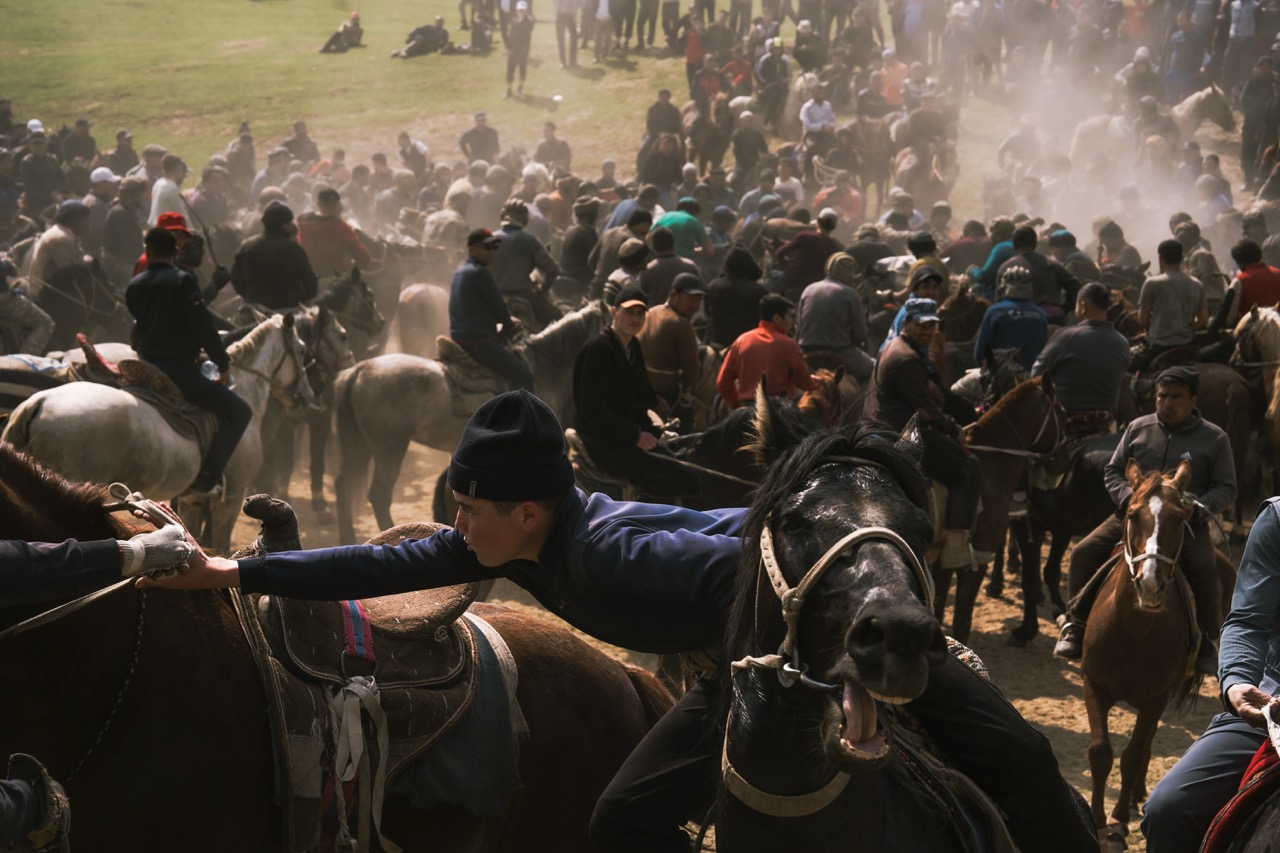 Kupkari competitions in Boysun © Ildar Sadikov / Instagram: ildar.sadikov.52
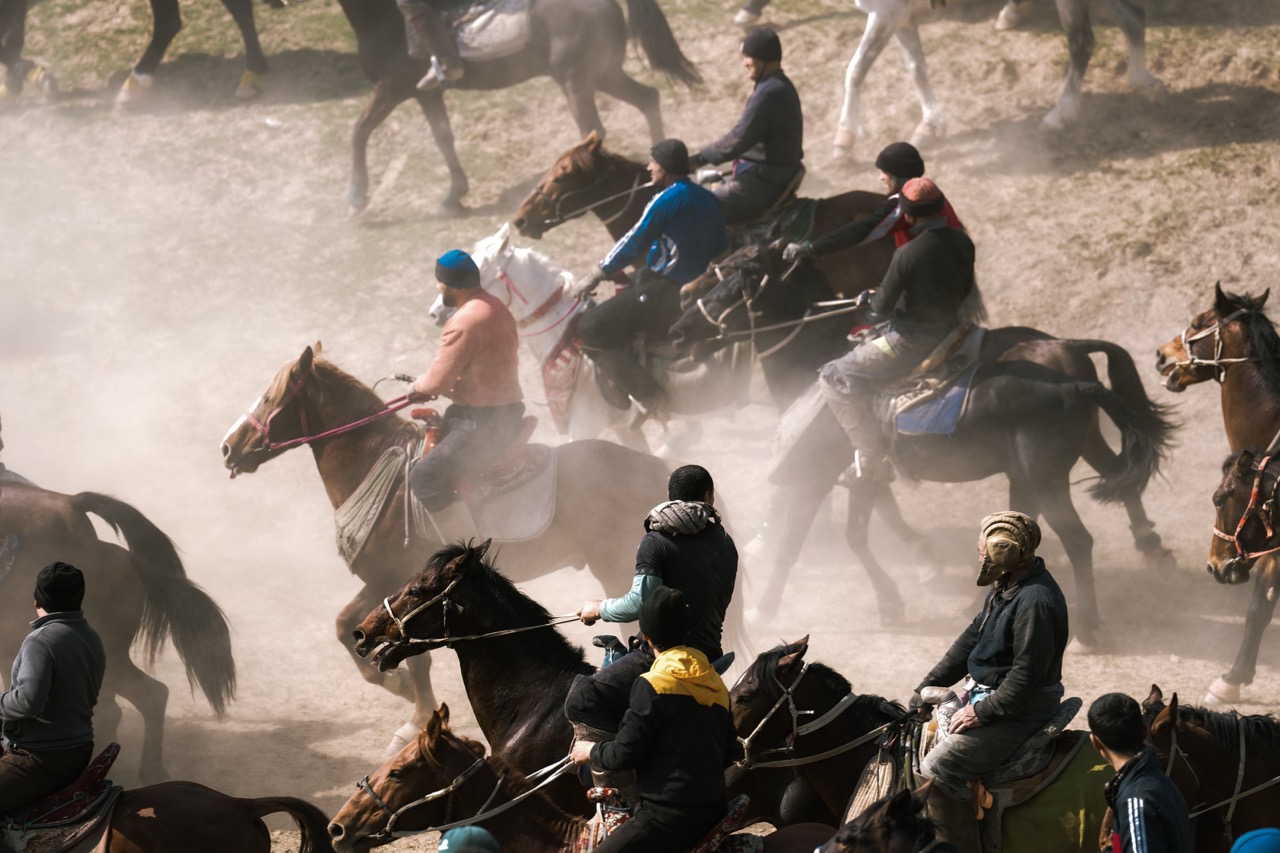 Kupkari competitions in Boysun © Ildar Sadikov / Instagram: ildar.sadikov.52
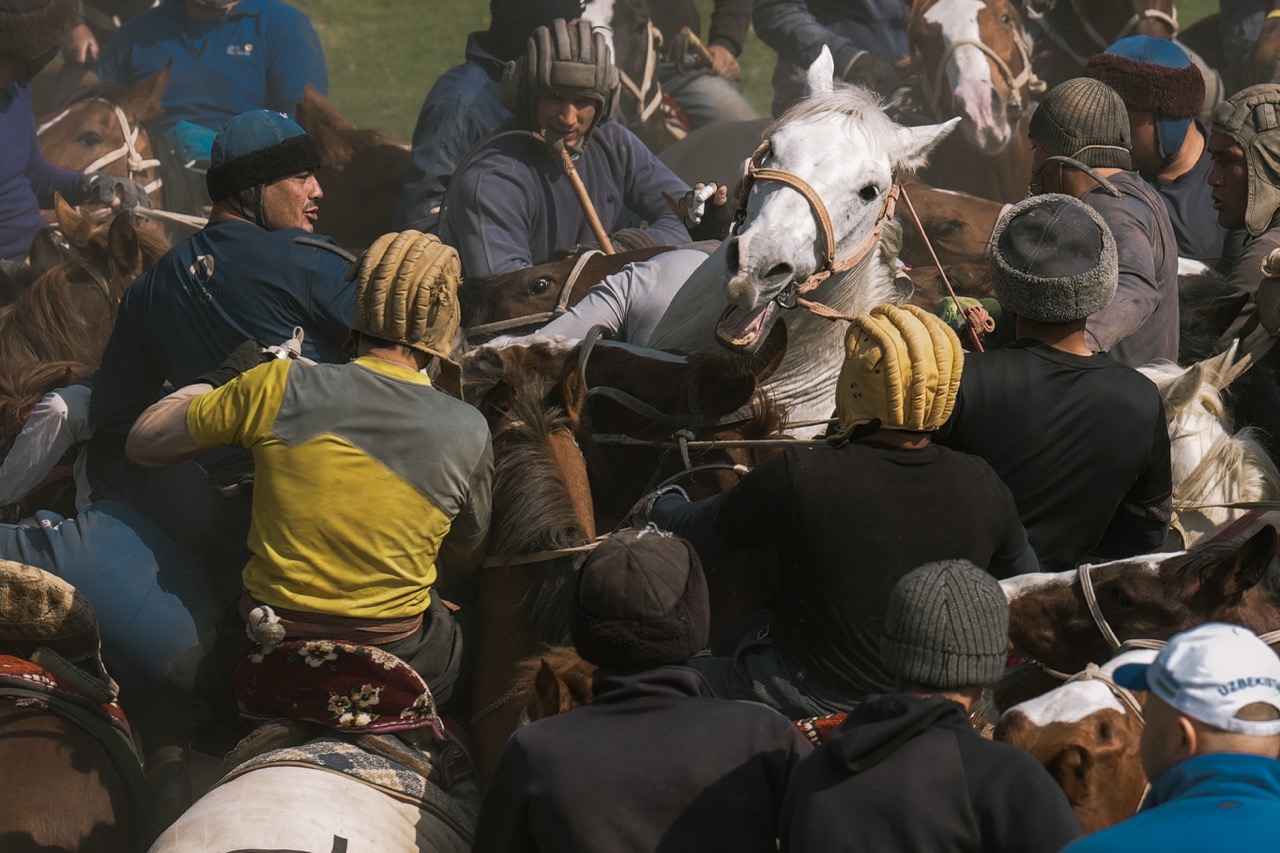 Kupkari competitions in Boysun © Ildar Sadikov / Instagram: ildar.sadikov.52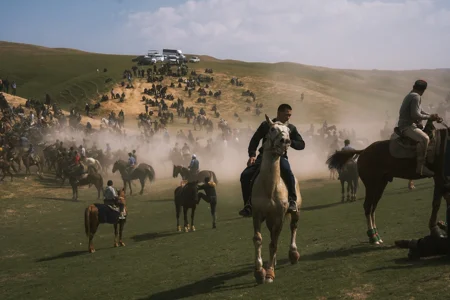
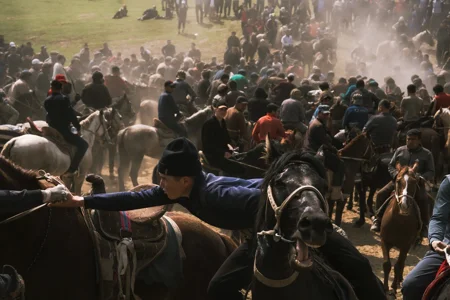
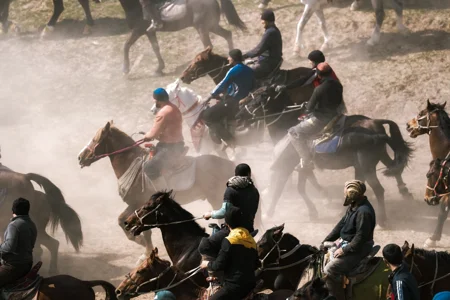
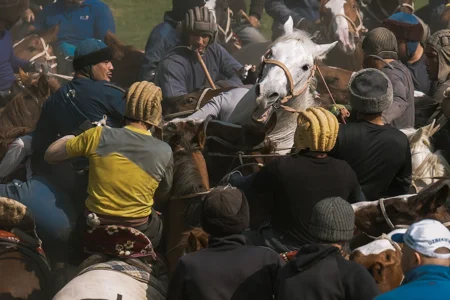
The field is marked in such a way that the place where the ulak lies is located in the center between two kazans. When the judge gives the signal, the riders rush towards the carcass. The task is not an easy one: first, the carcass, which weighs about 30 kilograms (on rainy days, mud sticks to it and it weighs more), must be lifted from the ground. Then the rider presses the ulak with his leg against the side of the horse — this makes it easier to hold during the race — and tries to break through to the kazan to make the decisive throw.
Opponents are in no hurry to pick up the ulak first—it's tactically more advantageous to take it from someone who has already managed it. A rider with the ulak immediately becomes less mobile — it is difficult for them to dodge on their own, so it is important for teammates (if it's a team game) to cover them, pushing opponents away with their horses.
"They were now running neck and neck. Tanabai leaned from the saddle to grab the goat by its leg and pull it over to his side. But the Kazakh deftly swung the prey from his right side to his left. And the horses still raced straight towards the sun. Now Tanabai had to drop back slightly and catch up again to approach from the left side. It was difficult to pull the ambler away from the bay, but he still managed to execute this maneuver. And once again, the Kazakh in the torn gymnasterka managed to swing the goat to the other side. 'Well done!' Tanabai shouted excitedly."
"Farewell, Gulsary!"
Interestingly, the one who picks up the ulak does not always deliver it to the cauldron — the throw requires not only immense physical strength but also precision. The walls of the cauldron are high and sloped inward, making the task even more difficult. Therefore, a successful strategy and team mutual aid are the keys to victory.
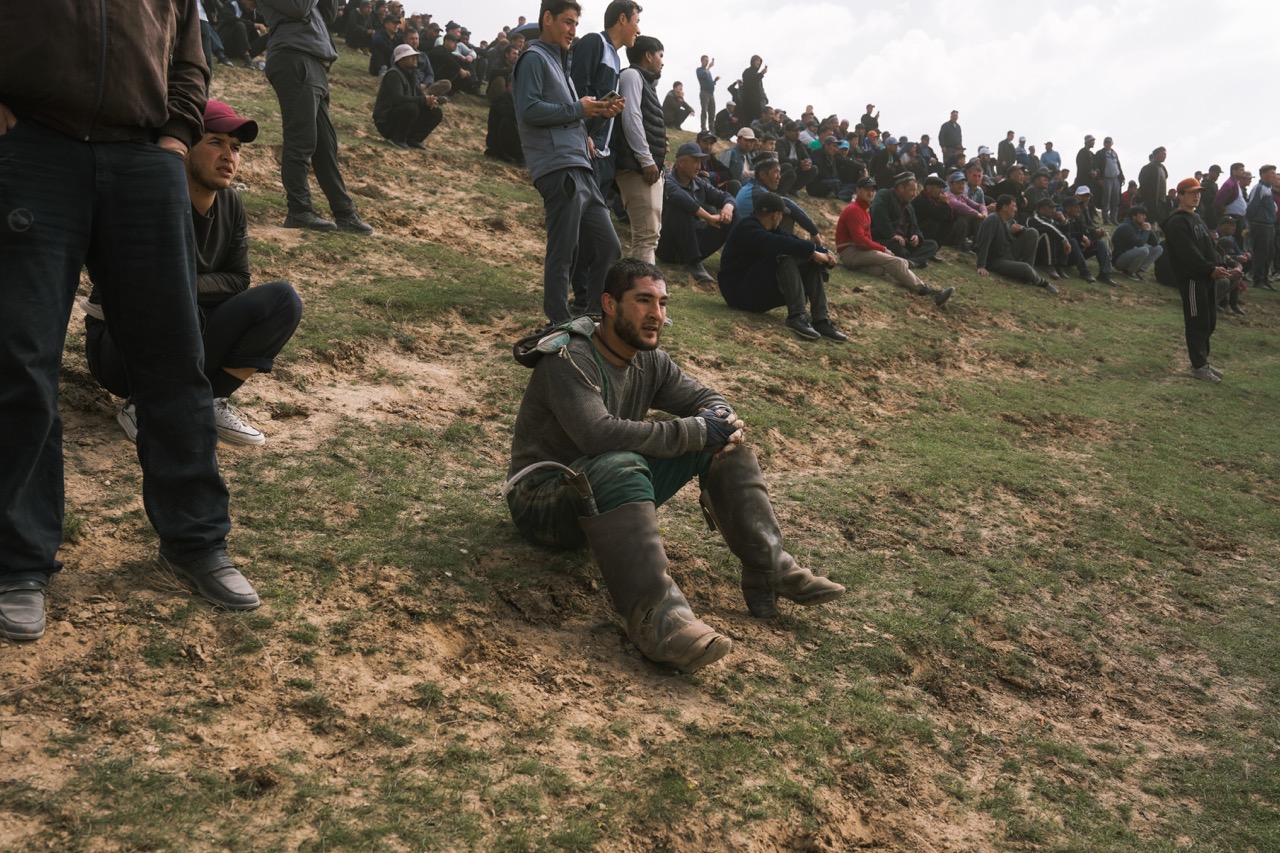
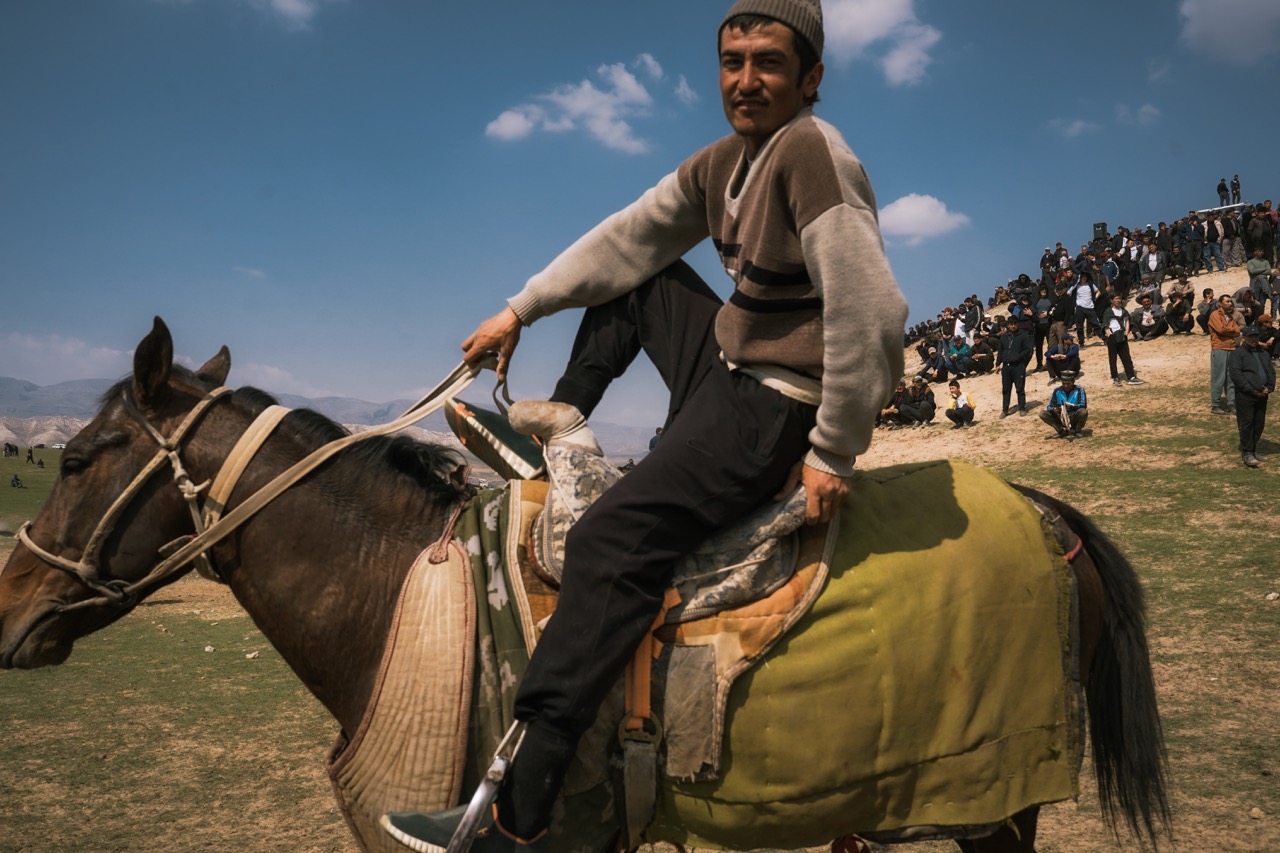
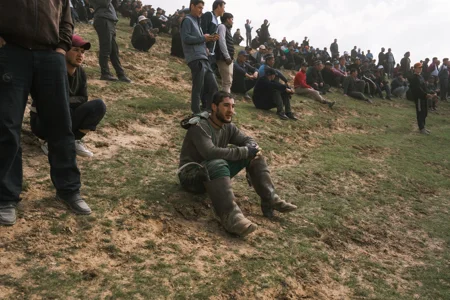
Usually, tents are set up on the field where the competition takes place, participants and spectators are treated to food, and gifts are distributed.
 Kupkari competitions in Boysun © Ildar Sadikov / Instagram: ildar.sadikov.52
 Kupkari competitions in Boysun © Ildar Sadikov / Instagram: ildar.sadikov.52
 Kupkari competition in Boysun © Ildar Sadikov / Instagram: ildar.sadikov.52
 Kupkari competitions in Boysun © Ildar Sadikov / Instagram: ildar.sadikov.52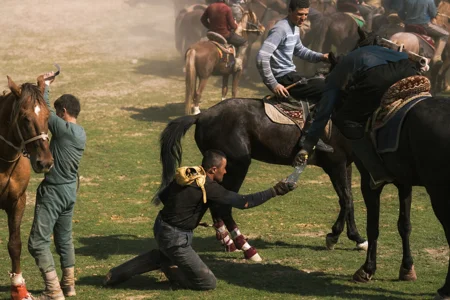
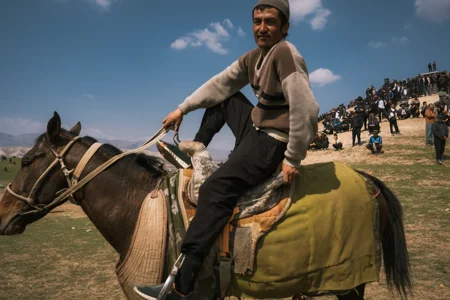
The prizes can be quite impressive: from horses, camels, and bulls to monetary rewards, household appliances, and even cars — if we're talking about major competitions. But beyond the trophy, the winners take something more valuable from the field — the respect of their opponents and self-respect.
“Hold on now, brother Kazakh!” Tanabai shouted. “You lie, neighbor, I won’t give it up!” the other replied. And a fight on a furious gallop began. Locked together like eagles over a single prey, they shouted at the top of their lungs, wheezed and growled like beasts, terrifying each other, their hands intertwined, blood oozing from under their nails. And the horses, joined by their riders’ duel, raced in fury, hurrying to catch up with the crimson sun. Blessed be the ancestors who left us these fearless men’s games!”


