Fashion and Style
From "ethnic chic" to boutiques in yurts: how Central Asia is becoming an object of cultural appropriation
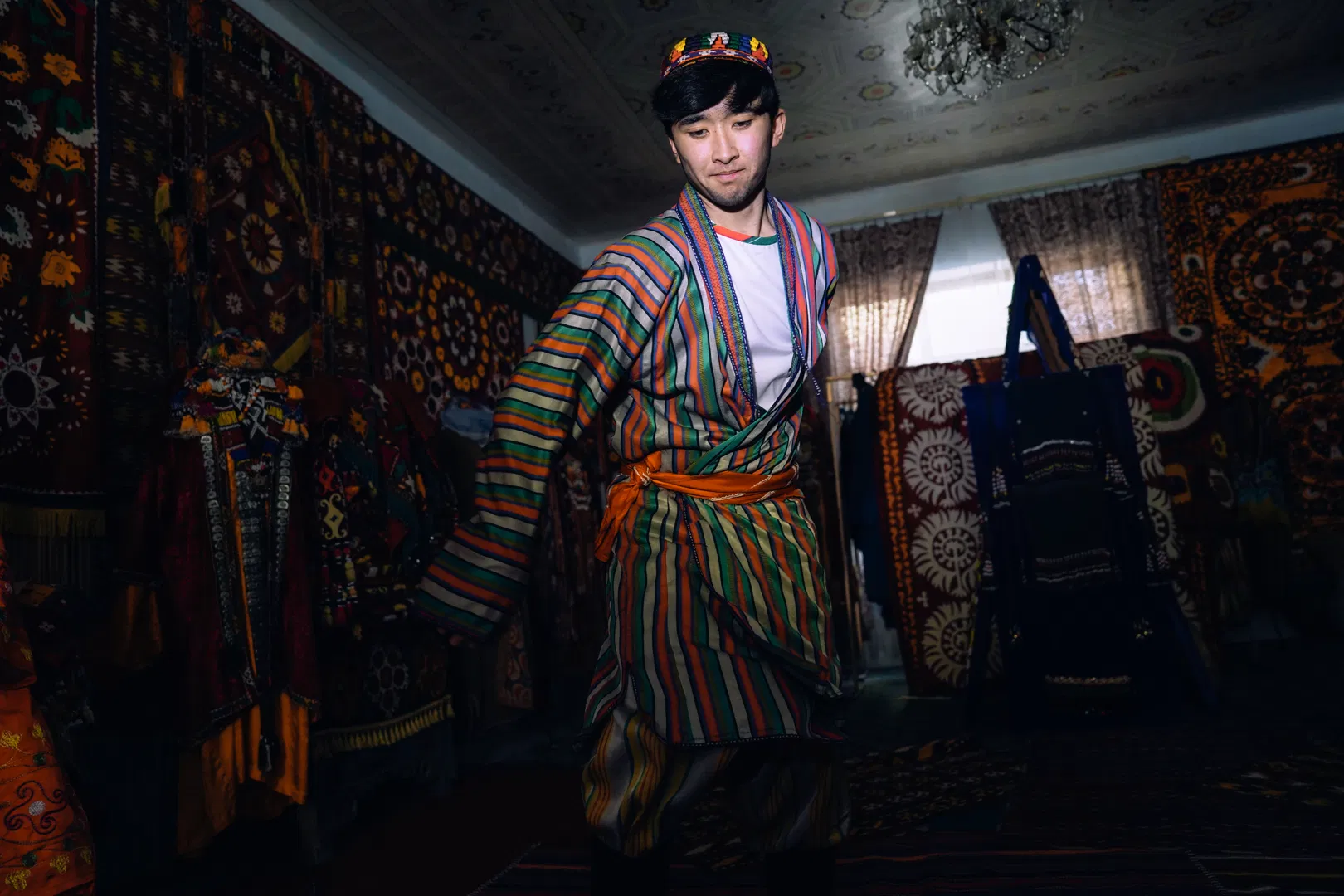
When a Russian brand uses Kyrgyz patterns as decoration, and Louis Vuitton sets up a boutique in a yurt, the already thin line between cultural exchange and appropriation becomes almost imperceptible. We explain why cultural appropriation is a serious ethical problem and how it is viewed from Central Asia.
What is cultural appropriation — and how does it differ from cultural exchange
Cultural appropriation is the borrowing of another culture, which members of that culture consider inappropriate and tactless. Some researchers believe that appropriation most often targets the culture of a minority in a vulnerable position. Their traditional ornaments, clothing elements, and art are used by the dominant culture as decor, often for commercial or entertainment purposes.
Vincent van Gogh copied Japanese prints without mentioning their country of origin; the first recordings of jazz and rock and roll brought fame to white performers, but not to their Black creators. And in the 2010s, rapper Iggy Azalea faced criticism for using African American aesthetics without solidarity with its bearers.
Cultural exchange, on the other hand, is based on respect and reciprocity—for example, when Western guests participate in a Japanese tea ceremony upon invitation, or when representatives of other ethnicities in Central Asia attend an iftar upon invitation from the Muslim community.
In Central Asia, discussions about cultural appropriation have only recently begun. Previously, the appearance of ethnic motifs in global fashion was perceived as a source of pride. Now, the question is increasingly being asked: who benefits—the bearers of the culture or those who use it? Below are cases that help understand where the line between inspiration and appropriation is drawn.
YAKA: Scandal with Kyrgyz Ornaments
In 2023, designer Anna Obydenova founded the Russian brand YAKA, whose stated mission was to preserve Central Asian culture in ethno-design. In February 2025, the brand sparked a wave of criticism in Kyrgyzstan: it turned out that YAKA was using traditional Kyrgyz ornaments while placing prohibitions on copying them on its website. On social media, the brand's actions were perceived as an attempt to appropriate Kyrgyzstan's cultural heritage.
The outrage intensified due to product names like "skirts with embroidery" instead of "beldemchi" and slogans such as "Better than your ex" for national motifs. Kyrgyzstan's legislation does not mention copyright for national ornaments; however, the claims against the Russian brand were not legal but ethical. Representatives of YAKA explained that they had registered only the name and design of specific products, not the patterns themselves.
First, Obydenova advised critics to "first learn Russian", adding that they were expressing their dissatisfaction precisely in that language. Later, she apologized, acknowledged her responsibility, and restricted access to her profile. The company emphasized that the products are made by Kyrgyz craftsmen and that the brand "loves and respects" Kyrgyz culture.
The YAKA scandal exposed a legal vacuum: proving the fact of appropriation is difficult if ornaments or elements of cultural heritage merely "inspired" the designers. At the same time, this discussion demonstrated the growing demand from the local audience for respectful treatment of their cultural code.
"When a designer uses ornamentation from another culture without crediting the source of inspiration, it is not always perceived as cultural appropriation. We often move from the sphere of culture into the realm of business, where different laws apply: marketing, visual trends, demand. For the manufacturer, it is simply a product. For the buyer, it is simply a beautiful pattern. Crediting its origin is not as important to them. This concerns researchers more than the market," explains ornament and carpet expert Elmira Gyul.
Gucci and the Sikh Turban: A Religious Symbol on the Runway
Not only niche brands from the CIS have been accused of cultural appropriation, but also renowned fashion houses. In the autumn of 2018, the Italian brand Gucci presented on the runway turbans styled after the Sikh dastaar. The show predominantly featured models of European descent, which sparked a wave of criticism from the Sikh community, for whom the turban is not just a headdress but part of religious practice. Additional outrage was caused by the item's price (around 800 dollars) and its sale under the name 'Indy Full Turban', which was perceived as the commercialization of faith.
Representatives of the Sikh diaspora in the US have called on Gucci to answer, pointing to double standards: Sikhs themselves, especially in the West, often face discrimination for wearing turbans, while the fashion brand used it as a stylized runway look.
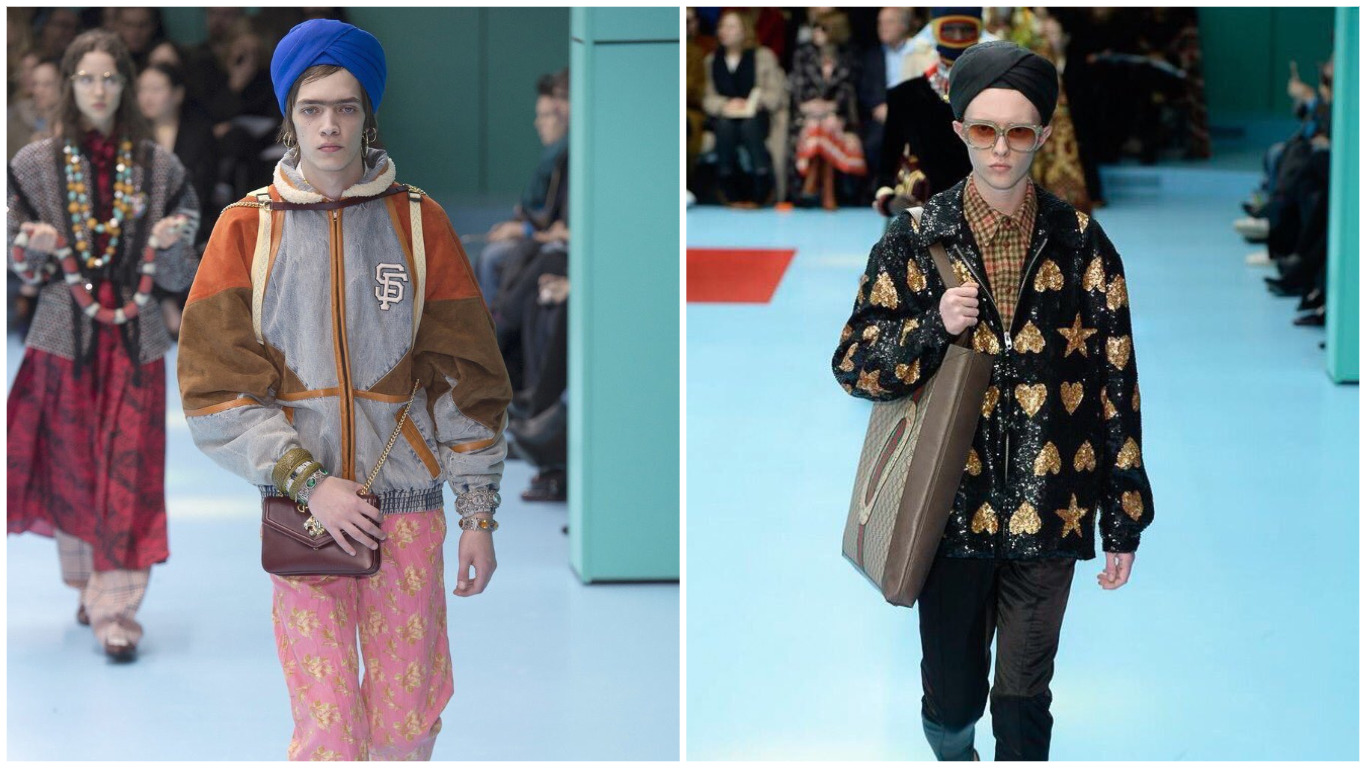 "Gucci's 'Sikh' Collection" © Harjinder Singh Kukreja / Twitter
Gucci renamed the product, but no public apology followed. The incident demonstrated how using religious or ethnic symbols outside their original meaning can be perceived as a form of devaluation — especially in the case of marginalized communities, for whom these elements are part of identity, not a fashion accessory.
From nomadic dwellings to glamping
The traditional yurt — a symbol of the nomadic lifestyle of Eurasian peoples — has become a popular element of glamping (glamorous camping) in the West. What was perceived in Soviet times as a sign of backwardness and was being displaced by a sedentary lifestyle is now presented as an exotic and eco-friendly way to vacation in nature.
Companies in the USA and Europe build yurts for tourists, emphasizing their uniqueness, but often without mentioning the historical, geographical, and cultural context. A more vivid example is the Louis Vuitton boutique that opened in 2022 in St. Moritz, Switzerland. Its structure is stylized as a yurt: a visual image unusual for the Swiss landscape was used to present luxury goods. Commentators noted that in this case, the yurt became merely a spectacular decoration, not referencing the culture and history of nomadic peoples.
Burberry: bag with Turkmen carpet
The fashion industry regularly turns to ethnic motifs, but does not always do so with respect to their origins. One early example is the Burberry 2014 accessories collection, adorned with patterns from Turkmen carpets. These geometric patterns were recognizable, but their cultural origin was not indicated anywhere. In Turkmenistan itself, this event went almost unnoticed — the brand did not emphasize its source of inspiration.
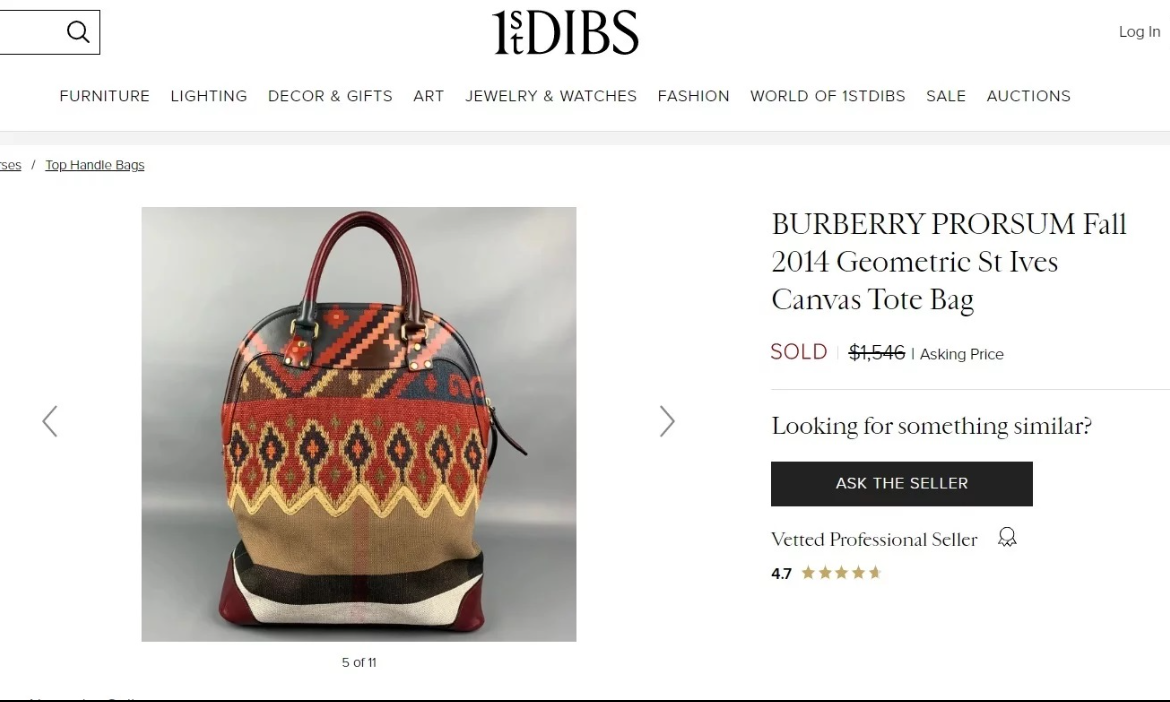 Burberry bag with Turkmen patterns © 1stdibs.com
According to Elmira Gül, commercialization is particularly evident in the case of carpets. Although many patterns have clear ethnic origins, the phrase often heard in collector circles is: "We don't care whose heritage it is—we admire the form, quality, and color." Gül admits: "Personally, I don't relate to such an approach, but unfortunately, it is currently predominant in international practice." She notes that today, on American and European websites, one can find many items with patterns of Uzbek embroidery—from mouse pads to curtains and phone cases.
"Nowhere does it say it's from Uzbekistan. It's just exotic, just beautiful — and it sells. Because there's demand."
Central Asia has also been swept up by the wave of demand for fashionable exoticism. The Gucci 2021 collection used the Kazakh ornament "qoshqar müyiz" (ram's horns), and Vivienne Westwood stylized the Kyrgyz wedding headdress "shökülö". Fashion brands are taking a closer look at Uzbek adras, Tajik chakan embroidery, Kazakh and Kyrgyz ornaments. The question arises: where is the line between inspiration and appropriation?
From a legal perspective, brands are protected: in Kazakhstan, for example, national ornaments are considered national heritage, and their use cannot be restricted. Intervention is only possible if an ornament is registered as a trademark. In Tajikistan, specific elements, such as chakan, are protected by UNESCO, but most motifs remain freely accessible.
How cultural appropriation is perceived in the region
Until recently, the topic of cultural appropriation did not provoke a strong reaction. This can be explained both by the low awareness of the local audience and by an inferiority complex: "if they are interested, it means they respect us."
"People are genuinely delighted when they see the word 'Samarkand' on a bottle of French perfume, when an Uzbek footballer plays for an English club, Bukharan music is heard in foreign universities, and a Russian designer invites a Tashkent artist to his exhibition," noted researcher and art critic Alexey Ulko in a conversation with the editorial board. "This fascination with 'international recognition' often reflects a superficial perception of one's own culture, rather than a deep understanding of its inherent value," he believes.
However, the situation is gradually changing, and in Central Asian countries, calls to independently tell about their culture—without intermediaries—are becoming increasingly frequent. Gül believes that the task of researchers and designers is not only to preserve but also to "unobtrusively show that this is ours, this is part of our culture." And then the market itself will decide who and how will use it.
"Now everyone uses everything — without explanations, without context. That's probably why it's best to develop our own. To bring our native motifs back into the visual environment of everyday life. Let them become recognizable again. Because even our own patterns we often know poorly," she emphasizes.
Cultural Appropriation as an Unfinished Conversation
The reviewed cases show: the topic of cultural appropriation is complex and ambiguous. It intersects issues of power, history, and justice. Major brands, using foreign cultural codes, often cite "inspiration" or "globalization," but admit fault only under public pressure.
Meanwhile, the bearers of these cultures themselves often face reproach. For example, when a Western designer incorporates an African headdress into a collection—it's a fashion statement. But if Franco-Malian singer Aya Nakamura chooses to perform Édith Piaf's "La Vie en Rose" at the opening of the 2024 Olympics, she faces criticism: her style and background allegedly "do not align with French culture" and "Africanize" the image of France.
A similar situation occurred in Russia in 2021, when singer Manizha (Sangin) performed at Eurovision with the song "Russian Woman." The performance used visual references to Russia's cultural diversity, and the singer's stage costume included a stylized Russian sarafan. Manizha herself faced harsh criticism and xenophobic attacks: according to far-right commentators, a Russian woman of Tajik origin had no right to represent ethnically Russian women.
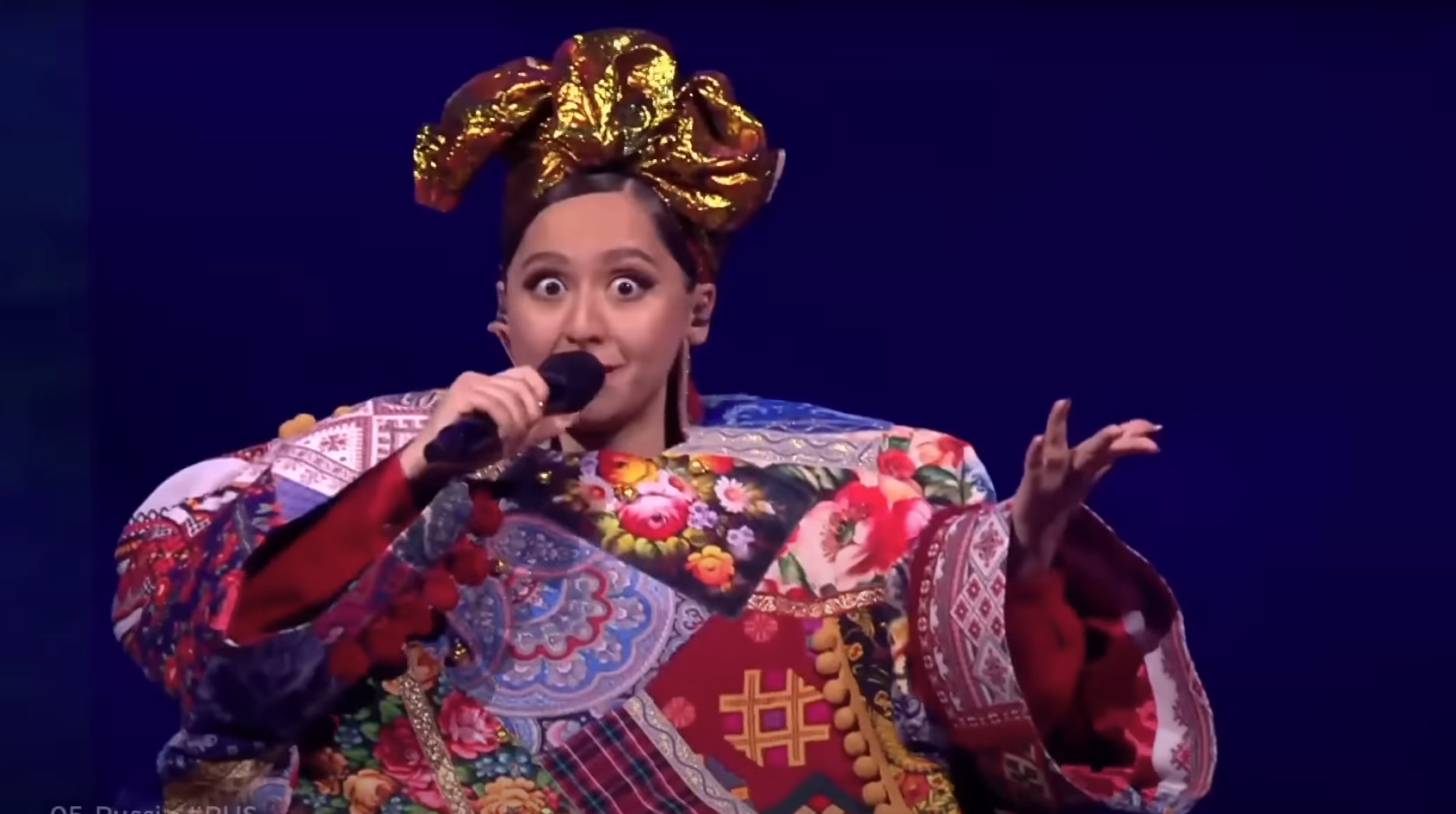 Manizha's performance at Eurovision © Eurovision Song Contest / YouTube
This situation reflects entrenched colonial patterns, where elements of a subordinate culture were borrowed without permission and sometimes forcibly appropriated. Today, the rejection of cultural appropriation becomes a form of protest against the echoes of those times, which persist in fashion and creative industries.
Did you like the story? Subscribe to us on Instagram and Telegram — there's even more interesting content there.

Newsletter
A letter from the HD editors
Once a week, we send the best stories, events, and cultural discoveries from Central Asia.