The first "Stihiya" took place in September 2018 at the "ship graveyard" in Muynak, with the festival conceived as a Central Asian version of Burning Man. Additionally, the organizers, led by Otabek Suleimanov, wanted to draw attention to the tragedy of the Aral Sea.
During Karimov's time, such festivals were unthinkable — even rap concerts were under an unofficial ban. However, the new government saw in "The Element" an opportunity to demonstrate to the world the onset of a cultural thaw: the festival received approval from the Prime Minister, support from the Tourism Agency, and even the UN.
Why Muynak?
Why was "Stihiya" decided to be held specifically in Karakalpakstan? The organizers answer this way: this region is the epicenter of an ecological disaster and a symbol of the Aral Sea's demise. Just half a century ago, Muynak was a thriving port village—now only the rusty skeletons of ships remind us of that. According to Suleimanov, the post-apocalyptic setting makes the event vivid and media-prominent.
The festival began attracting tourists, local residents gained opportunities to earn income, and officials started working more actively on regional development.
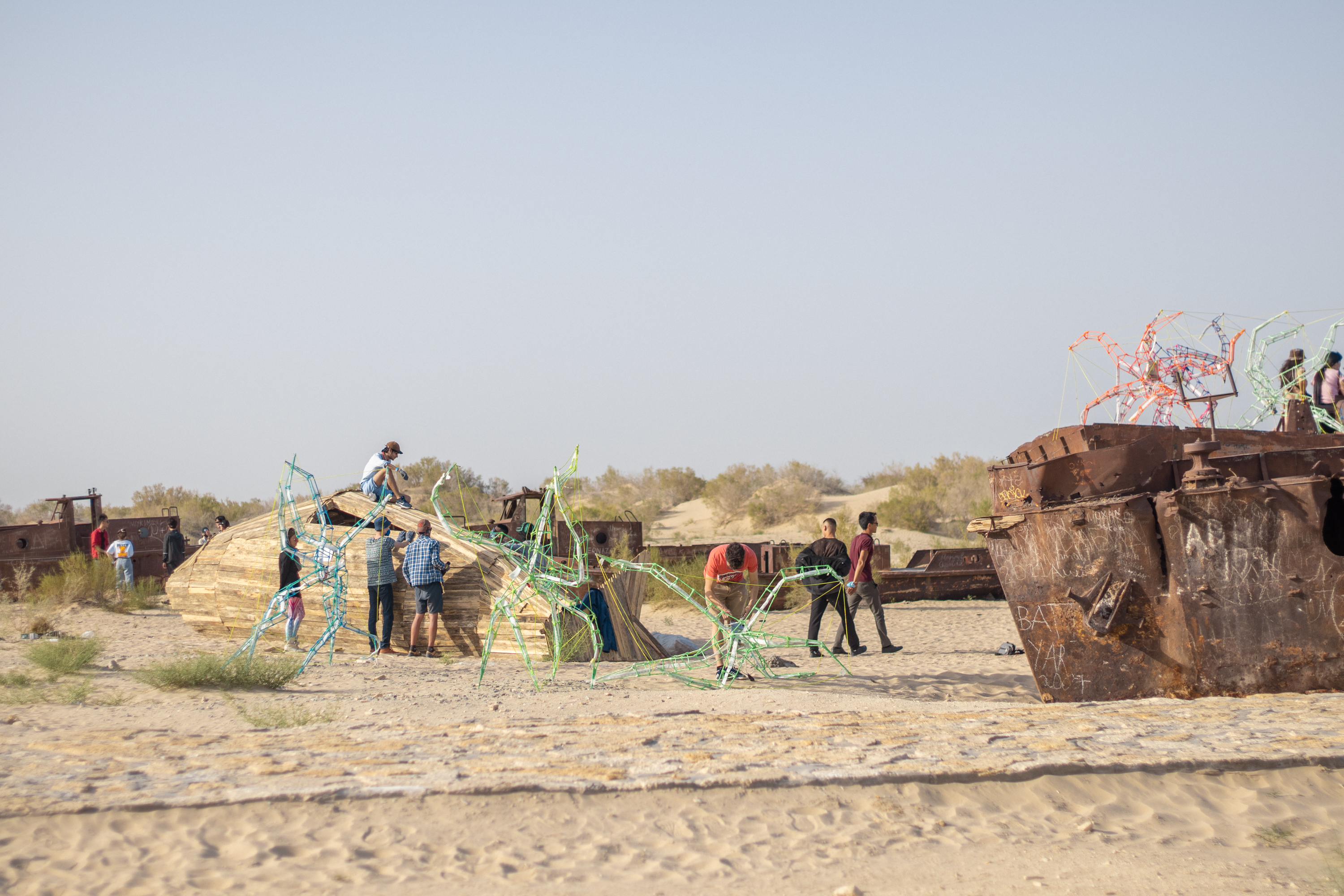 The "Elements" Festival in 2021 © Photo: Boris Zhukovsky
The festival began to change the perception of Karakalpakstan: residents of large cities, who previously considered Muynak a godforsaken place, started coming and rediscovering it.
"I haven't been to 'Stykhiya' myself yet, I'm planning to go in the coming days — I'll see how it is. For now, I have a neutral attitude. But I think that overall the festival somehow helps the region. Primarily — in developing domestic tourism. Plus it's good that they've started doing some educational programs, at least something for young people," says Kamal Uteniyazov, a Karakalpak blogger and author of the podcast @gojeproject.
In 2023, after protests in Karakalpakstan, the festival was moved to Bukhara. The organizers explained the decision to relocate as a sign of respect for the memory of those who died during the protests. However, it was in Bukhara that the trial of the protesters, including the main defendant in the case — Daulenmurat Tajimuratov, took place. Activists and residents of Karakalpakstan found this logic strange. In 2024, the festival was returned to Muynak, with the announcement accompanied by the hashtag #BackToMuynak.
What do local residents receive?
Suleymanov and the moc team claim that thanks to the festival, money is also coming into the region. Indeed, owners of guest houses, taxi drivers, and food vendors can earn money from visitors to "Stikhiya" — but the positive economic effect does not extend to everyone. Local beneficiaries complain that there are too few tourist attractions.
"We need more festivals like 'Element' and Rally Muynak. They bring tourists, which means income. If loans were more accessible, we could open museums, restaurants with local cuisine, organize hot air balloon rides. I'd like to add music, entertainment, but we need support," says an entrepreneur from Muynak.
The festival team strives to invite representatives of the local music community as well. Beatmaker and DJ KOKEBARNBLED from Muynak told HD magazine that starting this year, Karakalpak performers have begun to be invited to "Stikhiya". "They simply selected me for the lineup, and that means a lot to me. I write techno in a Karakalpak style—it's my work, my sound. I've spent so many sleepless nights, invested so much nerve and effort. I'm very happy to be performing at 'Stikhiya'," — he shared.
"Now I want to fully switch to techno with a Karakalpak accent. It's good that since this year they've started inviting Karakalpak DJs. I would like them to continue inviting [artists] of original music — so that our names and our rhythms are heard here."
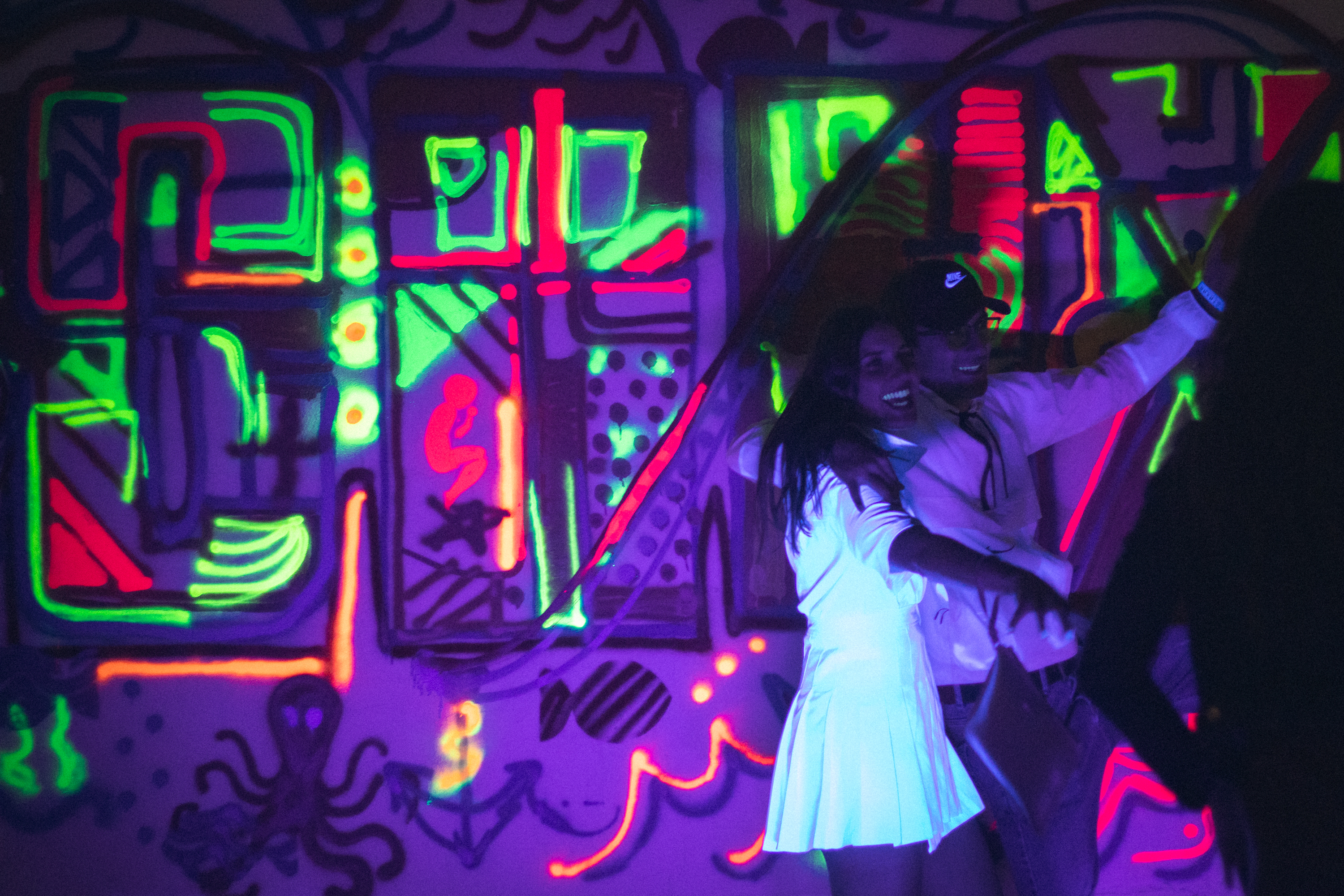 "Stikhiya" Festival in 2021 © Photo: Boris Zhukovsky
The celebration departs, the disaster remains
The organizers position "Element" not as an ordinary rave, but as a platform for dialogue about ecology. However, behind the loud slogans — like "returning the region to the map" — it's currently difficult to discern real mechanisms for supporting the Aral Sea region. "Element" turns Muynak into an exotic stage set for a party: people take photos here, dance until morning, drink, and wear things that in other regions of the country would cause a negative reaction from locals.
"Element" is not suitable for our region. We cannot dress and dance so openly here. I attended the first festival, but we couldn't dance there. Their music is strange. People are half-naked, drinking, smoking — this has absolutely nothing to do with ecology. The festival doesn't solve any problems. It's just entertainment on the bones, nothing more," — says a resident of Muynak, who requested anonymity.
The festival team constantly urges visitors to maintain cleanliness, but the Muynak residents complain that they themselves have to clean up after the influx of guests. " They leave trash behind, and we have to collect it," — added the editor's interlocutor.
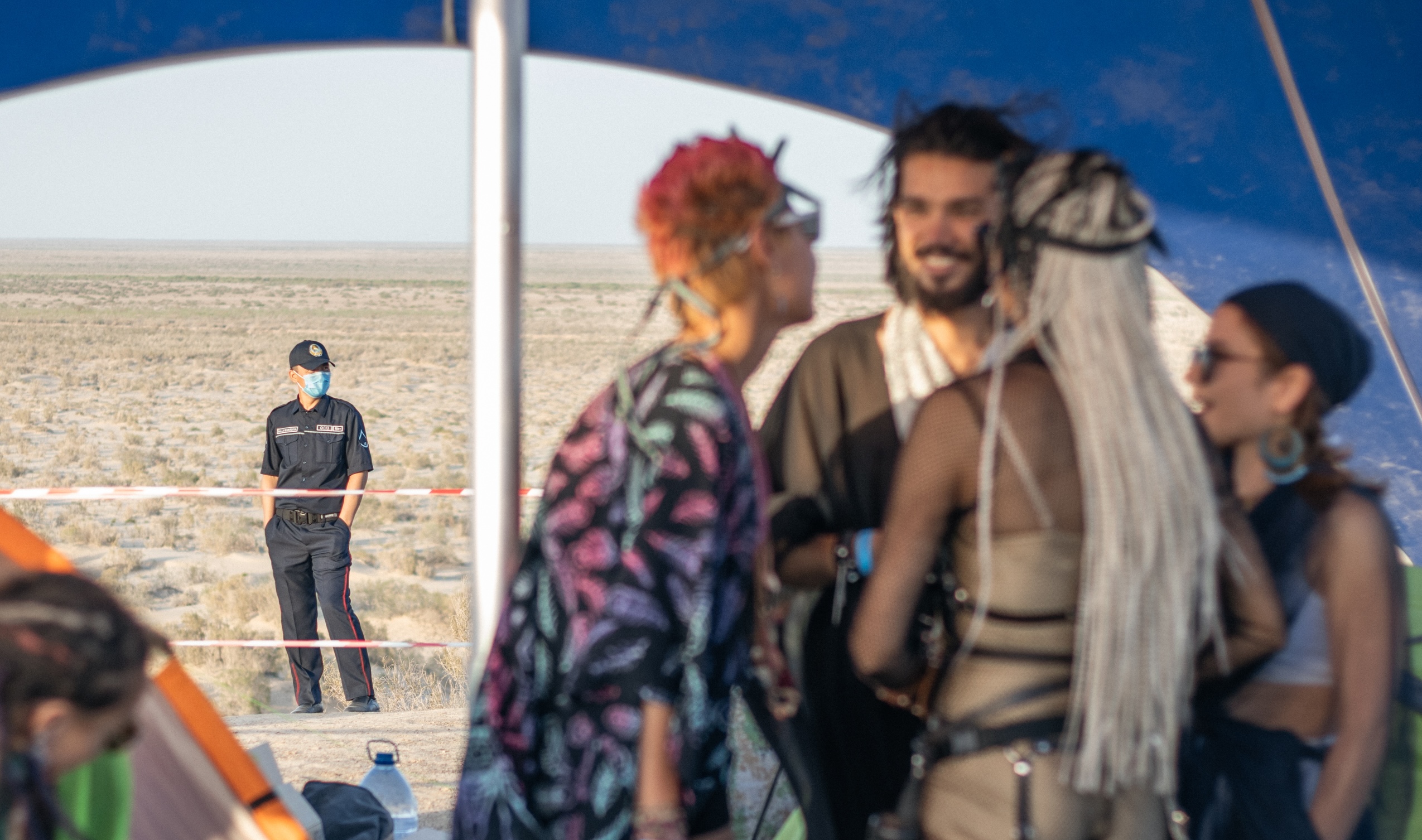 Festival "Stikhia" in 2021 © Photo: Boris Zhukovsky
An equally important question — is it ethical to organize entertainment events where the largest environmental disaster of modern times occurred? And will the Aral Sea region become a platform for apocalyptic safari?
Washington Post called "Stykhiya" an example of "disaster tourism". In an article about the first season of "Stykhiya," the British publication The Calvert Journal noted that photoshoots against the backdrop of the dead sea turn the Aral tragedy into a backdrop for Instagram posts. Sustainable tourism expert Tom Millington believes that locations for disaster tourism are most often chosen by external players, with local residents having virtually no say.
"Stikhiya" and other similar projects — for example, "Rally Muynak" — reinforce for Karakalpakstan the image of a region where disaster is aestheticized for the sake of an external audience. Races on the bed of a dead sea and raves among rusty fishing schooners — all of this looks sharp, exotic, and somewhat apocalyptic.
Muinak has indeed been put back on the world map—however, there is still no water, work, or prospects there.
In Karakalpakstan, but not for Karakalpaks
Formally, the festival takes place in Karakalpakstan — but clearly not for its residents.
A significant portion of the audience for "Stihiya" — are young (20-35 years old), middle-class individuals from Uzbekistan and other countries, interested in electronic music and frequent travelers. All of them will pay 750 thousand soums for a ticket, and attending "Stihiya" will require additional expenses for travel, food, accommodation, and in some cases, a tour package.
The cost of a festival ticket is comparable to the weekly, sometimes monthly income of an average resident of Karakalpakstan. With this money, you could go seven and a half times to a traditional feast or buy a month's supply of groceries for the whole family. Even the most budget-friendly trip to Muynak from a remote district of the republic (by bus or car, with one overnight stay and meals) can "eat up" a significant part of this sum. Meanwhile, the average monthly income in Karakalpakstan (in Nukus) — is around 4 million soums (about $300–350).
This class distance creates a sense of alienation. People from the outside, more prosperous world come to listen to electronic music and look at the dried-up Aral Sea. The local residents act as observers and service personnel—but not as equal participants in the celebration.
There is a sense that people come to "Stikhiya" not for information about the Aral Sea disaster, but to experience a limited space of freedom away from the ever-watchful eye of the state. There are no alternative events in the country, just as there are no regional cultural initiatives for youth. In Tashkent, music festivals are often cancelled, even those organized according to all the rules.
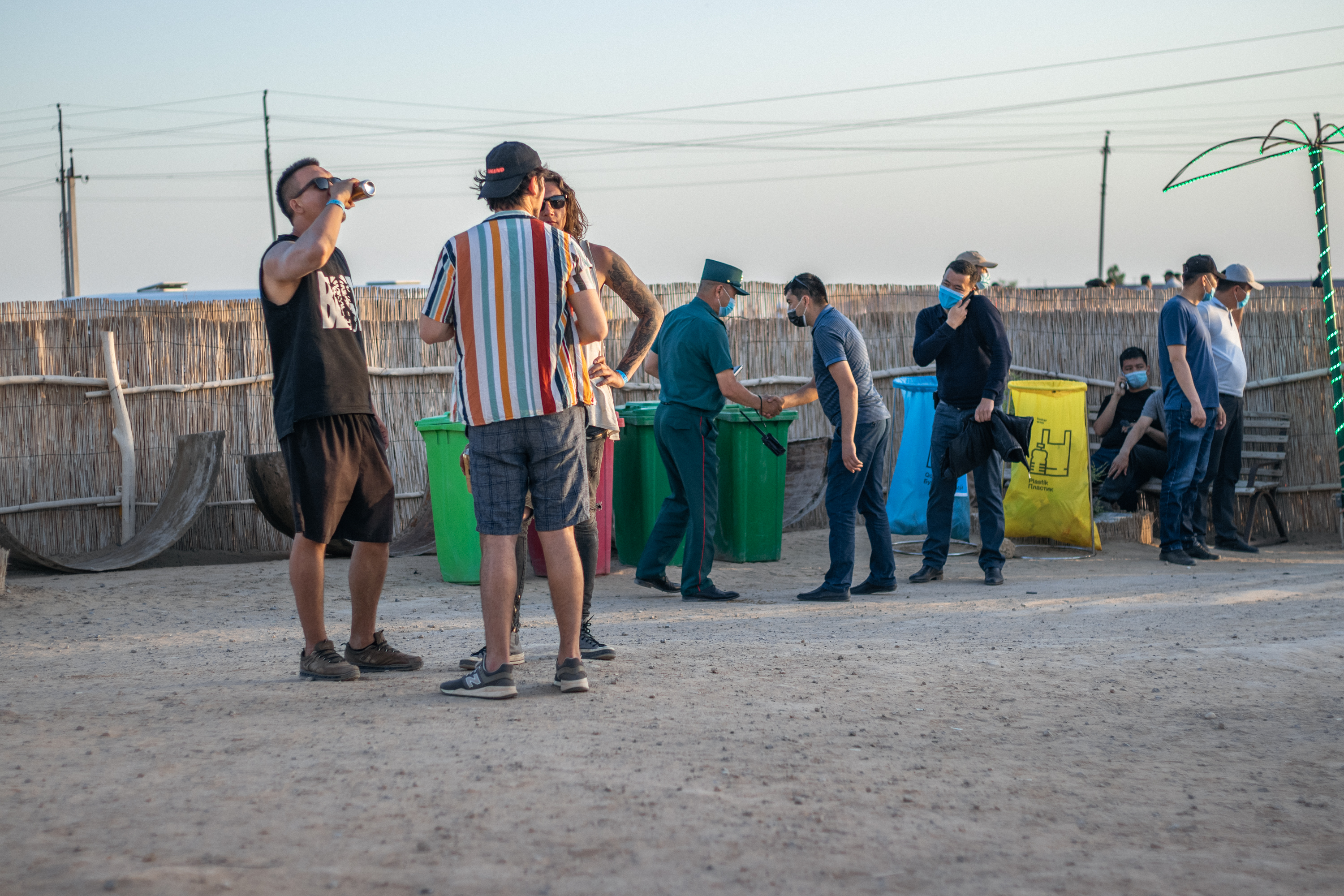 "Stikhiya" Festival in 2021 © Photo: Boris Zhukovsky
Perhaps Karakalpakstan is perceived as a remote, inconspicuous, and in its own way free territory, where one can arrange things that in other regions, especially in Tashkent, would lead to administrative prohibitions. Something similar has already happened with the Savitsky Museum in Nukus: it was there, hundreds and thousands of kilometers from the republican and union capitals, that the richest collection of forbidden avant-garde art was assembled, which now delights the entire art world.
By the way, Karakalpak ecologist Yusup Kamalov claims that the rusted boats, barges, and tugboats that once sailed the Aral Sea were deliberately brought to Muynak ahead of the visit of then UN Secretary-General Ban Ki-moon in 2010. So the "ship graveyard," which symbolizes the death of the Aral Sea and serves as the backdrop for performances by participants of "Stikhiya," is not a graveyard or evidence of a tragedy, but a makeshift memorial.