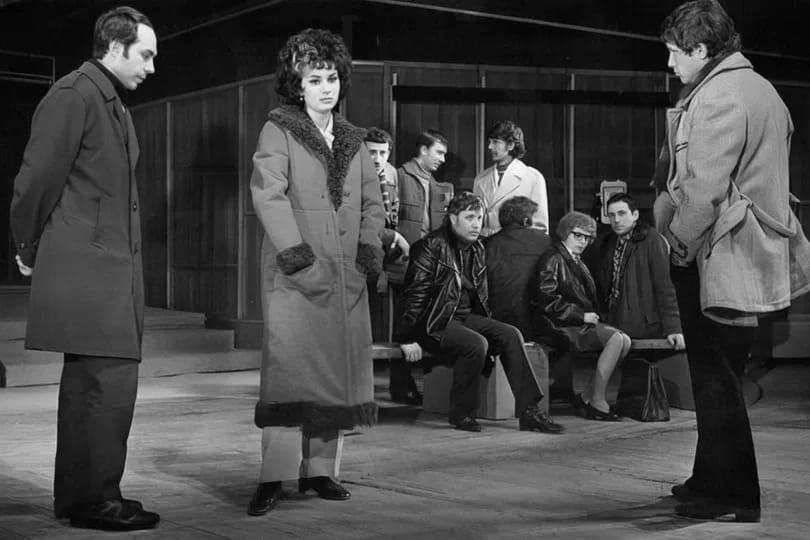
— A female cinematographer always sounded a bit paradoxical. Nevertheless, you graduated from the cinematography department of VGIK. Did you ever feel the desire to be in front of the camera instead of behind it?
— Of course, in our youth, everyone dreams of being an actress. But I consciously chose the camera. At that time, I was the only female cinematographer across five faculties of VGIK. There were fewer female cinematographers than male ones — but they existed. It's enough to recall the brilliant Margarita Pilikhina. I am also personally acquainted with the cinematographer from Belarusfilm, Tatyana Loginova. Now everything is different: the equipment has become lighter, more accessible. But back then — it was an exception. But about myself, I can say that I am the first female cinematographer from Central Asia.
— How did it all start?
— I left Parkent and went straight to the Faculty of Philosophy at Moscow State University. Funny, isn't it? A girl from a small town, with an accent, no connections or support. At that time, there was a system: one or two people were admitted to "national" spots in capital universities under a quota. I didn't get in the first time. I didn't get into anywhere in Uzbekistan either. But leaving was necessary — not out of ambition, but out of a need to break free.
Didn't get in — so, as is customary with us: marriage. Goodbye, dreams. But then my first angel appeared — a girl from central Russia, smart, an excellent student, and we are still friends to this day. She helped me with my essay. Although in the end neither of us passed, she said: "I have relatives who study at a technical school..." And I learned about the system of cultural education schools, which trained leaders for photo and film clubs, theater and dance groups, and club establishments. That's how I ended up in Vladimir.
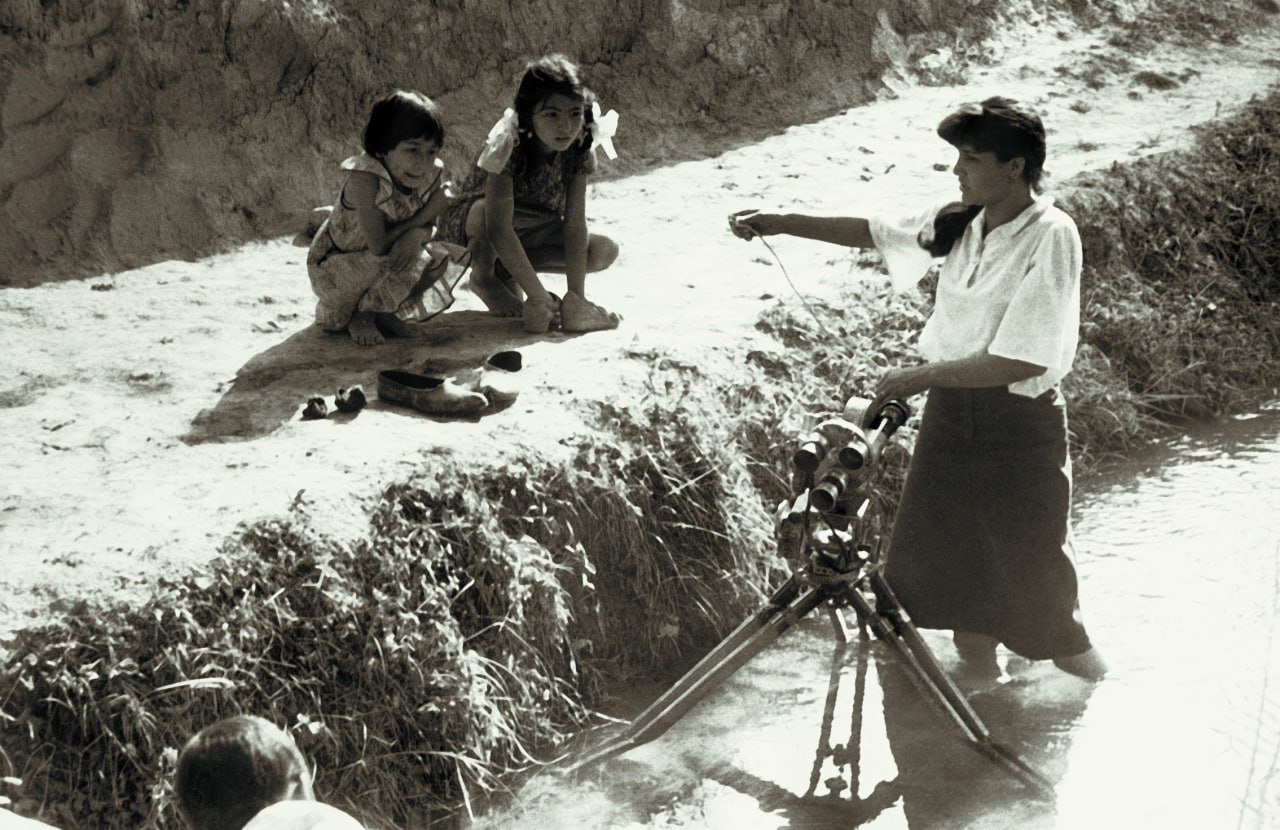
Umida Akhmedova during the filming of her student film. Archive photo
That's where I first picked up a camera and realized: this is it, my calling. My classmates were already finishing university, and I was just starting, but I knew: that's where I belong, behind the lens. To get into the cinematography department, you had to pass a photo competition. For the first two years, you work specifically with a still camera: you learn composition, lighting, you do reportage. But not every cinematographer is a photographer. Because it's impossible to combine a film set and an exhibition-level of photography. But I do combine them. I shoot films and create photo exhibitions. No one pays me for this — I am a free person. And if somewhere it gets recognized — that's a gift from fate.
For example, our video art "Hostages of Eternity" (2007), filmed together with Oleg Karpoff, was acquired by the Stedelijk Museum in the Netherlands. This was an important recognition.
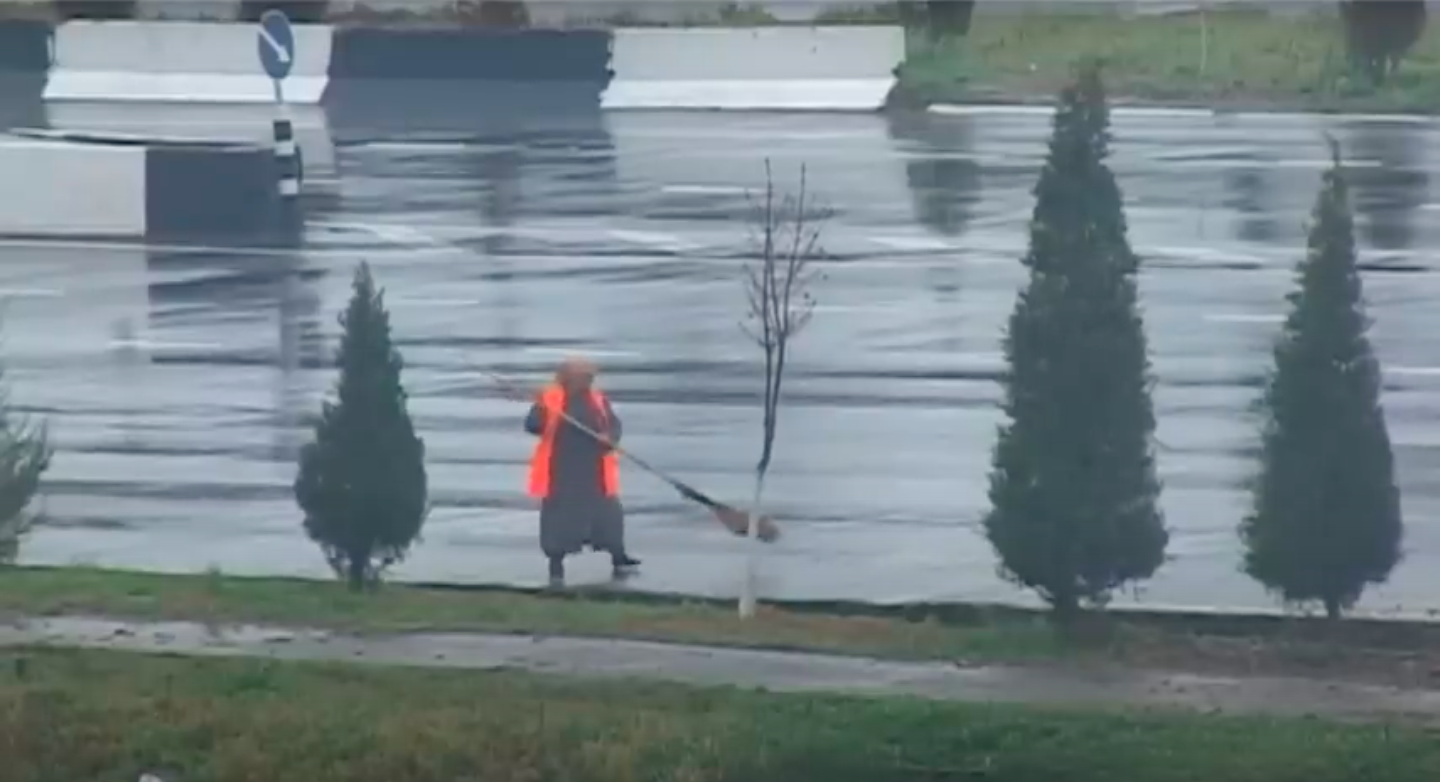
Frame from the film "Hostages of Eternity"

Since then, I've been thinking: I really do have angels. And there was another one — already married, in a figurative sense. I got married late, you see — by local standards, at 30 years old.
— But you didn't just get married – you created one of the most famous creative unions in the country. How did you meet Oleg Karpov?
— We met at the "Uzkinochronicle" film studio. I immediately showed him my course film. And when it was time to shoot my pre-diploma work, Oleg... brought a battery and simply kicked the director off the set. He said: "Leave, we'll make a movie." And we did — a chamber feature film based on my sister, Masuma Akhmedova's story "The Unsent Letter." Later, that very director said: "Umid and I made a film." Well, let it be so.
From the very beginning - with coursework and diploma projects - we experimented: combined filming, special effects, rehearsals for dramatic scenes. I studied in a drama workshop and was sure I would make feature films. But life led me to documentary filmmaking. That's how about twenty films came to be - and each of them became a part of me.
As for our creative partnership — yes, we are co-authors. He is the director of our films, the ideas are shared, and the camera is in my hands. That's our particularity: I'm the one who approaches people with the camera. Over time, we realized something important — if the person in front of the camera trusts you, a delicate thread of sincerity emerges. And any extra presence on set can break that connection.
Can art be offensive
— Someone called your works honest and authentic. But some people took them as an insult…
— Yes. They often said: "Don't air your dirty laundry in public." As if "everything is fine with us." But things are never all fine. The ability to criticize is what maturity is. Without it, it's just a show. Problems exist everywhere: in Sweden, in Denmark too—just different ones. Depression, loneliness, suicides.
So speaking about pain is not slander. It is honesty. That is what love for the homeland is.
I don't see that much has changed. For example, the film "The Burden of Virginity" was made together with my husband, Oleg Karpov. The title was his idea, but it was precisely this title that became a red rag against the backdrop of the persecution against me at the time. In Uzbek, 'burden' is yuk, a load. A metaphor. But many, without even watching the film, were outraged: how can you call virginity a burden? They criticized it without even seeing the film, where it is discussed quite delicately that blood is not an indicator — this is explained by medical professionals.
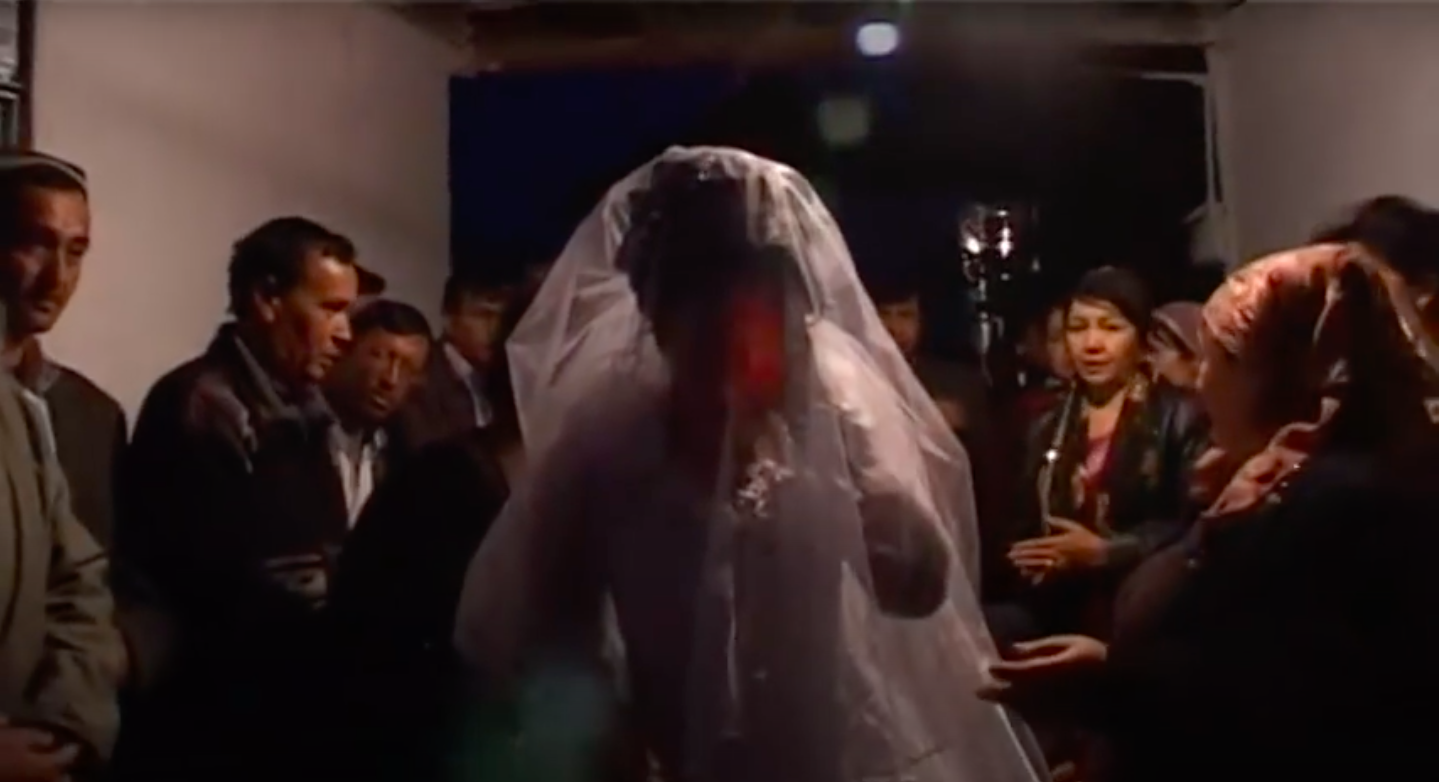
Still from the film "The Virginity Burden"

I explained: it's about the darkness that infiltrates life under the guise of care. About how in most Muslim—and not only!—countries there is a tradition of checking a bride for virginity. The film doesn't promote anything—it shows how young people are forced to live lives not their own.
Once upon a time, girls were indeed married off at 13–14 years old. They performed ritual scenes of coming of age, not understanding what awaited them. Perhaps, in ancient times, because young people, especially girls, were married off early, these peculiar "performances" were arranged in the rituals. The fact that a relative or close woman would remain to witness the innocence.
A film about the need to be careful so that young people (not just girls!!!) don't "pay for the samsa they didn't eat" (Yemagan somsaga pul to'lanmaydi — Uzbek proverb). I filmed all of this — so I wouldn't have to explain to everyone what "the burden" means. People say: "But it's purity, honor…" And I answer: you can get married fifty times — and still talk about virginity. But that's not the point. And it's pointless to argue about it. I don't make such films anymore — not out of fear, but because I myself have changed.
— The discussion of the film on television caused a stir...
— Yes, it was unpleasant. A criminal case was opened against me, and my lawyer said: "While the investigation is ongoing, you can't discuss it." But then they gave the signal—and it all started. In one of the programs, a woman says: "Let's see what kind of film this is..." It was a very difficult moment. And I don't want to go back to it. I don't want people to fixate on this. Let the young people figure it out themselves. That's all.
— How do such ideas come to you? For example, the film "Angel... and Her Two Husbands."
— This was in 2009. We filmed the story of the poet Rifat Gumerov's family. At the center is his wife, who brought her former and current husband under one roof. Back then, everything was different. These are— intelligent people who maintained respect for each other. Today, I'm afraid the public would perceive it too literally: like, a woman with two husbands...
— What is your position as an author? You're not just an observer, are you?
— Of course. It all depends on the film. In "To Live and Die in Samarkand", I wanted to show how cultures intertwine. Samarkand is a city with history; Petrov-Vodkin, Benkov... lived there, each leaving their mark. Sometimes I became not just a witness—but a participant, a friend to the characters. The same in "To Live and Live in Fergana".
Polyphony of "Women's" Art
— The central theme in many of your works is the woman — her pain, inner world...
— Yes, but not because it has become fashionable. I am a woman, and this is part of my life. I view the world through this experience.
Every home has a skeleton in the closet. One project close to my heart is the photo series "Mothers-in-Law and Daughters-in-Law". It's about pressure, about silent violence, about women driven to despair. In small communities, the most conscientious and gentle ones suffer. The strong one "devours" the weak one. Not always, but often.
The series includes two portraits: a young bride and an older woman. We get married young. At the wedding, the dowry is displayed—kurpachis, chests. My friend from Russia was surprised: "What a wealthy bride!" But this isn't necessarily wealth—it's a ritual, a tradition. Behind it lies an entire system.
They marry not a person, but a clan. They look to see, "is she one of ours." Even if she studied abroad — the mother-in-law decides on the daughter-in-law.
Life begins. And sometimes - survival. It was important to show not just the wedding, but what comes after. In my concept, the mother-in-law is a key figure. There was a case: a jury trial, and a man says - "I'm getting a divorce because my mother doesn't like her." This is not a fabrication.
I made a film "Toxicomaniacs" — about children sniffing glue. A woman who works with them said: many became homeless due to broken marriages. The mother-in-law decided: "she's not the right one."
— Your works are called feminist...
— Feminism is often criticized. But it can be different. In Scandinavia, women have achieved a lot — thanks to the struggle. In Norway, the first women's organization appeared as early as 1884. Of course, there are problems everywhere. But the level of rights and respect is the result of efforts.
Sometimes it all resembles scenes from movies. In Hitchcock's "Psycho" — the mother as a ghost. In Jodorowsky's "Santa Sangre", a mother without arms orders her son to kill. This is a metaphor — fusion, an umbilical cord that was never cut. Freud wrote about this too.
So when people criticize feminism, I say: you're mistaken. It's not aggression — it's defense. The ability to speak.
But my film "Men and Women in Rituals and Ceremonies" is not feminist at all. It simply shows the difference in behavior. It's an observation. Not an accusation.
— Do you think the female voice in art sounds different today?
— Nowadays it's trendy to talk about "women's cinema," about women in art. This is indeed a trend. But behind it lies both authenticity and superficiality. A woman feels differently — she has a different rhythm, a different perception, a different nerve. This is scientifically proven: men and women use different hemispheres of the brain. That's why women's art can be especially sharp, sensual, unconventional.
I admire those who combine talent with inner strength. For example, Zaha Hadid — her buildings breathe audacity and harmony. Or directors — Kira Muratova, Lana Gogoberidze. This is not just "women's" cinema. This is real cinema. Profound, powerful. Why do we even separate it by gender?
Yes, we need to talk about the "female voice" — when we want to support those who have not been heard. But turning this into a slogan means devaluing it again. Art is not "female" or "male." It is either alive or dead.
Recognition – "theirs," non-recognition – "ours"
— What does recognition mean to you?
— It exists — abroad. They feel our subtext there, read between the lines. But true recognition is at home. When the perspective changes, the mindset, even for a few — that is already a victory.
After the trials, I thought I wouldn't be able to work anymore. But colleagues from Nizhny Novgorod invited me. I returned to creativity. I gathered photos taken since the 2000s — Baku, Tbilisi, Kyrgyzstan, Uzbekistan, Russia… The entire post-Soviet space is one. Somewhere — a shot from Baku, somewhere — from Tbilisi, and it's not easy to tell the difference. We share a common fate. "Friendship of Peoples" — today it's a memory. But it is ours.
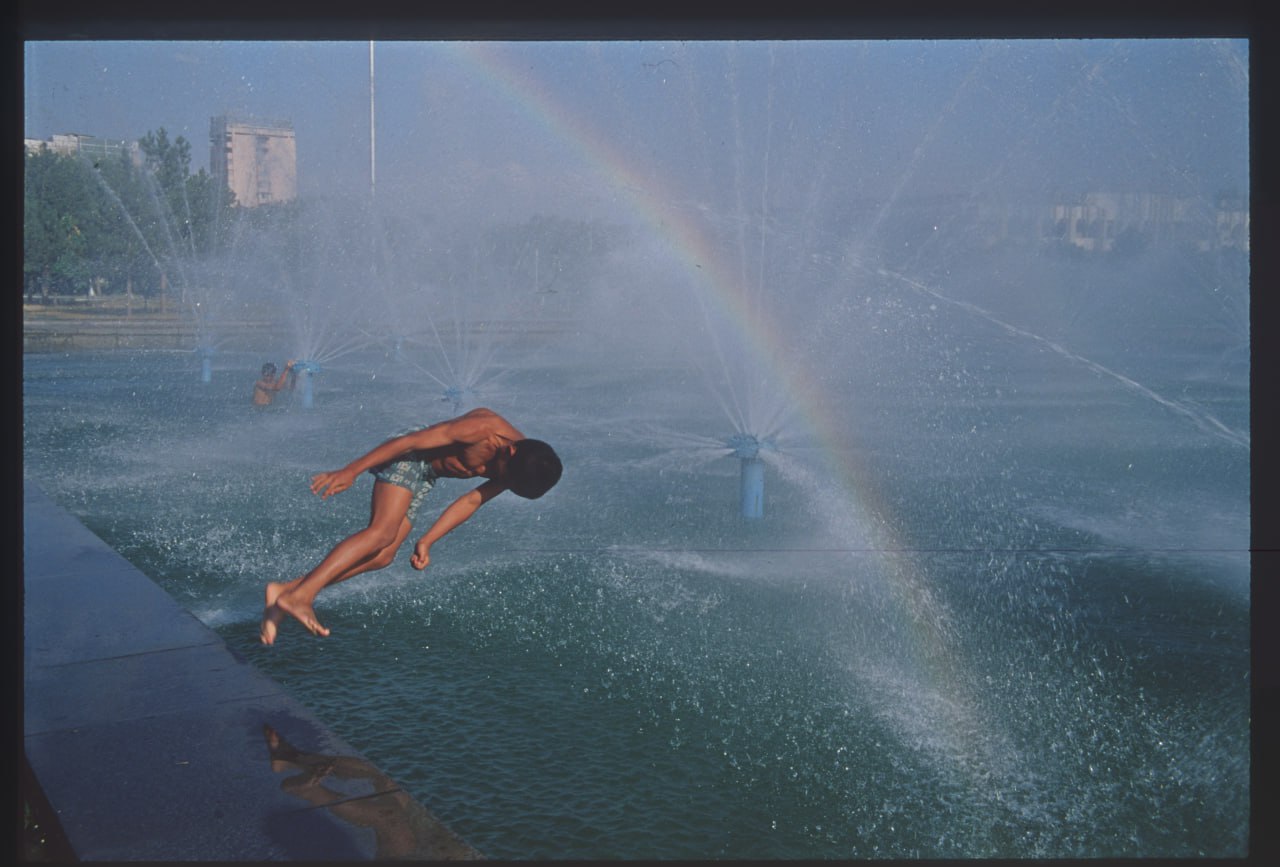
I was capturing life. The photograph "The Heat", where children are jumping into a lake, became the "photo of the day" in The New York Times in 2009. A simple, authentic scene. The children are in the moment, in the water, in childhood.
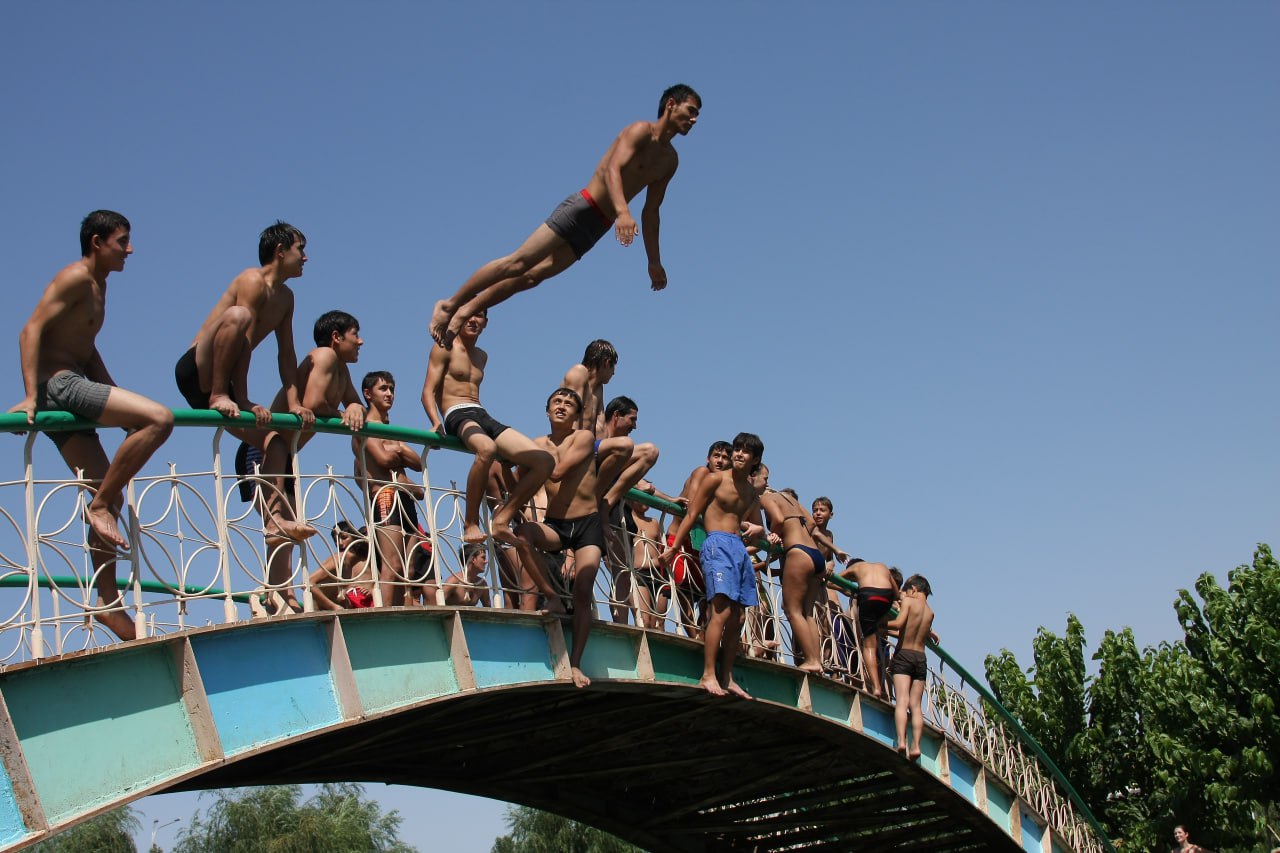 Photo: Umida Akhmedova
"Heat". Photo: Umida Akhmedova
I am happy that I started working during the perestroika era, when there was no need to lie.
When Gorbachev "opened the window" — he himself didn't know what had begun. Then another time came, and I left the film industry. But I returned — with a camera.
A cinematographer rarely can be a photographer — especially in big cinema. But I managed. Photography became my language.
Then came the stage of searching. Fashion emerged, a visual image. We collaborated with fashion designers, searched for style. But I said: we shouldn't imitate Vogue. We don't have the industry. We need to create our own. And the photos turned out — special, powerful.
In 2004, I received the Grand Prix in the "Contemporary Photography" category at Press Photo Russia – 2004. For an honest, documentary shot of a circumcision ritual. For the truth.
— Which award stands out most vividly in your memory?
— Probably the most memorable one was in 1985, for the 40th anniversary of Victory. At that time, my black-and-white photograph "Loneliness" won second place in the all-Union competition. It was exhibited at the VDNKh in Moscow and awarded a silver medal. Later, it was included in the album "The Poetry of Light and Shadow. The Photographic Art of Modern Uzbekistan".
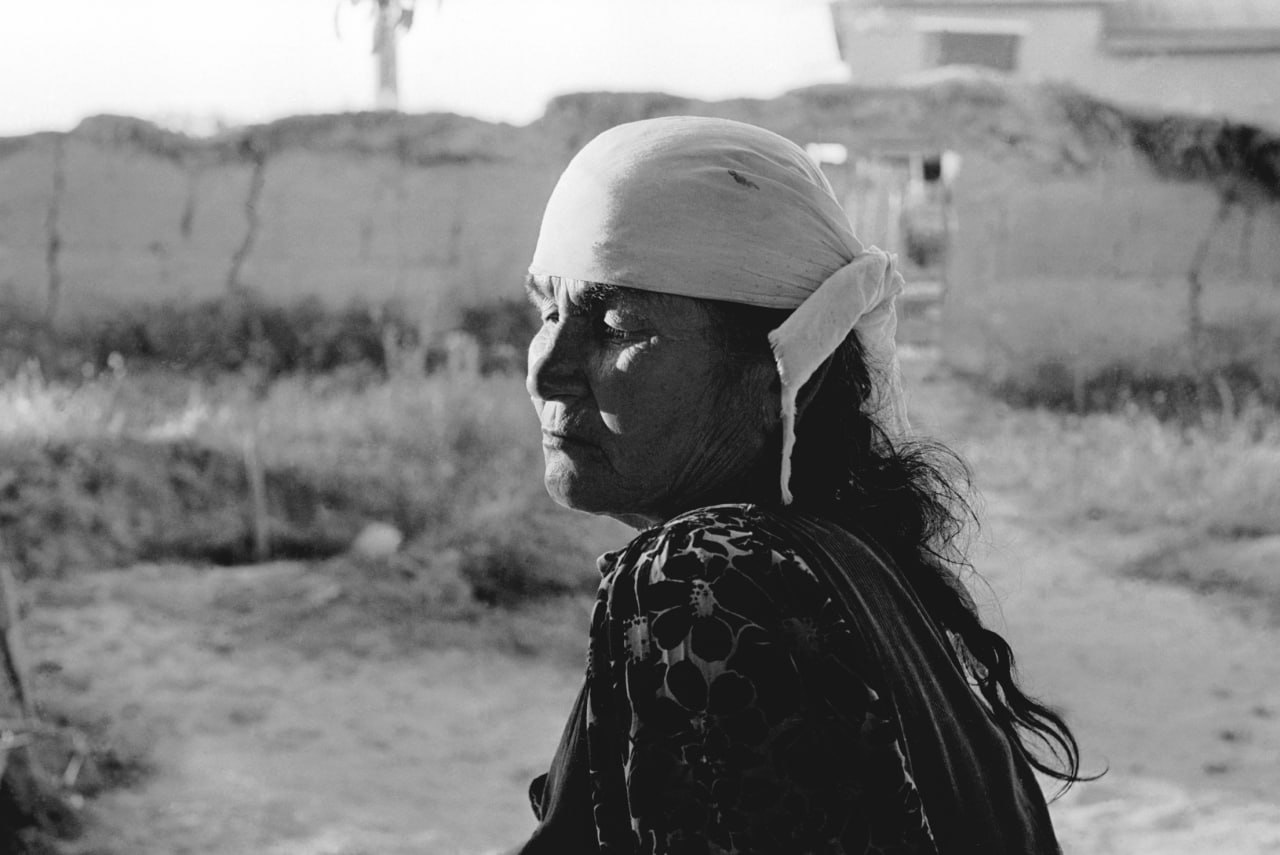 Photo: Umida Akhmedova
"Loneliness". Photo: Umida Akhmedova
But overall, I take awards calmly. Maybe I was just lucky. Or maybe I have angels. I believe in them. Life has been difficult — illnesses, hardships… But it's as if someone was guiding me.
— In 2016, you received an international award — for courage?
— Yes, it was the Oslo Freedom Forum award. It has been presented since 2012. The first laureate was the Chinese artist and human rights activist Ai Weiwei — he was under house arrest at the time. I was nominated together with Pavlensky, but then I was the only one left. And I became the first laureate from Central Asia.
The award is named after Václav Havel — a writer, playwright, and President of the Czech Republic. It is given to those who remain true to themselves, who create — no matter what.
My speech was broadcast live, my son took a screenshot of the stream — it was going out to the whole world. At the end, I read lines from Pasternak, from his Nobel Prize acceptance speech:
I'm lost like a beast in a pen./ Somewhere there are people, freedom, light,/ But behind me the noise of pursuit,/ For me there is no way out…
I read them because that's exactly how I felt — cornered. But not broken.
After the trial, my films became sharp
— One of the most high-profile topics associated with your name is the trial where you were accused of defamation. In the end, you were still convicted, right? Although, as far as I know, you were released right in the courtroom?
— Yes, we were not taken into custody. But the case was serious. After 2005, a wave of pressure on independent activists began in the country, especially those working with gender issues. The programs were supported by international foundations, including Soros and the Swiss embassy. The recent attempts to 'strangle' this movement were particularly aggressive.
Close directly — impossible. So they started looking for a weak link and found it in the authors. For example, a girl wrote an innocent article: "I put on a wedding dress... And what's next?" — and criminal cases were opened against everyone. Our films became "demonstrative" — they were chosen as a target.
— Have you tried to appeal the decision?
— The lawyer filed a complaint with the Supreme Court. Formally, the verdict was not overturned, but the criminal record is expunged over time. Although the internal scar remains. There was support, but mainly—abroad. Pickets were held in Paris, London, Moscow, and Bishkek. In Moscow, well-known photographers and documentary filmmakers in traditional Uzbek national dress came out with posters saying "Uzbekistan! Be proud of Umida!" and "Uzbekistan, do not return to the Middle Ages!" and with photographs from my photo-album book, which was the reason for the trial. But in Uzbekistan—silence.

Colleagues in Moscow and Paris printed out photos and went to the Embassy of the Republic of Uzbekistan. And I... was in shock. The support of loved ones, friends, colleagues — that's what saved me. I published case materials on social media. Everything was open.
— You mentioned a book…
— "Women and Men: From Dawn to Dusk." It contains over one hundred photographs. One of them—a girl in a room with rags—was declared "slander." I was convicted under Article 139 of the Criminal Code of the Republic of Uzbekistan. At that time, it meant: a fine, community service, restriction of freedom.
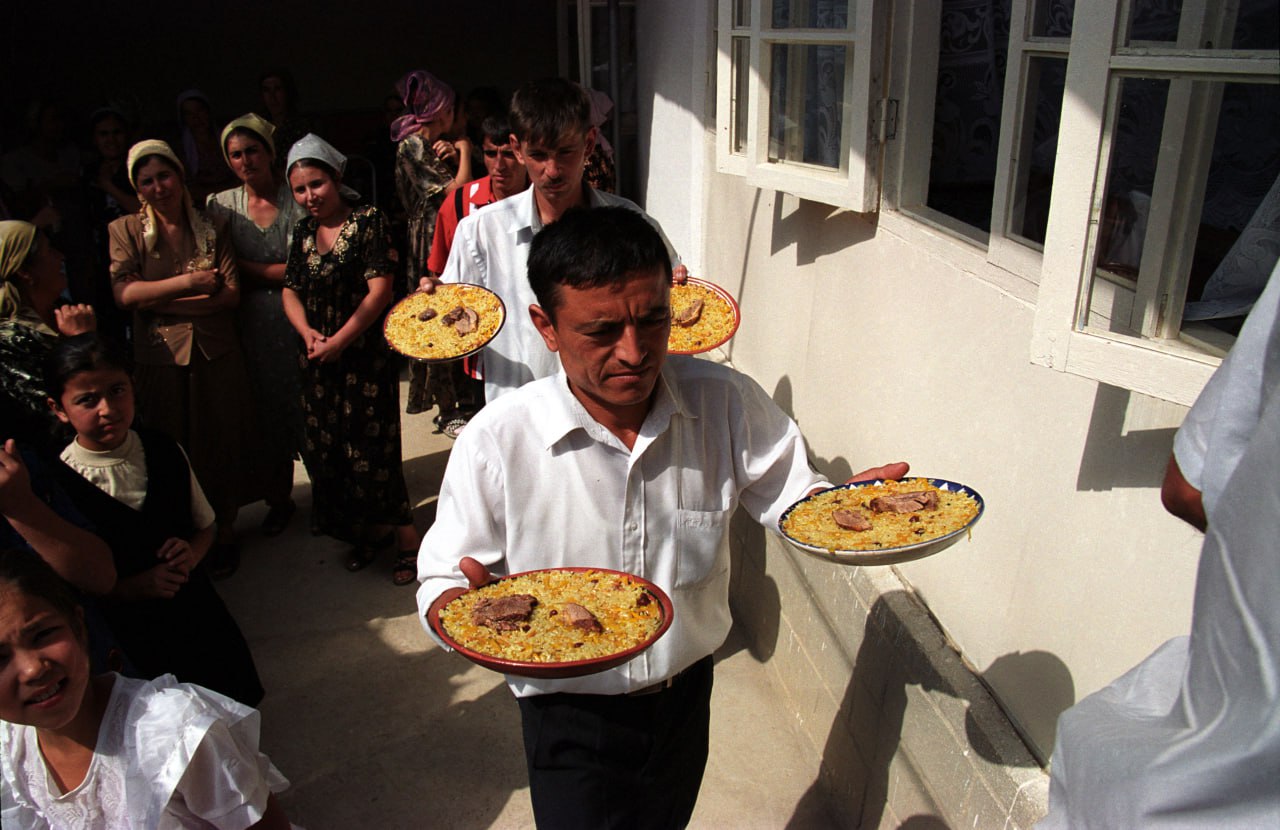
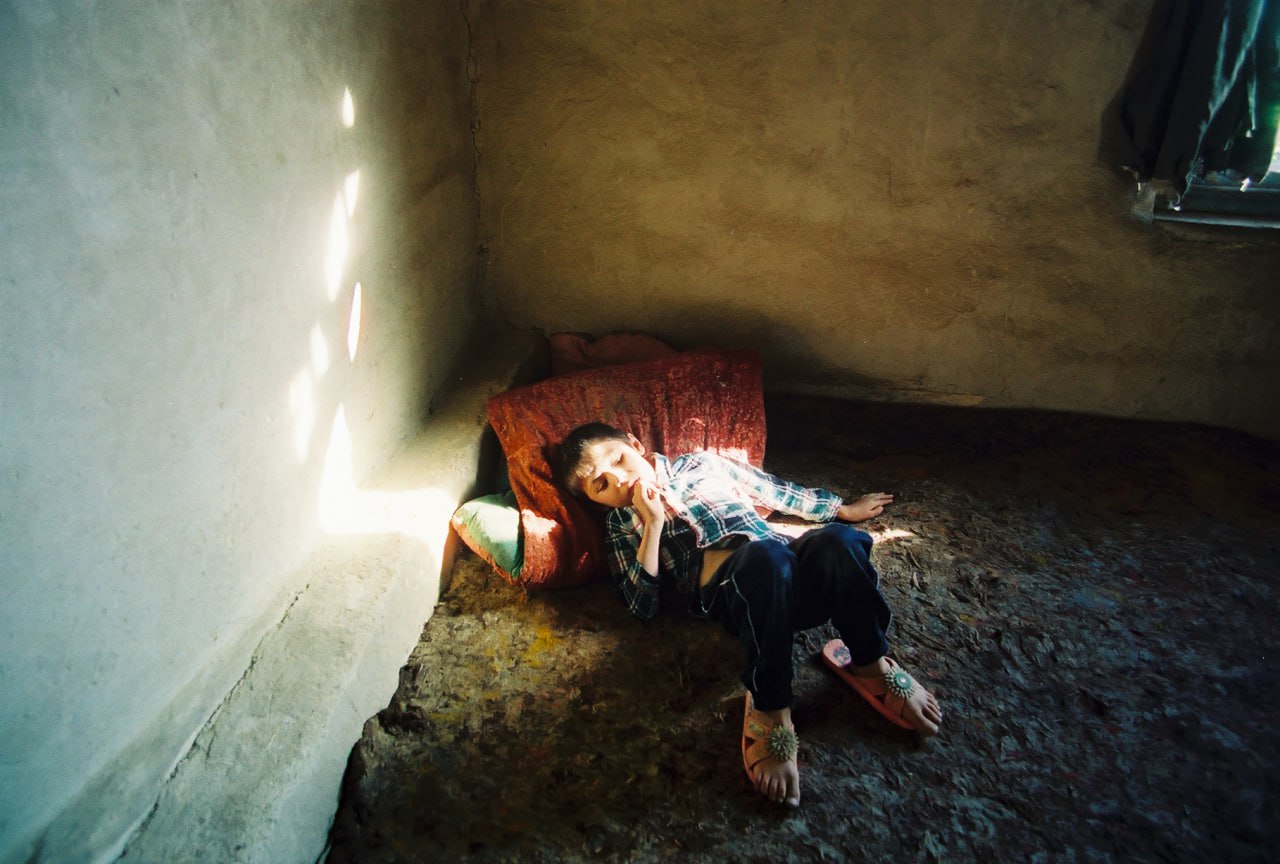
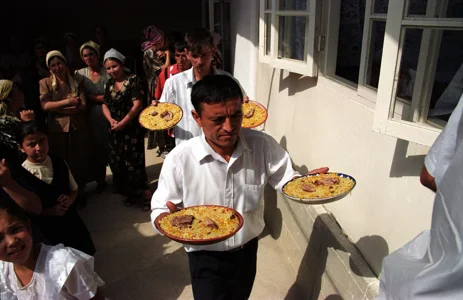
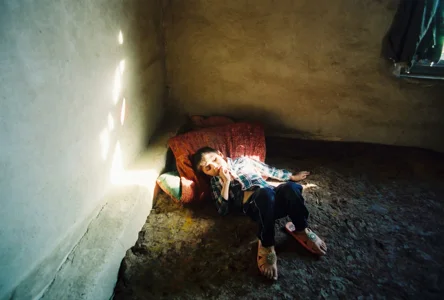
From the album "Women and Men: From Dawn to Dusk". Photo: Umida Ahmedova
Irony: it was under this article that my son named his gallery — 139 Documentary Center. Our lawyer found 12 violations that should have led to the case being closed at the expert examination stage. But it continued.
— Did this affect you?
— It made me angry. Before that, I was filming calmly, nothing sharp. But then an inner resolve appeared. And the films became different — real, alive, sharp.
— Has the attitude toward women in the arts changed since that case?
— No. It all went unnoticed. As if nothing had happened.
Work and live in the new era
— Our generation has essentially lived through three eras: the Soviet Union, 26 years under the first President, and, since 2016, a new reality. Has anything changed for you?
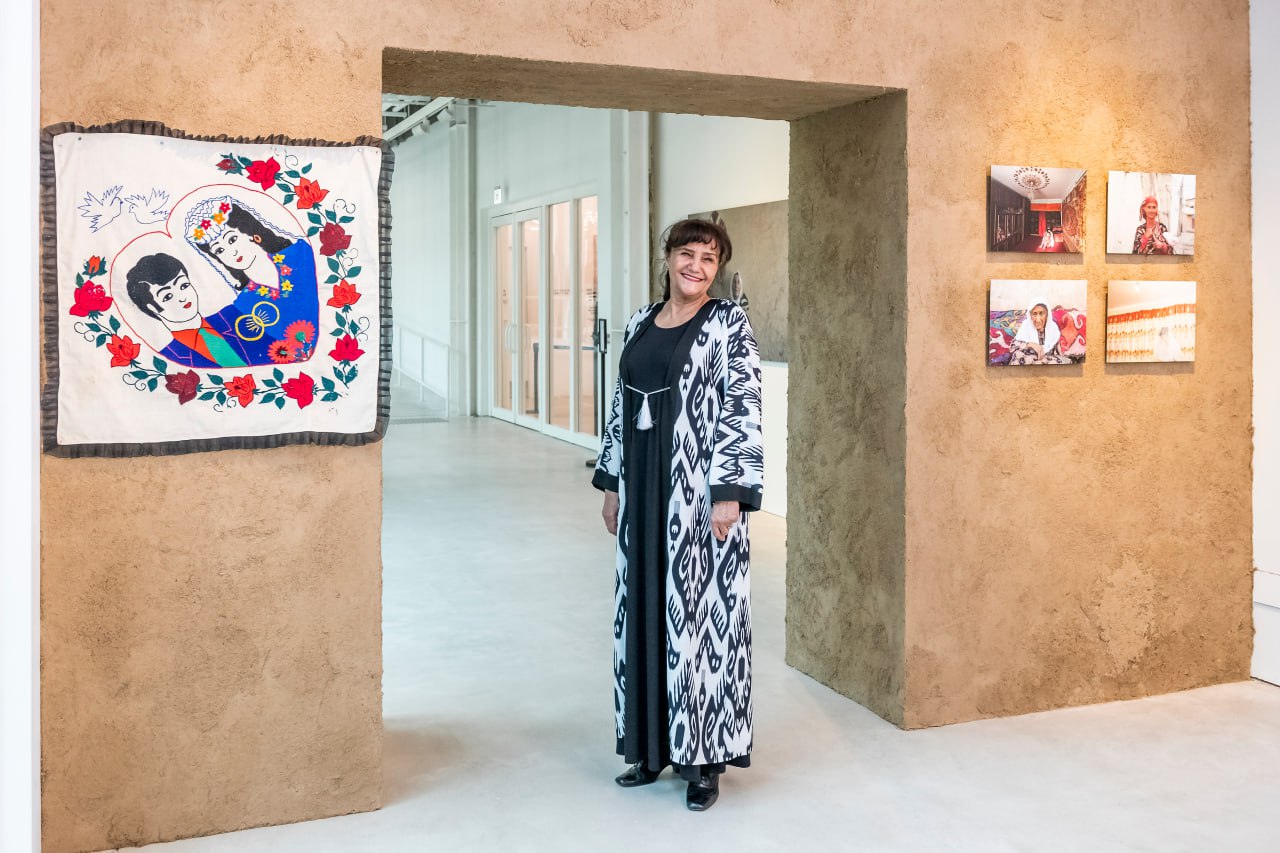
— Probably, yes. Independent spaces have emerged, exhibitions have started, for example, my solo exhibition at the Zero Line gallery. That's important. But frankly — I'm tired. Not of myself, of the system. No matter how hard I try to be active, I feel — I'm hitting a wall again.
In 2023, Zilola Saidova and I held an exhibition "Mission: Impossible" at the 139 Documentary Center. We photographed women in remote villages. Two questions: "What is your brightest memory?" and "What did you dream of?". The answers were stunning. No one dreamed of diamonds. Everyone wanted to work — to teach, to heal, to pass on knowledge. They said: "I finished school. Don't I deserve more?"
These were not complaints. It was an awareness. Their day - worries, endless daily routine. And their whole life - like a single day. We weren't asking for pity. We were asking for an opportunity. But such exhibitions receive no support. And 139, alas, no longer works.
And I ask: why should they be afraid of us? Are we calling for rebellion? No. We are for art, for growth, for the youth who should have a voice. But it seems no one needs this. There is money, but they only support showpieces.
My photographs are just life. But people see "criticism," "a hint of poverty" in them. I have to explain everything. It's exhausting.
The biggest problem is that photography is still not considered an art form here. It's perceived as a handmaiden of propaganda.
In the USSR, pictorialism was destroyed—the artistic perspective. Photography became a tool. And this mindset is still alive.
And the world has long recognized: photography is an art. Josef Sudek - the great Czech photographer - graduated from an art academy. All masters had schooling, foundation, tradition. And what about us?
We have photographs in photo studios, elegantly dressed dancing Uzbeks, stereotypes. Everything should be joyful, like postcards. But a photograph can speak of pain. Of silence. Of a person. For this to be recognized, talent alone is not enough. A change in mindset is needed.
— Does pressure, external or internal, affect the language of art?
— Honestly? No. I remain myself. They don't influence me.
— You film ordinary people. How do you find the balance between your authorial perspective and respect for your subjects?
— For me, honesty and ethics are important. Do no harm. The main thing is trust. Only then does a person open up, and you do not betray them. This is especially important in photography. My husband works in film, he is stricter, but honesty is important there too—without humiliation.
— Does internal censorship ever hold you back?
— Yes, it happens.
Internal censorship for me means: when photographing people, do no harm!
Keep your distance, don't go where you're not allowed, listen to the hero, what he or she wants to say, etc. You don't always decide to show something if it could negatively affect the hero.
And self-censorship, of course, holds me back. Especially in moments of fatigue. But my husband is by my side. He doesn't let me shut down. He is the one who says: "Go, speak, do." This saves me.
Photography is the art and breath of life
— How would you describe your own style — in photography, in film?
— I have always been a documentary photographer. My photography is an attempt to be honest. Not ceremonial, not staged, but genuine, human. I suppose 'alternative chronicle' is a good definition.
Now my projects are becoming more conceptual. The series "Mothers-in-Law and Daughters-in-Law" is not just a document, it's a statement. Almost no one here works in conceptual photography. But this direction is close to me.
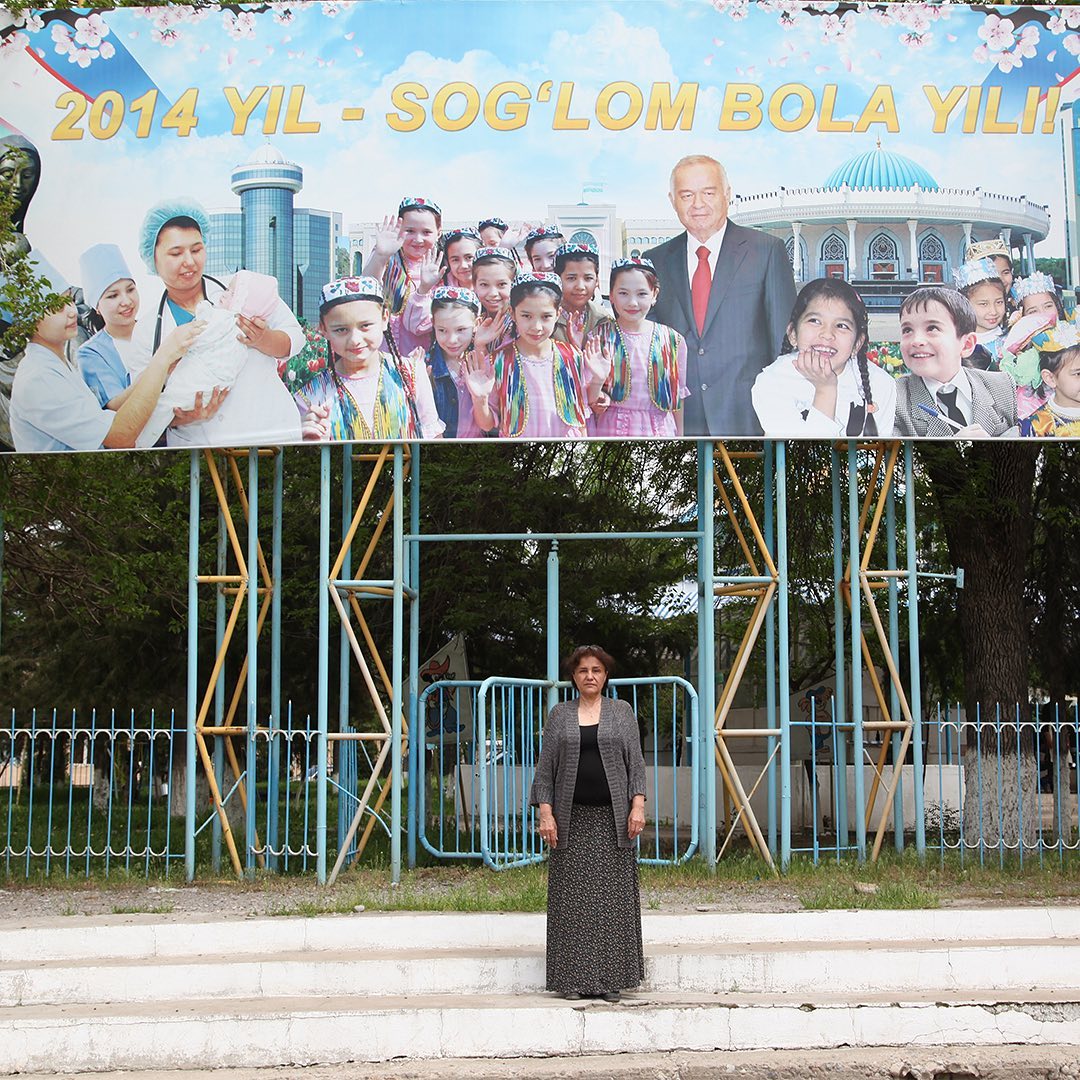
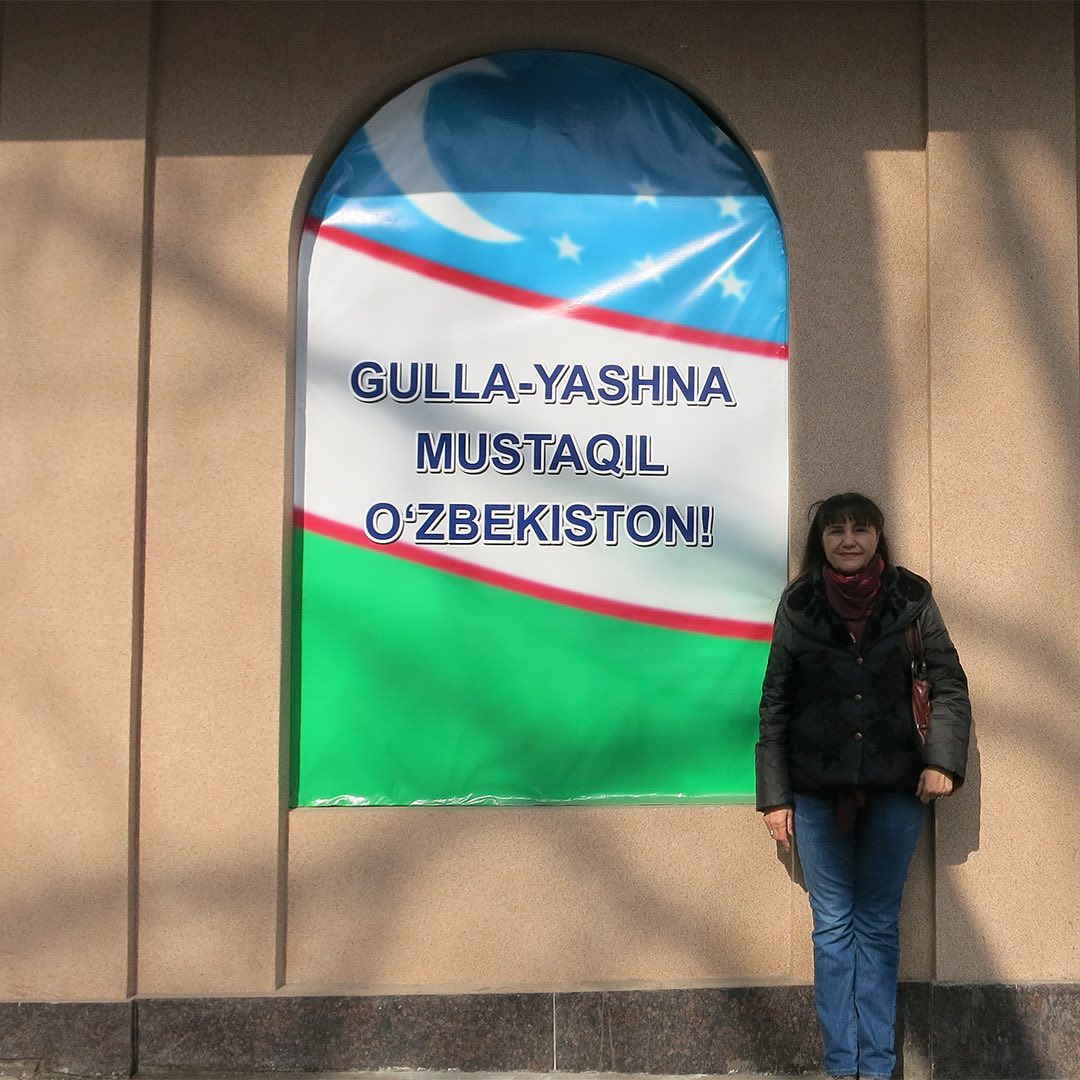
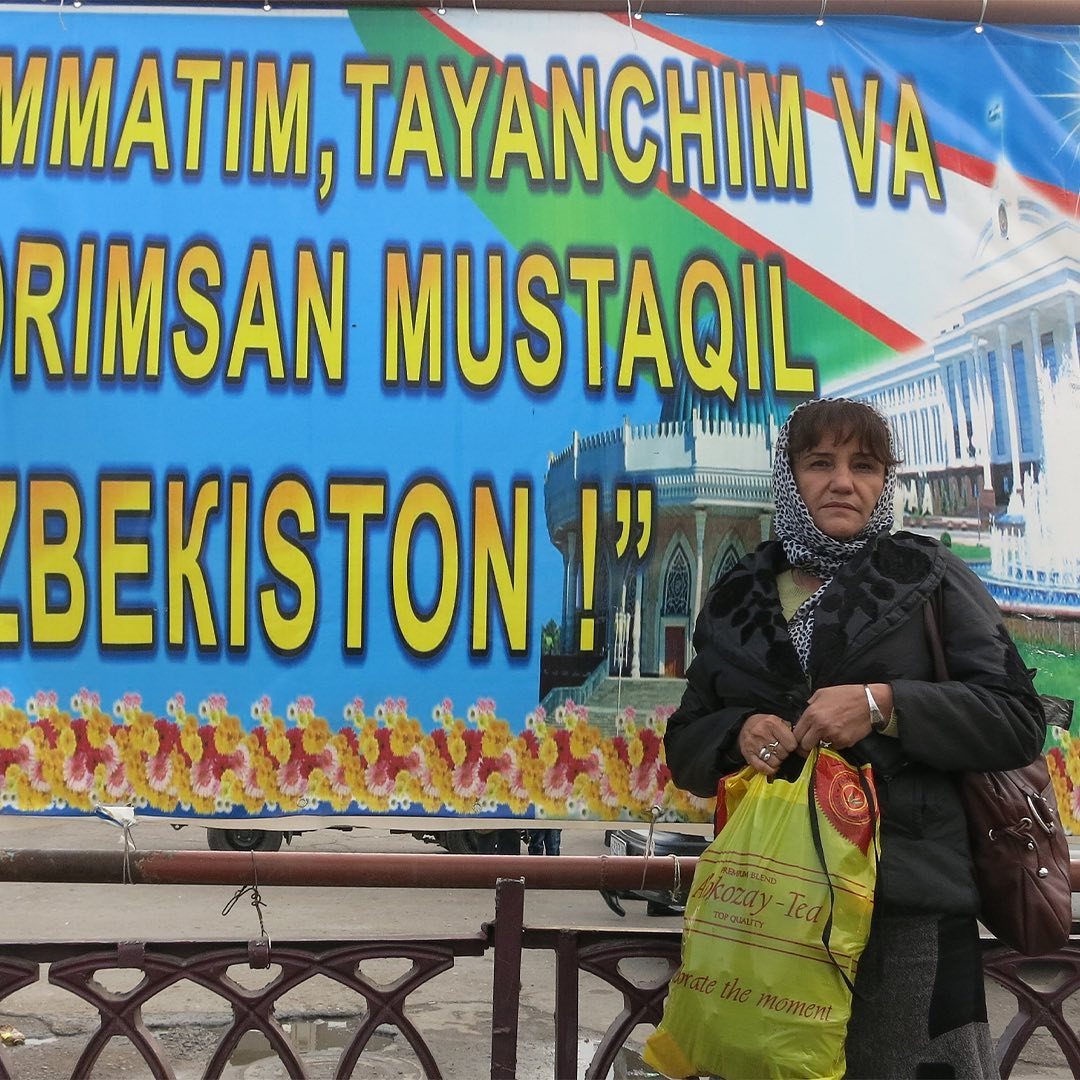
When I was studying in Vladimir, we had a subject called "Means of Visual Agitation." Posters with slogans were everywhere. I didn't photograph them back then — it seemed like it would last forever. But everything changed. A new regime — and slogans again. Only the words are different. That's when I started photographing myself against their background — as a gesture, as irony, as a document.
 https://www.instagram.com/p/CqxklXWNzg-/?utm_source=ig_web_copy_link
 https://www.instagram.com/p/CqxklXWNzg-/?utm_source=ig_web_copy_link
 https://www.instagram.com/p/CqxklXWNzg-/?utm_source=ig_web_copy_link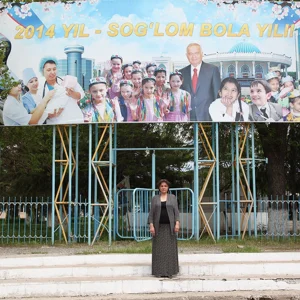
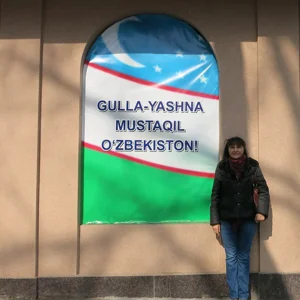
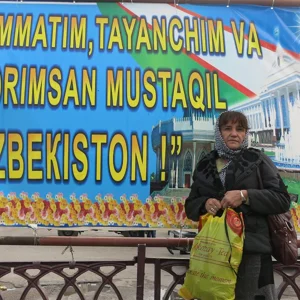
Photos from the "SNAP" exhibition at the 139 Documentary Center. Photo: Umida Akhmedova/ 139 Documentary Center
I can be a photojournalist, street photographer, documentarian. But more and more, I feel like an artist working with photography as a concept. This is my path.
I revived the photo club — after 11 years. Thanks to the support of my son Timur's gallery — 139 Documentary. There — a new generation. Not just photography enthusiasts, but people with a voice. I always wanted to create a school around myself. A space where photography is a way of thinking.
And now, it seems, a chance has appeared. We are filming again. We are speaking again. And I believe that even more young people will join us. This is important.
— Are there any topics you haven't dared to approach yet?
— There is fear, denying it is foolish.
But I don't avoid topics. They just need to ripen. I always try to explain to the characters what I want. If they understand — we go together.
— If you could keep only one shot or phrase — what would it be?
— There are many shots. But words... There are a couple of aphorisms that are dear to me: "The native land feeds. The main thing is that the scoundrels don't interfere." And another: "God forbid that your own reflection spits on you."
— You share your experience with the young. Who influenced you?
— Yes, I see how the youth is becoming bolder, more honest—and that's encouraging. In the '90s, I was influenced by Mikhail Shtein from the Panorama photo club. He simply believed in me—and that was enough. The Japanese writer Kenzaburo Oe, directors Antonioni and Alexei German. The cinematography of Leonid Knyazhinsky, Vadim Ivanchusov—their vision of the frame taught me a lot. And then there was the East and Munch. He stunned me. And that's also important—art doesn't necessarily have to be "yours." It should awaken you.
— What do you think young artists in Central Asia should be talking about?
— About myself. Sincerity is the main thing. Don't conform. Only then does true art emerge.
— What project do you dream of realizing?
— Many are related to memory: destroyed houses, disappearing monuments. One is particularly important — a collaboration with Zilola Saidova — about the children and wives of migrants. A painful, unprocessed topic. But there is no support. And the project requires attention.
— What do you see as your mission?
— To convey: photography is art. And documentary film is also art. Not just filming, not illustration. Art.
— For whom do you continue to film?
— For the sake of life itself. It's part of my breath. I film as I breathe. And who will need it... God knows. If someone feels, ponders, loves — then it's not in vain.