Here — in the center of the square — the philosopher observes the new life of Greek culture. In the hall — busts and statues, helmets reminiscent of the headgear of Alexander's warriors. And nearby — strollers: a kindergarten operates in the Center. Hellas and children's songs, philosophy and watercolor, antiquity and modernity are not separated here, but coexist, as in a theater where an ancient tragedy and a children's fairy tale are performed on the same stage.
Hellenes in Central Asia: from Antiquity to the 20th Century
The Greek presence in the territory of modern Uzbekistan dates back to the 4th century BC, when Alexander the Great passed through Sogdiana and Bactria. Along with his armies, Greek philosophy, architecture, theater, and art came to the region. Cities with Greek names emerged here — such as Alexandria Eschate, Alexandria Oxiana, Ai-Khanoum.
The influence of ancient culture persisted into the Islamic era—through Arabic translations of Greek texts, which had a powerful impact on Eastern thinkers, including Al-Farabi and Ibn Sina.
Before the October Revolution of 1917, Greek artisans and merchants lived in Tashkent, Samarkand, and Fergana. In the mid-20th century, following the defeat of the leftist forces in the Greek Civil War, about 15,000 political emigrants—participants and supporters of the Democratic Army of Greece—were evacuated to Uzbekistan. "Greek towns" were created for them, schools, theaters, ensembles, and sports sections were opened, and festivals and even Spartakiads were held.
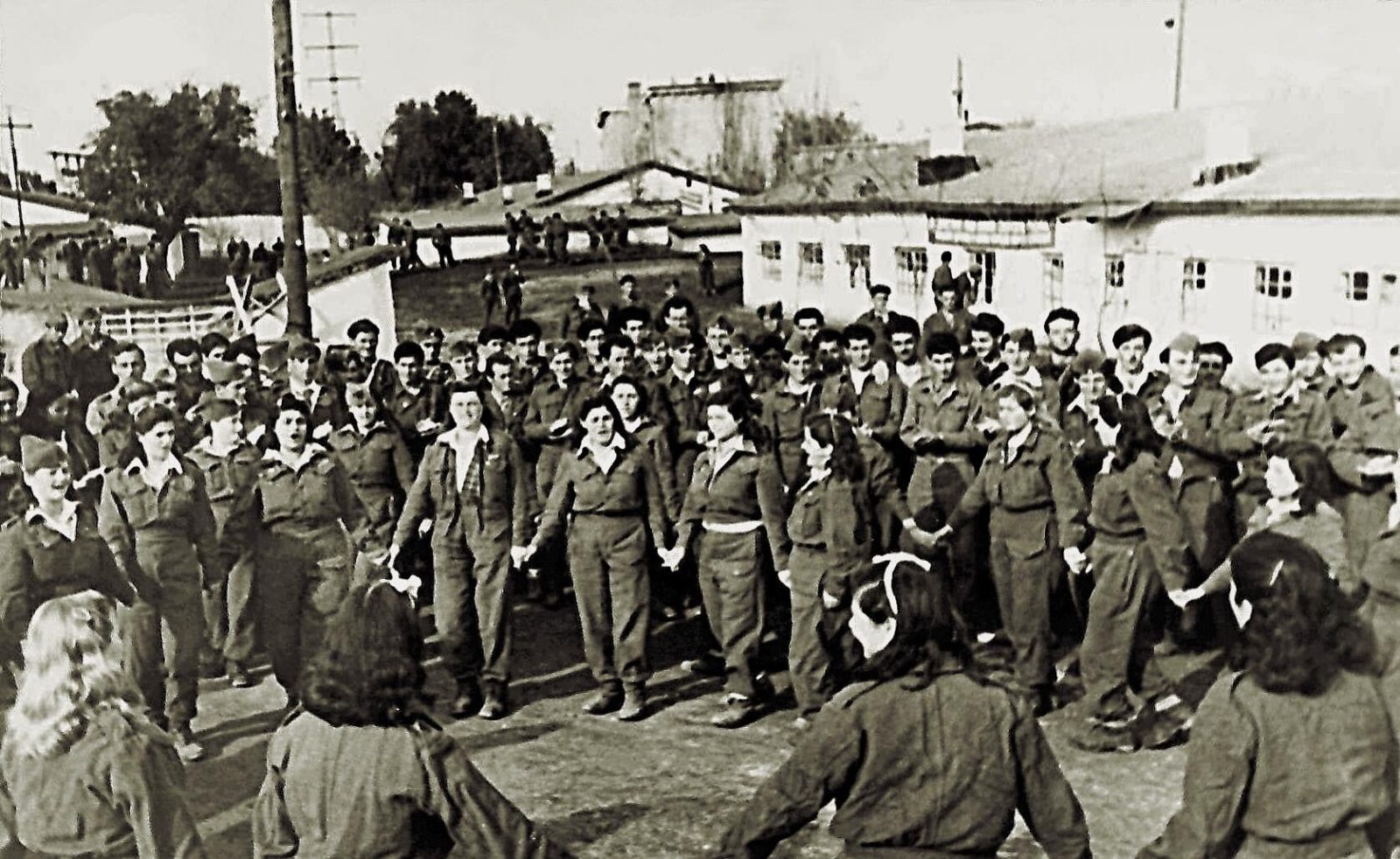 Source: Letters about Tashkent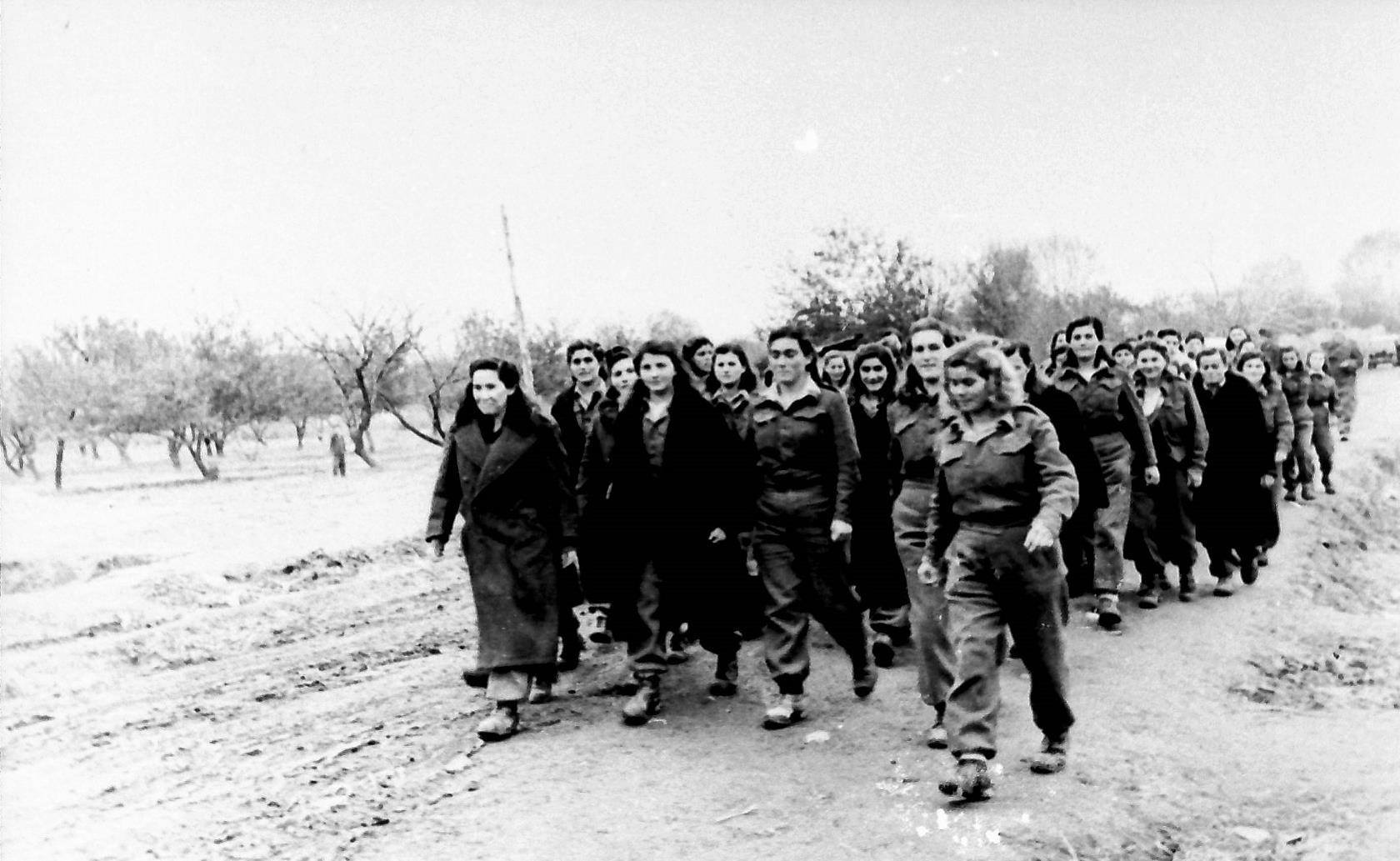
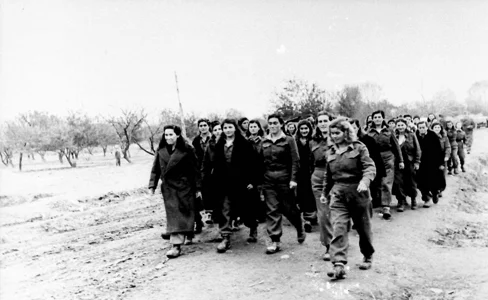
Greek political emigrants. Source: Letters about Tashkent
By the 1960s, the Greek population in Uzbekistan had reached 40,000. Many of them became prominent figures in science, medicine, culture, and sports.
- Konstantin Sarianidi was an outstanding archaeologist who discovered the ancient necropolis at Gonur-depe, the capital of the country of Margush in Turkmenistan. His discoveries became of paramount importance for the study of Eastern civilizations, for which he was awarded in Greece, Turkmenistan, and Afghanistan.
- Vasilis Hatzipanagis is a footballer who began his career at Tashkent's Pakhtakor, later becoming a star for the Greek club Iraklis. Recognized as Greece's best player of the last 50 years, he is known for his technique and spectacular style of play.
- Yanis Salpinkidi is an artist and educator, academician of the Academy of Arts of Uzbekistan. He taught at the "Poisk" studio at the Palace of Culture of Aircraft Builders, authored over 20 works on art, and nurtured a generation of local artists.
- Georgios Ioannidis is a professor at the Tashkent Medical Institute, a specialist in the field of maxillofacial surgery. He worked on methods for treating bone pathologies and tumors and contributed to the development of surgical dentistry in the region.
They not only maintained ties with their historical homeland but also became part of Uzbekistan's cultural fabric, participating in the construction of new cities, restoration of monuments, and the development of science and education. In the last decades of the 20th century, the majority of the diaspora repatriated. Today, the Greek community in Uzbekistan numbers about 1,500 people.
Center of Greek Culture: From Idea to Action
The modern Center of Greek Culture in Tashkent grew out of the Association of Greek Political Emigrants, which was transformed in 1997 into the city society of Greek culture. A new stage in its development began in 2020 under the leadership of Konstantinos Politis: an updated charter was adopted, reforms were carried out, and the modern name — the Center of Greek Culture — was established.
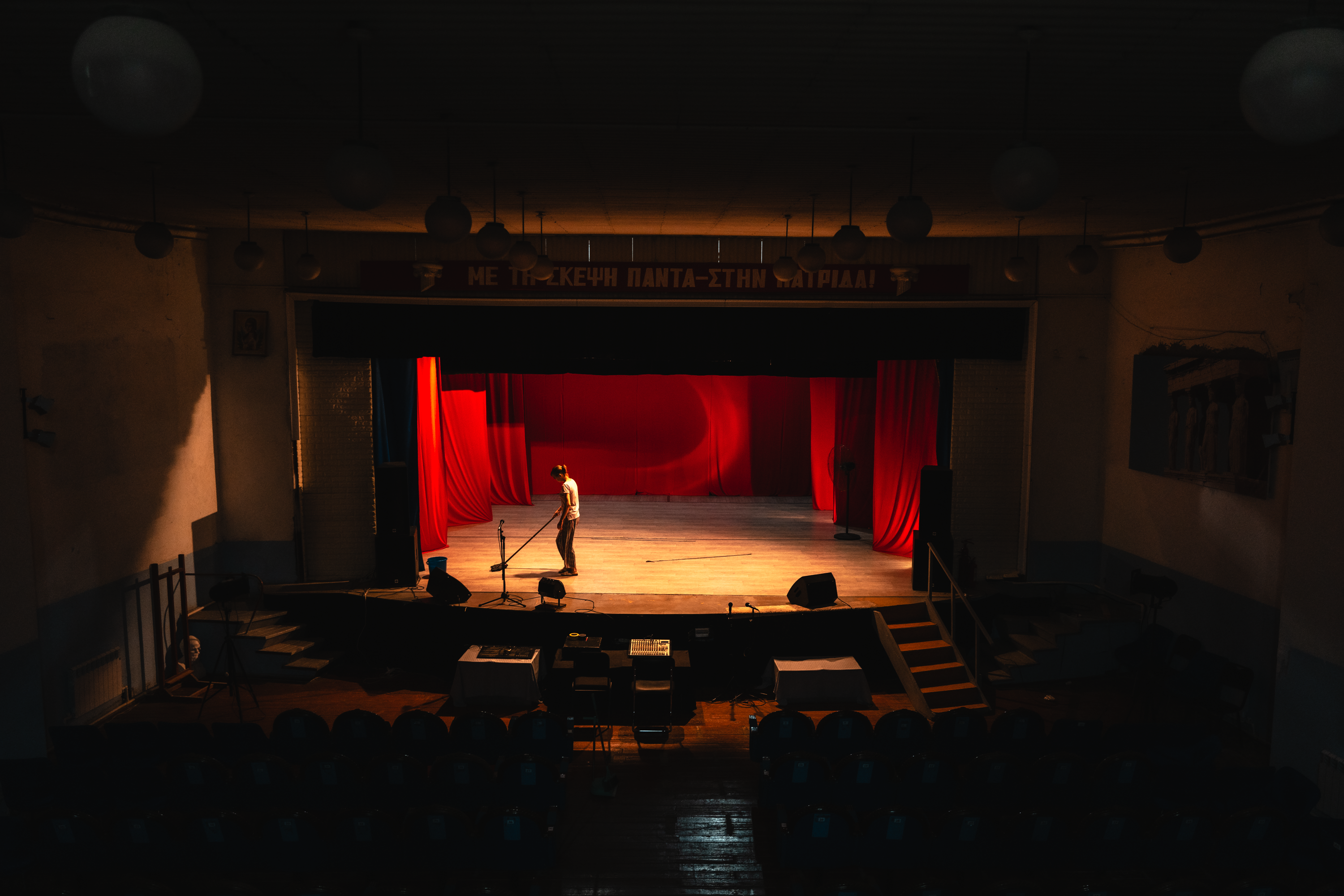 Photo: Katerina Kuznetsova
Scene from the Central Greek Culture Center in Tashkent. Photo: Katerina Kuznetsova
The Center is not a museum in the conventional sense, but a living and open space where culture does not gather dust in display cases, but resonates, moves, and evolves. Here, people study Greek and English, master theatrical arts, vocal performance, painting, photography, and culinary skills. On Sundays, a school for children operates, where young participants sing, dance, draw, and socialize. Throughout the year, performances, musical evenings, lectures, and festive events take place — from intimate concerts to large cultural festivals.
Cultural centers as spaces of belonging
Uzbekistan is home to representatives of over 140 ethnic groups, yet only about 40 cultural centers are officially registered. Each of them is not only a repository of heritage but also a bridge between peoples. The Greek center in Tashkent is a vivid example of how culture can be both ancient and relevant.
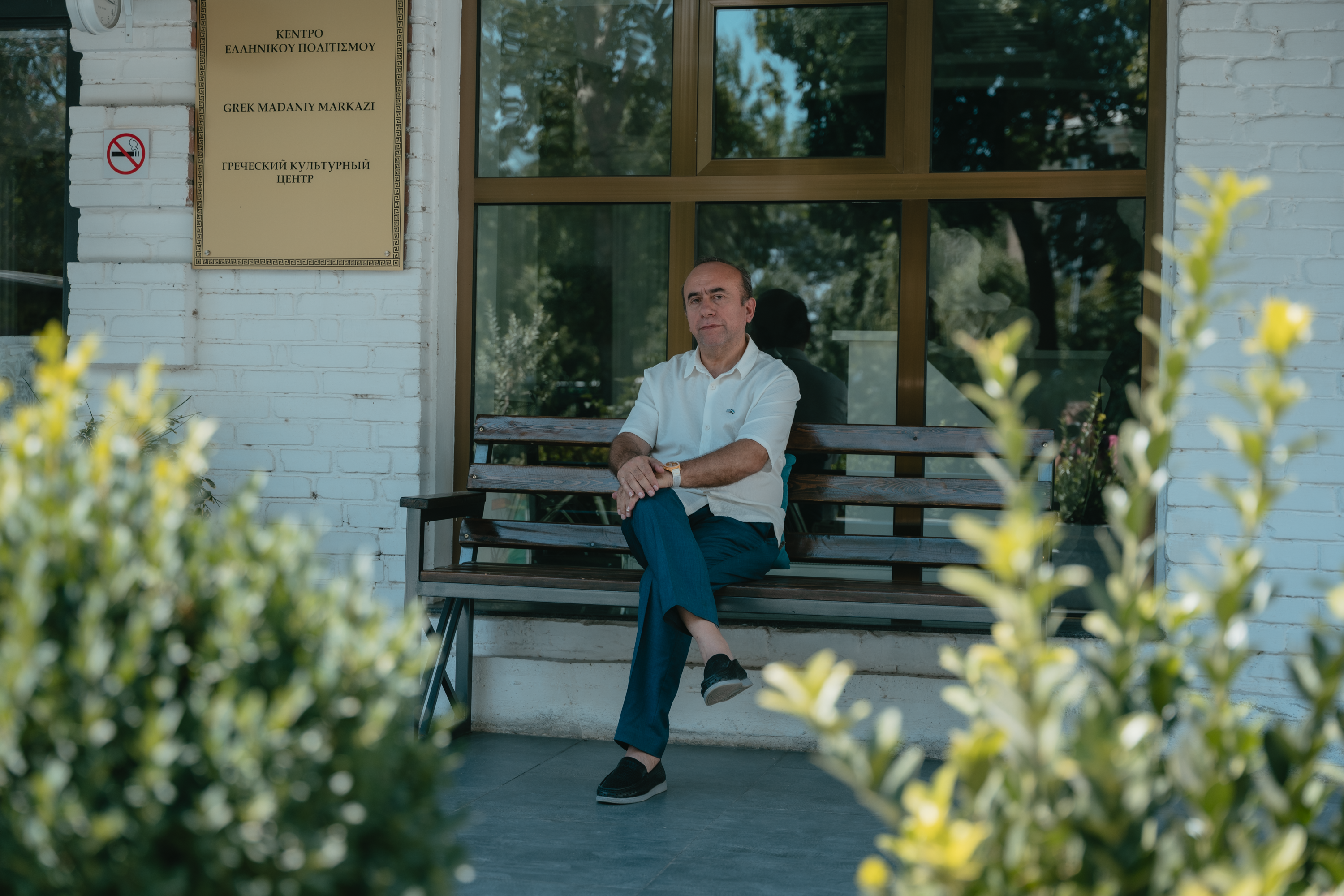 Photo: Katerina Kuznetsova
Chairman of the Center for Greek Culture in Tashkent Konstantinos Politis. Photo: Katerina Kuznetsova
As says the Chairman of the Center, Konstantinos Politis:
"Greek culture is not merely a national code. It is theater, philosophy, music, mathematics, a way of life. It is *ef-zin* — to live with dignity and in harmony. And we are open to all who wish to touch this culture."
* Euzōn (εὖ ζῆν) — an ancient Greek term meaning "to live well" or "to live worthily" — the harmony of body, spirit, and mind.
What to do at the cultural center
The center is open all year round and welcomes both adults and children. Here, you can not only get acquainted with the culture of Hellas but also master new skills.
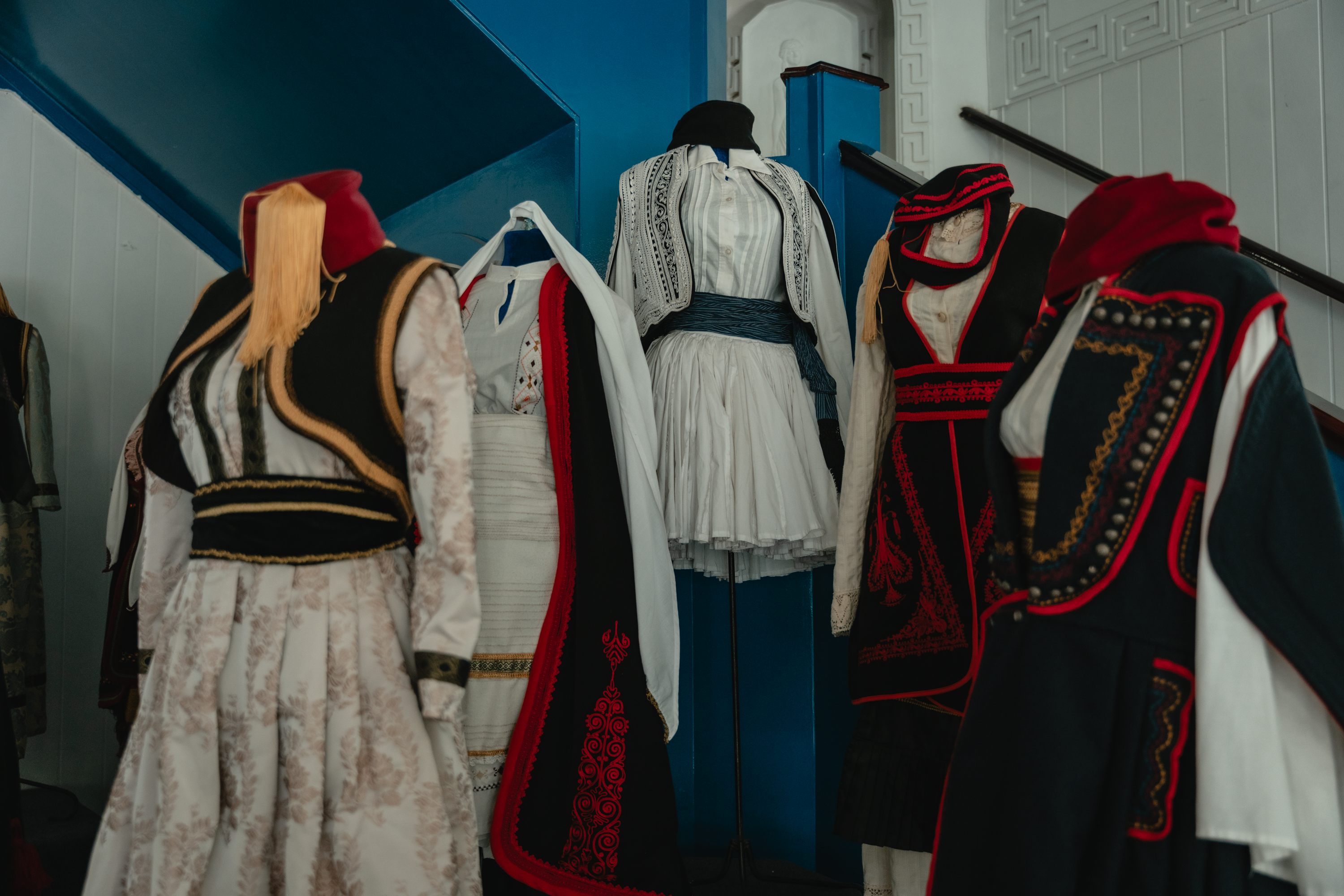 Photo: Katerina Kuznetsova
National costumes at the Greek Culture Center in Tashkent. Photo: Katerina Kuznetsova
For adults:
- Courses in Greek and English languages;
- Drawing;
- Pop vocals;
- Acting and improvisation.
For children from 3 to 14 years old:
On Sundays, the school operates, offering classes in:
- Greek and English languages;
- Drawing;
- Vocals;
- Choreography;
- Bead weaving.
How to get there:
The center is open to everyone — just come to the address: Tashkent, Yakkasaray district, Yusuf Khos Khodjib Street, 30.
Today, the Center has become a place where the marble bust of Aristotle doesn't feel like a relic—it watches over a kindergarten, creative workshops, and a living language environment. Here, the past does not freeze; it breathes, laughs, dances, and speaks in different languages. And this is precisely what makes the Greek Cultural Center important—not only for the diaspora but for all of Uzbekistan.