
With the arrival of mid-June, the city prepares for survival mode: soon the asphalt and traffic lights will melt, and it will be nearly impossible to breathe without scorching your nasopharynx. By noon, the city will fall silent, and all living things will take shelter in the shade of plane trees and the coolness of irrigation ditches.
Sacred Arithmetic of Heat
The term "chilla" (in Uzbek — chilla, in Persian — chehel or چهل) — originates from the word for "forty". For the Islamic tradition, and especially for Sufism, this is not merely a count of hot days, but a time for reflection and self-knowledge. One of the common practices of Sufis — is a forty-day seclusion-asceticism, which is called «chilla-nashini», analogous to Christian seclusion or Zen sesshin. This period was accompanied by prayers, Quran recitation, and fasting, and was most often conducted in special rooms called chillakhona.
One of the most famous such structures has been preserved in the mausoleum of Sheikh Zayniddin-bobo in Tashkent. The mausoleum over the sheikh's grave was built by order of Amir Timur. Sheikh Zayniddin was the son of one of the founders of Sufism—Shahobiddin Abu Hafs Umar Suhrawardi. On Kukcha, next to the mausoleum of Zayniddin-bobo, there is a chillakhona (retreat cell), which existed there long before the sheikh's own lifetime and apparently served as an ancient observatory.
Chillakhona was designed so that from it one could determine the day of the vernal equinox, the solstice, the angle of inclination of the equatorial plane to the ecliptic plane, and the latitude of the area. There was even a legend that a six-kilometer secret tunnel led from the ancient observatory to Hast-Imam. Chillakhona was built of brick and consisted of two octagonal rooms. Today, it is so sunken into the ground that only the dome remains visible on the surface.
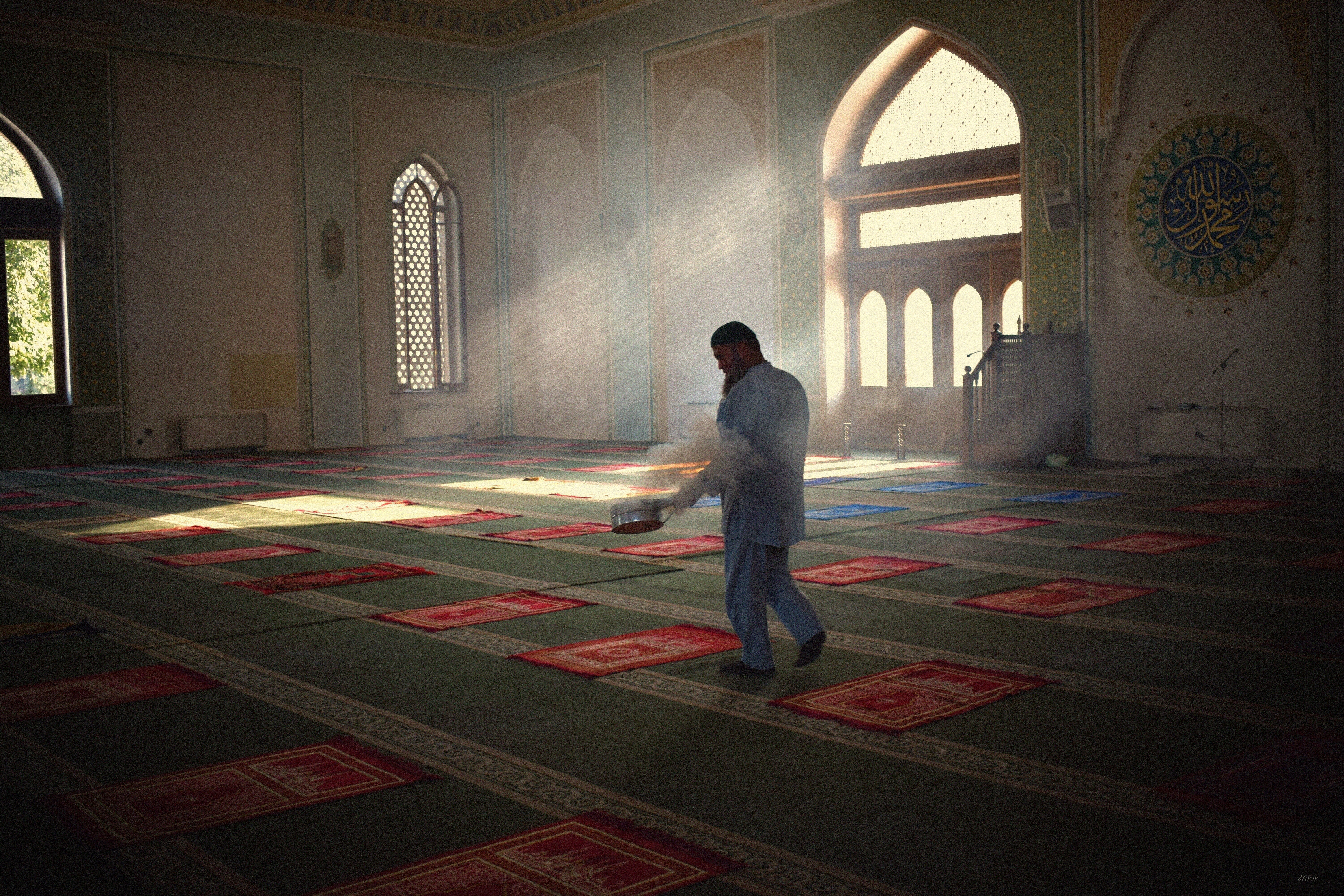
The number "40" itself in Islamic culture is considered one of the most iconic — the Prophet Muhammad received revelation at the age of forty, the Almighty spoke to the Prophet Musa (Moses) for forty days on Mount Sinai, Nuh (Noah) survived the flood caused by forty days of rain, and the Children of Israel spent forty years in the desert. In this context, chilla is a time of trial and abstinence not only for the body but also for the spirit.
From frost to heat: there are different kinds of chili
In a climatic sense, chil'ya is the forty hottest days of summer. This period begins on June 20-22 and ends in late July or early August. This time also coincides with the peak of solar activity and the summer solstice.
According to the Uzhydrometcenter, the average air temperature in July in Tashkent is about +36°C, but peak values regularly exceed +40°C. For instance, in July 2022, a temperature of +45.6°C was recorded in Nukus — one of the region's absolute records, and in July 2021 in Tashkent, the thermometer reached +43.8°C, exceeding the temperature maximum of the last decade. In the capital, the absolute record was recorded by meteorologists on July 18, 1997 — on that day, weather reports indicated +44.6 degrees in the shade.
Interestingly, there is also a winter chillah, but only in Iranian and Tajik traditions. According to the folk calendar of the inhabitants of Kulob, Karategin, Darvaz, Pamir, and Afghan Badakhshan, the winter chillah begins on the day of the winter solstice after Yalda night — December 22. It is divided into a major one, lasting forty days, and a minor one — twenty days. The minor chillah begins on January 30, when another ancient holiday is celebrated — Sada, signifying that fifty days and fifty nights remain until Nowruz.
Shadows, fabrics, and survival secrets at +45
Chillah is a factor of the urban environment where everything is subject to the sun. During this time, the daily routine changes—people try to finish some of their tasks early in the morning and postpone everything unfinished until late evening. During the day, life comes to a standstill, as if someone has pressed pause on life.
It is especially noticeable how the heat dictates its own rhythm in residential mahallas and old districts, where life flows in sync with the shade – people wake up early, work until 11-12 o'clock, and a return to activity begins only after 6 p.m.
In the dry continental climate of Central Asia, everything revolves around water. Tashkent is known as the city of fountains—there are more than sixty of them here, making the capital of Uzbekistan the leader in the number of fountains among Central Asian cities. And on weekends, everyone heads to the Charvak or Tuyabuguz reservoirs to wash away the asphalt heat.
Tashkent's canals were indeed once a unique response to the chillu, as Soviet modernist architecture in Uzbekistan integrated water and shade into the urban environment in an attempt to adapt to the extreme conditions of the hot southern summer.
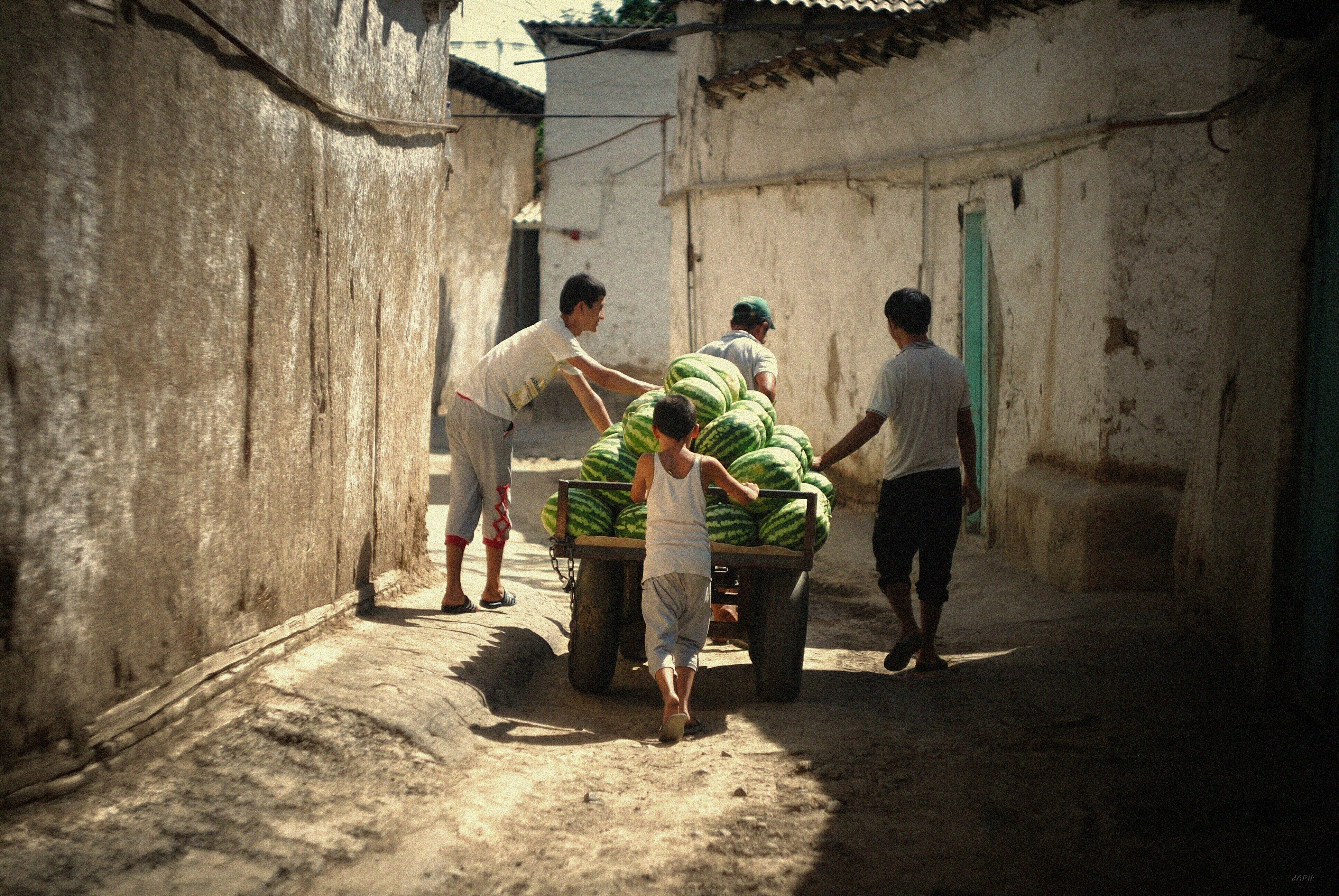
The appearance of the residents and their way of life is also sometimes dictated by the heat—light-colored clothing and architecture, and if you look at the road, white cars stream endlessly along it, with vehicles of other colors only occasionally flashing by. In the courtyards, people gather in the evening, cook in open kitchens, and during the heat, they take refuge on the aivan . Cold soups like chalop and guji appear on the menu, and watermelons are cooled in the aryks.
In these details lies the deep logic of experiencing the heat not as a natural disaster, but as a familiar and expected rhythm, in which summer life begins to resonate with the onset of the first moments of scorching weather. All these rituals and practices appeared long before fans and air conditioners, and even now they continue to live in the shade of an old courtyard, the crunch of a cold watermelon, and the whisper of an aryk outside the window.
From Gafur Gulyam to SMM: Chillah as a Cultural Code
Chill not only permeates everyday life but also culture. Gafur Gulam wrote in his poem "The Garden":
Playfully caressed
summer chill leaves,
under the jam-making boilers
the flame ignited hot.
The chill also permeates marketing. During the summer season, there is an increase in advertisements for air conditioners, fans, and portable pools, while restaurants and cafes launch summer menus. One of the most telling examples of how the forty-day summer heat is literally woven into the cultural code of Central Asian peoples is humor. City publications release carousels of memes about the chill, and ordinary social media users are not far behind.
Like the long polar night, like the Japanese tsuyu or "dog days", the chiliya in Central Asia serves as a cultural barometer: it regulates rhythm, organizes time, and resets perception. Heat is an integral part of the local culture, but chiliya itself — is not just about the heat. It is a period of meaningful and conscious life, unique regional knowledge that is passed down from generation to generation, enriched and developed alongside people. Within the forty days of scorching silence lies a philosophy not of survival, but of life, endurance, and transformation.


