Literature and Storytelling
A Poet on Vacation: How Yesenin Went to Tashkent and What He Took Away
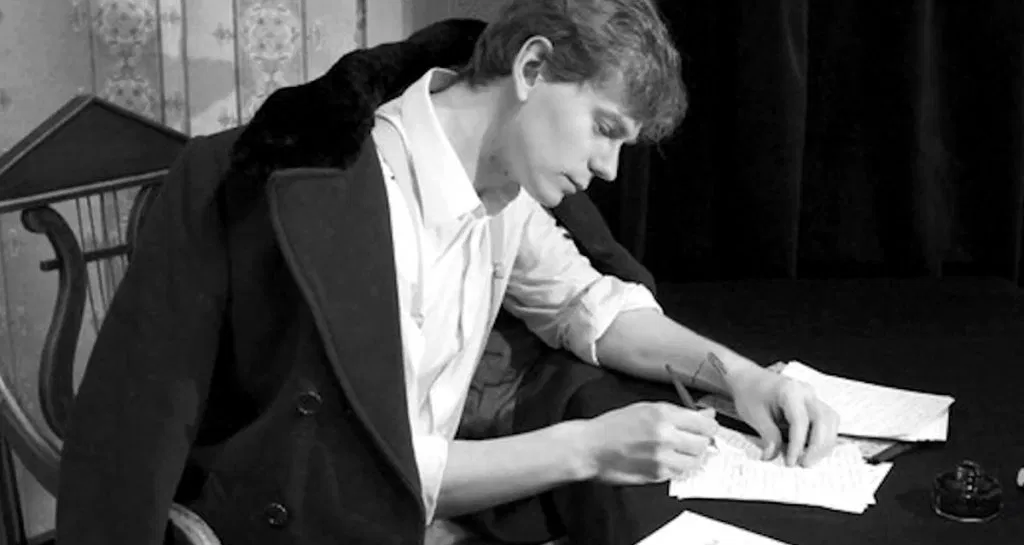
Sergei Yesenin arrived in Tashkent in early May 1921 and spent about three weeks there. According to contemporaries' recollections, the poet was drawn not so much by "Tashkent — the city of bread" as by Tashkent as a gateway to the East. His trip to Turkestan was a kind of flight to the east: firstly, he had long dreamed of seeing these lands, and secondly, at that time he was hiding from a scandal related to the illegal publication of his "hooligan" poems.
Sergei Yesenin's friend, the poet Valentin Volpin, recalled that he arrived "joyful, excited, gazing eagerly at everything, absorbing the lush Turkestan nature, the unusually blue sky, and that entire sight so unusual for a European: the native city with its narrow streets and windowless houses, the colorful crowd, and the spicy smells." Tashkent was just celebrating Eid al-Fitr—the streets filled with thousands of people in bright robes, the air was filled with the aromas of pilaf and shashlik, trumpets and drums thundered, and teahouses glowed with lamplight.
It's interesting that Yesenin did not settle in a hotel. Instead, he lodged right at the railway station — in a special service carriage on the sidings. The poet spent most of his time in the cultural circles of Tashkent's intelligentsia. His Moscow friend, the poet Alexander Shiryaevets, introduced Yesenin to the local literary and artistic society.
Esenin performed poetry readings at evenings of the "Studio of Arts" in the Public Library, at the Red Army Club, and even before film screenings at the "Turan" and "Khiva" cinemas. In Tashkent, his popularity turned out to be enormous — enthusiastic listeners gave the poet several ovations. The "Russian guest" was constantly surrounded by local poets and artists.
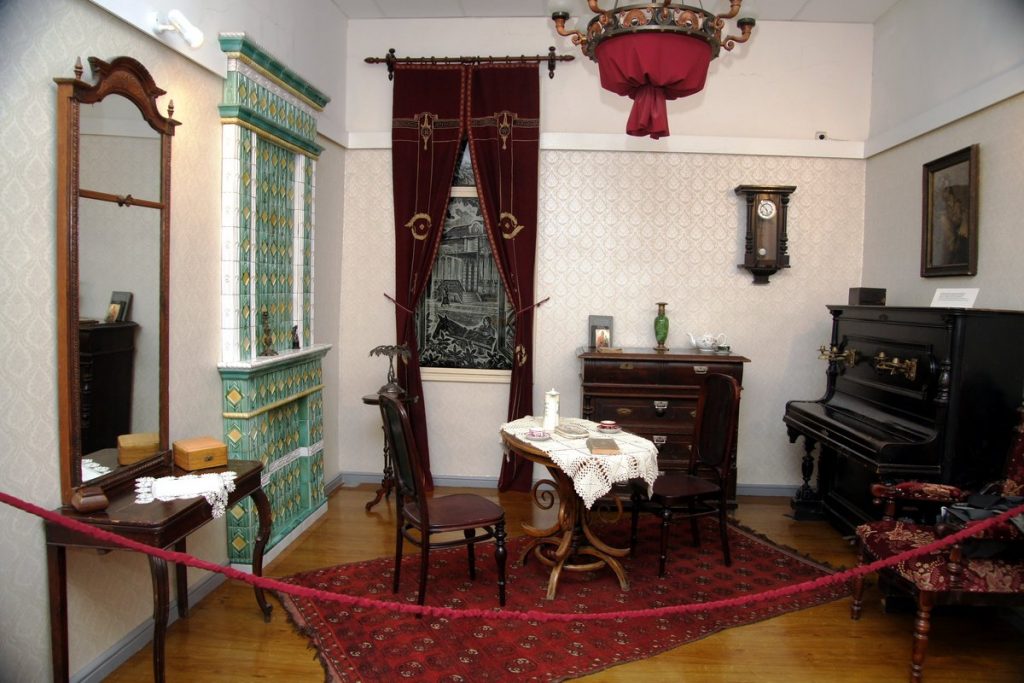
Reconstruction of Volpin's apartment, where Yesenin first read the poem "Pugachev". Photo: Yesenin Museum in Tashkent
Route and Geography
Yesenin's main point of stay was Tashkent, but he was eager to see ancient Samarkand as well. He spent several days there, visiting the main architectural landmarks. Samarkand made a profound impression on the singer of peasant Russia. The artist Kuzma Petrov-Vodkin wrote to his wife in the summer of 1921:
"A few days ago I saw Yesenin... He returned in complete delight from Samarkand and looked very refreshed."
However, it appears that Esenin never actually reached Bukhara. Alexander Volkov asserted that the poet 'wrote about Bukhara, which he had never seen.' Nevertheless, even a fleeting immersion in the atmosphere of Turkestan and the journey to Samarkand were enough to enrich Esenin's imagination with 'Eastern' imagery.
Traces of Turkestan in Yesenin's Poetry
A short trip to Central Asia did not pass without a trace for Yesenin. But how deeply did it influence his work? Immediately upon his return in 1921, the poet did not publish any poems or poems about Turkestan. His main "Eastern" works appeared later — the cycle "Persian Motifs" was written in 1924.
Nevertheless, the impressions of 1921 were firmly imprinted in his memory and creative consciousness. They later surfaced in his lyric poetry as individual images and metaphors. For example, in the 1923 poem "This street is familiar to me..." Yesenin recalls distant wanderings:
"The Golden Sands of Afghanistan"
And the glass haze of Bukhara.
Ah, and I know those countries —
"I myself have traveled a considerable path there...".
Here appears the famous image of the "glass cloud of Bukhara," meaning the sultry haze over Bukhara.
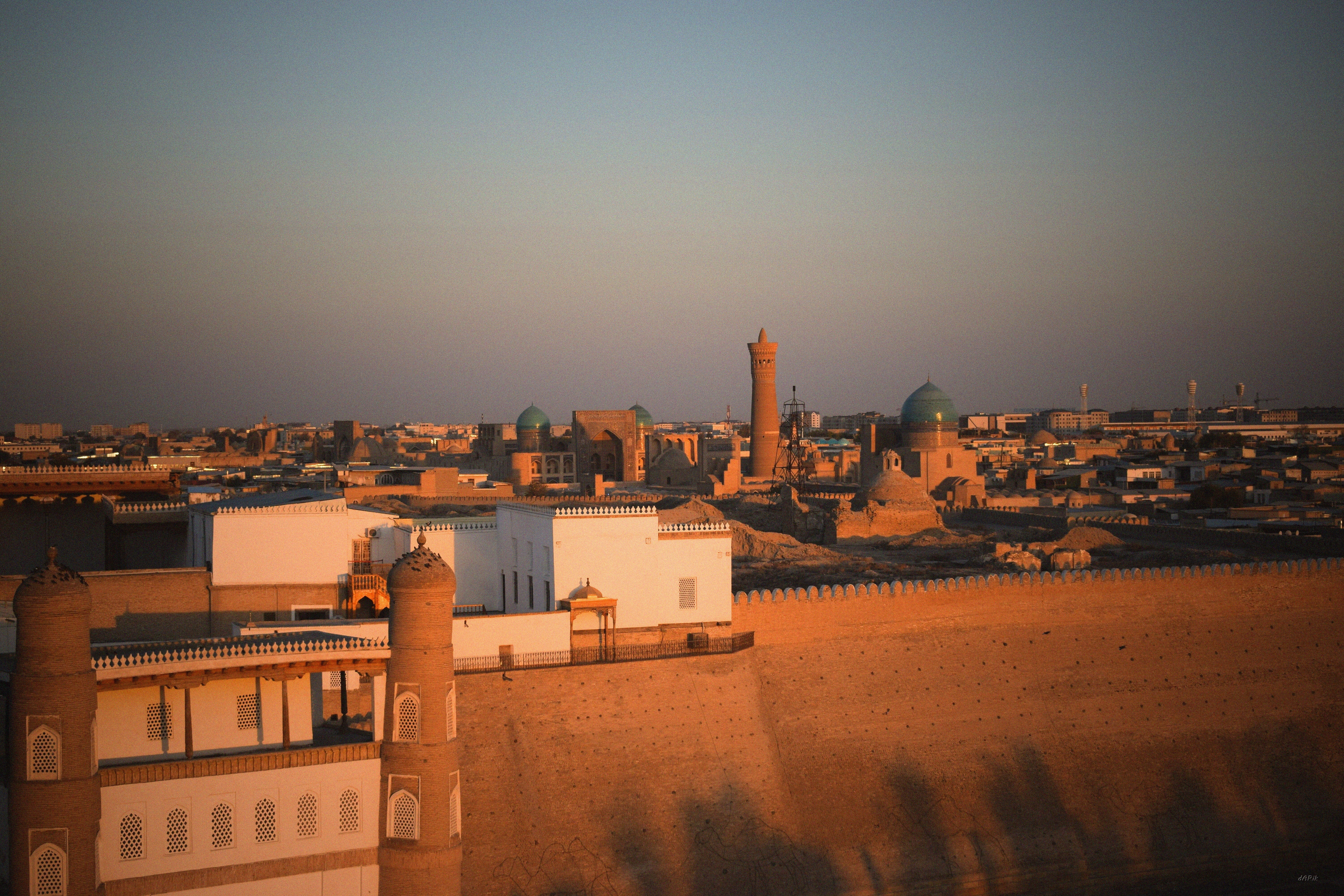
Sweltering Bukhara nowadays. Photo: Ildar Sadykov
In addition to direct mentions of Turkestan toponyms, the trip sparked a deeper interest in Eastern culture in Yesenin. He genuinely became fascinated with local poetry, music, and customs. Friends recalled that Sergei listened to Uzbek folk songs and poems with great interest, spent hours drinking green tea in the old city's teahouses — he particularly loved the teahouses of Sheikhantaur and Urda. He tried sitting in the Eastern style on a topchan (which he did poorly — he would still dangle his legs down and swing them like a boy), paraded around Tashkent in a suit with a tie and polished shoes, despite the heat.
An interesting detail: the famously heavy drinker Yesenin hardly consumed any alcohol in Tashkent. Witnesses noted that the poet, enchanted by Turkestan, soberly absorbed the colors and aromas of the East, finding inspiration without any "fuel." It can be said that Central Asia gifted him a new creative breath and a fresh perspective.
In the famous poem "Shagane, you are mine, Shagane," characteristic lines sound:
"No matter how beautiful Shiraz may be,
He is no better than the Ryazan meadows.
Here, Esenin seems to be saying: yes, the East is beautiful, but my heart is dearer to my native Ryazan. This is — the key to understanding his "Eastern" lyric poetry. It is not about a specific Turkestan or a specific Persia, but about the encounter of the Russian soul with Eastern exoticism. Eastern imagery became a means for him to express his own feelings — anxieties, disappointments, hopes — in a new, symbolic key. It is no coincidence that in one poem of the cycle, the hero heals his spiritual wounds with "the blue flowers of Tehran" in a Tashkent teahouse, combining geographical specifics (Tehran, teahouse) with the inner experience of healing.
"Mythbusters": Modern Distortions and Speculations
The history of Yesenin's three-week stay in Central Asia has over time become overgrown with many myths — sometimes innocent, and sometimes deliberately exaggerated. Let's examine some of them.
Myth 1: The Eastern Journey Fundamentally Influenced Yesenin's Creative Work.
In popular literature and media, it is often claimed that the trip to Turkestan became a turning point for Yesenin, inspiring him to create masterpieces. For example, modern publications write that the impressions of Tashkent had a great influence on Yesenin's work: it was there that he completed the poem "Pugachev" and conceived the cycle "Persian Motifs". There is a grain of truth in this — he indeed finished the poem "Pugachev" in draft form in Tashkent and even read it to the local audience.
And even without the Turkestan experience, there likely wouldn't be such a vivid oriental flavor in "Persian Motifs." But still, one cannot exaggerate: the main creative work on the cycle "Persian Motifs" was carried out several years later — in the autumn of 1924, when Yesenin lived in Baku and Georgia. Turkestan gave the impetus but did not become an instant muse dictating the poems. Therefore, it is more accurate to say that the eastern journey — is an important color in Yesenin's palette, not a change of the entire picture. He needed time to "digest" what he saw and embody it in poetry.
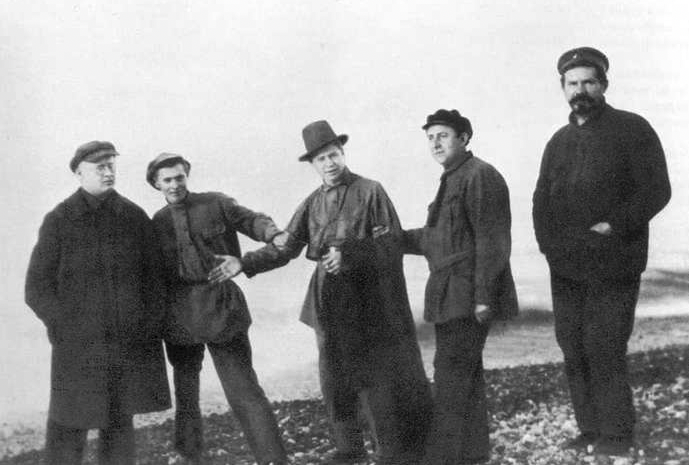
Yesenin (center in the photo) in Batumi, 1924.
Myth 2: Yesenin traveled all over the East — he was in both Bukhara and Samarkand, and even almost in Persia.
This legend is eagerly picked up by mass media. For example, the famous Russian actor Sergei Bezrukov in a recent interview states that "Uzbekistan holds a special place in Yesenin's biography, who visited not only Tashkent but also Bukhara and Samarkand", and that Eastern poetry (including the works of Ferdowsi) deeply inspired the poet. Such assertions create an image of Yesenin as a connoisseur of Eastern countries, literally a wandering Orientalist poet. The reality, however, is much more modest.
Myth 3: In Tashkent, Yesenin indulged in continuous revelry and scandals.
The scandalous reputation of a troublemaker haunted the poet in his homeland, and some authors transfer this image to his Eastern journey as well. In reality, as eyewitnesses note, in Turkestan, Yesenin behaved surprisingly calmly and even sedately. Yes, there was one anecdotal incident: according to Volkov's account, Yesenin once ran out of a concert in a stuffy room where a visiting diva was performing, saying, "I didn't come here for this." On the street, the poet embraced a Bactrian camel and said to it: "Take me away from here, dear, like Majnun…".
This episode vividly shows Yesenin's disappointment in banal "European" leisure (variety shows and cinema — he craved the real East, not cabaret with tango. However, he did not cause any large-scale debauchery or scandals. On the contrary, the poet worked a lot (finished a poem, performed before audiences) and studied — he was learning a new culture.
In Uzbekistan, the memory of Sergei Yesenin has long been preserved: since 1981, the Yesenin House-Museum has been operating in the center of Tashkent. It is no coincidence that the poet's daughter, Tatyana Yesenina, lived in Tashkent for many years, preserving and passing on her father's relics to the museum.
Today we are witnessing a new surge of attention, largely initiated from Russia. The year 2025 has been declared the 130th anniversary of Yesenin's birth, and Russian cultural figures are using this occasion to "bring back" the poet to Central Asia. For example, Bezrukov has launched a whole project: in the autumn of 2025, he is bringing his play "The Hooligan. A Confession" to Tashkent and simultaneously proposes to erect a monument to Yesenin in the city.
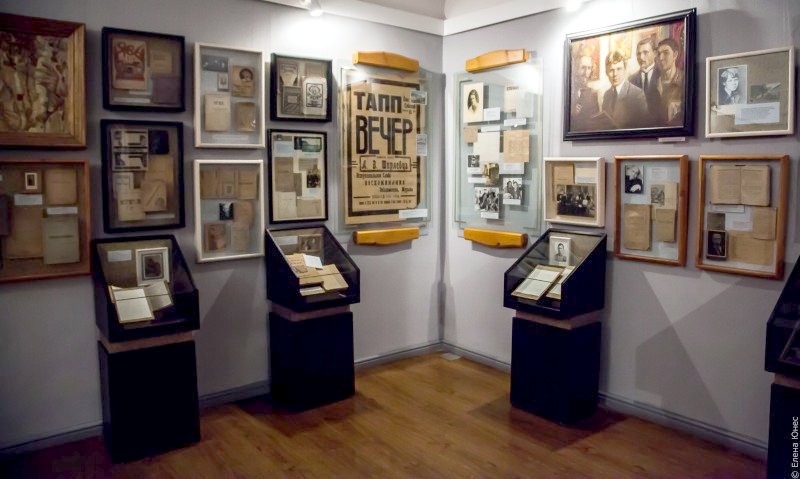
The exhibition of the Yesenin Museum in Tashkent.
According to the actor, the monument will become a symbol of cultural connection between peoples, and Russia is ready to finance the project. "The memory of Yesenin — is a common cultural code for the peoples of the former USSR," — states Bezrukov. He emphasizes the strategic importance of studying Yesenin's poetry in schools of allied countries, calling the poet's verses carriers of the "living soul of Russia."
The head of Rossotrudnichestvo, Yevgeny Primakov, also supports this "Yeseniniana": Russian cultural policy is clearly betting on the "soft power" of poetry, using Yesenin's image as a unifying and nostalgic one for the post-Soviet space.
Here, the "Eastern motif" in Yesenin works more as an artistic device, embellishing and deepening the traditional themes of homeland and love, rather than as a travelogue. His "Persian Motifs" — are largely a mythologized "East," created from real impressions (Tashkent, Transcaucasia) and the poet's rich imagination.
By the way, Yesenin himself, despite the cycle's title, never actually visited Iran. Modern literary scholars emphasize that a brief trip to Turkestan (May-June 1921) and a longer journey to Azerbaijan (late 1924–1925) provided Yesenin with the necessary material and local color, allowing him to "create his own, fairy-tale Persia." However, the poet left no direct sketches about Turkestan — his Eastern experience manifested in his poetry indirectly, through the prism of artistic reinterpretation.
Did you like the story? Subscribe to us on Instagram and Telegram — there's even more interesting content there.
Read also
 Literature and Storytelling
Kazakhstan announces a hunt for readers. Read 15 books and get 10 million tenge
Kairat Baltabai
 Literature and Storytelling
"Days Gone By" Today: Cinema, Theatre and the Living Legacy of Abdulla Qadiri
Christina Inyakina
 Literature and Storytelling
The Doctor Who Changed Literature: Anton Chekhov
Christina Inyakina
Newsletter
A letter from the HD editors
Once a week, we send the best stories, events, and cultural discoveries from Central Asia.