
Nowadays, social media widely categorizes people into "Zoomers," "Millennials," and others: almost any social phenomenon is explained by "generation theory." This concept dates back to American researchers Neil Howe and William Strauss, who in the 1990s proposed that each generation is shaped by common events and values. This gave rise to the now-familiar terms: "Baby Boomers" (born after World War II), "Generation X" (1965–1980), "Millennials" or Generation Y (1981–1996), and finally, Generation Z — Zoomers, who grew up in the digital era.
This theory is not perfect — scientists often criticize it for overly vague boundaries, excessive generalizations, and insufficient attention to the contexts of individual countries. Yet, these labels have taken root in media, marketing, and even politics because they allow for describing major societal shifts in simple terms.
How Gen Z views family and gender
Children of independence — today's zoomers — strive to balance respect for traditions with a desire for change. They grew up in a society with strong patriarchal foundations: many still believe that the man has the final say in the family, and a woman's lot is home and domestic life.
At the same time, there is a noticeable divergence in views among young people. According to a study by UNICEF, young men more often advocate for preserving the traditional order, while young women advocate for equal rights. Essentially, Gen Z sees the future of gender relations in two ways: either a continuation of patriarchy (the viewpoint of the majority of young men) or a move towards equality (the position of many young women).
The youth of Uzbekistan still adhere to family traditions, but they do so more consciously.
For example, traditionally, the youngest son is expected to live with his parents and care for them in their old age. However, Gen Z is not always ready to follow this strictly: if there is an opportunity to arrange care differently, they prefer personal freedom. Family remains an important value, but young Uzbeks want to approach it more flexibly.
Attitudes towards authority are also changing. Older generations expect respect, while Zoomers increasingly want to speak on equal terms. Authorities call the youth the "golden generation" and assure them of support, but young people themselves often feel their opinions are ignored — especially in mahallas, where decisions are made by adults. Zoomers note that they lack dialogue with their parents and want their elders to genuinely take an interest in their opinions and experiences.
Higher Education for Every Fifth Person
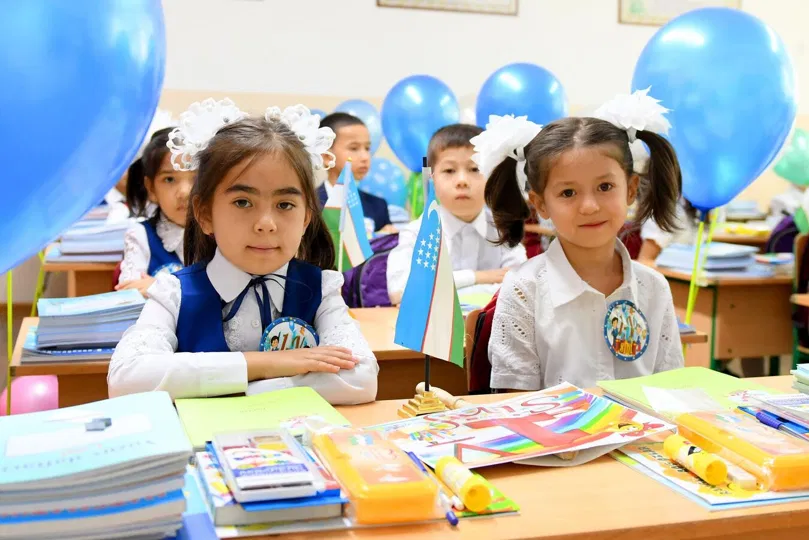
Young people in Uzbekistan aspire to obtain higher education, but it remains a dream for many. On one hand, Gen Z is better informed about opportunities: the internet and globalization provide access to global knowledge. On the other hand, gaining admission to a university within the country is extremely difficult. In 2023-2024, about 800,000–900,000 applicants submitted applications to admissions committees, but only 19%, or roughly one-fifth of the total number, received student IDs.
As a result, thousands of school graduates are left out and try to make their way in life by other means. Some go to private colleges, some go abroad, and some postpone their studies and start working. The statistics on so-called NEETs—young people who are not in education, employment, or training—look particularly alarming. In Uzbekistan, among young people aged 19–30, this figure is already 54.6%, and among young women, it is 74%.
In other words, three-quarters of young women in Uzbekistan do not continue their studies or build a career after school. The reason often lies in social and cultural norms: early marriage, the expectation that a daughter will help with household chores, and the lack of conditions for combining study and motherhood.
READ ON TOPIC:
The state is trying to change the situation. Dozens of new universities and branches have opened in the country, quotas for girls and additional grants are being introduced. But so far, this is not enough—there are more young people than available educational opportunities.
Work without bosses and career sprints
In matters of work and career, Uzbek Zoomers differ significantly from their parents. Previously, landing a government job or a position at a large state-owned company was considered a great success. Today's youth are not particularly enthusiastic about this.
For many, success is not about being appointed to a management position. The Financial Times calculated that 57% of young professionals do not want to become middle managers. And 67% consider such positions too stressful and thankless: the responsibility does not match either the salary or the moral satisfaction.
Generation Z values flexibility, freedom, and self-fulfillment more than status. They care about work-life balance, flexible schedules, and opportunities for development. They are not willing to sacrifice themselves for an organization. Therefore, more and more young people are choosing freelancing, startups, or companies with a flat structure, where there are fewer bosses. As Economic Review notes, Gen Z's drive for entrepreneurship is linked to the desire to work freely and by their own rules.
Why young people dream of leaving
One of the notable traits of Uzbek Gen Z is a drive for mobility. Many think about studying or working abroad. When they cannot realize their ambitions at home, emigration seems like a real opportunity to start a better life. According to UNICEF, the main reasons for leaving are the desire to study, live better, and have more career opportunities.
For young city dwellers, the priority is to get an education, while for rural residents, it's to earn money and support the family.
These sentiments reflect the demographics. In Uzbekistan, more than half the population is under 30. The economy cannot create enough jobs, especially skilled ones, so more and more young people are "looking" abroad.
Currently, the main direction of labor migration is Russia. According to data from the Migration Agency, at the beginning of 2025, 698 thousand Uzbek citizens were working there. In recent years, more and more educated zoomers aspire to go further — to Europe, America, or East Asia. The state is trying to contain the "brain drain." On the initiative of the president, the "El-Yurt Umidi" (Nation's Hope) fund operates, which pays for education abroad on the condition that students return to their homeland.
However, opinions among Gen Z on this matter are contradictory. On one hand, the majority do not want to leave permanently: according to surveys, 80% are against moving even within the country — being close to family and living in a familiar environment is important to them. On the other hand, the economic situation forces young men, who follow the patriarchal tradition of providing for the family, to seek work abroad. Women, however, are more often opposed to their husband's departure.
Activism: From Volunteering to Online Protests
Uzbek Gen Z grew up in a more open information environment and are better informed about events in the country and the world. According to UNICEF, 75% of young people follow the political agenda. The paradox is that they are in no hurry to actively participate in politics. Only one in six young Uzbeks over 18 (16.1%) is a member of public or political organizations.
Gen Z individuals more often express their activism in safer areas. Helping an orphanage, raising funds for treatment, cleaning up a park from trash—such initiatives find a response.
It's interesting that young Uzbeks feel a relatively high degree of freedom of speech. To the question "Can you freely express your opinion publicly?" 87.2% of respondents answered affirmatively. A vivid example is the "Я/Мы Эвелина" ("I/We Evelina") campaign against violence against women. In the spring of 2020 in Fergana, a man avoided punishment for brutally beating a 17-year-old girl. Thousands of young Uzbeks began sharing their experiences of violence, posting illustrations and videos under the hashtag #ЯМыЭвелина. This flash mob was called the Uzbek analog of #MeToo.
Another example is environmental activism. In February 2025, activists in Tashkent collected over 1,500 signatures in two days against the felling of trees in the "Ankhor-Locomotive" park. It turned out that this green area was intended to be given over for residential complexes, a shopping center, and an aparthotel. Bloggers joined the campaign, including eco-activist Muattar Khushvaktova (Urikguli). The construction was suspended, and the fate of the park began to be decided with public opinion taken into account.
In January 2024, capital city bloggers, artists, and eco-activists held a flash mob under the hashtag #TozaHavoKerak ("Clean Air Needed"). Besides Urikguli, rapper Konsta, stand-up comedian Mirshakar Fayzullaev, bloggers Umid Gafurov (Troll.uz), Mirzayor Erkinov, and others participated in it. Student and musician Lailo Rikhsieva (known as Laylo) released a music video for the song "Home" — it tells about the catastrophic consequences of deforestation, aggressive development, air pollution, and the problems of the Aral Sea and the Sardoba Reservoir.
It is still too early to talk about a mass protest movement among youth in Uzbekistan. Nevertheless, the fact that Generation Z is discussing sensitive topics and uniting to solve problems is in itself a new phenomenon. Young Uzbeks are increasingly voicing their values: they are for clean cities, against domestic violence, and for opportunities for self-expression. Their activity is primarily manifested online, but the results are already noticeable.


