Symbols & Meanings
Akyns, Tigers, and Turkmenbashi: Top 11 Most Fascinating Banknotes of Central Asia
National currency serves as both an economic instrument and a visual code of a country. The ornaments and portraits that Central Asian nations place on their banknotes encode key narratives of national history and the most significant cultural phenomena. We've compiled a selection of the region's most interesting and visually significant banknotes.
Tenge (Kazakhstan)
Exchange rate: 1 USD ≈ 540 KZT
Silver coins of the Golden Horde were minted on the territory of present-day Kazakhstan as early as the 12th–14th centuries, and the name of the modern currency "tenge" derives from the ancient Turkic "denga"—the name for Turkic silver coins (from which, incidentally, the Russian word "деньги" [den’gy] also originated). After the collapse of the USSR, Kazakhstan became the first Central Asian country to introduce its own currency. The old-design banknotes were printed in Great Britain, but their design was developed by Kazakhstani artists.
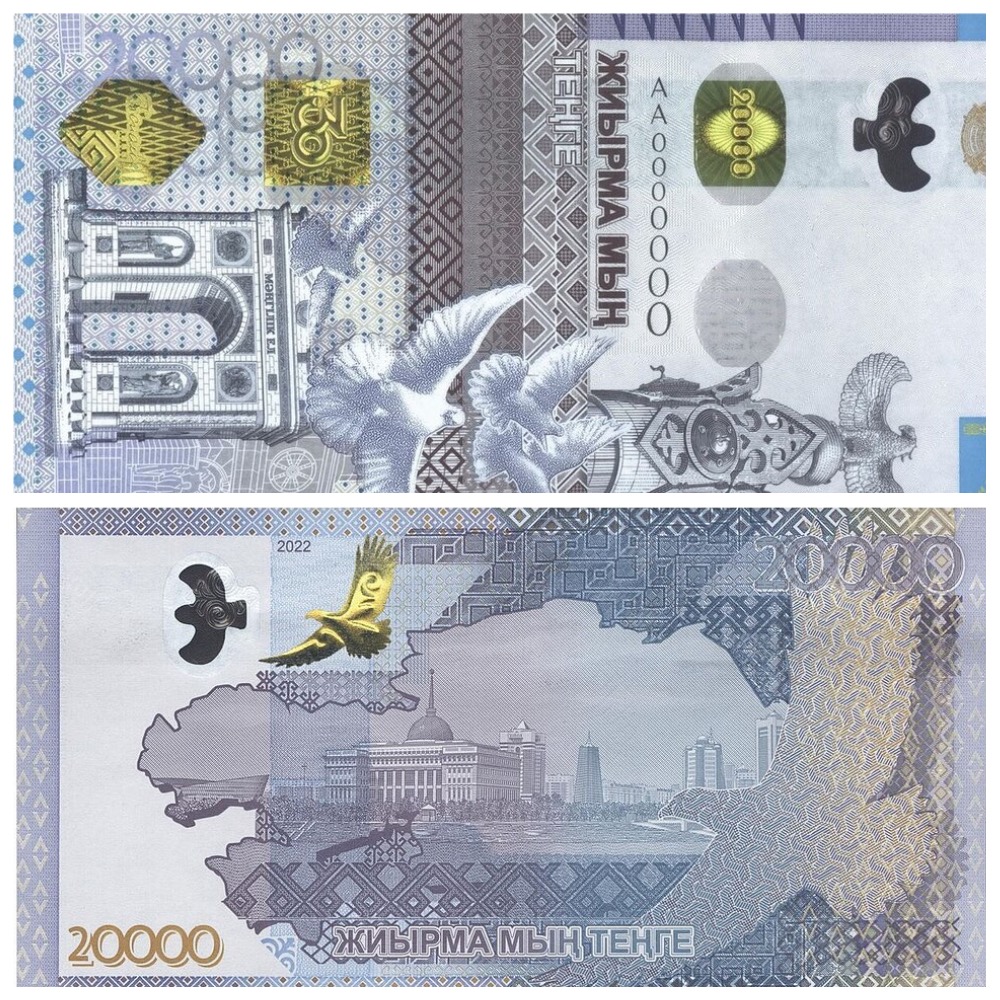
20,000 tenge: Triumph of Independence
- Years in circulation: since 2022
- Design: The banknote's design is dedicated to the twentieth anniversary of the introduction of the national currency. Featured are the «Қазақ Елі» monument, doves as a symbol of peace, the triumphal arch «Мәңгілік Ел,» the coat of arms, and the flag. On the reverse: the presidential residence"Akorda," and the buildings of parliament and government.
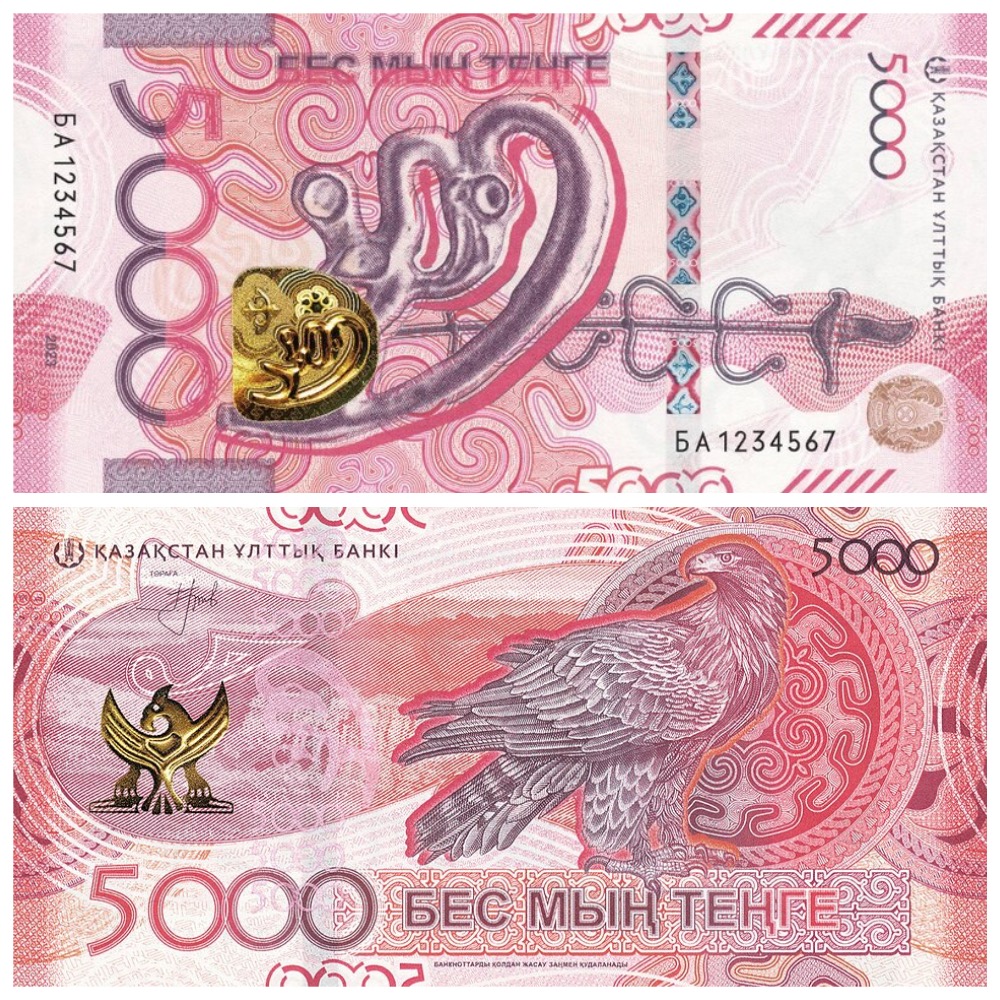
5,000: Saka Style and Golden Eagle
- Years in circulation: since 2023
- Design: The Saka style references ancient Turkic motifs—featuring a golden eagle, the "tree of life," finds from the "Issiq" and Taldy-II burial mounds, as well as the "Golden Man."
Som (Kyrgyzstan)
Exchange rate: 1 USD ≈ 88 KGS
Among all CIS currencies, the som boasts the lowest cumulative inflation rate throughout the entire post-Soviet period. The currency's name refers to the Turkic word "som," meaning "pure" (som altın—"pure gold"). This word was first recorded in the 11th century by the great lexicographer Mahmud al-Kashgari.
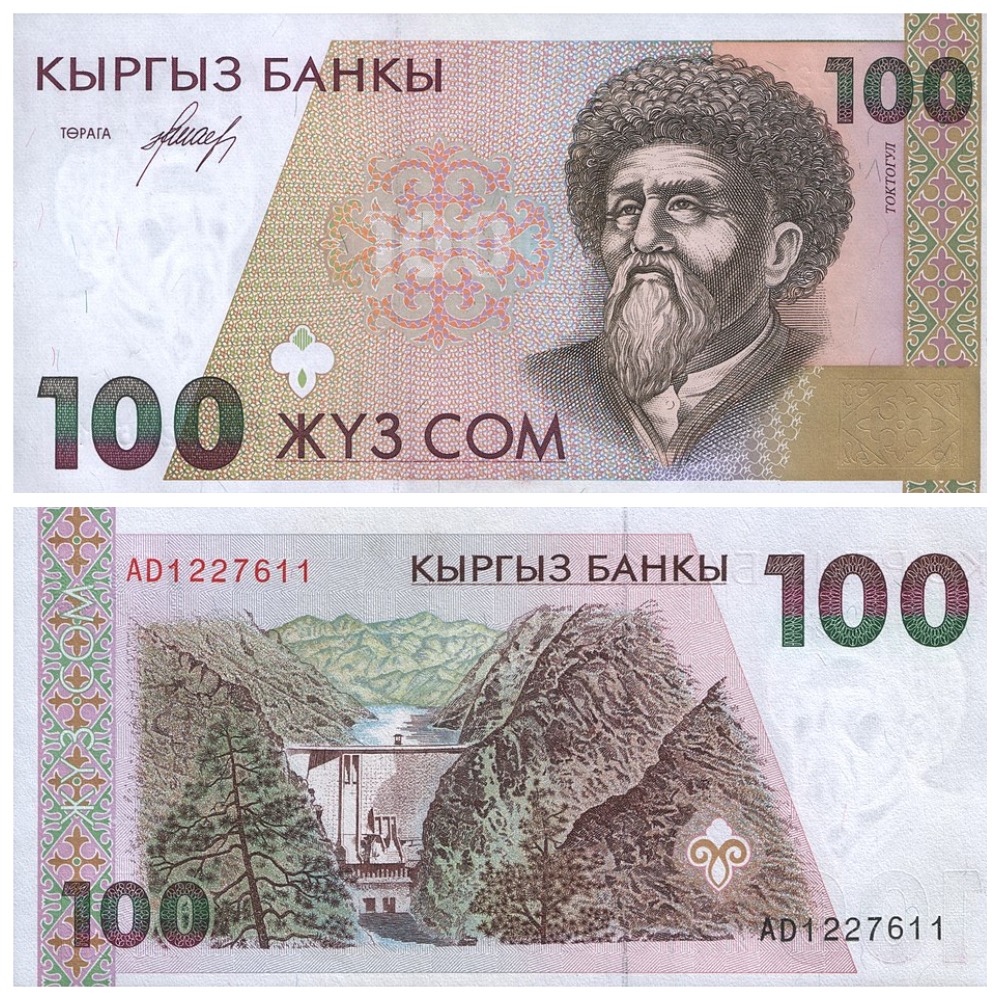
100 som: Komuz Player and Hydroelectric Power Station (1995)
- Years in circulation: 1995–2008
- Design: A portrait of the legendary folk akyn of Kyrgyzstan, singer and komuz player Toktogul Satylganov (1864–1933), and the dam of the Toktogul Hydroelectric Power Station as two sources of energy: spiritual, which nourishes identity, and electrical.
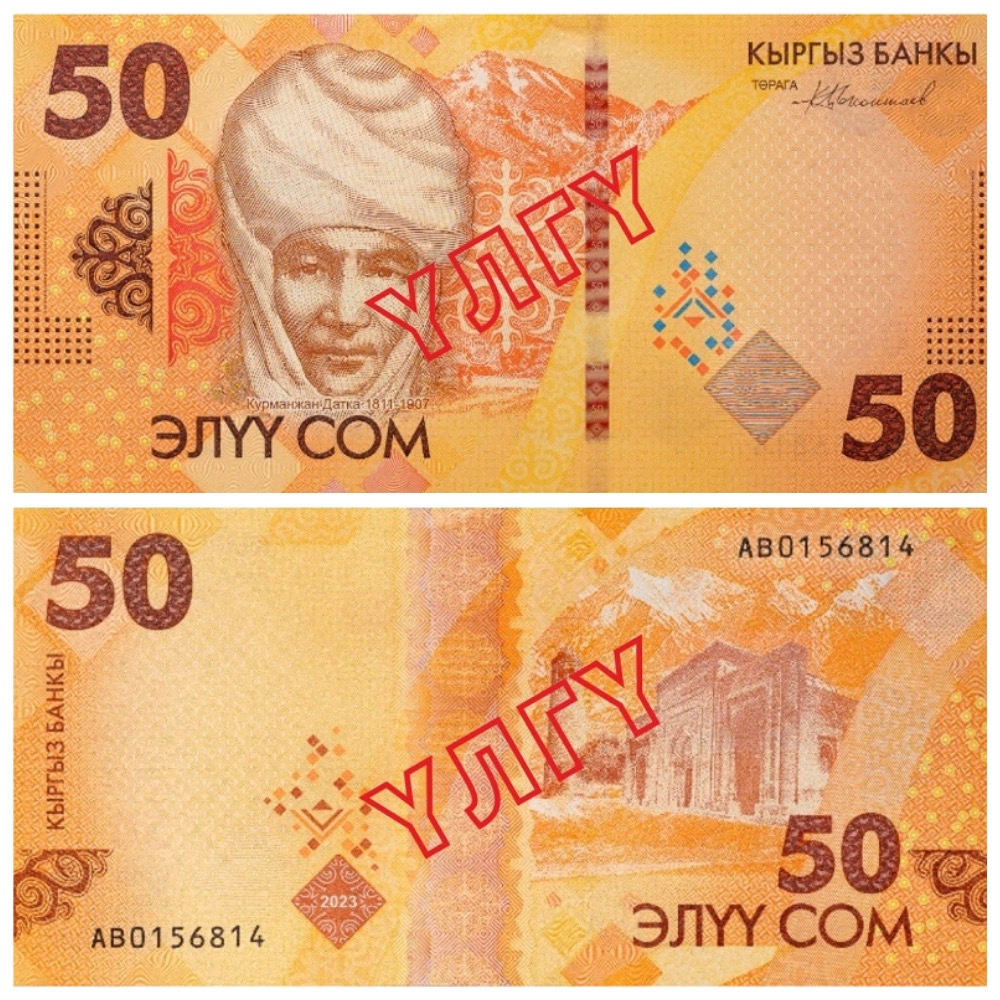
50 som: Queen of Alai
- Years in circulation: since 2024
- Design: Kurmanjan Datka, leader of the Alai Kyrgyz, who managed to preserve the unity of her people during the era of confrontation with the Russian Empire, as well as the Uzgen Mausoleums of the Karakhanids—one of the rarest monuments of Islamic culture in the region.
Somoni (Tajikistan)
Exchange rate: 1 USD ≈ 9,45 TJS
Tajikistan became the last post-Soviet country to acquire its own currency. Due to the civil war in the early 1990s, Soviet and later Russian rubles remained in circulation. In May 1995, the first national currency appeared—the Tajik ruble. In 2000, it was replaced by the somoni, named after the founder of the Tajik state, Ismoil Somoni.
The first issue of somoni was designed and printed in Germany by Giesecke & Devrient. Coins were minted in St. Petersburg and later at the Kazakhstan Mint.
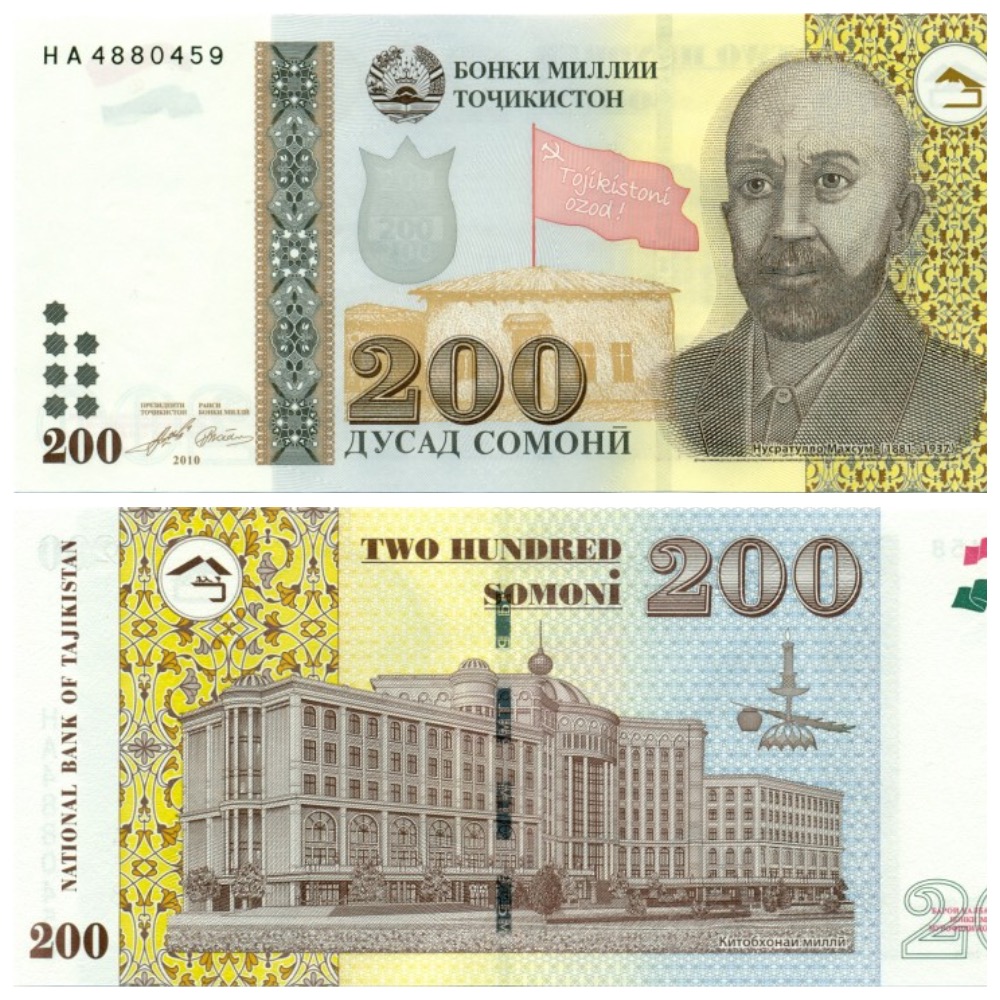
200 somoni: Victim of Stalin's Repressions
- Years in circulation: since 2010
- Context: The obverse features Nusratullo Makhsum—a statesman and public figure, one of the founders of Tajik statehood, honored with the title Hero of Tajikistan. The composition is complemented by an image of the building of the Central Executive Committee of the former Council of People's Commissars of the Tajik ASSR, a landmark structure from the era of Soviet statehood formation. The reverse depicts the National Library of Tajikistan in Dushanbe.
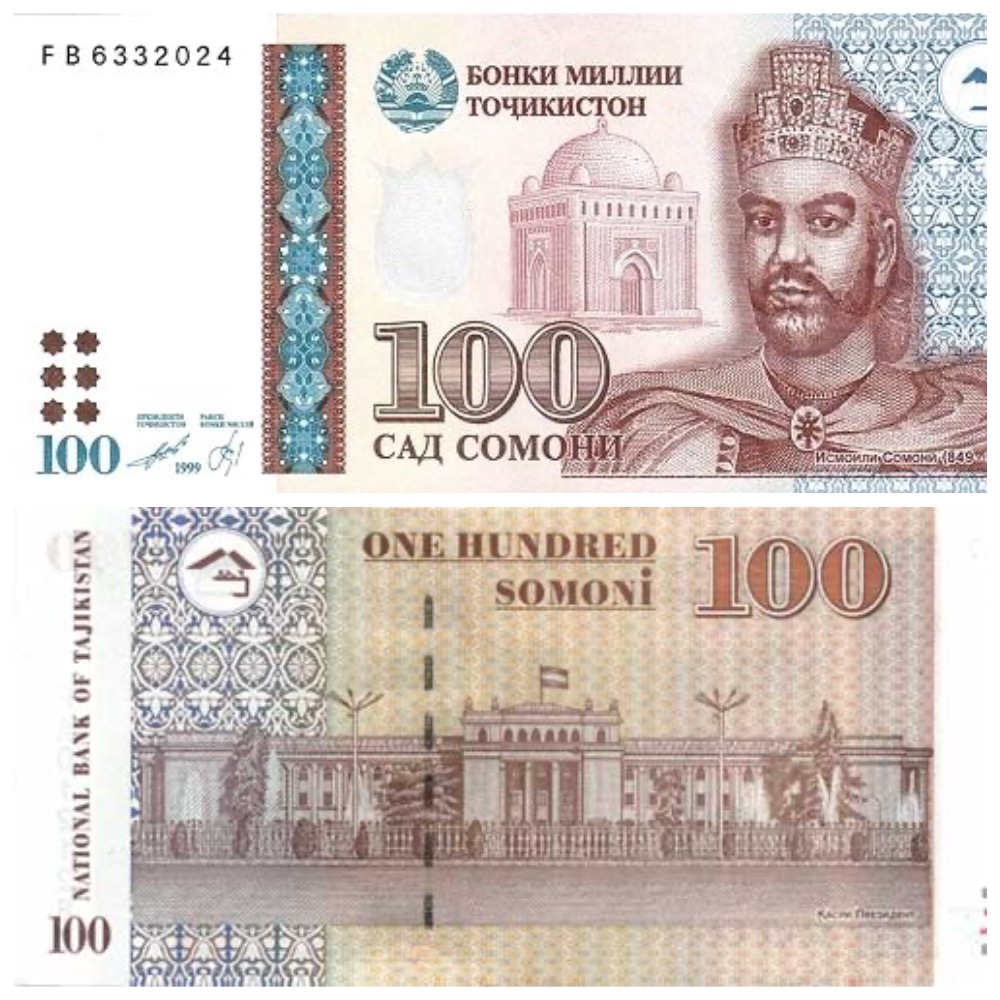
100 somoni: Father of the Tajik Nation
- Years in circulation: since 1999
- Design: The obverse of the banknote features Abu Ibrahim Ismail ibn Ahmad Samani, emir of the Samanid dynasty and founder of the first Tajik state in Central Asia. His reign (9th–10th centuries) marked the establishment of the Samanids as a powerful dynasty and an important milestone in the region's history. Next to it is placed the coat of arms of Tajikistan, adopted in 1993. The reverse showcases the Presidential Palace building in Dushanbe.
Manat (Turkmenistan)
Exchange rate: 1 USD ≈ 3,50 TMT
The word "manat" was borrowed from Russian, where the word "moneta" (coin) derives from the Latin "the one who warns" or "adviser."
In 1990, the Russian "Goznak" was considered for producing paper manats, but amid the "parade of sovereignties," this idea was postponed—the tender was ultimately won by the British company De La Rue. The design was developed by artist Haji Atakayev. All early-issue banknotes featured portraits of President Saparmurat Niyazov.
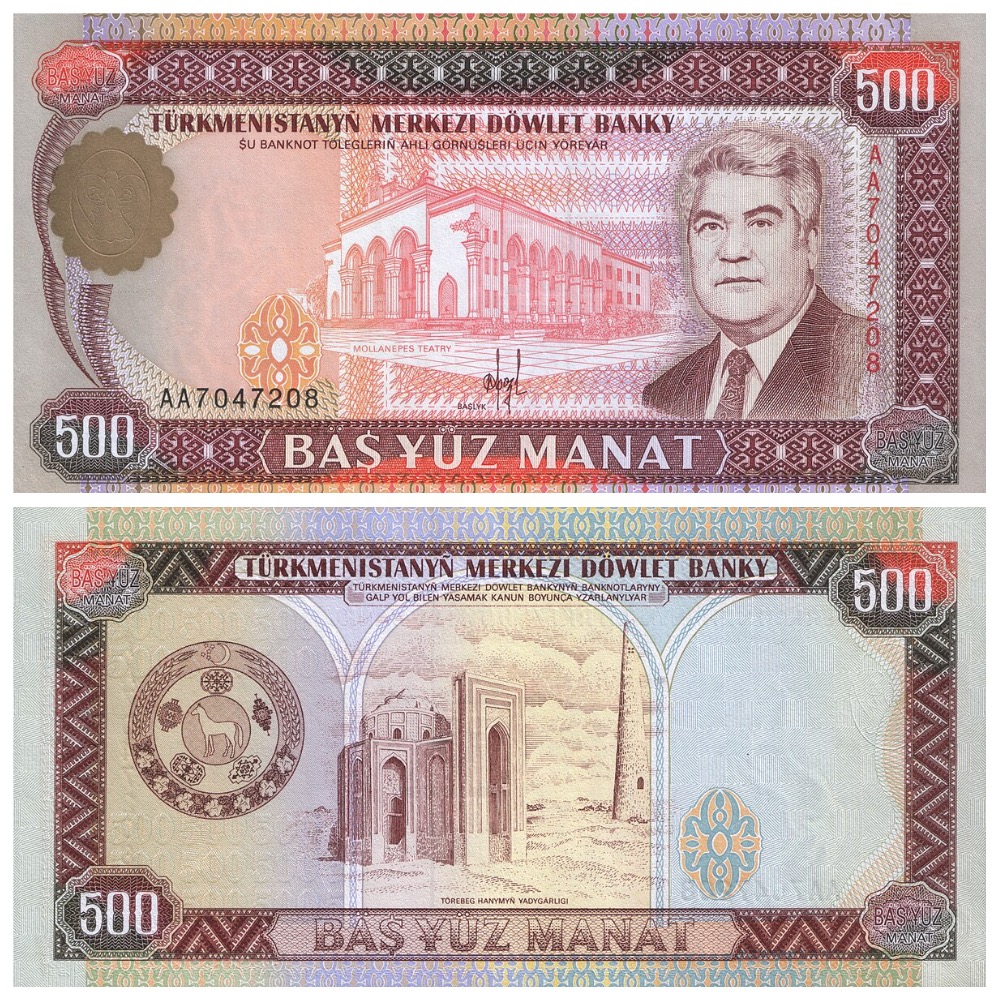
500 manat: Cult of Personality and Cultural Heritage
- Years in circulation: 1993–2009
- Design: The obverse features a portrait of President Saparmurat Niyazov and the building of the Turkmen Drama Theater named after Mollanepes—one of the most recognizable monuments of Stalinist architecture in Ashgabat. On the reverse—the Turabek-Khanym Mausoleum, a unique 14th-century architectural monument in Dashoguz Province.
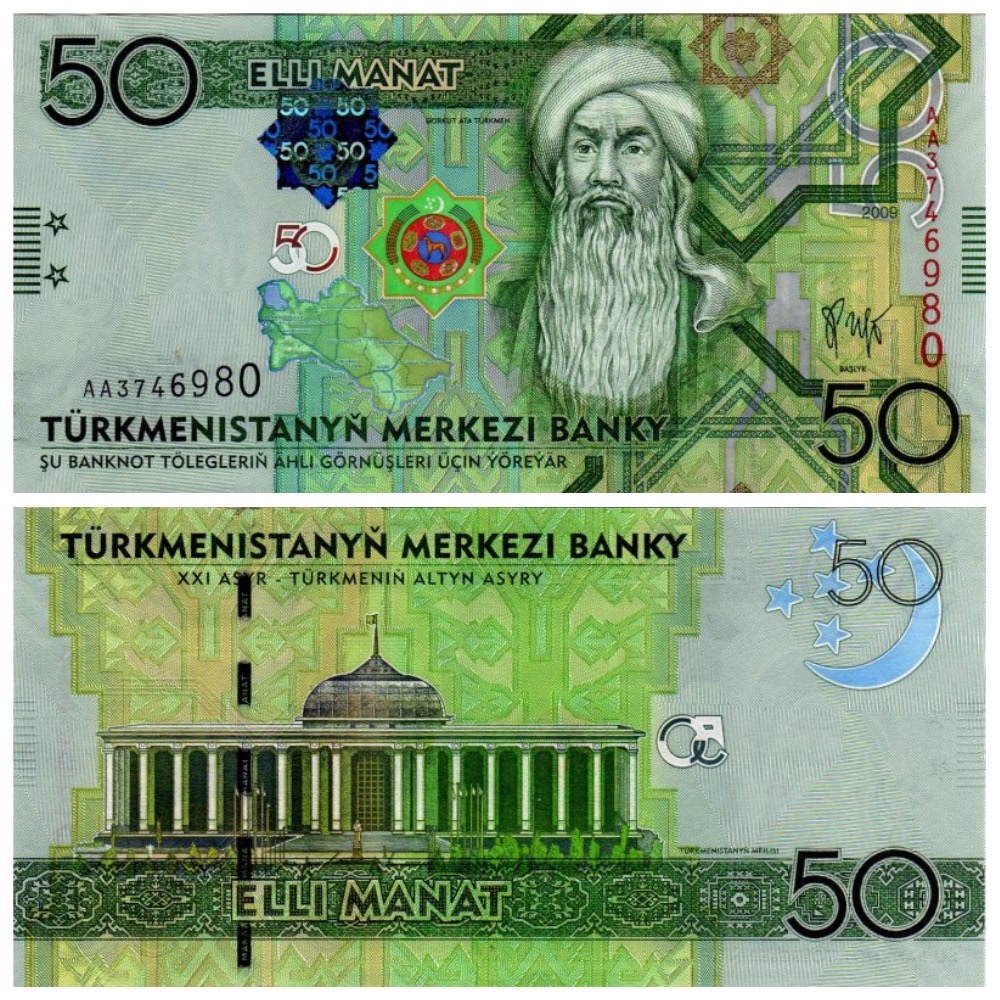
50 manat: Creator of the Kobyz
- Years in circulation: since 2009
- Design: The obverse depicts Korkut—a sage, poet, and musician revered in the Turkic world, the presumed creator of the kobyz, while the reverse features the building of the Mejlis of Turkmenistan (parliament) in Ashgabat.
Sum (Uzbekistan)
Exchange rate: 1 USD ≈ 12422 UZS
The Uzbek sum appeared in 1994, replacing Soviet and Russian rubles as well as temporary "sum coupons." The name itself, like the Kyrgyz som, refers to the Turkic word meaning "pure." The first sum banknotes looked ascetic: no portraits, only national ornaments and the coat of arms. Initially they were printed in Great Britain (Harrison & Sons Ltd) and Germany (Giesecke & Devrient). Over time, production was transferred to the state enterprise "Davlat belgisi."
Inflation quickly turned the Uzbek currency into a record-holder among post-Soviet countries—the 200,000 sum banknote issued in 2021 became the largest denomination note in circulation in the CIS.
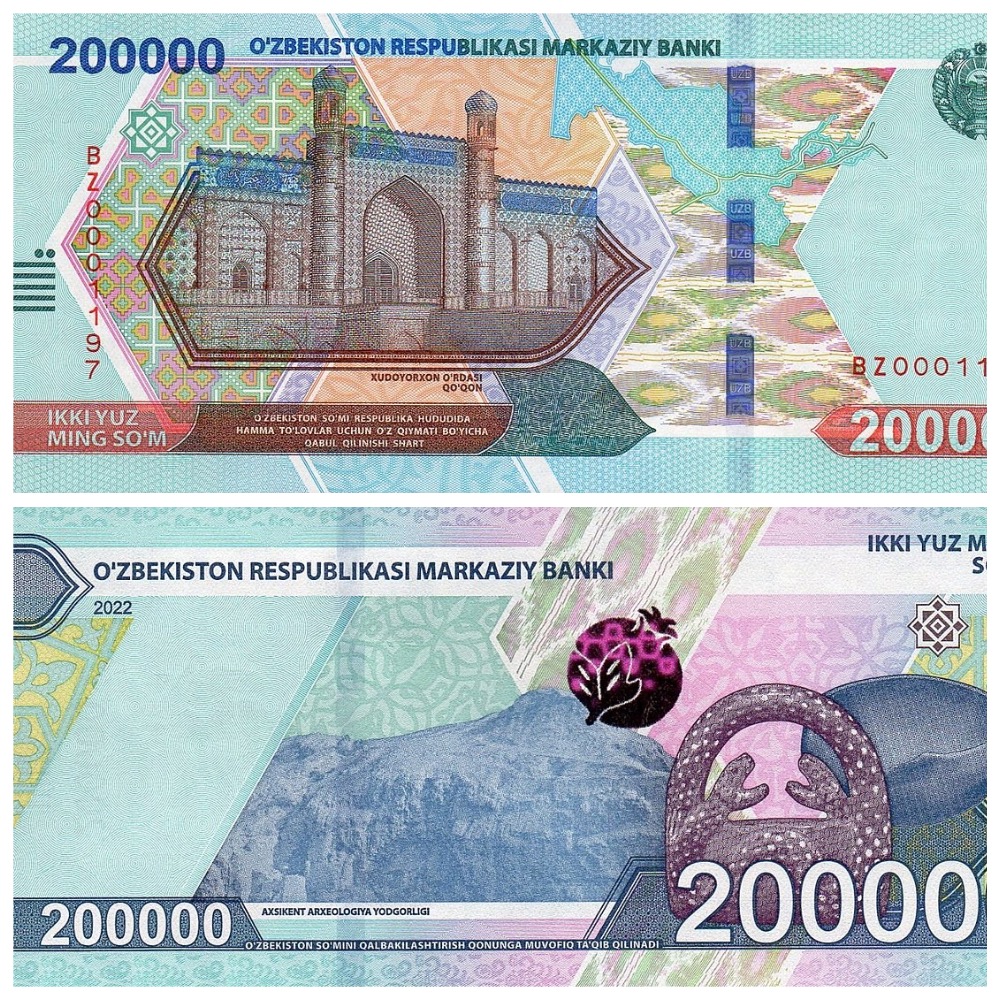
200,000 sum: Great Silk Road
- Years in circulation: since 2022
- Design: The obverse depicts the Khudayar Khan Palace in Kokand, with a tactile element for the visually impaired, while the reverse shows the Akhsiket settlement (3rd century BC), the former capital of the ancient Fergana state. In the center is placed a Spark Live security element in the form of a pomegranate, and nearby a ceramic bowl and a 2nd millennium BC talisman.
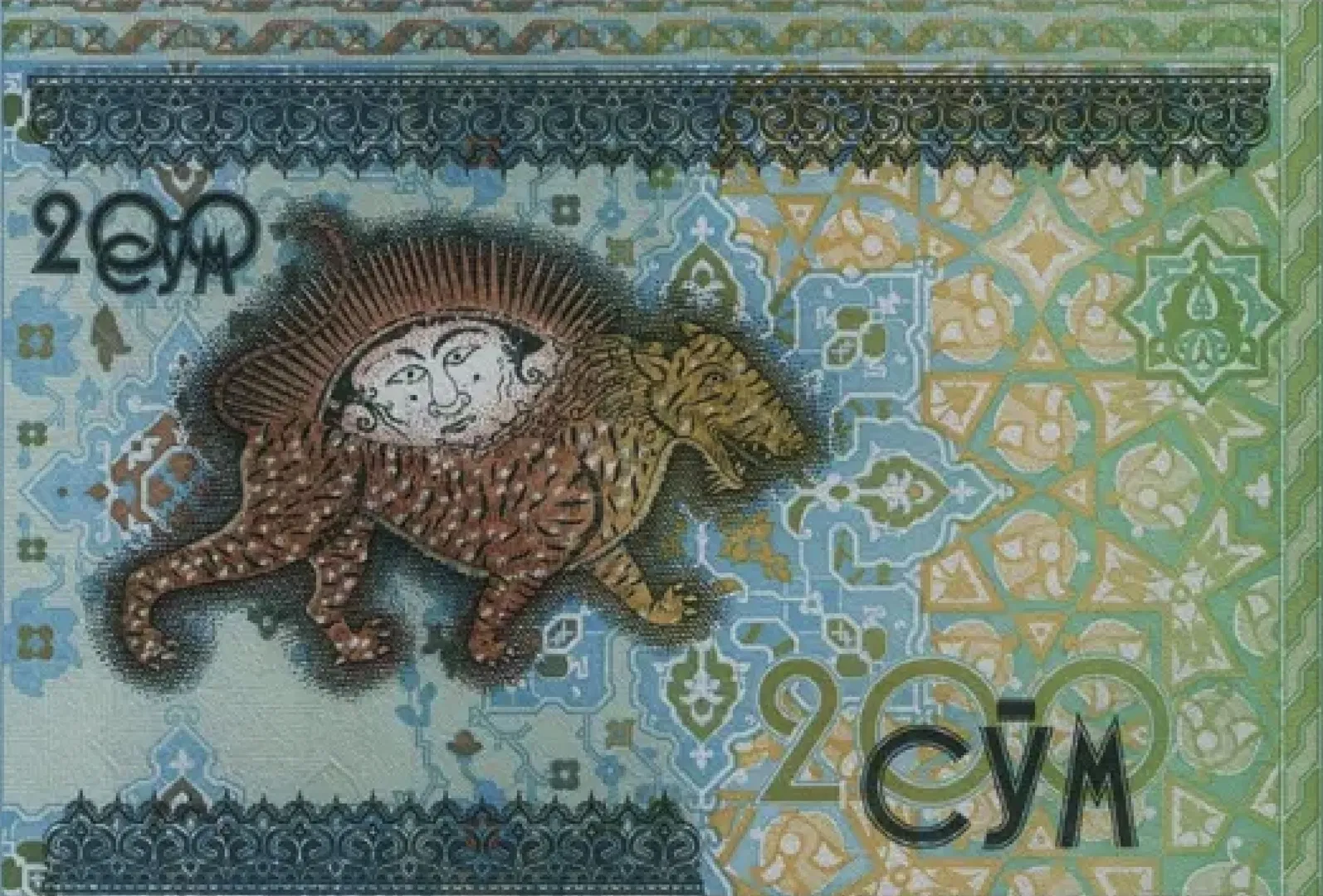
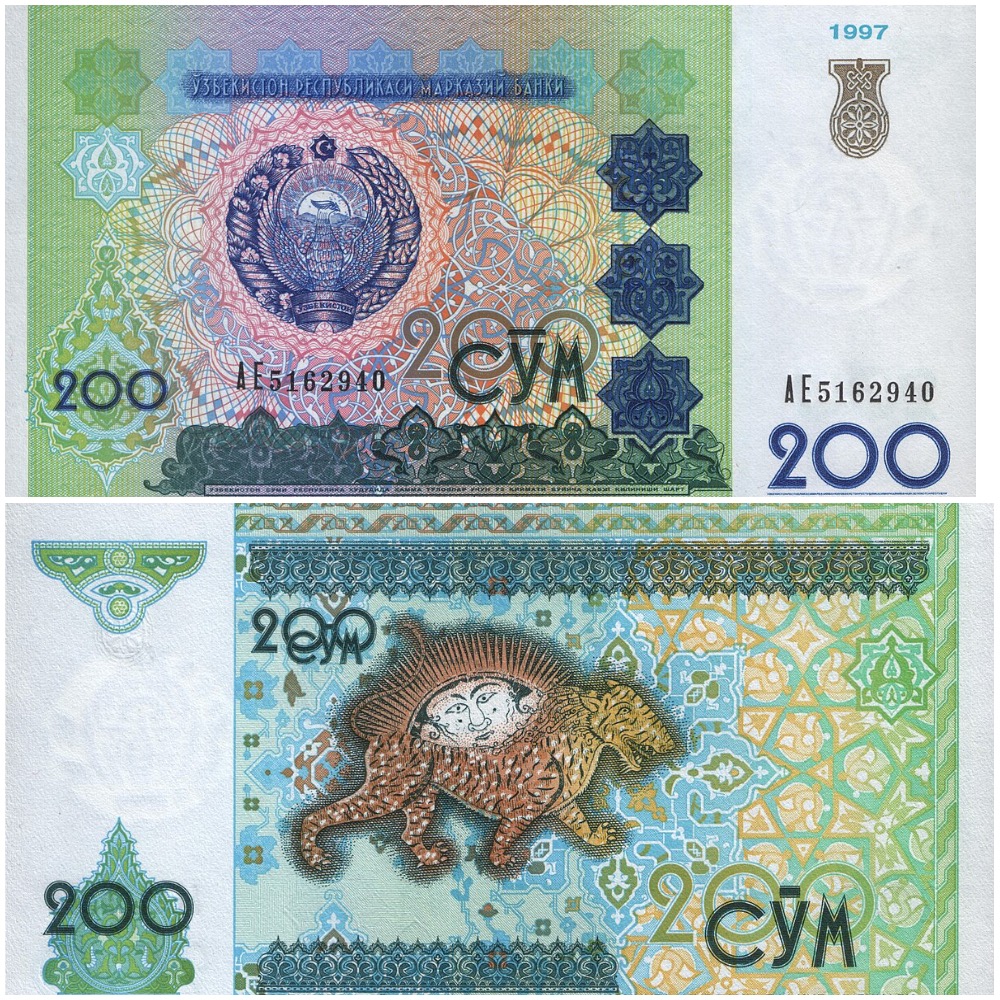
200 sum: Tiger and Sun
- Years in circulation: 1997–2020
- Design: The obverse features the state coat of arms in the center, with blue and green ornaments in the form of octagons, while the reverse displays a recognizable fragment of the facade of the Sher-Dor Madrasah in Samarkand: a stylized tiger with the sun on its back.
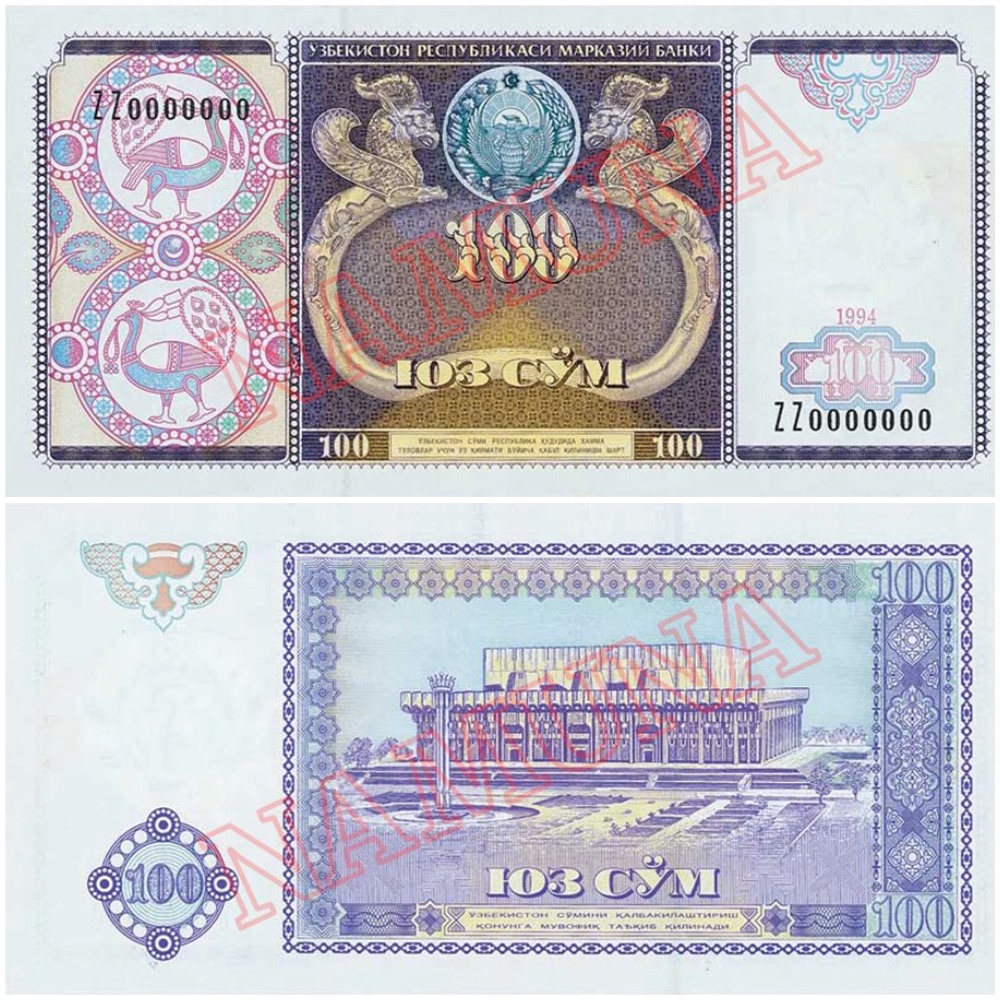
100 sum: Griffins and Palace of Friendship of Peoples
- Years in circulation: 1994–2019
- Design: The obverse features the country's coat of arms and a decorative bracelet with figures of griffins from the Oxus Treasure. The reverse displays the Palace of Friendship of Peoples—an example of Soviet modernism, built according to the design of Soviet architect Evgeny Rozanov in 1981.
Central Asia was not only a crossroads of the Great Silk Road but also one of the first regions where many different currencies could be found in circulation—from Chinese "pigtail coins" to Arab dirhams. Paper money occasionally appeared on the territory of present-day Central Asia under the influence of China and the Golden Horde, but never took root: metal money proved more familiar.
However, there were also indigenous monetary units: in 8th-century Bukhara, they minted their own silver coins with Kufic inscriptions, and in 19th-century Kokand—copper puls and silver tangas.
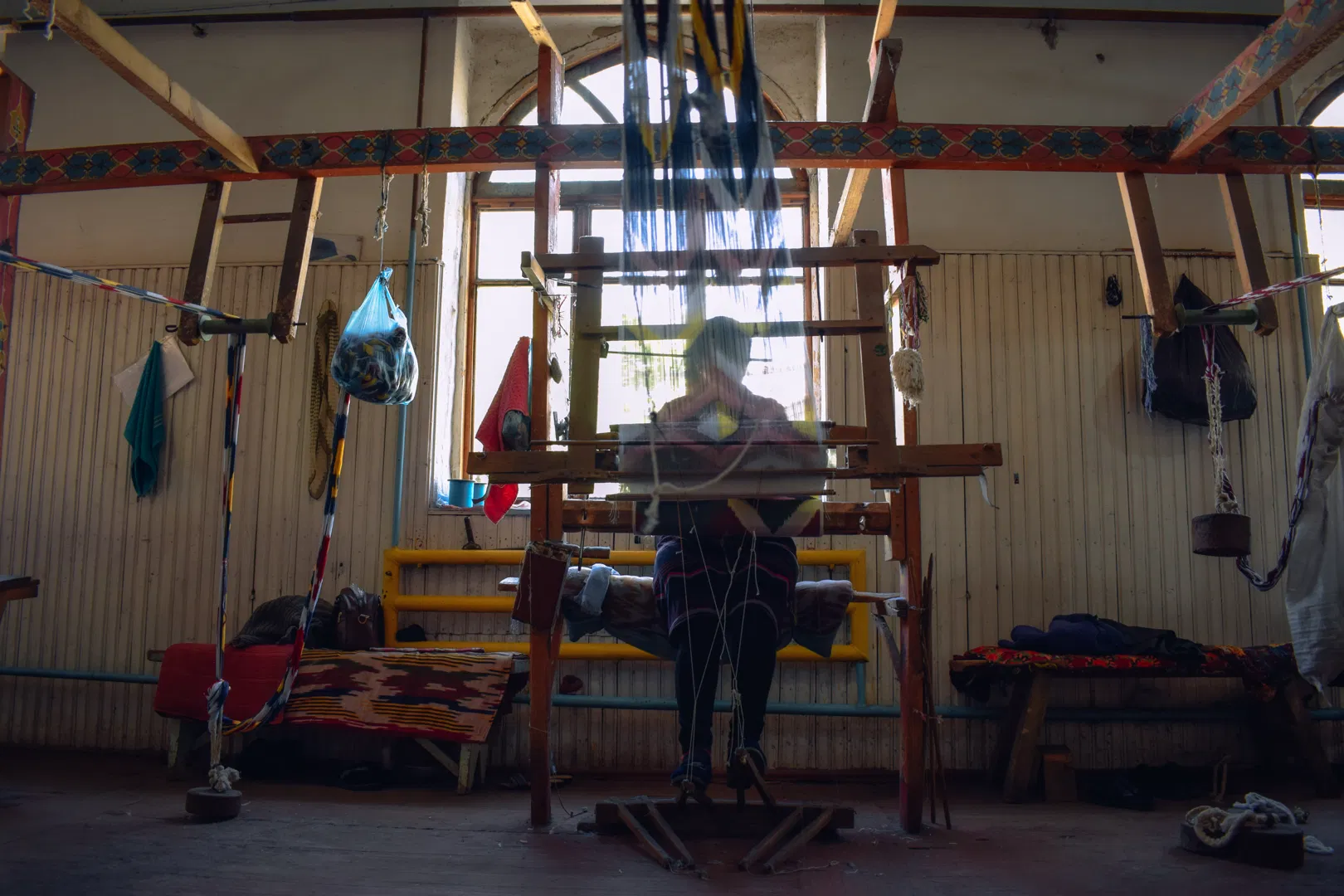
In 1918, the government of the Khanate of Khiva decided to conduct a monetary reform, withdrawing silver and copper coins from circulation and replacing them with banknotes. Due to a shortage of paper, locally produced silk was used to manufacture the banknotes. A piece of green or red silk fabric was woven on a loom, which was then cut into patches measuring 15×11 cm. All inscriptions and images were applied by hand using a stamp-cliché. Mainly two colors were used—black and red.
Did you like the article? Support us on Instagram and Telegram.
Newsletter
A letter from the HD editors
Once a week, we send the best stories, events, and cultural discoveries from Central Asia.