UPD:
How It All Started
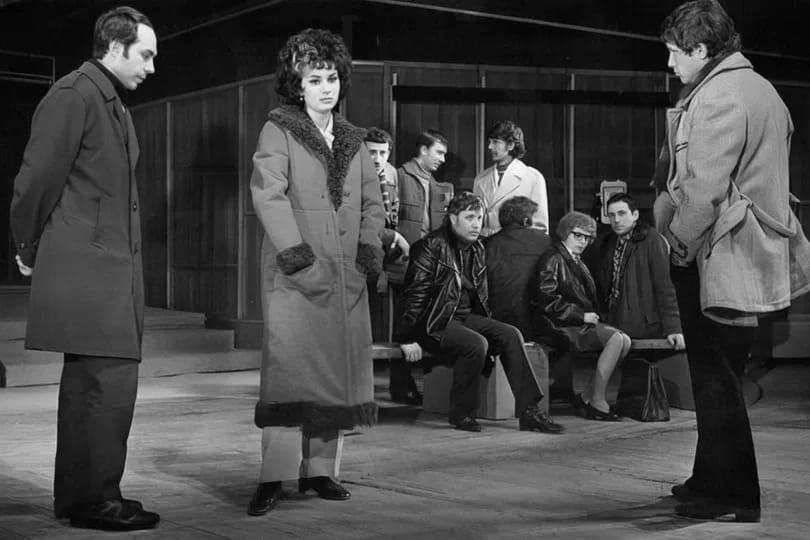
In 1976, in the basement of the "Shodlik" hotel building (the future Shodlik Palace), Mark Weil, together with his students and colleagues, created the ESTM "Ilkhom" — the first professional non-state theater troupe in the USSR. The theater was born without grand declarations, but with perseverance and faith in the freedom of the stage: here, they relied not on ideology, but on metaphor and living speech. Performances went on without the censorial "preview" — a step risky for that time, but fundamental for the founders. The turning point came in 1982, when "Ilkhom" first performed on the small stage of the Mossovet Theatre in Moscow. The public began talking about "new energy from the East," and the theater itself, finding itself in the spotlight, preserved the most important thing — the right to its own voice and independence.
In the 1980s, Ilkhom moved away from verbal dominance towards physicality and musical scores: it was then that "Ragtime for Clowns" (1986) and "Clomadeus" (1988) were born, establishing the company's recognizable style. After 1991, the theater explored local themes — from old Tashkent in "The White White Black Stork" to the bold "Imitations of the Quran".
These productions cement "Ilkhom's" reputation as an "island of freedom" — a space where contemporary plots and classics sound modern and sharp, and artistic independence is not declared but built in practice.
The Murder of Mark Weil
September 7, 2007, became a turning point for Uzbek theater. In the evening, while returning home after a rehearsal of Aeschylus's "Oresteia," Mark Weil was fatally wounded at the entrance to his building. He was 55 years old.
The reasons for the tragedy have never been fully clarified. Many linked it to Ilkhom's repertoire: bold productions, such as "Imitations of the Quran" based on Pushkin or "The White, White Black Stork" based on Abdulla Qodiriy, raised themes of religion, forbidden love, lack of freedom, and social pressure. These performances caused resonance and criticism from conservative circles, as well as open pressure on the theater.
In 2008, a court in Tashkent found three men guilty of the director's murder. Tajik citizen Yakub Gafurov, who inflicted the fatal knife wound, received 20 years of imprisonment. Two former police officers, who helped organize the crime, were sentenced to 17 years in prison. The defendants claimed the motive was the staging of "Imitation of the Koran," although the investigation did not reach a definitive conclusion about the real reasons for the murder.
The death of the founder was a shock for the troupe. But, as Boris Gafurov recalls, the collective decided: "The place created by the Master must live." A student and colleague of Weil, he took on the leadership of the theater, although he admitted that this decision was not easy for him: the responsibility for the legendary theater was both heavy and honorable.
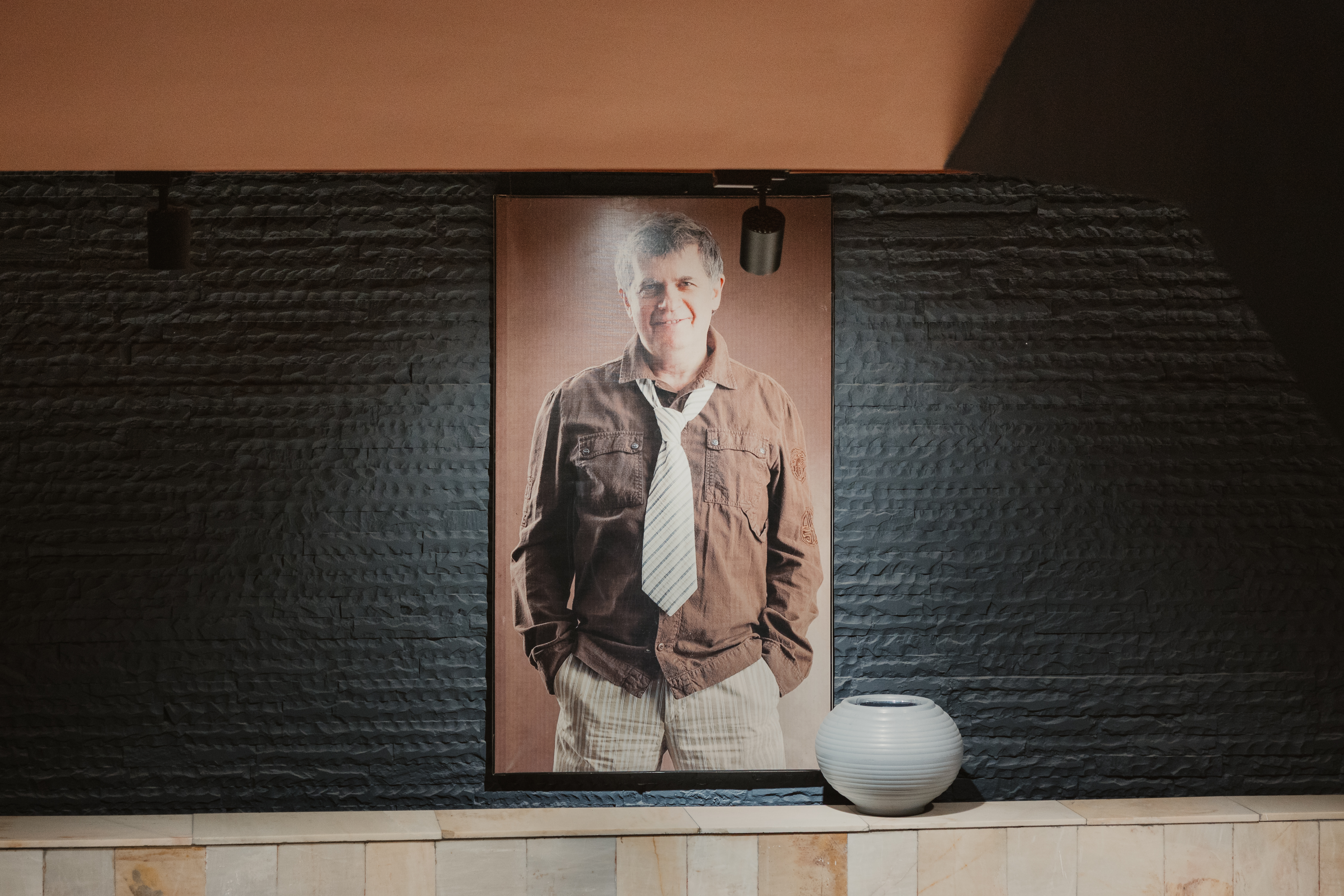
Portrait of Mark Weil in the theater lobby. Photo: HD magazine
The first seasons after the founder's death were a time of trials: a lack of funds, pressure, and the threat of closure accompanied every step. However, the main principles of "Ilkhom" were preserved: independence from censorship and bureaucratic dictate. "In state theaters, a commission makes the decision, but at 'Ilkhom,' it's the audience. If a production doesn't find a response, it simply disappears from the repertoire," notes Gafurov.
The death of Mark Weil was a turning point, but not the end. Ilkhom continued to live — as a memory of its creator and as a challenge to circumstances.
From #SaveIlkhom to the Fight Against Censorship
For "Ilkhom," independence is not a slogan but a daily reality. "We are not on subsidies, which means no one dictates to us what to stage or what to perform about," emphasizes Boris Gafurov. All decisions are born within the theater, but the final verdict comes from the audience: "Commissions may think what they need, but if the audience doesn't come, there will be no performance. That's how it should be in a living theater."
Freedom has a price. The theater relies on ticket sales and support from international partners. "The downsides of a catastrophic lack of funds for salaries, premises, and equipment maintenance are obvious. Theater is an expensive art form, and tickets cannot fully cover the costs: the hall only has 150 seats," notes Gafurov. Even tours become a serious challenge: flights and transporting the troupe from Uzbekistan are expensive.
"We only agree where partners cover all expenses. Otherwise it's unaffordable," he adds.
However, international donors do not influence the repertoire in any way. The Goethe-Institut, the French Cultural Center, and the Swiss Agency for Development and Cooperation (SDC) have supported the theater for years. With the assistance of the latter, the Central Asian Young Directors Laboratory was established at Ilkhom in 2005.
It has become the most important part of the theater: dozens of participants have passed through it, including six from Uzbekistan and several actors from "Ilkhom." The laboratory has yielded tangible results for the theater itself: it gave rise to Anton Pakhomov's "Clay Letters, Floating Apples," which entered the repertoire as "Delhi Dance" (2022), as well as new plays selected for production in the anniversary season: "Hey, Belyash" by Nilguna Bakhromzoda and "A Tale of Two Stones" by Natalia Li.
Charity is more complicated in Uzbekistan. "We have absolutely no culture of philanthropy. For us, it's 'quid pro quo'," admits Gafurov. Therefore, gestures from private companies are especially valuable: Kapitalbank and Uzum helped strengthen the stage, update the sound system, and restore the exhibition hall after a fire.
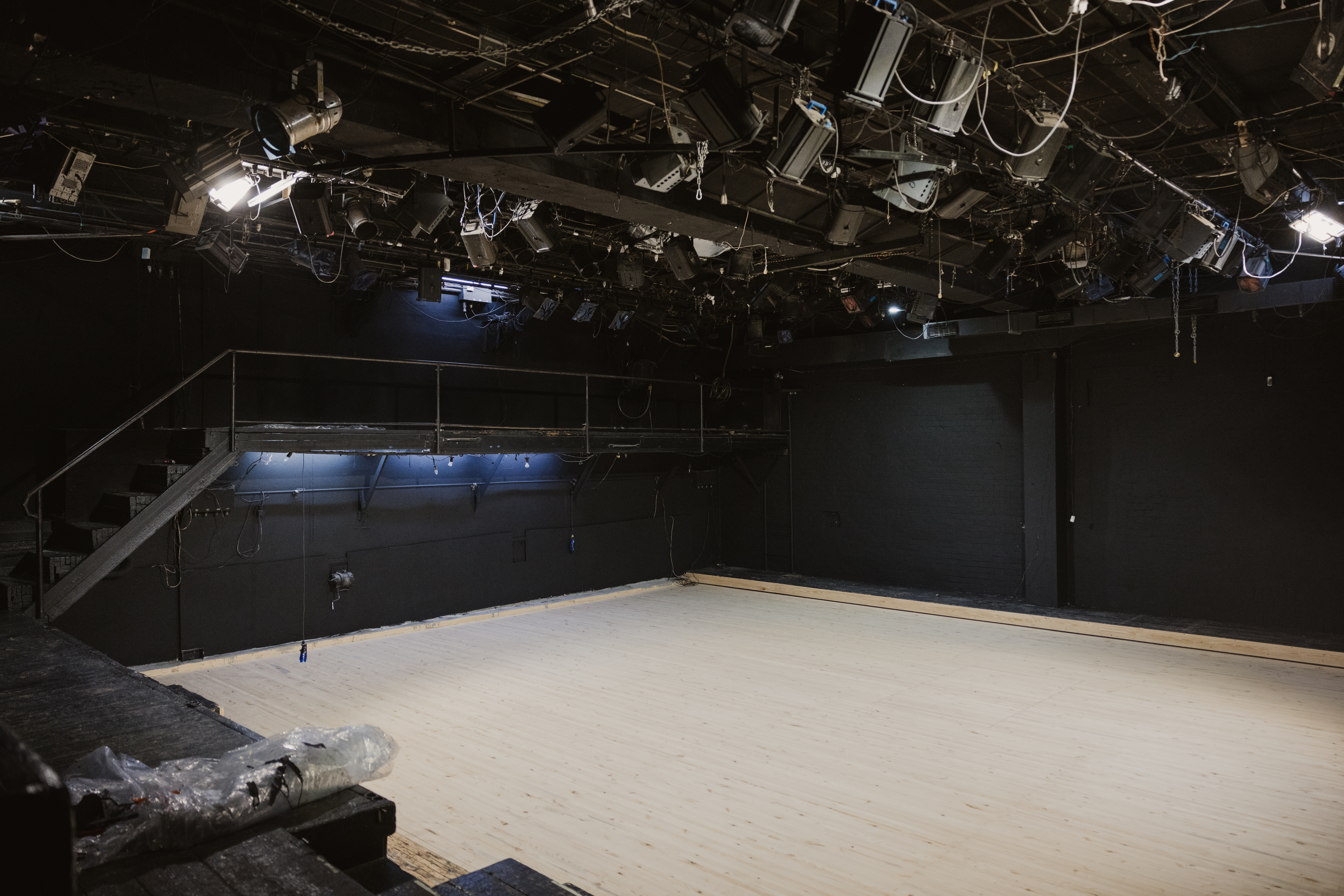
Photo: HD magazine
Sometimes the stakes were not artistic ideas, but the basic conditions in which the theater operates. In 2020, the new owner of the building demanded the evacuation of the basement in the Shodlik Palace hotel, where the theater had been working since its foundation. The response was the #SaveIlkhom campaign: audiences, artists, foreign diplomats, and media united in its defense, with then Deputy Chair of the Board of Trustees of the Public Fund for Support and Development of National Mass Media of Uzbekistan Saida Mirziyoyeva and Minister of Culture Ozodbek Nazarbekov speaking out in support. In the end, the lease agreement was extended.
In 2022, the Union of Theater Workers appealed to the Ministry of Internal Affairs to request a ban on the performance of "The Underground Girls" — a play by Polish director Jakub Skrzywanek, based on Jenny Nordberg's book about the phenomenon of «bacha posh» in Afghanistan. The organization believed that the production would negatively affect "the peaceful and stable existence of the Uzbek-Afghan peoples (as stated in the text — HD magazine)." The Ministry of Justice stood up for "Ilkhom" — they reminded that public organizations do not have the right to influence the theater's repertoire.
"It's important that people were found who said: 'No, the show must go on!'" recalls Gafurov. "This gives us faith: if we speak the truth and do our work honestly, we have a future."
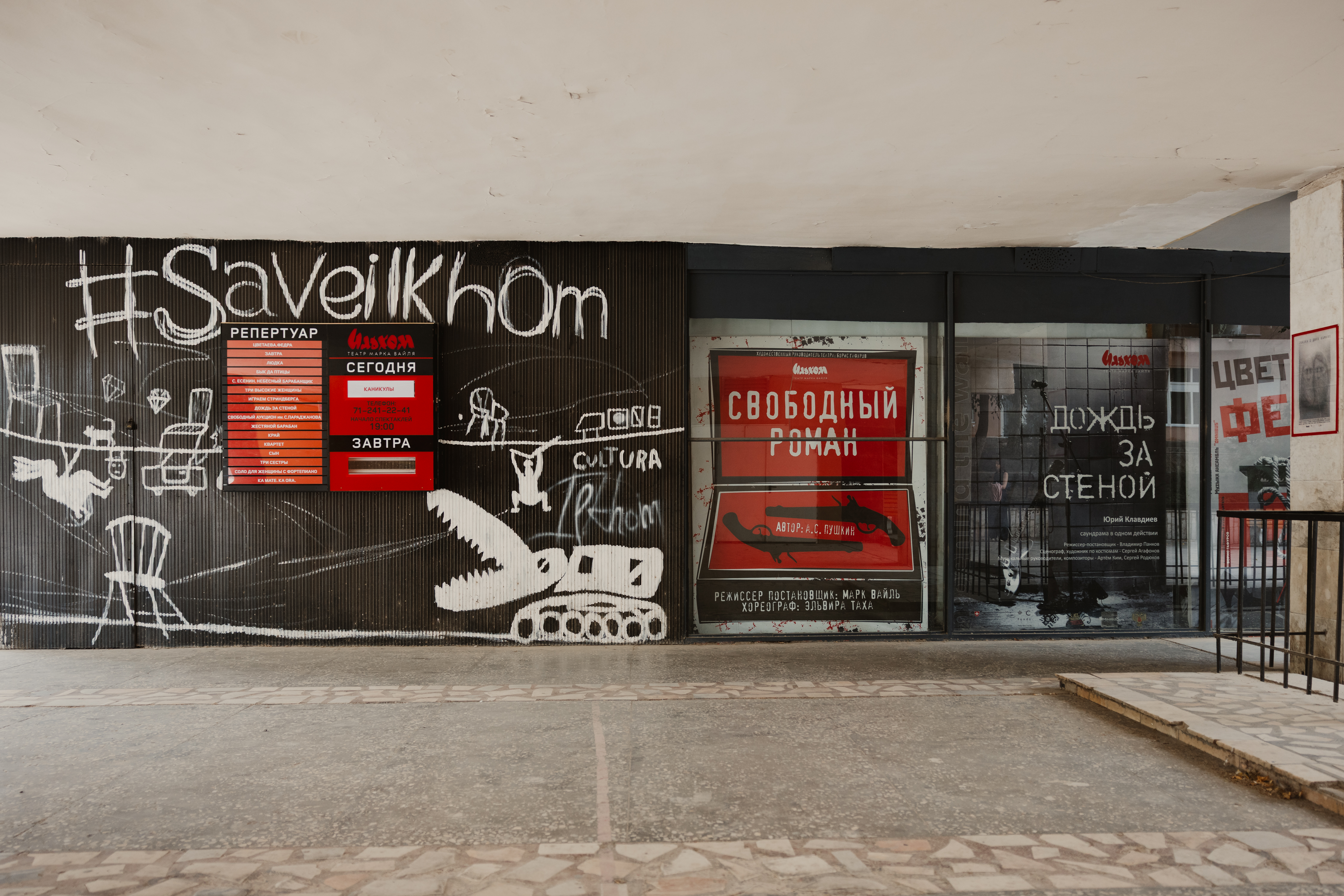
Photo: HD magazine
Mission and Artistic Philosophy
"One should not live in the past — it is important to create something new, even if it is a production of the same work. Literature only provides the foundation, and theater must transform it into the living breath of today," emphasizes Boris Gafurov.
This thought defines the philosophy of "Ilkhom." Here, they do not recreate classics for the sake of museum-like accuracy but strive to speak to the audience in its own language and reinterpret texts in a modern context. Thus, the attempt to restore Brecht's "The Wedding of the Petty Bourgeoisie," undertaken several times, showed Gafurov: returning to the past turns classics into a museum exhibit. "The task of theater is not to copy, but to create anew. Even if we take Tolstoy or Brecht, we must read them as we feel in the 21st century. In art, there are no and should be no prohibitions," he explains.
Hence the polyphony of stage languages: clowning merges with philosophy, physicality with documentary drama, music with words. In Ivan Vyrypaev's "Dance of Delhi," text transforms into a flow of movements and rhythms; in Nassim Soleimanpour's "White Rabbit, Red Rabbit," the audience becomes a co-author of the action; and in Antoine Gintz's "Lyudka," life is played out on a kitchen table—a stage symbolizing a closed circle.
The main principle here is simple: respect for the viewer as a thinking person. "Our viewer is not a consumer, but a co-author," emphasizes Gafurov. Therefore, the theater's repertoire is diverse: Chekhov and Shakespeare coexist with Brecht and Navoi, contemporary playwrights, and emerging authors. But each work sounds new—sharp, unexpected, sometimes provocative.
Thus were born "OBLOM-off" by Mikhail Ugarov, where Oblomov became a metaphor for post-Soviet inertia—society's habit of waiting for change but not daring to act; "Trash" by Mikhail Durnenkov—a tale of a person buried under things and fears; "Seven Moons" based on the parables of Alisher Navoi, where Eastern poetry found avant-garde stage embodiment.
These works are not just an artistic exploration, but also a challenge to traditional society, where topics of equality, violence, and freedom of choice still provoke resistance. "We are talking about today's problems. If we remain silent, there will be no change. Our mission is to change attitudes towards life, to give a sense of tomorrow. If we do not speak about violence, equality, human rights, nothing will change," emphasizes Gafurov.
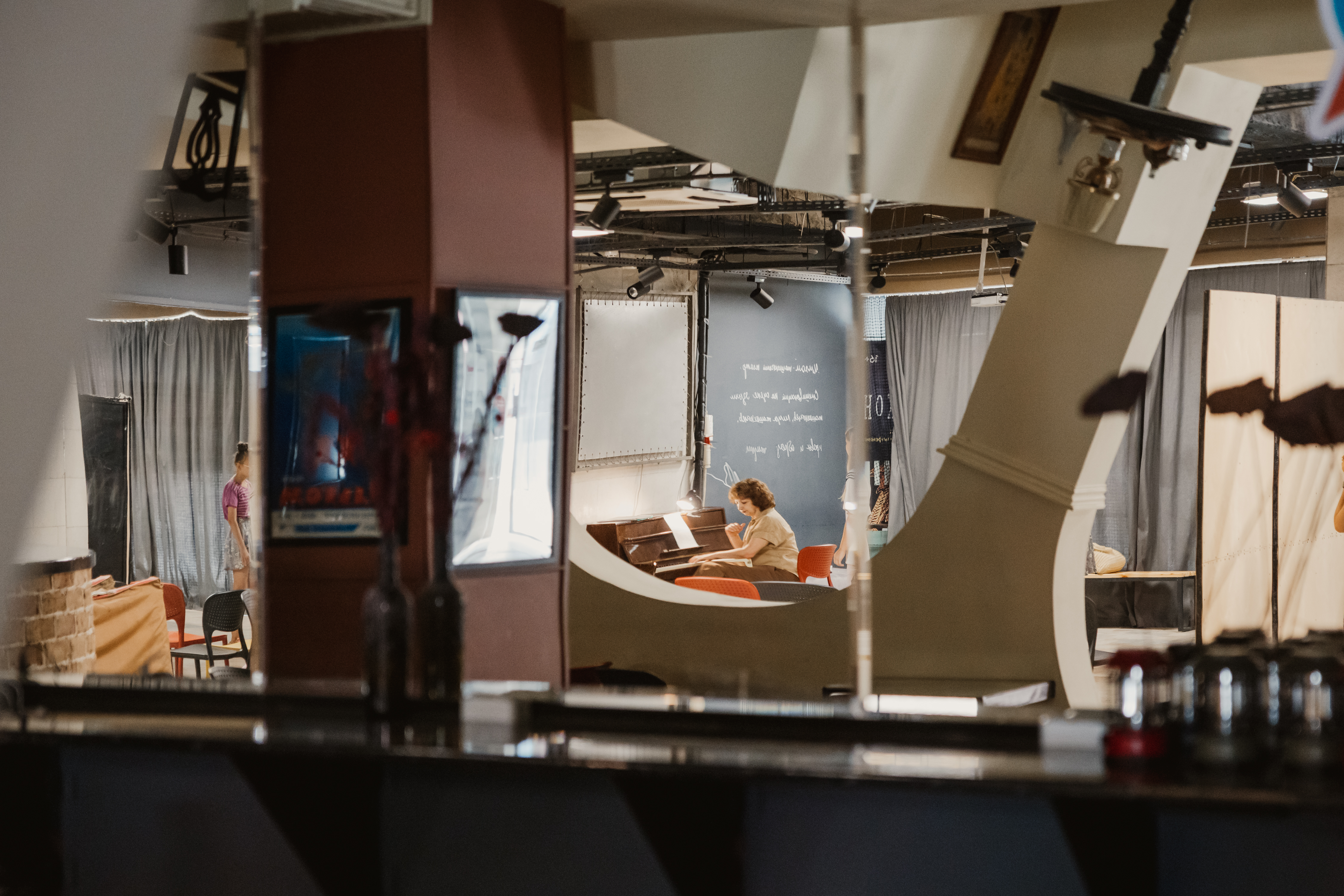
Photo: HD magazine
Anniversary season
On September 12, "Ilkhom" opened its anniversary — 50th — season with the premiere of the play "20 Days Without War" based on the novella by Konstantin Simonov. Directed by Alexander Plotnikov, the production transports the audience to 1942, to those twenty rare peaceful days between the front and the rear that the characters of the novella experience. Boris Gafurov plays the lead role of war correspondent Lopatin. "This is a play about human fragility, about how life is always stronger than war. Even in the darkest times, a person retains the right to love, to dream, to remember," he notes.
The season promises to be eventful. In addition to "20 Days Without War," audiences can look forward to a production by Maxim Fadeev based on a play by Tajik writer Nilguna Bahromzoda, created in the Central Asia Drama.Lab workshop, and the premiere of "The Life of Monsieur de Molière" by Mikhail Bulgakov, which Boris Gafurov is preparing for January 25th — the birthday of Mark Weil. This performance will be a tribute to the theater's founder.
For the anniversary, a large exhibition titled "The Body I Live In" opened in the theater's foyer and exhibition hall, dedicated to the history of the theater, and a retrospective of archival performances was also launched. In the format of a "memory cinema hall," the audience saw productions from different years and discussed them with the actors.
"Our task is not to conform to expectations, but to remain honest. If the audience leaves as different people, then the theater is alive," summarizes Boris Gafurov.