To understand where it all comes from, we need to go back to postwar Japan. A severe crisis, a devastated economy, millions unemployed. And at this moment, a young artist Osamu Tezuka, the future “god of manga,” is inspired by Disney animation, which was being imported into the country en masse, and draws his first graphic stories, and then begins work on “Astro Boy.” This series essentially set all the rules for modern Japanese animation: simplified frames to save on costs (the country was still in a difficult economic situation), large eyes for vividly expressed emotions. Moreover, it quickly became clear that such cartoons were also an excellent cultural export. Cheap to produce but expressive, it became a true technology of self-expression for a country in a tough situation, a way to talk about dreams, hardships, coming of age, and trauma.
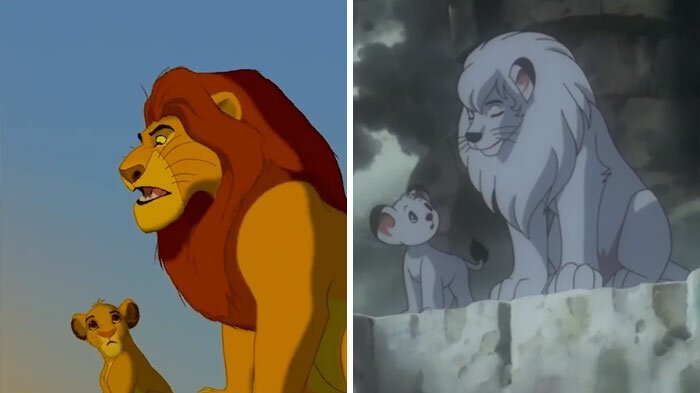
However, it wasn’t just Tezuka who was inspired by Disney’s works, but the reverse as well. One of the most iconic family animated films, “The Lion King,” is very similar in plot to a work by Tezuka that aired on Japanese TV in the 1960s. In the animated series “Kimba, the White Lion” there was a lion cub heir, an evil uncle, a mentor spirit, and even the composition of shots and plot devices can later be easily recognized in the cartoon about the lion cub Simba.
 Source: konnichiwa.ru
At Disney, of course, they denied all accusations of plagiarism, but this demonstrates one interesting detail — what we are used to considering classic animation, like "The Lion King," grew out of the Japanese visual tradition.
Then why does the stereotype that anime is something “childish,” “weird,” or even “wrong” still persist? The answers lie in cultural habits and a lack of context. Anime became popular in our country much later than Western animation. It started being shown on children’s TV, and even then only in limited amounts, at a time when the concept of “animation” was already firmly associated with American, and less often French and British, cartoons. To get a taste of the world of Japanese animation, you had to buy pirated discs, look for friends who were already familiar with the anime phenomenon, and at the dawn of the genre’s popularity, you also had to struggle to understand the meaning of the work through not-so-great dubbing. There were no detailed explanations anywhere about the origins and development of anime, which led to a natural oversimplification—as if it were just a “genre,” when in fact it was a true cultural phenomenon, much more multifaceted than simple children’s cartoons.
Anime is not a genre, but a style
To consider anime as a single genre is like reducing all Uzbek cuisine to just pilaf. The visual language, yes, is similar in many works of different directions—big eyes, exaggerated emotions, characters whose inner struggles are reflected on their faces with painful clarity. But this is only the form, the cover, the packaging, under which content of any kind can be hidden, from incredibly bright children's fairy tales to the dramaturgy of existential crisis.
Let's start with something safe and more familiar to the language of animation: children's stories. For the generation of the nineties, Pokémon became one of the first major universes, and the feature films by Miyazaki, gentle and airy, show children that art can be kind.
A step to the side — and here is the romantic kitsch of "Kaichou wa Maid-sama!", where the school drama warms the soul with first love, and the amount of sugar threatens you with a diabetic crisis by the third episode.
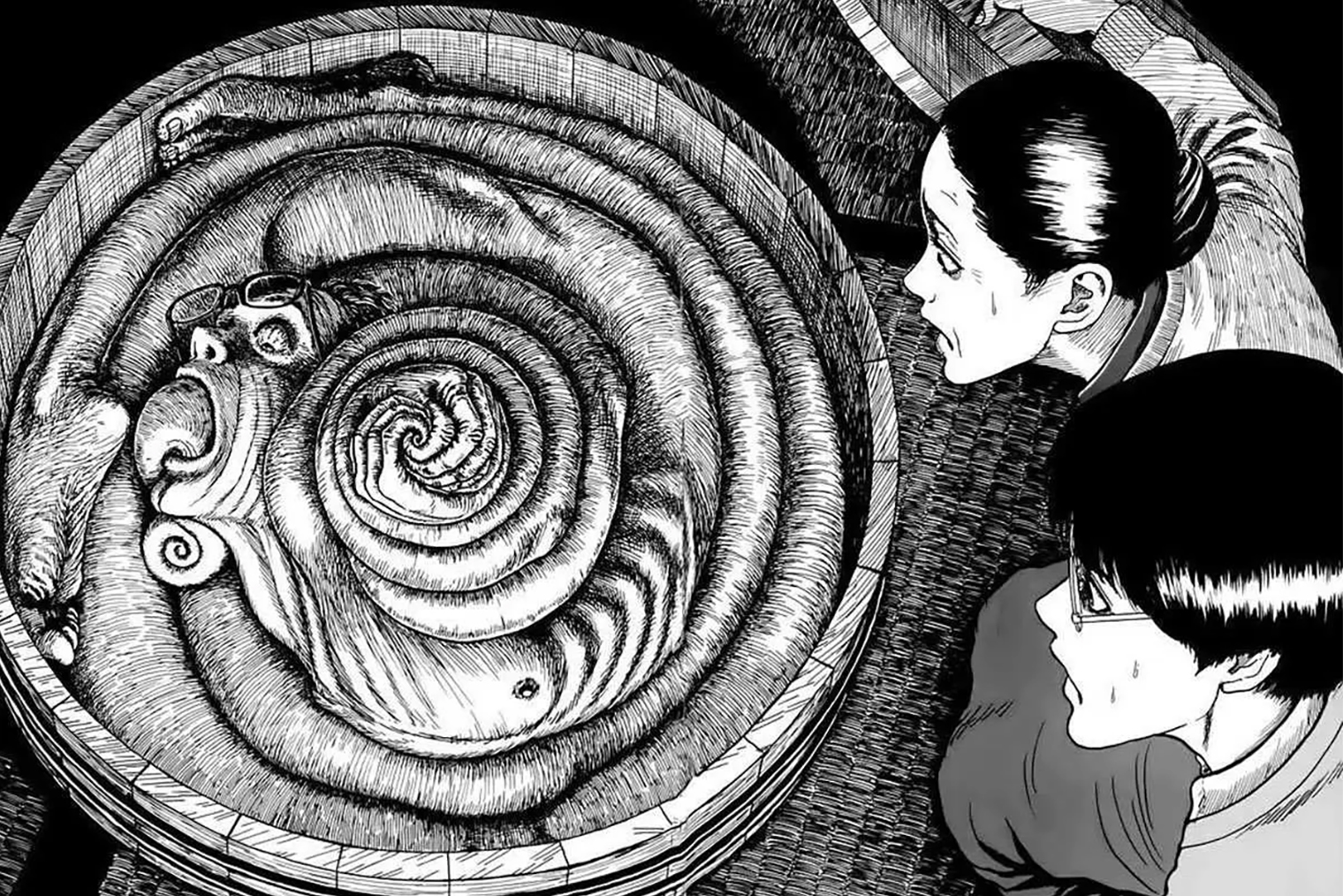
And then the lights go out. And Junji Ito comes on stage. A master who transforms everyday moments into psychological wormholes. His animations are not just horror, but existential dread and deep, primal fear; after his stories, even the swirl on a cinnamon roll or the shell of a garden snail will make you shiver for a long time.
 Source: 98mag.kz
And if you’re looking for something more thought-provoking, you should spice up your viewing with “Paprika” — one of the most intellectual films about dreams, which inspired Nolan when creating his “Inception.”

And how about, for example, a semi-political, semi-biblical statement about genocide, war, propaganda, and the price of freedom? If you're interested, you should check out the series "Attack on Titan", watching which will put your moral principles to the test.
But if all this is too much, then somewhere nearby there will be "One Punch Man", which breaks the traditions of superhero stories. Because being invincible, as it turns out, is not cool, but rather boring.
That is why, when someone tells you that all anime is the same, it only shows that they have probably watched no more than one title. Anime is not a genre; anime is its own visual style and narrative grammar, capable of telling any story, from a bedtime fairy tale to a scary story around the campfire.
Who are "anime fans" really
In the mid-twenties of this century, anime fans are no longer afraid to wear pins on their backpacks or keychains with their favorite anime characters. This summer, the second Comic Con has already taken place, and by the end of the year, fans of various fictional worlds will return for the third Geek Con. Merchandise from favorite universes can be found in specialty stores that pop up here and there in shopping malls or simply among regular shops. However, stereotypes still follow anime fans, and to dispel all the myths about lovers of Japanese animation, you just need to get to know them to understand that this is not just a club of interests, but a true cross-section of society.
Nurlan Sheranov, 36 years old, Executive Director of Bold Brands International
In Nurlan’s everyday life — a strict schedule, deadlines, responsibility to the team, but on his shelf are hand-assembled Gundam models, and in his mind, countless associations with “Naruto,” “Bleach,” and “Psycho-Pass.”
I belong to the generation whose lives were invaded by anime not through TikTok algorithms, but because "Naruto" was on 2x2 at seven in the evening, and that was an event. My teenage years fell during a time when anime was considered something strange, almost underground. But the very process of growing up coincided with the development of these storylines, and for a while, I was literally growing up together with the characters.
Nurlan Sheranov
Among his favorite genres are shōnen and isekai, from classics like Bleach to escapist stories like “That Time I Got Reincarnated as a Slime” and “Overlord.”
For me, anime is not just entertainment, but a full-fledged form of art with its own schools, genres, and philosophies, which even helps in my work. For example, in one of our corporate videos, we even used JoJo-style* catchphrases.
Nurlan Sheranov
Malika Shermatova, 29 years old, accountant
Malika has daily reports, spreadsheets, and a pile of financial documentation, but there is always room for a bright splash of color—anime. For Malika, anime has evolved along with her life.
The choice is difficult, but if I had to pick a favorite, it would be "Bleach." I really like shonen anime with vivid emotions and adventures that never leave you indifferent. If anime used to be like fireworks—colorful, exciting, evoking delight and joy—now it's more like warming yourself by the fireplace under a cozy blanket with a cup of hot coffee, watching the whimsical shapes of the flames.
Malika Shermatova
As for stereotypes, Malika has long since stepped out of their shadow.
Oh, well, as someone who has personally experienced all the delights of such stereotypes, I can say that now it doesn't matter to me. Although before, of course, it used to bother me. Today, anime has become commonplace, and I regard people with such prejudices with condescension. It's a bit of a pity that in the 21st century, there are still those who don't realize that there's no accounting for taste.
Malika Shermatova
Ruslan Zaitsev, 27 years old, marketer and young father
Ruslan works with large-scale projects and takes care of his family, but he likes to diversify his leisure time by watching anime. Among his top favorites are One Piece, “Demon Slayer”, “Solo Leveling” and “Death Note”.
I love anime for its well-thought-out worlds, detailed artwork, and stories that draw you in for a long time. Take, for example, One Piece, with its vast fantasy world and the way it grows along with the characters, and how each arc surprises with its unpredictability and sparks the imagination. Many of my adult friends watched anime as kids. My son is still little, so I don't push anime on him. He watched a couple of episodes of One Piece, said, "Cool," and went off to play (laughs).
Ruslan Zaitsev
Bogdan Garaskov, 28 years old, head barista
Anime in Bohdan's life is not just a hobby, but a part of his personal story.
I grew up with the title Sword Art Online, while playing the online game Lineage 2, and this became the meeting point of two important worlds. Anime for me is a deep and multilayered world, where you can find something that will matter to you: philosophy, culture, and a unique tone of storytelling. As for stereotypes: it’s easy to put labels on people, but before you consider someone strange, it wouldn’t hurt to ask yourself: am I not strange myself?
Bogdan Garaskov
Bogdan treats stereotypes with irony and goodwill; people are different, tastes are different, and there is nothing wrong with that.
In my childhood, the object of my admiration became L from "Death Note", because his deduction, attention to detail, and ability to see the whole picture truly amazed me. Later, these idols were joined by Alucard, who, being a vampire, displayed rare—and therefore valuable—moments of mercy. People who fundamentally refuse to watch anime deprive themselves of experience and exploration. Yet another fascinating world, whose culture has much to offer.
Bogdan Garaskov
Arslan Aslanov, 31 years old, baker
For Arslan, anime is a distinct form of art, and he sees stereotypes about anime fans as a misunderstanding.
It's just a stereotype. I and many of my friends watch anime. But someone might love detective stories or action movies and still be a nonconformist—so what? Sometimes anime sparks professional interest: for example, after “Food Wars!” I started thinking about the kitchen and the food service industry as a whole. This influence is more inspiring than direct—in my work, I stick to reality, not storylines. What matters to me are the heroes who keep moving forward no matter what—like Naruto, Luffy, Tanjiro, Rengoku. At the same time, I look at the industry without rose-colored glasses—there’s plenty of mediocre stuff in anime too, but where isn’t there?
Arslan Aslanov
Five anime that influenced global culture
"Akira" is a film that defined modern cyberpunk
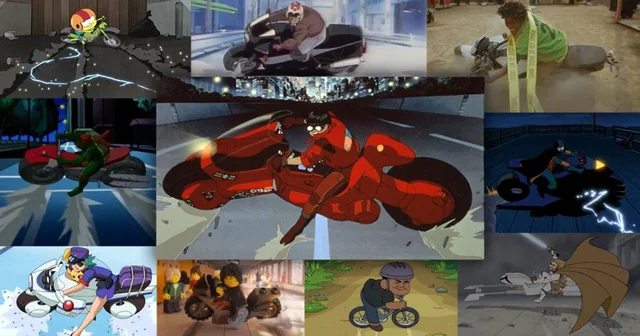
The story of neon Tokyo in the future, street bikers, government control, and forces capable of destroying the familiar world is not just a cartoon, but a true phenomenon that defined the visual language of cyberpunk for decades to come—from "The Matrix" to Cyberpunk 2077. The hand-drawn animation of "Akira" still impresses with its precision and scale, and the famous shot of the motorcycle slide is echoed in many media projects with enviable frequency.
"Naruto" — "Dattebayo" instead of a thousand words
The story of a boy who dreams of becoming the strongest, but first must defeat his main opponents — loneliness, trauma, and lack of recognition. For those who grew up in the 2000s and 2010s, "Naruto" became something like a guide on how to survive when there is chaos and uncertainty all around. Millennials followed in his footsteps: work hard, try your best, believe in your dream, and you will succeed. It is both a story about ninjas and an artistic interpretation of growing up for those who faced hardships but kept holding on to hope.
"Berserk" — the epic that gave rise to dark fantasy
The hero’s journey, passing through betrayal and inner struggle in a world where humanity and cruelty are locked in eternal conflict. “Berserk” is the foundation of the “dark fantasy” genre, which established the archetype of the lone hero, as well as a world of difficult choices and morally complex antagonists. It served as inspiration for the creators of the Dark Souls game series and all subsequent soulslike games, from architecture to the philosophy of “struggle against all odds.” But beneath the harsh exterior of this anime, there will always be a profound story about willpower, choice, and freedom.
“Attack on Titan” is the most talked-about anime of the decade
A world where people have taken refuge behind colossal walls from the Titans and are trying to uncover the truth about the world, the past, and the future—and most importantly, the truth about themselves. This anime has proven that Japanese animation can be a full-fledged global drama with widely discussed themes: power, fear, social mechanisms, and rampant propaganda. It is one of the rare projects that are discussed both in the media and on Reddit, as well as in university lectures.
“Cowboy Bebop” — jazz, space, and the maturity of anime as an art form
The team of bounty hunters travels through the solar system and encounters the past, freedom, and loneliness. This title is a true art object, the first genuinely "Western-Eastern" anime. Yoko Kanno's soundtrack, noir aesthetics, and philosophical stories in every episode elevate the anime to the level of auteur cinema. "Cowboy Bebop" influenced "Firefly," "The Mandalorian," the style of soundtracks in Netflix series, and set the trend for stylish space noir.
Why anime has become a global phenomenon
Japanese animation relies not on realism, but on stylized metaphors. Exaggerations, symbols, visualization of emotions that are instantly recognized. Animation researcher Susan Napier puts forward the thesis that anime was originally created as a form of artistic expression with its own rules, and not as an attempt to respond to Disney.
The foundation for anime—manga—is not just comics, but a vast system of mass literature. Weekly magazines, multi-year sagas, and authorial experiments make up a large-scale industry that annually sells manga for hundreds of billions of yen every year. And many mangaka such as Eiichiro Oda, Kentaro Miura, and Naoki Urasawa have a national cultural status comparable to that of writers.
Anime is not just a hobby for a handful of people—no, it is a whole industry that has given rise to studios, art colleges, and production workshops. The Report on Japanese Animation Industry annually records hundreds of studios, thousands of professionals, and a stable production model. This system makes it possible to release dozens of series per season without losing quality.
In Japan, the author is more important than the brand. The creator's name sometimes determines sales more than the plot does. This creates an environment where individual style, risk, and experimentation are valued. And thanks to this, works emerge that often feel not just like content, but like the unique mythology of a particular author.
What Uzbekistan can learn
A new generation of artists, designers, game developers, and animators is growing in Uzbekistan. Our culture has a whole layer of its own stories, myths, and folklore—from "Alpomish" to tales of divs and peri. The popularity of anime among people of different ages demonstrates a steady demand for high-quality visual content, and if we stop viewing animation as something "childish" or "unserious," we can develop our own industry with authors, studios, original projects, and a recognizable visual aesthetic. After all, people who grew up with art without borders continue to carry forward what they loved in childhood. They create illustrations, video games, comics, and branding in which you can recognize the principles they once drew from their favorite titles: a lively visual language, highly empathetic characters, eclecticism, and a world-building that inspires.
And that's normal. Anime itself grew out of a synthesis of cultures, since the aesthetics of cyberpunk came from there, from Hollywood sci-fi of the 80s, and then returned back, already reinterpreted by Japanese artists, and influenced classic games worldwide. Today, China releases its own donghua, and Netflix offers its sometimes not-so-successful reboots of cult classics.
But the main lesson of anime is not about superpowers, but about humanity. In its own way, it is symbolic that this idea arose in a country that, trying to rethink its traumas and mistakes, created a new form of art whose language is now understood by the whole world.