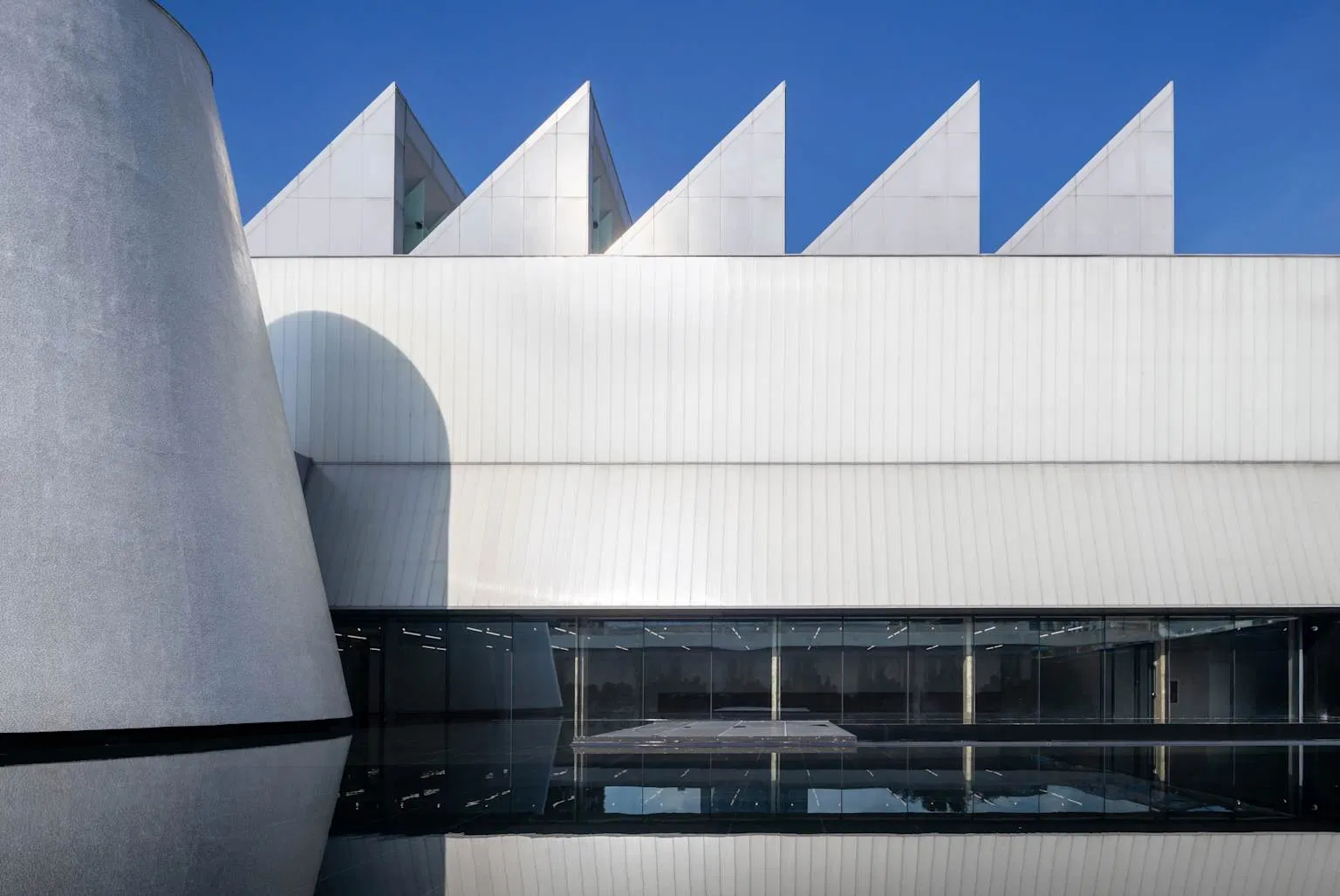
The museum was founded by Purath "Chang" Osathanugrah, an entrepreneur and president of Bangkok University, in memory of his father—businessman and musician Petch Osathanugrah. The idea for creating the institution arose from the grand collection that Petch Osathanugrah amassed over 30 years—more than a thousand works by about 200 artists from around the world.
For Purat, this was not merely the opening of a family collection, but a continuation of the dialogue between generations. Petch viewed art as a language, a means of exchanging values and ideas. Instead of keeping the collection within private walls, Purat decided to create a public space—in a converted industrial warehouse in Khlong Toei spanning 7,000 sq. m. The museum includes 11 galleries, a sculpture garden, a restaurant, and is accessible to all for a price starting from 150 baht (about 4 euros).
The name Dib comes from the Thai word meaning 'natural, in an authentic state.' The designers (WHY Architecture and A49) embodied the Buddhist concept of the path to enlightenment: as one ascends to the upper levels, the space becomes increasingly contemplative and airy.
«(In)visible Presence» unites 81 works by 40 artists, including Anselm Kiefer, Lee Bul, and Apichatpong Weerasethakul. The exhibition is structured as a three-level narrative that unfolds as one ascends through the building. Sensory elements — sound, light, smell — play as significant a role as the visual works.
For Thai artists and the public, this is the first opportunity to see relevant international art in reality, without books or magazines. Museum director Miwako Tezuka notes that large-scale installations and sensory works cannot be fully understood on a screen—physical presence is required.