Imprints from the Ice Age: Indonesian caves hold the oldest known human artistic creation in science
An international research team has made a discovery that rewrites the history of the development of human creativity.
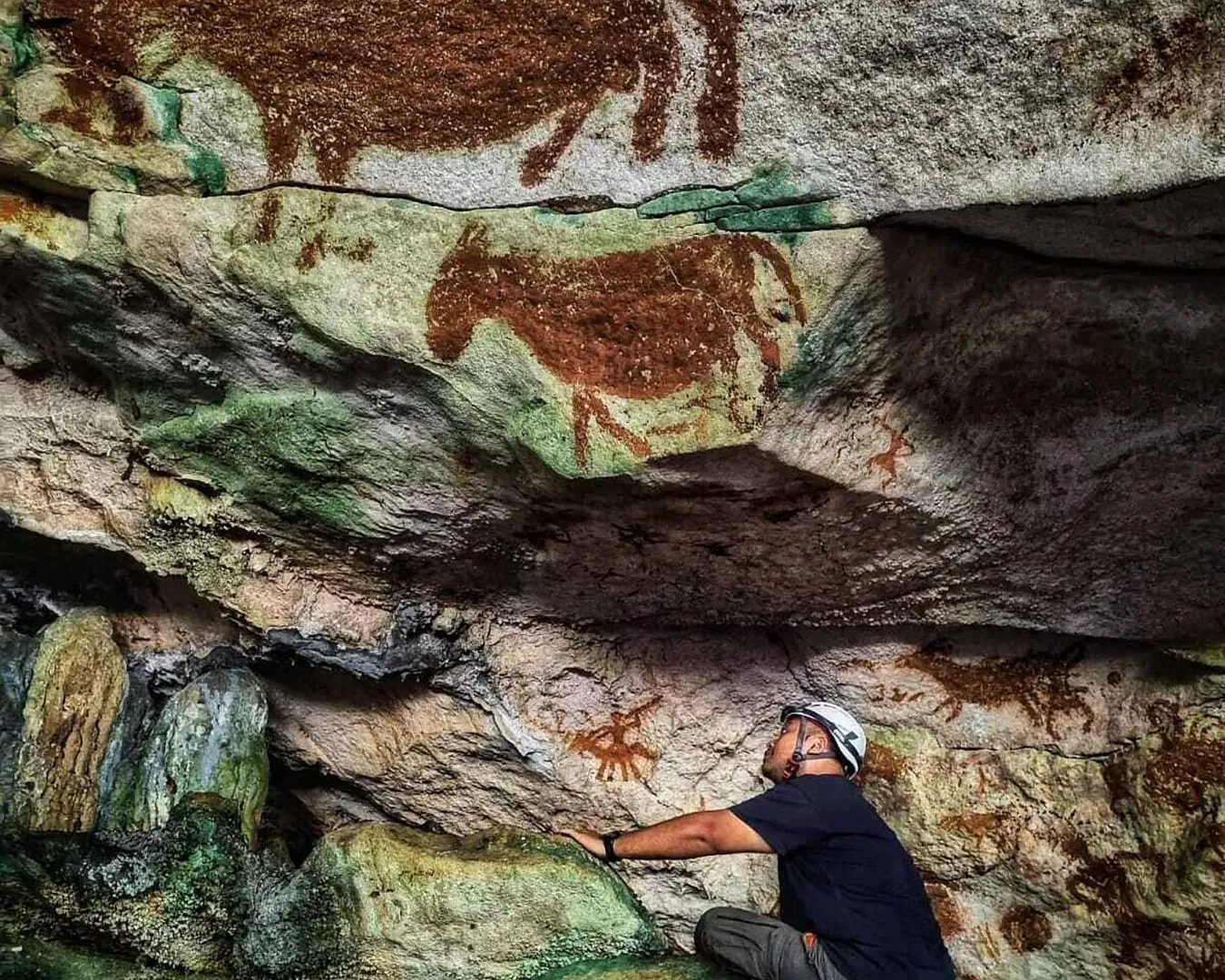
On the island of Muna in the province of Southeast Sulawesi (Indonesia), handprints have been discovered that are at least 67,800 years old. This is the oldest dated rock art ever discovered by humanity.
The discovery, published in the authoritative journal Nature, is located in the Liang Metanduno limestone cave. Researchers from Australia and Indonesia, led by Maxim Aubert from Griffith University, used an innovative uranium-series dating method to determine the age of the finds.
Ancient artists created these prints by pressing their palm against a stone wall and spraying pigment—presumably red or dark ochre—through it. After removing the hand, a distinct border-print remained. However, the Indonesian findings have an intriguing feature: the fingertips on some stencils were deliberately altered to appear sharper and resemble claws. This technique—creating claw-like fingers—is found exclusively on Sulawesi and indicates a deliberate artistic reworking of the human form.
One of the dated handprints measures only 14 by 10 centimeters and is extremely faint—so much so that it could easily be mistaken for natural weathering traces on the rock. However, its age, determined by the laser ablation uranium-thorium analysis of mineral crusts formed over the pigment, is 71.6 ± 3.8 thousand years.



Newsletter
A letter from the HD editors
Once a week, we send the best stories, events, and cultural discoveries from Central Asia.