In a personal interview with the editorial team of HD Magazine, former actor of the Ilkhom Theatre and close associate of Mark Weil, Mark Sorsky, spoke about how this collection of memoirs came together:
The idea for the book did not emerge as an “anniversary project” or because someone simply decided it was time to write one. The trigger was far less pleasant: a defamatory post about Mark Weil appeared on social media. It contained many insulting and unfair claims, and it affected me deeply. I responded sharply, and it became clear that if we did not preserve these living testimonies now, only rumours and other people’s versions would remain.
Someone said: we need a book of memoirs. As usual, everyone supported the idea, but nothing happened beyond words. Then a theatre scholar I know told me directly: "If this affects you so deeply, do it yourself. Not a monograph, but a collection of recollections." I resisted at first, I had never published a book. But then I realised it was possible.
I immediately explained to everyone that this would not be a scholarly study or a "granite monument". I wanted to assemble an impressionistic portrait in different voices and brushstrokes, so that a living sense of the person and his time would emerge, rather than a heavy memorial slab.
It took about a year to gather the material. I spent days online: writing to people, corresponding with them, persuading them, collecting texts. Some responded immediately; from others, the memories had to be coaxed out.. The texts were then edited by me and my theatre scholar friend, and always sent back to the authors so they could approve the final version.
The book was published at our own expense by me and another person from Ilkhom. It was important to me that this was not a commercial project. I do not sell these books.
The print run was small, around 300 copies. Some were donated to libraries, which matters greatly to me. Personal libraries disappear over time, but library collections remain. I can proudly say that one copy is kept in the Central City Library of Jerusalem.
Part of the print run was also given to the theatre. Ilkhom decides for itself what to do with it: give it away, sell it, or distribute it in its own way.
Mark Sorsky
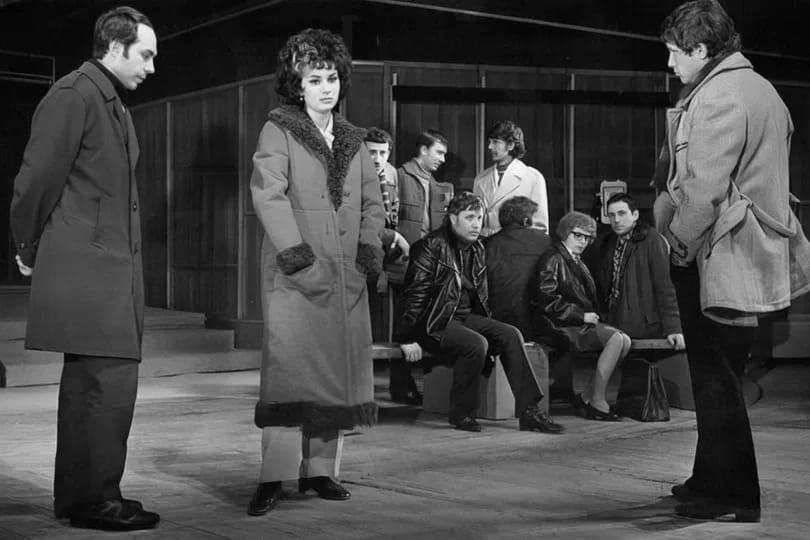
 Source: "Unknown known Mark Weil", M. Sorsky
“Each of you is dear to me”: a personal and shared tragedy
6 September 2007. The eve of the theatre's 32nd season. The final rehearsal had ended late, as usual. Tomorrow there would be the stage, the audience, and naturally the critics (what theatre could exist without them?). But for now… He looked carefully at the exhausted actors, his family, the people he loved and cherished, and said: "Every one of you matters to me." Once again those words revealed his feeling for his colleagues, though no one could have imagined they would become farewell words...
Two figures in black quietly detached themselves from the wall. He did not immediately feel the sharp pain piercing him, then again and again. One thought hammered in his head: "Do something. Tomorrow I have the premiere of Oresteia. I cannot miss it!" With his last strength he pleaded with the doctors in the ambulance, trying to look into their eyes while watching blood flow endlessly from his wounds...
Those gathered at the gates of City Hospital No. 16, members of the vast Ilkhom family, could not for a long time bring themselves to believe what they were hearing. The hope that had lingered in each of them on the way there slowly faded. Their Master, Director, Mentor, was gone. Mark Weil, founder of the Ilkhom Theatre, died during surgery at the age of 55.
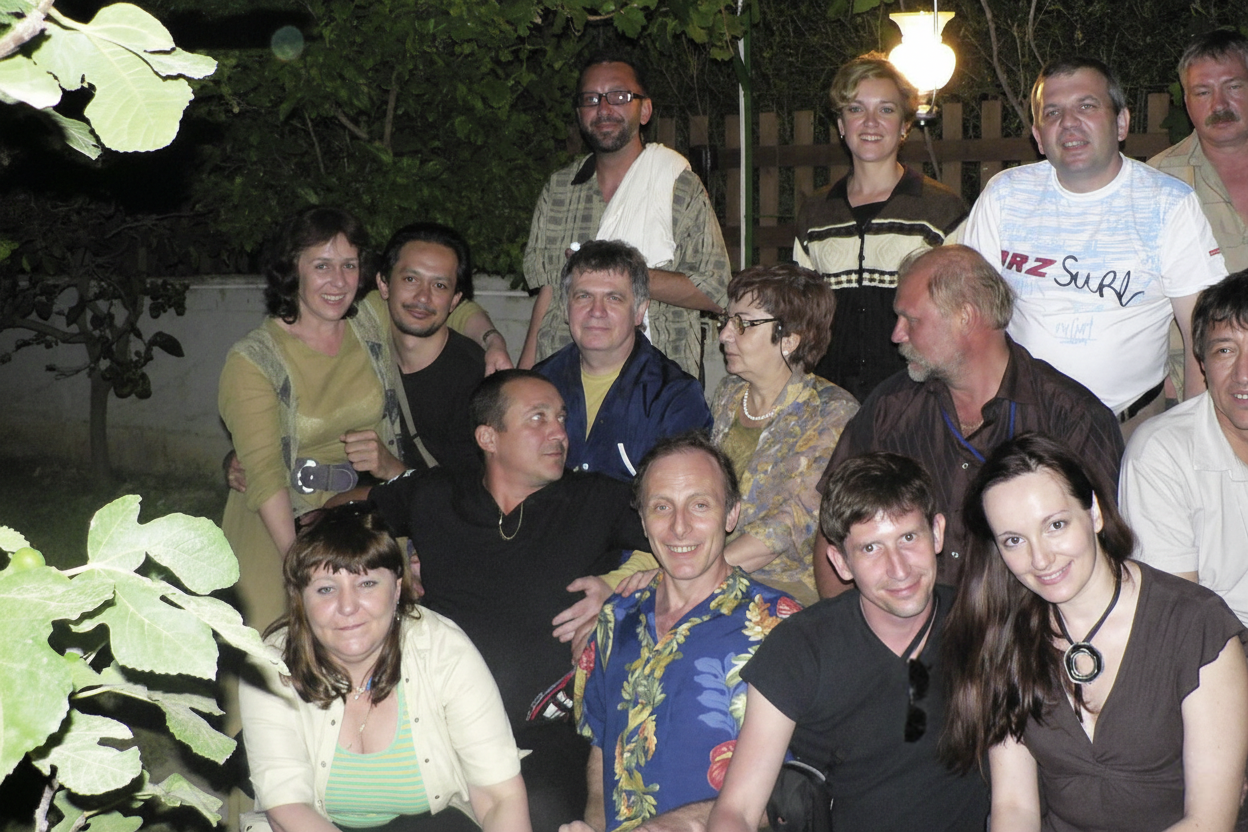
 Source: "Unknown known Mark Weil", M. Sorsky
Grief and loss often unite people, yet each person carries them differently. And the weight of a great loss stays in our souls for the rest of our lives.
Each of those who stood beside him experienced the tragedy in their own way, but the sense of loss was universal.
Ilkhom actress and Honoured Artist of Uzbekistan Marina Turpisheva recalls the final hours before the tragedy:
The rehearsal ended very late that day. I remember complaining that the metro would close. Mark shouted at me, which was understandable: it was the eve of a premiere and everyone was on edge. I came home and lay down, but could not sleep. Then I received a phone call and heard a sentence that reached me as though through cotton wool. For a long time I did not understand what to do, whom to call, where to go. I simply woke my husband and we went to the theatre. It was night, but people were already there. So many people. I barely remember faces. What I remember is the feeling: we were all like orphaned children. And another feeling too: that he was eternal. That something like this simply could not happen.
For many, it was not only grief, but the sudden loss of a foundation: the disappearance of the person who had held the theatre and the people around him together.
Actor, director and current artistic director of Ilkhom Theatre Boris Gafurov speaks of that period without softening the experience:
It feels as though you are falling into a vortex and everything collapses: everything you lived for, everything that gave your life meaning. No one knew what to do next. We decided the theatre created by the Master had to survive. It was never my initiative to become artistic director: I was chosen. It is an enormous responsibility to lead a legendary theatre with such a rich history. At first it was incredibly difficult. I wanted to run away. Sometimes I still feel that way…
The news of Mark Weil’s death was impossible to comprehend, even for those who had long since left the theatre but still felt an unbroken connection to it.
Mark Sorsky recalls the moment he learned what had happened:
I took the news of Mark’s death very hard. Someone called me in the morning and said: “Mark Weil has been killed.” For five minutes I could not even understand what I had heard. It simply did not fit into my mind: Mark and death did not belong together. Especially since I had seen him only a few months earlier.
And yet for many,the memories of him remain astonishingly vivid: the Master does not feel distant to them, but strangely alive even now.
Former Ilkhom actress Oksana Sokol said in 2022:
Mark Yakovlevich Weil...
Oh, how tangled the thoughts become, and how the heart pounds… It is strange: even the faces of people we once knew well often fade from memory, leaving only a blurred image behind. And yet I remember Weil as though we had parted only yesterday. And yet fifteen years have passed since 2007, the year Mark Yakovlevich came to Israel, where we met!
"He was… not an easy man": what Mark Weil was like off stage?
This death was not only a personal tragedy for every member of Ilkhom, but also the starting point after which the theatre, and the city as a whole, began to perceive the significance of the Master in a different way. Mark Weil was a complex figure. He could not be reduced to the simplified image of a “kind master” or a “strict leader”, he was both. It could be said that it was precisely these contradictions that made Ilkhom possible. And yet almost everyone who encountered him recalls the same phrase: “He was not easy to get along with.” And almost no one says it was easy.
Marina Turpishcheva speaks openly about this experience:Marina Turpishcheva
I can hardly recall any real creative conflicts. If there were tense moments, they were usually human rather than artistic. Rehearsals often dragged on endlessly. Mark could work for hours without noticing the time, without stopping to eat or rest. But we are human: the metro closes, our strength runs out… He did not take that into account.
There was one conflict, though. When work began on The House That Swift Built, I was part of the team. At some point another person appeared who behaved one way at Ilkhom but, in another theatre, allowed himself to say extremely unpleasant things. Above all, about Mark Yakovlevich.
For me that was unacceptable. I always believed that betraying your master was the worst thing possible. At the time, out of youth and excessive emotion, I told Mark Yakovlevich about it. Perhaps he did not believe me, it is difficult to say now. But as a result, I had to leave the production...
This episode reveals less about the conflict itself and more about the boundaries that existed within the theatre. Mark Weil was a reserved man who disliked emotional confrontations. He rarely explained himself and almost never justified his decisions, which meant that the choices he made, or chose not to make, remained entirely his own responsibility.
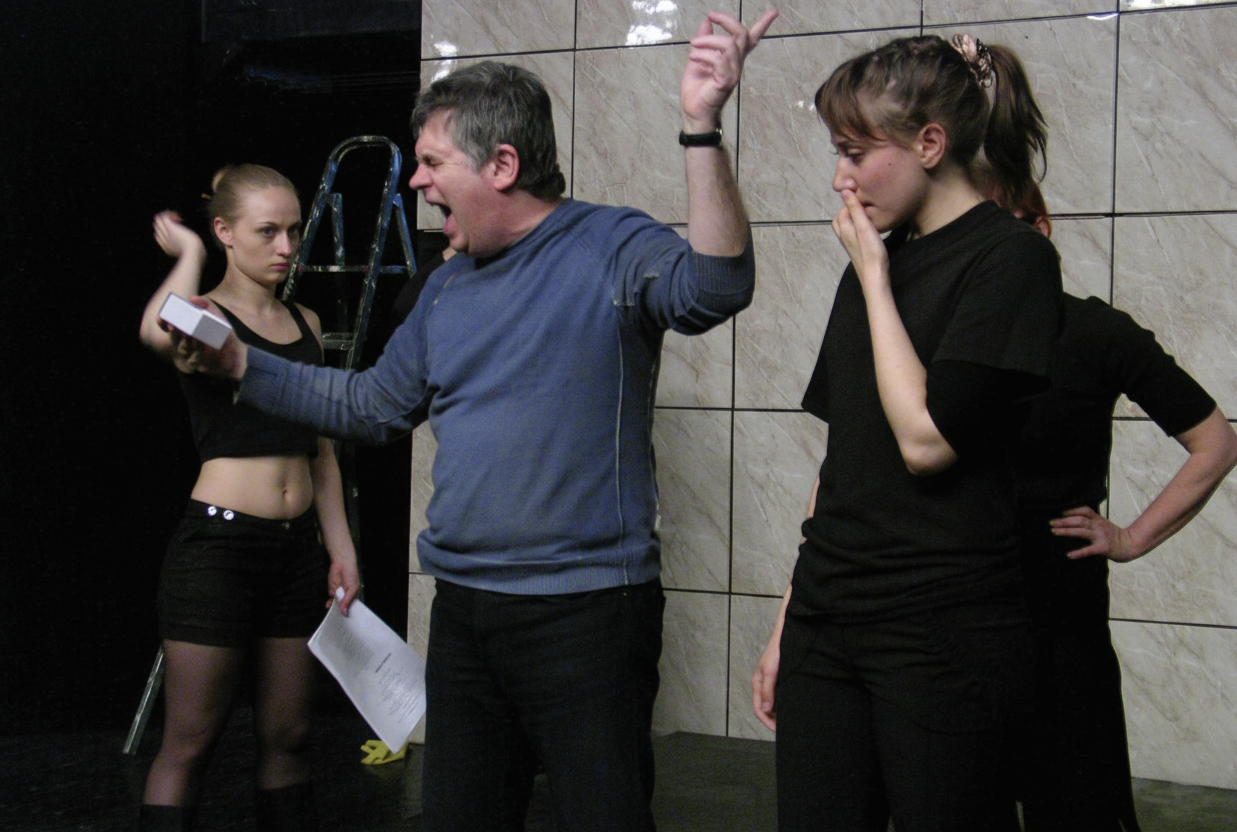
 Source: "Unknown known Mark Weil", M. Sorsky
Another Ilkhom actress, Honoured Artist of Uzbekistan Olga Volodina, spoke to us about the scale of his personality and why communication with him was difficult yet professionally essential:
There is a well-known formula: the director is a voluntary dictator, the actor is a voluntary subordinate. With him it was not easy, above all because of the scale of his personality. He never said: "Do it like this." He said: "Search. Think." He did not force us into rigid frameworks, yet discipline and form were absolutely essential to him. That form emerged from his inner ideal vision of the performance: the music, the scenography, the actors, the entirety of it… And we tried to live up to that vision.
People often ask me whether there was harshness in him. Yes, he was a difficult man. But that difficulty was magnetic. Being around him was always an exchange of energy. When you are near a person with such broad horizons, your own horizons inevitably expand.
Despite his reserve, Weil did not suppress initiative in actors: he set a standard. It was not softness, but a different kind of demand: he guided people while refusing to allow them to fall below his own understanding of the profession. This inner strictness always revealed itself in work, because here, on the submarine called Ilkhom, compromise simply did not exist for him. Director and teacher at the State Institute of Arts and Culture of Uzbekistan Alexander Kudryavtsev notes:
... At times capricious, at times verbose. Sometimes irritable and unpredictable. Protective of his actors and not especially trusting of outsiders. Let me repeat: he was not ideal. That was in ordinary life. But on stage he was demanding and responsible. Fierce precision and relentless persistence in achieving what he envisioned. A stubbornness that bordered on torment and self-torment… Mark Weil was strict. Not ruthless, but principled and uncompromising whenever theatre was concerned. He could not forgive superficiality, carelessness or doing things “half-heartedly”. Everyone who worked with him knew this and feared disappointing him. Because he himself never let others down.
The theater you can never truly leave
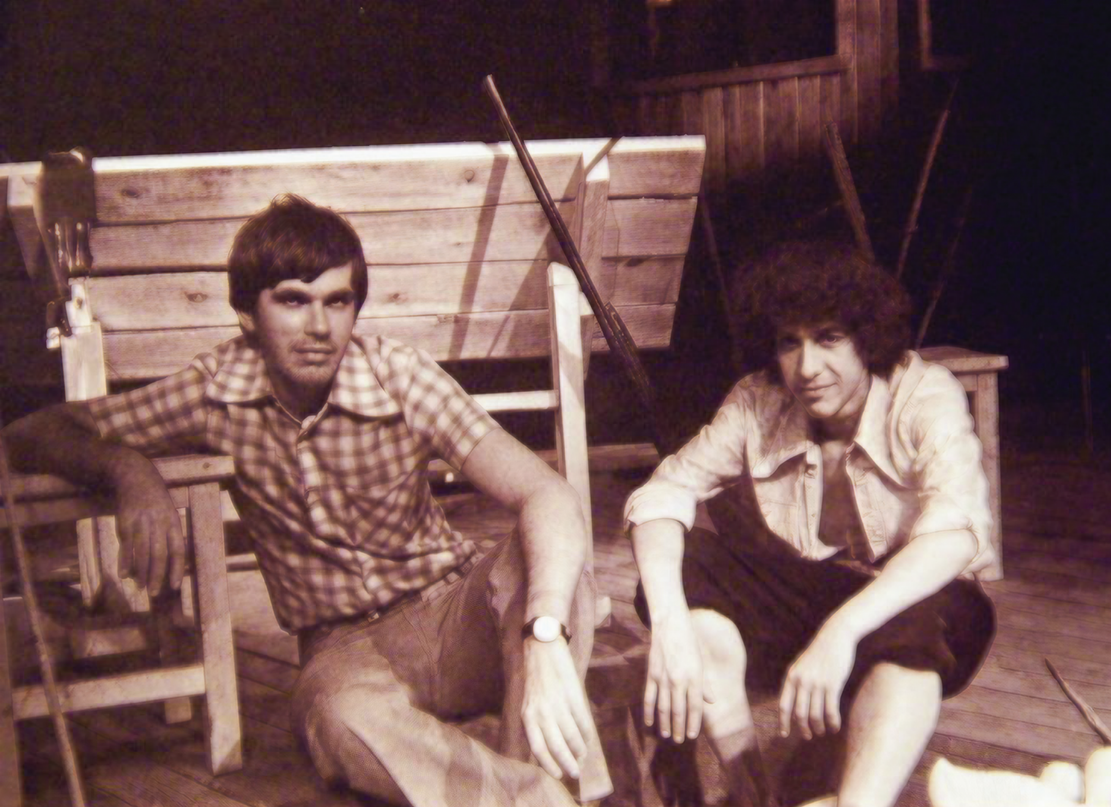
Speaking about Ilkhom Theatre inevitably raises a question both simple and difficult: what was it for Mark Weil? A profession, a home, a family, an idea? Those who knew him closely and worked beside him answer differently. For Weil, theatre could never be reduced to a single definition.
I think it was all of those things at once. He lived through theatre. He arrived in the morning and left at night.
<span>Marina Turpishcheva</span>
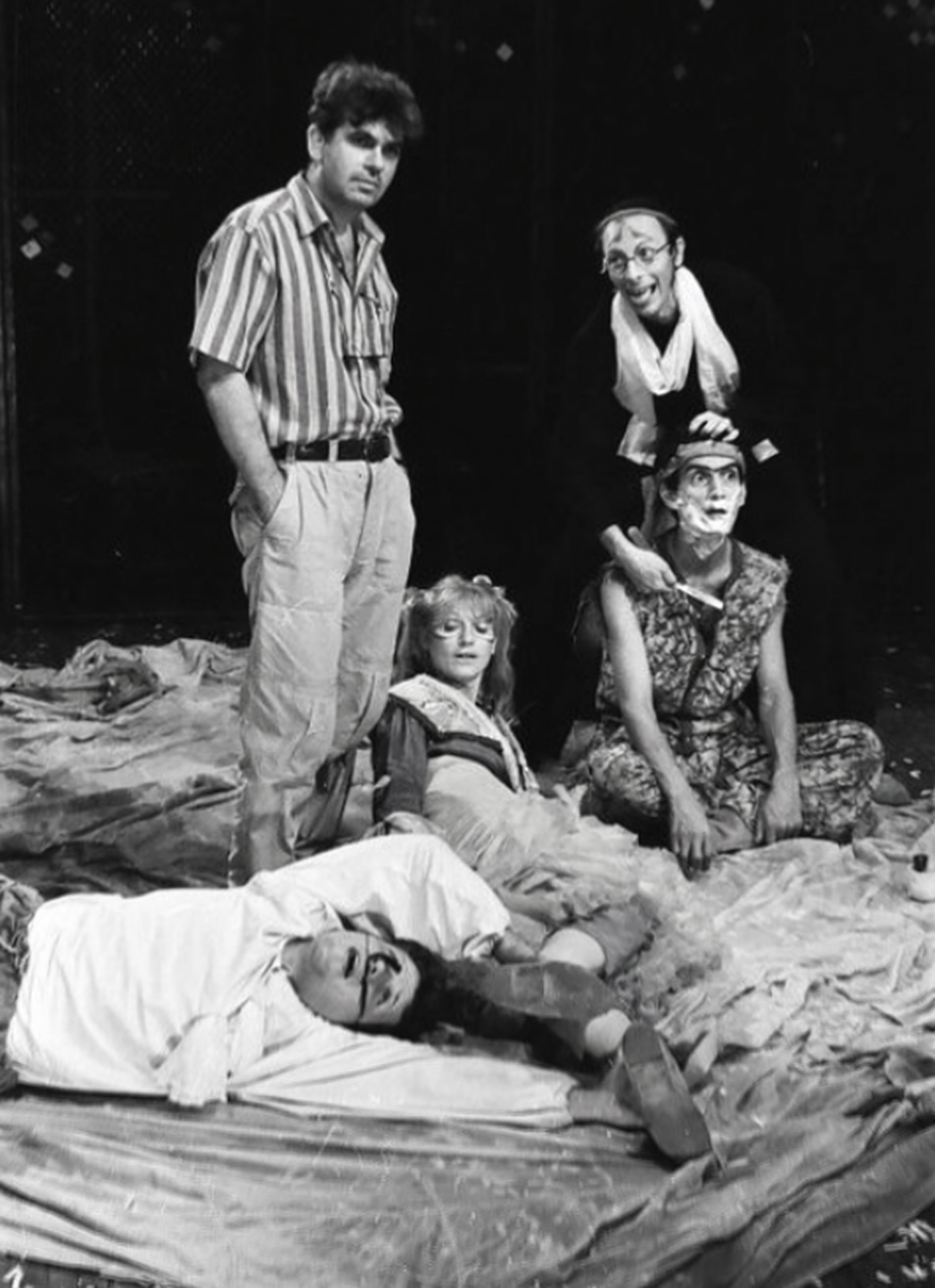
 Source: "Unknown known Mark Weil", M. Sorsky
For him, theatre was everything. Not a profession or a workplace, but life itself. His creation. He built the theatre, the company and the school that nourished the theatre. It was a living organism.
Olga Volodina
At the same time, the theatre never existed in isolation. On the contrary, under Weil it became a cultural centre of gravity far beyond the city and even the country. Literary scholar and writer Chingiz Huseynov, observing the process from the outside, wrote:
Under Mark, Tashkent became the theatrical Mecca of Central Asia,” someone once remarked. It sounds beautiful, but it is true... Mark became known in Moscow through the theatre’s tours as a director of original vision, gifted not only in scenography and striking stage effects, but also in working with actors, creating with them a vivid, dynamic and intensely alive artistic reality.
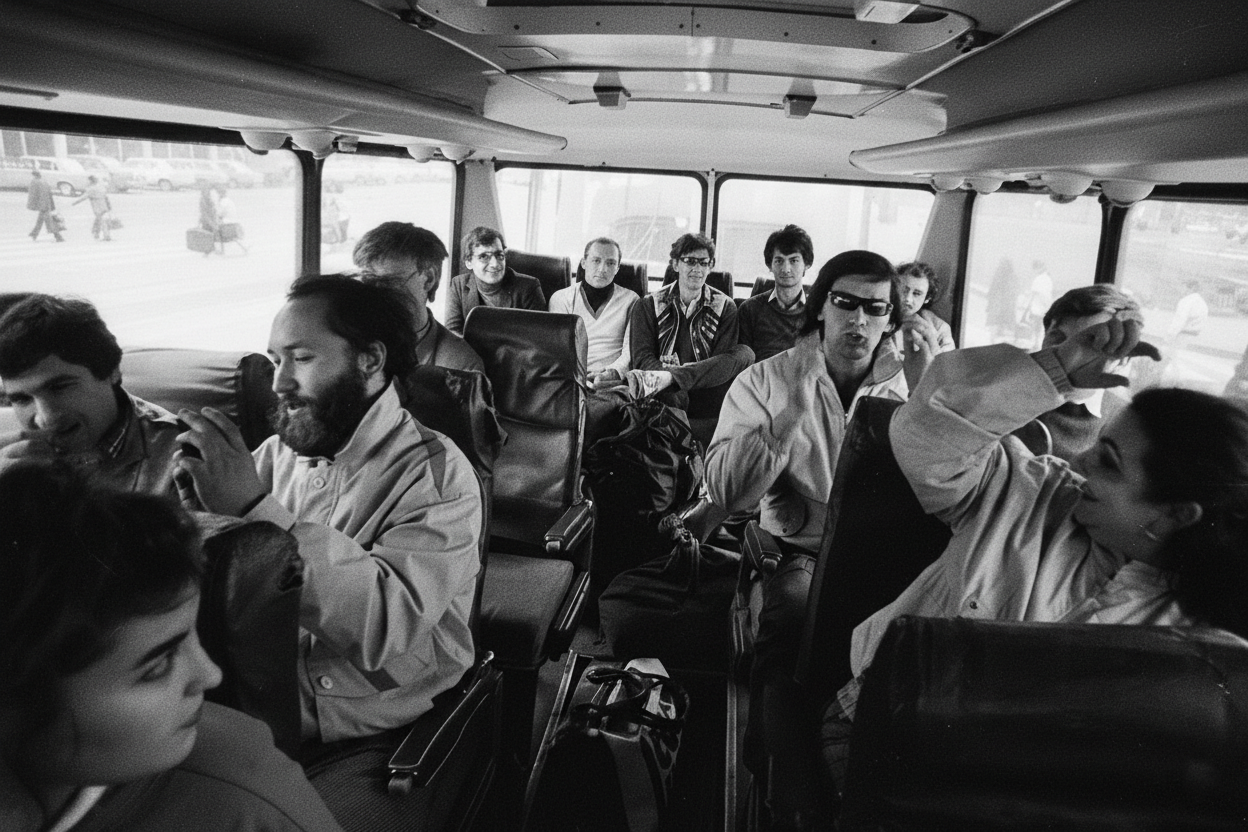
But behind this visible side of success, namely tours, recognition and reputation, stood labour far less noticeable and almost invisible. The theatre demanded constant protection, effort and decisions that rarely entered official chronicles. For Honoured Artist of Uzbekistan Seydulla Moldakhanov, Ilkhom remained above all a family:
...He could literally shield our Ilkhom with his own body, our family and everyone who worked in the theatre... And he showed us the world. There is a saying among us: a theatre without tours is no theatre at all. Only Mark knew what it truly took to bring an independent (non-state) theatre to Bulgaria on tour back in 1986. It was, without question, an act of courage.
 Source: "Unknown known Mark Weil", M. Sorsky
Mark Sorsky recalls the repertoire, the conflicts and the ways the theatre resisted pressure:
We had no censorship whatsoever. Mark allowed himself things for which, by all the rules of the time, we should have been imprisoned. Back then they called it ‘anti-Sovietism’, but in reality it was simply truth. The Central Committee of the Komsomol would come, ban performances and hang a huge padlock on the theatre door. We would remove it, throw it away and continue performing. There was outrage and scandal, but for some reason they never touched us. Mark had a powerful trump card: the 1976 union decree on work with creative youth. In many ways, that decree became Ilkhom’s point of origin, the opportunity finally to do our own work.
They tried to suffocate us constantly, especially in the early years. There was even a nationwide campaign against us. After The Peasant Wedding, Komsomolskaya Pravda published a devastating and openly commissioned article titled Why Break the Chairs? What did Mark do? He pinned the article up in the theatre foyer before the entrance to the performance. Any spectator could read it and understand where they were going. We hid nothing. They wrote it, fine, here it is, read it. That was his principle: never justify yourself and never hide.
And so Mark Weil’s theatre existed and continues to exist as both a home and a place of risk, responsibility, faith and devotion to one’s work. It is neither a comfortable institution nor an abstract idea, but a living space demanding the constant presence of both its actor-inhabitants and its audience-guests. Perhaps that is precisely why Ilkhom remains so impossible to separate from the name of its founder.
Weil Off Stage
As already mentioned, Mark Weil was a private man. This is how those who knew him personally remembered him, including those who had been close friends.
Marina Turpisheva connects Weil's reserve with his attitude towards home and family:
I never called him simply "Mark" in front of other people, only Mark Yakovlevich. He was not someone who opened his soul to everyone. But I remember very clearly the way he spoke about his family. He always said, "my girls." Tanya was, for him, the best of women, utterly devoted: she supported everything, understood everything, accepted everything, never interfered in the creative process, yet always stood beside him as a companion and ally. Their daughters, Yulia and Sasha, grew up in the atmosphere of the theatre, and the theatre became part of their lives.
He was a master. He gave everything he could to the theatre: equipment, seats, repairs, whatever was needed. Sometimes he would ring Tanya and say: "Tanya, there is nothing to pay the actors with." It was never a family expense. It was about saving the theatre. Later, if he could, he repaid everything.
Off stage, Weil revealed himself most clearly through actions, often passing almost unnoticed. The People's Artist of Uzbekistan Svetlana Norbaeva remembers him this way, recalling a moment when his support proved decisive during one of the hardest periods of her life:
At one of the worst moments in my life, I fell gravely ill. I was taken to Moscow for treatment, where doctors diagnosed my condition and performed open heart surgery. Mark visited me in hospital while he was in Moscow. Our conversation lasted a long time and brought a sense of calm. He had a gift for creating an atmosphere in which pain seemed lighter and spirits rose. Later there came a moment when I left the Hamza Theatre. I called Mark, explained the situation and asked: "Will you take me on at Ilkhom?"
"It would be an honour," he replied. I burst into tears...
Art historian Yury Podporenko also wrote about Mark Weil as a man with a powerful inner core, noting the particular nature of his ambition:
Was Mark Weil ambitious? Undoubtedly. But it was not everyday ambition, not worldly ambition. It was something larger, something almost universal in scale.
Yet despite his restraint and inner reserve, many still found him remarkably approachable, especially the younger people within the theatre. Composer Aziza Sadykova recalls him this way:
Mark was an absolutely open person. With me, an 18-year-old who had just come from school, he communicated with respect and as an equal, as with a professional. I never saw him in a bad mood. Always kind, cheerful, energetic, with incredible charisma. He evoked a sense of admiration. There are many talented people, but charismatic ones are few. Around people like Weil, and today — Serebrennikov or Currentzis — there is constant excitement. People are drawn to their inner light.
Mark was an entirely open person. With me, an eighteen-year-old who had only just left school, he spoke respectfully and as an equal, as he would with a professional. I never saw him in a bad mood. He was always warm, cheerful, energetic, with extraordinary charisma. He inspired admiration. There are many talented people, but truly charismatic ones are rare. Figures like Weil, and today Serebrennikov or Currentzis, create a constant energy around themselves. People are drawn to their inner light.
For Weil, caring for people extended far beyond the theatre. Actress Umida Akhmedova recalls how the director helped her in a deeply practical way:
Understanding that work at Ilkhom was essentially voluntary, with no salary for actors, Mark took care of me and helped me secure a position at the Y. Akhunbabayev Young Audience Theatre. His personal involvement in my creative and professional life became an example of the highest form of responsibility a director can show towards his actors.
In everyday life, Mark Weil remained light-hearted and ironic, entirely free of any sense of distance or status. This comes through vividly in the recollections of writer Lutfulla Kabirov. After an Ilkhom production that left a group of Bulgarian guests in a state of genuine cultural shock, Weil readily joined everyone at the writer's home, where an ordinary evening around the table unexpectedly became a continuation of the theatre, only without a stage:
It turned out the Bulgarians had never even heard of condensed milk, let alone tasted it. It impressed them no less than Mark Weil's production. Without hesitation, my wife gave them our last tin.
Several days later, the story continued at the theatre:
Weil was waiting for us in the foyer, a box in his hands. Mark opened it, and the Bulgarians cried out with delight. Inside, neatly arranged, were sixteen tins of condensed milk. Four for each of them.
<span class="15">From Lutfulla Kabirov's story</span><span> Condensed Milk</span>
Director and scenographer Danila Korogodsky describes his impression of Weil through a single word that seems to unite many of these recollections:
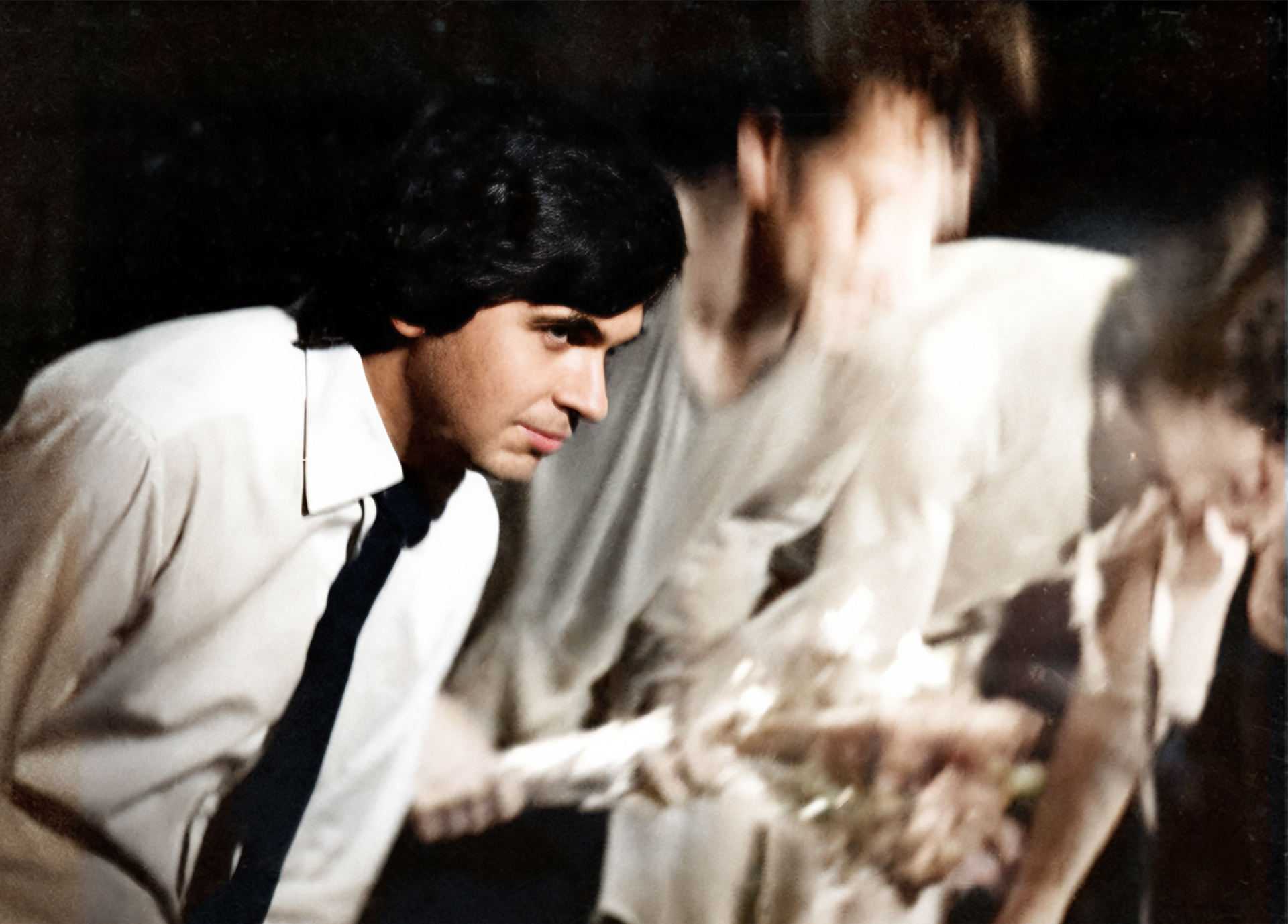
For me, his defining quality was always a kind of fatherhood. Both in life and in theatre he was a family man. Mark Weil was a man of his word. He knew how to draw people close, and people repaid him with loyalty both in life and on stage. He could be stern, he knew how to be strict. And yet there was always a delicate vulnerability within him, the vulnerability of a true artist, something he was forced to conceal beneath a mask of severity.
There is a familiar saying that a person lives on for as long as they are remembered. In the case of Mark Weil, a complex and deeply multifaceted man, it is clear that he is remembered not only as the creator of a unique theatre and singular productions. He is also remembered as a man of responsibility, inner strength and a rare capacity to be there for others when it mattered most. It is this enduring presence that continues to sustain those who still carry the memory of him.
 Source: "Unknown known Mark Weil", M. Sorsky