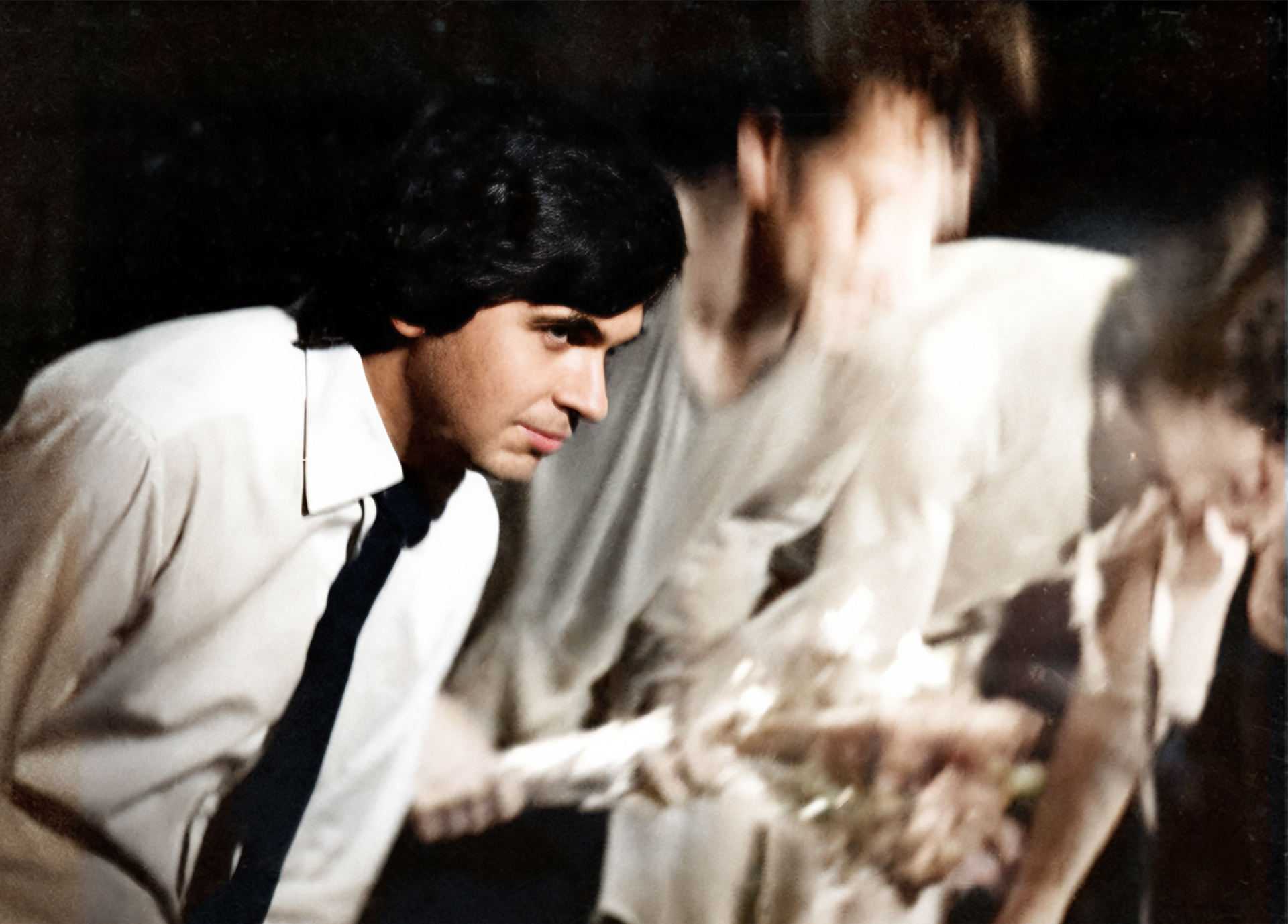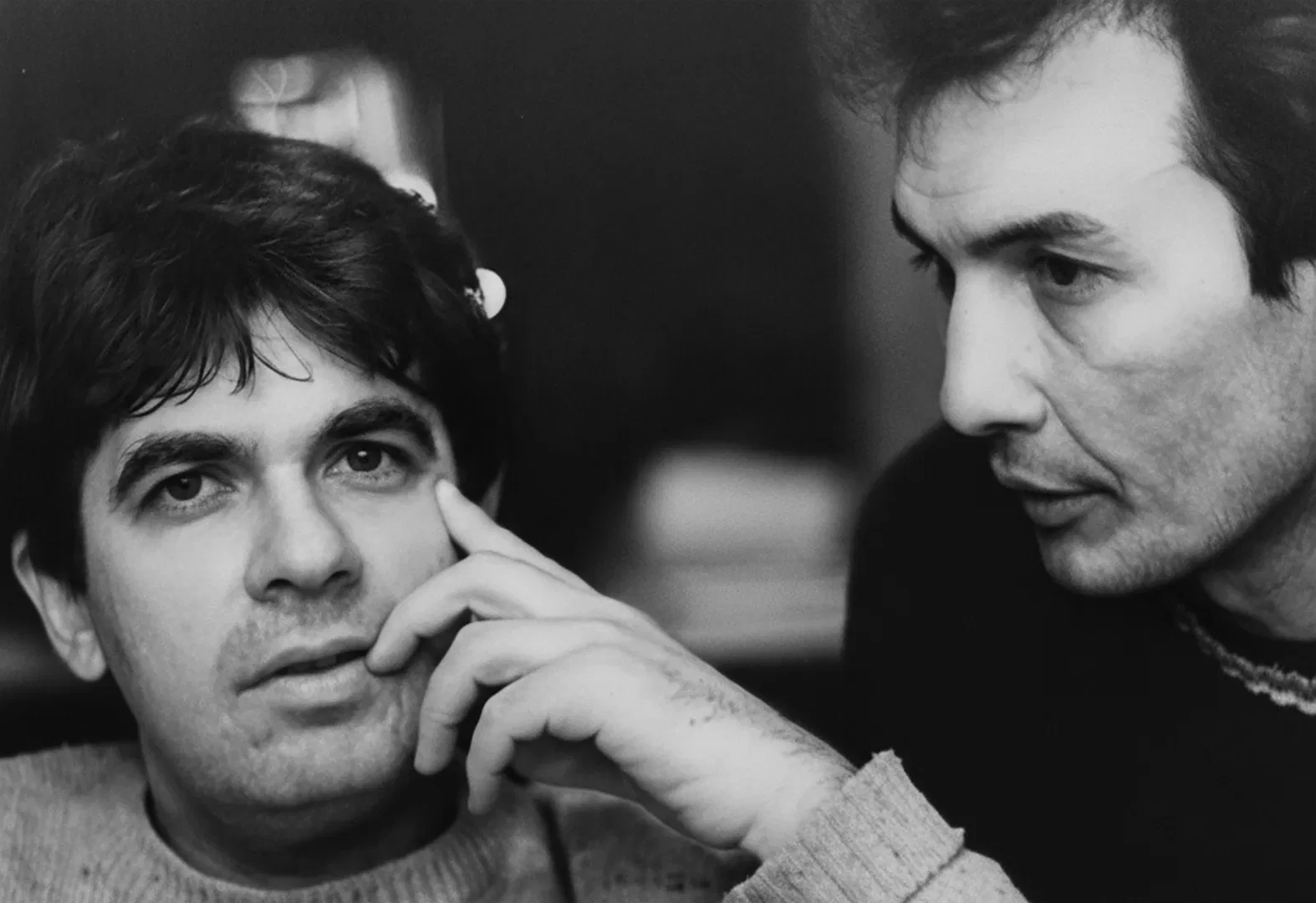
The idea for the book didn't come "for an anniversary" or because someone sat down and decided it needed to be written. The reason was unpleasant—a dirty post about Mark Weil appeared on social media. It contained a lot of humiliating and unfair things, and it upset me. I responded sharply, and then it became clear that if we didn't gather living testimonies now, only rumors and someone's versions would remain.
Someone said: we need to make a book of memories. As usual, everyone agreed, but it didn't go beyond words. And a friend of mine, a theater scholar, told me directly: "Since you care so much, just take it and do it. Not a monograph, but a collection of memories." I resisted at first—I had never published a book. But then I realized it was possible.
I immediately explained to everyone that this wouldn't be a scholarly study or a "granite monument." I wanted to gather an impressionistic portrait with different voices and different brushstrokes. To create a living sense of the person and his time, not a heavy memorial slab.
It took about a year to collect the materials. I spent days online: writing to people, corresponding, persuading, gathering texts. Some responded immediately, from others I literally had to pull out memories. Then the texts were edited—by me and my theater scholar friend—and we always sent them back to the authors so they could agree with the final version.
We—myself and another person from "Ilkhom"—published the book at our own expense. It was a matter of principle for me—this is not a commercial project, I am not selling these books.
The print run was small—about 300 copies. Some of the books went to libraries, which is especially important to me. After all, personal books disappear over time, but library ones remain. I can proudly say that one copy is held in the central city library of Jerusalem.
I also gave part of the print run to the theater. "Ilkhom" itself decides what to do with them—gift them, sell them, handle them as they see fit…
Mark Sorsky
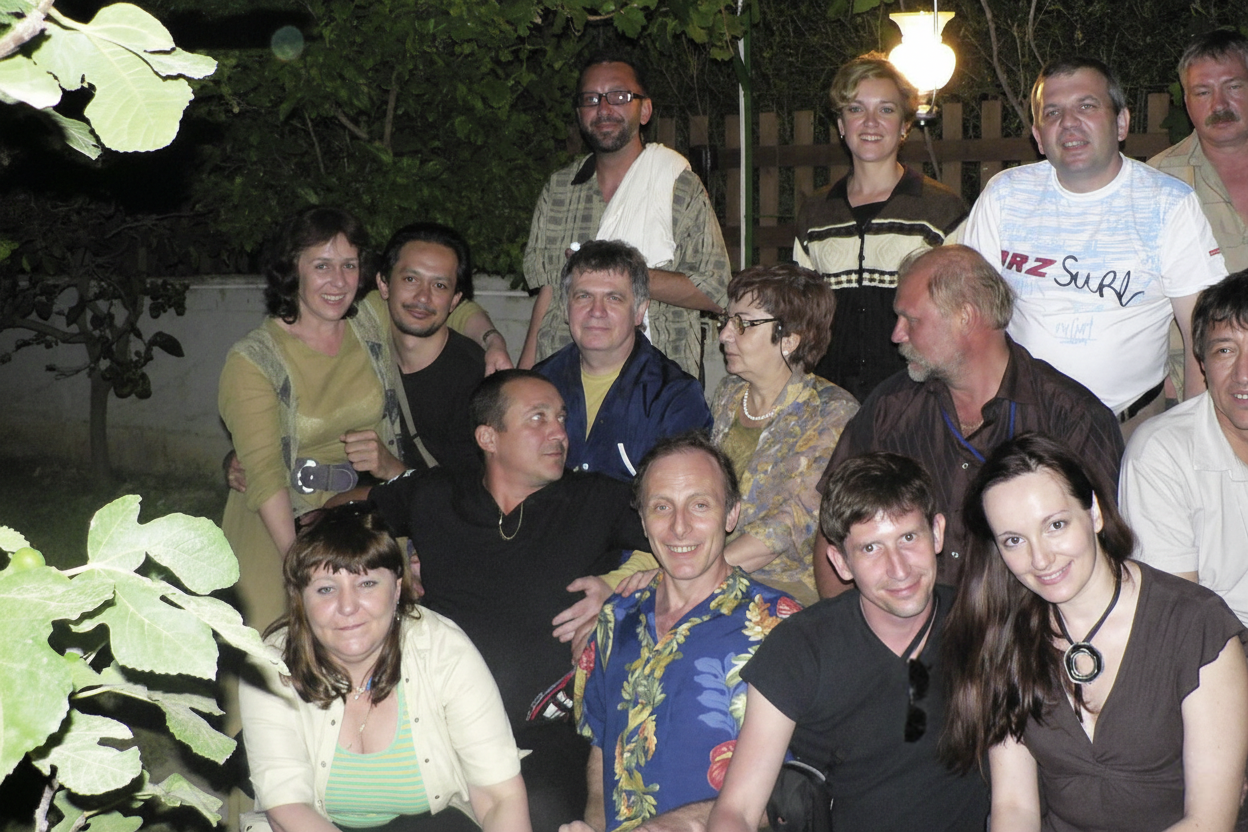
"Each of You is Dear to Me": A Personal and Collective Tragedy
September 6, 2007. The eve of the 32nd theater season. The dress rehearsal ended late—as usual, of course. Tomorrow there would be the stage, the audience, and certainly criticism—how could it be otherwise? But for now… He looked attentively at the tired actors—his family, his beloved and dear people: "Each of you is dear to me." These words once again showed his attitude toward his colleagues, but no one could have imagined that they would become farewell words…
Two figures in black quietly detached themselves from the wall. He did not immediately feel the sharp pain that pierced him, and then again and again. Only one thought pounded in his head: "Do something, tomorrow is my premiere of 'The Oresteia,' I can't miss it!" — with his last strength, the wounded man pleaded in the ambulance, trying to look into the doctors' eyes while simultaneously watching as blood poured ceaselessly from his wounds…
Members of the vast "family" of the Ilkhom Theatre, gathered at the gates of the 16th City Hospital, could not believe what they had just heard for a long time. The hope that had flickered in each of them as they made their way here was extinguished. Their Master, Director, Mentor—he is no more. The founder of the Ilkhom Theatre, Mark Weil, died during surgery at the age of 55.
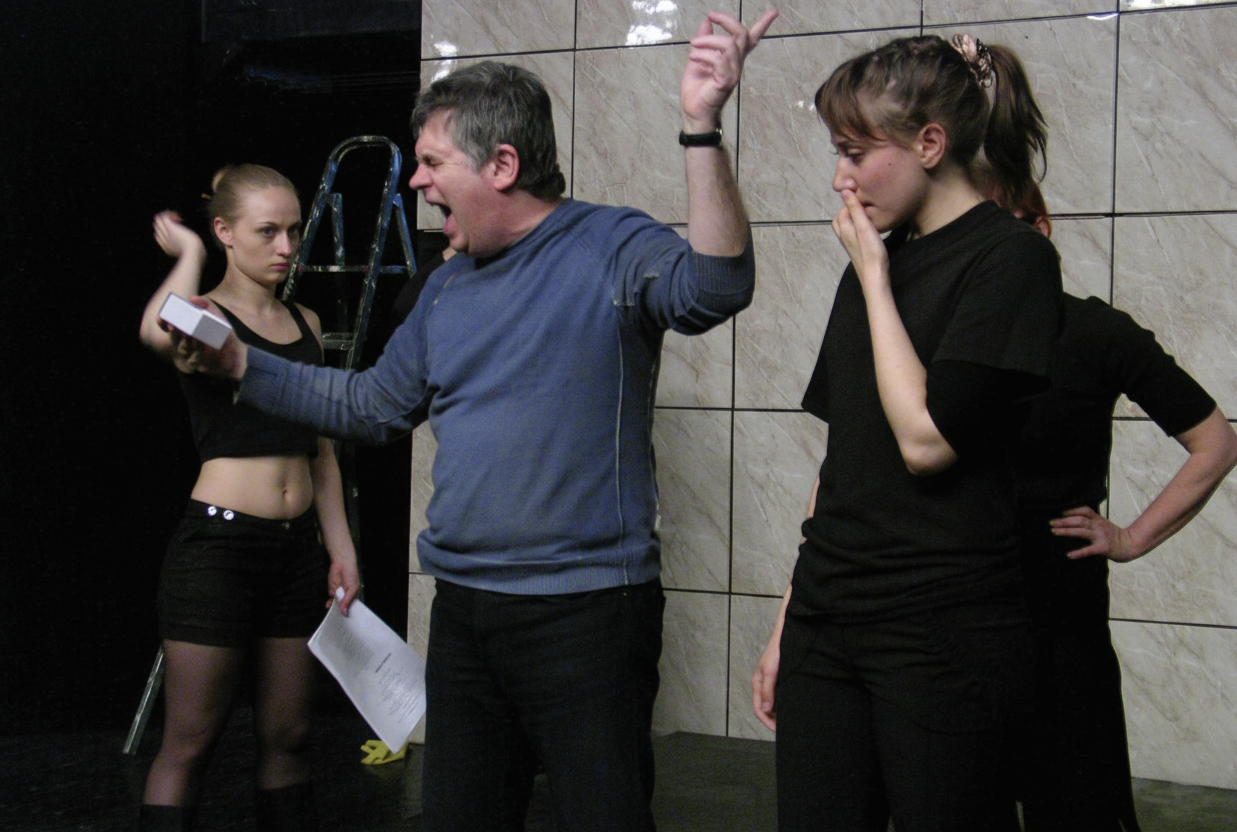
Misfortune and the sense of loss often unite people, yet each person experiences this feeling differently. And the feeling of a great loss remains in the soul until the very end of life.
Each of those who were close to him experienced the tragic news in their own way, but the sense of loss turned out to be shared.
Actress of the Ilkhom Theater, Honored Artist of Uzbekistan Marina Turpishcheva recalls the last hours before the tragedy:
The rehearsal ended very late that day. I was still complaining: the metro will close!.. Mark yelled at me, and that's understandable — opening night, everyone's on edge. I came home, lay down, but couldn't fall asleep. Then someone called me and said a phrase that reached me as if through cotton wool. For a long time, I didn't know what to do, who to call, where to go... I just woke up my husband, and we came to the theater. It was night, but there were already people here. Many people… I hardly remember any faces. I only remember the feeling — we were all like orphaned children. And also — the feeling that he was eternal… That such a thing simply cannot be.
For many, it was not just grief, but a sudden loss of support: the person who had sustained the theater and the people around him was gone.
Actor, director, and current artistic director of the Ilkhom Theatre Boris Gafurov speaks about this condition without softening it:
The feeling is like falling into a vortex, and everything is collapsing: what you lived for, what you lived for?.. No one knew what to do next. We decided — we needed to preserve the theater created by the Master. There was no initiative from me to become the artistic director — I was chosen. It's a huge responsibility to lead a legendary theater with a rich history. At first, it was very difficult, I wanted to run away. And even now, sometimes I want to drop everything and run…
The news of Mark Weil's death was hard to comprehend even for those who had long been away from the theater but continued to feel an inner connection with it.
Mark Sorsky recalls the moment he learned about what happened:
The news of Mark's death hit me very hard. They called me in the morning and said: 'Mark Weil has been killed.' For about five minutes, I couldn't comprehend what I had heard. It simply did not compute: Mark and death—they didn't belong in the same sentence. Especially since we had seen each other just a few months before.
But the memory of him lives on in many and is preserved with surprising clarity—for them, the Master is not a distant figure; his living presence feels as if it is still alive now.
Oksana Sokol, a former actress of the Ilkhom Theatre, said this about it in 2022:
Mark Yakovlevich Vail...
Oh, how my thoughts are tangled, and how my heart beats!.. It's so strange: often the faces of even well-known people fade from memory, leaving behind a blurry and indistinct image, but I remember Vail as if we had parted only yesterday; yet it has been fifteen years since 2007—the year Mark Yakovlevich came to Israel, where we met!
"He was... difficult...": What Mark Weil was like behind the scenes
This death became not only a personal tragedy for every "Ilkhomite," but also the starting point after which the theater—and the entire city—began to perceive the Master's significance differently. Because Mark Weil was a complex figure. He could not be reduced to the simplified image of a "kind master" or a "strict leader"—he was both. One could say that it was precisely thanks to these contradictory qualities that "Ilkhom" was created. However, all the inhabitants of "Ilkhom," the director's friends, those who met him at least once, remember Mark Weil like this: "It was not easy with him." And almost no one says it was easy.
Marina Turpishcheva speaks candidly about the difficulty of this experience:
I hardly recall any creative conflicts. If there were tense moments, they were mostly due to "human" factors: rehearsals would drag on endlessly. Mark could work for hours without noticing the time, not stopping to eat or rest. But we are human: the metro closes, our energy runs out... He didn't take that into account.
But there was one such conflict... When work began on the play "The House That Swift Built," I was also part of the team. And at some point, a person appeared who behaved one way at Ilkhom but allowed themselves to say extremely unpleasant things in another theater. And first and foremost—about Mark Yakovlevich.
But for me, this was unacceptable. I always believed that betraying one's master is the worst thing. Back then, due to youth and excessive emotionality, I told Mark Yakovlevich about it. Perhaps he didn't believe me—it's hard to say now. But as a result, I had to leave the play...
This episode reveals not so much the conflict itself, but rather the established boundaries, as Mark Weil was a private person who disliked dealing with matters "emotionally." He rarely explained himself and almost never made excuses—and therefore, the decisions he made or did not make remained his personal responsibility.
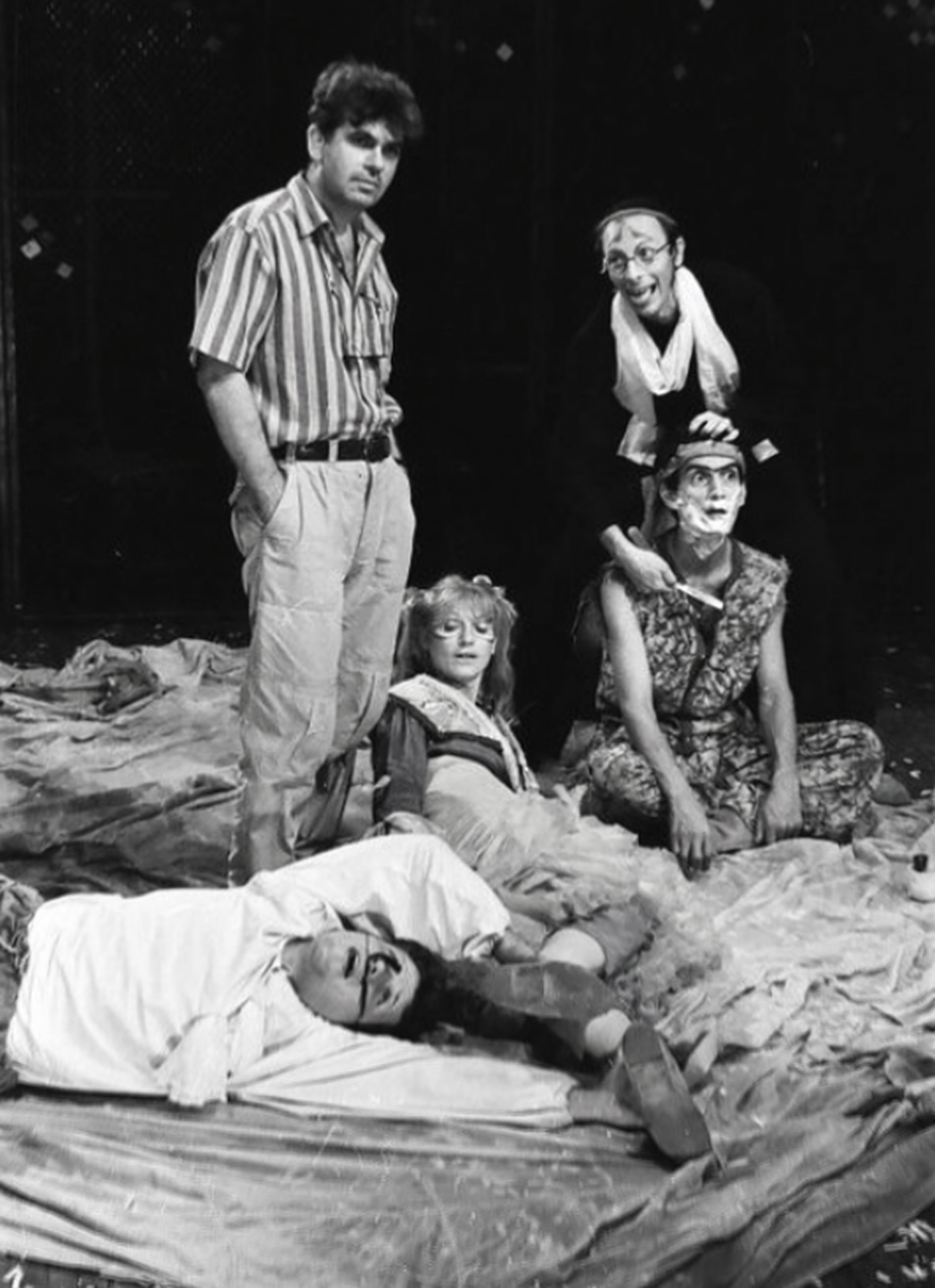
About the scale of this figure and why communicating with him was challenging but professionally necessary was explained to us by another actress of the Ilkhom Theatre, Honored Artist of Uzbekistan Olga Volodina:
There is a well-known formula: the director is a voluntary dictator, the actor is a voluntary subordinate. It was not easy with him — primarily because of the scale of his personality. He never said: "Do it like this." He said: "Search. Think." He did not force you into rigid frameworks, yet discipline and form were fundamental to him. After all, the form was born from his inner, perfect vision of the play — the music, the scenography, the actors, the entire whole... And we tried to live up to this concept…
I am often asked if there was harshness in him. Yes, he was a complex man. But this complexity was magnetic. Interacting with him was always an energy exchange. When you are near a person with vast horizons, your own horizons inevitably expand.
Despite all his reserve, Vail never suppressed initiative in actors—he set the standard. This was not softness, but a different kind of demand: he guided and, at the same time, did not allow anyone to fall below his own understanding of the profession. This inner strictness always manifested in work, for it was precisely here—on the submarine named "Ilkhom"—that there were no compromises for him. This is confirmed by director and teacher at the State Institute of Arts and Culture of Uzbekistan Alexander Kudryavtsev:
...Sometimes capricious, sometimes verbose. At times irritable and unpredictable. Jealous of his actors and not very trusting of 'outsiders.' I repeat—not perfect. That's in communication, but on stage—demanding and responsible. Rigid pedantry and persistence in achieving the envisioned. Stubbornness reaching the point of torment and self-torment... Mark Weil was strict. Not merciless, but principled and strict when it came to the theater. He could not forgive any superficiality, sloppiness, or 'half-effort.' And everyone who worked with him knew this and feared letting him down. Because he did not let down either.
A theater you can never "leave for good"
Speaking of the Ilkhom Theatre, a simple yet complex question inevitably arises: what was it for Mark Weil—a profession, a home, a family, an idea? Those who knew him closely and worked alongside him answer this differently. For Weil, the theatre did not have a single definition.
I think it was all at once. He lived for the theater. He came in the morning — left at night.
Marina Turpishcheva
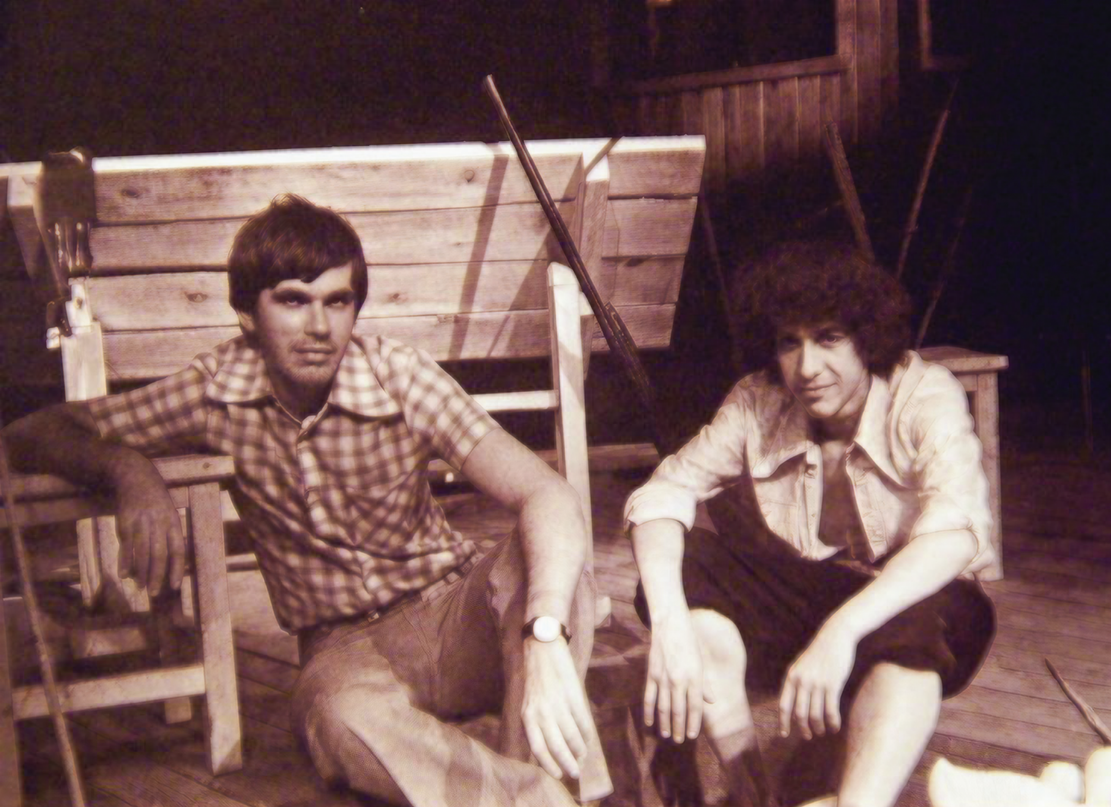
For him, the theater was everything. Not a profession, not a workplace—but life itself. His brainchild. He created the theater, the company, the school that nourished the theater. It was a living organism.
Olga Volodina
However, the theater itself never existed in isolation. On the contrary, it was precisely under Vayl that it became a point of attraction, noticeable far beyond the city and the country. This was written by the literary scholar and writer Chingiz Huseynov, who observed the process from the outside:
"Tashkent was the theatrical Mecca of Central Asia under Mark," someone remarked; it sounds beautiful, but it's the truth... Mark became known in Moscow thanks to the theater's tours, as an originally thinking director possessing a high gift not only for scenography and production effects, in which he is a master, but also for working with actors—he builds with them a phantasmagorical, dynamically and sharply developing artistic reality.
But behind this "visible" side of success—tours, recognition, reputation—lay a much less noticeable, almost invisible work. The theater required constant protection, effort, and decisions that rarely made it into the chronicles. For the Honored Artist of Uzbekistan Seydulla Moldakhanov "Ilkhom" in this sense always remained first and foremost a family:
...He could literally shield our "Ilkhom" with his own chest, that is, the family, everyone who worked at the theater... And he also showed us the world. A theater without tours is no longer a theater, as we say. What it took to take a non-state theater on tour to Bulgaria... in the distant year of 1986—only he, Mark, knew. Of course, it was an act of courage.
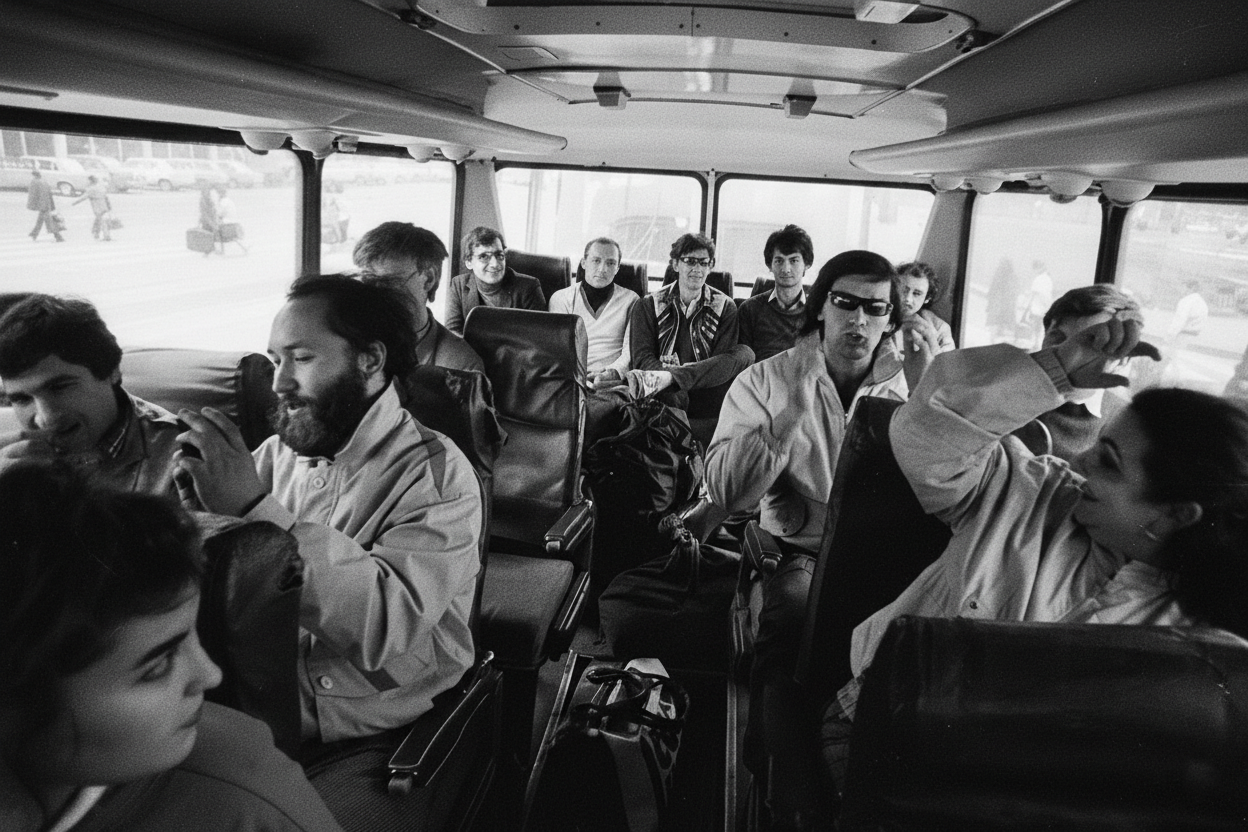
About the repertoire, conflict situations, and methods of combating the theater, Mark Sorsky tells:
We had no censorship. Mark allowed himself things that now make you think—we should have all been imprisoned according to all the rules. At the time, it was called "anti-Soviet activity," but in essence, it was simply the truth. The Komsomol Central Committee would come, ban performances, hang a huge lock on the door—and we would remove it, throw it away, and continue performing. They made noise, were outraged, but for some reason, they left us alone. Mark had a strong trump card: the 1976 Union-wide decree on working with creative youth. Essentially, it was from this that the lineage of "Ilkhom" begins—as a pretext and an opportunity to finally do our own thing.
They constantly tried to strangle us—especially in the early years. There was even a nationwide smear campaign. After "Meshchanskaya Svadba" (The Philistine Wedding), a scathing, clearly commissioned article titled "Why Break Chairs?" was published in "Komsomolskaya Pravda." What did Mark do? He posted this article in the theater foyer—right before the entrance to the performance. Any viewer could read it and understand where they were going. We hid nothing. They wrote it—here you go, please read it. That was his principle: not to justify or hide.
This is how Mark Weil's theater existed and continues to exist and live: for its inhabitants, it is simultaneously a home and work with risk and responsibility, but without fear and with faith and love for their craft. It is not a convenient structure or an abstract idea, but a space that requires the constant presence of its actor-inhabitants and guest-spectators. And perhaps this is precisely why "Ilkhom" is so difficult to separate from the name of its founder.
Weil Offstage
As already mentioned, Mark Weil was a private person — this is how those who knew him personally, and even those who were close friends with him, remember the director.
Marina Turpishcheva links Weil's reclusiveness to his attitude toward home and family:
I never called him simply "Mark" in front of people — only Mark Yakovlevich. He is not the type to bare his soul to everyone. But I remember very well his attitude towards his family. He always said: "my girls." Tanya was the best woman for him. And Tanya is truly a Decembrist's wife: she supported everything, understood, accepted, never interfered with the creative process, but was there as a comrade-in-arms. The daughters — Yulia and Sasha — grew up in the atmosphere of the theater, and the theater was a part of their lives.
He was the master. He invested everything he could here: equipment, chairs, repairs, necessary things. Sometimes he would call Tanya and say: "Tanya, there's nothing to pay the actors with…" — and this was not a "family expense," but saving the theater. He would always pay it all back later, if he could.
Offstage, Weil was best revealed through his actions—often almost imperceptible ones. This is how he was remembered by People's Artist of Uzbekistan Svetlana Norboeva, for whom the director's involvement proved decisive during a difficult moment in her life:
At the worst moment of my life, I fell ill. Seriously ill. For treatment, I was evacuated to Moscow, where I was diagnosed and underwent open-heart surgery. Mark, while in Moscow, visited me at the hospital. Our conversation was long and soothing. He knew how to create an atmosphere, to find words that had the ability to lessen pain and lift the spirits. Later, there was a moment when I left the "Hamza" Theatre. I called Mark, explained the situation, and asked, "Will you take me to 'Ilkhom'?"
— I would be honored! — I heard in response. I cried...
Art critic Yuri Podporenko also wrote about Mark Vail as a person with a strong inner core, noting the special nature of his ambitions:
Was Mark Weil an ambitious person? Absolutely! But it was not an ordinary, everyday ambition, but rather... well, not otherworldly, but all-encompassing, universal.
But despite all his restraint and inner reserve, he remained accessible to many, especially to the youth in the theater. This is how composer Aziza Sadykova remembers him:
Mark was an absolutely open person. With me, an 18-year-old who had just come from school, he communicated with respect and as an equal, as with a professional. I never saw him in a bad mood. Always kind, cheerful, energetic, with incredible charisma. He evoked a sense of admiration. There are many talented people, but charismatic ones are few. Around people like Weil, and today — Serebrennikov or Currentzis — there is constant excitement. People are drawn to their inner light.
For Weil, caring for people was not limited to the theater. This is confirmed by theater and film actress Umida Akhmedova, whom the director helped with a concrete act:
Understanding that the work at the Ilkhom Theater was on a voluntary basis, where actors were not paid a salary, Mark showed concern for me and helped me get a job at the Y. Akhunbabaev Youth Theater. His personal involvement in my creative and professional life became an example for me of a director's high regard for his actors.
At the same time, in everyday life, Mark Weil remained lighthearted and ironic, without the slightest tendency toward distance or "status." This is evident in the recollections of the writer Lutfullah Kabirov. After the performance by "Ilkhom," which was a cultural shock for the Bulgarian guests, Mark Weil went with everyone to visit the writer without hesitation, where an ordinary evening at the table unexpectedly turned into a continuation of the theater—only now without a stage:
And then it turned out that the Bulgarians had no idea about condensed milk — they tried it for the first time… And it made no less of an impression on them than Mark Weil's performance. Without hesitation, my wife gave them the last can…
A few days later — already in the theater — this episode continued:
Weil was waiting for us in the foyer. He had a box in his hands... Mark opened the box, and the Bulgarians practically squealed with delight! Inside, sixteen cans of condensed milk were neatly stacked. Four for each of us.
from the story "Condensed Milk" by Lutfullah Kabirov
Director and set designer Danila Korogodsky describes his feelings about meeting the director through a single definition that unites many memories:
For me, his main quality was always "fatherhood"; he was a family man both in life and in the theater... Mark Weil was a man of his word. He knew how to win people over, and people repaid him with loyalty both in life and on stage... He was a man of strict character, he knew how to be strict... And yet, within him always lived the delicate vulnerability of a true artist, which he was forced to conceal behind a mask of severity...
There is a popular saying: "A person is alive as long as memory of them lives on." In the case of Mark Weil—a complex and multifaceted man—it can be noted that he is remembered not only as a master who created a unique theater and unique productions. He remained a man of responsibility, inner strength, and the ability to be present. And it is precisely this presence that continues to support today those in whom the memory of him still lives.