How Hitler's Paintings Became an Article of Trade in the Art Market
This week, the HBO series "Industry" featured a painting by Adolf Hitler as a chance find in an Austrian castle. The scene was intended as satire, but behind it lies an unusual reality: the works of the failed artist now fetch hundreds of thousands of dollars at auction.
Where did the paintings come from
Hitler was not an interior designer or amateur painter. In his youth, between 1908 and 1913, he worked as a professional artist in Vienna. He painted architectural views, landscapes, and still lifes. His works were mediocre — even auctioneers acknowledge this.
He was twice rejected by the Vienna Academy of Fine Arts. Historians debate whether this failure influenced his hatred of Jews and "degenerate art" (as he called modernism). Hitler himself believed he remained an unrecognized genius.
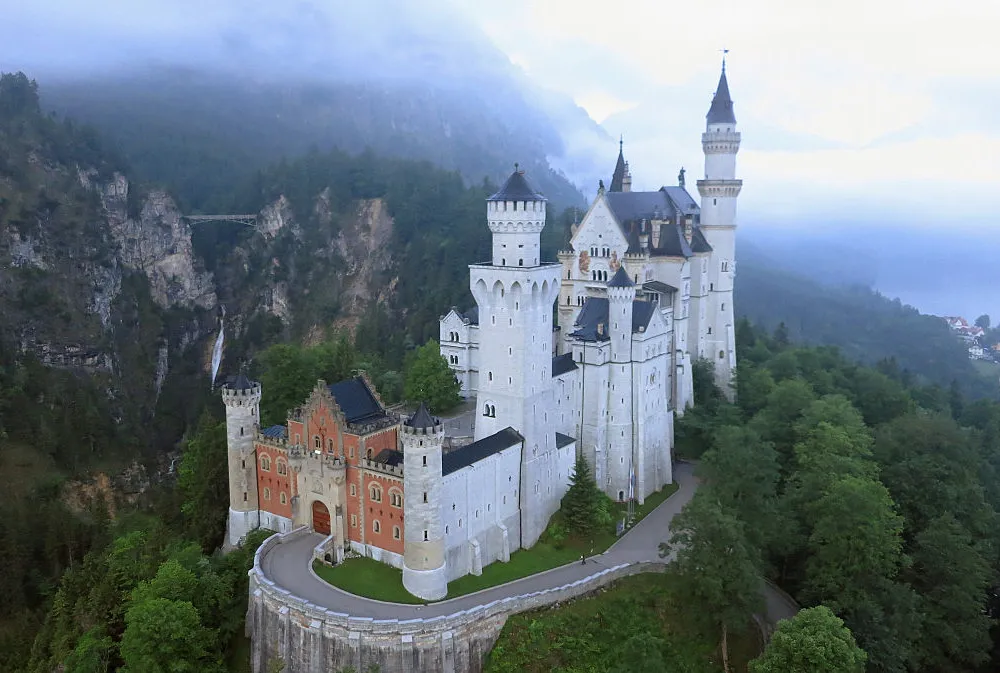
Hitler's paintings began appearing at auctions in the 2000s. And people bought them. In 2014, the work "Standes and the Old Town Hall of Munich" (1914, watercolor) sold for €130,000 ($147,000) in Nuremberg. The following year, at the same auction, "Schloss Neuschwanstein" (Neuschwanstein Castle) went for €100,000 to a buyer from China. A total of €391,000 was raised during the entire 2015 session.
In 2009, the British auction house Mullocks sold 15 paintings by Hitler for £97,672. In total, over the last 15 years, paintings have been auctioned for a total sum of millions of dollars.
The identities of the buyers are kept secret. Christine Weidler, the head of the Weidler auction house in Nuremberg, said her clients are not "old Nazis." "These are people who want to own a piece of world history," she explained. Among them are collectors from Brazil, the UAE, France, Germany, the USA, and Japan. But no one publicly admits to having bought a Hitler painting. Anonymity is part of the deal.
Problem: half of the paintings are fakes
This is where it gets strange. At an auction in Nuremberg in 2019, the prosecutor's office seized 63 paintings allegedly by Hitler. They were declared forgeries. This means people were being deceived. They paid tens of thousands of dollars for paintings that Hitler didn't paint at all.
Dutch art critic Bart Drog studied the issue and concluded that more than half of Hitler's paintings on the market are forgeries. The style does not match the confirmed works, the materials are different, and the certificates are fake.
How is this justified
Auctioneers refer to the paintings as "historical artifacts." This magic word transforms awkwardness into legitimacy. If it's "historical documentation," then it can be sold. If it's speculation on the personality of a dictator, then it cannot. The boundary is blurred.
Historians say such discussions are necessary. "It is a question of how modern Germany views its past in the 21st century," explained experts from the Central Institute for Art History in Munich.
Why did this end up on HBO
In episode 3 of season 4 of "Industry," the character Yasmin discovers a painting in a Viennese castle and sees the signature "A. Hitler." This is a real painting—the 1914 watercolor "Schloss Neuschwanstein." The scene is intended as a comedic moment, but it also exposes the absurdity: the paintings of a dictator are traded as investments, and people buy them.
Paradox
Hitler considered himself an artist all his life. He was rejected, he was humiliated. Now his unsuccessful works are worth more than he could ever have imagined. This is not fame—it is speculation on history.
Paintings without artistic value, of dubious authenticity, purchased by unknown individuals. All of this is wrapped in the word "history" and sold. As critic Jonathan Jones said: "Art historians are simply too lazy to authenticate the works of this monster." Therefore, forgeries are sold alongside genuine pieces. No one verifies.
In Germany, this is almost prohibited
In Germany itself, Nazi symbolism is prohibited in public places, with rare exceptions. Paintings by Hitler without swastikas can be sold, but this causes outrage.
When an auction was scheduled in Nuremberg in 2019 (the city where Nazi party rallies were held and war criminals were tried), the mayor of the city called it "bad taste." But the law allows it. And the trade continues.


Newsletter
A letter from the HD editors
Once a week, we send the best stories, events, and cultural discoveries from Central Asia.