A Name from Military Collective and Swaddling Cloth Made from Footwraps
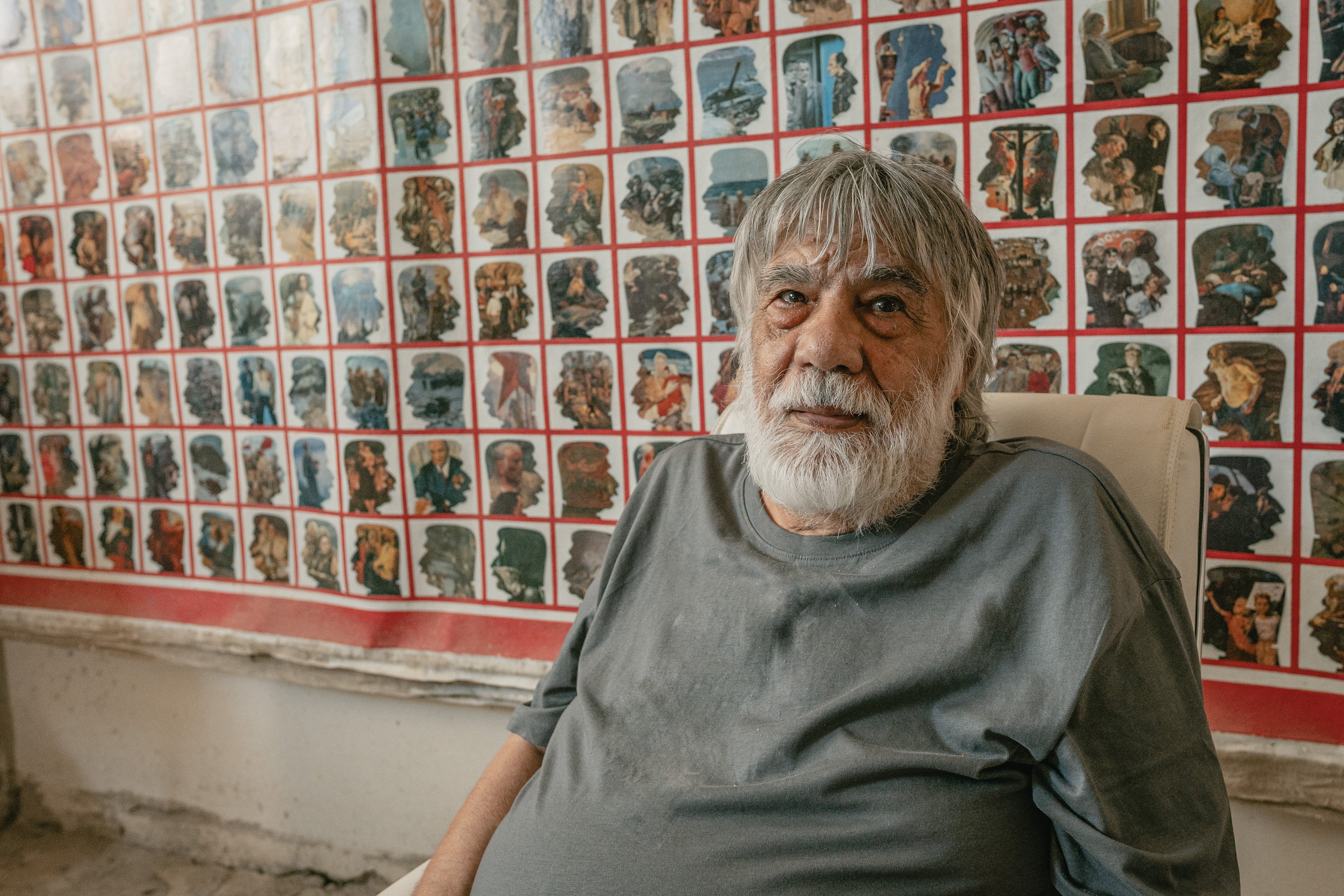
It’s a strange story. I got the name Vyacheslav from… a collective. Not my mum, not my dad, but a collective. A military one. My father was serving at the time as an ordinary soldier-artist in a construction battalion. And when I was born, my first swaddling cloths were made from brand-new flannel footwraps.
My dad wanted to call me Raphael, after Raphael Santi, the great Italian painter. My mum said, “No. What, he’s going to be Rafik? That doesn’t sound right… what kind of Rafik is that?” Because Raphael would just get shortened to Rafik.
Then the military stepped in, soldiers and officers. They said, “No, no, that won’t do. We need something more solid.” So at a meeting they decided to name me after
the Minister of Foreign Affairs, Molotov.
 Author: Katerina Kuznetsova
Photo: Katerina Kuznetsova
Three Smells of Childhood
For a long time, my childhood smelled like kindergarten, because my mum worked there as a nursery teacher. Everything was tied to her, to that place, to those rooms and their smells. The smell of cod-liver oil: they’d line us up, bring out this awful mixture, and shove a spoonful into our mouths. We’d gag, feel sick.
But our kindergarten also had a beautiful garden, fruit trees in bloom. Those scents…
And then there was another one, a special one, the smell of the cemetery. There was a cemetery right next to the kindergarten. After the war, in the 1950s, three or four war veterans were buried there every day. One truck after another. Always a brass band, and in front, on little cushions, the orders and medals. An open-backed truck moving slowly, women in black headscarves weeping. A veteran lying in the coffin, and a yellow nose sticking out. And we, little kids, would hang over the fence and watch it all, every day.
At some point, we even started staging mock funerals for each other. And those smells, thuja, juniper. There were no fir trees in Central Asia, so wreaths were made from juniper. That smell stayed with me for a long time. I still can’t eat tandoor kebab here, and I can’t drink gin, for me, it’s the smell of the cemetery.
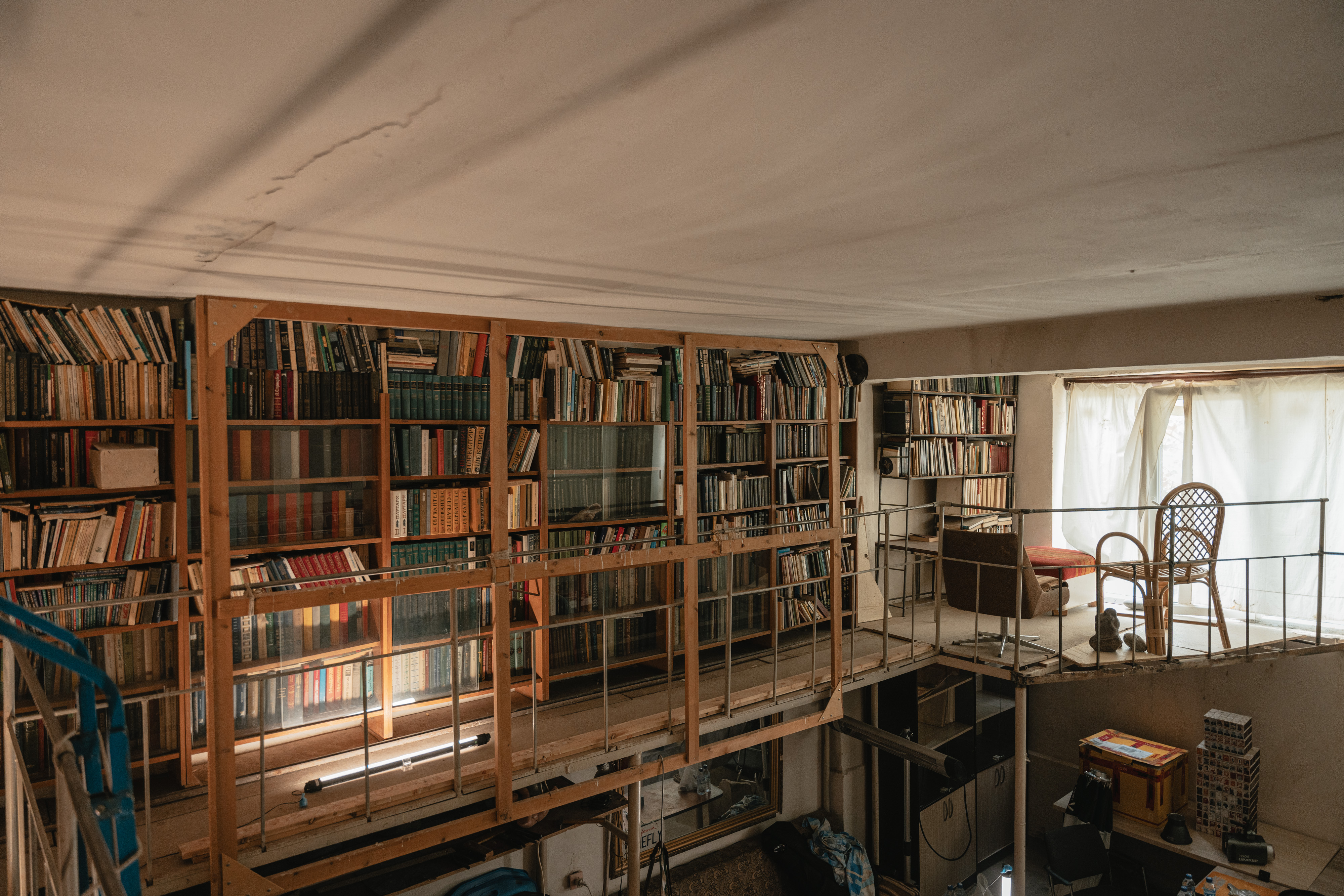 Photo: Katerina Kuznetsova
Photo: Katerina Kuznetsova
A Shoemaker in a Booth and a Night Watchman: Dreams of Solitude
As a child, I first dreamed of becoming a shoemaker. I liked it: he sat in his little booth in winter. It was cold outside, but inside it smelled of glue and leather. Your parents sent you to have your shoes repaired, you came in, and there was only one place for a customer. You sat there, a kettle on a hotplate, warmth. Those smells. And most importantly, he was alone. No collective. I liked that so much, being alone.
Later, as I grew older, I wanted to become a night watchman. Again, alone, sitting in a booth with a transistor radio, looking out through the windows as snow fell, or slush.
It was almost an obsession: to be alone, without a collective. Later I understood why. My father worked the same way. He would go to his studio, alone. He came when he wanted. No political briefings, nothing.
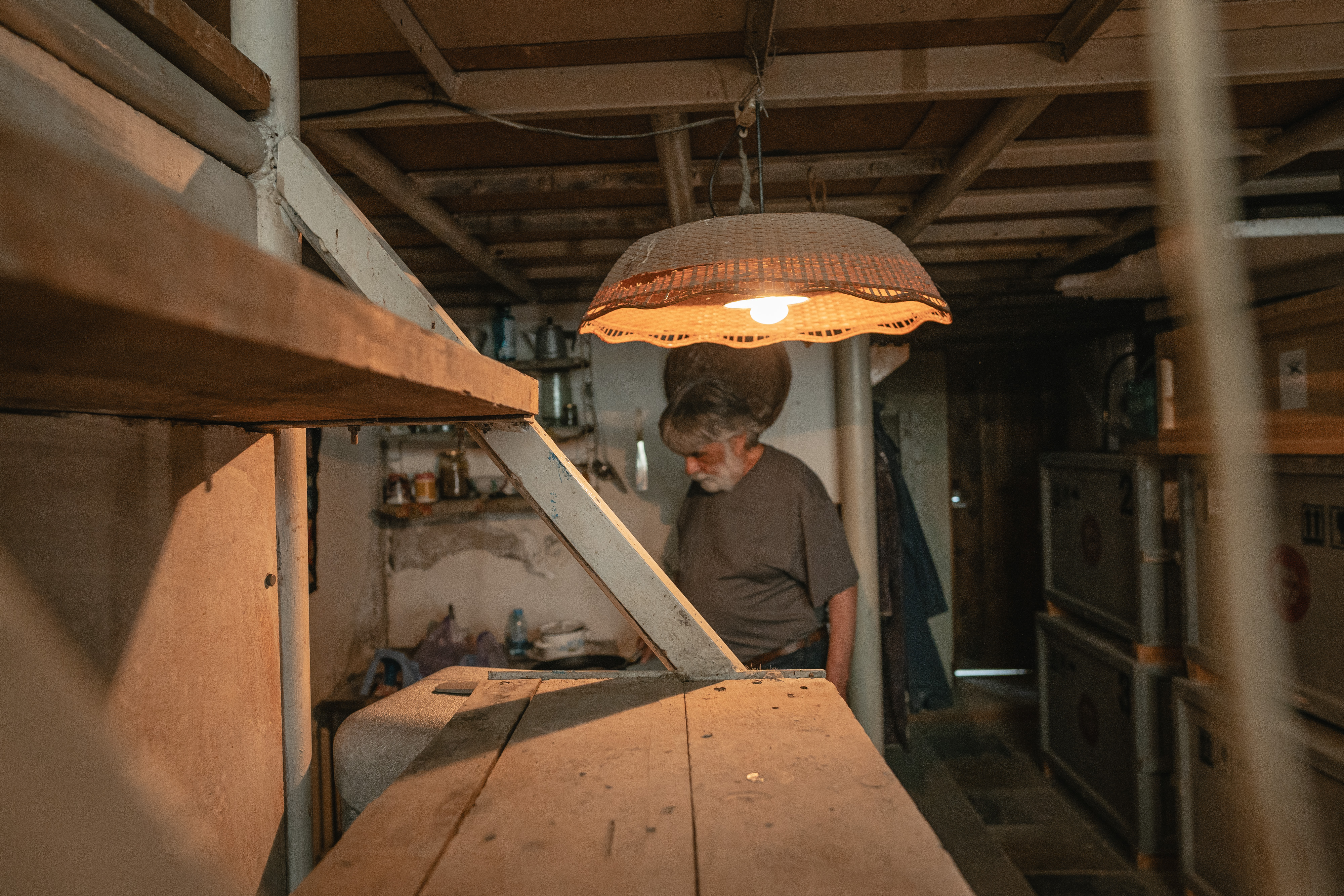 Photo: Katerina Kuznetsova
Photo: Katerina Kuznetsova
From Emptiness, All Things Are Born
I think solitude is the lot of artists. Not all of them, perhaps. There are groups of artists who work together. The Blue Noses, for instance, Slava Myzin and Sasha Shaburov, people join them, people leave. There were the Kukryniksy, who worked as a trio, painting together. But there are also those who need solitude.
Conceptualism, I think, thrives on solitude. It thrives on reflection. I feel uneasy when I am surrounded by a lot of artists at meetings, openings, large exhibitions. It creates this sense of anxiety. It is not the right state. In solitude, by contrast, you become focused. It stops being loneliness and becomes another form of emptiness.
People tend to think emptiness is just emptiness. But from a Daoist perspective, it is not like that. Emptiness is what things are born from. Ideas and objects come out of it. In ancient Chinese thought, everything is born from nothing.
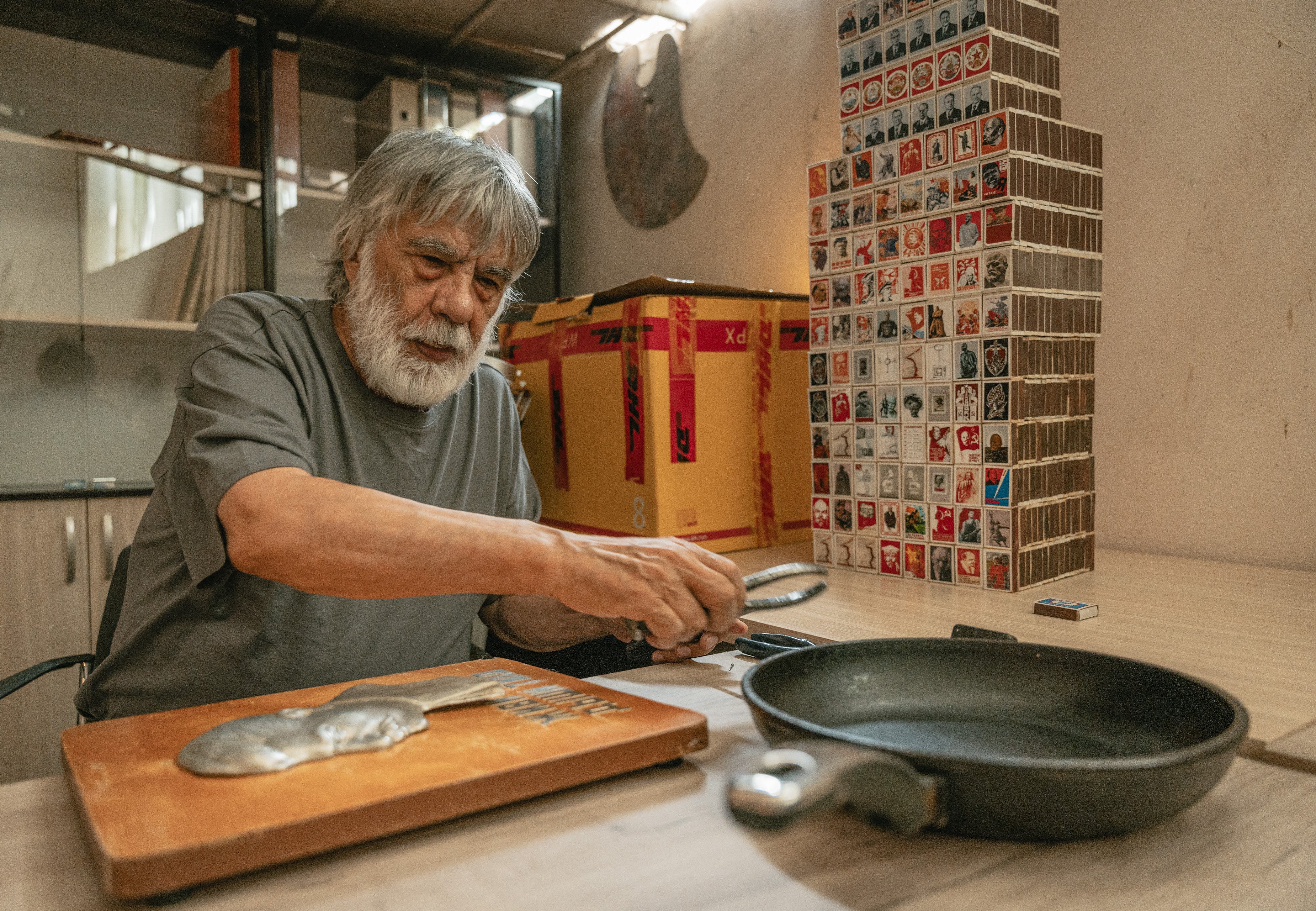 Photo: Katerina Kuznetsova
Photo: Katerina Kuznetsova
The Dreamer Who Tuned the Radio to London
As a child, I was calm. Very calm. And sort of… well, withdrawn. Too much of a dreamer.
I didn’t like the exact sciences. I liked history, literature. And I liked dreaming. I was just a dreamer, wandering around. What I was dreaming about I don’t even remember now, but something.
And I really enjoyed tuning the radio, catching waves. It said: Moscow, London, various cities. I thought: if I tune in to London, I’ll hear London. If I tune in to Paris, I’ll hear Paris. Well, of course, it was just the way it was labelled. But one day I heard some amazing music. It struck me so deeply… I remembered where the little line was on the dial, where I needed to tune in. And in the evenings, while my parents were in the other room, I’d tune in to that station to hear it again. It turned out to be an English station from the island of Ceylon. And the music was jazz.
Three Reactions to Stalin’s Death: Tears, Swearing and a Shot Prosthesis
I remember that March very clearly. A gloomy day. And suddenly, sirens everywhere. Across the whole city. Not only air-raid sirens, but factory whistles as well. The news had come: Stalin had died. My mother, a kindergarten teacher in a white apron, and the cleaners in mouse-grey coats came out and burst into tears.
As a small child, I felt a strange sense of freedom, the feeling that I could break away and run. I always used to look for last year’s walnuts under the trees. And near one walnut tree there was a drunk man. Lame, probably a war veteran. He was urinating against the tree and muttering: “That bastard is dead… that bastard is dead.”
I couldn’t make sense of any of it. And then I heard gunshots. Behind a clay fence, through one of the holes, I saw the father of a boy from my kindergarten group. He was lying in the mud. The weather was bad, March. His leg, a wooden prosthesis, was hanging on an apricot tree. He was shooting at it with a double-barrelled shotgun. Wadding was flying out of the leg. Then he shot at his medals and orders. He was shouting, swearing. For him, it was the end of the world. Stalin was dead, and life was over. A terrifying scene.
In panic, I ran to my mother. When a child says to his mother, “a leg on a tree”, it sounds like surrealism. But I led her there, and it all turned out to be true. She covered my eyes and took me away.
These were three reactions to Stalin’s death. My mother crying. The man under the walnut tree swearing. And the father of my friend shooting at his prosthesis and medals. And yet he had waited a long time for that prosthesis. I remember how he and my father once toasted it in a restaurant, that brand-new, gleaming prosthesis.
That day stayed with me forever. If not for the sirens, the crying, and the leg on the tree, I might not have remembered it at all.
 Photo: Katerina Kuznetsova
Photo: Katerina Kuznetsova
A Father’s Performance, the KGB and a Belated Pioneer Tie
I remember my induction into the Pioneers. It was a joyful day, one I have never forgotten. In the spring I was supposed to be accepted, in the fourth grade I think. But I wasn’t. Everyone else was accepted, but not me. I felt hurt and upset. How was that possible, was I some kind of outsider?
And it was all because my father decided to stage a performance. Well, at the time it wasn’t called a “performance”, just something like that... My father used to look through magazines like Ogonyok and newspapers, and there was a photograph of American workers. They were standing in coats and Borsalino hats, asking for alms. The caption read: “This is capitalism! Look how they live!” It was one of those standard propaganda images in Soviet magazines.
So my father asked the photographer Yakov Sutkevich to take a picture of him in the centre of Osh. He put on a Chinese coat and a Borsalino hat and stood there as if he too were begging for alms.
But someone saw it. Maybe the KGB. My father was taken away. And interrogations began: “Why? What are you trying to depict? Is life not good enough for you? Are you begging? Do you not have enough? Are you disgracing us? There are no beggars in our country. The Soviet Union is not a nation of beggars!”
In short, they kept him there for three days, and then released him. Because he was, at the time, the only person in the south of Kyrgyzstan who could paint Stalin, Lenin, the leaders.
And I was finally accepted into the Pioneers later, together with the "outsiders," the poor students. It was autumn, cold. Near the Lenin monument they tied our red scarves around our necks and congratulated us.
I walked, I remember, feeling so happy. I thought everyone was looking at me. There he is, the boy who has been accepted into the Pioneers. I felt as if I had been awarded a medal.
And then I came to a kind of crossroads: there was a department store called “Children’s World,” opposite a nail salon for women, we called it “Mum’s World,” and next to it was the Pamir restaurant, which we jokingly decoded as “Dad’s World.”
And of course, outside the Pamir restaurant stood my father with his friends: the photographer Sutkevich and others. I came up: “Dad, I’ve been accepted into the Pioneers.” And they picked me up and took me into the restaurant. They sat me down, put my school bag on the chair so I could sit higher at the table. Their drinking began, while I sat there like a guest of honour. And if it hadn’t been for that restaurant, I would probably never have remembered that day.
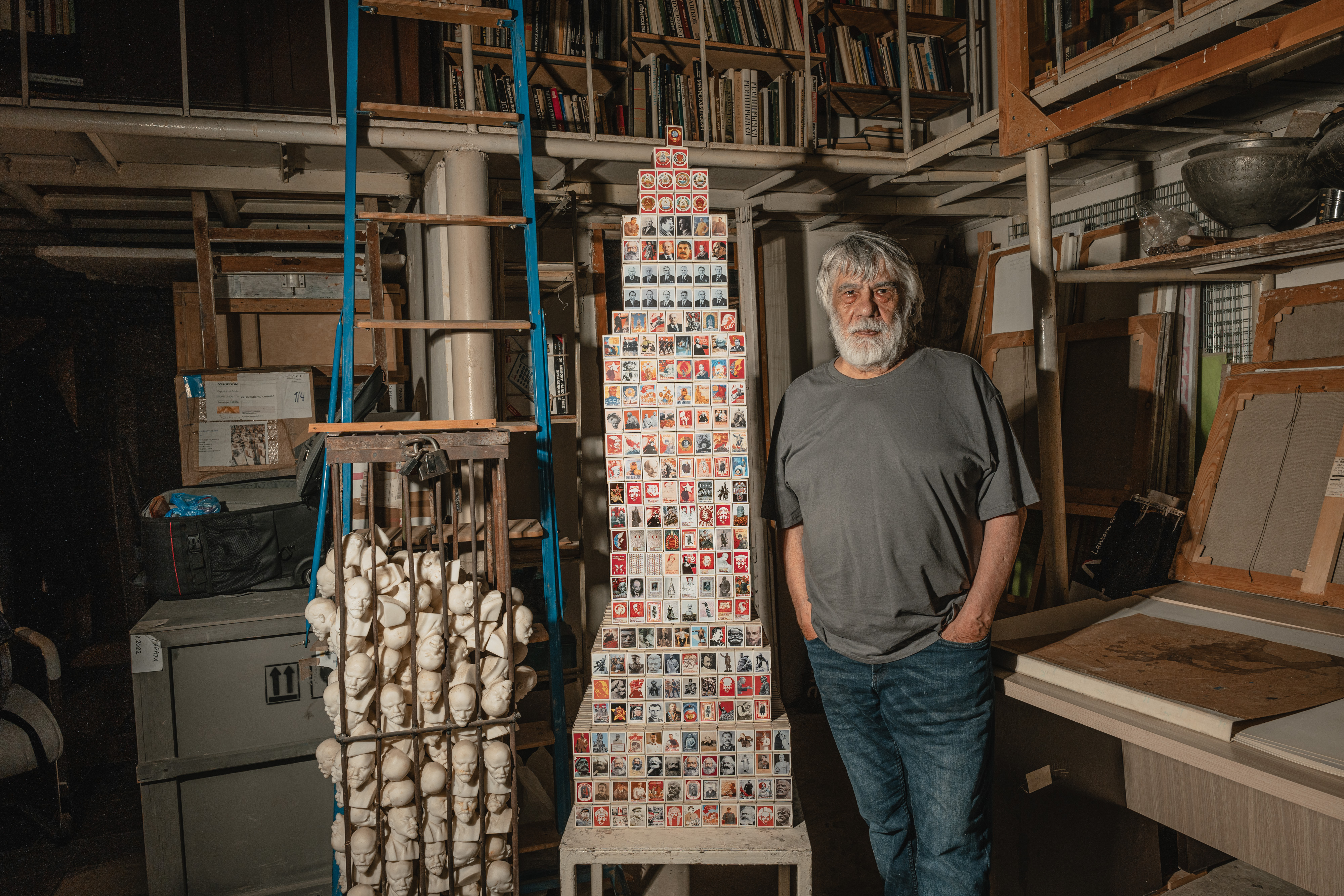 Photo: Katerina Kuznetsova
Photo: Katerina Kuznetsova
Creative Intoxication in Amandkutan
Once, during my musical period, I played in a restaurant in the evenings when my father came in. He called me over to his table and said: “Tomorrow I’m going on a motorcycle trip across Central Asia with my friends. Do you want to come?” I said: “Yes, of course.”
I left my guitar with the band, and the next day I went off with my father. They, the artists, were painting, and I just wandered around, moving from place to place, looking at the landscapes. Then I picked up a brush and started to paint. I made something quite unusual. I still remember the place, Amandutan, a village on the pass between Samarkand and Shakhrisabz. It turned out well. And suddenly I realised that I could actually do something.
That was when I felt it. I felt intoxicated. Intoxicated by creativity. I wanted more and more, to repeat it again and again, to paint, to paint. That is what intoxication is in a good sense. It can be like what happened to Paul, when he was on his way and suddenly he was transformed... He was persecuting people, and then suddenly faith came to him. It is the same kind of shock. The same blow you receive when something suddenly works.
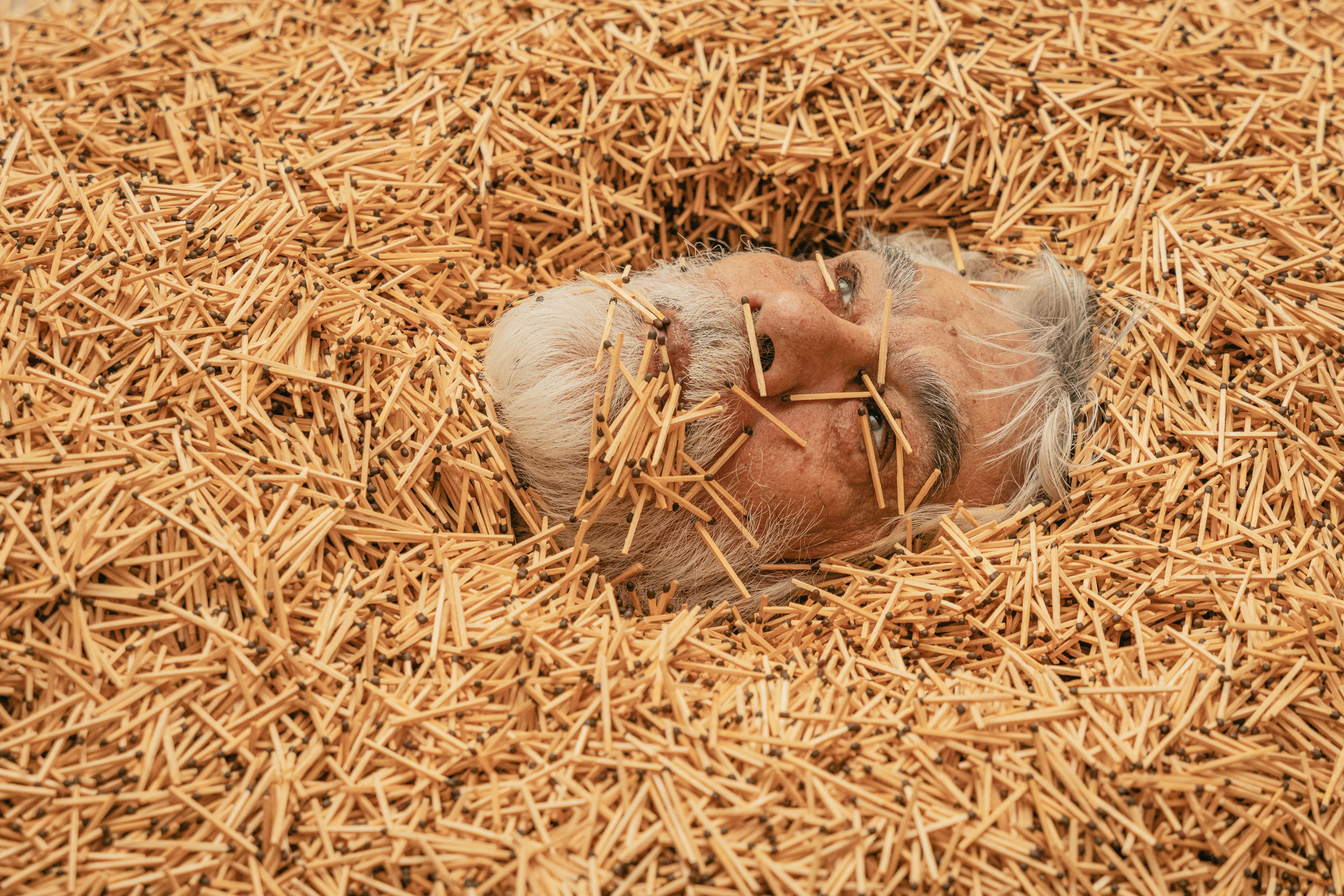 Photo: Katerina Kuznetsova
Photo: Ekaterina Kuznetsova
Next to Chuikov: The Youngest Artist of the Republic
We returned from that trip in the spring. By autumn, I had already painted a larger tempera work. It was accepted for the republican exhibition “Land and People”, held in Frunze, now Bishkek.
My work was hung in the museum where the exhibition was taking place, next to a work by Semyon Afanasyevich Chuykov. He was one of the pioneers of painting in Central Asia and was born in Pishpek, the former name of Frunze before it was renamed. He was presented as the oldest artist, and I as the youngest. That is how the exhibition organisers placed us.
A favourable review appeared in the newspaper at the time. I carried that newspaper with me for a long time until I eventually lost it. I was not at the opening, as my father attended instead, since he also had works in the exhibition. Lydia Ilyina, a graphic artist and People’s Artist of the USSR, a very well-known figure, came up to him and said that his son should study.
A month or so later, my father took me to Bishkek, brought me to the art school and said: “Go on. You already sat the entrance exams in 1962, then you ran away, so now you should go back.” And I was admitted straight into the third year. A year later I graduated and went on to study at the Surikov Art Institute in Moscow..