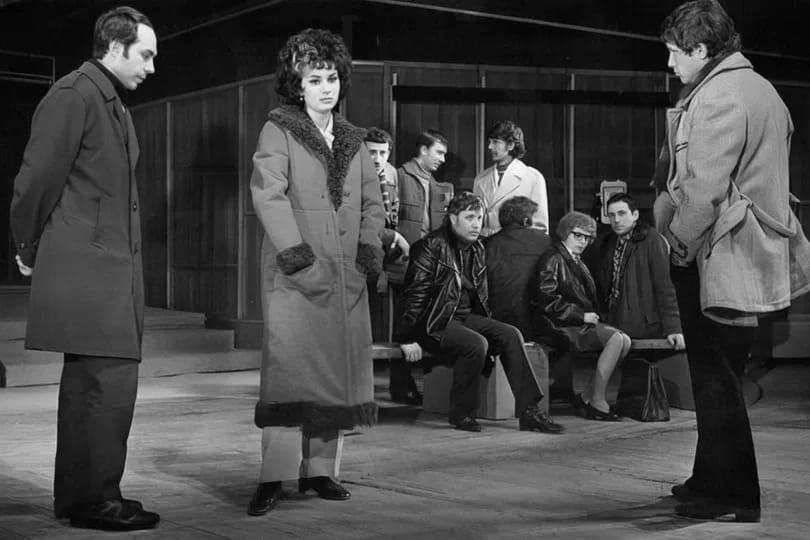
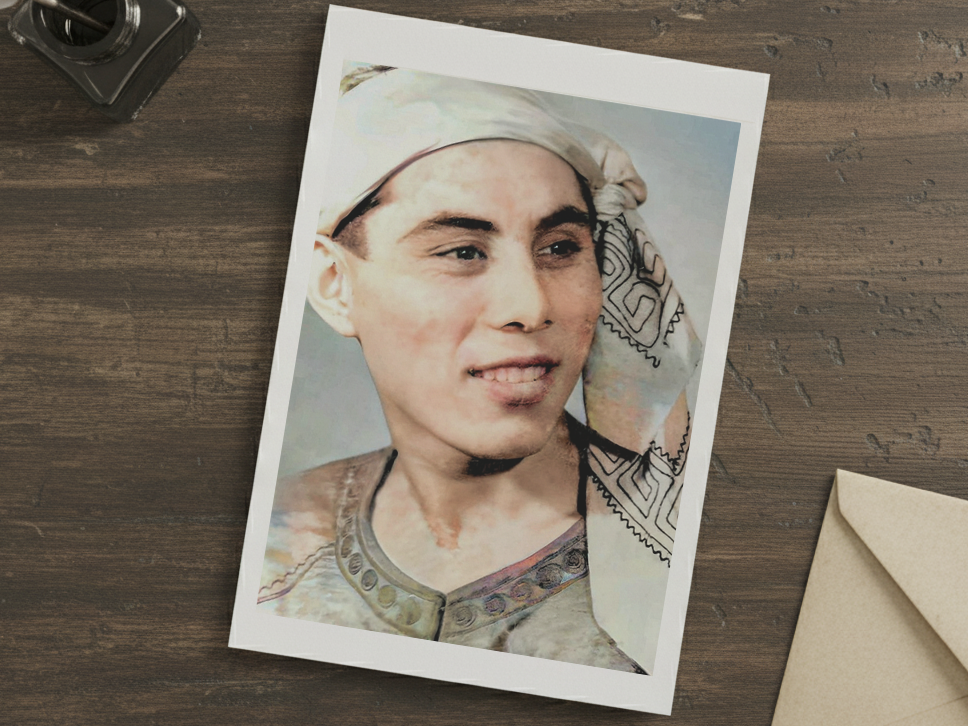
I wrote the book three years ago to mark the 130th anniversary of Karim Zaripov’s birth. The book was published in three languages and is based on a work by Professor Tashpulat Tursunov from 1960. His book was published just before my grandfather passed away. He was studying at the Faculty of Journalism and approached my grandfather with this request: “Karim-doda, I must complete my thesis, but I need a scholarly article, and it will be about you, your work. Allow me to follow you, to observe you. So he worked like this for a whole year, and the article eventually grew into a book. Later, Professor Tursunov told me: “You resemble your grandfather, as you have the same strong-willed character!”
At present, I am working on a book I plan to release for the 120th anniversary of my grandmother, the great circus artist Mubarak-aya Zaripova. Ten years ago, I already wrote a book for her 110th anniversary. But now, other events and memories come to mind. My sisters assist me in gathering information.
For me, my grandfather, grandmother, and parents are the benchmarks of the finest artists. Yet, despite their high status, respect, and position, they never became arrogant and remained true, genuine people. This is the real Zaripov school. Grandfather, mother, and father would always tell us: “Never forget who you are, what name you bear, as thousands of eyes are watching you. Therefore, control your every step, every movement, so that people do not say anything that later forces us to bow our heads in shame.”
Karima Zaripova
Awards and Titles of Karima Zaripova:
- 1990 — Laureate of the Youth Union of Uzbekistan Prize for contribution to the development of circus arts.
- 2000 — Honored Artist of the Republic of Uzbekistan.
- 2009 — Order of Do‘stlik (Friendship).
- 2012 — Order of Friendship of the DPRK for contribution to the development and promotion of the martial art Hapkido.
- 2022 — Medals “For Devotion to Culture and Art”, “For Loyalty and Devotion”, and “30th Anniversary of the Constitution of Uzbekistan”.
- 2023 — Order of Mehnat Shuhrati (Labour Glory).
- 2025 — Awarded the academic title of Professor; by decision of the Turon Academy of Sciences, conferred the academic title of Academician.
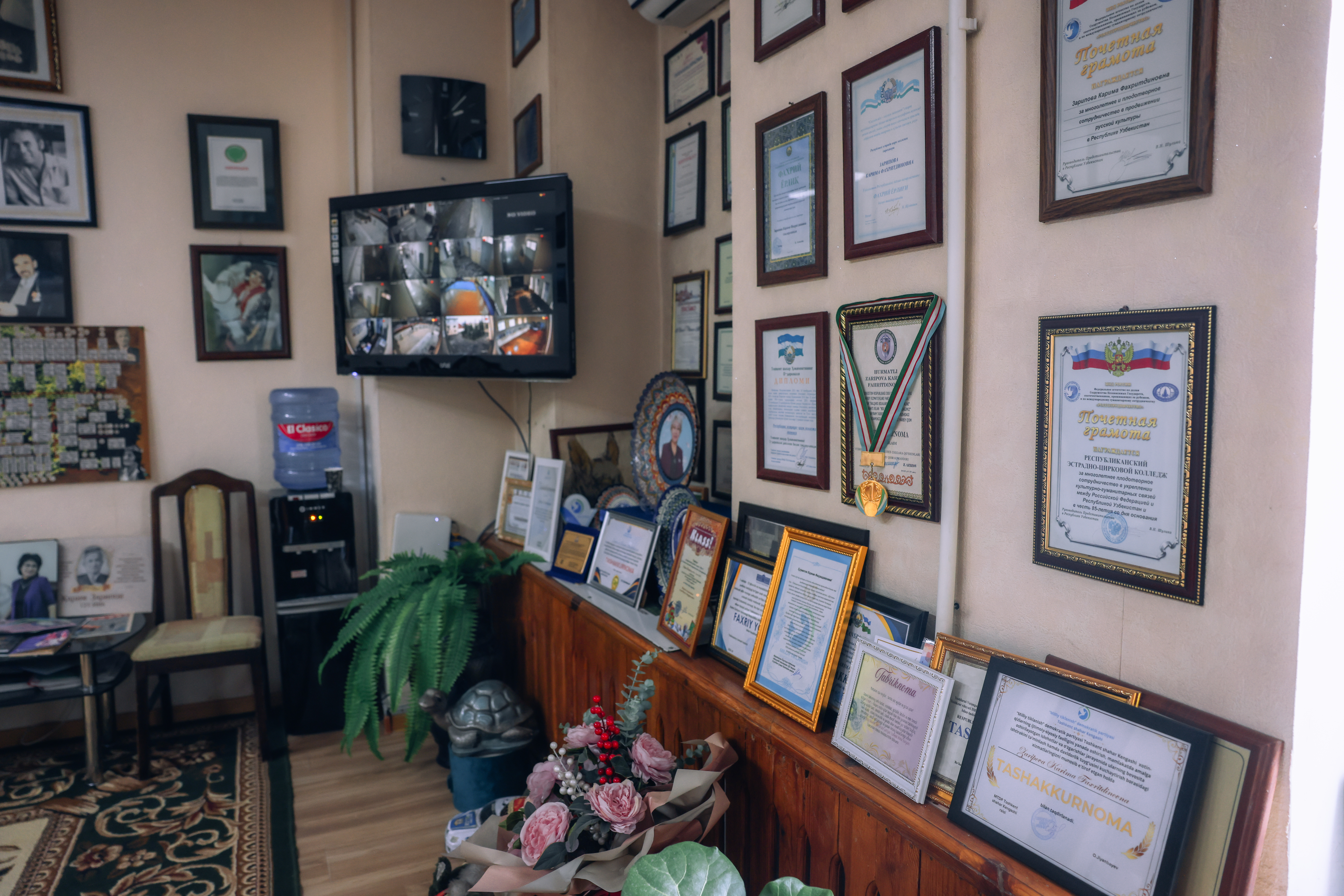 Photo: Ildar Sadykov
He sat on a bench, silently staring ahead. The tears were gone, the lump of sugar in his palm had softened and crumbled. Crowds of people bustled past, paying no attention to the little boy. Scenes from the past days flashed before his eyes. Here he was, running from his angry stepmother across the flat rooftops of houses. An unfamiliar square lay before him. Frightened, he began to cry loudly. The next image: a young woman in a chachvan (a traditional face veil): "Little one? Sweetheart, why are you crying? Are you lost? Where are your parents? Do you want to be my son?" And now they were on a train, trees, houses, and open spaces rushing past; but where were they going? "Home! We're going home, son. Your father is waiting for us." A crowded station, and: "You've lost your mind!" a young man shouted. "Where did you pick him up? I don't ever want to see him!" And he was alone again, sitting on the bench, clutching a piece of flatbread and sugar in his little hands. Too many trials for a six-year-old. It seemed a whole lifetime had passed in two days...
The Life That Began at Six
— The story goes that the life of the great artist Karim Zaripov began not at birth, but at age six. How is that?
— You could say that… He ran away from home at the age of six. His birth mother had passed away, and Zarip-khodja married a very beautiful girl, apparently of Turkish origin, Sakine. But the blue-eyed beauty did not like children. He had an older sister and brother. His sister had married a wealthy man, his brother was still unmarried. In their yard was a stable with twenty-four horses. And the lively little boy was always drawn to them; that is where our family’s love for horses comes from. Whenever his father went somewhere, he would forbid the boy from entering the stable, as the horse could kick him. But Karimjan dreamed of horses. He would run to the stable, shaping clay horses. If his father was home, the boy would be put on a horse and taken for a ride.
Apparently, when his stepmother scolded him for going to the horses again, he ran away from her across the rooftops of houses. That's how he ended up in some square, and an unfamiliar childless woman took him away to an unknown place. Nowadays, it was effectively a kidnapping. But her husband refused to take him, and she, handing the child a piece of flatbread and some sugar, went after her husband. He sat and cried. But then a man approached him, spoke to him in an unfamiliar language, and then, seeing the child didn't understand, switched to Uzbek. And, in turn, handed him over to a passing teahouse owner, who was also childless.
But Karimjan heard the familiar and dear sounds of the doira and ran there. As it turned out, Jumabai-surnaychi's circus troupe was performing in the square. The teahouse owner persuaded the troupe leader to take in the little boy, who was crying and begging to go with them. It was fate! Jumabai-surnaychi's two sons took the boy under their wing and began teaching him acrobatics, stretching him, making him flexible, practising the splits.
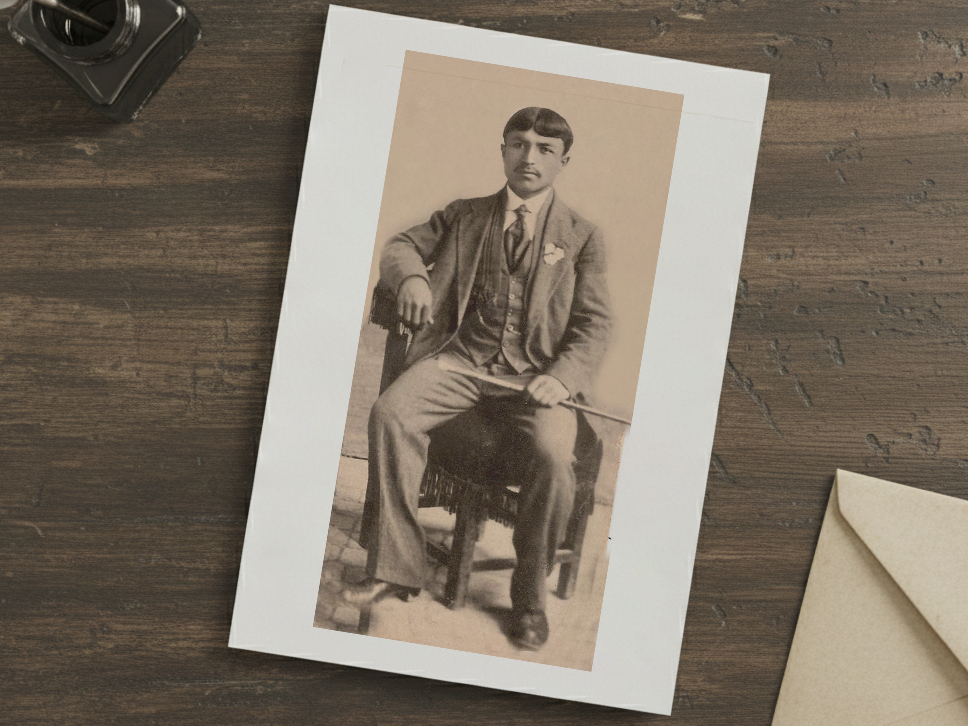
All the training was not in vain and Karimjan started working with travelling performers and, in a sense, went through fire, water, and copper pipes. Jumabai-Surnaychi took him to Bukhara to demonstrate the boy's skills to the Khan.
 Source: personal archive of Karima Zaripova
At the court, many theatrical and circus groups performed, including darbaz, palvon, and askiyachi-maskarbaz. A designated, covered performance area was set up, with seating for the audience. Karim Zaripov recalled: “It seemed his courtiers were beasts in a cage, who had to obey his commands. If spectators clapped or laughed without permission, the Emir could become furious. And if something displeased him, performers could be expelled or even executed.”
Karimjan was very flexible, and everyone called him the “Rubber Boy” or “Gutta-Percha Boy”. The Khan was astonished: "Does this child even have bones?" After the performance, the Khan said: "This boy will be a great man!" and gifted him his gold-embroidered robe. Of course, everyone laughed at the sight of a small child in an adult’s robe. Later, her grandfather recalled that he was frequently brought to the Khan and gifted gold each time, gradually accumulating a small fortune.
He used this capital for the good of others, as he loved giving and sharing, and perhaps that is why life rewarded him. He invested in art and artists. For example, he gave 1000 tanga in gold towards the construction of the Abror Khidoyatov Theatre. At that time, the government called on everyone who could help. Only my grandfather responded. People with money did not care for the future or the arts and culture of Uzbekistan as deeply as he did. This passion lived on through his descendants.
— When did he form his own troupe?
At the age of twenty-one. The troupe was called "Koopetariv" (“Cooperative.”) He gathered unique acts from all regions, acting as both professional director and performer.
In 1924, he expanded the troupe, inviting his friend, then still unknown composer and musician Yunus Rajabi and his associates. The circus collective is now known as "Zvezda Vostoka" (“Star of the East.”) For the first time, performers began appearing in the ring to live orchestra music and in bright new costumes. It can safely be said that professional circus in Uzbekistan owes its origins to Karim Zaripov. In 1929, Yunus Rajabi left to work for the radio and television company.
— Did he reunite with his family later?
— Yes, his sister and brother found him after hearing about the performance of the famous Karimjan Zaripkhan. They realised he was their missing and, as they thought, deceased brother. Their father had already died after being dispossessed as a kulak, and stepmother Sakine disappeared."
Stage — school — history
— Speaking of family… Who was the next member of your dynasty?
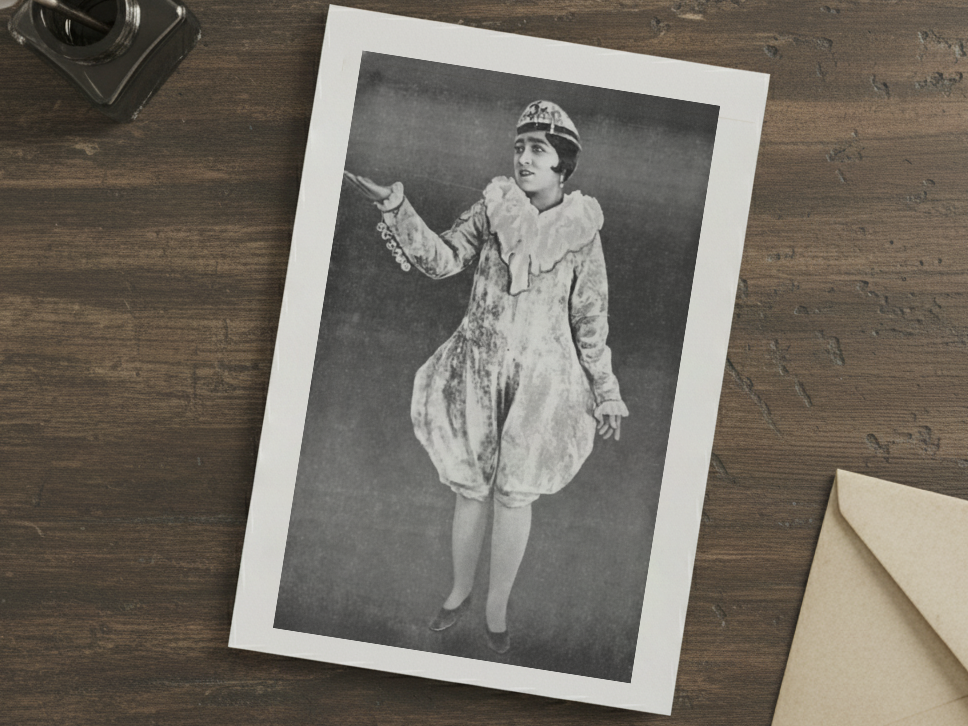
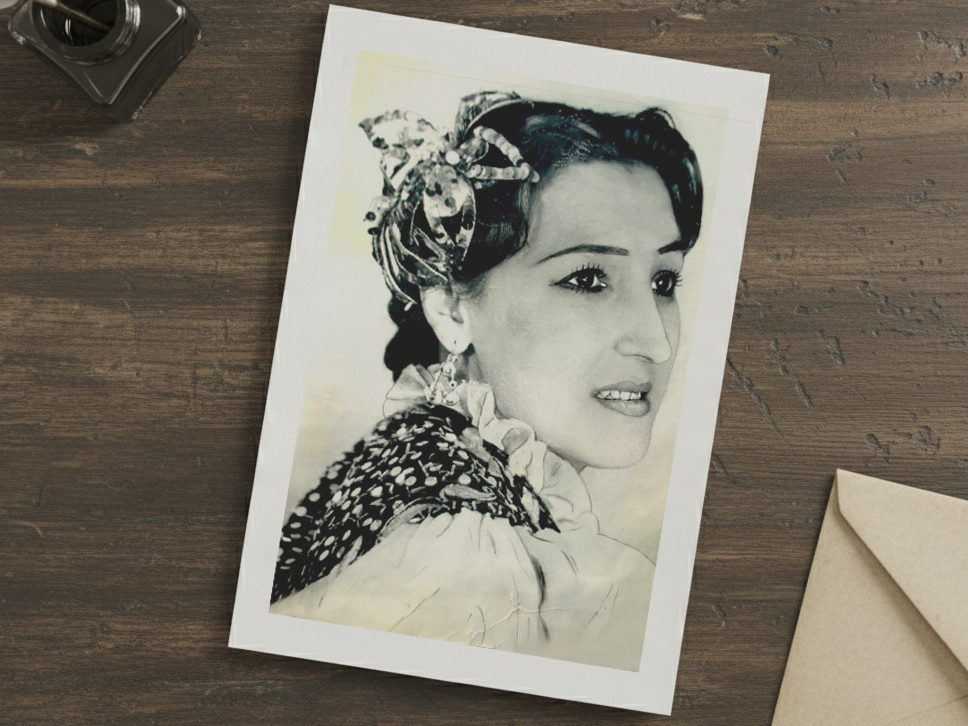
— My grandfather’s life partner and the first female circus performer, a maskarbaz, comedian, and horse trainer, my grandmother, Honoured Artist of Uzbekistan Mubarak-aya Zaripova. She was an extraordinary beauty, danced and rode horses at a time when women were forbidden to show their faces. Fearlessly, she came to the circus with her husband in a veil, which she would later remove. She applied stage makeup and performed alongside her partner-husband in the ring, executing their routines. The audience had no idea a woman was performing before them!
 Source: Karima Zaripova's personal archive
She was among the first to remove the paranja. She opened a school and taught girls to sew and embroider costumes, as well as to read and write.
Like my grandfather, she had no formal professional education, which made them unique. They were natural talents who taught themselves and helped others to learn. Of course, they received a general education in a madrasa, but they had no specialised training. And this was not amateurism, but true professionalism. My grandfather learned through practice, from real street performers. As early as 1939, he sent first graduates of his school to study in Moscow.
— So, he was not only an artist, but also the founder of a school?
— Yes, as I have already said, Karim Zaripov was a very generous man. In 1932, he built a school with his own funds. It was the first school of circus, variety, acting and musical arts. He invited the very best performers to teach there. Most of the students were children from poor families, often without parents. He clothed them, fed them and gave them an education.
In 1937, the People’s Commissariat for Education of the RSFSR took over the school building for state use, though classes continued there until 1942. In 1942, the third floor was converted into a hospital.
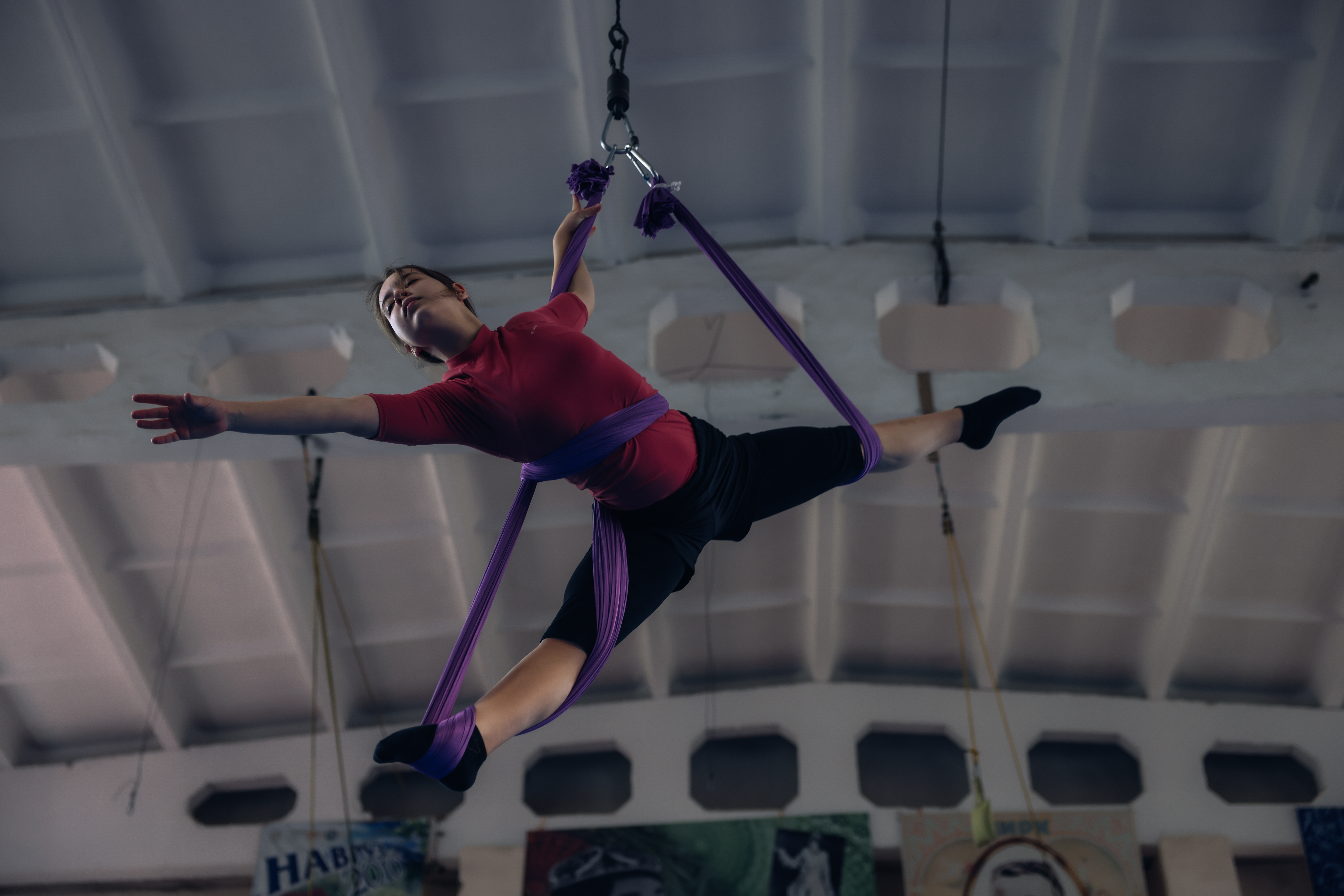 Photo: Ildar Sadykov
— Was he close to the artistic community?
— He had a strong friendship with the actor Abror Khidoyatov. When the actor saw his signature stunt, known as “the drop”, he jumped up and began shouting, thinking the rider was in danger. Behind the scenes, the great People’s Artist, adored by everyone, embraced his friend and wept like a child. Years later, this stunt was repeated by his son, Hakim Zaripov. Not exactly in the same way, but he did repeat it. To this day, however, no one performs it. Many are afraid for their own safety, as it requires extremely complex technique.
Besides Abror Khidoyatov, my grandfather was friends with other figures of the artistic world, including Yunus Rajabi, Shukur Burkhanov, and Halima Nasyrova. Halima-opa adored my grandmother. They often came to visit us, and my grandmother would cook plov and lagman. These artists were frequent guests in our home, sitting around a large oval table, talking about art and debating their work.
— Did your family also work in cinema?"
— My grandfather and my parents appeared in films as stunt performers. At the Dovzhenko Film Studio, they worked on the film Dokhunda. The filming took place in Azerbaijan and involved horse stunts, such as sweeps, falls, and full gallop riding. They also took part in Nasreddin in Bukhara, where my grandfather was the stunt double for Lev Sverdlin. By the way, the donkey in the film belonged to my grandfather.
I also appeared in films, though not in leading roles. For example, in the 1996 film Amir Timur, I worked as a stunt performer. My son Sherzod played the son of Amir Timur.
A film about the Prophet Muhammad was shot in Jordan. As it turned out, he was also depicted with a white horse, and at that time I had similarly long hair. According to the script, I had to ride along the embankment on horseback wearing a white cloak. I did it. I was filmed from a distance, and the result was very striking. I do not know whether the film was ever released, and I was not even given any photographs.
"He passed away, and a week later I was born"
— How did Karim Zaripov pass away?
—
He died of a heart attack, his third.
I
It happened in 1960, on 20 December, when he was 70. And exactly a week later, on 28 December, I was born. He had very much hoped for a boy, as I have three elder sisters. My grandfather was in a government hospital when my grandmother received a call asking her to come urgently. But he did not wait for her… His friend Abror Hidoyatov was there at the time. When he was told that my grandfather had passed away, his cry echoed through the entire corridor.
— How did the dynasty continue? Who carried on the work?
— My mother, Honoured Artist of Uzbekistan Khalida Zaripova, followed in his footsteps as a grotesque equestrienne and woman-jigit. His eldest son, People’s Artist of the USSR Khakim Zaripov, also continued his work and later became the head of the ensemble Jigits of Uzbekistan. He made a significant contribution to the construction of our circus and was invited as a consultant on circus construction projects in many Russian cities. After all, every circus begins with its stable, just as a theatre begins with its cloakroom, and he knew exactly how to build one from the ground up. A circus is, first and foremost, a ring, an arena where horses are trained and broken in.
 Source: Karima Zaripova's personal archive
 Source: Karima Zaripova's personal archive
My grandfather also created and staged the act “Grotesque Equestrienne” for my mother, a dance on horseback. Standing on a moving horse, she would leap, dance and perform acrobatic movements. For my uncle, he developed horse training techniques. He also taught my father clowning and gave him his comic sketches and routines.
My third sister also entered the circus world, though not as an equestrienne. After an injury, my mother created a new act, "Trained Pigeons," as well as an illusion performance which was later continued by my sister Aida. She bears the surname Tashkenbaeva, and in this way two great dynasties became united.
— And what happened to the circus in Tashkent afterwards?
Where Broadway stands today, there once stood a circus, a simple wooden ring beneath a travelling tent. People came in large numbers, but there were only about 800 seats. Three or four performances were held each day. But in 1966 after the earthquake, the circus was gone. Then in 1976 the new building was constructed, the one we all know today. My uncle Hakim and my father both worked on the project.
— When did you realize you belong to such a dynasty?
— Probably even before I was born, because as soon as I came into the world all I heard was circus, theatre, dance. Art was simply in the air we breathed at home. I attended every performance and in the circus I never missed a show. I adored my mother, who was my absolute role model. Despite having four children at the time, she was always in perfect form, like a young girl, performing incredible tricks on horseback. At the same time she was a devoted mother who managed everything. On tours she would take her three younger daughters with her, while the eldest stayed with our grandparents.
From the age of three we were put on horses to see how we held ourselves. We naturally had perfect posture, perhaps it was instinctive. The famous clown Akram Yusupov once saw me as a small child on horseback and told my father, “Fakhriddin, she will be an equestrienne.” But my father was strongly against his daughters working in the circus, absolutely against it. When I eventually joined, he did not speak to me for two years. He would say, “One performer in the family is enough, your mother.” She had suffered so many injuries...
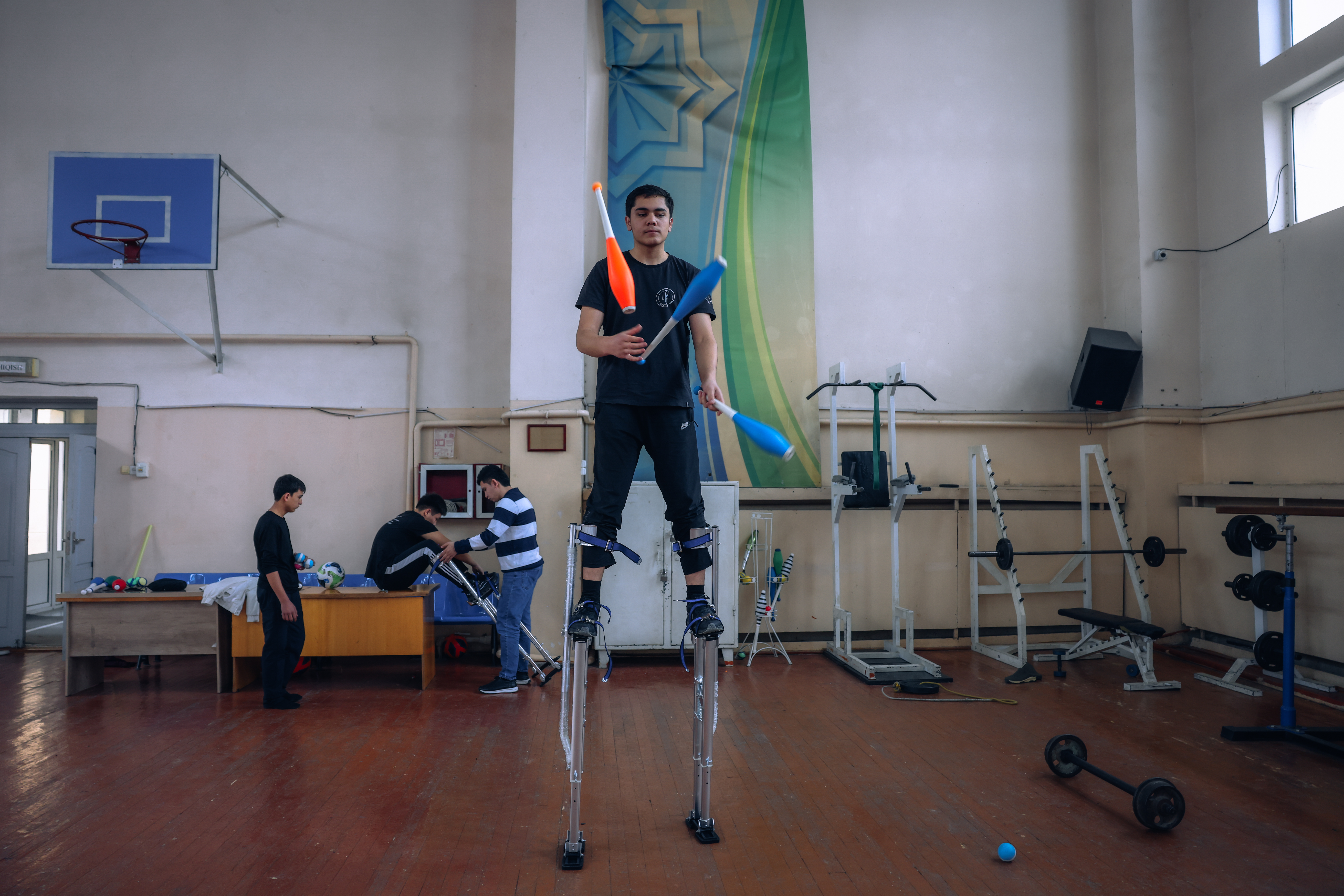 Photo: Ildar Sadykov
— Have you ever been injured?
During one of my performances in Tashkent I was injured. In those days the arena floor used to be covered with torn rubber matting. I was riding at full gallop when a boy suddenly ran out from somewhere with flowers. The horse was startled, caught its hoof in the rubber and began to fall sideways. My leg was trapped underneath. That was at least half a tonne of weight on my leg. I do not know how I managed to pull myself free, it was pure shock. I remember looking up and seeing the circus dome above me, unable to understand what had happened, as only moments earlier I had been watching the audience.
My younger brother, Honoured Artist of Uzbekistan Ulugbek Zaripov, helped me to my feet to the sound of applause. Of course it was a painful ending to the performance. My entire left side was badly bruised, my fingers dislocated; I somehow reset them myself while still in a state of shock and immediately lost consciousness. I came to with my leg in a cast. At home, my mother reacted surprisingly calmly, “Now do you understand why your father was against it? It is good you came back on your own feet.”
But in 1998, after the death of my horse, I stopped. I had worked with him, Nebosklon, for 27 years, and
I also suffered a micro heart attack.
Two years of silence
— How did you come to work in the circus if your parents were against it?
— I always saw the world through rose-tinted glasses. I grew up in a highly educated family, where we weren’t controlled, but we were protected from certain things. We were always told what was right and wrong, what was acceptable and what wasn’t, and reminded of our family and our name.
At the same time, it was a happy childhood. My parents were always there, and I was studying at a college. Although I dreamed of studying at the circus school in Moscow, my parents wouldn’t allow it, so I studied at a choreographic college for almost eight years instead. At my final exams, I was offered places in six different companies. I did my placement with the Bahor ensemble, but I said straight away: I don’t want to dance, I’m going to work in the circus. I bought a ticket myself and left. I went straight to the general director, introduced myself, and within three hours my parents arrived. They took me back to Tashkent.
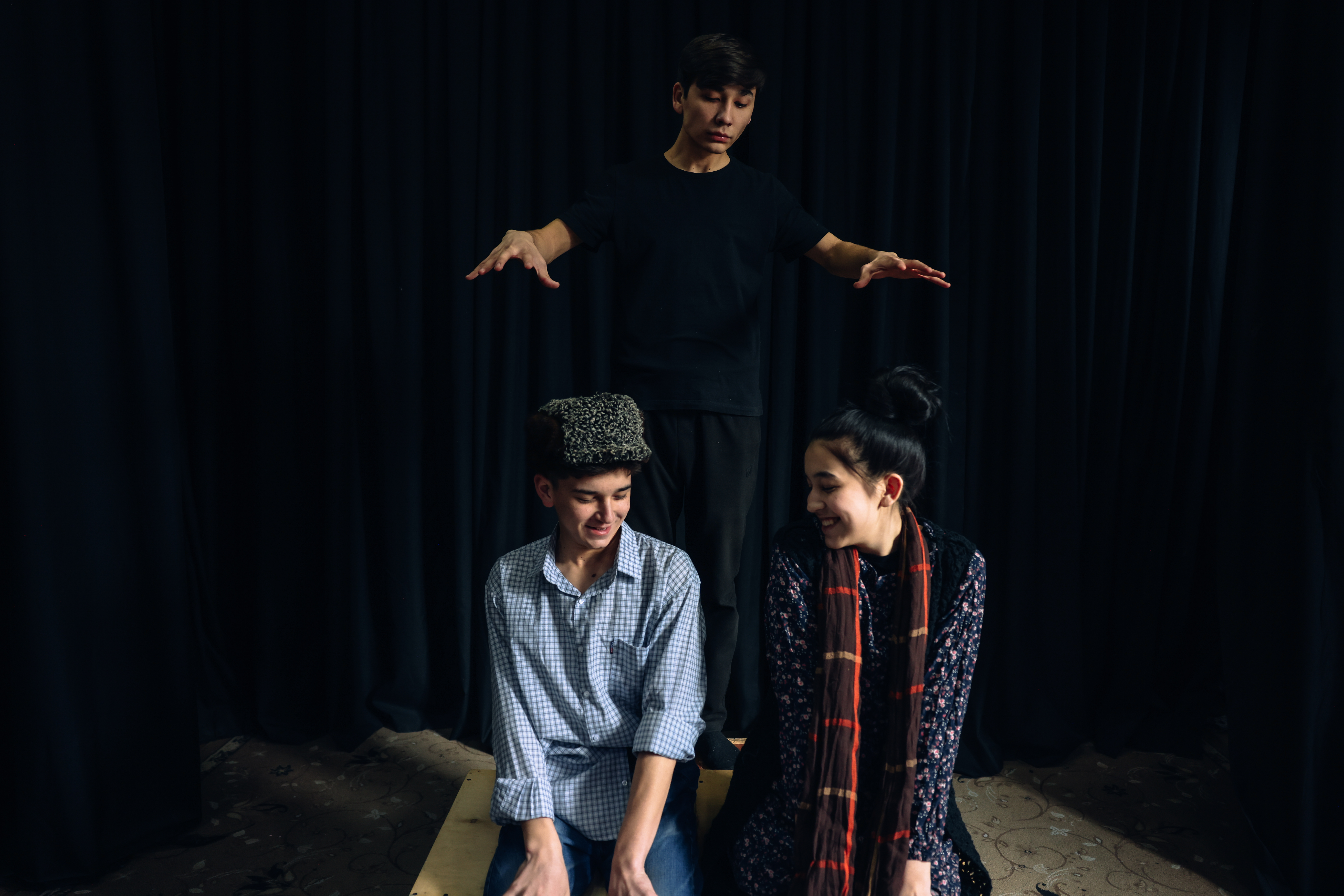 Photo: Ildar Sadykov
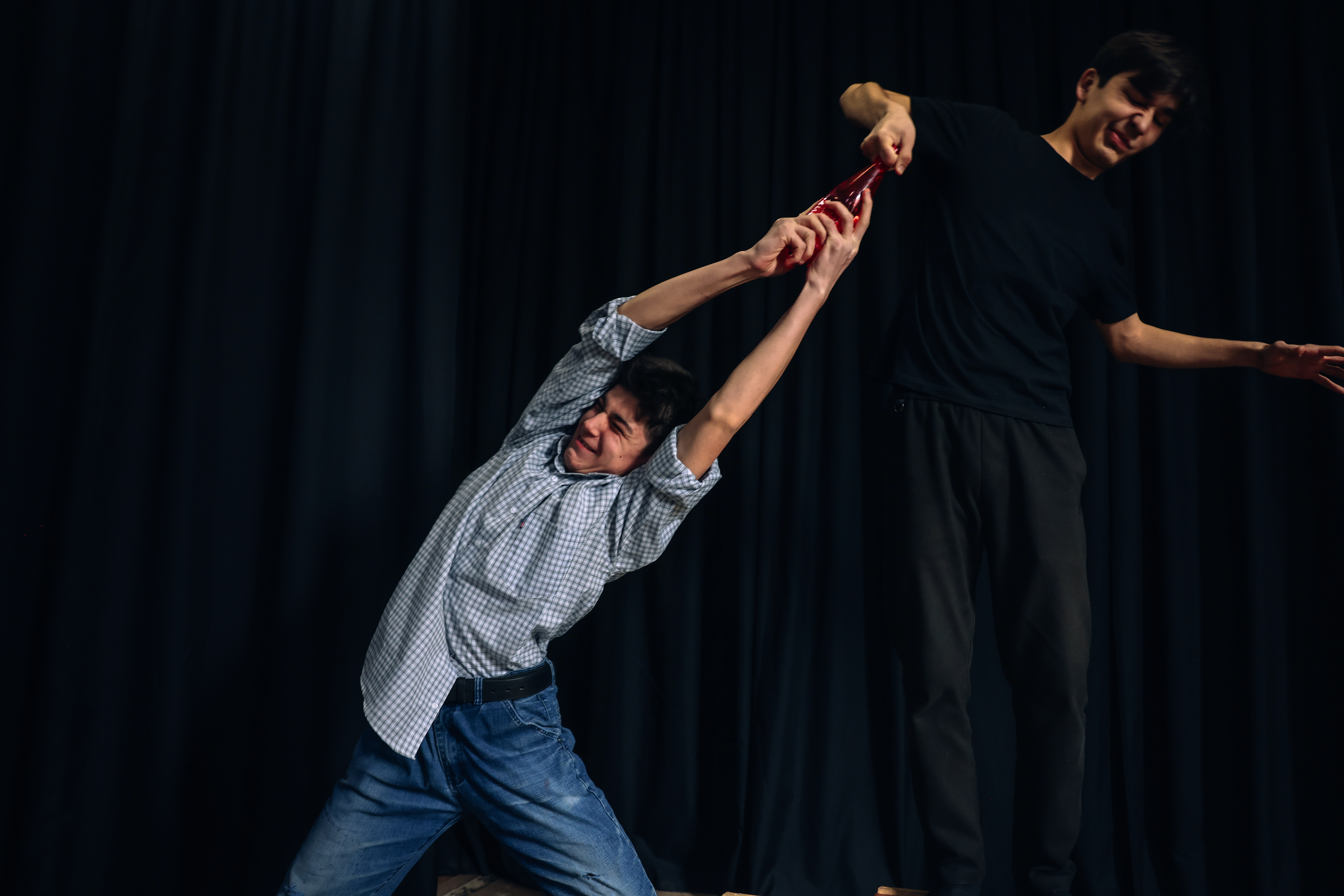 Photo: Ildar Sadykov
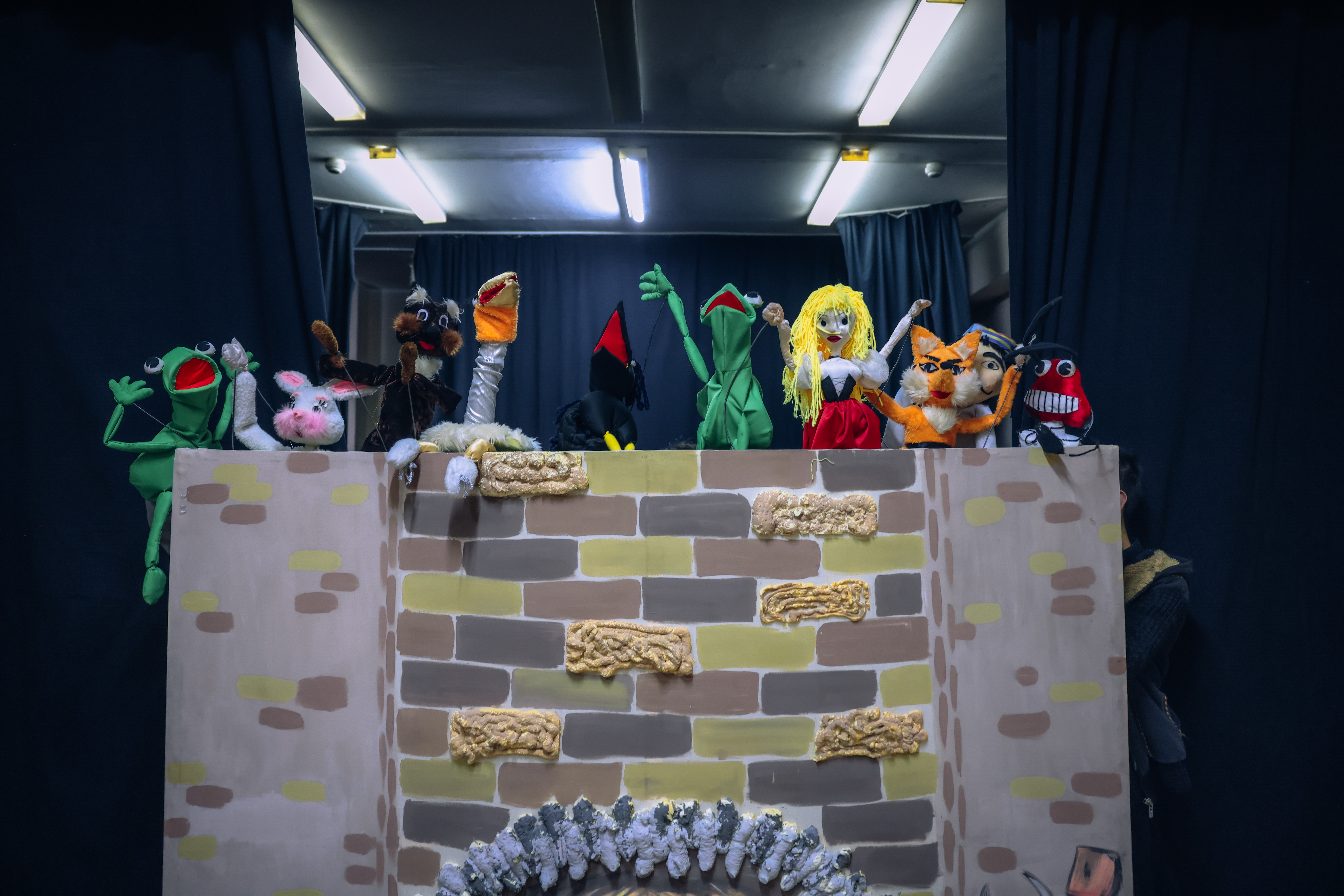 Photo: Ildar Sadykov
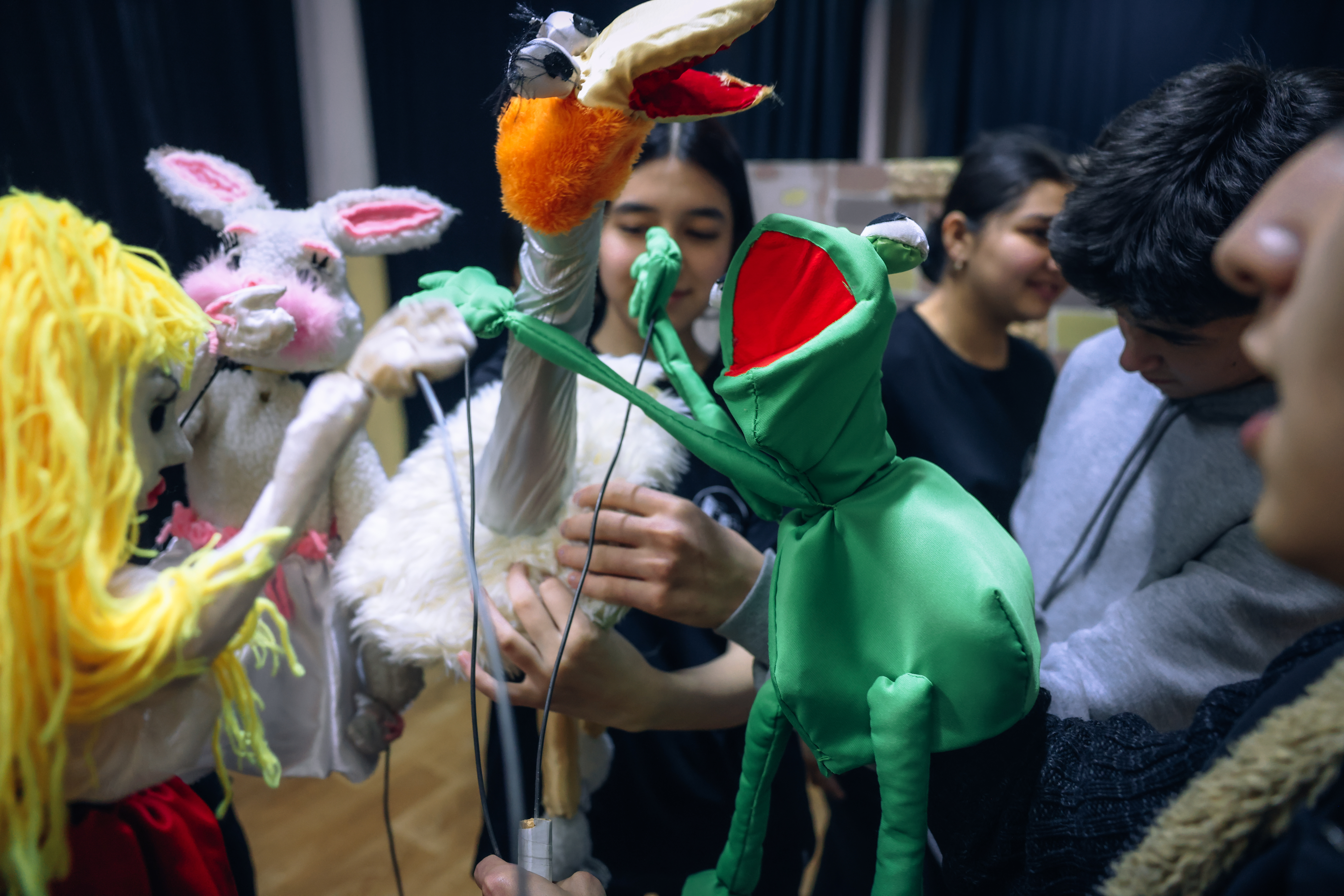 Photo: Ildar Sadykov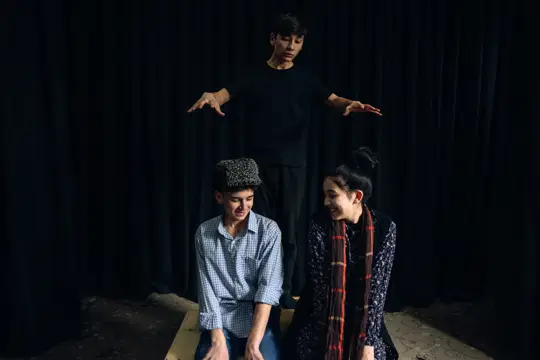
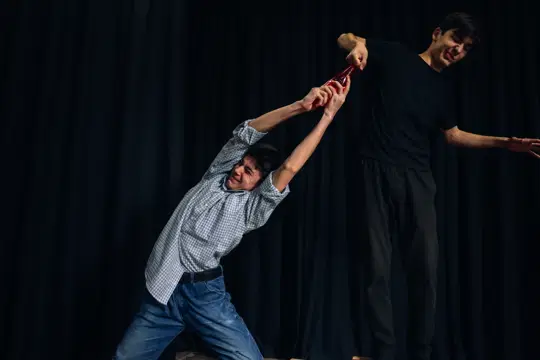
My mother secretly bought me a horse without telling my father. After that, he stopped speaking to me. But later, when we were on tour in Karaganda, he came to see my performance. Backstage, he came up to me, hugged me, kissed me and said: “Yes, you are a Zaripova!”
— Tell us about your acts in the arena
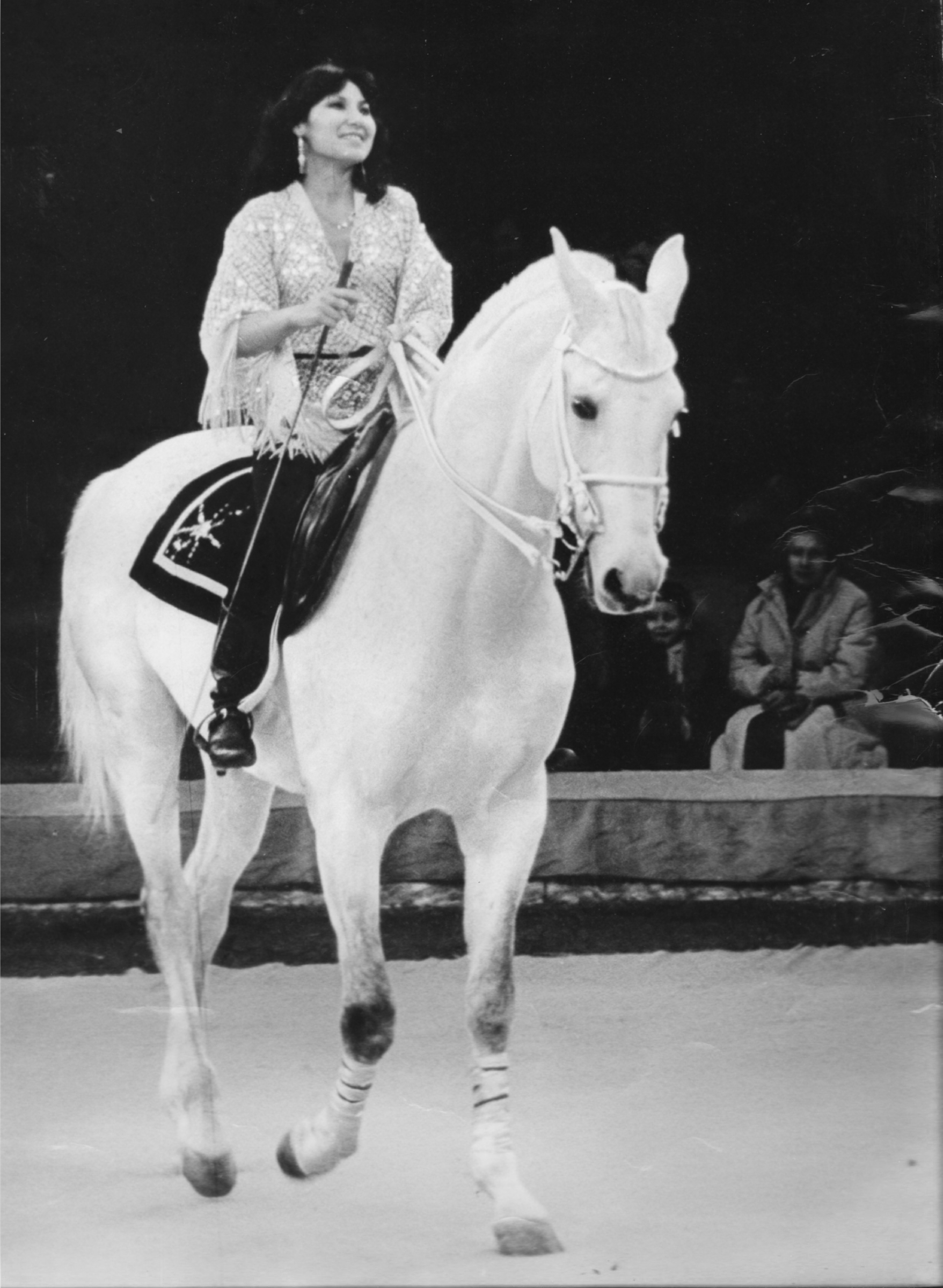
— One of them was a completely new act, a high school of equestrian performance where the rider sits on the horse while the horse itself dances to music. No one has managed to repeat this act to this day. Unfortunately, many performers now look for easier paths.
The second act was roller-skating acrobatics. With these two acts, I travelled almost the entire world, performing as an equestrian artist.
— What was your life on tour like?
— There were moments when people wanted me to stay abroad. For example, King Hussein of Jordan and his daughter wanted me to remain there and open a riding club for girls. But I refused and came back home. Still, I worked abroad for years. Circus tours are long, it’s not like theatre, where you leave after a few performances. I would come home just once a year, for fifteen or twenty days. I couldn’t leave my horses without supervision, even though I had staff. My whole life was built around it. And everywhere I went, I represented Uzbekistan.
I only used Uzbek music in my acts: “Kizbola”, Batyr Zakirov’s “Arab Tango”, and others. For example, my horse would dance a waltz to “Bahor”, and in the finale an Andijan polka. At the end I would dismount and continue dancing myself. The audience was always amazed.
— You travelled widely. Did you learn any tricks abroad?
— To be honest, their acts weren’t that interesting. But I did teach others. In Czechoslovakia, for instance, a trainer wanted his wife to perform my equestrian act. She was beautiful, but difficult to train. Still, I staged the act for them. While I was there, she could still perform thanks to her well-trained horse. I showed her how to guide the horse, how to work with the reins so it responds.
In other cities, I taught shaping classes. My sisters and I had been dancing since childhood, thanks to our mother.
One of my ideas was later realised by someone else. About forty years ago, I described an act involving a cube made of metal rods. A few months later, something very similar appeared in the arena. Someone had clearly taken the idea.
 Source: personal archive of Karima Zaripova
— Who were your role models?
— Of course, my mother, my grandfather, my father. They are all my role models, people who devoted their entire lives to culture and art in this country. They did not go abroad, like many artists, even though they had countless opportunities. My grandfather performed in France and China. It was in China, many years later, that my younger brother became a Guinness World Record holder and won the Grand Prix. They didn’t have a tradition of trick riding there. He stayed and, within a year, taught them trick riding. His students still work there today. I was also invited to stay, but I refused. That’s patriotism. That’s love for your country!
— What does the circus mean to you?
— The circus is a great and demanding art form. It’s multi-genre, multinational, complex and dangerous, but incredibly beautiful. That’s what I always tell my students.
It’s hard, daily work. Training, stretching, conditioning, that’s how a circus artist’s day begins. For example, we were already at the stables at five in the morning: cleaning, feeding, taking care of the horses. Only after that do you go into the arena. By seven in the morning we were already on horseback, training and working. After that, the animals would rest in the stables until the evening performance. That was life, even on tour. I travelled all over the world with my parents, changing schools several times a year. It was the same in my own life: my son used to travel with me on tour. My daughter Kamilla was still small, so I left her with her grandmother.
"I fought for the school"
In 2023, the first school of circus, acting and musical arts marks its 90th anniversary. Today it is the Republican College of Variety and Circus Arts named after People’s Artist of Uzbekistan Karim Zaripov. Over the decades, thousands of performers have studied there and now work on stages and in circuses around the world.
— You mentioned your students. The college you now lead bears the name of its founder. How did your academic journey begin?
— I have been here since 1999. I started as deputy director and head of department. Officially, I became director in 2005. That means I have spent 28 years here, almost a third of my life. During this time I have learned a great deal and tried to pass all my knowledge on to my students. I have big plans and I want us to realise them. There were attempts to take this place away. When a bridge was being built across the road, there were plans to demolish the building entirely. There were threats and attempts to make me sign a waiver. I fought for it, went all the way to the highest levels, and succeeded in having the building recognised as a monument of historical architecture.
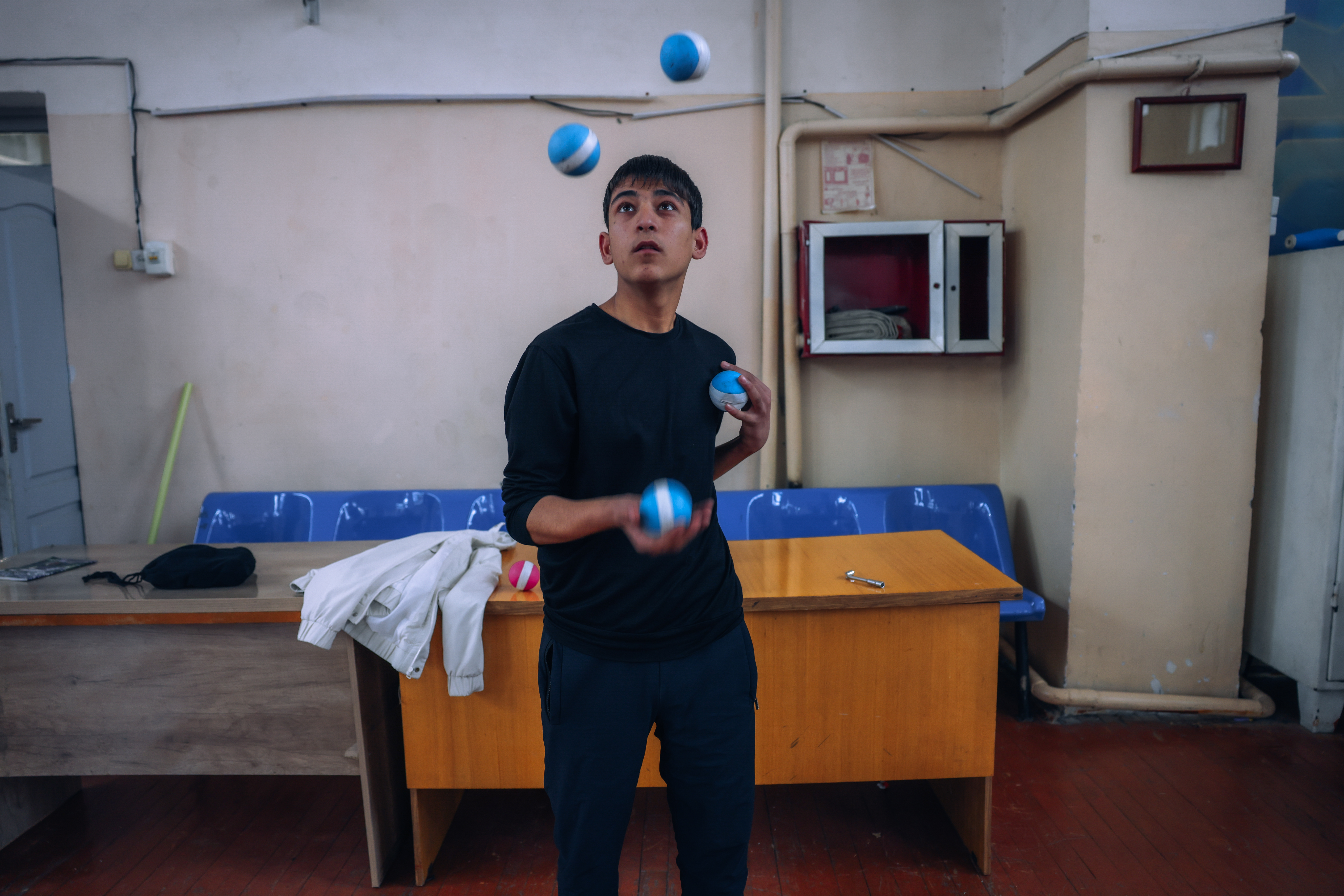 Photo: Ildar Sadykov
Every year I graduate around 150 students. I am happy because they all work. Around 30 per cent are now employed at Cirque du Soleil. When I was in the United States and attended a performance, I saw my own students on stage. It was a deeply moving moment.
We maintain high standards and try to train worthy performers. But now the programme has been reduced to two years. That is simply not enough. What can you achieve in two years? I am writing everywhere to extend it to four years. There is no institute for circus arts and no higher education system for it.
— What qualities should a circus performer, especially a woman, have?
— First of all, love for animals. There must be a true partnership with the horse. I washed, groomed and fed my own horse myself, even though there were workers responsible for the animals. They could feed it and clean the stable, but everything else I did myself. I did not trust anyone. I considered it my creation, my child. That is why I had a heart attack after its death. It felt like losing a close family member.
The second quality is the ability to work on yourself constantly. To develop flexibility, plasticity, musicality, acting skills, even stage speech. When I rode into the ring, I always began by speaking to the audience. You must be able to focus the audience's attention on yourself. This is a huge amount of work. Few circus performers can claim to posses these qualities. Someone may have excellent technique and perform every trick perfectly, but if there is no charm, no acting skill, the audience will not be interested. That is why we teach all of this here.
— Are you a strict teacher?
— Very much.
— Tell us about the college
— We teach both theory and practice. Many cannot handle the pressure and strict discipline. They come here after ninth grade from different schools. They are 15 or 16 years old, the age when you have to break old habits, hold firm and place them within a new framework. In the mornings we collect their phones. No devices.
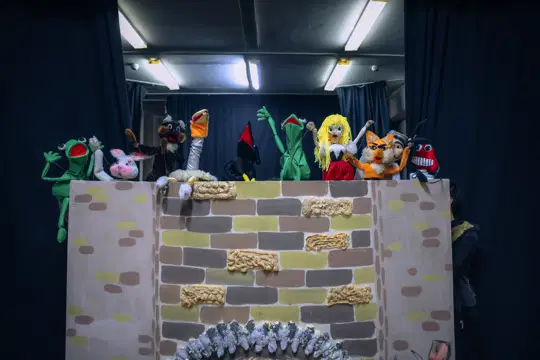
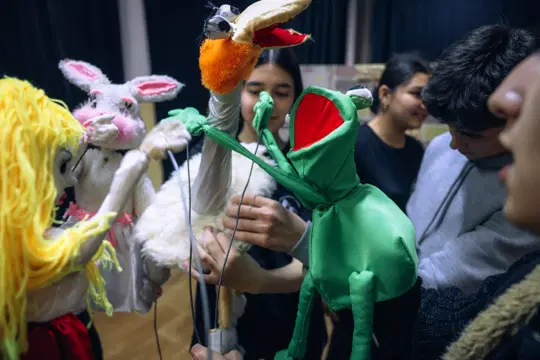
We have departments covering everything from circus acrobatics to stage performance, from trick riding to puppet theatre. Every year around 100 children apply, but I personally select them at every exam. There are many tears. But they know my standards and my attitude towards work. That is why people often say, “your students are completely different.” Even at the institute where I teach, they say my graduates stand out. They are disciplined, they greet people properly, they carry themselves professionally. The training stays with them and they carry it into their professional lives.My students appear in television series and host TV programmes, which gives me great satisfaction. They work in Monte Carlo, take part in festivals and competitions around the world, and win awards.
We, the Zaripov dynasty, are six-time Guinness World Record holders. My students, Dariana Matveeva and Sanjar Khasanov, recently entered the record books with their act. Others, Kristina Vorobyova and Rustem Osmanov, received the Golden Elephant and the Grand Prix in Monte Carlo for their act "Aerial Gymnasts." Unfortunately, Kristina was seriously injured and faced a long recovery. Today she is a director of the act "Second Breath."
I also plan to open a composition department. For that we need equipment, new classrooms, and strong teachers. Another idea is a department of arrangement, which could be combined with composition. I also want to open a directing department. We already teach “Basics of Directing” and “Basics of Screenwriting,” which I teach myself. From the first year, students study the history of theatre, circus, and variety arts.
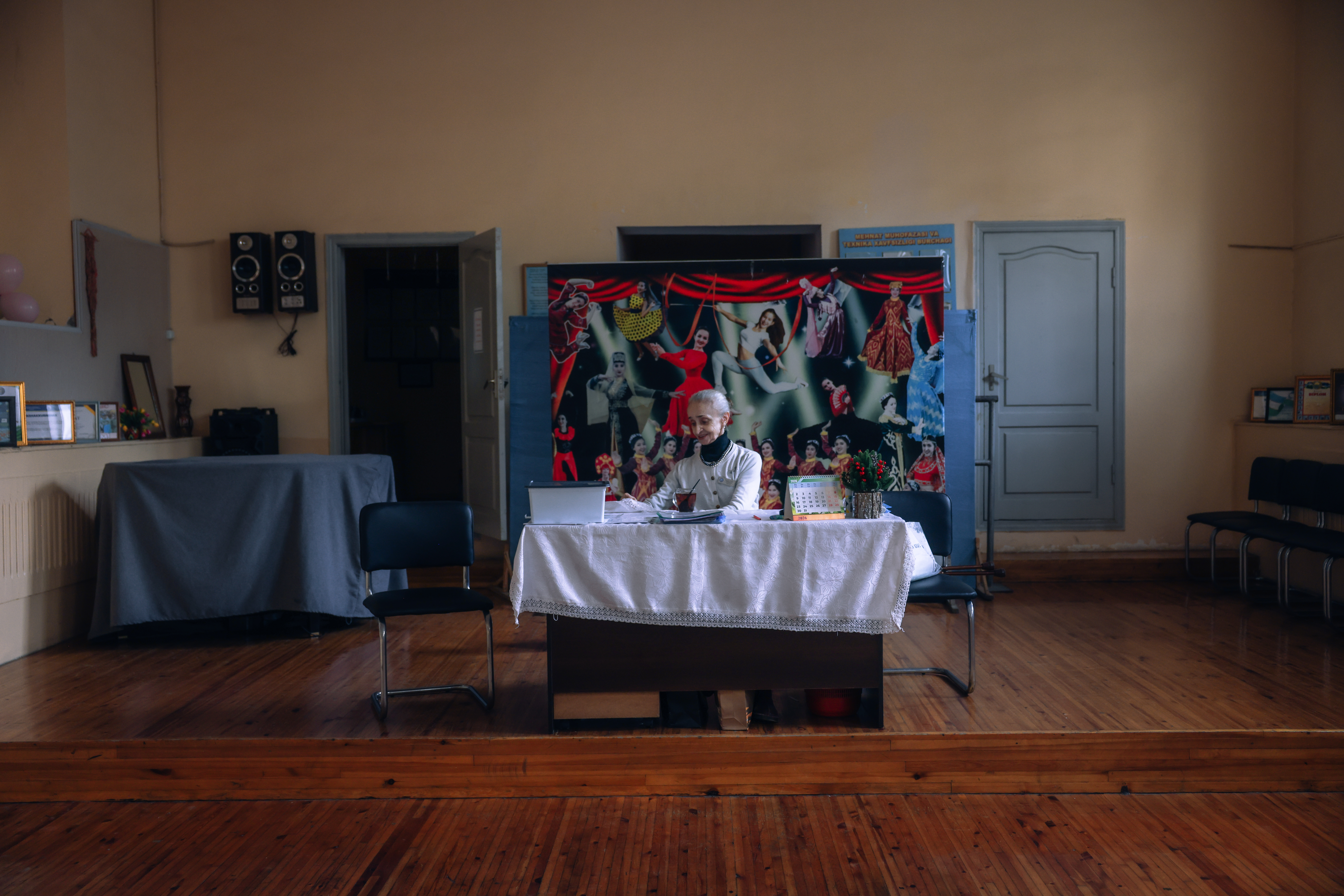 Photo: Ildar Sadykov
— What else would you like to achieve?
— I would like to open a private school. A place, where I would organise everything differently. We represent the state and depend on decisions from above. Now we are being placed into strict frameworks. Earlier we focused more on creativity, now it is mostly paperwork. That takes a lot of time. It is very difficult. I would like to create a school where we focus only on creativity. I already have a children’s circus studio called “Karima.” And there is also the “Alimak” studio run by my daughter, where they study dance, acting, speech, and drawing.
Dreams, character, life...
— What is your greatest dream?
— To create an Academy of Circus and Variety Arts here. Today we are the only college in Central Asia, but we should become the only academy in Central Asia. I once mentioned this in Kazakhstan, and they immediately opened an academy of arts. Why are we worse? Why shouldn’t circus departments have higher education? We need an institute, a higher school, or an academy.
What is needed? If there is will, funding can be found. I can develop curricula and bring in teachers. That is not a problem. I became a professor at the age of 65. Today I am the only female professor of circus arts in Uzbekistan.
I teach master’s students at the conservatory. I always tell them to write, to research, to study. I speak French, as I studied at a school with a French curriculum. But it is essential to know your native languages well, both Uzbek and Russian.
At the ministry once they asked me why artists leave. I said, look at their salaries. For two million they risk their lives. You need to rethink the pay system. A circus artist steps into the ring on his own feet, but whether he comes out alive is never guaranteed. They are fanatics, half-hungry, half-dressed fanatics of their art. We were the same. I myself started on 60 rubles in the 1970s.
— You are known as the “Iron Lady”. How do you feel about that?
— People say I am a good mother, a good grandmother, and a demanding but fair director. Behind my back they call me the Iron Lady. But my students respect me. A leader has to be an authority, otherwise you risk becoming a laughing stock. If you’re not an authority, if you can’t do anything and don’t understand your own field, then of course you become exactly that.
My daughter Kamilla often consults me. We have a very strong partnership. I do not interfere in her artistic work. She has her own world, but I can guide her, give advise… But with others I can make adjustments, because they come from a different school, with different approaches. I think so because I’ve experienced it myself, and I’d like to see that quality in others too.
— What would you never forgive?
— Betrayal, gossip and lies. I sense people very well and immediately see when someone is not being honest. I love children, flowers, animals, and nature. I believe that a person who loves nature will never harm others. I think so because I’ve experienced it myself, and I’d like to see that quality in others too.
— How do you spend your free time?
— I only have one day off, Sunday. Even then I am often invited somewhere, to events or other engagements. I really love my home. I keep it clean and fill it with flowers. I have brought many plants here as well and I have practically turned the place into a greenhouse. I take care of my plants and sometimes I knit. And sometimes I lie down on the sofa and tell myself, “Right, that’s it, I need at least 30 minutes to rest.” But I cannot just lie there because my thoughts do not stop and they do not let me relax. So I end up writing a script or working through new ideas.
— How have you changed over time?
—
I always looked at the world through rose-tinted glasses. I have gone from that girl in rose-tinted glasses to what people call an iron lady, but inside I am still the same Karima Zaripova I was sixty years ago. I remain kind, emotional and sensitive. I can easily cry when I hear about other people’s problems or when I talk to my children. I become very emotional and start to tear up. I worry about them a great deal. I do not feel my age. You begin to see the world more realistically; the rose-tinted glasses fade and you start to understand people better. Life teaches us how to live in its own way. I have achieved everything through my own work: fame, respect and position. I owe nothing to anyone except God and my parents. They gave me life, raised me and gave me an education. Everything else is my own contribution.
I was awarded the title of academician by the Academy Turon under the President of Uzbekistan, and later on my anniversary received the title of Honoured Worker of Arts. It is always a pleasure to be appreciated. I would like, of course, to leave behind good memories of myself and my work, just as people still keep warm memories of my grandparents.
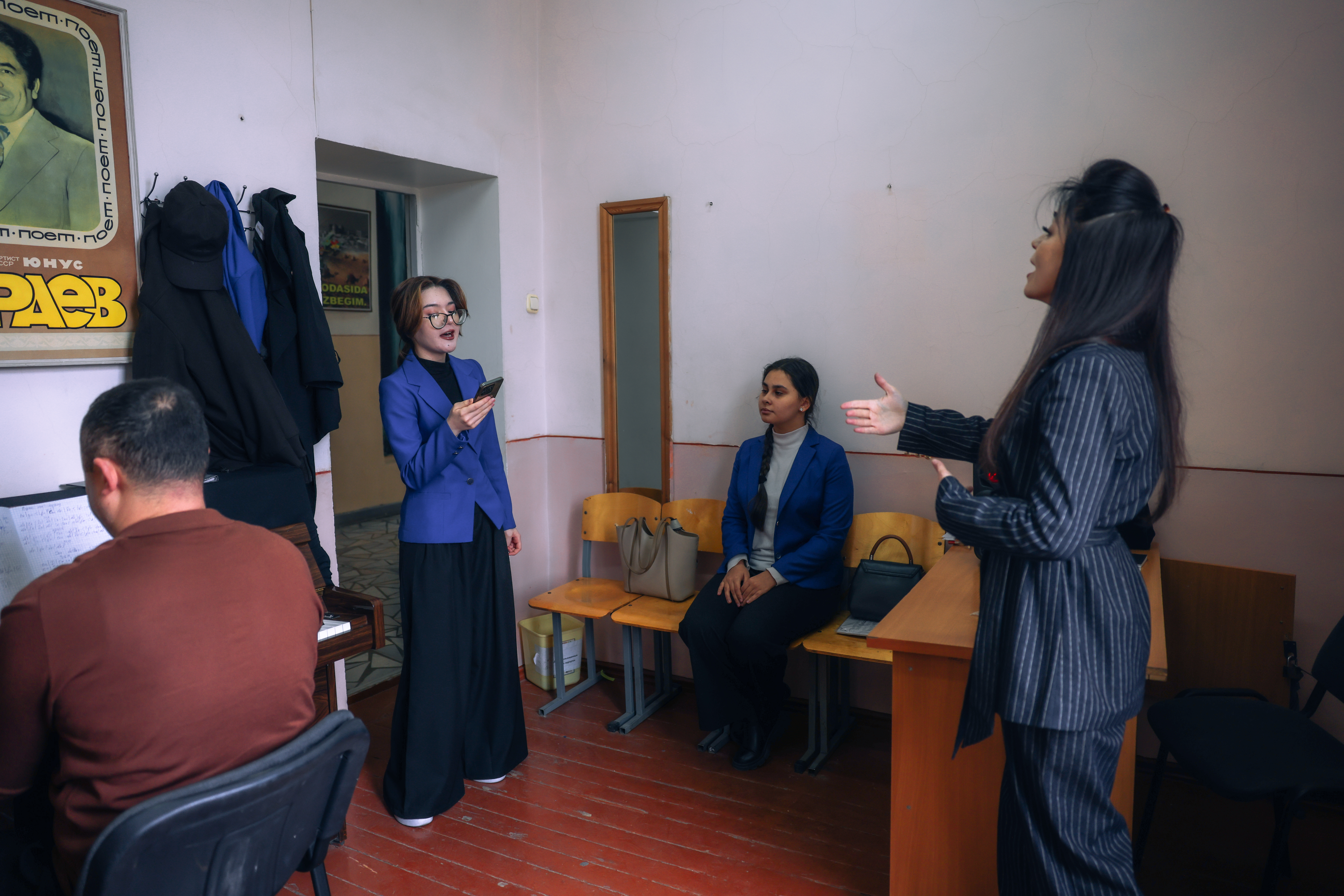 Photo: Ildar Sadykov
— What advice would you give to your students?
— First of all, I always say: whatever happens and whatever titles you hold, never become arrogant. Stay human. Be kind and decent so that people feel comfortable around you, and express yourself clearly and well. Prove who you are through your work. Read more, develop yourself, and never stop. A person who keeps working on themselves remains relevant and interesting. The moment you stop, you begin to decline, and that is a bad sign.