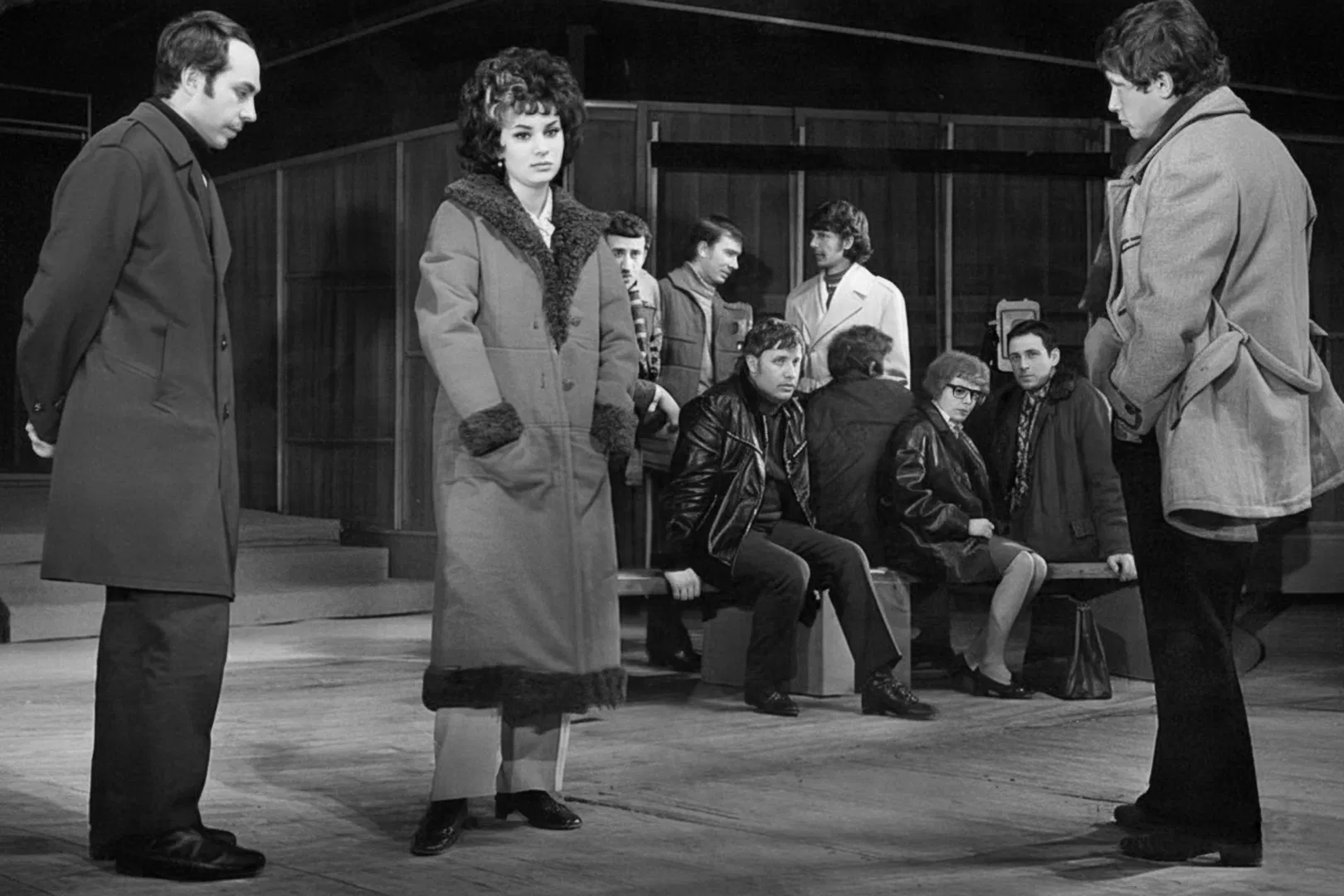
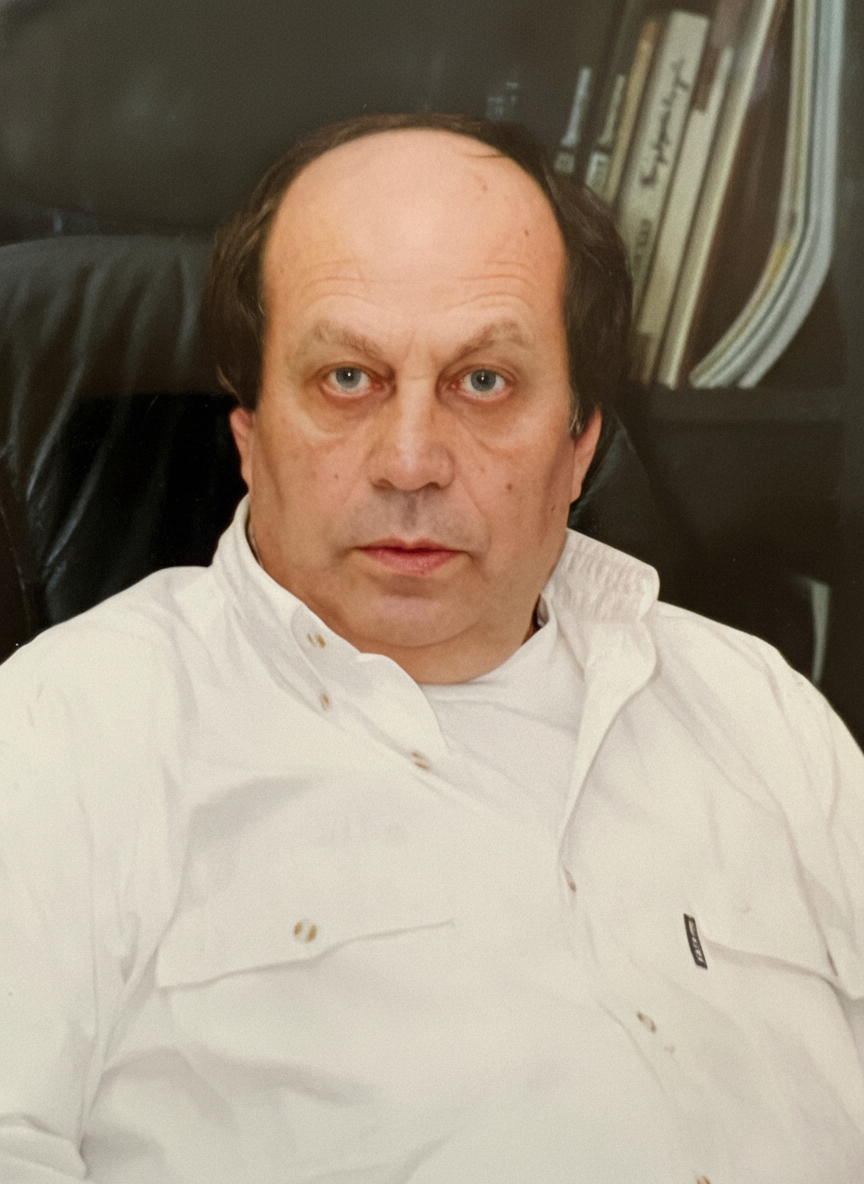
Vladimir Shapiro has come a long way. He received his acting education at the Theater and Art Institute, completed the directing school at LGITMiK, and became a student of Georgy Tovstonogov.
From 1990 to 2015, he headed the Russian Drama Theater of Uzbekistan, and his service there was associated not only with productions but also with the training of young actors, for whom he became an important professional and life reference point.
He became the artistic director of the theater in 1990, and from 1991 onward, he combined artistic leadership with the position of director—a period that lasted until 2015. The museum's information about the theater lists Shapiro as the author of over 45 productions, including "Zoyka's Apartment," "Everything in the Garden," "Even a Wise Man Stumbles," and "Uncle Vanya," among many others.
There is always a trap in biographies of this kind. They neatly list the stages of a life: education, cities, positions, awards—and almost never explain what the actual theatrical vision consisted of. Meanwhile, judging by the surviving interviews and the recollections of those who worked with him, Shapiro was important not only as the head of a major stage. He was a bearer of a specific theatrical method, part of a family, and he was a Human Being.
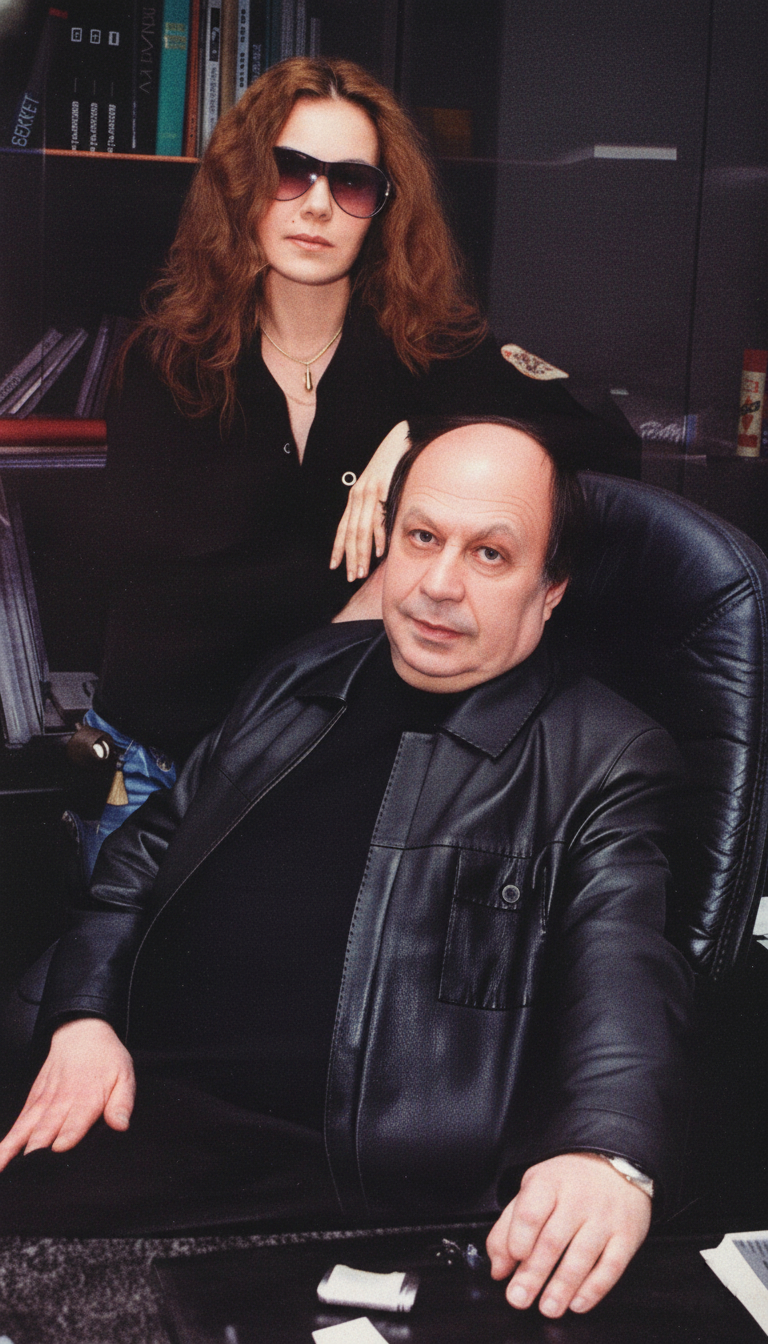
We spoke about the master with people for whom he was not only a notable figure in theater history but also a personal teacher. Actor Ivan Nenashev—a student of Vladimir Shapiro—came to the theater very young, studying in the theater's studio. Honored Artist of the Republic of Uzbekistan Anastasia Penkova also belongs to the number of Shapiro's students: in her recollections, the scale of Shapiro as a master, his demanding nature towards the profession, and his attentiveness to the actor are especially clear.
About the first impression from the students' meeting
Ivan Nenashev came to the theater in 1999, when he was not yet nineteen. By that time, this was not his first theater, but it was here, he says, that the most important professional acquaintance of his life happened — his meeting with Vladimir Mikhailovich Shapiro.
His first impression of the meeting remained very vivid. He recalls walking into the artistic director's office prepared for the usual actor's audition: expecting to be listened to, asked to perform a fable, a monologue, to have his stage preparation tested. But none of that happened.
No, we simply talked about where I live, how I live, how old I am, and so on. He told me how to write a job application. I'll be honest, I was sitting across from a Maestro. He could have performed the part of absolutely any actor. The most important thing was to explain why exactly that way. In my now twenty-seven-year creative career, I have never been so fortunate with any other director. Alas.
Literally everyone called Vladimir Mikhailovich the Boss. And that said it all. He was the boss on stage, indisputable and unconditional. He was the boss as the theater director—excellent, in my opinion. He was the boss in the studio, the boss in studies.
Ivan Nenashev
Yuri Antipin, an actor at the State Academic Russian Drama Theater of Uzbekistan and a graduate of the theater's school-studio, shared his story about his first impression:
Of course, it was a bit scary to work with him because he was a great professional in his field, and I was still a theater student back then, an 18-year-old kid. Working with him was wonderful; he is the only director in my life who knew everything. He could perform anyone's role on stage, he could find the right phrase to make it clear what to play and how to play it! Adult actors who had already left Uzbekistan always said: write down and remember everything he says.
Honored Artist of the Republic of Uzbekistan Anastasia Penkova — his student and theater actress, for whom working with him became an important part of her creative biography — recalls:
Vladimir Mikhailovich was a man of encyclopedic knowledge. And he knew a great deal: poetry, art, he knew everything in his profession, he was thoroughly versed. The first impression Vladimir Mikhailovich made on me was colossal. When I saw him, I was completely captivated by his genius, his talent, by him himself.
What was the difference between how he appeared to many from the outside and how he really was?
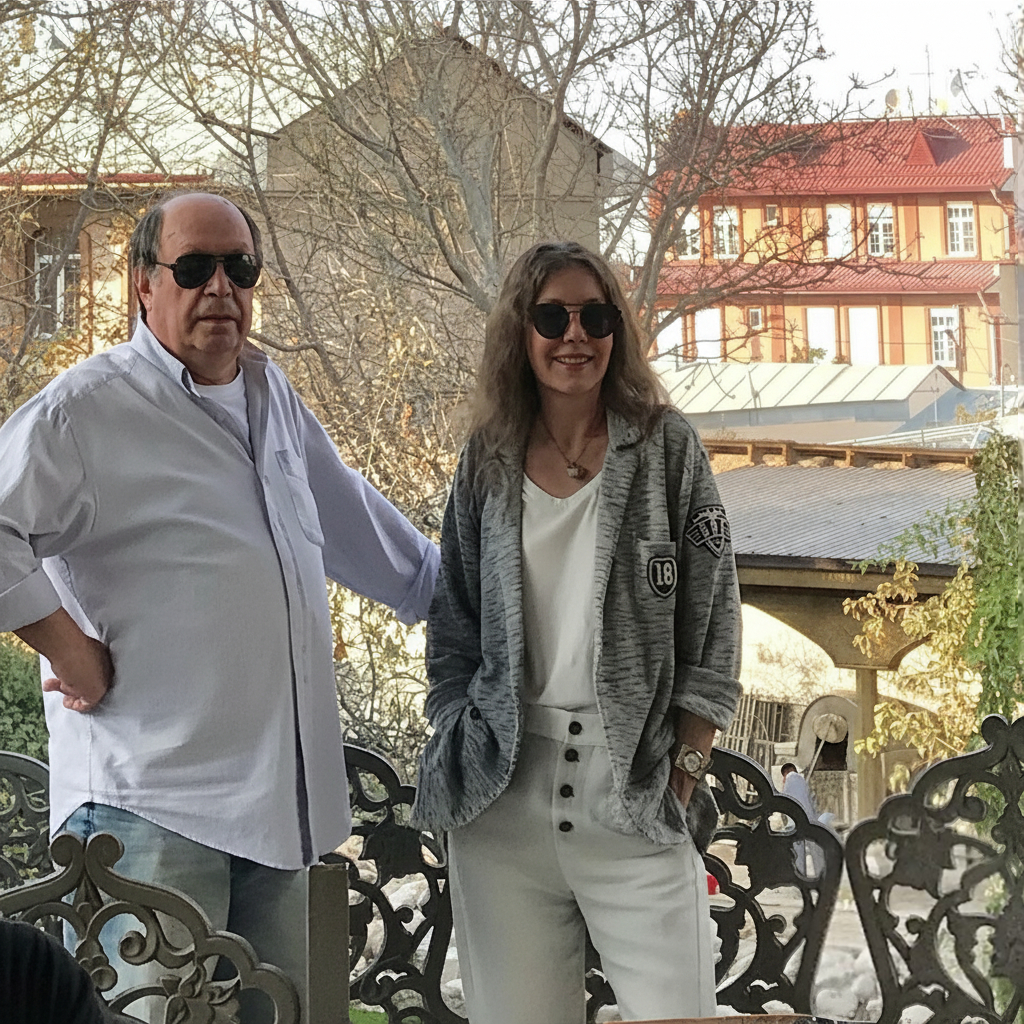
From the outside, the boss, that is, Vladimir Mikhailovich, seemed to everyone, I think, like some kind of unassailable fortress. To those who didn't know him. We, like many of my colleagues, were very close friends with him. I'm not afraid of this word, I can boldly call him my second, creative father. And not only creative, we were very good friends. What was he really like? He was honest. He knew how to give honest advice, to be an honest friend, to work honestly.
Ivan Nenashev
From the outside, he seemed very strict — well, the director and artistic director of a theater should be like that. All his work in the theater was organized like clockwork; everyone knew what, how, and when to do things. But in life, he was a great humorist! He joked wonderfully, and with a very serious face — you couldn't tell if he was joking or being serious.
Yuri Antipin
Directorial approach
Vladimir Mikhailovich Shapiro belonged to the Leningrad director's school and, as a student of Georgy Tovstonogov, inherited an approach based on a detailed analysis of the play and the role, attention to the author's intent, and the ability to convey all this through the actor. This included working on the author's essence, the director's vision, and his ability to convey all this directly through the performer. He strove to pass on all the invaluable lessons from Tovstonogov's teachings to the audience.
How did he approach analyzing a play, directing? Specifics of his approach, theatrical school
During readings and analysis, he would say: "Stop! Okay, why is this? And why does it say that here? And why did this character say that? And why did he look that way here?" It was impossible to surprise, shock, or stump Vladimir Mikhailovich with absolutely any question. But as for how he would dive into staging... he could inspire absolutely any actor. We always ran to these rehearsals. No one ever glanced at the clock. As he himself often said: "I'll make even a stool perform." And that was truly the case. Even if an actor was completely lost and utterly confused, and nothing was working for them, Vladimir Mikhailovich knew how to find an approach to absolutely any actor: whether through words, with passion, or with a sharp remark.
Ivan Nenashev
When he started rehearsing a new play, he would come already prepared, he already knew the entire play, he had analyzed it completely. He knew, as he should, more about the play than the actors, he knew more about each role than the actor themselves knew.
Anastasia Penkova
What did he repeat most often during rehearsals? What advice will you never forget?
During rehearsals, the director would tell absolutely everyone, every actor: send your energy to the lighting booth. At first, I couldn't understand at all what energy and why to the lighting booth, where the lighting operator sits. For me, as I thought, it wasn't necessary to be louder or to shout something far away; there are completely different scenes and characters. And only after some time did I begin to understand what he meant, that the actor's energy must spread to the entire auditorium. It is the actor's energy that must reach every single spectator and touch the last lighting operator sitting at the very, very top, at the back of the hall.
Ivan Nenashev
He always told me: "Hurry slowly," — I didn't understand this phrase until I saw Viktor Alexandrovich Verzhbitsky in a theatrical production. The second phrase he said to many: "On stage, you must speak with consonants."
Yuri Antipin

Did he have his own rehearsal pace?
Undoubtedly, there was. One that many people got used to very quickly. Vladimir Mikhailovich never rehearsed for long. In my opinion, unfortunately, many directors like to rehearse from early morning until late at night. I believe this is a mistake, because your creative drive, precisely your productive creative drive, your candle will burn out after a maximum of 3-4 hours of full-fledged work. Everything else is, excuse me, stretching unnecessary rubber. As Vladimir Mikhailovich liked to say, more does not mean better.
Ivan Nenashev
When an actor suggested something of their own, he could accept it only if it did not contradict the overall picture and the general concept of the entire play. Of course, there were arguments, but he almost always proved his point.
Yuri Antipin
He approached each actor individually. Even if actors were working in dubbing, each had their own approach, the character's line was built individually, tailored to each actor. He was very sensitive and attentive to the actor, but never tolerated falseness in acting.
Anastasia Penkova
Could he be harsh, and if so, where was the line between being demanding and being tough?
The boss was sharp. He never minced his words. We heard all kinds of swear words from him, but I think no one ever took offense—everything was to the point. With all the artists at all the rehearsals where Vladimir Mikhailovich could raise his voice and throw in a strong word—I believe absolutely everything was justified. But the line between demanding and harsh—he never shouted just for the sake of it. Yes, he could be cheerful, kind, and praise endlessly, but at the same time, he’d slip in a swear word if you suddenly stumbled and took a wrong turn.
Ivan Nenashev
What could the director not come to terms with?
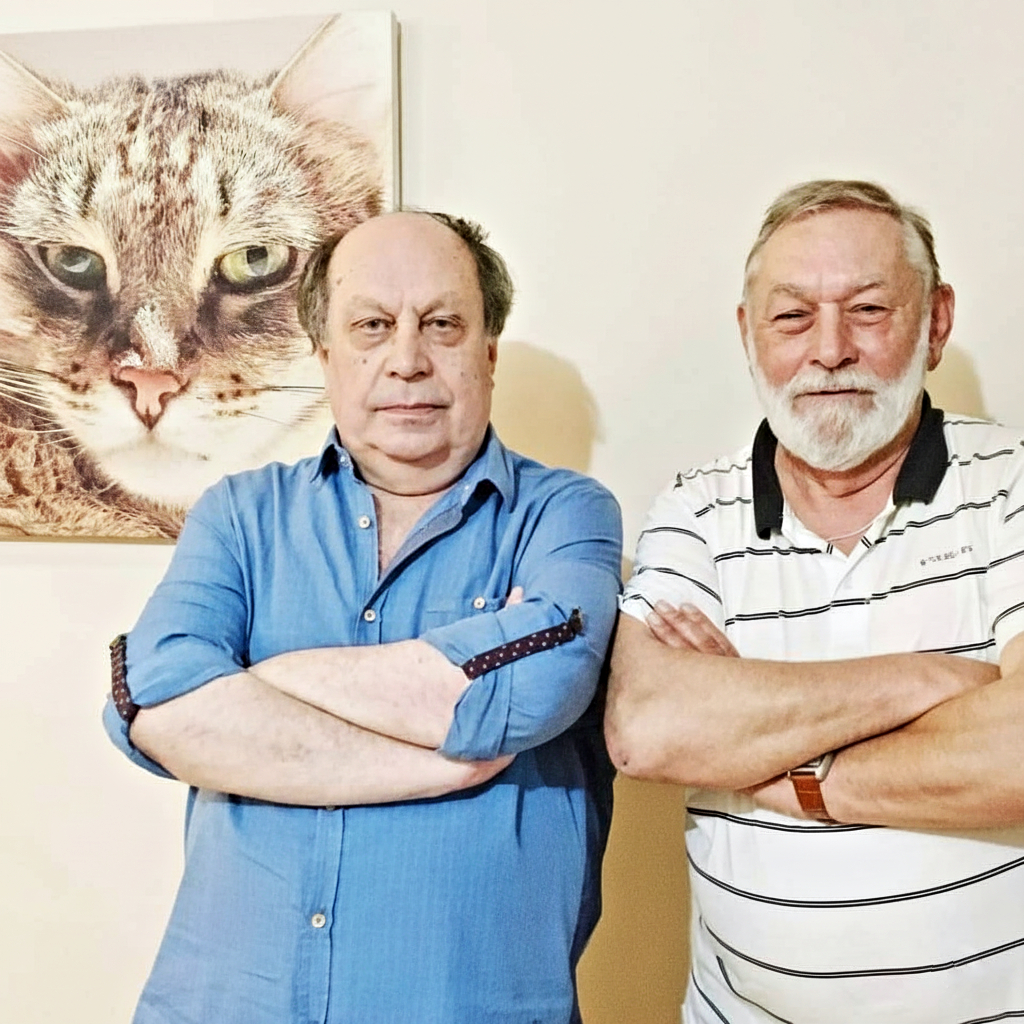
In acting, Vladimir Mikhailovich could never tolerate falseness, tediousness, or any kind of unjustified pathos. Many, I won't hide it, argued with him on this point, having, in my opinion, completely different ideas about an actor's work. When an actor is concerned about which side looks more advantageous, or how his voice sounds best, and so on. Vladimir Mikhailovich always pushed all of that to the very, very last priority. An artist must be an artist, not at all a mask that must move beautifully and speak the text correctly. First and foremost, the director needed an actor's individuality.
Ivan Nenashev
How did he react when an actor proposed an unexpected solution, how often were there disputes and what was their nature, how did he establish a connection with the actor?
Vladimir Mikhailovich always demanded explanations: if you're doing something well, explain why. Often an actor, feeling it inside but not understanding why exactly [the performance is built that way], naturally cannot explain anything. "I'll show you now," says the actor, shows it, and then Vladimir Mikhailovich would ask: "But why?" And here your brain would start to creak, searching for attempts at justification—how, why, and for what reason? It happened that you convinced him that it was exactly right—and he would agree. He would say "good" when a common solution was found.
There was no puppet-like game, no sort of Karabas-Barabas pulling the strings. At every rehearsal, disputes arise when the actor is engaged, when they are on fire, when the director—someone like Vladimir Mikhailovich—knows how to skillfully ignite them and not let them burn out; naturally, there will be disputes.
When you are infected by this, when you live by it, when you go to bed at night thinking: "Lord, what about tomorrow?" When an actor is on fire, when a director tries to fan that flame—that is priceless.
Ivan Nenashev
How was his school different from a regular theater institute or other work with other directors?
Every theater nurtures and raises its actors like children. The difference between a school, a studio, and a theater institute is that from the very first day of the studio, you begin to understand—or try to understand—what is expected of you, whether you are needed in this theater, and whether this theater is needed by you? But those who come after the institute, who are assigned or go on their own, often face conflict in the theater. Because it seems like you've studied, you're a specialist, but somehow it turns out that everything here is different, you were taught differently. That's the beauty of a school-studio—that from the very first days, you are inoculated with precisely this theater.
The difference from working with other directors: when I first came to the theater, a famous actress who had been through fire, water, and copper pipes told me at the time: "Vanya, this is your director, hold on to him, cherish him, listen to him." At that moment, I didn't understand, thinking: "Well, aren't there other directors too?" But now, I recall these words more and more often. Vladimir Mikhailovich truly was My director. Over the years of our work, he hardly needed to explain anything to me. He would say: "Vanya…," and I would say: "Already understood, it's clear, I'll do it that way."
Ivan Nenashev
What has changed in the theater of Uzbekistan specifically thanks to him?
Under the leadership of Vladimir Mikhailovich Shapiro, the theater flourished. We had everything in the theater created to produce performances of the highest level and so that the audience would leave inspired, uplifted, not empty. He was reliable in every sense of the word. We were as if behind a stone wall with him, because we knew he was guiding our theater on the right course. He worked very hard, producing four or more performances a year (that is a lot for a theater). Vladimir Mikhailovich helped young directors and actors, striving to help everyone he could.
Anastasia Penkova
Vladimir Mikhailovich was a magnificent director and, in my opinion, an excellent manager. He, I believe, skillfully combined creativity and administrative work. It was probably not easy for him. But as a manager, he knew how to shield creativity—the actor, the director, the set designer—from any unnecessary work. For him, a creative person should be engaged directly in creativity, in their profession, and certainly not in meaningless reporting. Things for which an artist should not be responsible and should never have to think about.
Ivan Nenashev
What was he like outside of rehearsals, in the hallway, in the office, after the premiere, in a one-on-one conversation?
We were all one big theater family, not just coworkers, colleagues, or friends, but a good family, with the boss as its head. I think many of us would say that Vladimir Mikhailovich was a second father to us. Once, the mother of one of my close friends—also an actor who worked in our theater—said to me with sadness and envy: "You go to a job you love, do what you love, and even get paid for it. You are the happiest people in the world." Everyone treated Vladimir Mikhailovich with great trust; many shared their problems with him, and he helped many, helping very significantly, both with advice and with other kinds of support. One-on-one, he was very honest, open, like a real father, which he was to each of us.
Ivan Nenashev
Vladimir Shapiro had a long biography, dozens of productions, and years of leading the theater. But perhaps more importantly, he left behind people who still remember him as a master, a teacher, and a person who knew how to lead, supported others, and possessed a special skill and sensitivity. Therefore, his story did not end with his departure—it continues in the memory of the theater and in those he managed to teach.