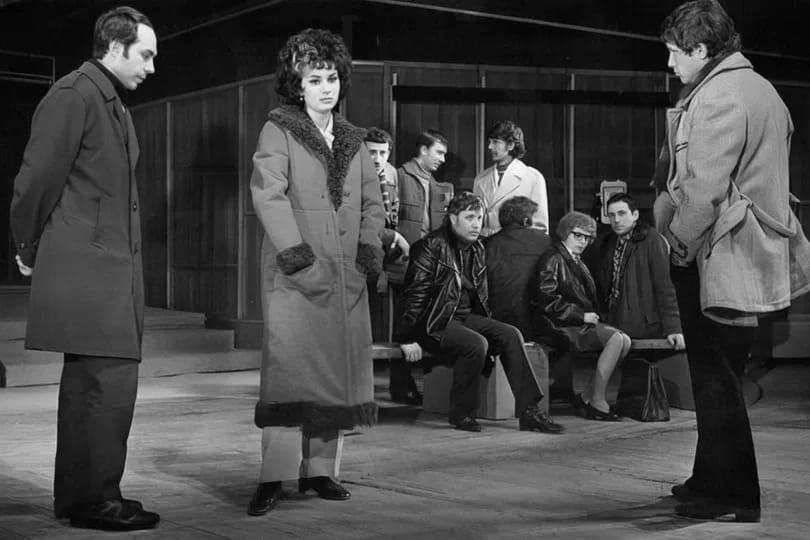
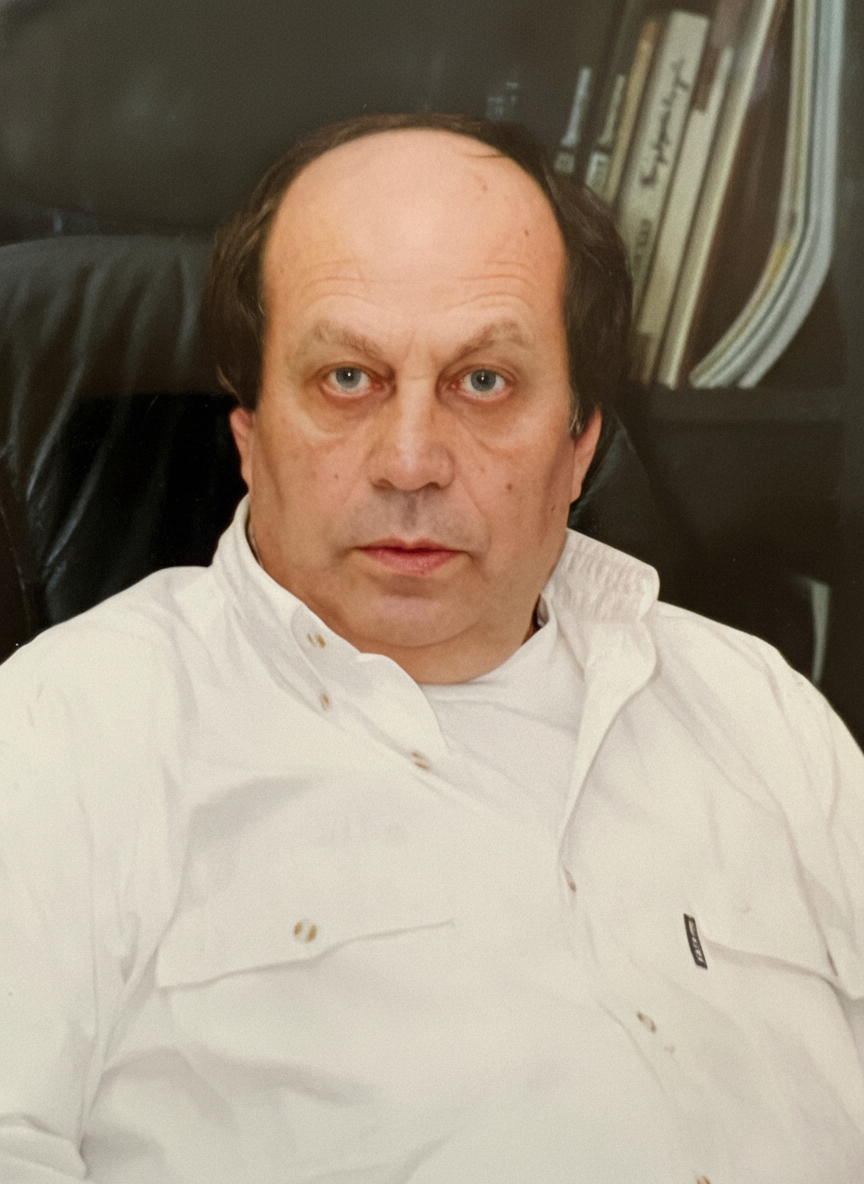
Vladimir Shapiro had a long and remarkable journey. He trained as an actor at the Theatre and Arts Institute, went on to study directing at LGITMiK, and became a pupil of Georgy Tovstonogov.
From 1990 to 2015 he served as Artistic Director of the Russian Drama Theatre of Uzbekistan, a tenure defined not only by his productions but by his dedication to mentoring young actors, for whom he became an indispensable guide, both professionally and personally.
He assumed the role of Artistic Director in 1990, and from 1991 combined artistic leadership with the position of General Director, a dual responsibility he carried until 2015. The theatre's records credit Shapiro with over forty-five productions, among them Zoyka's Apartment, Everything in the Garden, Enough Stupidity in Every Wise Man, and Uncle Vanya.
Biographies of this kind have a habit of cataloguing the stages of a life with care (education, cities, positions, honours) yet saying almost nothing about what a person actually believed about their art. Based on preserved interviews and the recollections of those who worked with him, Shapiro was significant for far more than his leadership of a major stage. He was the bearer of a distinct theatrical method, part of a wider artistic family and, above all, a man of rare human depth.
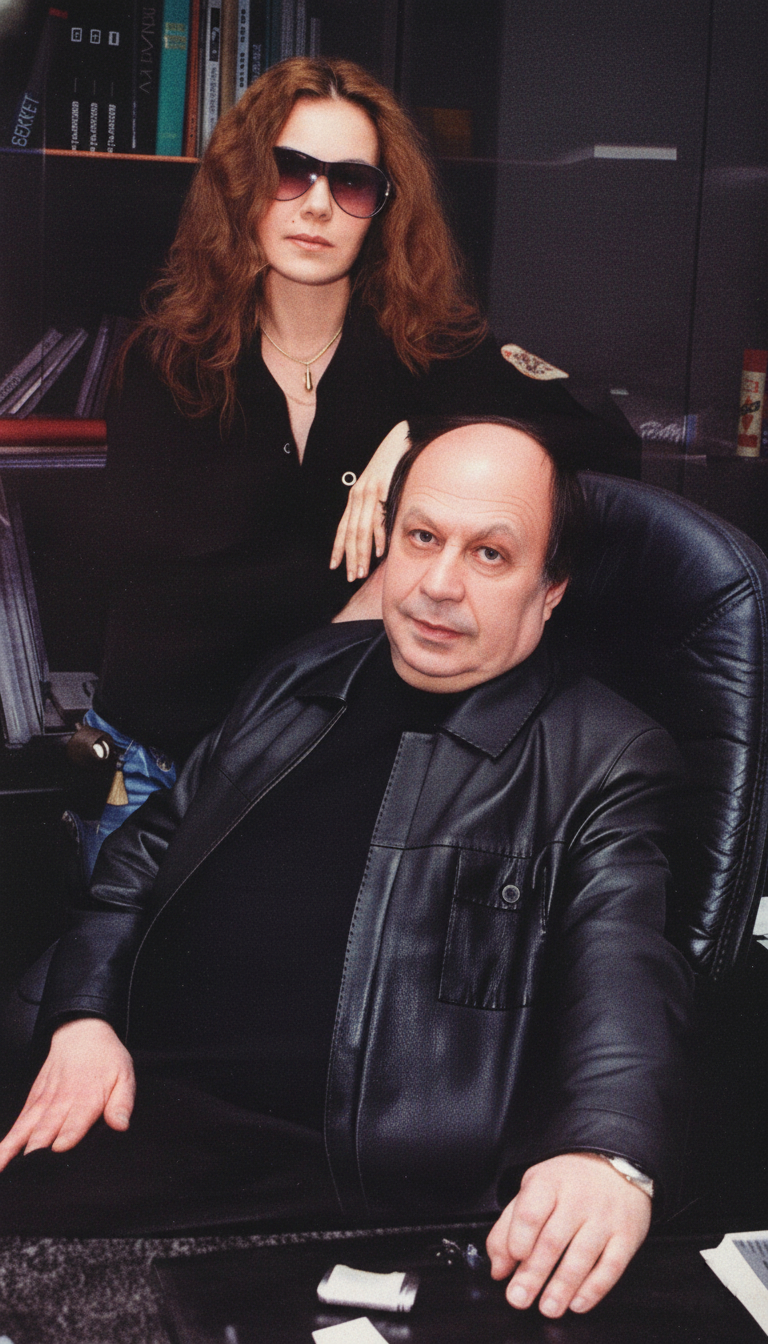 Source: personal archive of Vladimir Shapiro's students
We spoke to those for whom he was not only a prominent figure in theatre history but also a personal mentor. Actor Ivan Nenashev, a student of Vladimir Shapiro, joined the theatre very young, training in its studio. Honoured Artist of the Republic of Uzbekistan Anastasia Penkova was also one of Shapiro’s students. Her memories clearly reveal Shapiro’s scale as a master, his dedication to the profession, and his attentiveness to actors.
First impressions he left on his students
Ivan Nenashev joined the theater in 1999, not yet nineteen. By that time, he had already worked in another theater, but it was here, he says, his main professional encounter in life took place: his meeting with Vladimir Mikhailovich Shapiro.
His first impression remains vivid. He recalls walking into the artistic director’s office, expecting the usual acting test: reciting a fable, a monologue, or checking stage skills. But none of that happened.
We simply talked, he says, about where I lived, how I was getting on, how old I was. Shapiro explained how to write a job application. I will be honest: sitting before me was a Maître. He could step in and play any part himself. But what mattered most was his ability to explain why it had to be done that way. In my now twenty-seven-year career, no other director has come close. Not once. Not since.
Everyone called Vladimir Mikhailovich the Chief. And that said it all. He was the Chief on stage, indisputable and absolute. He was the Chief as director of the theatre, brilliant, in my view. He was the Chief in the studio, and in teaching.
Ivan Nenashev
Yuri Antipin, an actor at the State Academic Russian Drama Theater of Uzbekistan and graduate of the theater studio, shares his first impressions:
Of course, it was a bit scary to work with him because he was a great professional, and I was still a theater student, an eighteen-year-old kid. Working with him was wonderful; he is the only director in my life who knew everything. He could play every role himself on stage, could choose the right phrase to show how to act! Older actors who had left Uzbekistan always told us: write down and remember everything he says.
Honored Artist of the Republic of Uzbekistan Anastasia Penkova, his student and theater actress, recalls:
Vladimir Mikhailovich was a man of encyclopaedic knowledge. He possessed a vast command of poetry, art and all there was to know about his craft, and was exceptionally well-read. My first impression of him was overwhelming. When I saw him, I was completely captivated by his genius, his talent, and by his very presence.
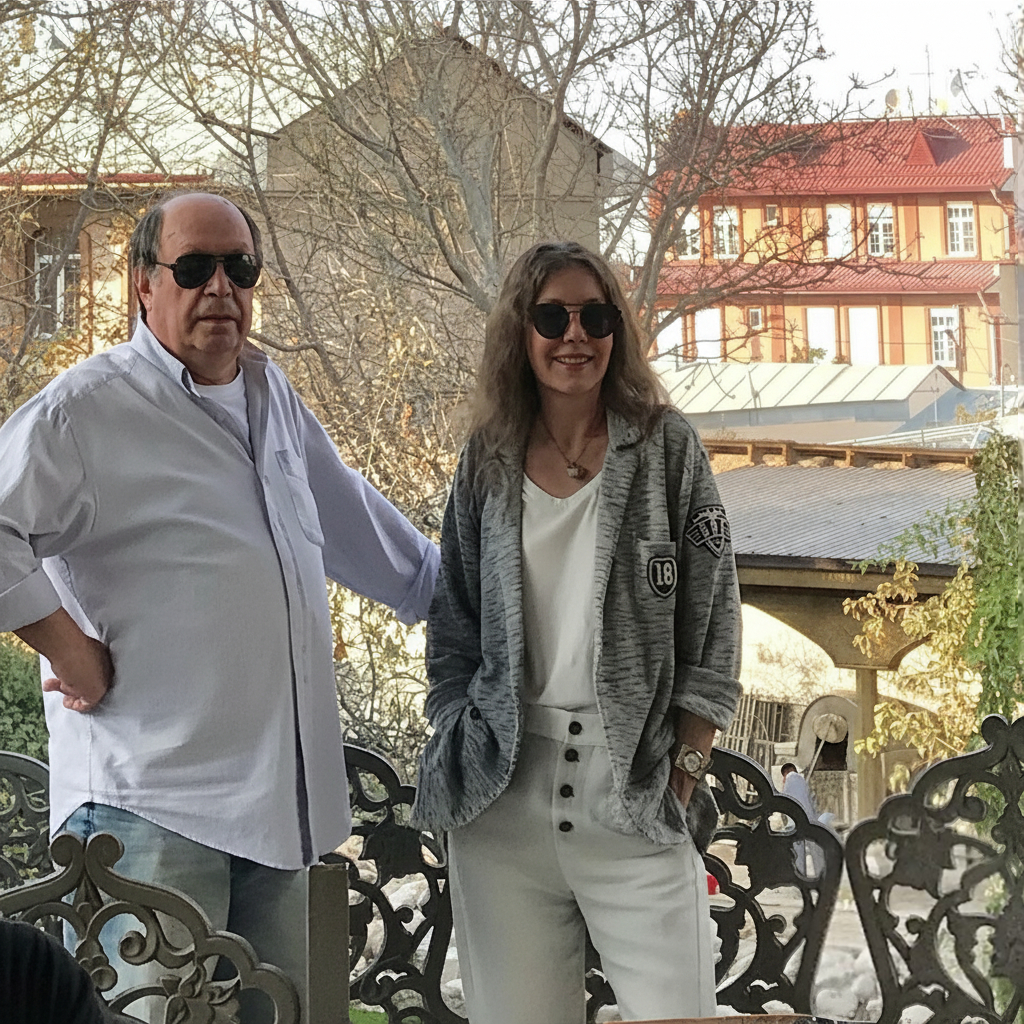 Source: personal archive of Vladimir Shapiro's students
How did he seem to outsiders, and what was he really like?
To outsiders, the Chief, Vladimir Mikhailovich, seemed, I think, like an impenetrable fortress. To those who didn’t know him. But we, like many of my colleagues, were very close to him. I will not hesitate to say it: I can call him my second father, my artistic father. And not only in an artistic sense. We were truly close. What was he really like? Honest. He knew how to give honest advice, to be an honest friend, to work with honesty.
Ivan Nenashev
To outsiders, he appeared strict, which a theater director and artistic director must be. His work at the theater was precise as clockwork, everyone knew what, how, and when to do things. But in life, he had a great sense of humor! He could joke with a serious face, so you could never tell if he was joking or serious.
Yuri Antipin
Directorial approach
Vladimir Mikhailovich Shapiro belonged to the Leningrad school of directing. As a pupil of Georgy Tovstonogov, he inherited an approach grounded in close analysis of the play and its roles, fidelity to the author's intention, and the ability to convey all of this through the actor. Everything of value he had received from Tovstonogov, he sought to pass on to his audience.
How did he approach analysing a play and staging it? What was distinctive about his method and his theatrical school?
During script readings and rehearsals, he would say: “Stop! Well, why this here? Why does he say this? Who said that? Why did he look this way? No question could astonish or confuse him. And when it came to staging… he could inspire absolutely any actor. We always ran to those rehearsals, never checking the time. As he often said: “I’ll make even a stool act.” And he truly could. Even if an actor was confused or blocked, Vladimir Mikhailovich could find an approach to anyone, whether with words, passion, or a sharp remark.
Ivan Nenashev
When he started rehearsing a new play, he arrived already prepared. He knew the play in full. He knew more about the play than the actors did, as any good director should, and he knew more about each role than the actor playing it did.
Anastasia Penkova
What did he most often say during rehearsals? Is there any advice that has stayed with you?
He often said during rehearsals: "Energy to the control booth." At first I did not understand what he meant by energy, or why it should go to the control booth where the operator sits. I thought there was no need to project or shout across the stage; different scenes called for different things. Over time I came to understand. He meant that an actor's energy must fill the entire auditorium, reach every single person in it, and touch even the very last technician at the top of the hall.
Ivan Nenashev
He often told me, “Hasten slowly.” I did not fully understand what he meant until I saw Viktor Alexandrovich Verzhbitsky on stage. Another thing he would say to many of us was: “On stage, you must speak through the consonants.
Yuri Antipin
 Source: personal archive of Vladimir Shapiro's students
Did he have his own pace for rehearsals?
Undoubtedly, and most people adapted to it very quickly. Vladimir Mikhailovich never rehearsed for long. In my view, and regrettably, many directors like to rehearse from early morning until late at night. I believe that is a mistake, because your creative energy, your truly productive creative energy, lasts for no more than three or four hours of focused work. Anything beyond that is, if I may say so, just dragging things out.
Ivan Nenashev
When an actor offered something of their own, he could accept it, as long as it did not contradict the overall vision and concept of the play. There were arguments, of course, but he almost always proved his point.
Yuri Antipin
He approached each actor individually. Even when actors were working in double cast, each received a tailored approach, and the character's arc was developed specifically for that performer. He was highly perceptive and attentive to actors, but he never tolerated any falseness in their performance.
Anastasia Penkova
Could he be sharp, and if so, where was the line between strictness and harshness?
The Chief was sharp and never minced his words. We heard all kinds of strong language from him, but I don't think anyone ever took offence. It was always to the point. Whenever Vladimir Mikhailovich raised his voice or used a sharp word, there was always a solid reason behind it. He never shouted without cause. Yes, he could be cheerful, generous, and lavish with praise, but he would just as readily throw in a cutting remark if you stumbled or went off track.
Ivan Nenashev
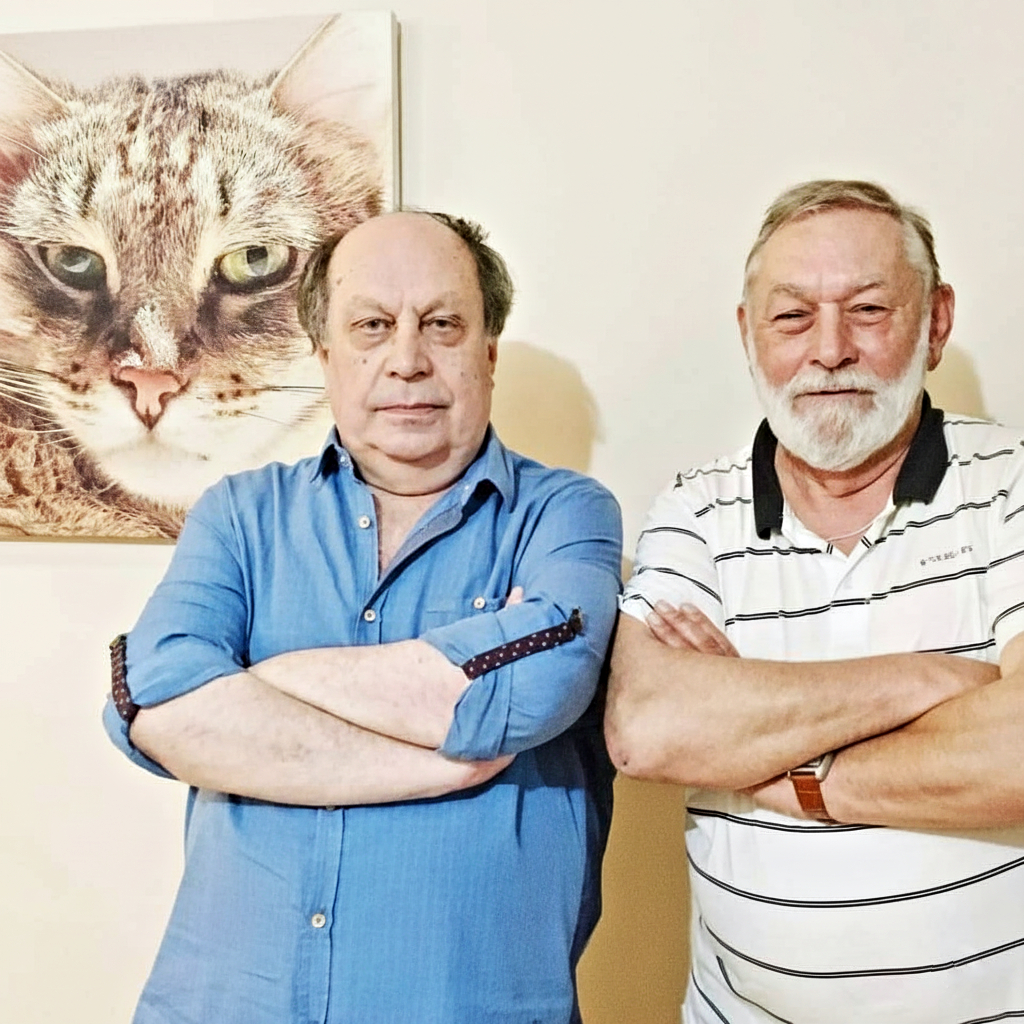 Source: personal archive of Vladimir Shapiro's students
What could the director never tolerate?
In acting, Vladimir Mikhailovich could never tolerate falseness, dullness, or unearned pomposity. Many, I won't hide it, argued with him about this, holding, in my view, very different ideas about the actor's work. When an actor is preoccupied with which angle is most flattering, or how their voice sounds best, all of that he would always push to the very last consideration. An actor must be an actor, not a mask that moves gracefully and delivers the text correctly. What the director needed first and foremost was the actor's individuality.
Ivan Nenashev
How did he respond when an actor came up with an unexpected idea? Did disagreements ever come up, and what were they like? How did he connect with the actor in those moments?
Vladimir Mikhailovich always asked for an explanation. If you were doing something well, he would ask you to explain why. Often, an actor feels something internally but doesn’t fully understand why it works and can’t put it into words. “Let me show you,” the actor would say and demonstrate it. Then Vladimir Mikhailovich would ask, “But why?” That’s when your mind would start turning, trying to figure out how, for what reason, and why. Sometimes you would manage to convince him, and he would agree. He would say “good” when you arrived at a solution together.
There was no puppet-like directing, no Karabas-Barabas figure pulling the strings. Arguments arise at every rehearsal when an actor is fully engaged, when they are on fire, and when the director, like Vladimir Mikhailovich, knows how to ignite that flame and keep it alive.
When you are completely immersed in it, when you live it, when you go to bed at night thinking: "My God, what will happen tomorrow?" That is when the actor burns and the director works to fan that flame. That is worth something beyond measure.
Ivan Nenashev
What made his school stand out compared with a theatre institute or working with other directors?
Every theatre trains and nurtures its actors, almost like raising children. The difference between a school, a studio, and a theatre institute is that from the very first day at the studio, you begin to understand, or at least try to understand, what is expected of you, whether you fit into this theatre, and whether this theatre fits you. Those who join after finishing an institute, either through assignment or on their own, often face conflicts. You have trained, you are a specialist, yet somehow everything works differently here and you were taught another way. That is what makes a studio school so valuable. From the very first days, you are immersed in the spirit of that particular theatre.
When I first joined the theatre, a seasoned actress, someone who had been through it all, told me, “Vanya, this is your director. Stay close to him, respect him, listen to him.” At the time, I didn’t really understand. I thought, surely there are other directors too. But now I find myself recalling those words more and more. Vladimir Mikhailovich was truly my director. After years of working together, he hardly needed to explain anything to me. He would say, “Vanya…” and I would reply, “I understand. Got it. Consider it done.
Ivan Nenashev
What difference did he make to the Uzbekistan Theatre?
Under Vladimir Mikhailovich Shapiro, the theatre flourished. Everything was organized to produce performances of the highest level and to make sure that audiences left feeling inspired and uplifted, never empty. He was reliable in every sense of the word. We felt protected by him as if we were behind a stone wall, because we knew he was guiding the theatre in the right direction. He worked tirelessly, producing four or more productions a year, which is a lot for any theatre. He supported young directors and actors and did his best to help everyone he could.
Anastasia Penkova
Vladimir Mikhailovich was an outstanding director and, in my view, an excellent administrator. He knew how to balance creative work with administrative responsibilities, which could not have been easy. As a director, he made sure that actors, directors, and set designers were shielded from any unnecessary tasks. In his view, a creative person should focus on their craft and certainly not on meaningless paperwork. That is not what an actor should be responsible for and not something they should ever have to worry about.
Ivan Nenashev
 Source: personal archive of Vladimir Shapiro's students
What was he like outside rehearsals, in the corridors, in his office, after a premiere, or in a one-on-one conversation?
We were a large theatrical family, not just colleagues or friends, but a true family with the Chief at its head. Many of us would say that Vladimir Mikhailovich was like a second father to us. Once, the mother of a close friend, who was also an actor in our theatre, said to me, half sadly, half enviously, "You go to work you love, you do what you love, and you are paid for it besides. You are the happiest people in the world." Everyone trusted him deeply. Many shared their problems with him, and he helped a great many people, both with advice and in other ways. In private, he was very honest and open, like a father, which is exactly what he was to each of us.
Ivan Nenashev
Vladimir Shapiro left behind a long biography, dozens of productions, and years of leading a theatre. But perhaps what matters most is something else. He left behind people who still remember him as a master, a teacher, and a man who knew how to lead and support, and who possessed a rare gift for attentiveness. His story did not end with his passing. It continues to live in the memory of the theatre and in everyone he had the time to teach.