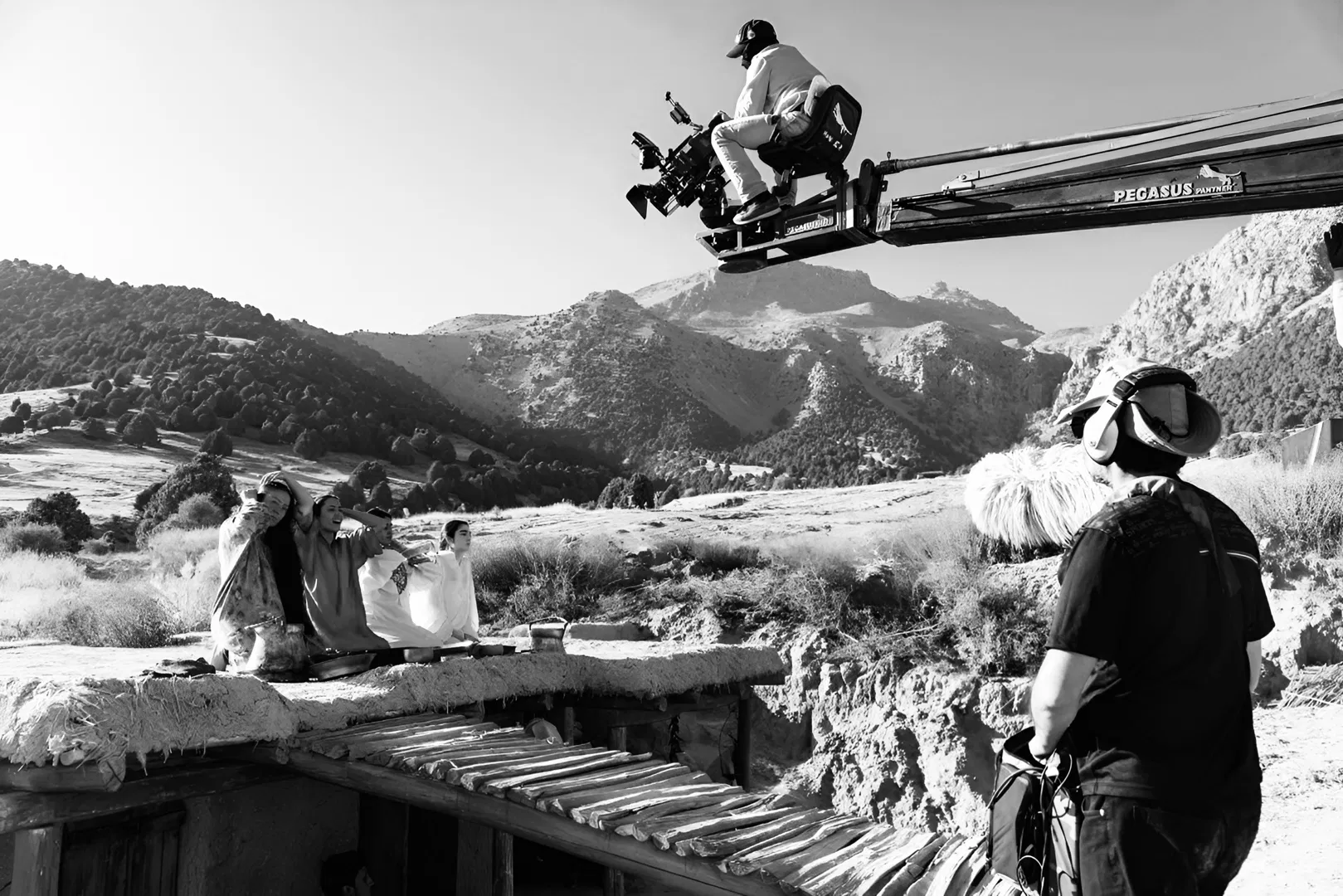
It's astonishing how over 131 years, cinema has spawned an enormous number of professions. In its early days, there were neither specialized schools nor a stable production system, and cinema itself was considered a fairground entertainment, not a visual art. Professional roles evolved gradually, as new tasks emerged, and the cinematographer in this system was long perceived more as a technician than as an independent author of the image.
The art of cinematography shaped the language of cinema. In the Soviet tradition, which we will refer to in this material, Eduard Tissé played a significant role. He began working with Sergei Eisenstein on "Strike" and subsequently filmed all his movies. This experience became part of a major school. As early as 1923, the cinematography department was established at VGIK. The production experience of early cinema began to take on the character of a stable educational tradition. The perception of the frame became more complex: the camera ceased to passively record events and began to participate in the dramaturgy.
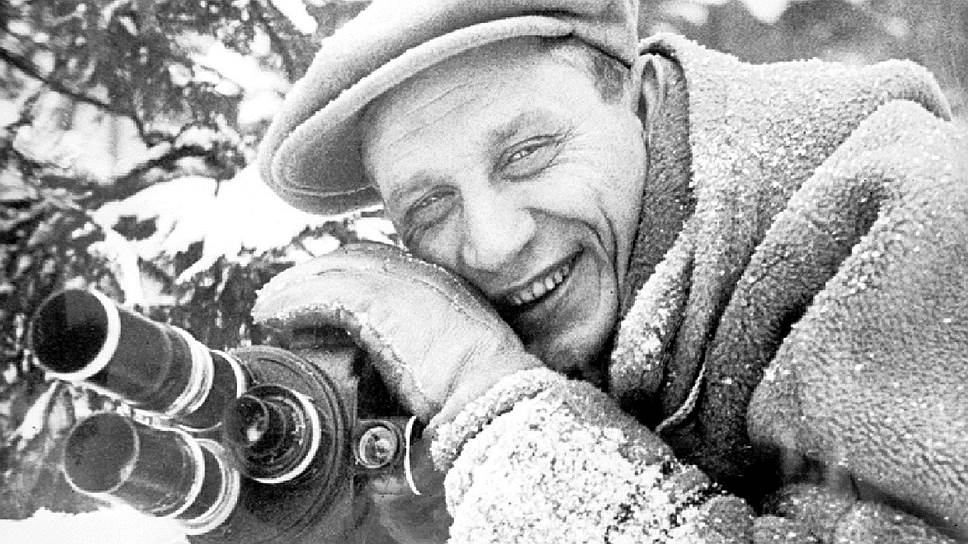
It was enthusiasts, driven by courage, interest in the new, and practical necessity, who explored the uncharted territory, and professional duties expanded spontaneously as tasks arose. However, let's leave the fascinating historical introductions aside. The content of this material is dictated by our contemporaries, the operators themselves—people from the industry.
It's worth remembering that cinema is a collective art, a large mechanism, and each of its parts determines the final result. Our "Community" section aims to make the work of every unit in this large process visible. It's important for us to assemble a picture of the industry through the hands of those who are on the other side of the lens, and in this case, literally behind it—behind the camera.
This material was made possible thanks to conversations with operators Ulugbek Khamrayev, Bakhodir Yuldashev, and Boris Litovchenko. Each of them has their own professional journey — and that made compiling this collective portrait all the more interesting.
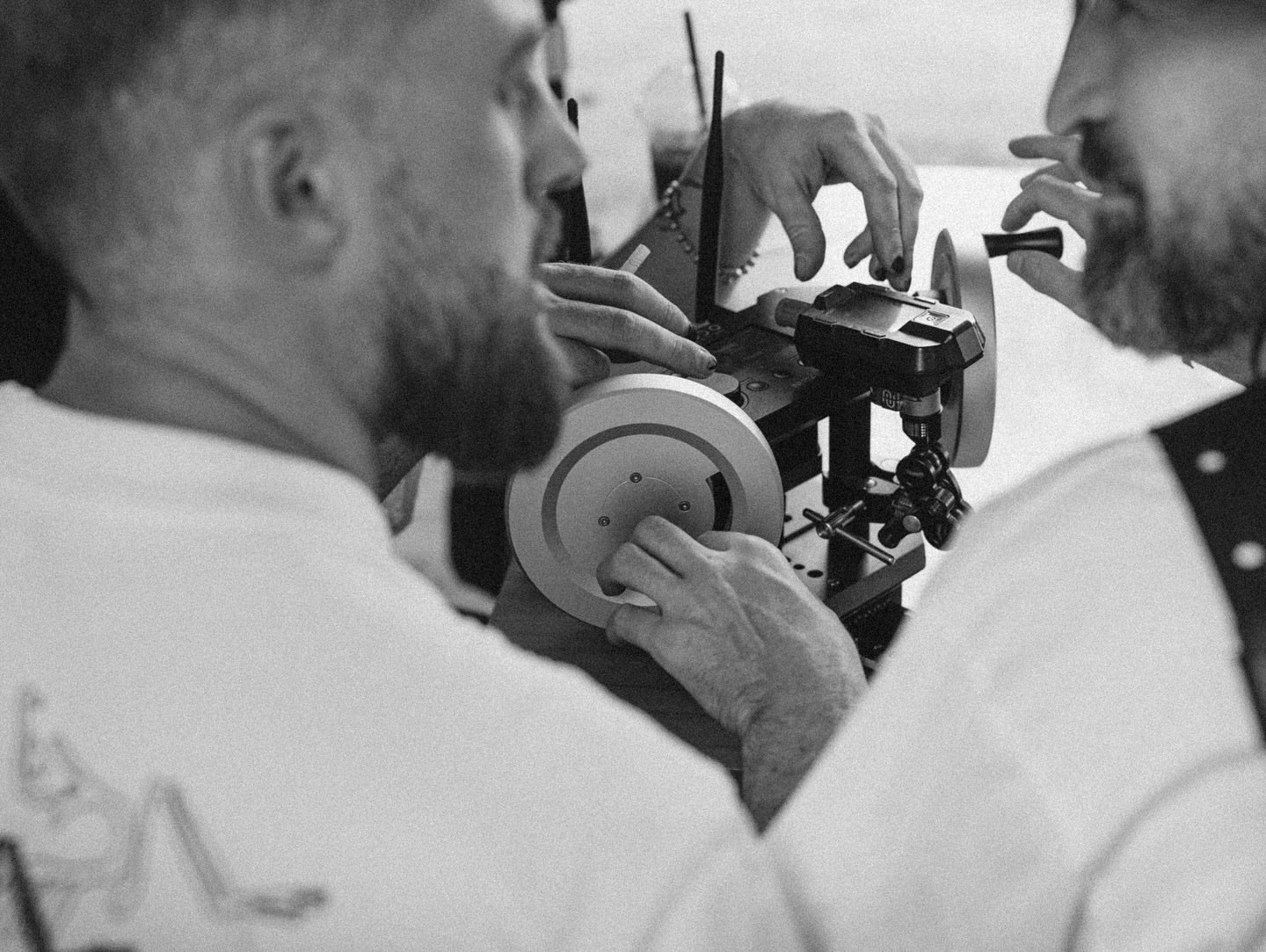
Our Heroes
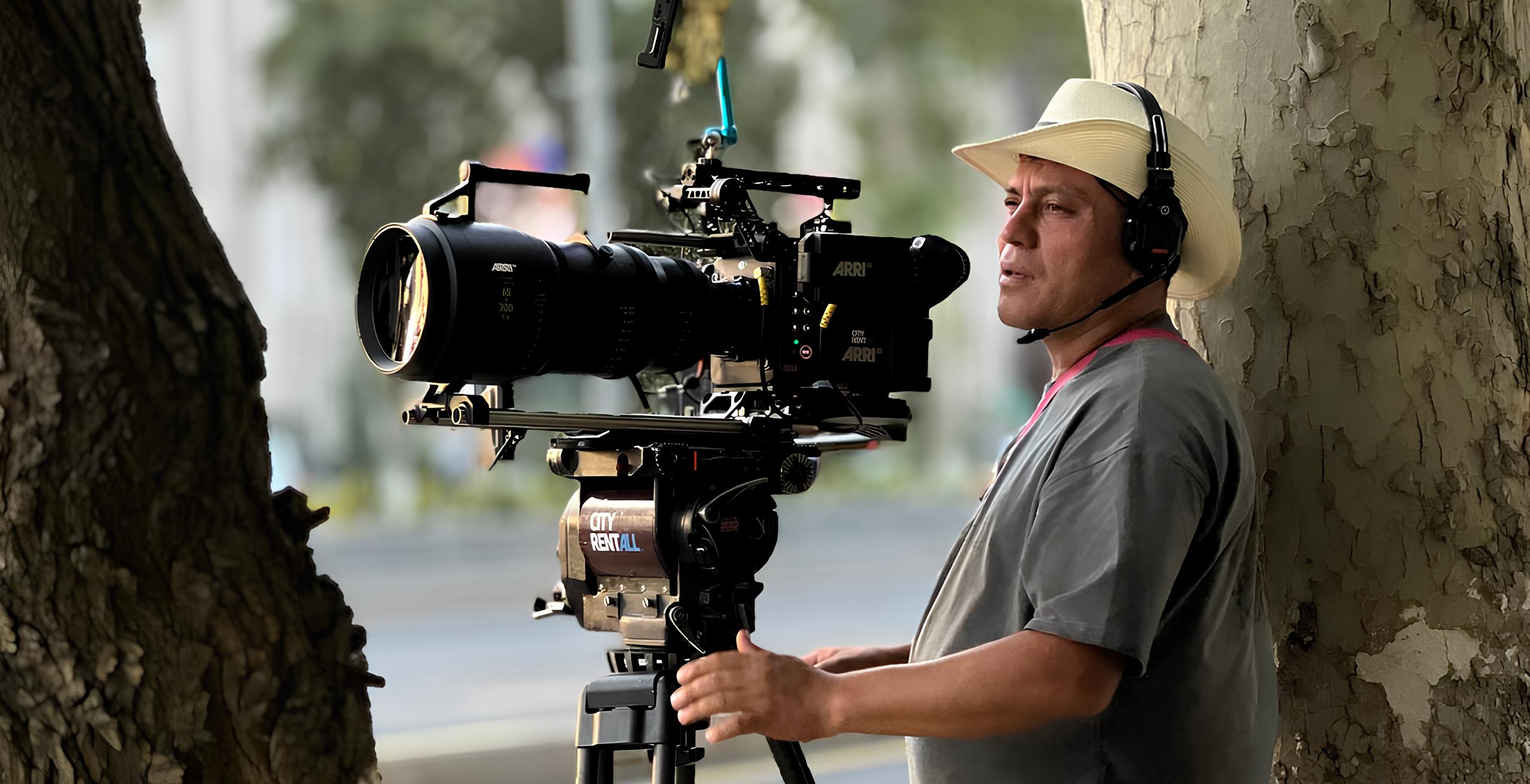
Ulugbek Khamrayev is an Uzbekistani and Russian cinematographer, a graduate of the cinematography faculty of VGIK. He began his career in Uzbekistan at Uzbekfilm, then moved on to Russian and international projects, shooting commercials, music videos, feature films, and TV series. He is best known to a wide audience for his work on the series "Major," "Klim," "Trotsky," "Vampires of the Middle Lane," and a whole range of popular projects from the 2010s-2020s. For his cinematography on the series "Major," "Klim," and "Trotsky," Khamrayev has repeatedly received awards from the Association of Film and Television Producers (AFTP).
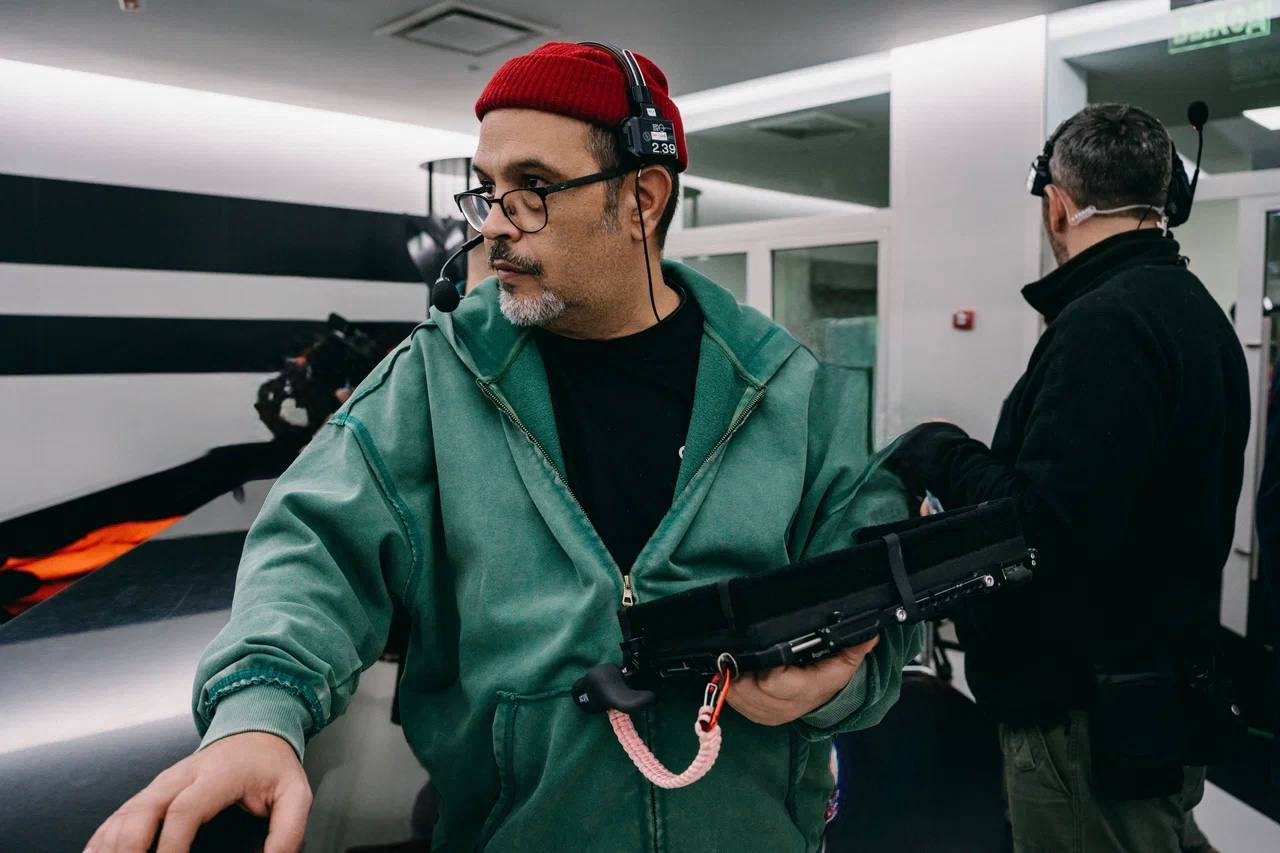
Boris Litovchenko is a cinematographer whose career is associated with auteur and genre cinema, as well as international projects. Notable works in recent years include the space drama "The Challenge" and the romantic comedy "Loves Me, Loves Me Not." In Uzbekistan, Boris Litovchenko has shot two feature films, one of which is "Pakhta" directed by Rashid Malikov (for his work on which Boris received the award for Best Cinematography at the "Oltin Humo" awards).
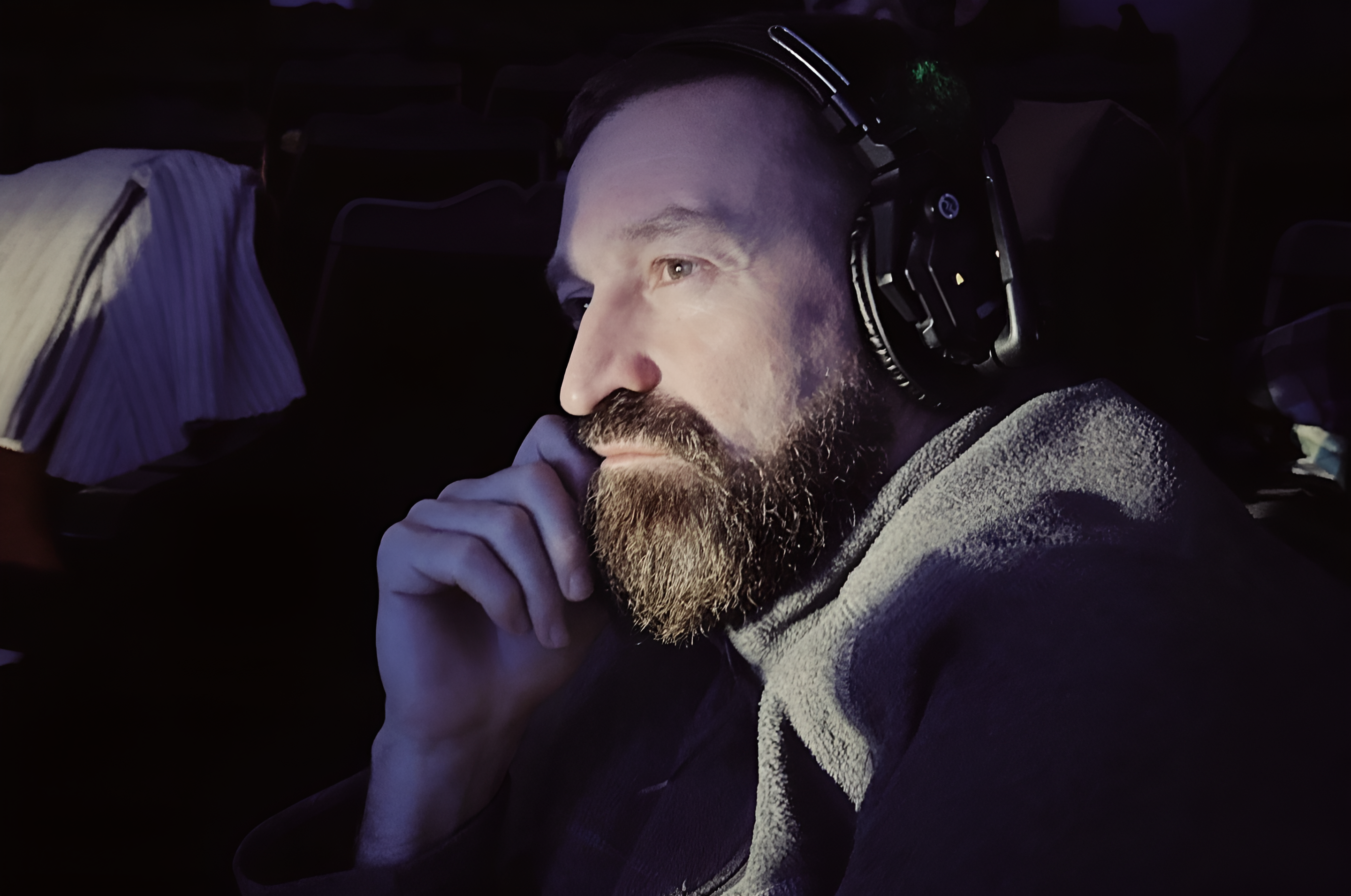
Bakhodir Yuldashev is an operator and director whose career is largely associated with serial and television formats: his portfolio includes projects such as "The Taste of the Sun," "The Gym Teacher," "Bar 'One Call'," "Offside," and "On the Sunny Side of the Street." Bakhodir Yuldashev has extensive experience working on Russian TV series, where he developed his approach to speed, discipline, and maintaining visual quality within tight schedules.
Chronology, systematic approach, Soviet school
A discussion about the current state of cinema is impossible without mentioning the preconditions. Chronologically, our starting point begins with the moment Uzbekistan gained independence. Our heroes started their careers or their education precisely at this pivotal moment.
Ulugbek Khamraev recalls that after the collapse of the Soviet Union, the industry found itself in a state of fracture: the old centralized funding model ceased to exist, and a new one had not yet been built.
After the collapse of the Union, no one really understood how to build a new system: how to finance cinema, how to conduct restructuring. As a result, the film studios were essentially left to their own devices. In the 1990s, a severe crisis began, and many people simply dispersed.
Ulugbek Khamrayev
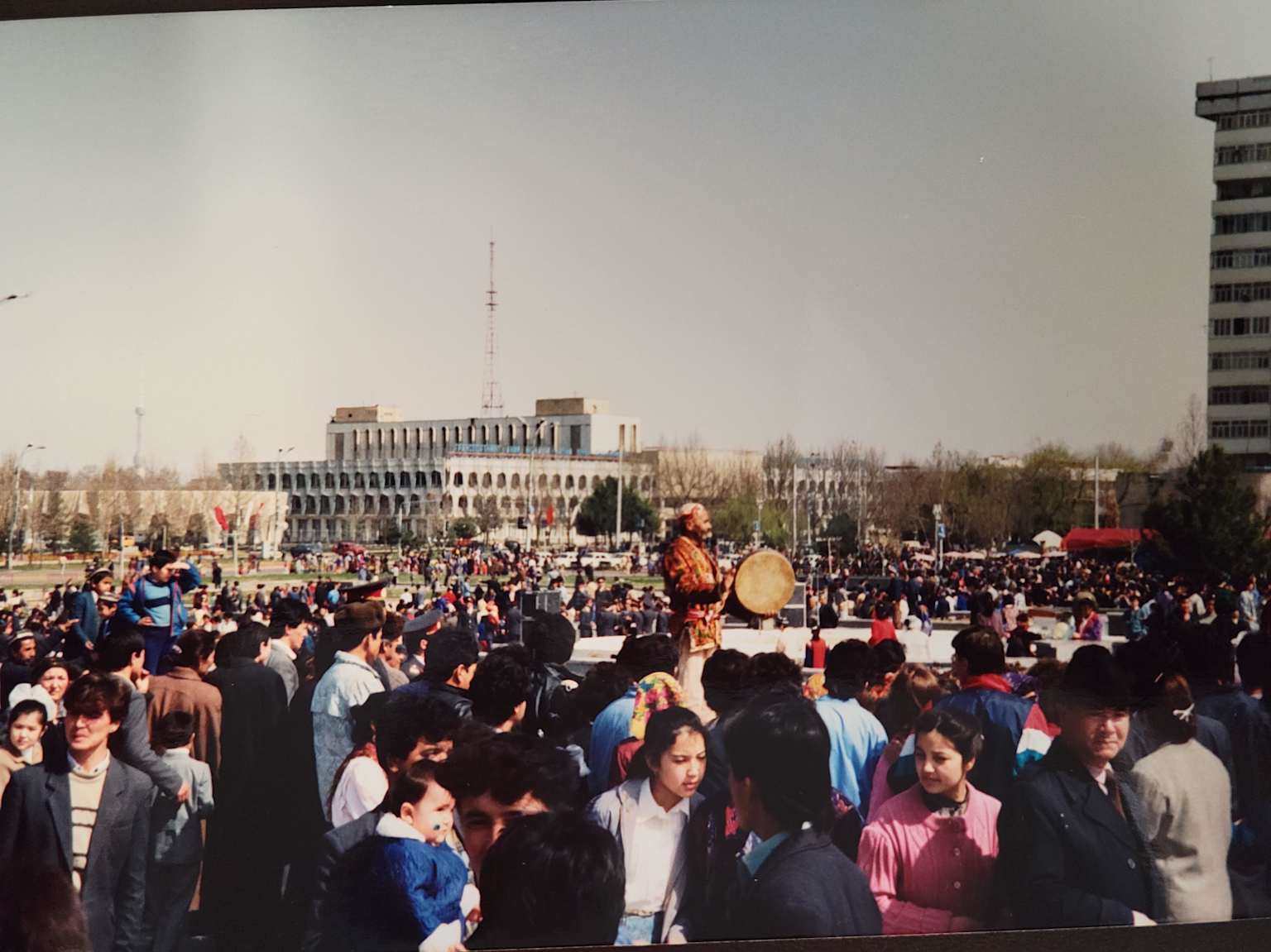
This institutional gap changed not only the way films were produced but also the very position of the person within the profession. The collapse of the former system became not only an economic but also a professional trial. The industry, technologies, and production rhythms changed, but the very principle of cinematographic thinking did not disappear. In other words, much in cinema changed—but not everything.
Over the past 15–20 years, cinema has changed significantly: production speed has increased, approaches have evolved, and digital technology has made the profession more technically accessible. But the most important thing remains the same: in every frame, the cinematographer must leave their own perspective, their own thought, their own understanding of the image. What distinguishes real work is not camera movement in itself, but the depth of visual thinking. The foundation of the profession is knowledge of painting, composition, light, form, and art history. Technologies change, formats change, but it is still the depth of perspective that distinguishes a true cinematographer.
Bahodir Yuldashev
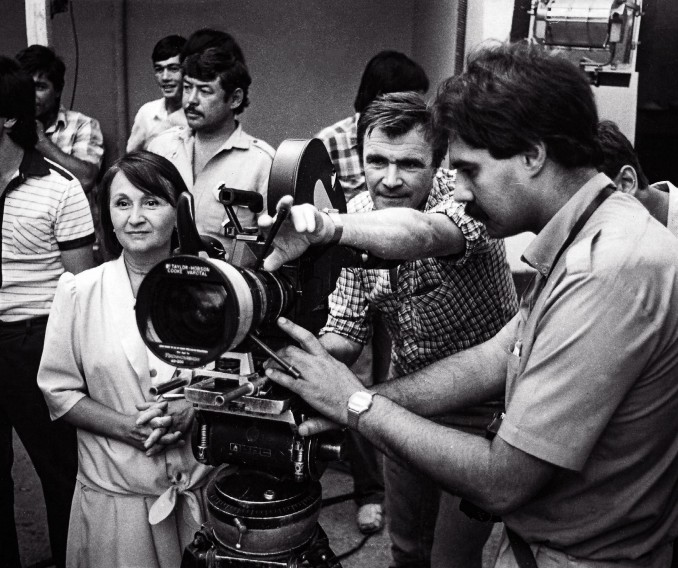
This is precisely where it's important to talk about the school—first and foremost, about that professional perspective which was shaped by the Soviet tradition. The Soviet legacy in cinema is not limited solely to the structure of the industry, funding, or crisis. It's crucial to understand what professional type of cinematographer the former school formed and what its internal philosophy consisted of. What exactly distinguished the Soviet tradition of cinematographic craft, and why do people still return to it today?
When I first entered the profession, I thought that the Soviet cinematography school lagged behind the West. But over time, I realized that in many ways, the opposite was true. Its strength was in the level of education: operators were required to have knowledge of literature, painting, and art in general. This formed a special intellectualism in the profession. Today, the industry has become faster and more pragmatic, and it is precisely this inner depth that it often lacks. Revisiting old films, especially Uzbek ones, I increasingly think about how beautiful they are, how subtly you can feel the art within the frame.
Ulugbek Khamrayev
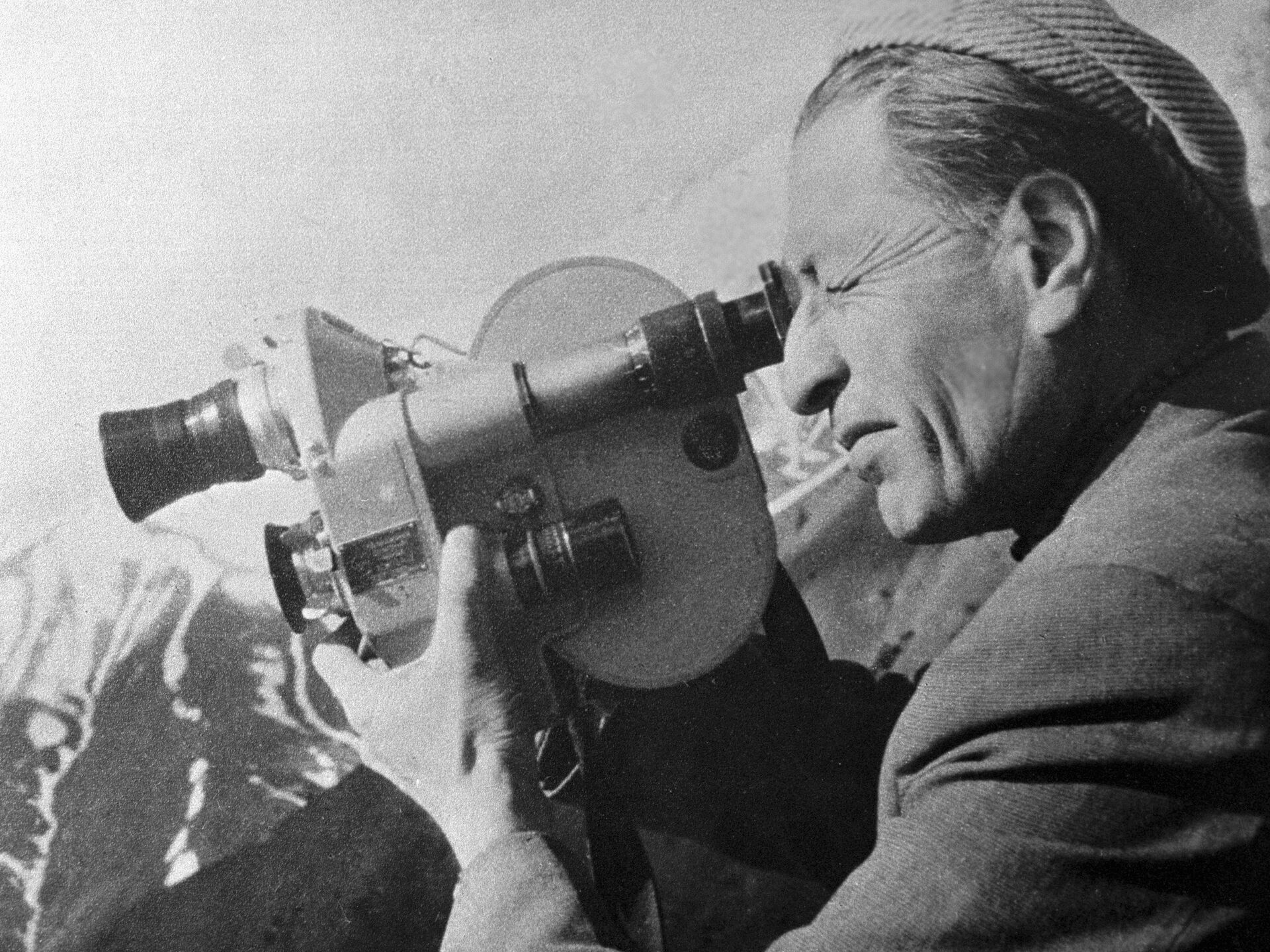
Is cinema a universal language?
Operator work is one of the key forms of cinematic language: it is through composition, lighting, angle, camera movement, and spatial organization that a story's impact on the viewer's experience is determined.
Cinema is a universal language. I have worked with filmmakers from a wide range of countries — I've been a director of photography, a second-unit cameraman, and even a third cameraman on international projects. And throughout all this time, I never once felt that somewhere they "make films differently." Yes, there are nuances — budget, team structure, technical capabilities. In Uzbekistan, a film crew might consist of 30–40 people, in Moscow — 80, and in Hollywood — 150–200. But that's a matter of scale and resources, not language. The cinematic language itself is the same everywhere. When I traveled to shoot in other countries and worked with a fully local camera crew, we had no barriers or misunderstandings. Because the principles of the profession are universal.
The difference only shows in the level of process refinement. Where the industry is developed, complex things are brought to automatism. For example, when we shot an action scene with a bus flipping over, for one of the crews it was their first such experience — we had to do numerous takes, analyze mistakes, and consider dozens of nuances. Meanwhile, a Hollywood company with the same technical task delivered a ready-made solution in just a couple of hours — simply because they do such scenes regularly. That's the difference — in experience, scale, and budget. But the language of cinema itself is one. And it is understood everywhere.
Bakhodir Yuldashev
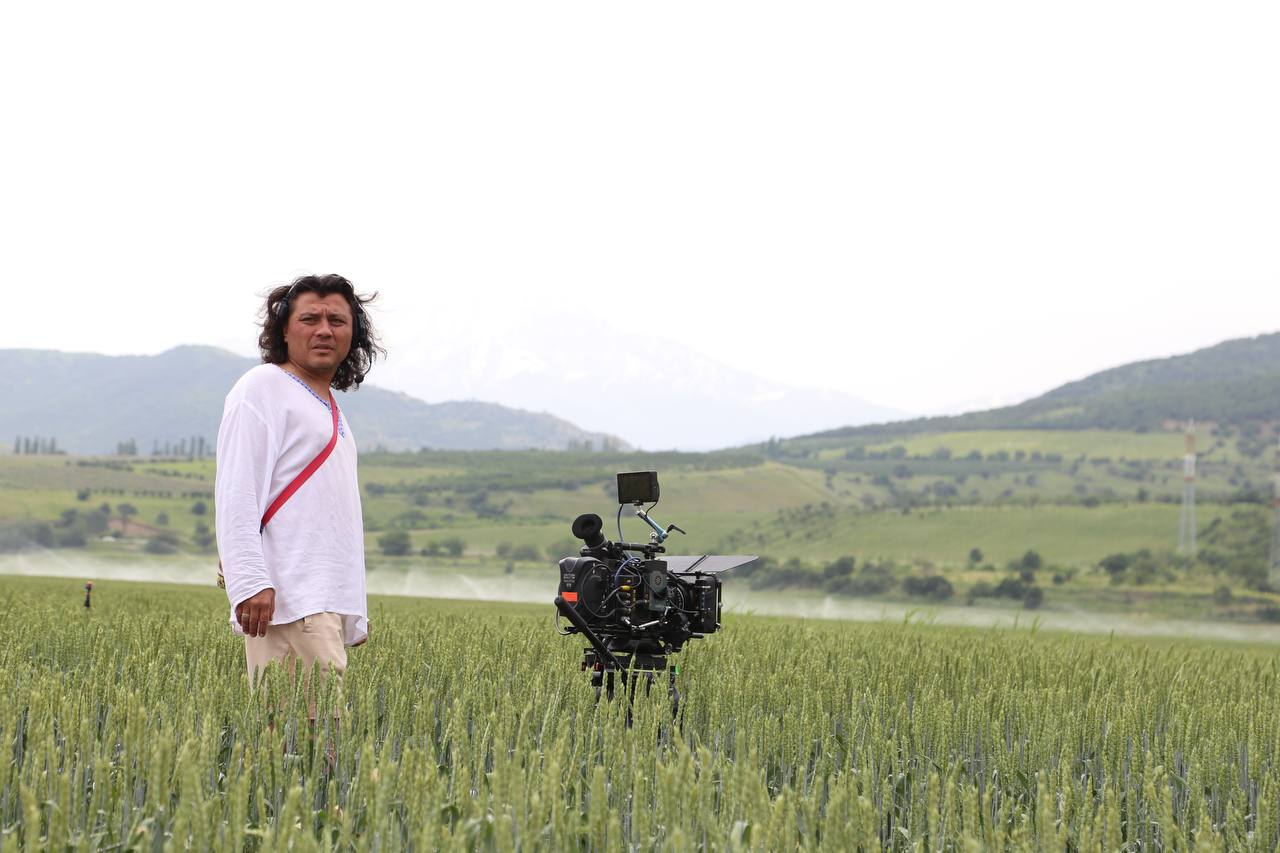
Genre as a Space for Freedom
We decided to explore the question of genre definition, as genre is precisely the space where cinematographic mastery is most clearly visible. The director is responsible for the dramaturgy and the overall statement, while the cinematographer is responsible for the form through which this statement becomes visible. The image must not only correspond to the logic of the story but also amplify its emotional tone.
It's easier for me to switch between genres than it is for a director; I have a bit more freedom here than it might seem.
Boris Litovchenko
Freedom is not limitless: the visual solution must remain within the film's logic and not conflict with the script, the actor's performance, and the mise-en-scène. At the same time, for the cinematographer, the differences between genres are not so much—or only—formal as they are psychological. шты
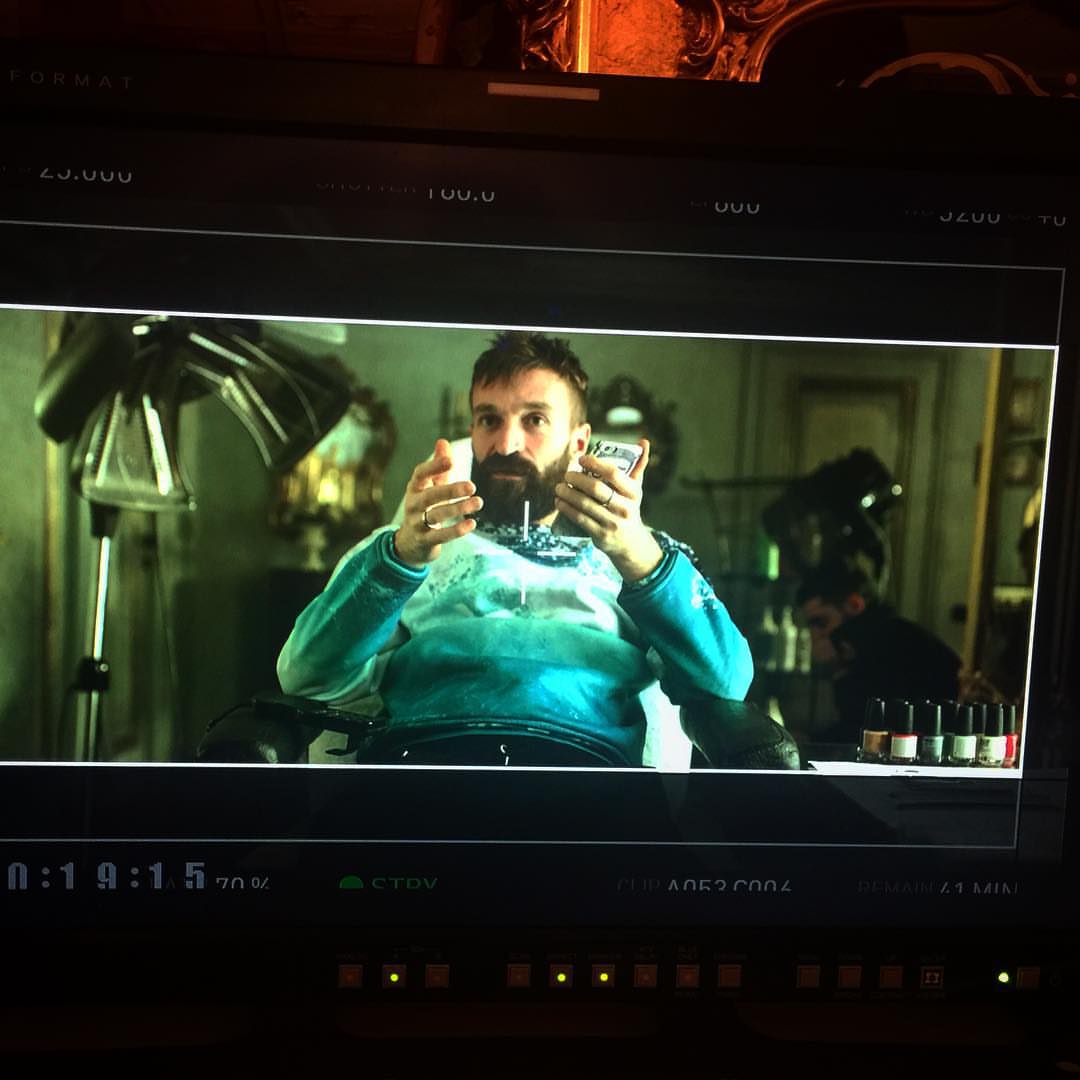
Genre rules are not dogma. They can be broken, but only when it is justified by the material itself. As Boris Litovchenko notes, the image does not exist separately from the script: if the visual style does not grow from the text, it begins to work against the film. As an example of such a conscious violation of genre expectations, one can recall Ari Aster's "Midsommar" — a horror film in almost blinding daylight clarity.
It's clear that a comedy where you can't see anything, like in a horror film, is unlikely to work. We once tried to borrow Wes Anderson's visual style but realized it simply didn't suit our script. His films are written in such a way that the imagery organically grows out of the text. With comedies, I think there are slightly more constraints. Because cinematographers still love light, contrast, atmosphere. And in a comedy, you often need to convey lightness, joy. And sometimes that seems a bit boring to me—perhaps simply because I'm not very good at doing it. I have a romantic comedy that I really love—"Loves Me, Loves Me Not."
We filmed it in St. Petersburg, Paris, and Moscow. Back then, I leaned more towards drama and was even a bit dissatisfied that I was making a comedy. But now, rewatching it, I realize it was great. You always start from the script, from the actors' behavior, from the scene. It's just that when you convey pain, drama—you feel more, think more, doubt more. Comedic techniques are largely more straightforward. In any case, there is a "bible"—the script. And you still start from it, from the actors' behavior, from the scene.
Boris Litovchenko
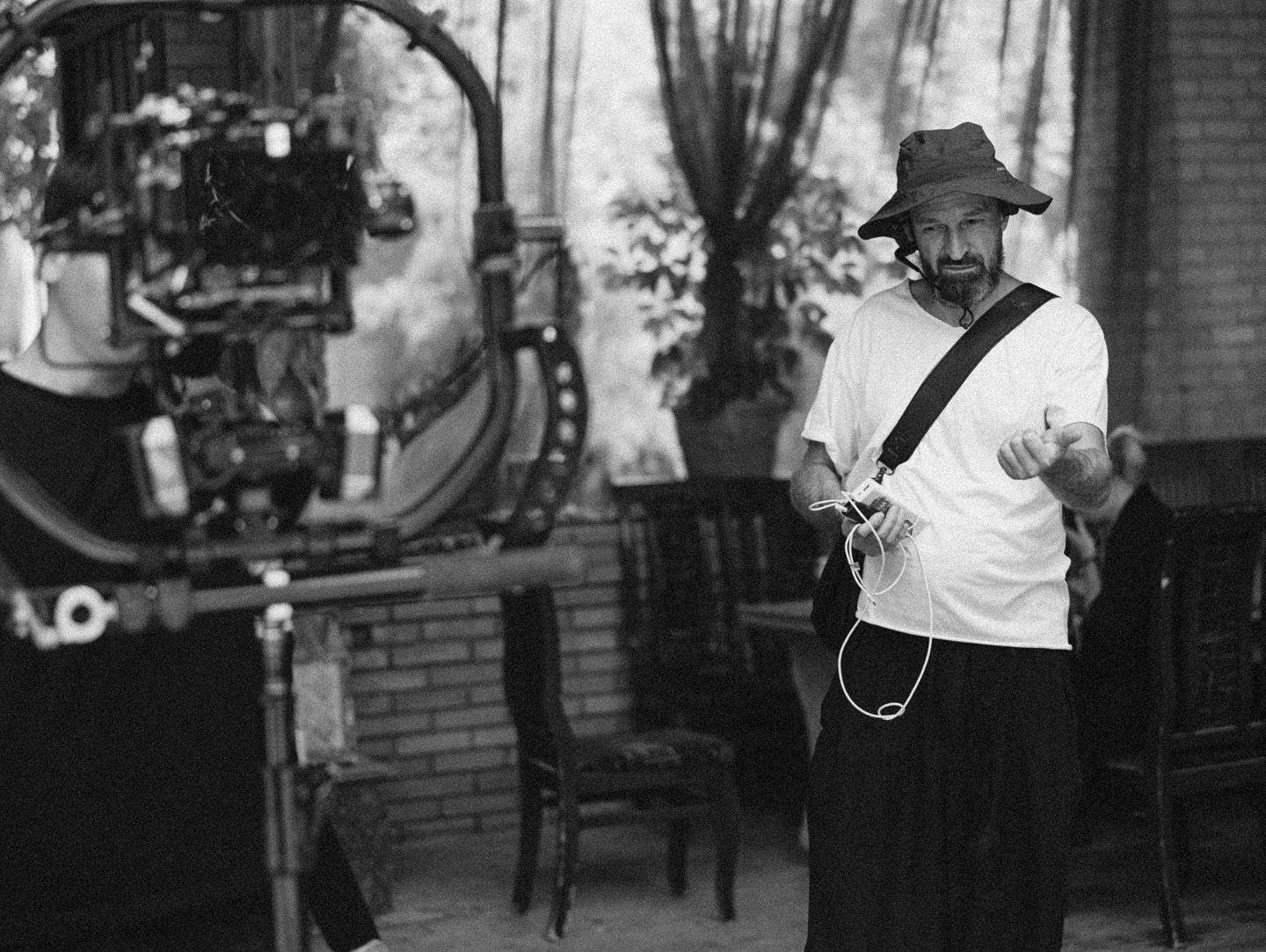
The Era of Series
Bakhodir Yuldashev is known for his work in the serial format. We wondered: what is the difference in such specificity:
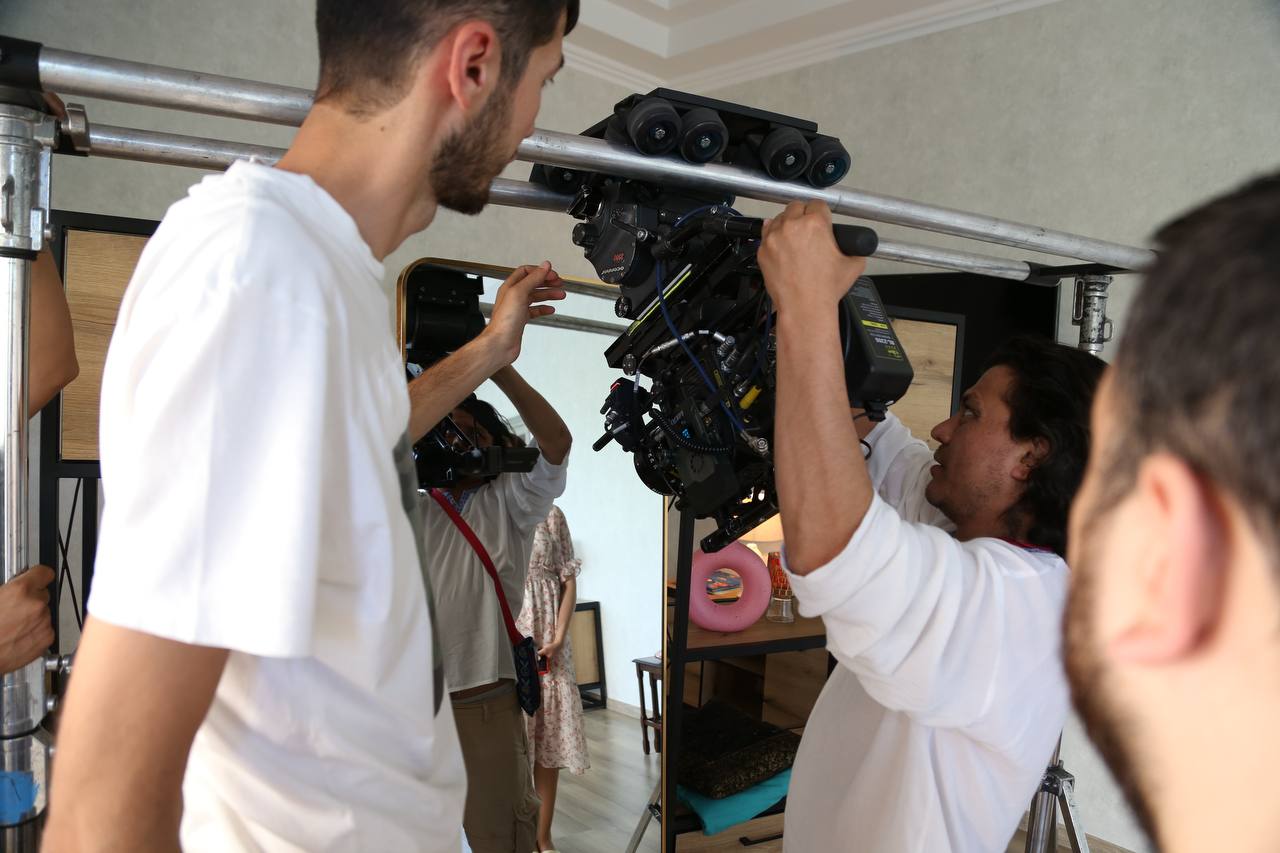
Working in a serial format teaches discipline. From a performance standpoint, it's an accurate assessment of one's own capabilities. You stop "reaching for the stars" and start to clearly understand what you can realistically accomplish on a specific filming day. Time pressure arises when there is no preparation. If you're on set scratching your head and wondering what the next shot will be, you're already late.
Bahodir Yuldashev
Working in tandem with the director
The history of cinema knows many tandems where the director's style is inseparable from the cinematographer's vision. Jean-Luc Godard and Raoul Coutard together shaped the visual language of the French New Wave; Mikhail Kalatozov and Sergei Urusevsky radically expanded the expressive possibilities of Soviet cinema; Ingmar Bergman and Sven Nykvist perfected the psychology of light and the close-up.
I start everything in pre-production. I demand from the director and the team to remove unnecessary elements from the script while it's still on paper. Everything that can be cut must be cut beforehand. Fluff is lost shooting time. Next comes blocking, the top-down scene diagram, understanding the exact number of shots needed for editing. I immediately assess: are we on schedule or not. If not — I honestly tell the director. We sit down and choose the essential. I always have a "minimum program" and a "maximum program." First, the minimum is shot — the most crucial shots, without which the scene doesn't work. If time remains — we move to the maximum. This way, speed stops being the enemy and becomes a tool of discipline. The main thing is that by the end of the shift, the episode is in the bag.
Bahodir Yuldashev
Systemic Problems and Crisis of Ideas
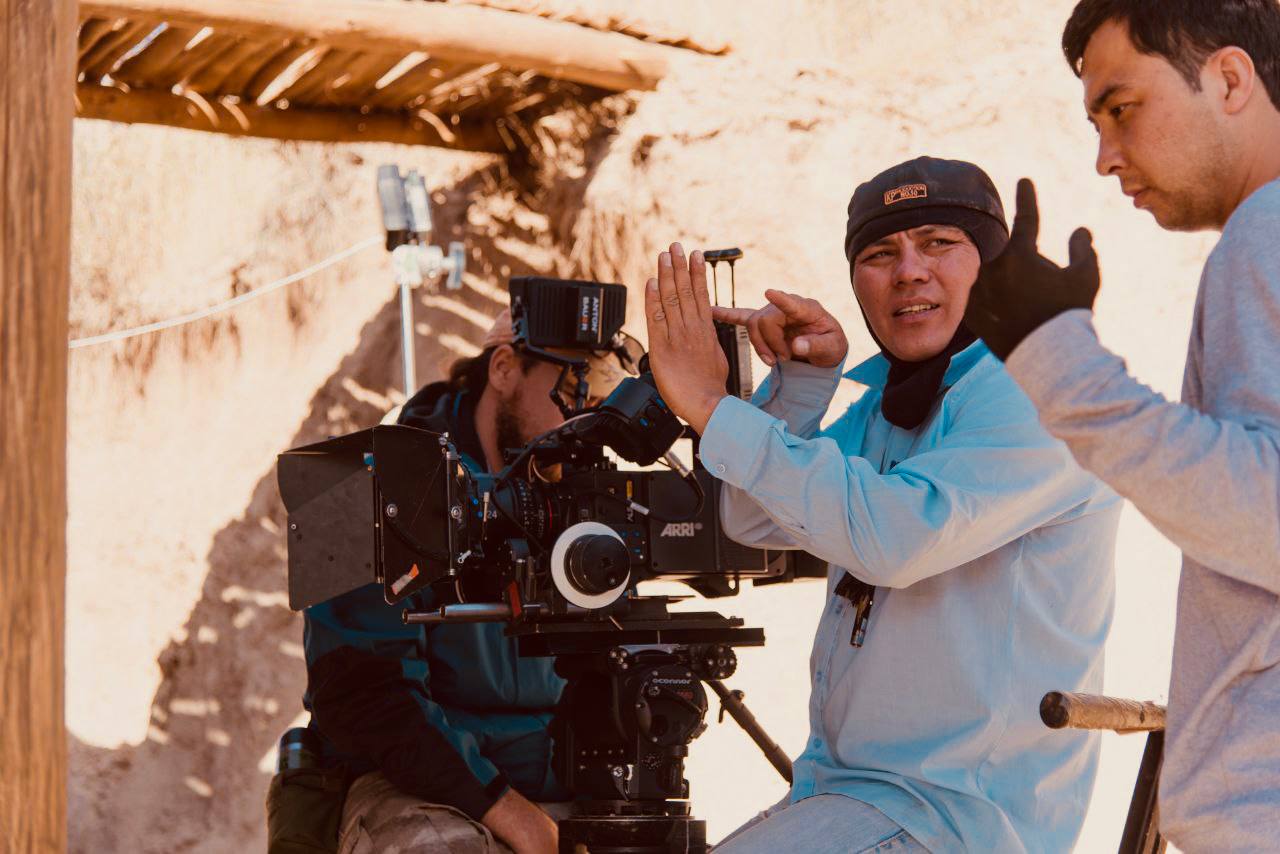
In the cultural sphere, as is customary, there are constant limitations that hinder individual creators in particular and the entire process in general. The problems can be roughly divided into ideological and practical: the former include more ephemeral issues—the difficult and not entirely clear path to gaining visibility and reaching a larger audience with one's message; the latter category includes very concrete difficulties, the main one being budget.
Any discussion about cinema immediately comes down to resources. In this very specific limitation, one can envy writers and artists, as their ideas are realized with minimal costs, and their flight of fancy is not constrained by the availability and expense of technology.
In conversations with our heroes—people whose work is directly related to technology and expensive equipment—the interviewees do not avoid these nuances. We are unlikely to surprise our reader with the idea that the main barrier in the industry is the budget, but this is a reality we cannot avoid addressing.
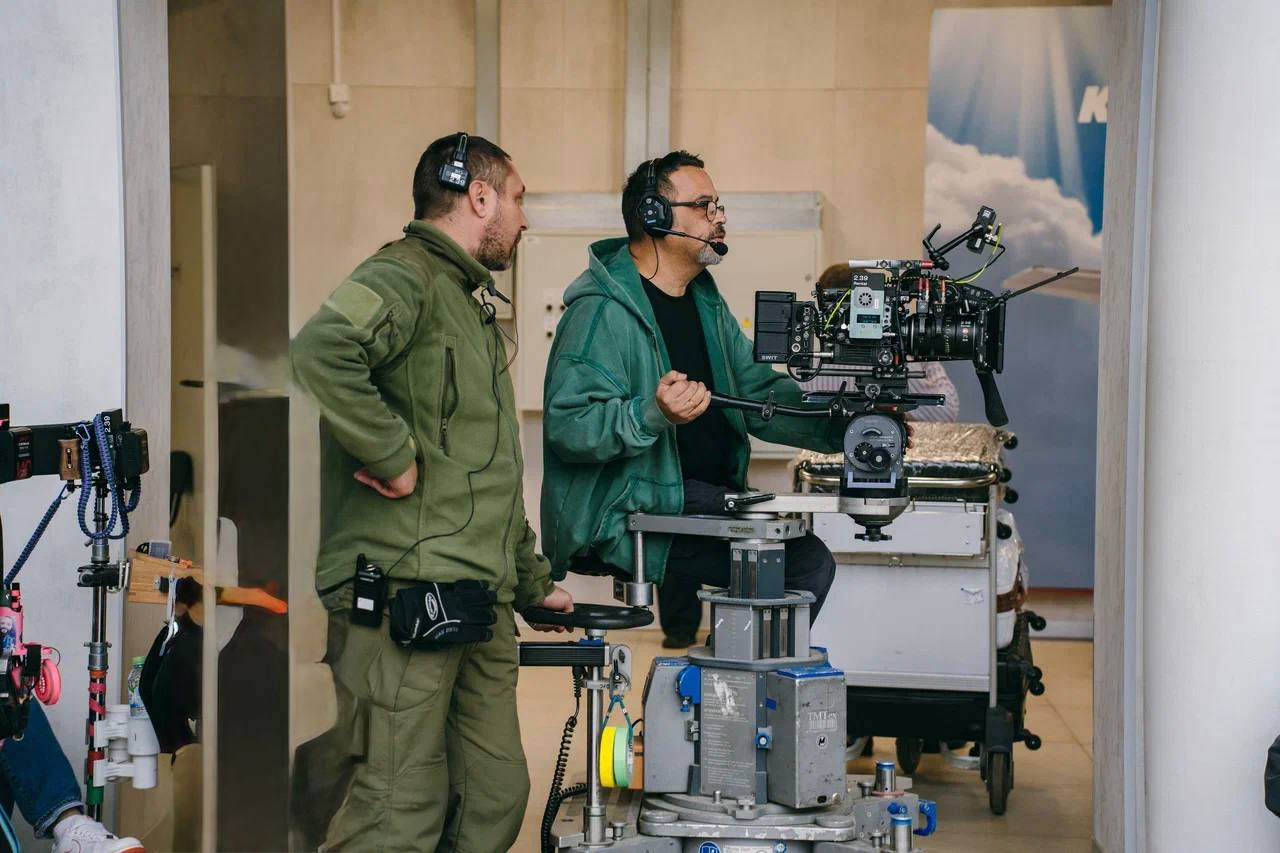
The main difficulty is the budget. The director and cinematographer always want uniqueness. But as soon as it comes to technical implementation, the producer often says "no." And if a complex shot is not backed by the resources, I don't shoot it. Because attempting to realize a serious idea with makeshift means often turns into a pathetic parody. This does not strengthen the film or enhance the portfolio. It's a compromise for the sake of an illusion. I made a rule for myself: if a technical solution is not approved — there will be no shot.
Ulugbek Khamraev
The main limitation in cinema is money. I've never had a single film without financial problems. Even films with huge budgets. I know people who filmed a movie in space — and even there, there were money problems.
Boris Litovchenko
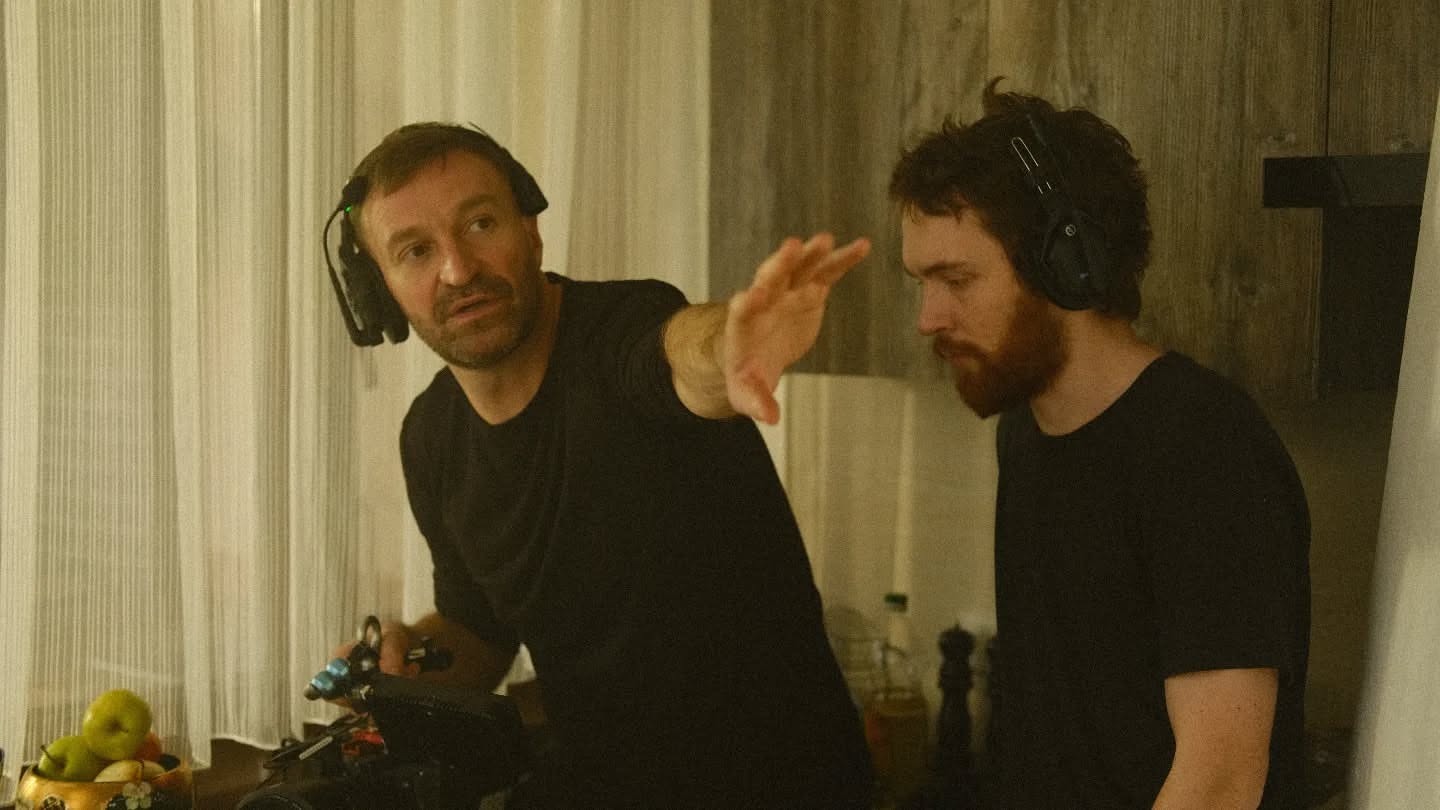
However, another problem appears no less alarming than budgetary or infrastructure constraints—the crisis of ideas. The history of art has repeatedly shown that external pressure, censorship, and social unfreedom can restrict the artist, narrowing the very space for expression. One can endlessly debate whether stronger art is born in difficult times or, on the contrary, it merely loses in freedom and depth; there is no definitive answer to this question. Baqodir Yuldashev speaks about ideological bankruptcy and problems with script development.
The second major problem is related to screenwriting. Over the years of work, I've noticed that stories have become impoverished. Poetic, profound scripts have become much rarer. An author draws material from the surrounding world. And if there is less poetry in life, less inner depth—this is reflected in the scripts as well. There becomes less space for artistic takeoff. Therefore, today a cinematographer faces not only budgetary constraints but also a limitation of the dramatic field. But despite this, the profession remains alive. As long as there is a story that needs to be told through imagery, the cinematographer will seek a way to do it honestly and accurately.
Bakhodir Yuldashev
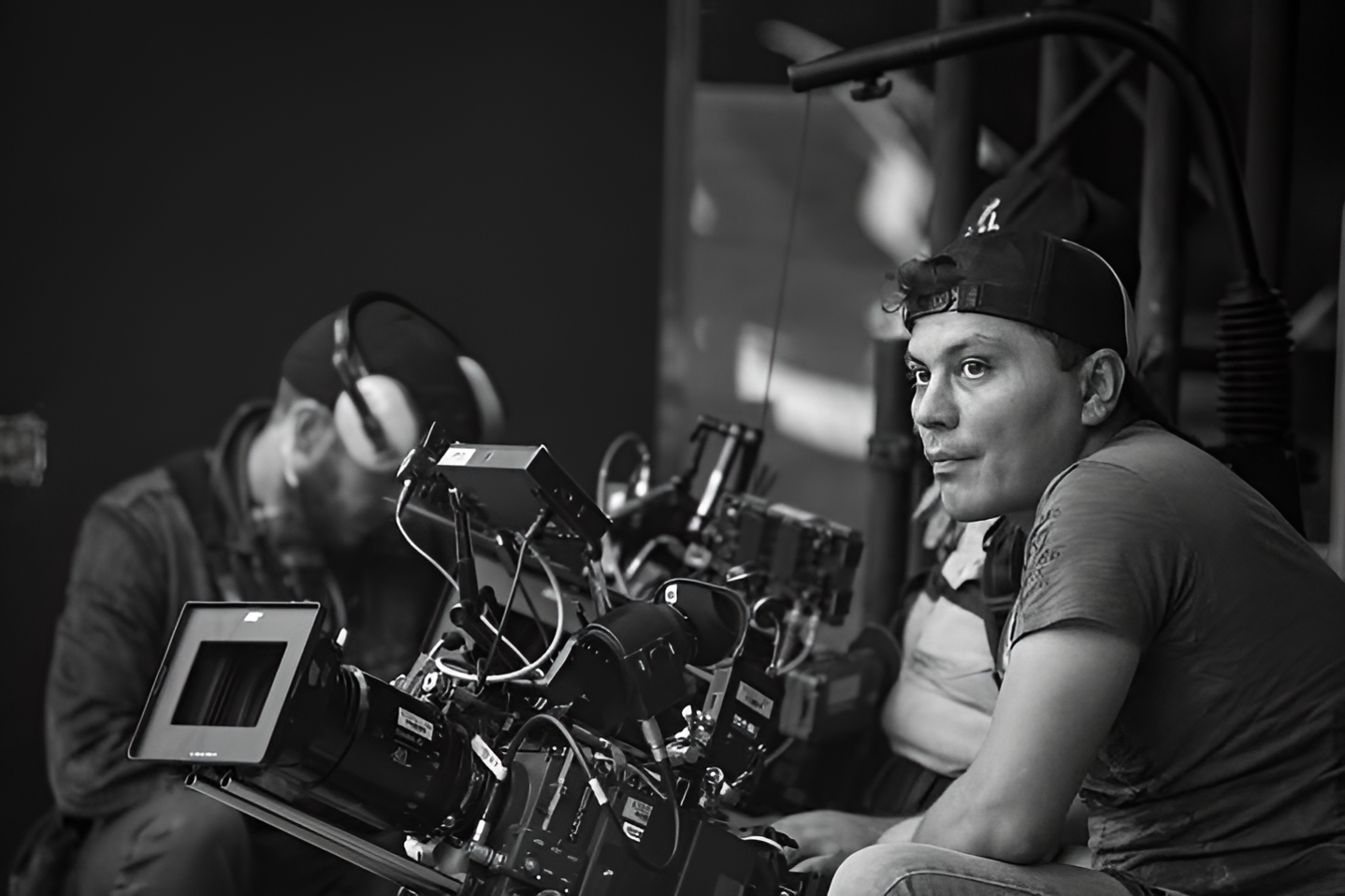
As Boris Litovchenko notes, a scene can be shot in many ways, but the main thing is to "hit the right emotion": this is precisely where directorial dramaturgy and cinematographic form converge.
Statistics on movie theaters: representative and not very encouraging
Even basic statistics here sound quite eloquent. The State Statistics Committee of Uzbekistan provides two key figures in various publications: 99 cinemas at the beginning of 2022 and 76 cinemas as of January 1, 2023. As of January 1, 2023, the country's permanent population was 36,024,946 people, so even without additional calculations, it is clear that the film exhibition network remains extremely sparse. For comparison: the French CNC counted 2,061 active cinemas and 6,298 screens in France in 2022.
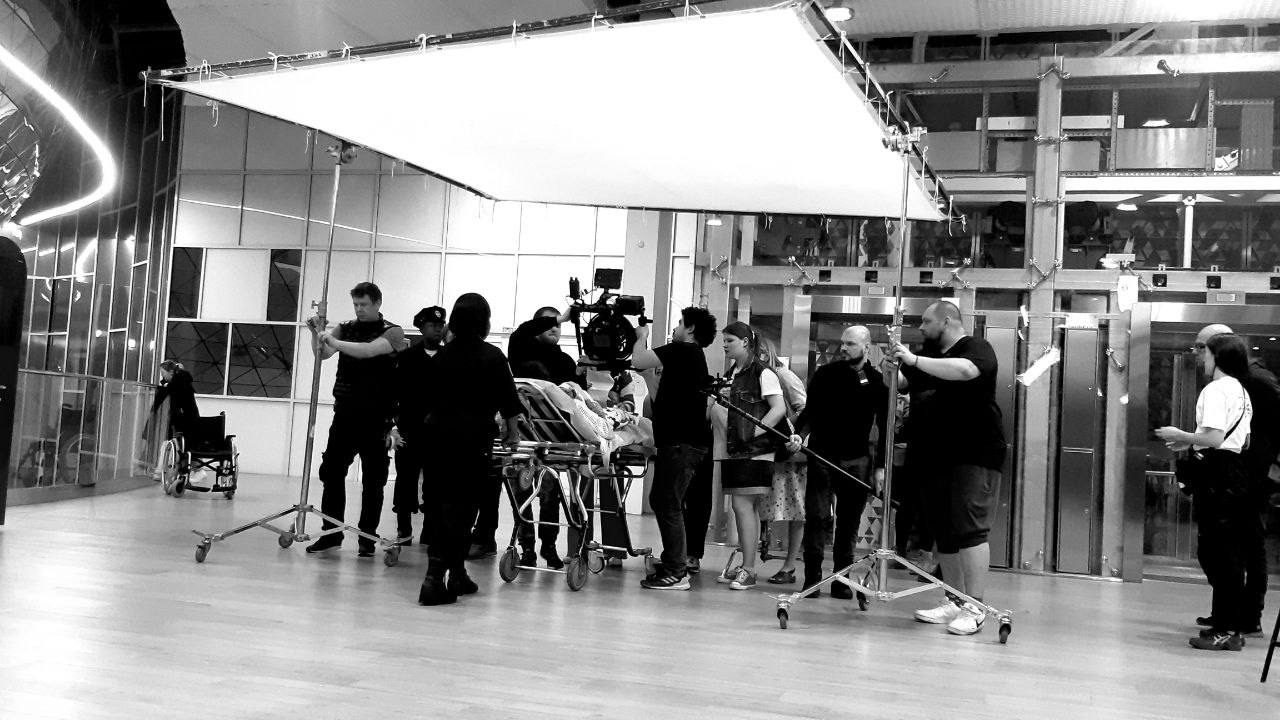
There is potential. But there is a systemic problem — infrastructure. When there are few cinemas, it is unclear where a film will live after it is made. And without this, the industry itself cannot develop: even a weak film should have a chance to meet its audience.
Boris Litovchenko
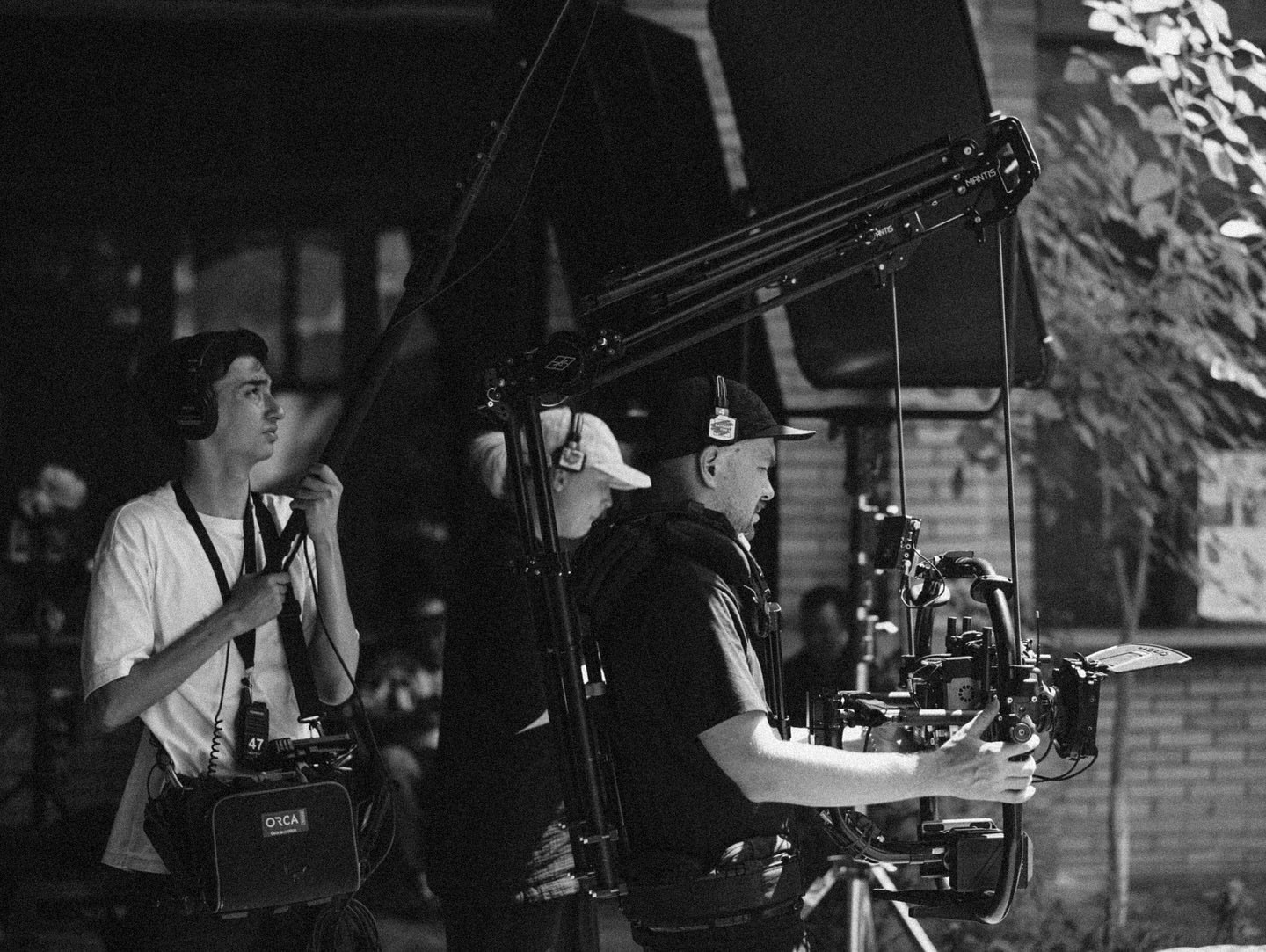
This leads to the next point: the industry is not enough to simply produce films — it needs an environment where they will be discussed, receive feedback, and re-enter cultural circulation. This is not just about theaters, but also about pavilions, festivals, film clubs, educational initiatives, and a sustainable audience habit.
More films need to be made, and they need to have some kind of feedback—if not financial, then festival-related. Then, perhaps, the state will take a closer look at the structure itself. And, of course, it's important that young people not only want to make films but also watch them. That's why film clubs, lectures, and any spaces for discussion are truly important here.
Boris Litovchenko
This feeling echoes the observations of Ulugbek Khamraev, who speaks about the systemic problems of Uzbek cinema in a much broader sense — as problems of the environment, rather than of individual specialists:
When it comes to the problems of cinematographers, in reality, there are no separate cinematographer issues. These are the problems of the entire industry. The industry has very few professional managers and producers. And this affects everything—including the work of cinematographers. There is no distribution system, no sales system, cinema practically doesn't earn money.
Ulugbek Khamraev
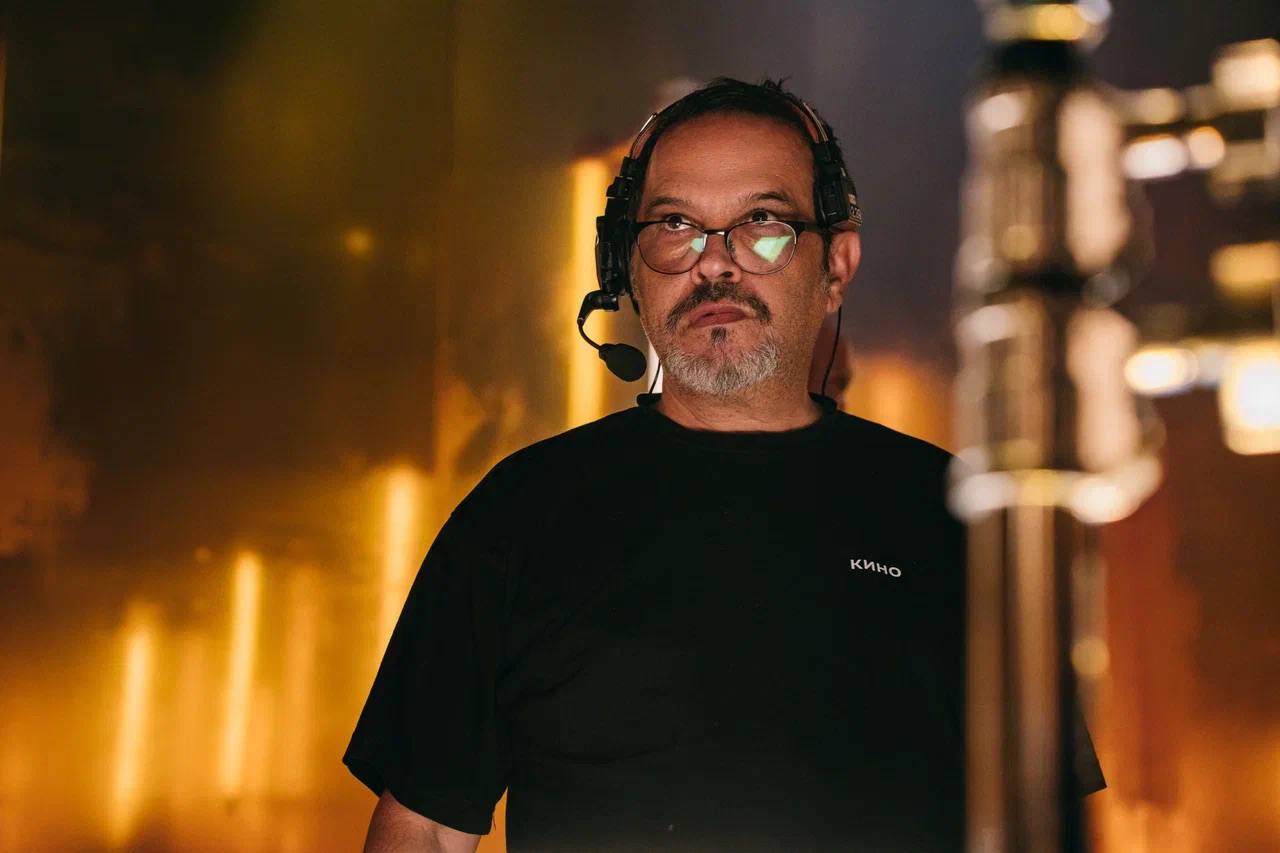
In this sense, the conversation about movie theaters turns out to be broader; it comes down to the question of cultural infrastructure as a whole: does cinema have a place in urban life, does the audience have a habit of watching it outside of streaming, and do young creators have a sense that their work could be addressed to someone?
About the specifics of working in Uzbekistan
Boris Litovchenko describes his experience in Uzbekistan as working in a more intimate, less predictable environment.
I filmed two movies here. One is "Pakhta" with Rashid Malik. Everything here is a bit different. More intimate, more technical limitations. But honestly, I love such conditions. It's just that lately I've gotten a bit out of practice with them. Sometimes it's useful when something is missing. That's when imagination kicks in. When you have experience, you know: to get this kind of result, you need to do this and that. But when half the tools are missing, you start looking for other solutions. And through that, you grow.
In Uzbekistan, I didn't interact much with local film crews, but I had a wonderful production designer — Bekhtosh Radzhabov. He and I existed on the same cultural wavelength because the story was very Uzbek, the action unfolded in a village, and he immersed me deeply in that world. We walked a lot, he showed me details, textures. I was very worried because I knew nothing about that environment. And it's in poor homes that you begin to understand how people live: what colors surround them, what objects. I took a huge number of photos. Sometimes you enter a house — and there's a composition that no artist could create on purpose. People just hung basins, bags, curtains — and it becomes an incredible visual composition. Completely random, but very alive.
Now I've finished another film, 'Uroboros' by Tatyana Lyutaeva. It's a complex drama about lovelessness. There was a different production structure. We brought a designer from Berlin. The director is my friend Tanya, she now lives in Spain. The main heroine came from Europe. But in Uzbekistan, we found an absolutely brilliant girl for the main role. We brought part of the team: a gaffer, a second cameraman, a mechanic from Kazakhstan. But I got the feeling that cinema here exists somewhere separately. There are advertising platforms, music videos — that's one industry. But cinema seems to be hidden.
Boris Litovchenko
Tips, school, opinion
It's clear that shooting commercials and music videos is popular now—there's quite a lot of money in it. Especially if you're just starting out, you can quickly get into a certain league if you have good taste. But film is a bit different. It requires different knowledge. Although nowadays you can read, listen, and watch about it. I'm generally in favor of finding your own director or cinematographer early on—someone whose way of thinking you like. And just shoot together, grow together. And not chase scale. For example, I spent a lot of time wanting to make a big film right away. But it came not when I wanted it to. It's cool that such young guys who work in commercials and music videos, like Abdouvaliev Bekzod (founder of Abstract Visuals), are confidently moving towards starting to make films—regardless of the overall structure. I hope they will be successful in all these endeavors. It will somehow shake up the routine we're in right now.
Boris Litovchenko
Conclusion
In this article, we wanted to briefly peek into the cinematographer's workshop. Cinema possesses a special magic. If you find yourself with someone who is in this business, you can be sure you're dealing with a fanatic, and that is undeniably captivating. The cinematographer's craft occupies a complex position. On one hand, cinema is becoming more democratic—almost everyone has a camera in their pocket better than professional cameras from twenty years ago. On the other hand, the demands for professional results are only increasing. It may seem that technology is killing craftsmanship, but in reality, it is making it more complex.
Optimism and faith that the profession and industry will not disappear are based precisely on this: equipment is becoming more accessible, but the ability to see, think, notice, feel, and transform an image into a statement remains a rare quality. The simpler the tool becomes, the more noticeable the difference between "a person with a camera" and a cinematographer.