
The editors would like to thank historian Madamin Madaminov, Head of the Museum of the “Academy of Mamun” at the regional branch of the Academy of Sciences of the Republic of Uzbekistan, for his expert consultation.
Every people tells its own story of origin. The people of Khorezm believe they were born from the very element of Lazgi. What kind of dance is this, one that has survived multiple civilisations, repeated changes of religious paradigms, and the collapse and renewal of Eastern empires, yet remains so
full of life and vitality?
As early as the fifth century BCE, Herodotus wrote about a people living in the lower reaches of the Amu Darya who danced from dawn until dusk. Yet Lazgi did not gain recognition beyond the region immediately. It achieved wider fame only with the emergence of a national dance school and the development of stage performance. Having moved, as journalists often put it, from the khan’s palace to the professional stage, it made a powerful impression. In less than a century, it evolved from an archaic tradition into a national and regional symbol, a pinnacle of folk art, and a recognised element of UNESCO’s Intangible Cultural Heritage. It was only in the mid-twentieth century that the great
Komiljon Otaniyozov gave Lazgi its “voice” by adding lyrics to a traditional melody and laying the foundations of the Khorezm vocal tradition.
What is Khorezm?
To understand the origins of the dance, we need to look at the land where it was born and developed so powerfully.
Khorezm is one of the most ancient states in Central Asia, known for its formidable mud-brick fortresses,, fearless warriors, and beautiful women. It is the birthplace of Zoroastrianism and a center of an advanced ancient civilization.
The Khorezmian people were shaped by a harsh climate and unforgiving conditions. Situated in the lower reaches of the Amu Darya, which divided the desert lands, Khorezmian civilisation adapted to the severity of its natural environment.
 Source: Press Service of the Uzbekistan Foundation for the Development of Culture and Arts
Whoever came to Khorezm had to accept its conditions. The Amu Darya, which sustained all life and allowed the oasis to flourish, constantly changed its course. By building numerous canals along its valley, the inhabitants developed close social ties and maintained strict discipline to sustain their way of life. Dependence on this single source of life, along with the power of the sun, shaped the conservatism of some of Khorezm’s oldest customs.
The Origins of Lazgi
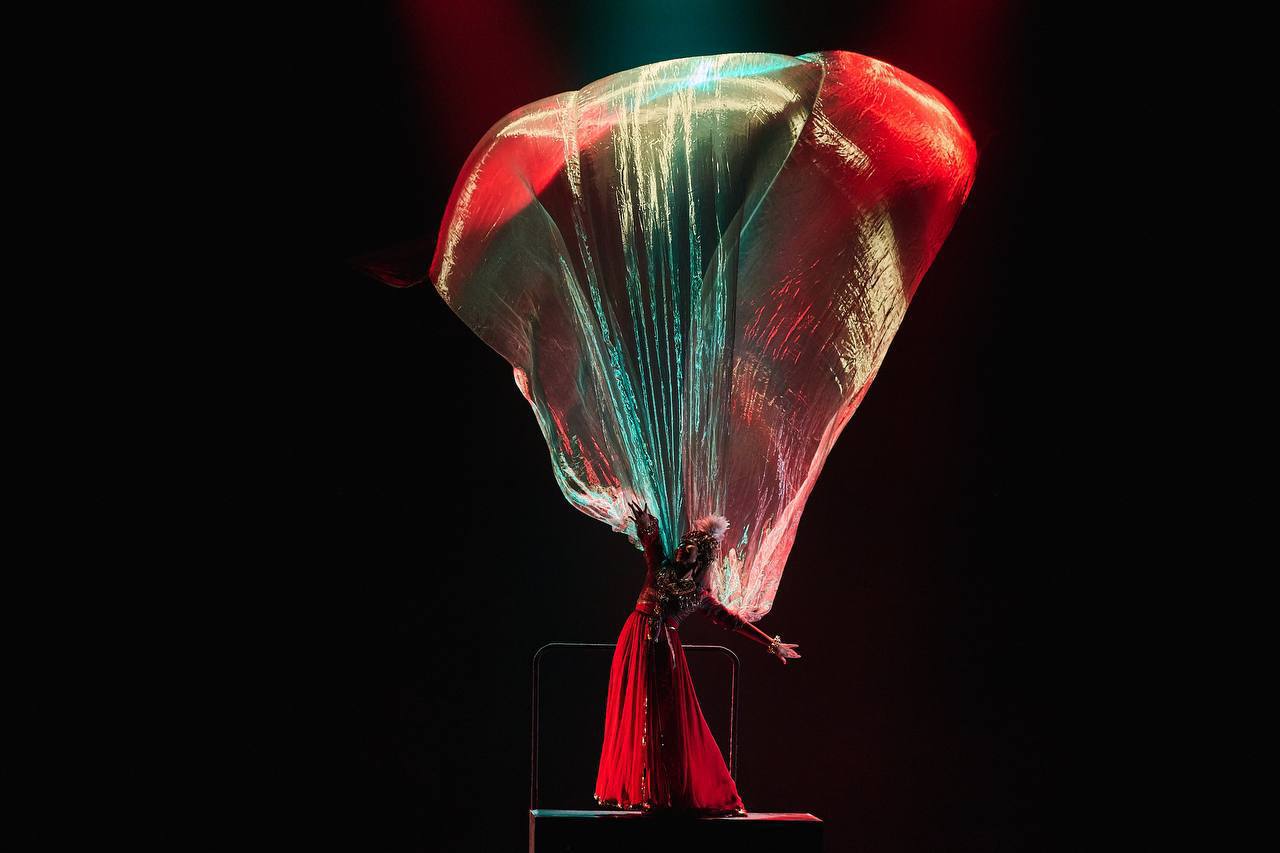
In its earliest form, this Indo-Iranian dance was built around choreographic elements depicting the hunt. Later, with the rise of Zoroastrianism, it became infused with religious meaning. Priests used staged scenes of the soul entering the body to explain the nature of existence to mortals.
One of its central elements was the depiction of flickering fire, the primary divine force. This is why Lazgi is still referred to as a “dance of fire,” reflecting the vitality of this element. The power of the sun, or fire, appears as a key attribute in many ancient dances across cultures, often linked to rituals intended to ward off evil spirits.
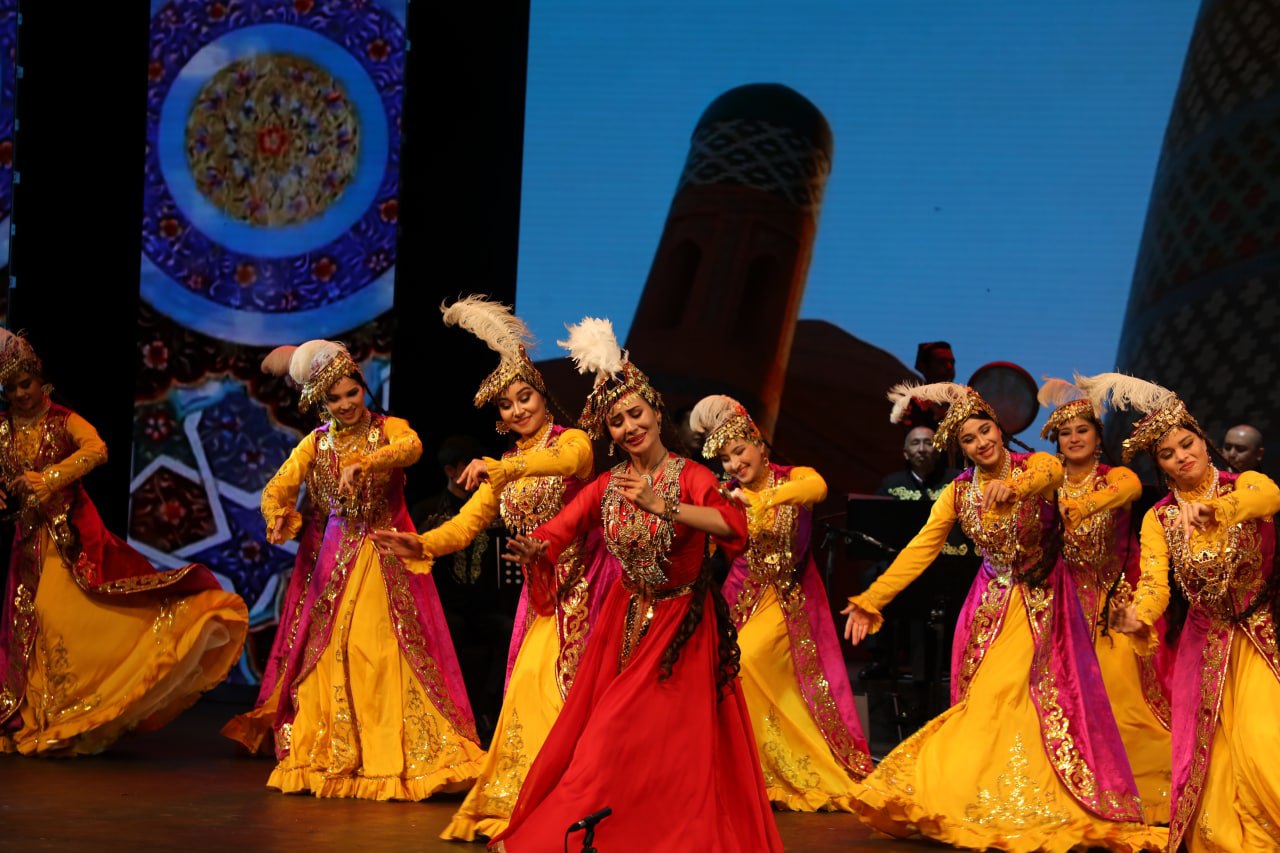
Originally connected to spring celebrations among Iranian-speaking peoples, the dance gradually became associated with Nawruz, the Eastern New Year. With the arrival of Islam, the interpretation of many of its elements changed. Over time, Lazgi accumulated layers of myth and reinterpretation, yet its essence remained intact.
 Source: Press Service of the Ministry of Culture of the Republic of Uzbekistan
Echoes of this dance can be found in Iran, Azerbaijan, and across the Caucasus (the lezginka, with its Russian suffix, shares a common origin). Its core elements are saber swings and the stomp of horse hooves, which in ancient times were part of rituals venerating air (wind), the sun (fire), and the earth. The element of fire is contrasted with the element of water.
Echoes of this dance can be found in Iran, Azerbaijan, and across the Caucasus. It shares common roots with what is known as the Lezginka (with its Russian suffix, the term reflects a shared origin). Its core elements include sword swings and the stamping of horse hooves, which in ancient times formed part of rituals dedicated to air (wind), the sun (fire), and the earth. Fire, in turn, is set in opposition to water.
What sets Lazgi apart from other dances
Lazgi, sometimes spelled “lyazgi,” is an intensely theatrical and sensual dance. It combines dramaturgy, parody, and a dense layer of symbolism. Khorezm Lazgi has little to do with Eastern notions of modest restraint. In contrast to the more controlled Fergana style, it
contains a great deal of “Gypsy-like” energy and unrestrained expression: trembling through every fibre of the body, play and flirtation, an open declaration of desire, and festive frenzy.
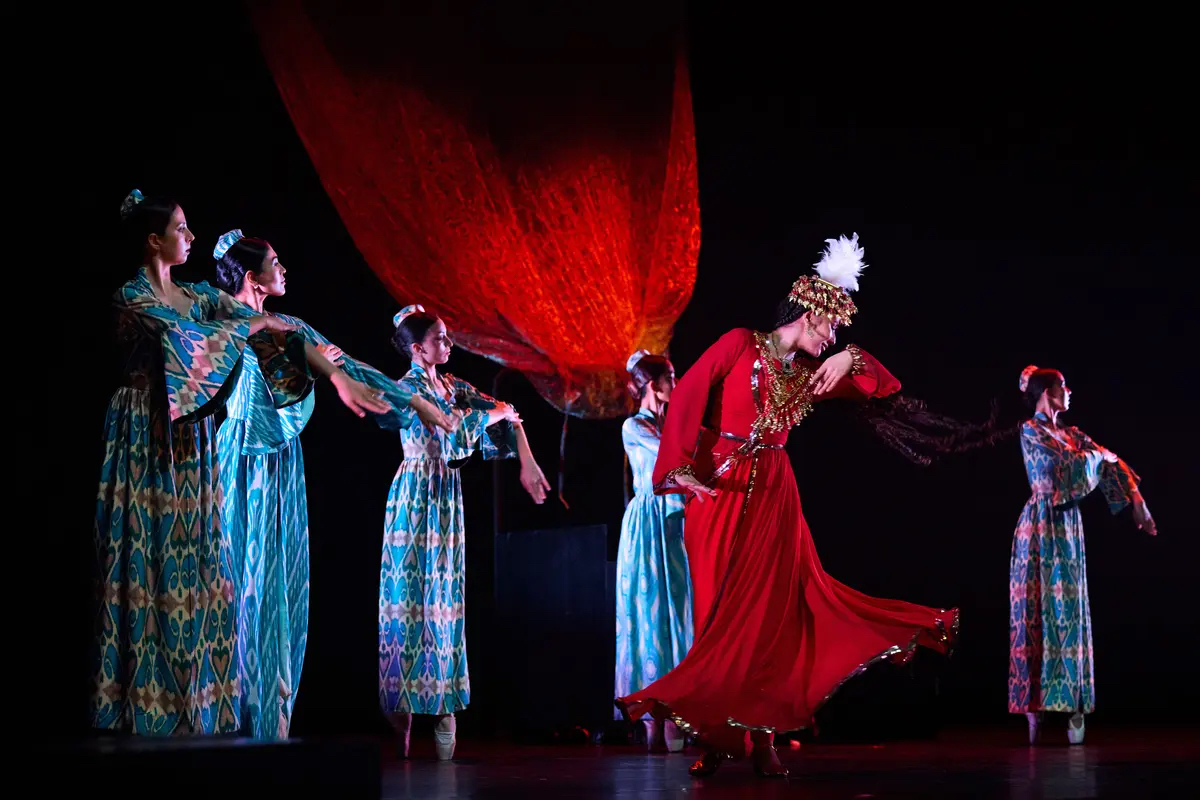
The movements of classical Lazgi are highly varied and intensely expressive, each carrying meaning. The dance often begins with a subtle trembling of the fingertips and quick, vibrating hand movements. Characteristic elements include shaking of the shoulders and head, sharp arm gestures, flowing movements of the torso, uneven steps, and leaps. In one gesture, the dancer appears to gather sunlight and draw it into the heart.Different forms of Lazgi include mimetic elements, imitating birds, animals, natural phenomena, and even physiological processes, alongside playful or provocative gestures.
The lyrical aspect emerges in certain recognised forms of Lazgi, of which there are officially nine. Both men and women perform it, although women dancers were only formally introduced to wider audiences in the early twentieth century.
In male performance, it takes on a martial quality, with strong, advancing movements. In both cases, temperament and facial expression are essential. What defines Lazgi above all is its rhythm: it begins slowly and gradually intensifies, symbolising awakening life, energy, and creation.
Originally, Lazgi was performed to percussion instruments. The sharp, stone-and-iron clang of the kayraks sets its rhythm. Music itself is not essential. The use of these castanet-like stones is linked to Zoroastrian beliefs in the eternal struggle between good and evil, with their sound believed to drive away malevolent forces.
 Source: Press Service of the Uzbekistan Foundation for the Development of Culture and Arts
World Heritage
The Khorezm school differs from the other two main schools of Uzbek dance not only in its music and tempo-rhythmic system, but also in its choreography, where the entire body is in play (in contrast to the static legs of Fergana and Bukhara dances). And, of course, in the dancer’s temperament and delivery. It is often said that no one can feel Lazgi like the people of Khorezm. Beyond knowledge of the local school, one must be immersed in these rhythms and in this worldview from childhood. Always ready for change, always celebrating life, worshipping the forces of shifting nature.
...The heat caresses the skin, the air is heavy with sweetness, and the stars shine with unusual brilliance. Beyond the fortress walls stretches a breathless desert, concealing danger... In the absence of lush vegetation, the dancer draws intricate patterns with her body, showing how life flows through it and how the human being is bound to nature, where the life-giving sun reigns supreme. She trembles, she reaches upward, she reveals how energy runs through every joint. She seduces and parodies. She is part of the flow of vital force; she is its flute.To understand Khorezm dance is given to anyone willing to see the essence of things as they have been since the dawn of time. But to perform it…
Independent Uzbekistan honours the traditions of its regions, but the Khorezm dance has long become part of the national heritage. Several years ago, the International Lazgi Dance Festival was established, bringing together professional dancers from around the world who share their skills and receive honorary awards. It is held in Khiva from 25 to 30 April, now for the third time.
And what a remarkable example of the resilience of tradition. Having survived the succession of several civilisations, the decline of paganism and Zoroastrianism, and the strict prohibitions of Islam, Lazgi continues to call on us to rejoice in life, to desire and to celebrate it with every part of the body, every joint…


