
One project to attract them all
When discussing the urban environment, many think about seismic stability, commercial viability, and convenient infrastructure, but the appearance of buildings that literally surround us every day and form the backdrop of our lives often remains overlooked. Fortunately, this injustice is increasingly being addressed today. Particularly encouraging are the efforts of the Association of Young Architects and events like the Tashkent Urban Forum, held on April 23.
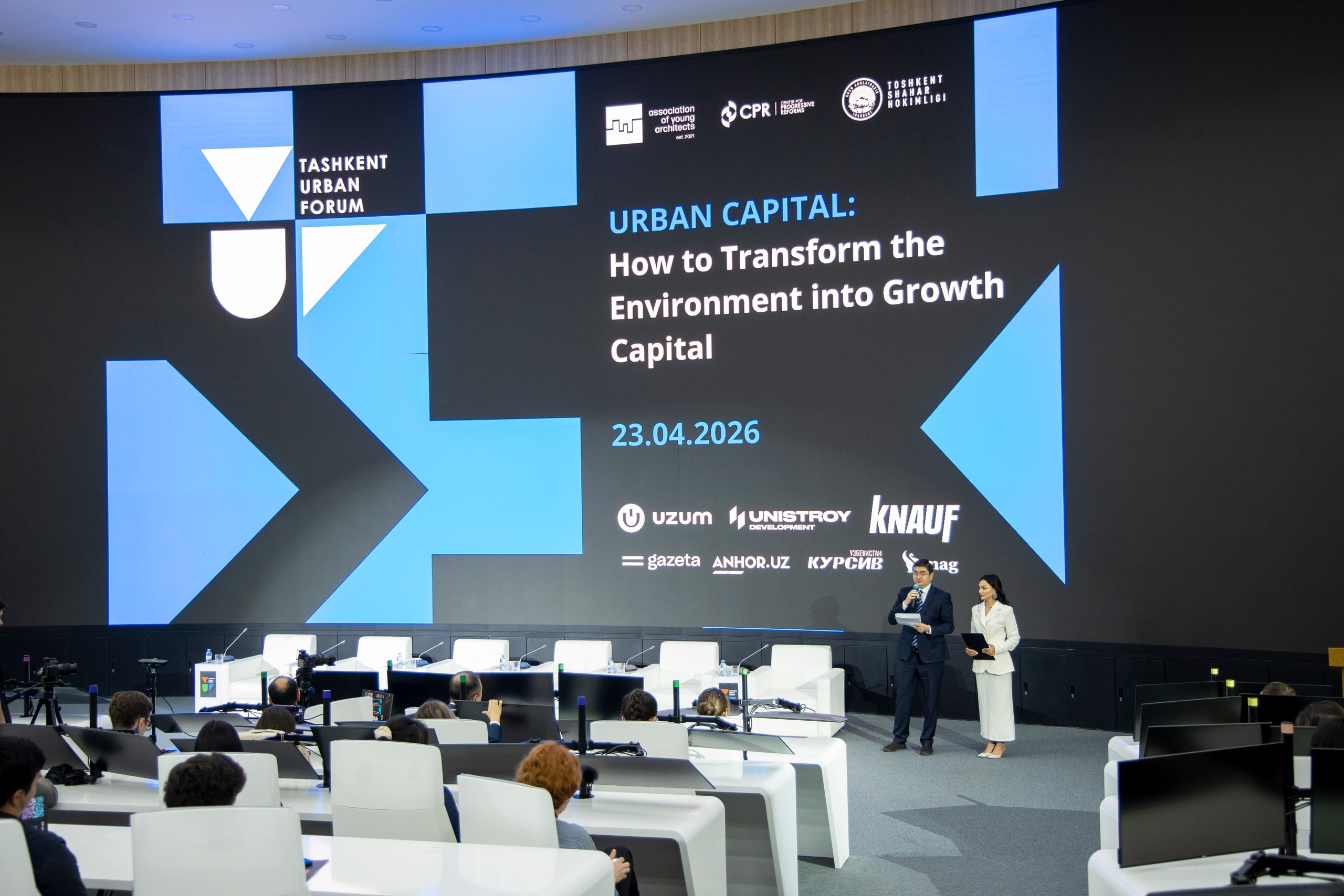
It was at this very event that Dr. Beatriz Plaza mentioned in her lecture a phenomenon that could allow not only Tashkent, but any city in Uzbekistan or Central Asia as a whole, to become one of the world's cultural centers. This phenomenon is known as the "Bilbao effect" (also called the "Guggenheim effect").
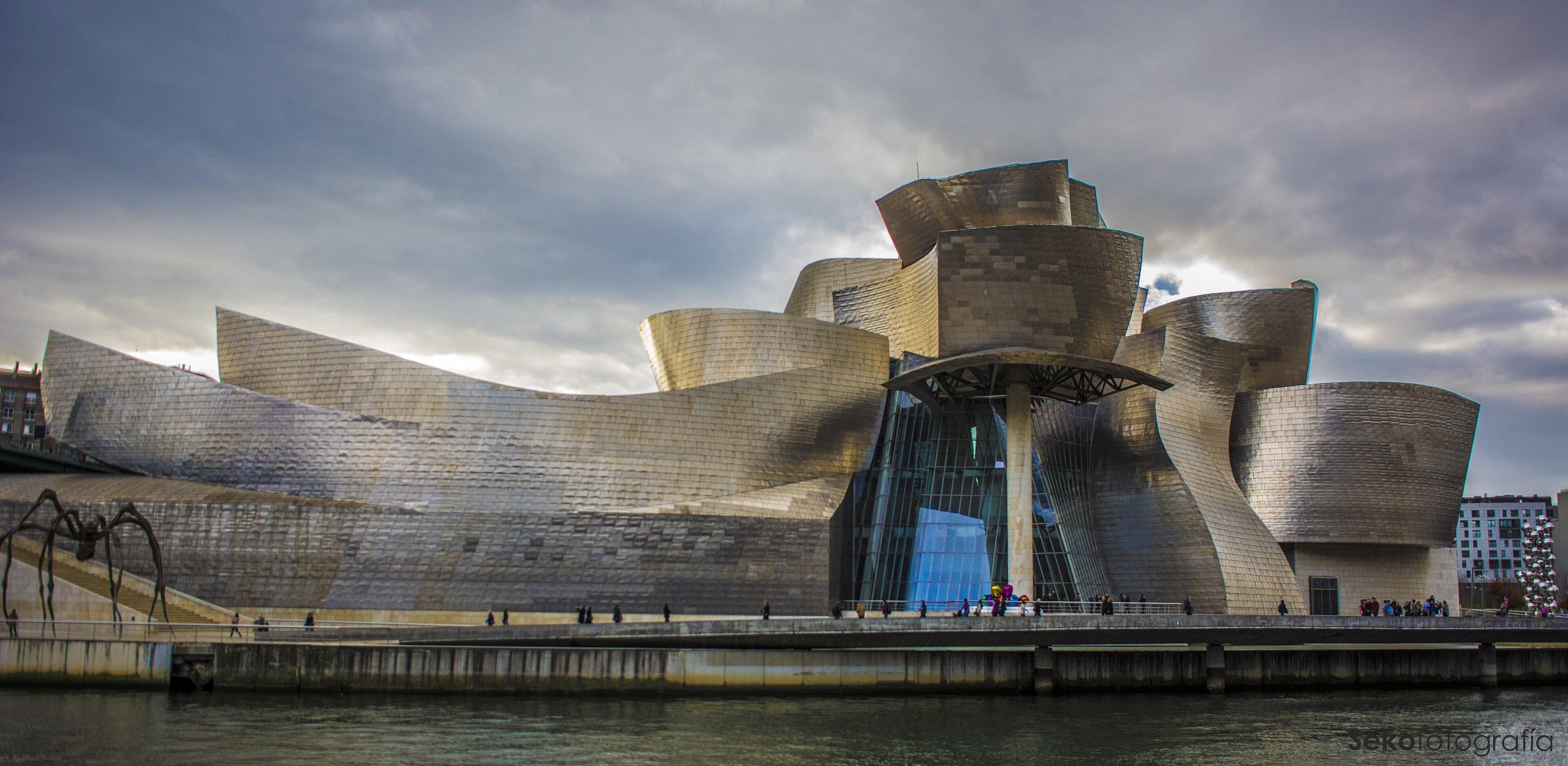
To put it very briefly — when the city of Bilbao, located in the Basque Country autonomous community in northern Spain, found itself on the brink of economic collapse, the city authorities decided to undertake an unexpected experiment: to build a marvel of architectural thought that would capture the world's attention. That marvel became the Guggenheim Museum, built in 1997.
The museum was written about in all international media, and guidebooks in dozens of languages urged people to see the "new wonder of the world" in person, resulting in a staggering surge in tourism and effectively saving the city from crisis.
However, the idea worked largely due to the skillful synergy of architectural and artistic thought. In global practice, the alliance between architect and artist has historically played a key role. The architect defines the structure, while the artist fills it with visual solutions.
The Lost Union
In Tashkent, this approach was long considered the norm. In the past. Monumental murals, mosaics, reliefs, and decorative elements were created to complement the architectural vision—meaning they were not added after the fact, but were embedded in the project from the very beginning. As a result, structures emerged that served not only a utilitarian function but also shaped the city's appearance. Many projects from that era are still studied today and held up as examples for future architects, not only in the country but also abroad.
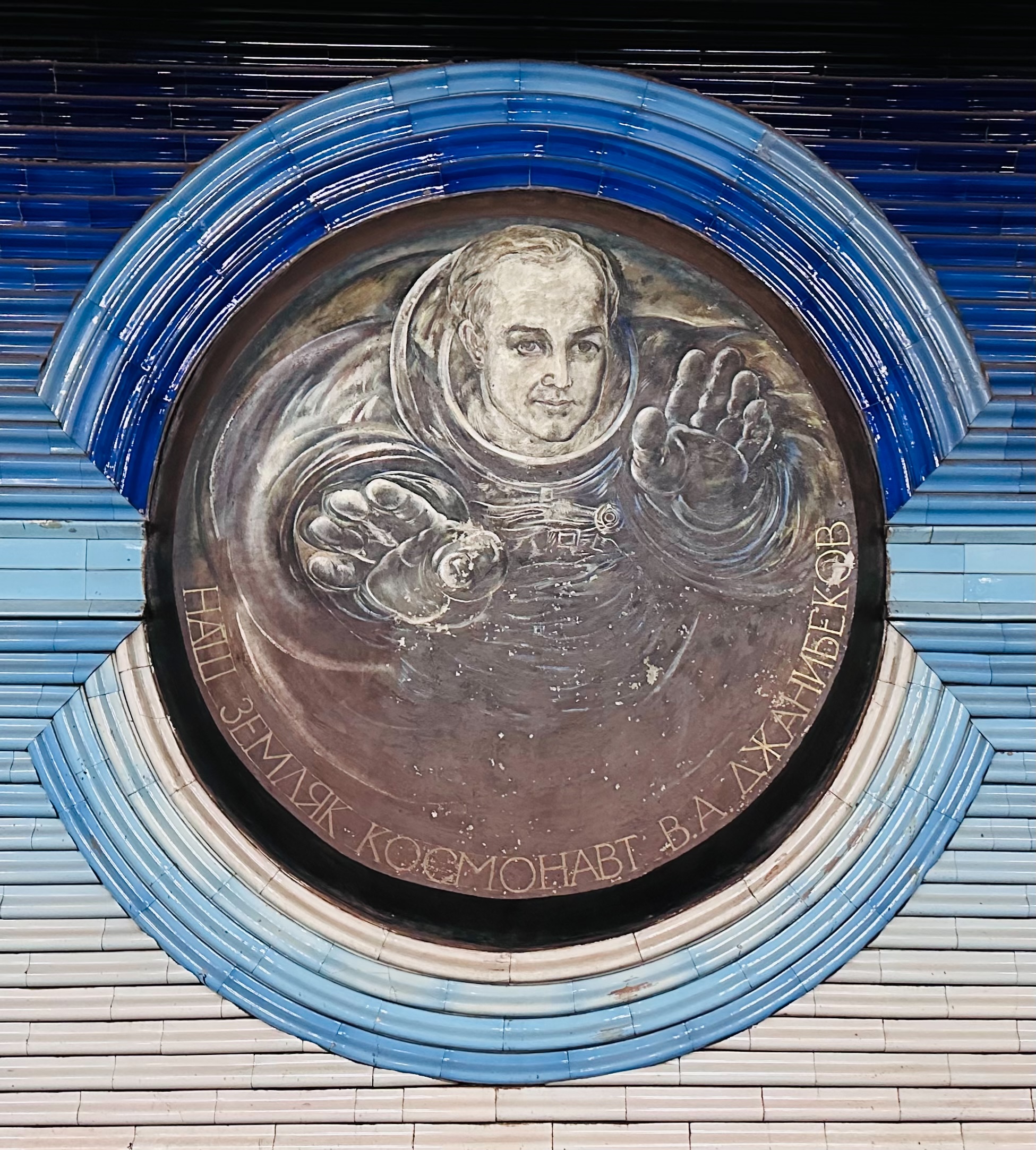
For example, the joint efforts of architect Yevgeny Rozanov and artist Kadyrzhan Khaidarov gave us the unique ornaments of the main entrance to the Palace of Peoples' Friendship, while the work of architect Sergo Sutyagin and artist Arnold Gan gave us the Kosmonavtlar metro station. One can also recall the mosaics by the Zharsky brothers, which adorn the facades of buildings in Tashkent.
But over time, this practice began to disappear. It was replaced by another, albeit in a completely different form. Here is how Fatima Abdurakhmanova, the scientific director and consultant of the "Mosaics of Tashkent" project and author of the book "Art for Architecture," describes it.
In my view, Uzbekistan is already actively leveraging the so-called "Guggenheim effect" today, creating new cultural and tourist attractions. This can be seen in the opening of the Center for Islamic Civilization, the Imam Al-Bukhari Memorial Complex, Samarkand's "Eternal City," as well as new projects in the regions — including in Margilan and Fergana. Such spaces are becoming not only architectural landmarks but also important symbols of urban identity.
At the same time, it is important to understand that the tradition of deep interaction between architecture and art, characteristic of Soviet modernism, has been lost over time. Artistic work requires time, attention, and a comprehensive approach, and after gaining independence, the very system of organizing the architectural process changed. The institutions that accompanied and supervised the artistic component of projects disappeared, including art combines and mechanisms for the professional approval of monumental art.
Meanwhile, global and regional experience shows that integrating art into architecture can create a more expressive and meaningful urban environment. However, such projects require serious investment, a long-term approach, and an understanding of the value of culture as part of urban policy. In neighboring Kazakhstan, for example, the renovation of the "Tselinny" cultural center in Almaty became a notable example of integrating contemporary art into an architectural project, but it also demonstrated that such initiatives involve significant financial costs and are more often realized with large private investments and sustained institutional support.
Today in Uzbekistan, initiatives and competitions aimed at developing the architectural environment are also emerging, but many interesting and artistically bold ideas remain at the conceptual stage. Here, what is especially important is not only professional dialogue but also genuine interest from the state and business in supporting culture as a strategic investment in the quality of the urban environment and the country's identity.
Fatima Abdurakhmanova
Why did we lose this alliance?
Artistic work requires significant effort and time. And it was precisely the need for extra time that played a cruel trick on the city's architecture.
It's no secret that Tashkent ranks among the three most populous cities in the CIS and leads in population growth rates. Under these conditions, the priority has shifted toward efficiency and cost-effectiveness. Construction needed to be extensive and rapid. That's precisely why the visual appeal of new buildings became secondary, as it didn't directly impact project deadlines or core performance metrics.
Of course, that was not the only reason, but the full list of "whys" has yet to be compiled by those responsible in order to study the shortcomings and avoid repeating past mistakes of ignoring wind patterns and the load on power grids.
Another problem that emerged was that this approach led to an accumulation of standard solutions. The architecture became more uniform (simply put, faceless), and the artistic component virtually disappeared from the process. So what individuality could there be? And the issue is not just the lack of expressive elements, but also the break with the previously established visual identity of the capital.
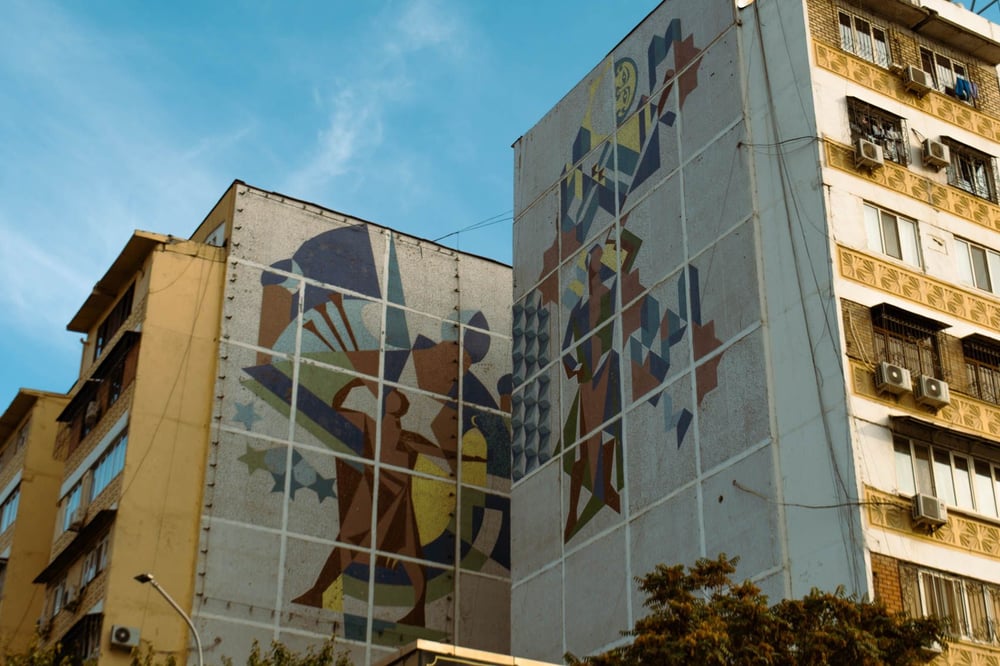
The loss of mosaics, murals, and other decorations led to the gradual disappearance of visually appealing solutions. The pressing housing issue was resolved, but at what cost?
What now?
The situation is now beginning to change. At the level of city policy, the professional community, and even ordinary residents, there is a growing demand for quality of the environment. Fortunately, the discussion is no longer limited to engineering specifications and compliance with environmental standards, but also includes appearance. And this is quite logical. Interest in exhibitions, contemporary art, and cultural initiatives is on the rise. This means that audiences are ready to embrace more complex visual solutions.
The introduction of the design code in the capital is generating particular excitement today, accompanied by heated public debates due to, shall we say, unconventional approaches to its implementation. Farkhad Kuchkarov, Director of Development and Strategy at Depot and curator of the KUCH agency, shares his opinion on this matter.
Let's talk about how timely the implementation of a design code is right now. I recall how in the early 2010s, the Strelka Institute came to Tashkent with its first lectures on the importance of urbanism and design codes. These discussions have been ongoing for quite some time, and now we're seeing the approximate timeline of such inertia — 10-12 years. Can we say it's been dragged out? Yes. Can we say it's too late? No, of course not.
The design code is extremely important and serves as the flagship of so-called agents of impression and second-tier mass behavior management. These are non-verbal, deeply subconscious transmitters of signals crucial to people. When discussing the impact of implementing design codes in different countries or cities, we can definitively note that they are part of larger social or political projects. In Rotterdam, they were recognized as key factors in the city's investment appeal; in Finland, they are part of state policy and the major national brand Design from Finland.
In Uzbekistan's case, several things need to be understood that speak not only to the timeliness but also the vital necessity of a design code: the country is partially transitioning from a resource-based or industrial economy to monetizing natural and environmental assets (history, nature) through tourism, alongside the development of modern sectors like IT and outsourcing.
Consequently, design as a discipline, visual culture as a transmitter of a country's positioning, and the design code as a way to make life comfortable and highlight the modernity of the conditions offered — these are not just a trend or a whim of certain individuals. On the other hand: a rich visual culture as heritage, distinctive architecture, a blend of history, and the active development of ultra-modern architecture — all of this simply demands awareness and attention from architects, designers, urbanists, and marketers, because only in this way can we build a complex system for people to gain emotional perception and an understanding of the cultural and social positioning of a city or country.
Farhad Kuchkarov
A solution that everyone will like
This is precisely where we recall Bilbao and its effect. Architecture influences — and quite significantly — the perception of a city, its investment appeal, and its ability to retain human capital.
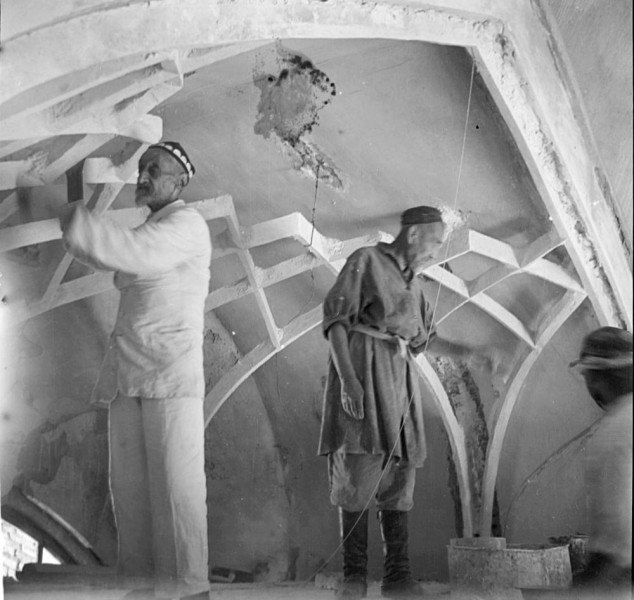
What is particularly important is that the practice of collaboration between architect and artist was backed by institutional support. The artist was regarded as a full-fledged participant in the project, not merely as an external contractor obligated to fulfill their part under contract. This approach made it possible to preserve the original creative vision and avoid a formalistic attitude. As a result, we ended up with works that have remained relevant to this day.
The market, one could say, is ripe. Integrating an artist into a project gives a developer several direct advantages: first, it makes the property stand out against standard developments; second, it increases the symbolic value of the project, which can later translate into economic indicators; third, it provides an additional media resource, allowing the property to be promoted through a cultural agenda.
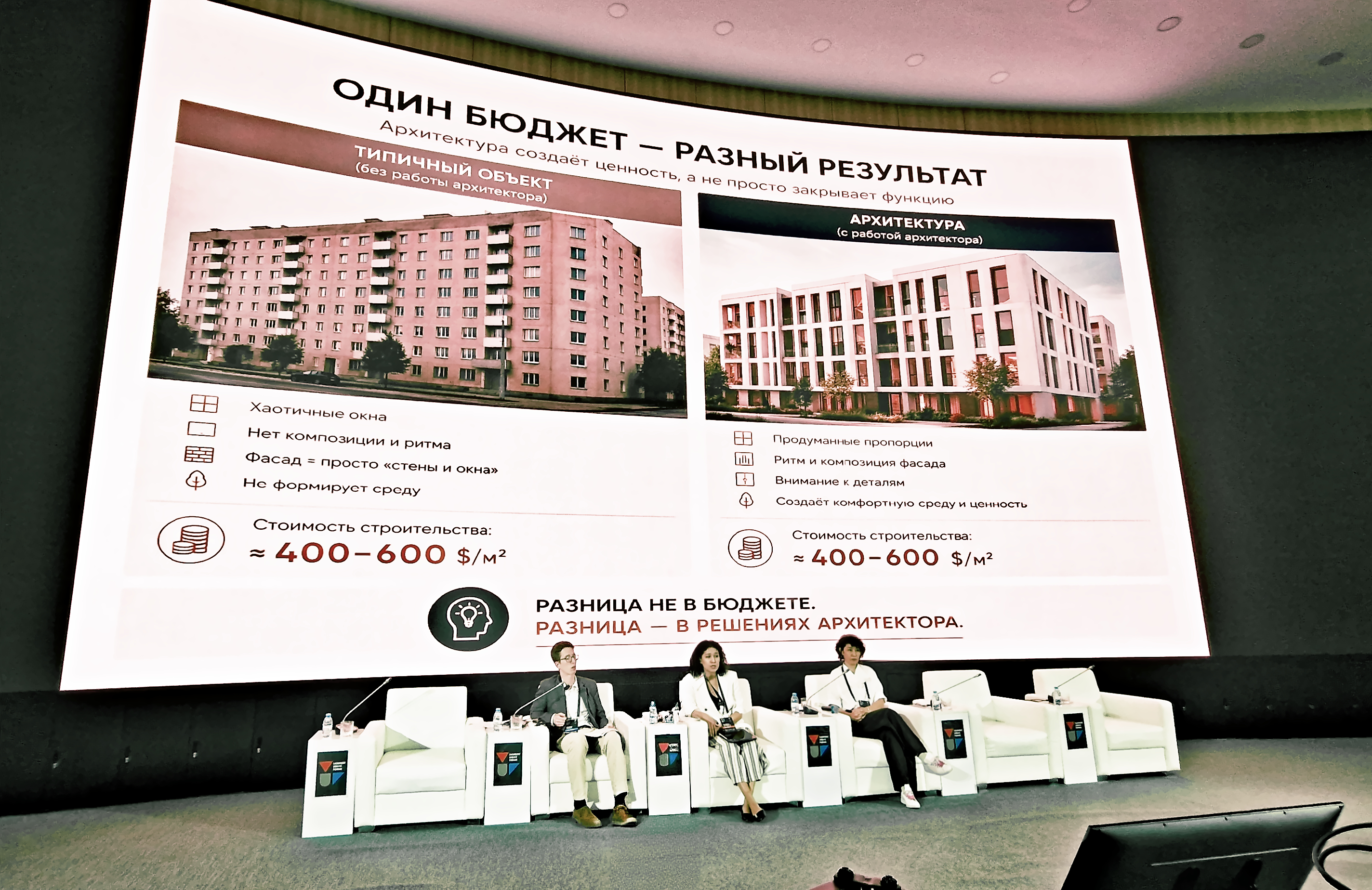
At the same time, as noted in her speech at the III Tashkent Urban Forum by Takhmina Turdalieva, Chairperson of the Association of Young Architects of Uzbekistan, constructing an artistically designed unique building costs no more than a standard structure.
Architecture is not a matter of increasing the budget. With the same investment, a building can be either standard and faceless, or unique and place-making. The difference arises at the design stage — in the decisions made by the architect: spatial planning, composition, and materials. These decisions determine not only functionality but also the artistic character of the building. Therefore, architecture is first and foremost a matter of competence and professional training, not merely a construction process.
Takhmina Turdalieva
In such a collaboration, the architect gains the opportunity to work not only with volume and layout, but also with its artistic content, which allows for more complex solutions that are demanding at the planning level yet more effective.
And the artist finally gets the city as a platform for their work. This is a move beyond galleries into the everyday space of millions of people. In Germany, for example, there is a legislative norm called Kunst am Bau — a fixed percentage of the construction budget for public buildings is mandatorily allocated to integrating artworks. The law was passed in 1950 and has been regularly updated ever since.
We have already moved past the stage of rapid growth and the need for speed. And now, as we grapple with the resulting problems—polluted air, faceless development, the loss of important artistic and architectural landmarks—it is time to once again invite architects and artists to the negotiating table, who can secure a future for us free of these issues.
Because it is impossible to make a city efficient, beautiful, and sustainable without consulting experts in each of these fields.