
Bakhshi is a folk singer-narrator, a representative of an ancient traditional folklore genre of performing arts.
Limited only by their talent, memory, and experience, such a person at the dawn of history transmitted invaluable knowledge about the heroic past, legendary times, and admonitions for the younger generation, embodying the joys and sorrows of the people in verse and melody. One can imagine how great the authority of folk poets was in the absence of other sources of information about the world's structure and their own history, and with what meticulousness their craft was honed over centuries.The art of the bakhshi is one of the most complex forms of folk art, and the institution of bakhshichilik is a multifaceted and intricate structure with its own philosophy, very profound traditions, and a way of interacting with modernity.
This traditional art form is currently experiencing a period of revival in Uzbekistan. The starting point of this process was 2018, when the "Bakhshi School" was established and an international festival was founded.
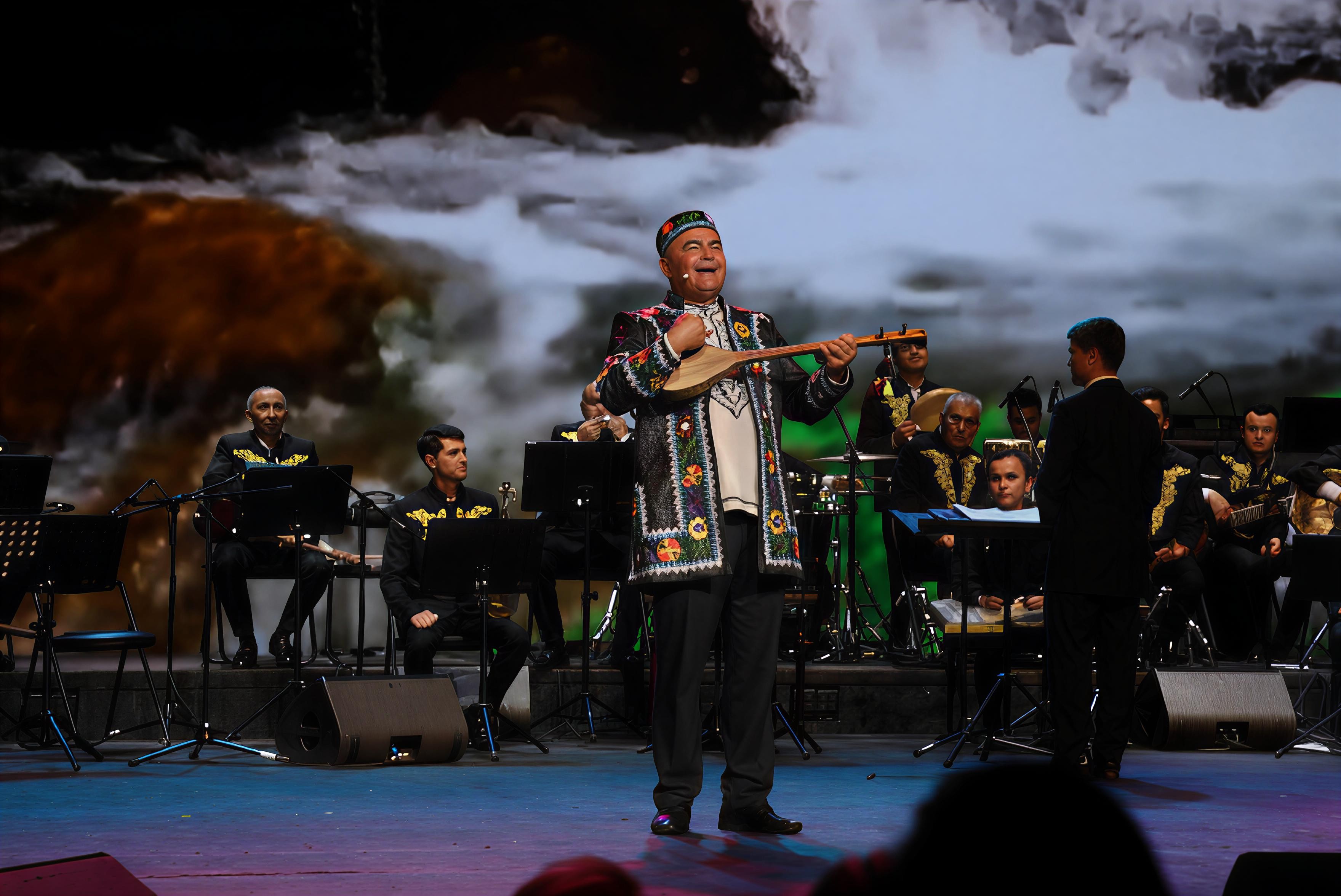 Source: photo archive of the Ministry of Culture of the Republic of Uzbekistan
In regions where the tradition of storytelling has traditionally developed, specialized classes have been organized in music schools, where over 1500 students are now studying. The Republican Center of Bakhshi Art has relocated from Termez to Tashkent, and the Institute of Uzbek Language, Literature, and Folklore under the Academy of Sciences of the Republic of Uzbekistan oversees expeditions to regions of Uzbekistan, Turkic states, and countries where the heritage of the Uzbek tradition lives its own separate life.
In 2025, the Doston Performance Department of the Yunus Rajabi Uzbek National Institute of Musical Arts graduated its first bachelors in the field of "bakhshilik". As in ancient times, to earn the honorary title of bakhshi and the corresponding diploma, a student must know 40 dostans by heart, performing one of them in its entirety during the exam.
Bakhshis use a unique vocal technique for sound production. The sound developed over centuries is designed to hold the audience's attention; the performer must skillfully blend vocals with recitative, seamlessly transitioning between them and adapting to the timbre of the musical instrument. They hone the ability to instantly change the density of sound, tempo, and emotional color. A distinctive feature of the bakhshi style is the tension in the upper overtones, which gives the singing an archaic, intentionally rough quality, enhancing the expressiveness of the performance and emphasizing the heroic content of the narrative. Improvisation plays a huge role.
The profession of a storyteller is often passed down through generations. Talented children begin their training in adolescence. Initially, the skill is honed on short works, and they study the theory of versification, art history, modes, and voice training. Throat singing lessons are only permitted after the adolescent voice mutation. And while the spontaneous creativity of a bakhshi was once guided solely by their impeccable ear, young storytellers are now taught musical notation. A future bakhshi must undoubtedly acquire invaluable knowledge about the life, customs, and culture of their native land. One singer may know from 20 to 100 dastans by heart! They can be so lengthy that they are sung over several days with short breaks.
There are three main schools of bakhshi art — Surkhandarya-Kashkadarya, Khorezm, and Karakalpak, each with numerous subtypes and directions. They differ primarily in the style of performance — closed (Surkhandarya, Kashkadarya) or open (Khorezm, Karakalpakstan) — and in the melody, or noma.
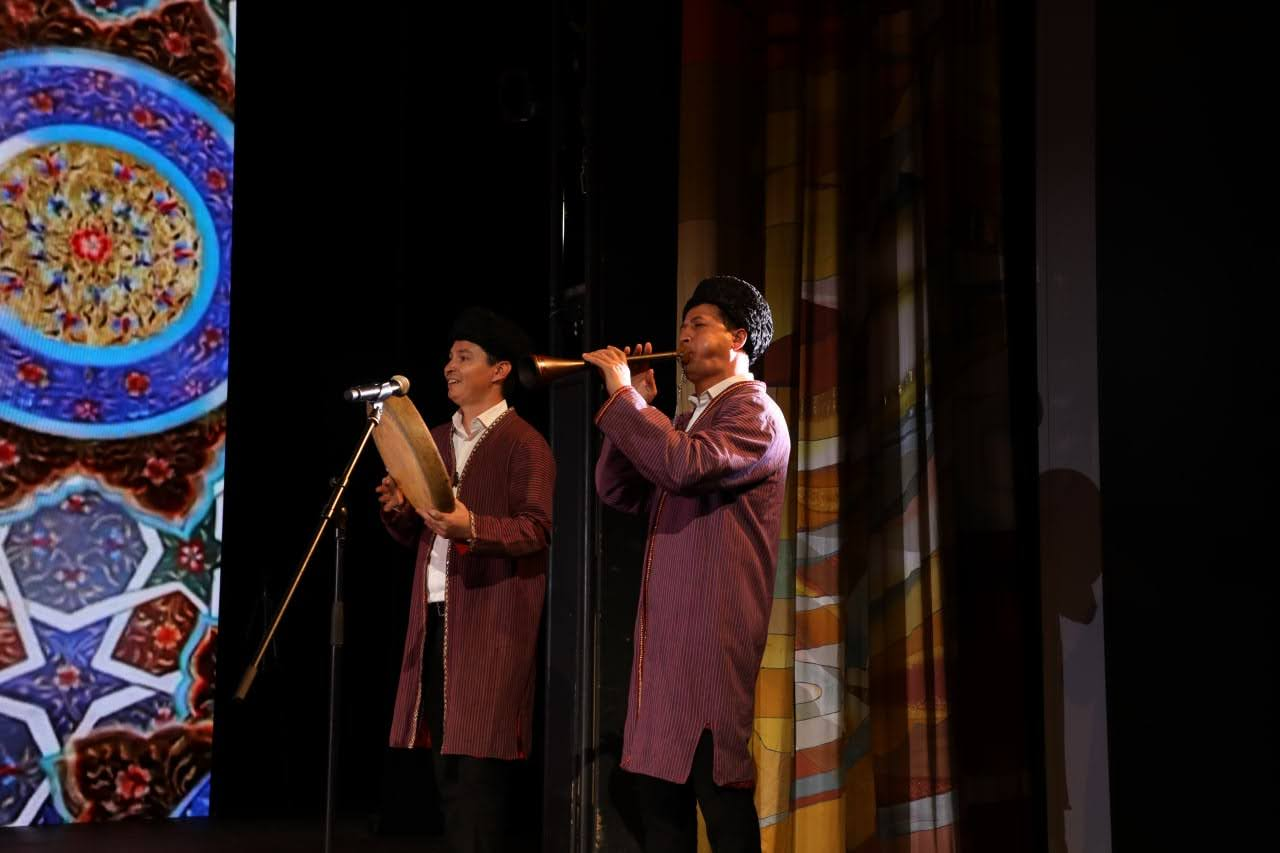 Source: photo archive of the Ministry of Culture of the Republic of Uzbekistan
Also, depending on the school, the set of musical instruments accompanying the singing differs: tor, nay, doira, dutor, sybyzgy, ghijak, the ancient changkovuz, rubab, sarnay, tambur — this is an incomplete arsenal of musician-storytellers.
The Karakalpak bakhshi are called jirau (zhırau), which are skilled poets or "bards" who accompany their singing with the playing of the kobyz. An interesting direction in Karakalpak tradition is the "qyz bakhshi," meaning female performers, who hold no less authority than men. The Khorezm school also has its representatives—khalifa, whose main instrument is the accordion, adopted from the Germans.
Uzbek bakhshi perform dastans - the traditional epic musical-poetic genre, and terms - songs of storytellers on heroic and love themes. Karakalpaks mainly sing kosyks - lyrical, ritual, and historical songs.
Moreover, due to the lack of a canonical text for lyrical and epic works, the same epic "Alpamysh" exists in Uzbek, Turkmen, Bashkir, and other versions. The performer relies on the performance tradition inherent to each dastan.
The center of bakhshi art in Uzbekistan has historically been Surkhandarya — the homeland of the hero Alpamysh in the Baysun mountains. On the banks of the Amu Darya, in the lands of Surkhan, archaeologists have found many material evidences of the highest level of development and status of the art of music. An example of this is a specimen of ancient art from Uzbekistan, the Airtam frieze from a Buddhist temple, found near Termez. The stone relief depicts a procession of musicians playing various instruments. This is a unique example of a developed musical and ceremonial culture, testifying to the high role of music in ritual.
The songs of bakhshi are one of the most valuable sources of knowledge about the lifestyle of our ancestors. Without a written language, our forebears conveyed knowledge about the world order, heroic legends, epic tales, and notions of beauty through the art of song. It is no wonder that tradition requires a skilled bakhshi to be, in one person, a virtuoso musician, a singer perfectly mastering the voice, intonation, and throat singing, a poet, and an improvising performer.
At the Yunus Rajabi Institute, future bakhshi are taught individually. The curriculum for students of this specialization includes solfeggio, harmony, stage speech, acting, voice training, and other disciplines. But the most interesting aspect is that representatives from each region—and consequently, each tradition—study their own specific direction. The conservatism of this approach ensures the continuity of mastery.
Graduates of schools and higher educational institutions are welcome guests at weddings organized in the national spirit. They will pass on their knowledge to students of music schools and colleges, and become regular participants in international festivals, scientific conferences, forums, and congresses.
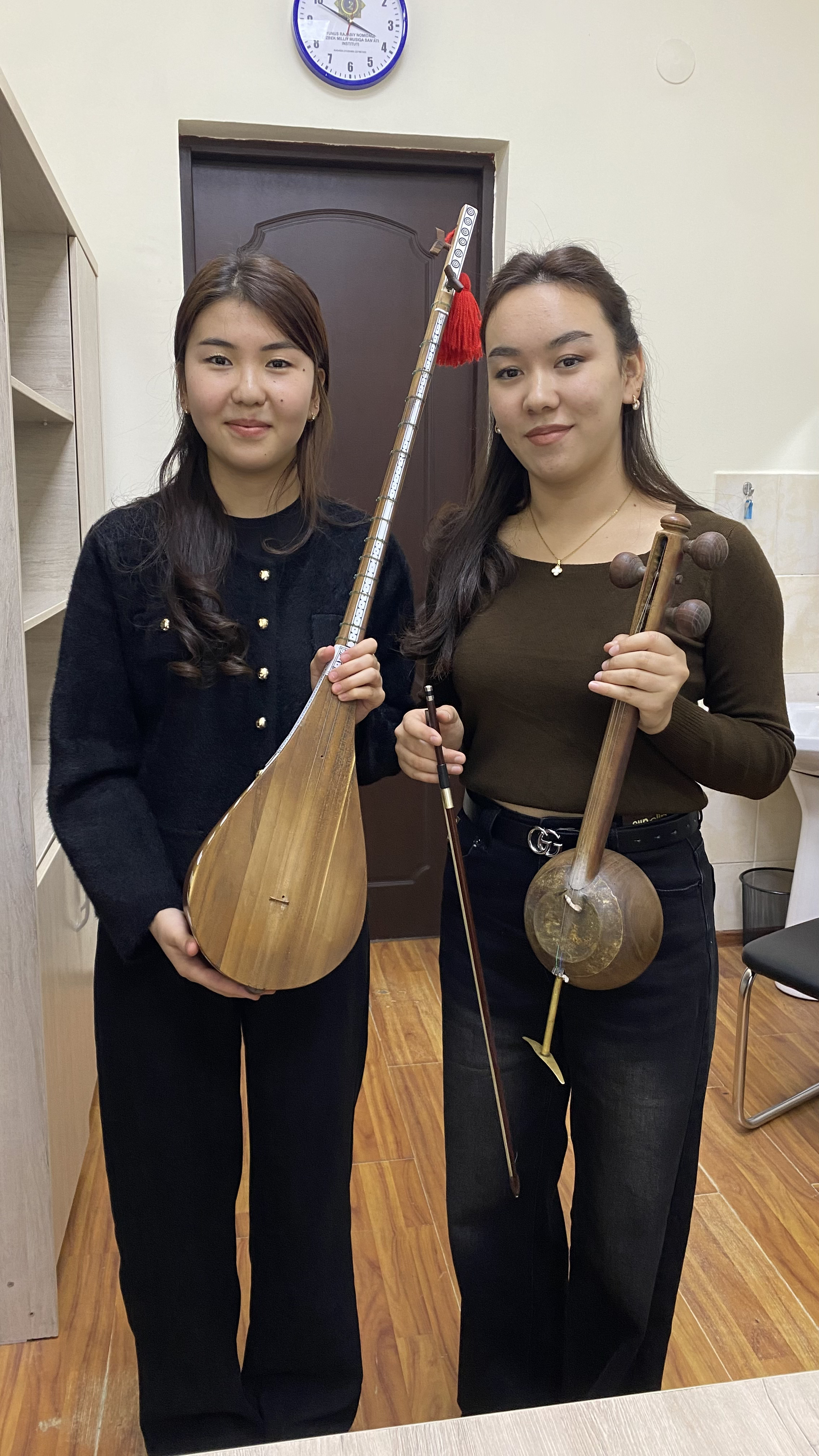 Author: Maria Maksimycheva
The institution of folk bakhshi plays a significant role, whose names are known throughout the country.
One of such names is Abdunazar Payonov from Surkhandarya. Until his death in 2022, he not only performed but also taught numerous students. Among the names of folk performers are outstanding singers Ulmas Rasulov, Kahramon Komilov, Abdukhoshim Ismoilov, Abdulla Shomagrupov, Salahiddin Azizboev, and many others.
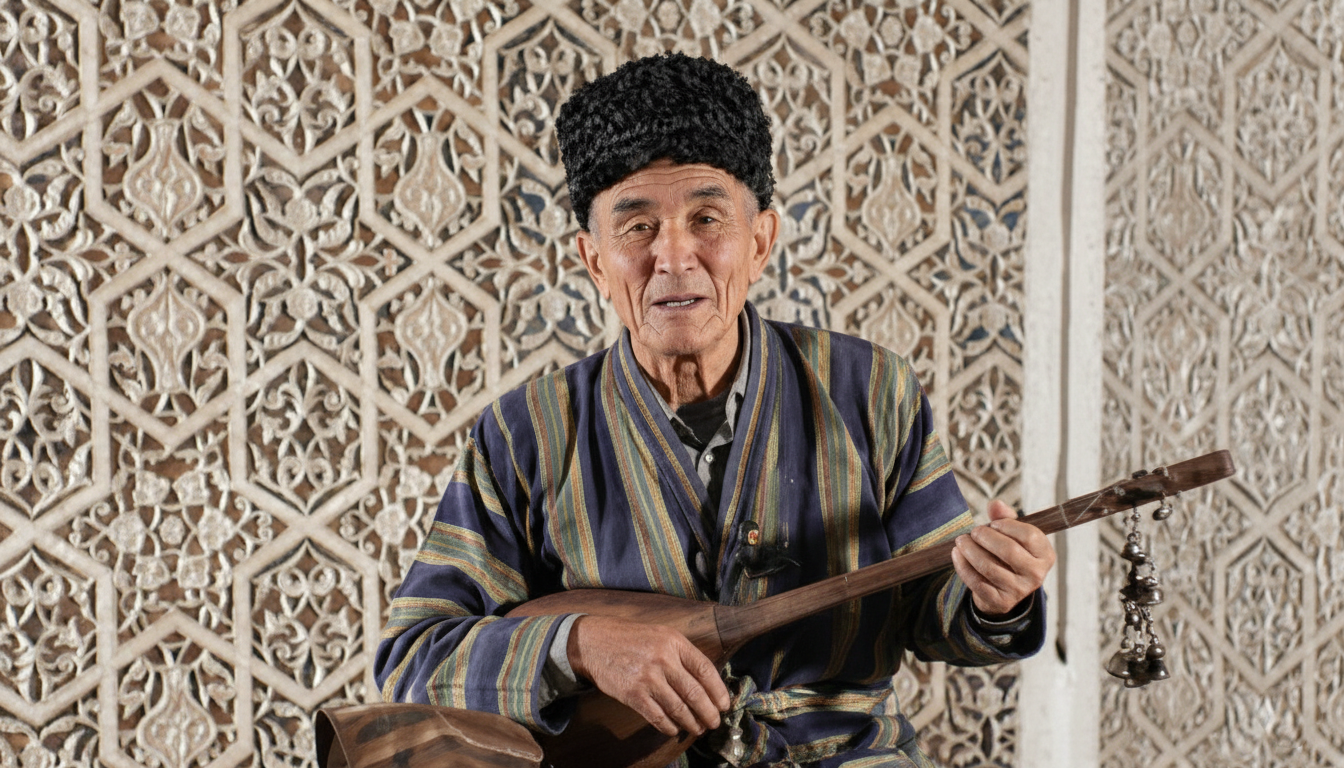 Source: Wikipedia
How can we popularize the heritage of bakhshi art today, in the age of artificial intelligence, the internet, and "clip consciousness"?
The status and value of master storytellers is protected at an international level: the art of Uzbek bakhshi is included in the UNESCO Representative List of the Intangible Cultural Heritage of Humanity.
Every two years, different regions of Uzbekistan host the Bakhshi Art Festival—an international event traditionally accompanied by scientific-practical conferences, award ceremonies, and the signing of various agreements to develop cooperation with other countries.
Folk bakhshis, including the prominent representative of the Khorezm school Rasulbek Abdurakhmanov, are appearing on platforms like YouTube, uploading videos with entire dastans.
Recently, a group of artists, on the initiative of the Bakhshichilik Center, staged a performance right in the Tashkent metro, and there are also plans to organize live television battles of performers. The modern bakhshi faces a complex task—they must balance between archaic ritual and show, strictly adhering to the requirements of the genre.
The national Mutolaa app, a free electronic library of Uzbek-language literature, now features audio versions of classic epic texts — "Alpamysh", "Görogly".
It is evident that the art of bakhshi is currently undergoing a period of active reinterpretation, reflecting the connection of the "New Uzbekistan" with the origins of its culture and the foundations of national self-awareness. This has become a solid foundation for Uzbekistan's integration into the cultural space of the Turkic world and for interaction within the community of countries with a similar civilizational code. However, the "export potential" of bakhshichilik remains to be fully revealed.
The life and art of the bakhshi is a philosophy, a worldview focused on the very best that a nation lives by. Listening to folk singers, you feel as if it is not a person producing the sounds, but rather music flowing through the person, absorbing their talent and vibrating with ancient myths.


