Batman's flight through time
Let's start with the batman — a unit of measurement whose name traces back to the word "mann." This measure of weight was used in the countries of the Near and Middle East, including Egypt, Syria, Iraq, Iran, and Turkey, and was also widespread in Central Asia. Notably, the great traveler Afanasy Nikitin mentioned the batman in his "Journey Beyond the Three Seas."
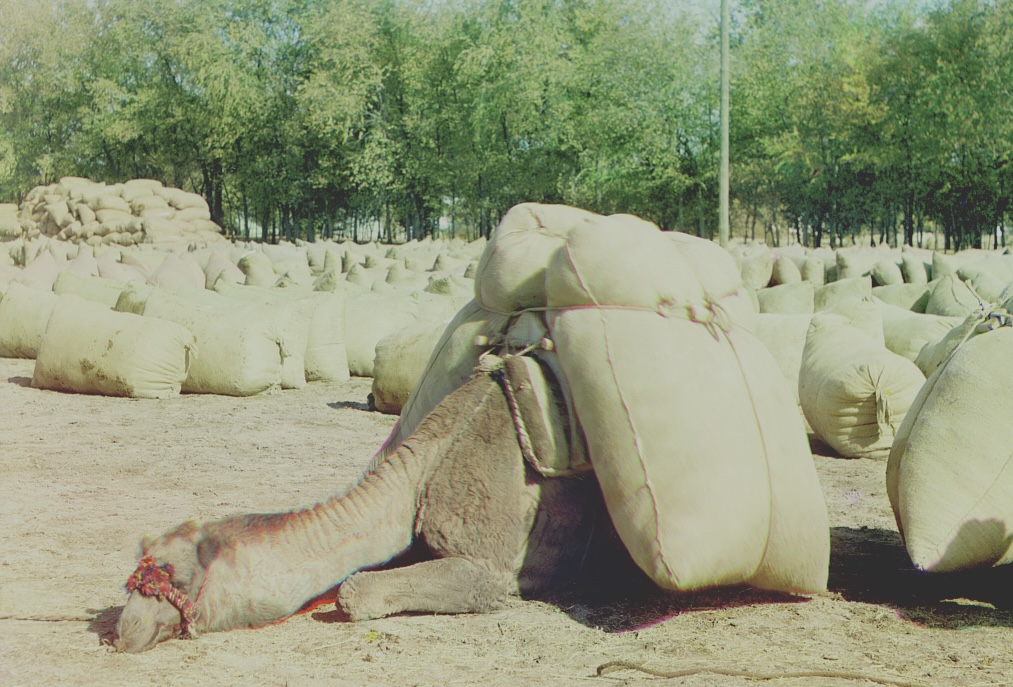
According to Sharia law, the standard weight of a batman was about 832 grams. However, depending on the region and historical period, its value varied significantly. Thus, in Khorezm, a batman could weigh from 20.16 to 40.95 kg; in Bukhara and Samarkand, its mass reached 8 poods (131.044 kg); in Fergana—from 8 to 10 poods (up to 163.8 kg); and in Tashkent, it could go up to 10.5 poods (171.88 kg). The diversity of values for this weight measure demonstrates how flexible and locally adapted traditional measurement systems were.
The variation in values of this weight measure led to the emergence of two varieties— the small and the large batman. The small batman had a fixed mass of 20.6 kg, while the large one, known as the "Tashkent" batman, reached 171.99 kg. Such a difference in weight was explained by regional peculiarities in trade and economic activity, where the need for standardization clashed with established local traditions.
In addition, besides the batman, there also existed the batman-dahsar, which in some regions of Central Asia was equivalent to 32 kilograms. Such large units of measurement were convenient in trade, especially when selling grain, cotton, wool, and other goods that required wholesale calculations.
 © Sergei Prokudin-Gorsky / Library of Congress
The instability of weight measures such as the small and large batman significantly complicated trade calculations, which over time made the unification of measurements an urgent necessity. This process accelerated after Central Asia joined the Russian Empire, when grams, kilograms, and poods began to enter everyday use. However, traditional units of measurement, established over centuries, persisted for a long time among the local population of Turkestan.
Interestingly, aside from weight, the batman in some regions also served as a measure of area. In a number of places, a unit equal to one hectare was called a sath-batman, highlighting the versatility of this term in the traditional system of measurements.
Small but precious
Since time immemorial, people have used quite tangible objects for measurement, things one could literally hold in their hands. It is from this that comparisons like "the size of a millet grain," "the size of a flax seed," or "the size of a fingernail" arose—they conveyed an idea not only of size but also of weight or even area. These expressions are still alive in the Uzbek language today. Thus, in Aybek's novel "Sacred Blood," the character Shakir-ota, indignant at Ziyakhodzhi's greed, reflects: "He wants to attach his house to mine, to live happily ever after… He has long had his eye on my house… So let him not get even a fingernail's worth of my land!".
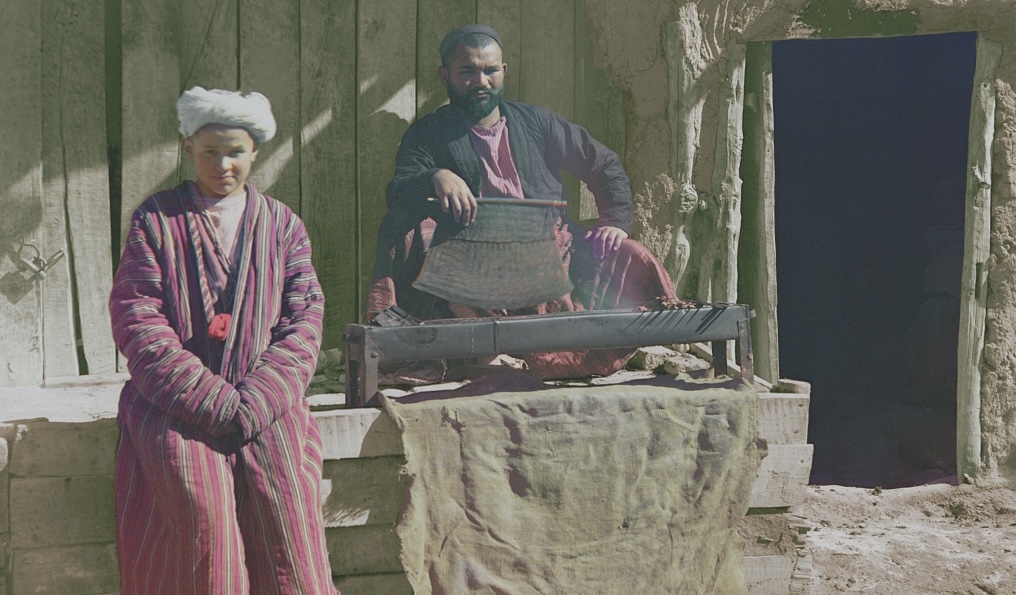
Among Turkic-speaking peoples in ancient times, a weight measure known as the mithqal was widely used, which corresponded quite accurately to the Russian zolotnik and amounted to 4.26 grams. In everyday life, its fractional units were especially common: half a mithqal (2 grams) and a quarter of a mithqal (1 gram). These measures were actively used in medicine, perfumery, and jewelry making, where weight accuracy was of particular importance.
 © Sergei Prokudin-Gorsky / Library of Congress
Another popular unit of measurement was the paisa — a measure of weight equal to 50 grams, similar to the Russian "os'mushka". The people also used the concept of "kaft", which translates to "handful" or "palmful". This quantity roughly corresponded to the paisa, as the measurement was literally taken "by hand". In this context, it is worth recalling the folk proverb: "Do not separate from the people; if they give you a handful, you will be fed; if they strike you once, you will be killed", which emphasized the importance of unity in society.
In addition, during the reign of the Bukhara Emir, the paisa was used not only as a unit of weight but also as a measure of value. In fact, the equivalent of the paisa was a small coin called the "miri," equal to five kopecks. However, among the people, it was often called by the same term—paisa—which emphasized the inseparable connection between weight and monetary calculations.
In the famous work of Muhammad Sharif Gulkhani "Zarbulmasal", rich in folk wisdom, proverbs, and parables, a weight measure such as chaksa is mentioned, equal to 5 kilograms and 300 grams. Three chaksas made up one pood, which allowed this measure to be used for weighing larger cargo.
A load of meat for one tangu
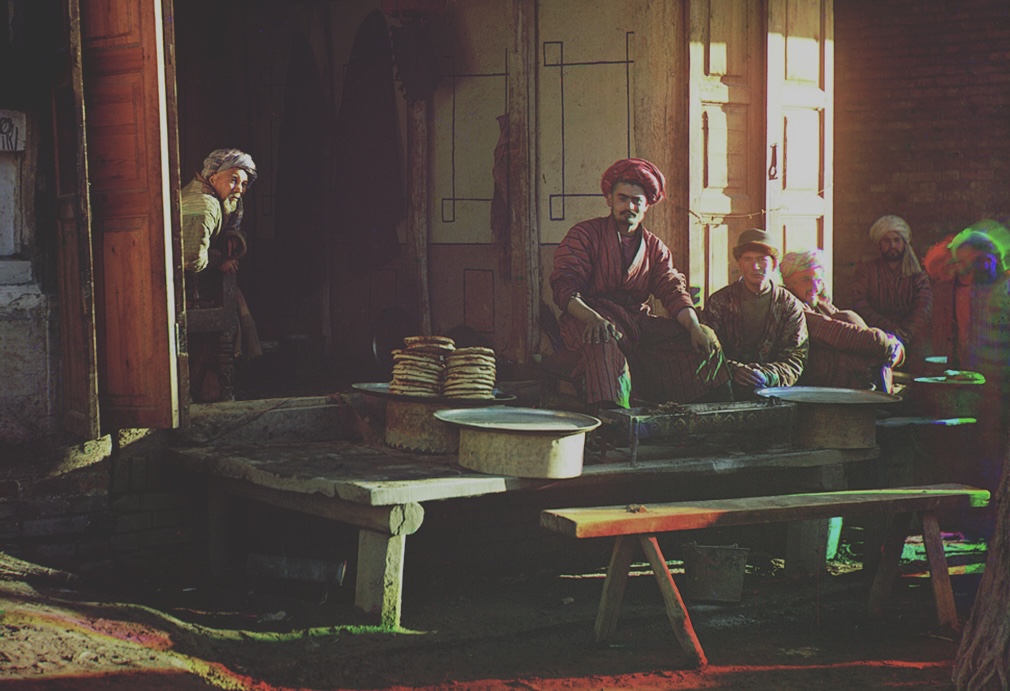
One of the most common units of weight in Central Asia can be called the kadok, approximately equal to a pound (about 450 grams). If it is impossible to imagine trade today without the kilogram, in the past not a single market functioned without the kadok. Contemporaries noted that one kadok of beef fat cost 20 kopecks, mutton fat
— 22 kopecks, beef meat — 8 kopecks, and mutton — 12 kopecks.
 Shashlyk Restaurant © Sergei Prokudin-Gorsky / Library of Congress
It is noteworthy that people of that time often purchased products by the kadok: two, one and a half, and sometimes even half a kadok of meat, butter, flour, rice, or mung beans. Over time, as prosperity grew, buyers became accustomed to taking goods in larger volumes. Today, it is already difficult to imagine someone asking for "half a kadok of flour" or "a kadok of meat" in a store, but in the past, this was completely natural.
The significance of this unit of weight is also evidenced by the recollections of old Tashkent residents. One of them recounted his childhood, which fell in the 1920s:
We lived in the New Mahalla back then. When we needed to buy meat, my father would give me one tanga and say: "Son, run to Mirabad, buy a kadoq of meat and a kadoq of fat from the butcher. He is an honest man, his goods are good." And I would walk there and back. Once I bought five kadoqs of meat at once. "It seems you have guests today," the butcher smiled.
Interestingly, kadoka had another name — "nimcha." This is recalled in the folk proverb: "Nimcha of rice can become pilaf, with a guest's good mood," which emphasizes the importance not only of food but also of a friendly atmosphere at the table.
Small change and folklore
As for money, in the late 19th century, besides the imperial kopeks, monetary units such as the grosh, pakir, miri, and tenga were in circulation. Among these, the black grosh, the silver tenga, and the gold tenga were the most widespread. Interestingly, there was also a coin called the "olmakhon" (literally, "little squirrel").
Just as the kadok was an indispensable unit of weight in trade, so the miri coin, with a denomination of 5 kopecks, played an important role in monetary settlements. It was widely used in everyday purchases, and for many people, this particular coin became key in small retail trade.
A grosh had different meanings: in some cases it was equal to half a kopeck, in others — to a whole kopeck. However, its purchasing power was very modest, and it was practically impossible to buy anything valuable for one grosh.
Nevertheless, it became firmly entrenched in popular speech, as evidenced by the expression "not worth a penny," meaning something insignificant or useless.
In the monetary circulation of that time, there was also a pakir, which was equivalent to two kopecks. However, wealthy people, possessing power and means, did not consider the grosh and pakir to be proper money. This contemptuous attitude was reflected in folk folklore: if one needed to emphasize a person's worthlessness, they would say: "He sticks his nose up above the sky, but his own price is a pakir." In Russian, a similar expression sounds more concise: "He's not worth a grosh."
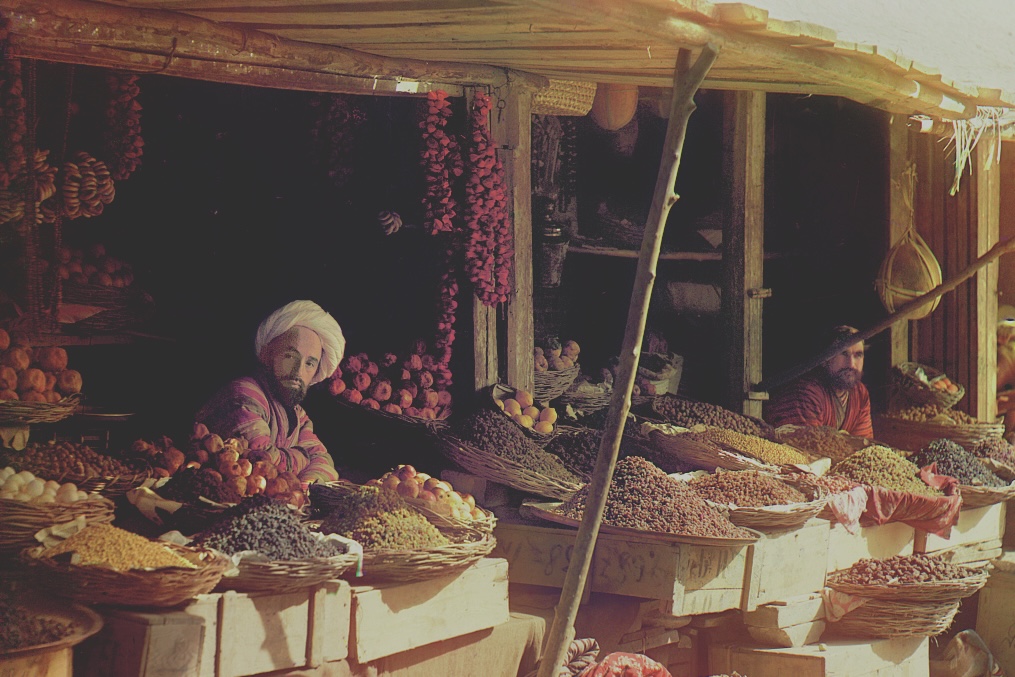 Fruit Merchant © Sergei Prokudin-Gorsky / Library of Congress
But why exactly did the grosh and pakir become symbols of something insignificant? After all, as already mentioned, at the beginning of the 20th century, one could buy a whole kadok of meat for 8–10 kopecks. The answer lies in the fluctuations in the value of small coins: their purchasing power changed over time. During periods of devaluation, the kopeck, and along with it the grosh and pakir, lost their significance, which gave rise to such expressions as "black grosh" or "black pakir," hinting at the low value of these coins.
The coins grosh, miri, and pakir were made from ordinary iron alloys and were used as small change in everyday trade. However, silver and gold tanga were valued much higher and circulated primarily among the nobility and affluent people. Gold coins were also called dinars, which emphasized their significance and high value.
Gas, voice, hair
As for units of length measurement, the most common at that time was a measure known as the "gaz," equal to 0.71 meters. This concept was widely used in construction, tailoring, and fabric trade. Interestingly, even in the 20th century, in some artisanal fields, the gaz continued to serve as a reference for measuring length.
Another fascinating unit of distance measurement was the chakirim — the distance it was believed a human voice could carry. It was approximately 1.06 km. A larger unit was the tash, equal to eight chakirims. And the measure of a farsakh (or farsang) covered 7–8 kilometers and was used for calculating large distances, such as between cities and caravan routes.
 © Sergei Prokudin-Gorsky / Library of Congress
For measuring land plots, a measure called takhta was often used, which denoted a plot on a large map. Dehqans (farmers) divided large land masses into smaller plots - takhta, to facilitate calculations and land distribution.
In the works of the poet Mukimi, another unit of area measurement is encountered — the tanap. However, its size was not strictly fixed and could vary depending on the administrative district. In some places, a tanap equaled 17–18 sotkas, while in others it could reach half a hectare.
To measure thickness and width in different regions, concepts such as a handful, a circumference, and even the thickness of a hair were used. It is particularly interesting that in classical Eastern poetry, the latter measurement acquired a metaphorical meaning: the beloved's waist was often compared to a human hair, thereby emphasizing her grace and fragility. This is how the medieval Uzbek poet Lutfi wrote in his ghazals:
"My beloved's slender waist is just like a hair,That slipped like a light shadow onto a virgin's temple,And my poor heart hangs by a thread,And the path to the desired one, as of old, is both difficult and far..."
Most of these ancient units of measurement have fallen out of use today. However, some have still been preserved. For example, in chronology in the East, the concept of a muchal – a twelve-year cycle (sometimes thirteen-year) – is still used. Many elderly people celebrate not only milestone birthdays but also their thousandth month of life, which corresponds to 84 years.
Units of measurement for weight, length, area, width, time… Studying these concepts is significant not only from a historical perspective but also for understanding the richness and uniqueness of the Uzbek language, where many of these terms are still used today. Furthermore, knowledge of traditional measures helps to delve deeper into the history and culture of the Uzbek people, to comprehend how our ancestors lived, traded, and measured the world.
Did you like the story? Follow us on Instagram and Telegram - there's even more interesting content there.