
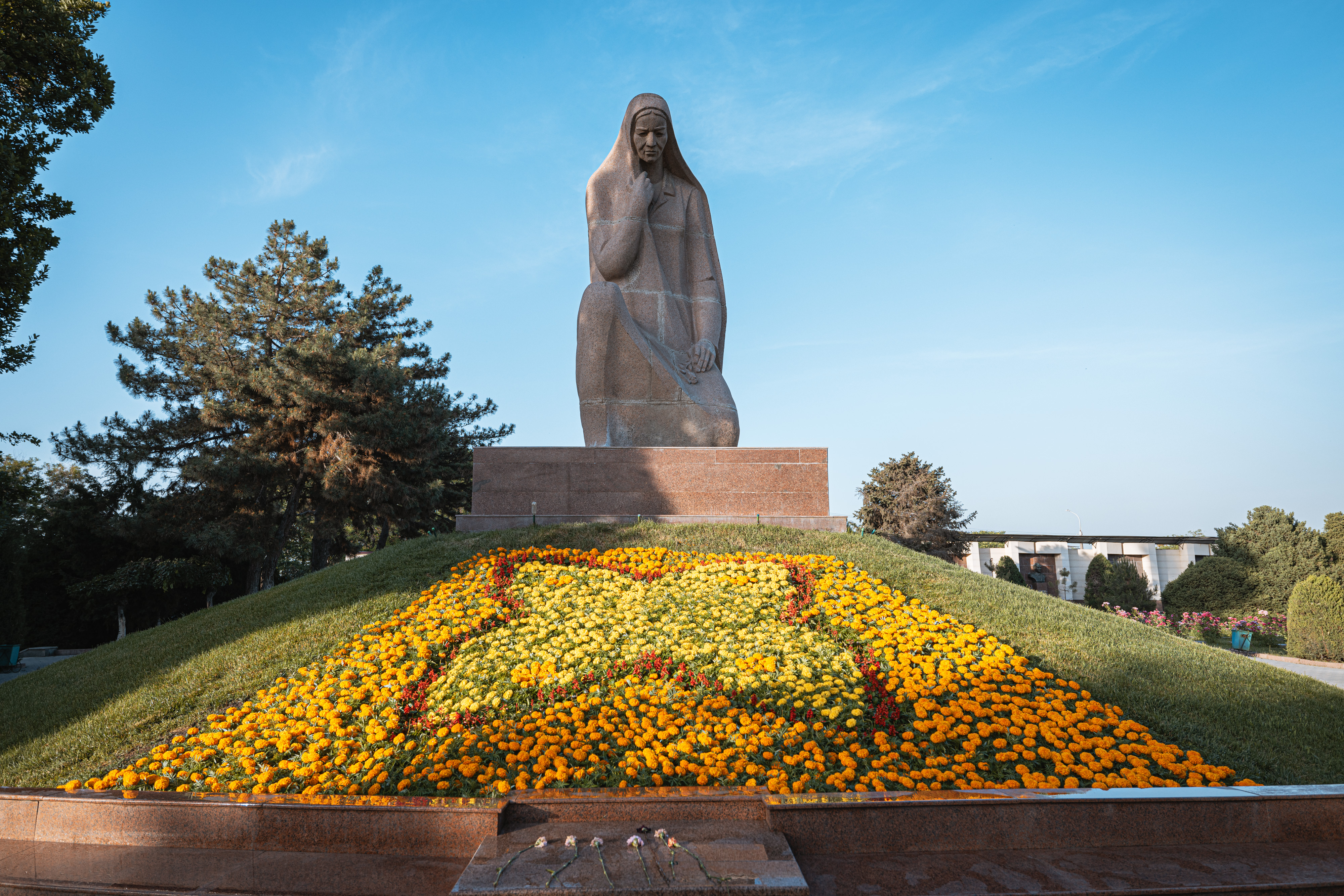
During his visit to Samarkand in April 2025, Russian Foreign Minister Sergey Lavrov pointed out the absence of inscriptions in Russian at the 'Grieving Mother' memorial, which was part of the official program. "How did the English get to you? I see the inscription is in English. I don't see Russian," he said. This news, which sounds like a joke, reveals the complexity of relations in the triangle of "Russia — memory of World War II — CIS countries."
Memory of the War in the Soviet Period
In the USSR, the anniversary of victory in the Great Patriotic War (WWII) lost its status as a non-working holiday in 1947. Historian Misha Gabowitsch writes that despite this, May 9th remained a day of remembrance both in the RSFSR and in other Soviet republics. The memorial date was often observed on the initiative of individual military units, local party committees, architects, and even relatives of the deceased.
From the mid-1960s, the memory of the country's greatest military triumph becomes a foreign policy trump card for the leadership of the USSR. The memory of the war also comes to the forefront in domestic politics—it gradually displaces the memory of the October Revolution and becomes one of the main sources of legitimacy for the Soviet system.
After 1965, the cult of the Great Patriotic War gained momentum in the USSR: across the country, monumental memorial complexes were erected instead of the laconic monuments of the first postwar decades. One striking example is the Motherland Calls statue in Volgograd (1967).
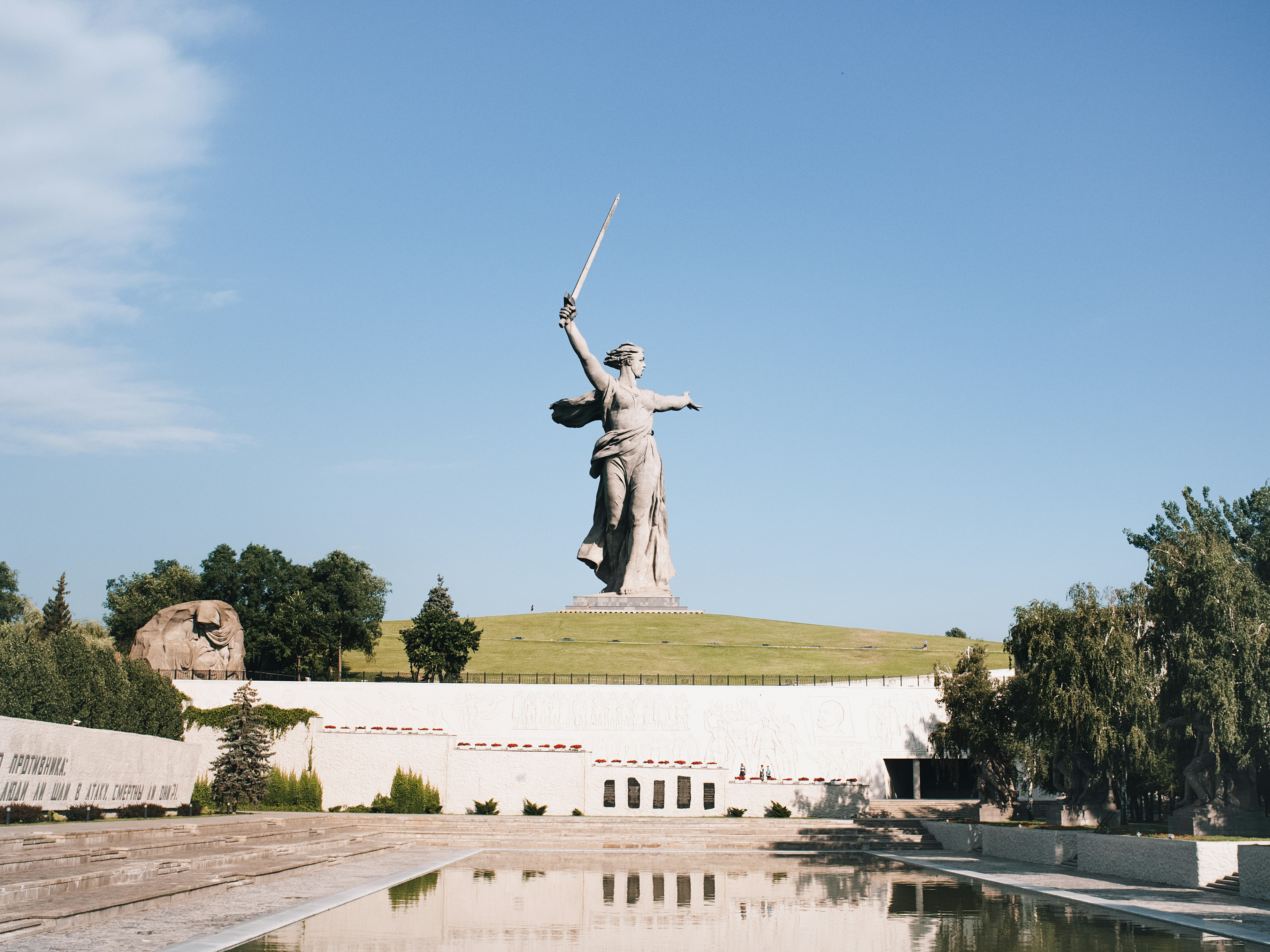 © Dmitry Ant / Unsplash
The Uzbek SSR joined this process in preparation for the 30th anniversary of Victory Day. In 1971, the transfer of the remains of 1,399 soldiers and officers who died in Tashkent's evacuation hospitals during the Great Patriotic War began from the Botkinskoye and Dombrabad cemeteries in Tashkent to the territory of the future military cemetery-memorial "Brothers' Graves." It was opened in the anniversary year of 1975.
By the 30th anniversary of the Victory, a Memorial to the memory of Soviet soldiers who died in the Great Patriotic War was also built in the center of Tashkent, next to the Lenin Square, which had been renovated and expanded in 1974. A monument to the "Defender of the Southern Frontiers" was erected in front of the Turkestan Military District (TurkVO) museum, and samples of military equipment appeared in the adjacent park.
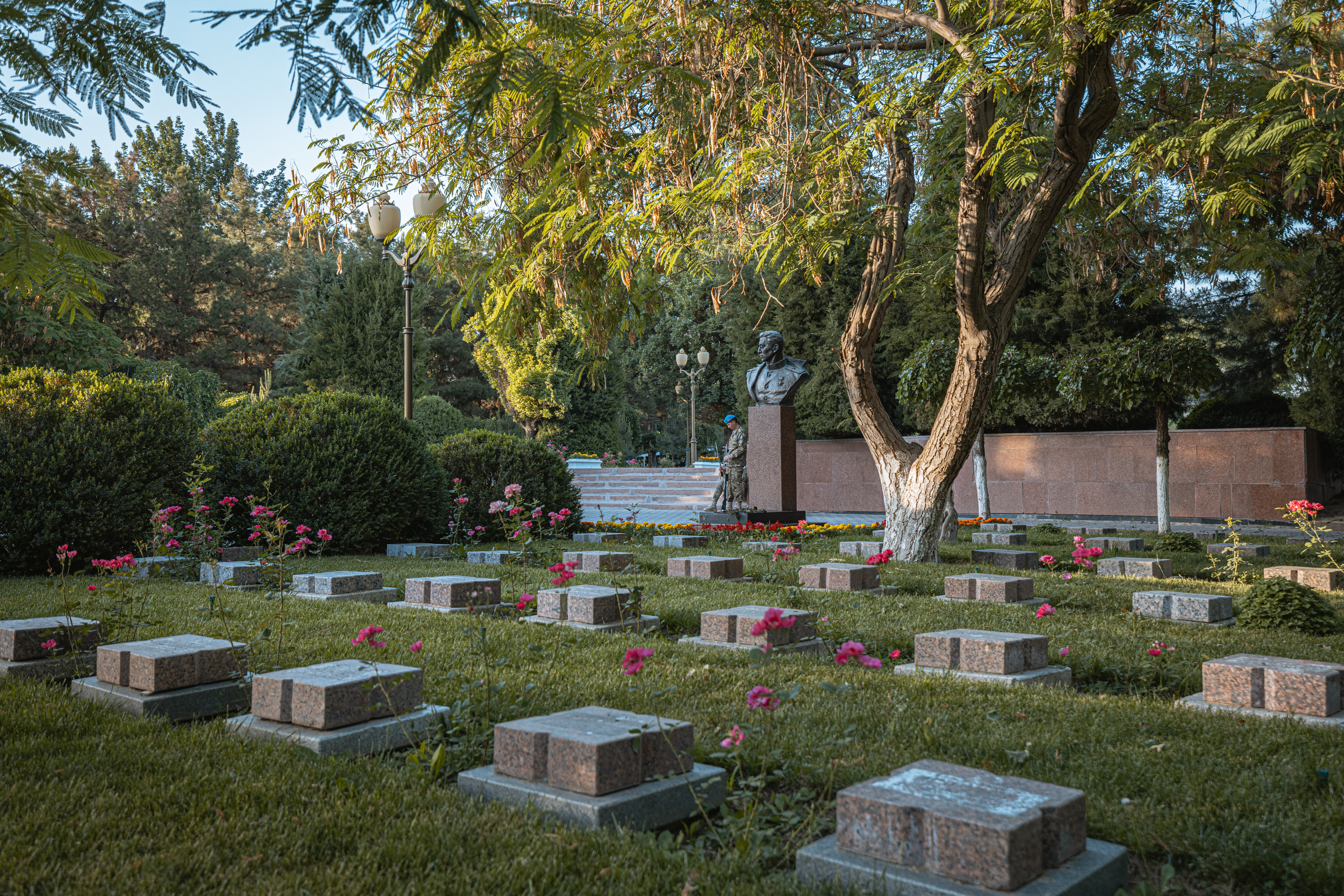 © Katerina Kuznetsova / Instagram: tawshan
 © Katerina Kuznetsova / Instagram: tawshan
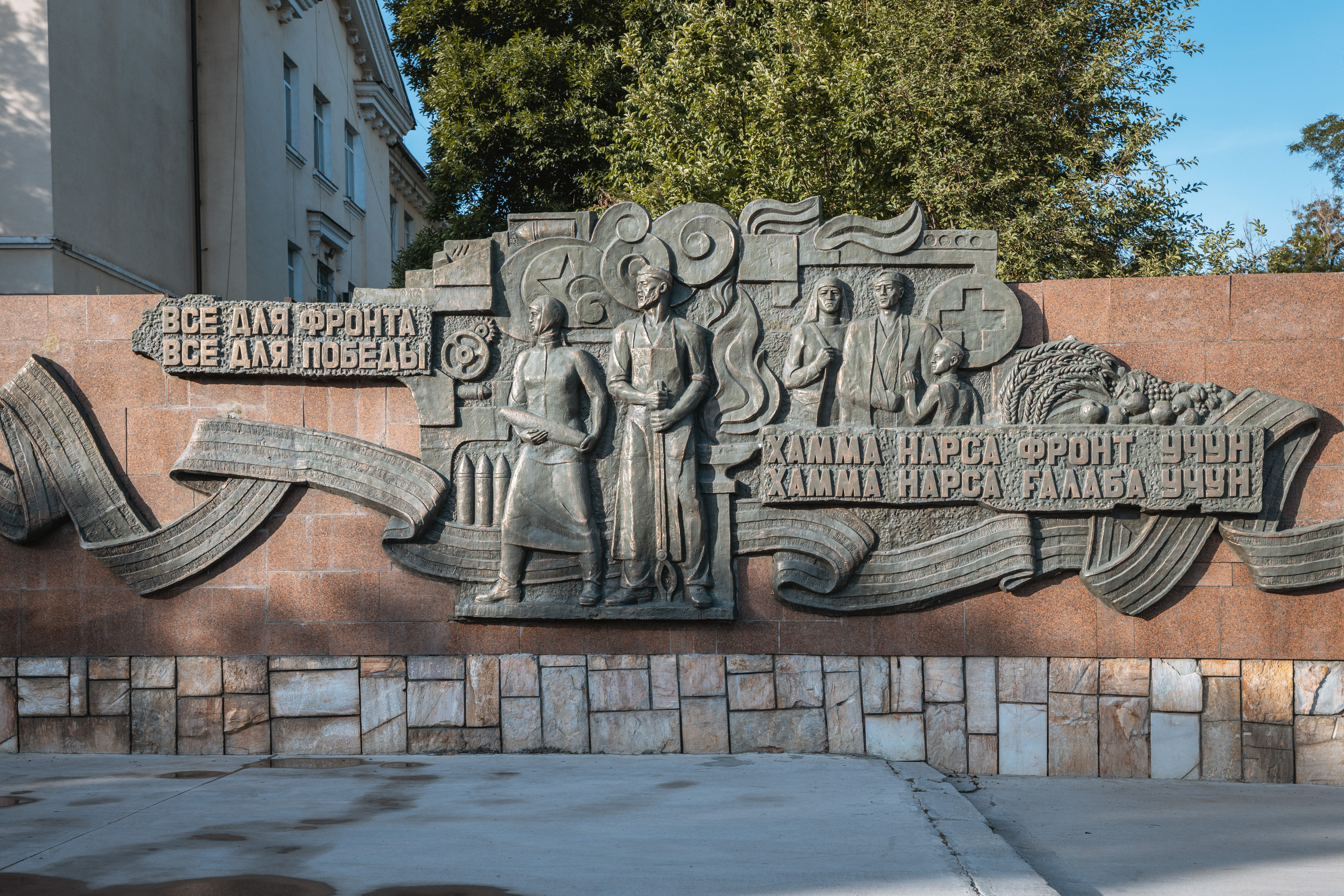 © Katerina Kuznetsova / Instagram: tawshan
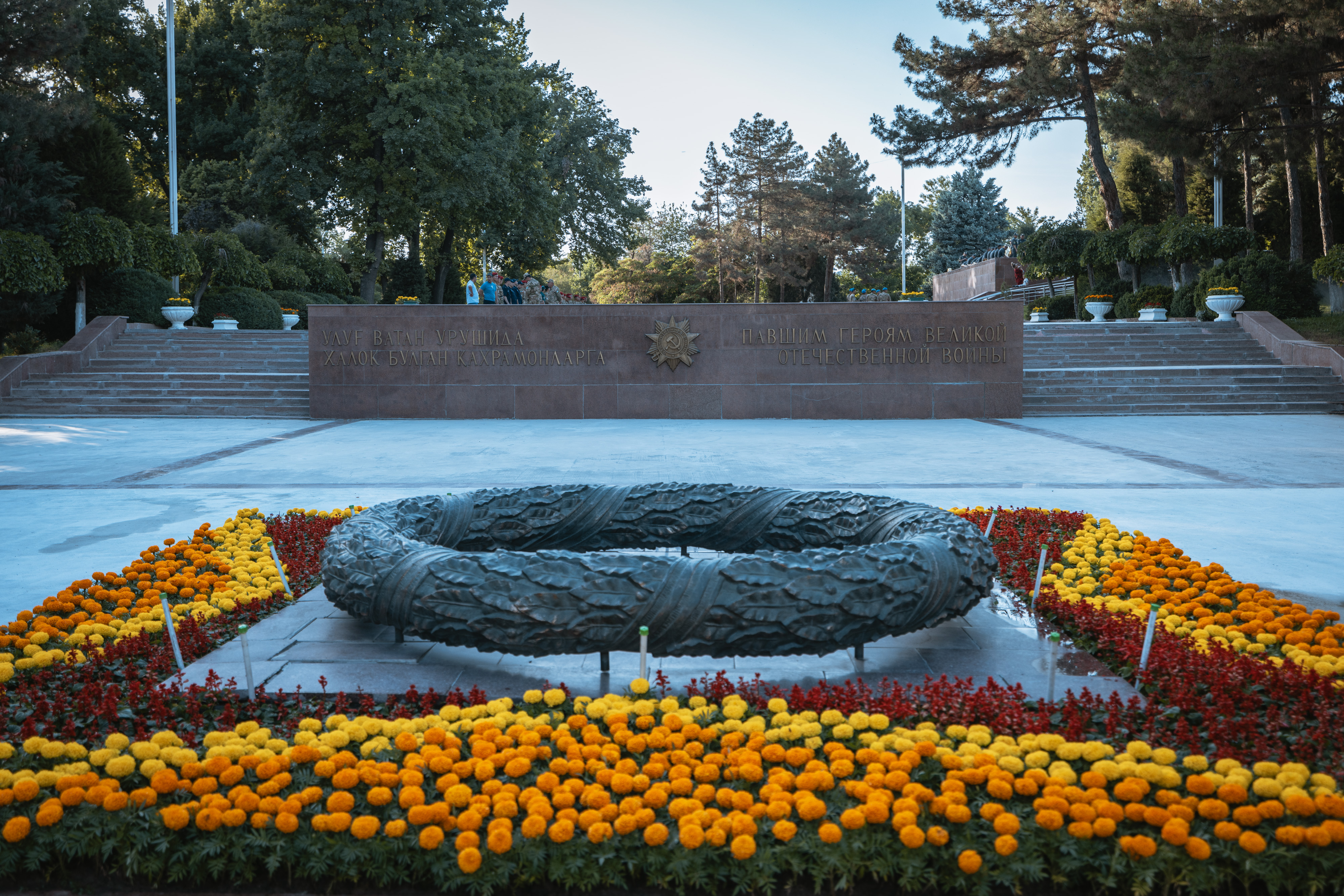 © Katerina Kuznetsova / Instagram: tawshan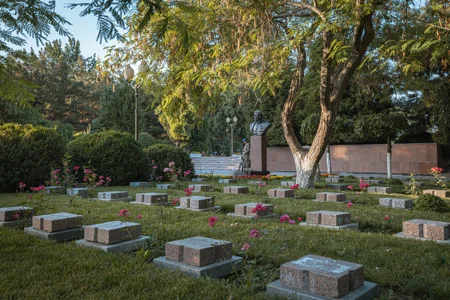
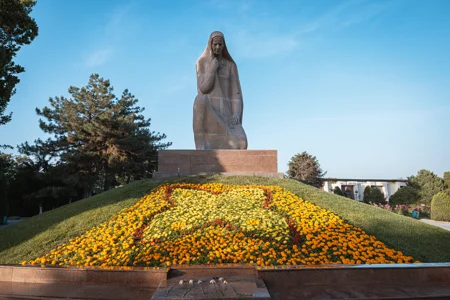
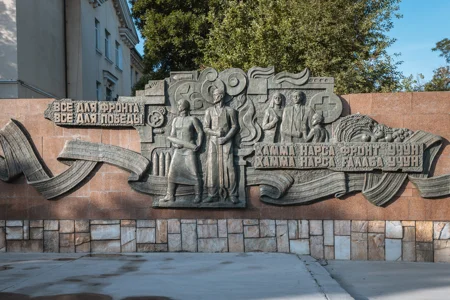
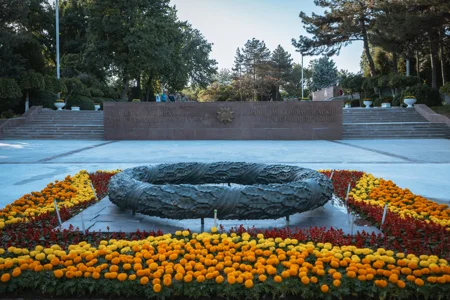
Memorial Complex "Brothers' Graves". Photo: Katerina Kuznetsova
Constructing Memory in Independent Uzbekistan
With the collapse of the USSR, Uzbekistan faced the questionof revising the meaning and symbolism of May 9th. In Russia, the cult of victory in the Great Patriotic War was revived in 1995. In Uzbekistan, however, for the first ten years of independence, this date formally remained a state holiday, but in practice was not celebrated — the first president of Uzbekistan, Islam Karimov, sought to lower the temperature of festive enthusiasm surrounding it.
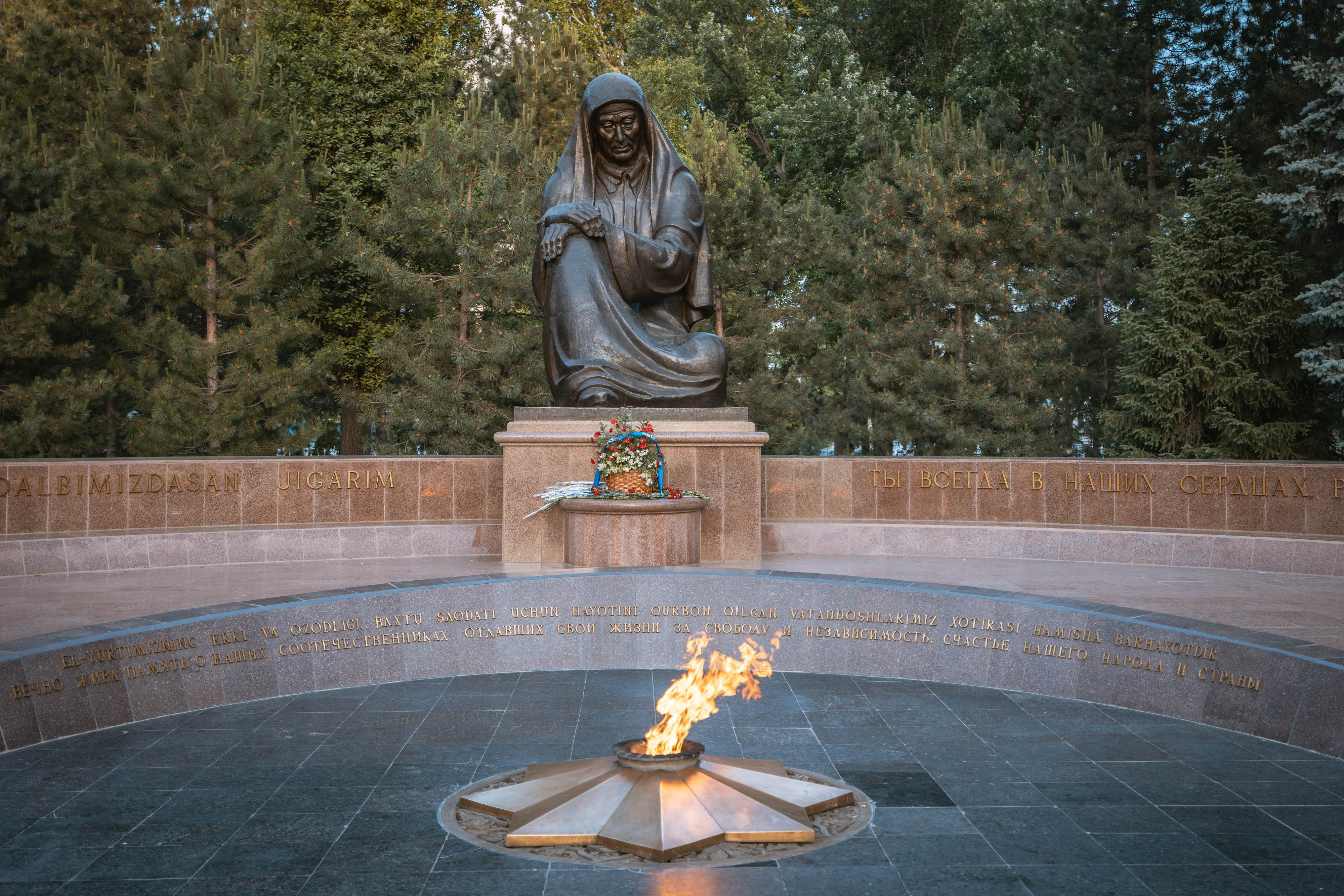
Since March 2, 1999, Victory Day was renamed to the Day of Memory and Honors. The new name allowed Uzbekistan to distance itself from Russia without entering into an open ideological conflict. The new holiday also required a new memorial symbol — this became the "Sorrowful Mother" sculpture, installed in 1999 in the central part of the Memorial to Soviet Soldiers in Tashkent, which was reconstructed and also renamed to the Square of Memory and Honors.
 © Katerina Kuznetsova / Instagram: tawshan
Sculpture "Grieving Mother" in Tashkent. Photo: Katerina Kuznetsova
The TurkVO Museum was renamed in 1991 to the Central Museum of the Armed Forces of the Republic of Uzbekistan. On January 14, 2012, on Defender of the Homeland Day, the grand opening of its updated exhibition took place. The participation of soldiers and military units from Uzbekistan in the Second World War is described by only a part of the exhibition, accompanied by brief explanatory texts.
Historians Henning Lautenschläger, Moritz Sorg, and Max Tracker note that the exhibitions dedicated to the war itself occupy approximately the same amount of space as the sections on the industrialization of the Uzbek SSR in 1941-1945 or on the work of women and medical personnel in the rear. Meanwhile, the exhibition remains silent on the fate of Uzbek prisoners of war and Uzbeks who sided with Nazi Germany — according to the researchers, this aligns with Soviet memory culture.
Researcher Svetlana Gorshenina notes that cultural policy under Karimov was aimed at ridding the country of the Russian legacy — both Tsarist and Soviet, perceived as a single "traumatic past." Therefore, in the updated exhibitions of Uzbek museums in the 1990s and early 2000s, the period of Russian presence in Central Asia either disappeared completely or was reduced to a minimum — as happened with the display of Uzbekistan's role in World War II.
Metamorphoses of Soviet Monuments
The fate of Soviet monuments in Uzbekistan, including those related to the Great Patriotic War, demonstrates not only the country's desire to distance itself from its communist past but also the variability of its historical policy.
In 2008, a six-meter-tall Red Army soldier towering over the Armed Forces Museum was dismantled — reportedly "for the purpose of reconstruction." However, already in January 2010, a new monument — "Oath to the Homeland" — was installed and ceremoniously opened in its place. The dismantling and replacement of the Soviet monument temporarily led to diplomatic tensions between Moscow and Tashkent.
The fate of the monument "Friendship of Peoples" (1982), dedicated to Shakhmed Shamakhmudov and his wife, who adopted 15 children of different nationalities during the war, is also telling. In 2008, by order of the Tashkent khokim, the monument was removed from its pedestal and relocated to the outskirts of the city, during which the figure of one of the children was lost. Ten years later — May 9, 2018 (!) — the monument
was ceremoniously returned to its original place. The new president, Shavkat Mirziyoyev, called this "the restoration of historical justice."
At the foot of the monument "Oath to the Motherland", conscripted servicemen take their military oath annually.
The return of the holiday
In recent years,the celebration of the Day of Remembrance and Honors has been held on agreater scale than under President Karimov. It is noteworthy that the head of state has resumed attending parades on Red Square in Moscow — President Mirziyoyev was there in 2023 and 2024. In 2025, he will also be present there at the invitation of Vladimir Putin.
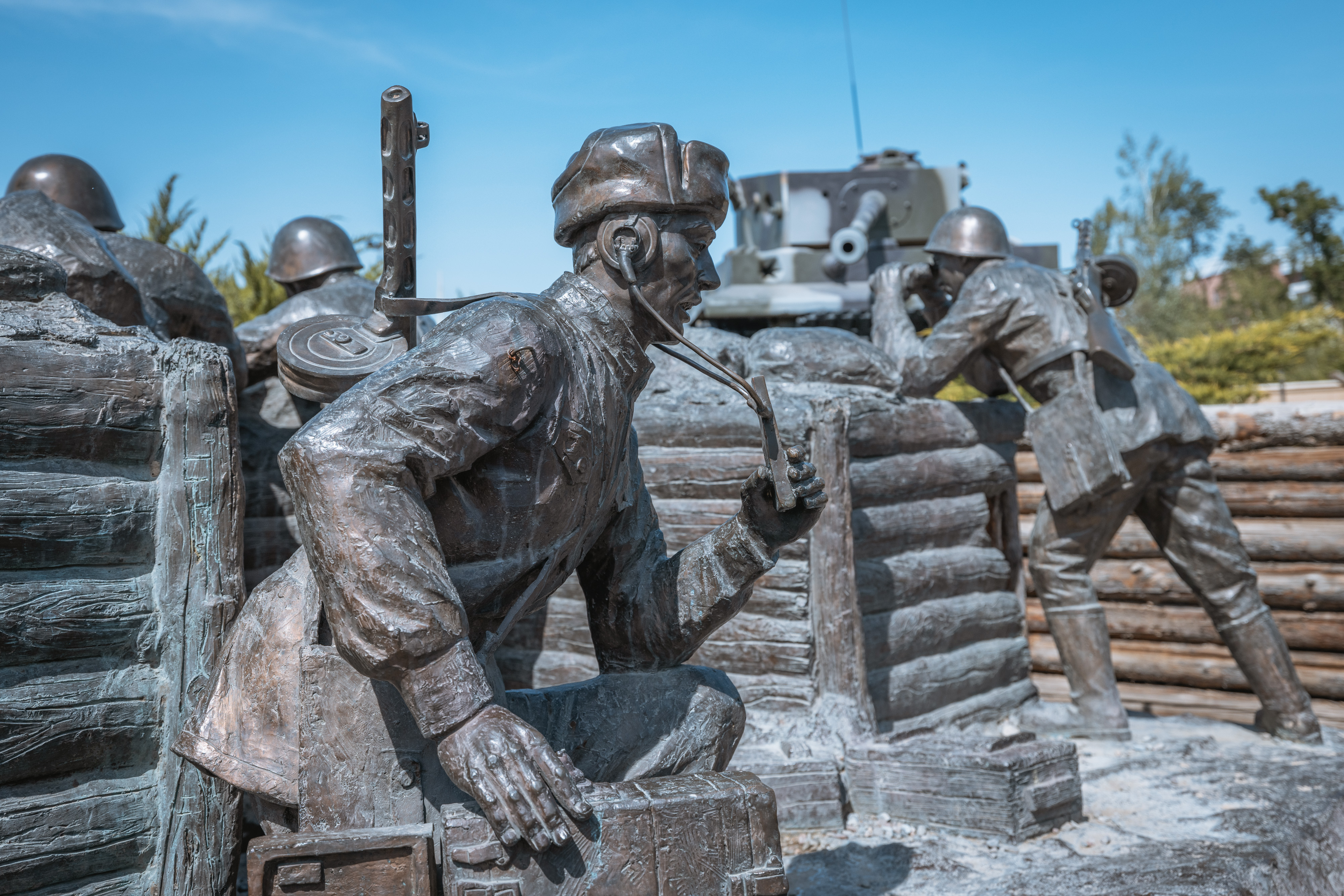
The practice of solemnly celebrating anniversary dates has also returned. In 2020, the opening of Victory Park and the State Museum of Glory in Tashkent, which immortalizes the contribution of the Uzbek people to the victory, became part of the official holiday program. In his speech at the park's opening, President Mirziyoyev emphasized: "We need to study the positive experience of countries such as Russia, Belarus, Kazakhstan in this regard and organize such practical work in Uzbekistan as well." The use of 3D installations and interactive multimedia for active emotional engagement of visitors at the Museum of Glory shows that Uzbekistan is actively studying the experience of the Victory Museum in Moscow and the exhibition projects of "Neva Battalist".
 © Katerina Kuznetsova / Instagram: tawshan
 © Katerina Kuznetsova / Instagram: tawshan
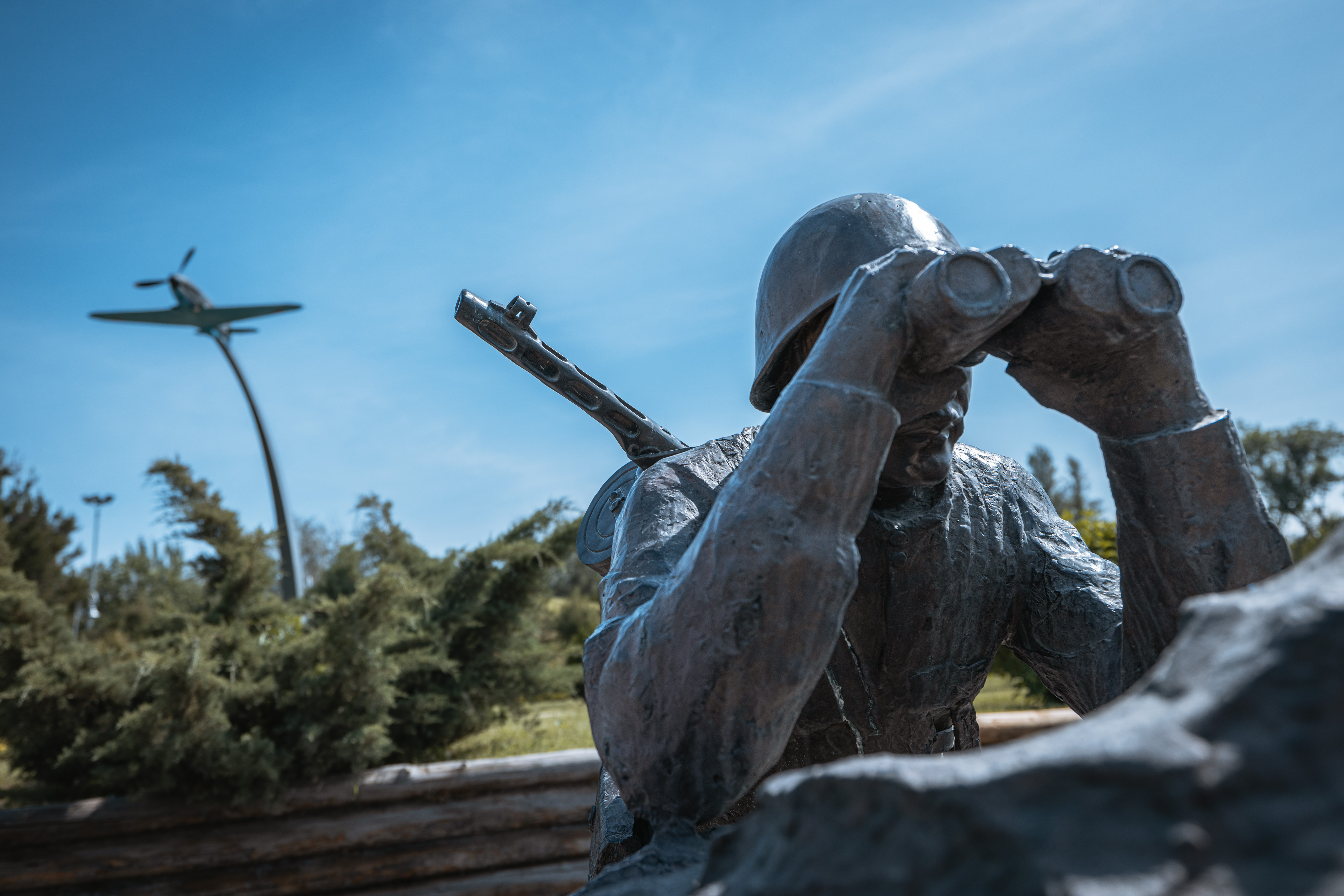 © Katerina Kuznetsova / Instagram: tawshan
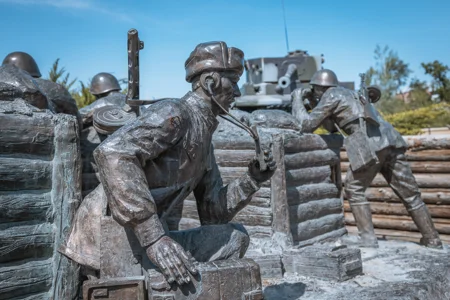
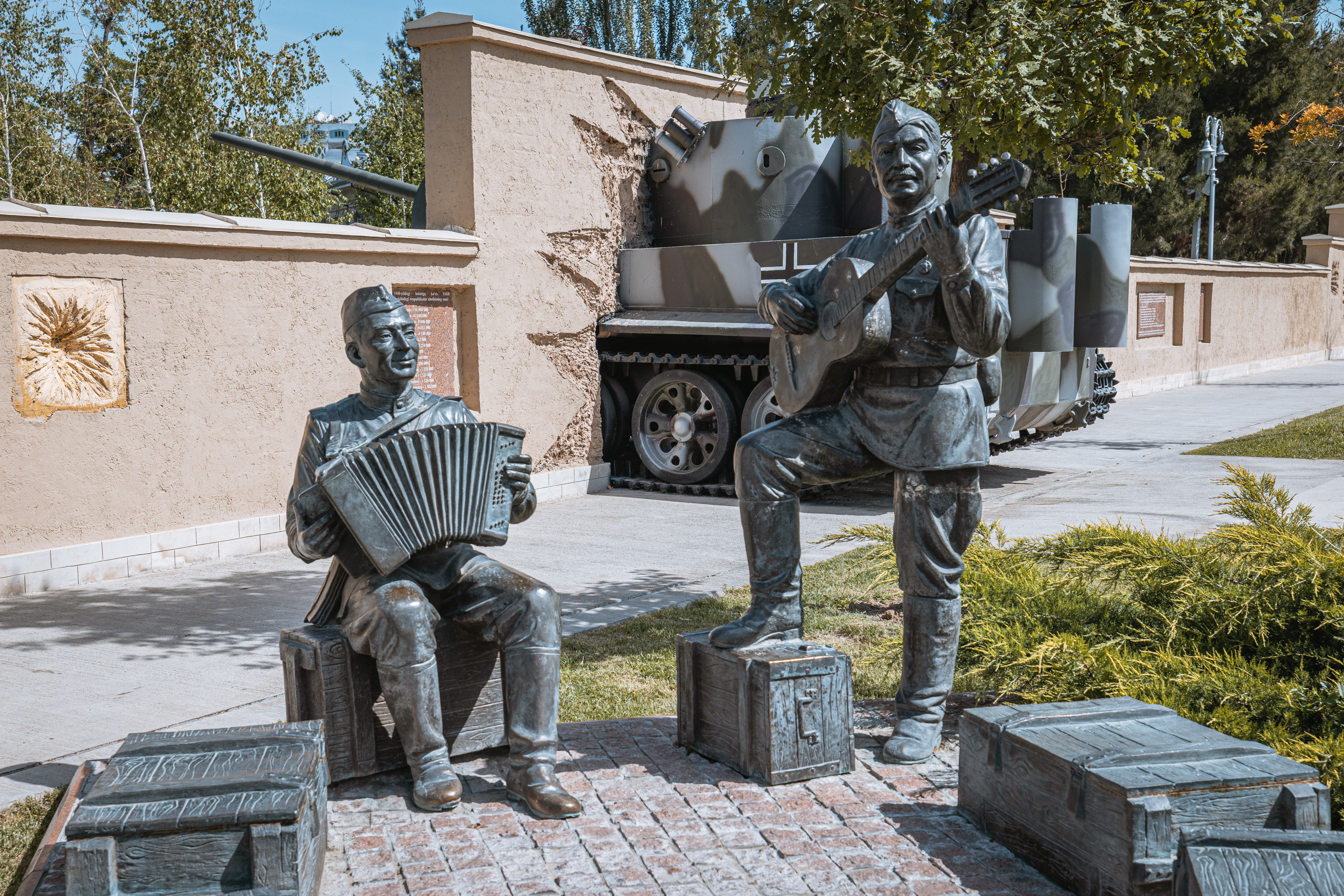 © Katerina Kuznetsova / Instagram: tawshan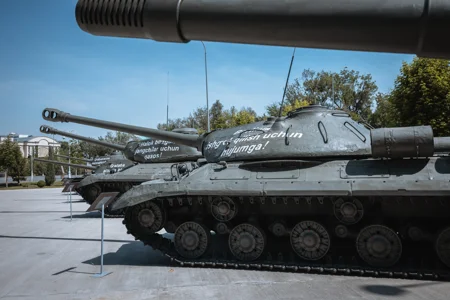
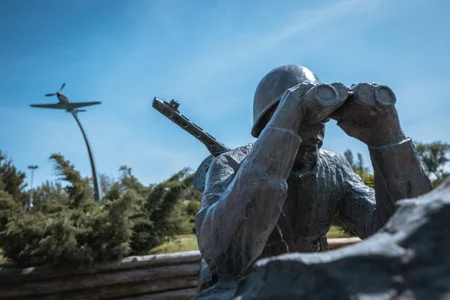
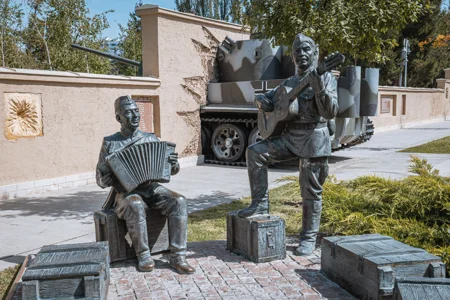
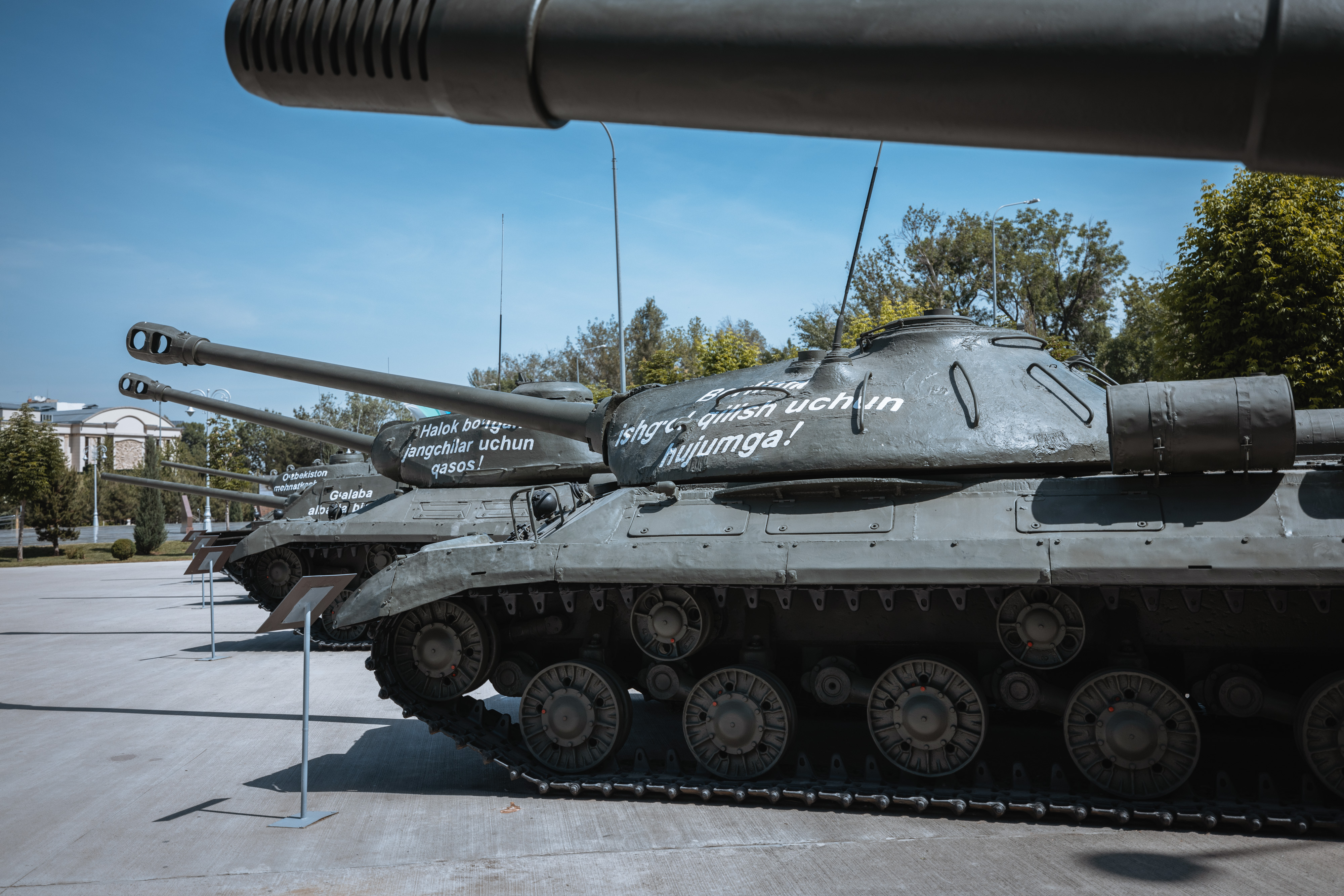
Outdoor exhibition of the State Museum of Glory. Propaganda slogans from those years are applied to wartime military equipment — but in Latin script. Photo: Katerina Kuznetsova
At the same time, the state's attention to living war participants takes on a social character — now in Uzbekistan, war veterans are honored not only for their combat merits but also due to their age. For example, in 2024, the president visited World War II veterans in a military hospital, and in 2025, he signed a decree on paying them festive monetary allowances in the amount of 10 thousand dollars.
Grassroots practices
Modern grassroots practices of celebrating May 9th have entered Uzbekistan from Russia. Along with them, the semantic content was also borrowed, which in the local context appears archaic and unnatural.
One of the most notable such phenomena is the "Immortal Regiment" campaign, which for several years now has been held in Tashkent on the grounds of the "Brothers' Graves" memorial complex. The annual event resembles a circular procession within the memorial grounds—participants have never been allowed out onto the capital's streets throughout the entire history of the campaign. Regarding this, the organizers of the Tashkent "Immortal Regiment" are engaged in a protracted legal battle with city authorities and maintain activity in Russian state media.
 © Katerina Kuznetsova / Instagram: tawshan
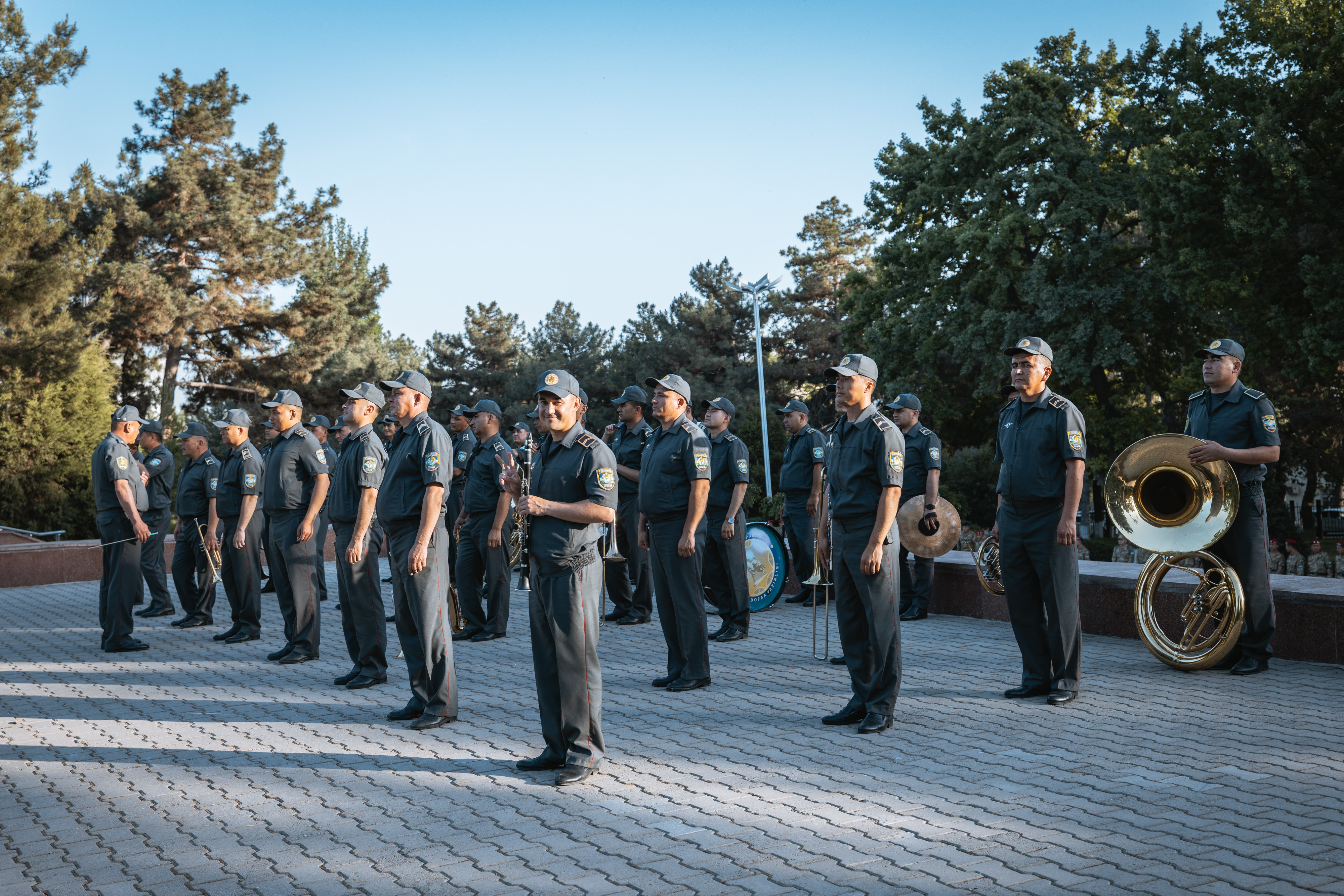
Two days before the holiday, a rehearsal of the Ministry of Defense brass band took place at the "Brothers' Graves." Photo: Katerina Kuznetsova
In Russia itself, «The Immortal Regiment» gradually evolved into a nationwide phenomenon, coming into the field of view of the state. In 2015, full administrative control was established over the movement: the "Victory" organizing committee, formed under the Russian president, recommended that regional and local authorities support and promote the event. On May 9, 2015, President Putin marched in the "Immortal Regiment" column with a portrait of his veteran father. From that moment on, administrative support for the grassroots initiative turned into its suffocation.
Another Russian practice of remembrance through action — is wearing the St. George's ribbon. In Uzbekistan, their distribution and wearing are formally not prohibited, but not encouraged either. In 2015, the Public Council under the Ministry of Defense proposed replacing the St. George's ribbon with a "ribbon of glory" in the colors of the Uzbek national flag. This substitute symbol is actively promoted at the highest level — for example, in 2023, President Mirziyoyev was seen with such a ribbon at the Victory Parade in Moscow.
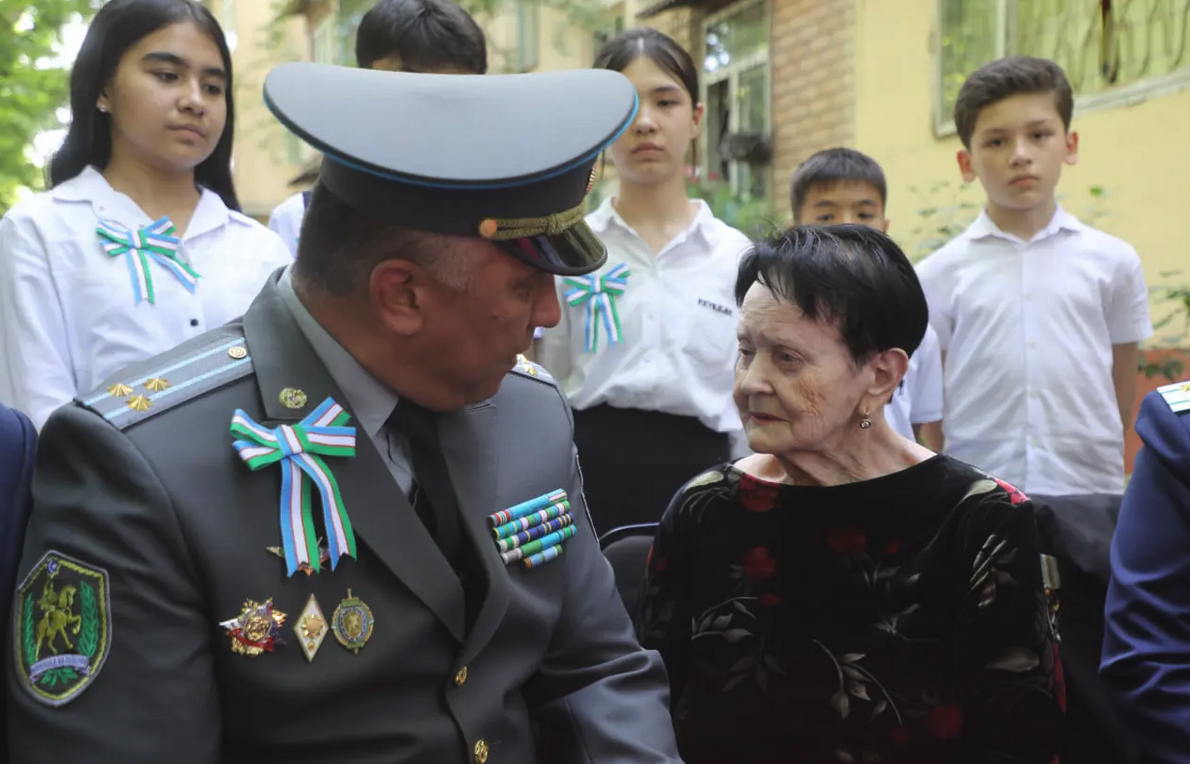
On the eve of the Day of Remembrance and Honor, the commander of the Tashkent Military District visited the home of a siege survivor living in the capital. Both the officer himself and the attending schoolchildren wore the "Ribbon of Glory." Photo: Ministry of Defense of Uzbekistan.
Wearing the St. George ribbon by participants in local memorial events appears more like a statement of cultural choice. It certainly serves as a symbol of the conditionally "Russian" Victory Day, contrasting with the narrative of celebrating the Day of Remembrance and Honors in independent Uzbekistan. This contrast became particularly noticeable after 2014 — it was then that wearing the St. George ribbon acquired a political connotation and began to be perceived ambiguously in the post-Soviet space.
Unlike post-Soviet Russia, the Great Patriotic War / World War II is felt in Uzbekistan as a nationwide, insurmountable disaster in which the country had no choice but to participate, yet through which it passed honestly and to the very end. This is precisely the meaning the country invests in May 9th — and this explains why Victory here is associated with memory and honors.
The author's opinion may differ from the editorial position.


