Gastronomy
Tatar buckwheat and Arabic rice. Pavel Syutkin — about Asian products of Russian cuisine
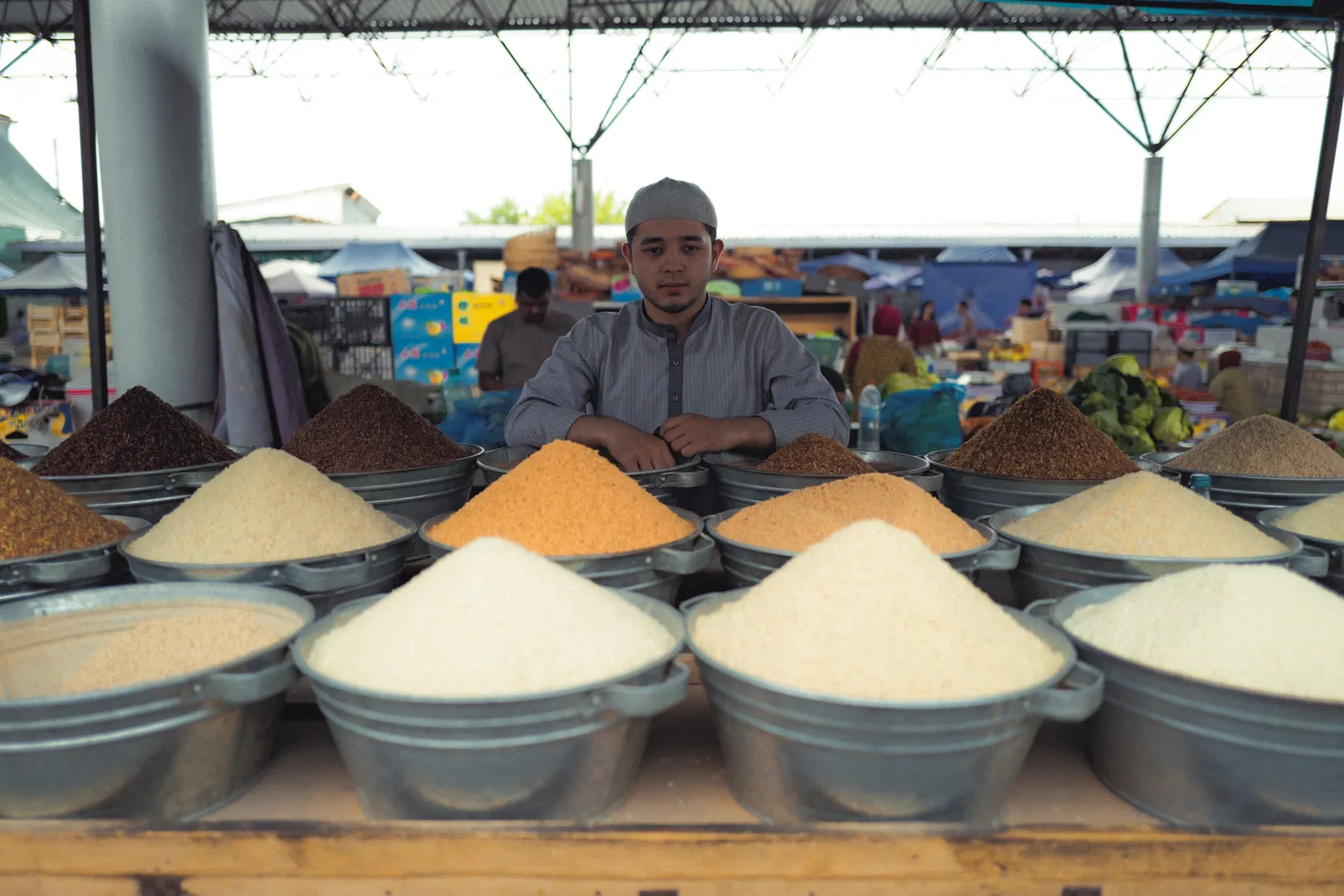
The history of national cuisines rarely aligns with state borders—especially at the crossroads of Europe and Asia. Buckwheat and rice, familiar and seemingly native to Russian gastronomy, actually entered it from the East and became part of the mythological narrative. Especially for HD magazine, historian and author of the book "The True History of Soviet Cuisine" Pavel Syutkin explains how Asian products became the basis of the daily diet in medieval Russia—and why discussing the traditional inevitably leads to a dialogue of cultures.
Asian Culture in Rus'
"Is Russia Asia or Europe?" — this question has repeatedly arisen in political discourse over the centuries. Foreign travelers of the 16th-17th centuries noted that the customs at the Russian court and even the clothing of the tsars and boyars resembled the Eastern fashion of Turkey and Persia. The famous kosovorotka shirt, adherents of Orthodox authenticity believe, was sewn so that the pectoral cross would not fall out during work. However, no attempt is even made to explain why exactly the same kosovorotka shirts can be seen on Turkic engravings from as early as the 10th century.
A similar situation is unfolding with food. "Russia is the homeland of elephants," our cuisine is the most ancient and rich, all the best in world cuisine originated from it. How many times have we encountered this primitive and ignorant opinion? Countless. And yet, it would seem so simple—look around, get acquainted at least with the cuisines of neighboring peoples, and much will fall into place. Then it will turn out that many dishes and cooking techniques were invented long before the first Russians, Tatars, French, or Uzbeks appeared.
The term "Kievan Rus" is not exactly forbidden to say in Russia now, but it's also not very recommended. However, downplaying Kyiv's role in the formation of the Russian state is just as absurd as closing one's eyes to its closest connections with Turkic peoples and steppe nomads.
Merchants traveling with caravans along the Great Silk Road through the northern Black Sea region carried not only expensive fabrics and tableware but also rice, dried fruits, and spices with them. It is hard to imagine that the inhabitants of the Russian principalities were not interested in the contents of their cargo. By the way, many Russian princes and military leaders had grandmothers, mothers, and wives of Turkic origin. Could it be that, after marrying, they forgot about the food and treats from their native homes?
Afanasy Nikitin's Barynya
Let's try to use the example of a typical foreign product to describe the process of its entry into Russian cuisine. So, what is considered more native in Russia — rice or, for example, buckwheat? After all, buckwheat porridge, unlike pilaf, is considered one of the main embodiments of Russian cuisine today.
The introduction of rice into Russian cuisine began as early as the pre-Mongol era. The Russian names for rice, which varied across different periods, clearly illustrate this. For instance, its ancient name "brynets" was borrowed from the Persian *birinǰ*, likely through the Crimean-Kipchak variant *brinč*.
The word "brynets" appears in sources from the 15th–16th centuries. Describing his journey to India, Afanasy Nikitin mentions: "And [the Indians] eat brynets, and kuchiri with butter, and they eat various herbs." However, brynets is also frequently mentioned in relation to Russian reality. For example, the chronicle of the Kirillo-Belozersky Monastery for the 1560s contains an entry: "The Annunciation priest Selivestr donated a pood of incense, a pood of brynets, 15 grivenkas of pepper."
In the mid-16th century, by decree of Ivan the Terrible, Archbishop Gury of Kazan was allocated an annual "pood of brine" from the treasury. The term "brine" also appears in certain editions of «Domostroy» (1550s). "Chicken in brine with saffron," "sugar pies are made in brine," — we read in one of them.
However, the word "brynec" for rice did not remain in common use for long. Significantly earlier, from the 12th century, the term "Saracen (Sorochin) millet" emerged and gradually became established. From the end of the 17th century, it became widely accepted and would appear in Russian culinary books until the end of the 19th century.

Saracen's millet
The word "Saracen," applied to Arabs, has been known in Rus' since at least the 10th century. Mentions of them can be found in the Resurrection, Nikon, Laurentian, and First Sofia Chronicles. The phrase "Saracen millet" itself first appears in ancient Russian written records in the Studite Typikon (a copy from 1193).
Where could the word "Saracen" have come to Moscow from? Most likely, from Byzantium, but this process was not straightforward. The term "Saracen" itself is of Western European origin — it was precisely after the Crusades that all Arabs began to be called this in Europe.
Now let us recall that the Byzantine capital Constantinople was captured by European knights in April 1204 during the Fourth Crusade. For some time (a little over 50 years), the so-called Latin Empire was established there. It is clear that even before this event, news of the Crusaders' battles with the Arabs had reached the Russian principalities.
Perhaps it was then that the word "Saracens," as an all-encompassing name for Arabs and Turks, entered mass circulation in Rus? And was finally established after the fall of Constantinople under the blows of the Turks in 1453, when Moscow assumed the status of the "Third Rome"? It seems that it was in this way that the name "Saracen millet" entered Russian usage.
Naturally, at that time, all rice was imported primarily from the south via the Volga. "Saracen millet [in Astrakhan] is cheap," noted the Swedish diplomat Peter Petreius in 1615, "a barrel of it can sometimes be bought for two and a half thalers, sometimes more expensive and sometimes cheaper, depending on the circumstances. It is brought by water across the Caspian Sea from Media, Persia, and Armenia." Johann Philipp Kilburger also writes about rice as a commodity from Persia in his "Brief Account of Russian Trade" in 1674.
Traditionally Russian buckwheat... from Asia
Today's understanding of the cultivation of buckwheat varieties indicates that it was domesticated approximately 3,000 years ago in southwestern China, from where it spread to Central and Western Asia, as well as Siberia. This process was not rapid: for example, it only appears in the Middle East around 1,000 years ago.
This is precisely where buckwheat comes to Europe from. Besides trade, the Crusades also played a significant role here. Buckwheat reached Rus through several routes, with the first attempts to cultivate it in the Dnieper region dating back to the 11th–12th centuries.
The very name of the culture indicates where it came from there.
At that time, everything that came from Byzantium was called Greek — “the Greek faith,”, adopted by Prince Vladimir, also originated from Constantinople. Buckwheat spread quickly to the north of the Slavic lands. As noted by the renowned Soviet archaeologist Alexander Mongait, "judging by the materials from the excavations of Pereyaslavl-Ryazansky, a new crop — buckwheat — appeared in the late 12th–13th centuries."
However, a pause follows. A number of specialists believe that this "preceding culture of buckwheat" gradually disappears by the end of the 13th century. The problem was the low yield of these cereals and their sensitivity to soil type. Furthermore, the straw after threshing buckwheat was unsuitable as fodder for livestock, which sharply reduced the value of this crop.
«Tatarka» from the Volga Region and Crimea
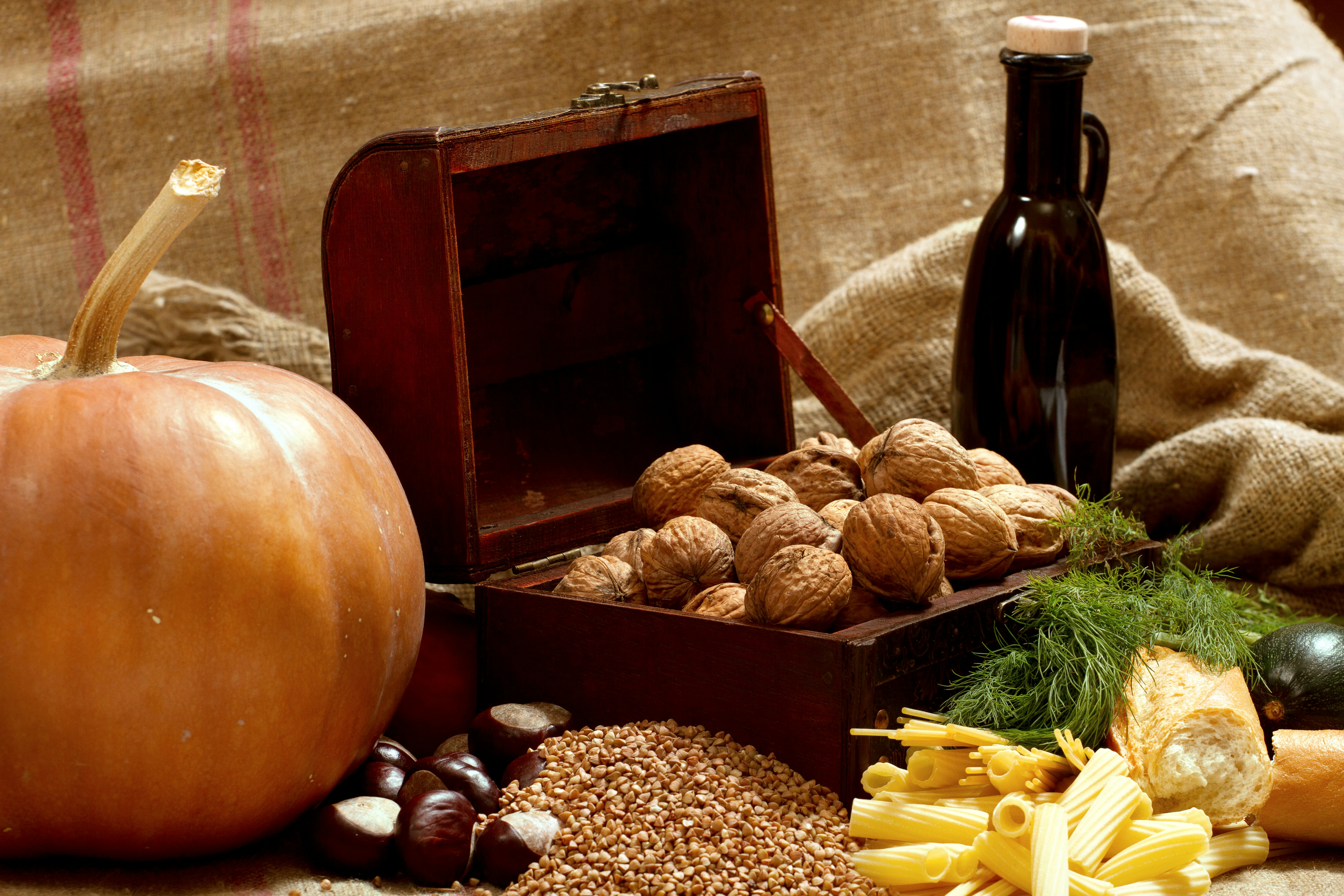
But then we encounter another hypothesis about buckwheat's arrival in Rus. The fact is that one of the habitats of wild buckwheat is the Volga region. It's difficult to say when it began to be cultivated there, but even the botanical name of the wild relative of cultivated buckwheat (Fagopyrum tataricum) refers us to this region. To this day, in some Russian villages, buckwheat is called "Tatar grain," and previously this name was widespread in Ukraine and southern Russia.
The capture of Kazan by Russian troops in 1552 completed the annexation of the Kazan Khanate to the Muscovite state. This event marked the beginning of the mutual interpenetration of the two cultures, including culinary ones.
However, the Tatar roots of buckwheat might not necessarily be linked to the Volga region. This crop entered Ukrainian lands from Crimea. One can debate whose national dish buckwheat porridge is—the people of Rus' or the Crimean Tatars. The French engineer Guillaume de Beauplan, who served under Polish King Sigismund III in the 1630s, left detailed recollections about Crimea and the habits of the local population. "Their [the Crimean Tatars'] ordinary food consists of millet, barley, and buckwheat groats; they cultivate these grains themselves."
It is evident that buckwheat reached the adjacent regions of the Muscovite state from Right-Bank Ukraine, where it then spread. Thus, there were several such routes into Rus, and at different times. In any case, by the beginning of the 16th century, buckwheat was already being actively cultivated in the country — this is evidenced, for example, by entries in the chronicles of that period.
Where to find the authentic?
In a world where products, customs, and languages have been mixing for centuries, finding a "truly national" cuisine is simply impossible.
Here we can draw an even deeper conclusion. Any attempt to create a culture isolated from the world, including cuisine (which is also a part of any national culture), always leads to one result — degradation. We last observed this at the end of the USSR's existence, when the "Iron Curtain", which separated it from the rest of the world, brought Soviet public catering to complete decline.
The secret of any national cuisine's success lies precisely in interaction with different peoples, in studying and creatively mastering their traditions and tastes, products and dishes.
There are many examples of this. Classic French cuisine developed from the Italian gastronomic heritage brought to Paris during the time of Catherine de' Medici. And even Peruvian cuisine, which has conquered the culinary world today, is not only the legacy of the Inca Indians but also a significant influence from Japanese and Chinese culinary traditions.
Did you like the story? Follow us on Instagram and Telegram — there's even more interesting content there.


Newsletter
A letter from the HD editors
Once a week, we send the best stories, events, and cultural discoveries from Central Asia.