Gastronomy
"On the plate are manti, and in it two parts of lamb": How Russia penetrated Asia, and Asian cuisine penetrated Russia
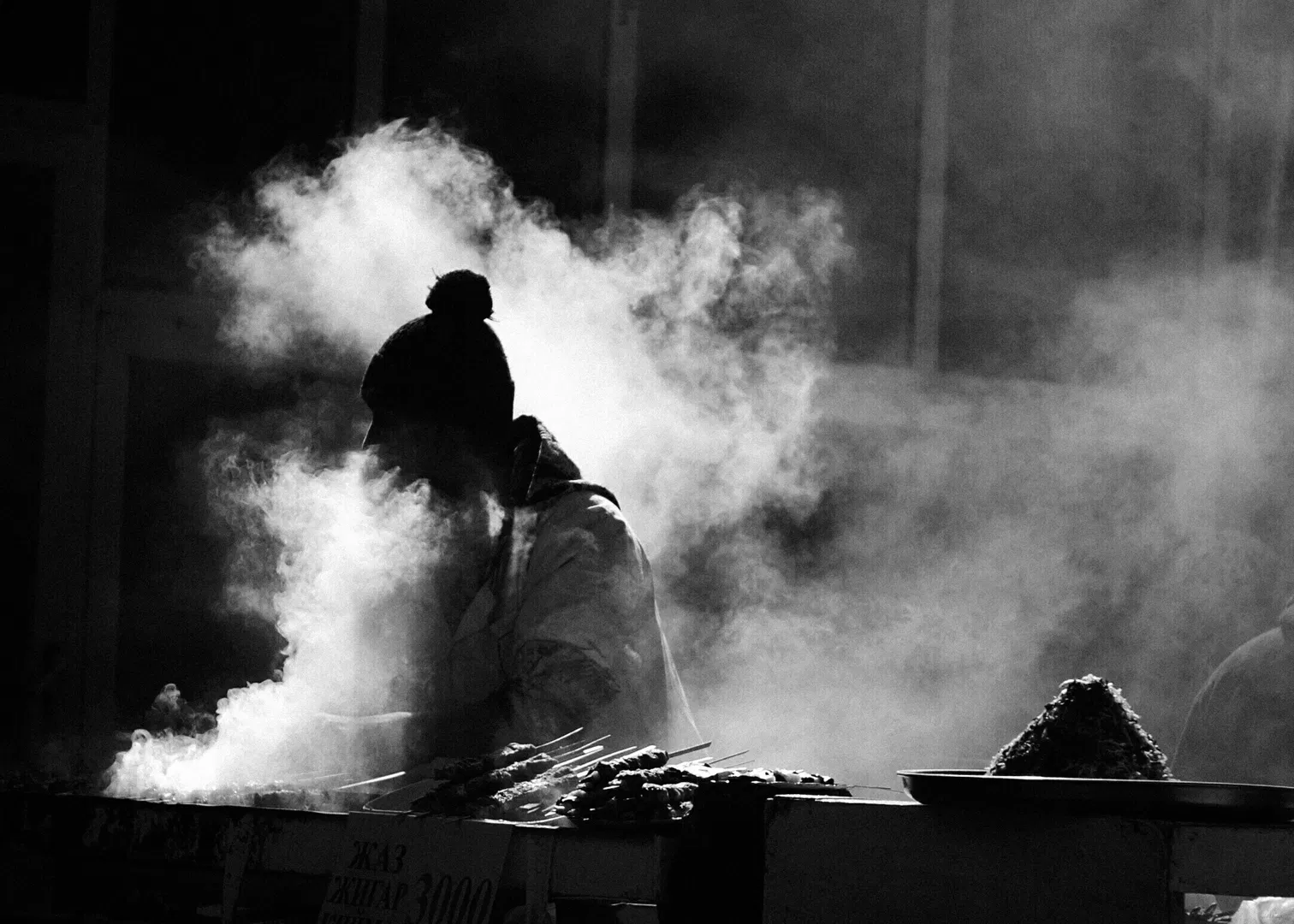
It's no secret that the most common fast food in Russia is of Asian origin. The overall popularity of pilaf and shashlik, lagman and baklava is not only equal to, but often surpasses, Russians' love for shchi, buckwheat porridge, or kulebyaka. Writer and culinary historian Pavel Syutkin, exclusively for HD magazine, explained how the infiltration of Asian cuisine elements into Russian gastronomy began.
National Cuisine Pyramid
What is cuisine? Of course, this concept is not limited to plov, shchi, beshbarmak, or beef stroganoff. It consists of several levels, forming a kind of pyramid.
At its core are local products that are grown and raised in a particular country. In the modern world, it is quite difficult to determine their "nationality" — everything has long been mixed. However, one can speak about the tastes and food preferences of the local population.
The next level of the pyramid consists of gastronomic preserves: sauerkraut, dried fruits, jerky, kumis, and sour milk. These products can be consumed on their own or serve as a kind of "semi-finished product" for other dishes.
A little closer to the top are ready-made dishes that the chef serves at the table. Their national character is defined by several aspects at once.
Firstly, national gastronomic products and preserves are often used as ingredients or seasonings. Shchi with sauerkraut, kurutob with syuzma, pies with jam—all these dishes have a local flavor for a reason. Secondly, food processing technologies are important. The most obvious examples are the Russian stove and tandoor, as well as methods of fermenting and pickling foods.
Finally, the concept of national cuisine is crowned by the traditions of feasting, the culture that forms around the table.
Let's try to apply this scheme to the centuries-old history of the interaction between Asian and Russian cuisine.
Trading is the engine of the kitchen
The acquaintance of Russians with Asian cuisine began in the centuries when neither Russia nor the Russians themselves existed as a unified people. Slavic tribes daily encountered nomads who levied tribute on caravans along the Great Silk Road — it is difficult to assume they were not familiar with the products and dishes consumed by the steppe inhabitants.
We should not forget that besides the famous "Route from the Varangians to the Greeks", which ran along the Don, Russian princes quite quickly began to intervene in trade along the Volga. Dirhams found at archaeological excavation sites in Russia are excellent material evidence of developed trade with the East and Central Asia. Arabic coins, by the way, were found much more often than Byzantine silver.
What products did Russians become acquainted with during this trade exchange? Undoubtedly, the caravaneer merchants' baggage contained rice and Eastern spices — cumin, cardamom, ginger, saffron. They also carried dried fruits — if not for sale, then at least for their own sustenance on the long journey. Here, for example, is the fig. Furthermore, the Hypatian Codex, while recounting the campaign of Russian princes against the Cumans in 1183, mentions the Fig Ford across the Dnieper. Whether merchants transported sweet goods across it then, or whether it somehow resembled this fruit — we cannot know today. But the word itself, it seems, was quite familiar back then.

Fig. Photo: Olga and Pavel Syutkin.
And even the dried fruits themselves—peaches, apricots—were called "sheptala" in Russian cuisine for many centuries. It is traditionally believed that this word comes from the Persian šäftaly, meaning "peach." Describing the feast held on the occasion of the birth of the future Emperor Peter I, the Russian historian Alexander Tereshchenko mentions that after dinner, "30 dishes of candy, 10 dishes of granulated sugar with spices, figs, candied fruit, shaptaly, ginger in molasses..." were served. However, history played a cruel joke on this word. Later, from around the end of the 18th century, the name "sheptal" also came to refer to dried apricots.
Kumis comes to Russia
As we remember, the kitchen is also about preserves. Processing milk to preserve it was a task that any national cuisine solved in the pre-industrial period. Most often, it was solved through fermentation, a vivid example of which — kumis.
The first mention of kumis in Rus is an episode described in the Hypatian Codex, related to Prince Daniel of Galicia's visit to Batu Khan's headquarters in 1250. He was received relatively cordially there. The Mongol commander himself offered him to taste kumis:
"Do you drink black milk, our drink, koumiss?" — "I have not drunk it before, but now that you command it, I drink," replied the prince. But later, noticing that the koumiss did not suit the Russian prince's taste, the Mongol sent him a drink more familiar to him: "You are not accustomed to drinking milk, drink beer."
However, from the 16th century onward, after the conquest of the Volga region, kumis became well-known to the Russian public. A couple of centuries later, its medicinal properties gained wide recognition. The Russian traveler and academic Pyotr Pallas wrote without any bias: "From Muscovy and the Don, the ailing people would travel to the Bashkir steppes to drink kumis, as it holds great benefit for health." And Vladimir Dal in 1843 even noted that "once accustomed to kumis, one involuntarily prefers it to all other drinks without exception."
Of course, the Russians became acquainted not only with kumis during their contacts with Asia. Fermented milk, which can be poured off, is known to many peoples. In Central Asia, a product called kurt is widespread — salted, dried white balls or cylinders. Sometimes it is simply dried, sometimes boiled and dried.
In Asia, it is made from katyk - fermented boiled milk, ayran. The katyk is placed in a linen bag and hung in the shade. The remaining mass (syuzma), from which the moisture has drained, is shaped and dried in the sun. If you dilute it with fresh milk, you get a sour, refreshing drink. In the Don region, it even had its own name "iryan," which - it's easy to notice - resembles the word "ayran."
READ ON THE TOPIC:
Татарская гречка и арабский рис. Павел Сюткин — об азиатских продуктах русской кухниИстория национальных кухонь редко совпадает с границами государств — особенно на пересечении Европы и Азии. Гречка и рис, привычные и вроде бы родные для русской гастрономии, проникли в нее с Востока и стали частью мифологического нарратива. Специально для HD magazine историк и автор книги «Непридуманная история советской кухни» Павел Сюткин рассказывает, как азиатские продукты стали основой повседневного рациона в средневековой России — и почему разговор о традиционном неизбежно приводит к диалогу культур.mag.humodoc.com
Finnish and clarified butter
Russian medieval sources are full of references to pots of butter, its sale at the market, and its preparation for future use. This refers, of course, not to modern butter, but to clarified butter. The very term "Russian butter" until the end of the 19th century denoted precisely that.
Rendering butter was a natural way to achieve its long-term preservation in medieval Rus (as, indeed, in other countries). Despite the cold climate, temperatures are above freezing for more than half the year in Central Russia. And the modern notion that every Russian family had convenient and spacious icehouses is more in the realm of alternative history. In reality, for most peasant households, the only option for cold storage of food was unheated seni, where sometimes a frosty draft blew from the street door, and sometimes warmth penetrated from the heated room, from the stoked stove. The yards of artisans and posad residents in towns also did not always have cellars. So, rendering butter was a pressing necessity.
Butter in pre-Petrine times — a perishable product and, consequently, having very limited use. Only with the expansion into the Baltic region did Russians become acquainted with "Finnish butter", which was washed during preparation and salted. It kept much better and almost never became rancid.
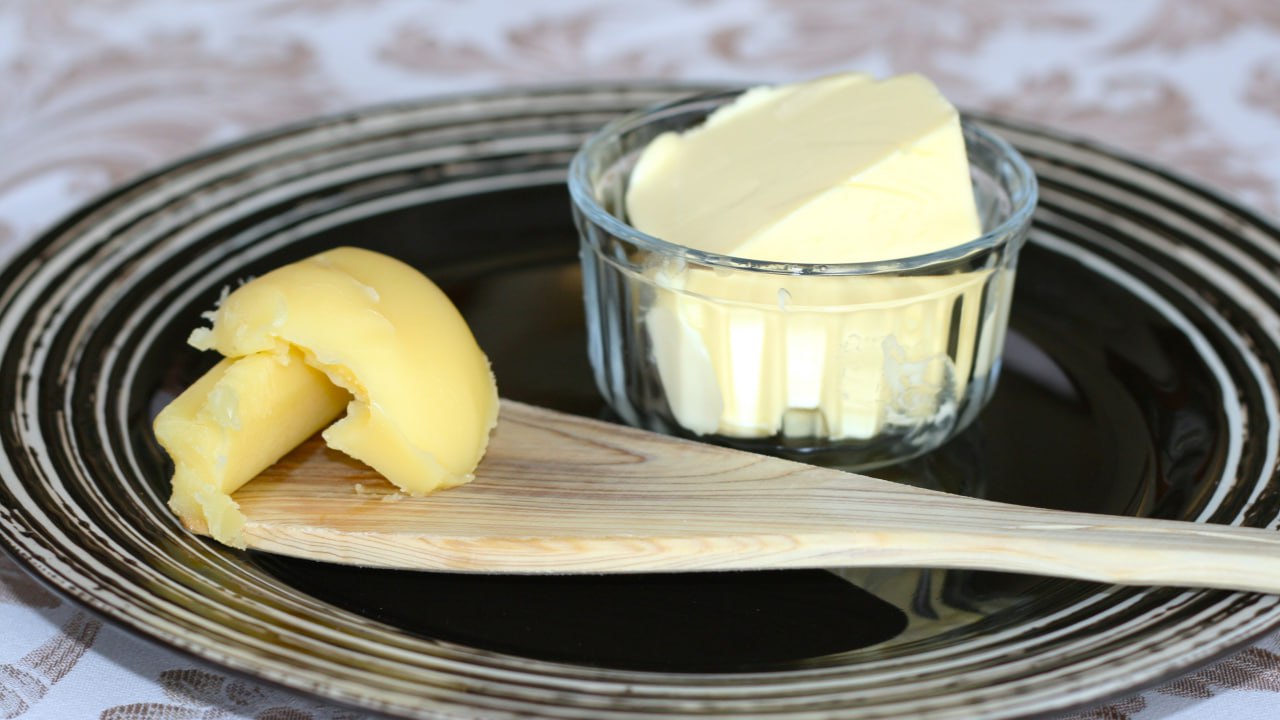
Ghee and butter. Photo: Olga and Pavel Syutkin.
But here's what's interesting: the choice between clarified and "Chukhon butter" was actually much deeper than just a "food question." Even Vladimir Dal noted that "the custom of churning butter belongs to all Chukhon or — more precisely — Chud, Finnish generations, while the custom of clarifying it belongs to the Turkish or Tatar and Mongol tribes. By this, seemingly insignificant custom, one can quite accurately distinguish these two generations among us where there is doubt."
In this sense, the blending of Asian and Northern European culture in Russia becomes more distinct, acquiring vivid and convincing hues in what seems like a minor food-related example.
Manti, kundyums, and lavash
Naturally, along with ingredients, ready-made Asian dishes also entered Russian cuisine. This is evidenced even by culinary terminology — words like "noodles," "salma" (salamata), "kundyuby," "peremeche," "belyashi," etc. — came from Turkic languages.
The name of the ancient Russian dumplings "kundyum" comes from the word "kyunda," which even today in the Azerbaijani language means a dough preparation for bread. And Central Asian manti have been used in Russian cuisine for five centuries. "A dish of manti, and in it two parts of lamb," we read in the "Inventory of Tsarist Foods," written in Moscow in 1610-13. The word "manti" entered the Russian language from Turkic languages, but its origin lies in the Chinese "mantou" ("stuffed head").
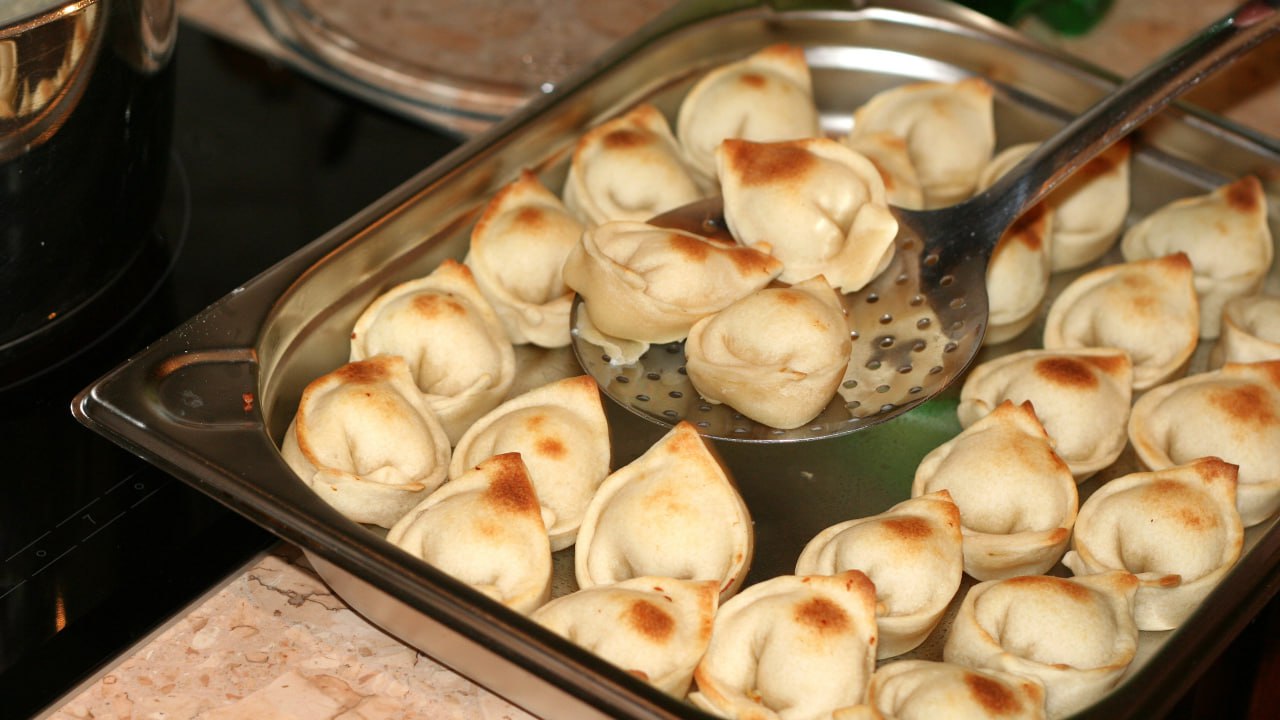
In Russian cuisine, old-fashioned kundyums were first baked in the oven, then added to soup or served with sour cream. Photo: Olga and Pavel Syutkin.
Few realize that even basic terms related to culinary culture also come from Asia. "Ochag" (hearth) — from the Turkish and Crimean Tatar consonance — oǯak, in Tatar — "uchak" (in both — "fire", "little fire"). A tub, a glass, a shot glass, a steelyard, balyk, watermelon, brine — all these are Turkic loanwords. And even the seemingly French "bakaleya" (groceries), upon closer examination, entered the Russian language from Turkish, where bakkal meant "vegetable seller".
Words often convey not only similar names but sometimes also indicate analogous cooking techniques. In the medieval monument of Russian culture "Domostroy" (1550s), "levashi" are mentioned several times: "Boil those berries for a very long time, and when they are thoroughly boiled—rub through a sieve and thickly boil down with molasses... When it thickens well, pour onto boards and ... dry in the sun or near the stove and roll into tubes." A similar product today in Azerbaijan is called "lavashana." Moreover, in both it and the ancient Russian dish, we hear echoes of the ordinary lavash—a flat bread cake.
Asian Dining Canon
Over the centuries, culinary art and dining customs gradually evolved. Even the Tatar-Mongol invasion and subsequent protectorate did not significantly hinder this process. Let us not forget that the Mongols themselves, before conquering Rus, had experienced lavish feasting in China, Central Asian states, and Eastern Europe. Despite their fondness for steppe traditions, the feasts of the Golden Horde khans were hardly too austere, and the Russian princes who traveled there for the yarlyk (charter) had the opportunity to witness this firsthand.
The meticulous regulation of Asian ceremonial feasting gradually extended to the Russian princely table as well. Gone were the days when Prince Vladimir feasted with his retinue, paying no heed to rank or title. The Grand Prince—like the Mongol Khan—now had to sit at a separate table and show his favor to one or another participant of the feast by sending bread or salt from his own table.

The Tsar's Feast in the Faceted Chamber of the Moscow Kremlin (1613).
And finally, another tradition that clearly came from Asia — the division of the table into men's and women's. Women in Rus almost until the 17th century feasted separately from men on the hostess's side. Only in the middle of the feast would the hostess, along with the wives of her sons, brothers, nephews, and other relatives, emerge from the inner chambers with cups of wine, which they offered to the guests.
As for public places, even in the mid-19th century, a respectable woman in Russia could only come to a tavern or restaurant if accompanied by a man.
Direct contact
As we can see, Central Asian cuisine has long been familiar in Russia. However, this familiarity came second- or third-hand through merchants, soldiers, or travelers' tales.
Yes, of course, there were episodic close contacts. For example, Peter the Great's Persian campaign of 1722-23 or the Cossack "campaigns for zipuns" along the shores of the Caspian Sea provided an opportunity to become acquainted with local products and dishes. But the brevity of these military actions did not allow for a systematic mastery of culinary traditions.
Everything changed after Russia began its expansion into Central Asia. The annexation of the Kazakh zhuzes in the 1840s became the prelude to campaigns against the Khanates of Kokand and Khiva, and the conquest of the Emirate of Bukhara and Turkmenia in the second half of the 19th century.
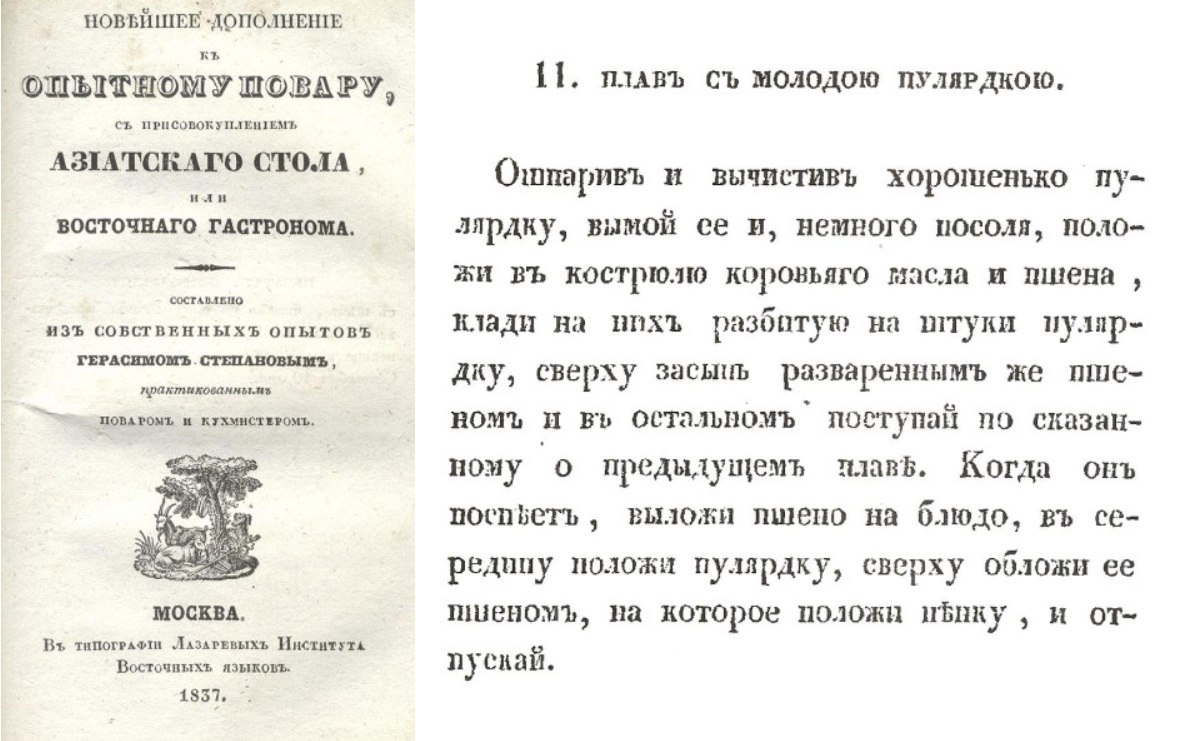
It is astonishing how quickly Russian cuisine responded to these processes. As early as 1837, a book by the famous culinary expert Gerasim Stepanov, "The Newest Addition to the Experienced Russian Cook with the Inclusion of the Asian Table," was published in Moscow. Its author directly states that he offers in this book "the preparation of the Asian table, which, I dare say, is described here in Russia for the first time."
It is there that we find, for example, "Plav (pilaf) with a young poularde." Do not be misled by the advice to "put millet in a pot." It refers to Saracen millet — a name for rice that existed in Russia until the end of the 19th century.
Of course, this Asian cuisine from Stepanov — is merely a whimsical mixture of Tatar, Armenian, Georgian, and Central Asian dishes. The time when the inhabitants of Central Russia will learn about and truly appreciate the cuisine of Central Asia and Transcaucasia in detail will arrive in the 20th century. But that is a completely different story, which we will tell in our next article.
Did you like the story? Follow us on Instagram and Telegram — there's even more interesting content there.
Newsletter
A letter from the HD editors
Once a week, we send the best stories, events, and cultural discoveries from Central Asia.