Cinema and Performing Arts
From Silence to Voice. How Female Images Changed in Uzbek Cinema of the 20th Century
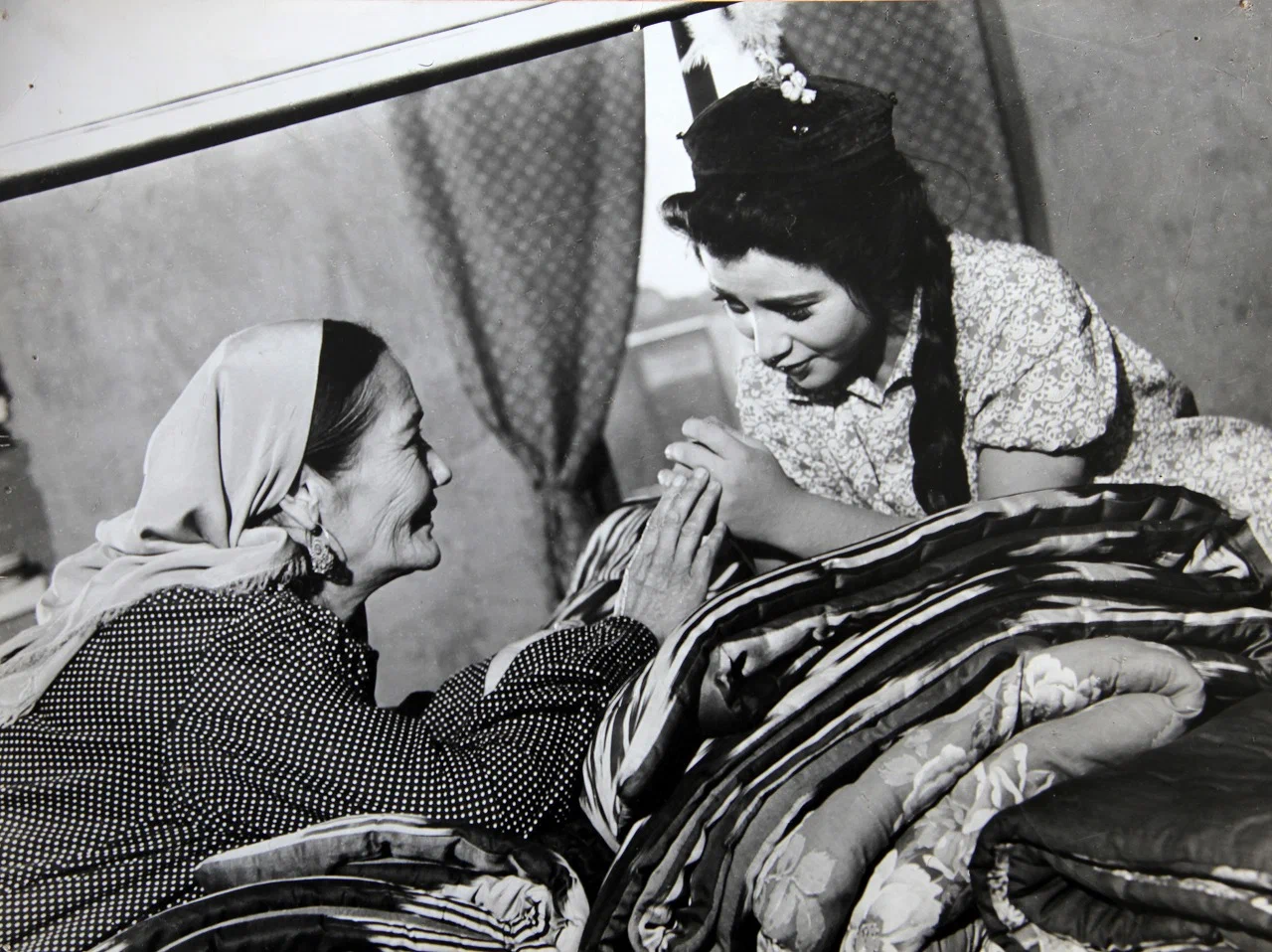
The female image in Uzbek cinema is not just a storyline on screen, but a reflection of the country's own history. At first, the viewer was shown a submissive wife in a paranja, then — the "liberated woman of the East," as if descended from an agitation poster. And only decades later did a heroine appear on screen with her own feelings, doubts, and the right to personal choice.
The journey from ideological clichés to genuine emotions became a key theme in the development of Uzbek cinematography in the 20th century. By developing the typology of female characters, the film industry of Soviet Uzbekistan attempted to show how society was moving from a traditional way of life towards modernization and national identity.
In 1924, the Uzbek SSR was established, and simultaneously, the first national film studio "Bukhkino" was founded in Bukhara, where director Vyacheslav Viskovsky immediately began filming the first full-length Uzbek film — "Minaret of Death."
For the Bolsheviks, cinema was becoming an important channel of political and ideological propaganda. Due to its ability to influence the viewer, create new images, and direct their perception, Lenin ultimately called cinema the most important of all arts.
The female images in the national cinema of Uzbekistan not only reflected reality but also shaped it through the means of film language. The formation of the film industry in the republic was closely linked to the social and political reforms of the Soviet state: land and water reform, the fight against illiteracy, and the campaign for women's emancipation.
In the mid-1930s, photographs of outwardly joyful women comprised about 70% of the illustrated content in magazines aimed at a mass audience. The plots of all silent films from the 1920s–1930s—from "The Minaret of Death" (1925) to "The Saint's Daughter" (1932), including "The Second Wife" (1927), "The Veil" (1927), and "The Leper" (1928)—were centered around the fate of their heroines.
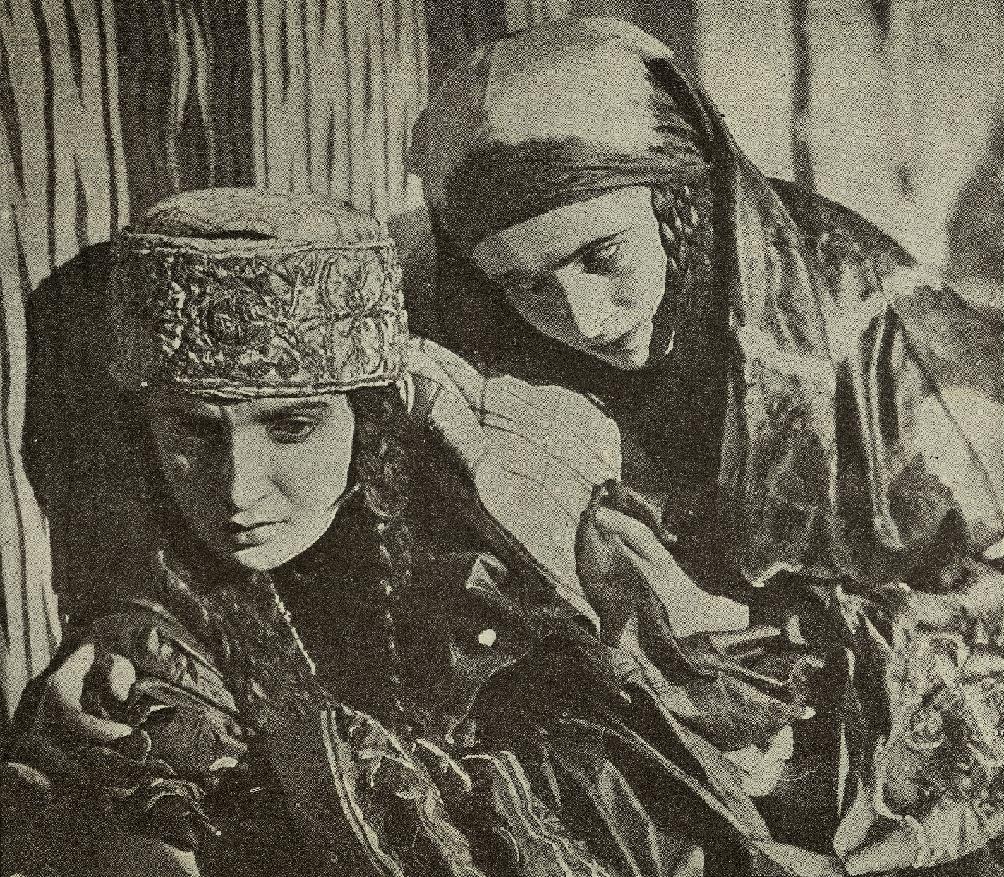
"The Minaret of Death" (1925, directed by Vyacheslav Viskovsky)
The dichotomy of "new - good - Soviet" and "old - bad - traditional" ran through almost all films from 1925 to 1935. Virtually every picture constructed its narrative around the opposition of "heaven and hell," two female destinies: that of a poor and unhappy Uzbek woman, oppressed by traditions and her husband, and that of a happy, emancipated Soviet woman. The "happy" heroines of the new era had access to education, could achieve financial independence by working in state organizations, and spent their free time in museums and clubs. Even elements of clothing and headwear on screen became signs emphasizing their new Soviet identity.
Their "oppressed" Uzbek girlfriends, on the contrary, face insults and humiliation from their husbands and mothers-in-law, as shown in the example of Adolat, the main character of the film "The Second Wife." Even if these women work, they are completely financially dependent on their husbands. When they need medical help, they are cruelly treated by "charlatan mullahs," as seen, for example, in the film "The Saint's Daughter" (1930). Unlike their "liberated friends," these women constantly suffer.
The transformation of the female image in cinema began with the arrival of the "Thaw". The heroines of this period differ from the images of the Soviet "non-Eastern" woman. To find their embodiment in the cinema of the 1960s, women had to endure pressure both from the Soviet authorities, who proclaimed freedom, and from traditional society, which resisted such changes.
Main Female Archetypes in Uzbek Cinema
Some images characteristic of the Soviet "pre-Thaw" period carried over into the cinema of the 1960s, but new ones also emerged—corresponding to the changed reality.
Dear Mother Heroine
In Soviet times, one of the most common female images remained that of the heroic mother. This was a strong ideological construct, actively used in cinema. However, during the "Thaw" period, this ideologeme gradually began to transform. In an era of searching for national identity, it became especially important to showcase myths, epics, and traditions in film, and therefore the maternal image acquired national features.
When it comes to Uzbek cinema, a clear trend is the creation of a national image of the Motherland—not as the mother of the state, but as the mother of the people. Moreover, it is precisely in Uzbek cinema that a new archetype emerges—the image of an atypical, "non-heroic" family matriarch.
In the film "You Are Not an Orphan" (1962) by Shukhrat Abbasov, Fatima-opa adopts children of different nationalities during World War II. It is important to note that Fatima-opa is the prototype of Bakhri Akramova, the wife of Shaakhmed Shamakhmudov, who indeed became a mother to 14 children adopted by her and her husband together. Akramova entered history as a heroine of the Uzbek people. Moreover, the role of Fatima-opa was played by Lutfi Sarimsakova — a People's Artist of the Uzbek SSR, who had already established the image of a strong mother courageously fighting for the happiness of children.
In the film "The Oath" (1937), the actress played the mother of the main character — the farmhand Azim, who swore to fight against the "old" way of life after a Russian communist worker was killed by a wealthy landowner. And in the comedy by Shukhrat Abbassov, "The Whole Neighborhood Is Talking About It" (1960), she played the role of Mehrikhon—a mother whose son gets married secretly and without parental blessing. The heroine undergoes a transformation and ultimately comes to terms with a reality where there is less and less room for the old way of life she is accustomed to. The actress's expressions, emotions, and even facial expressions perfectly suit the image of a "non-heroic" mother.
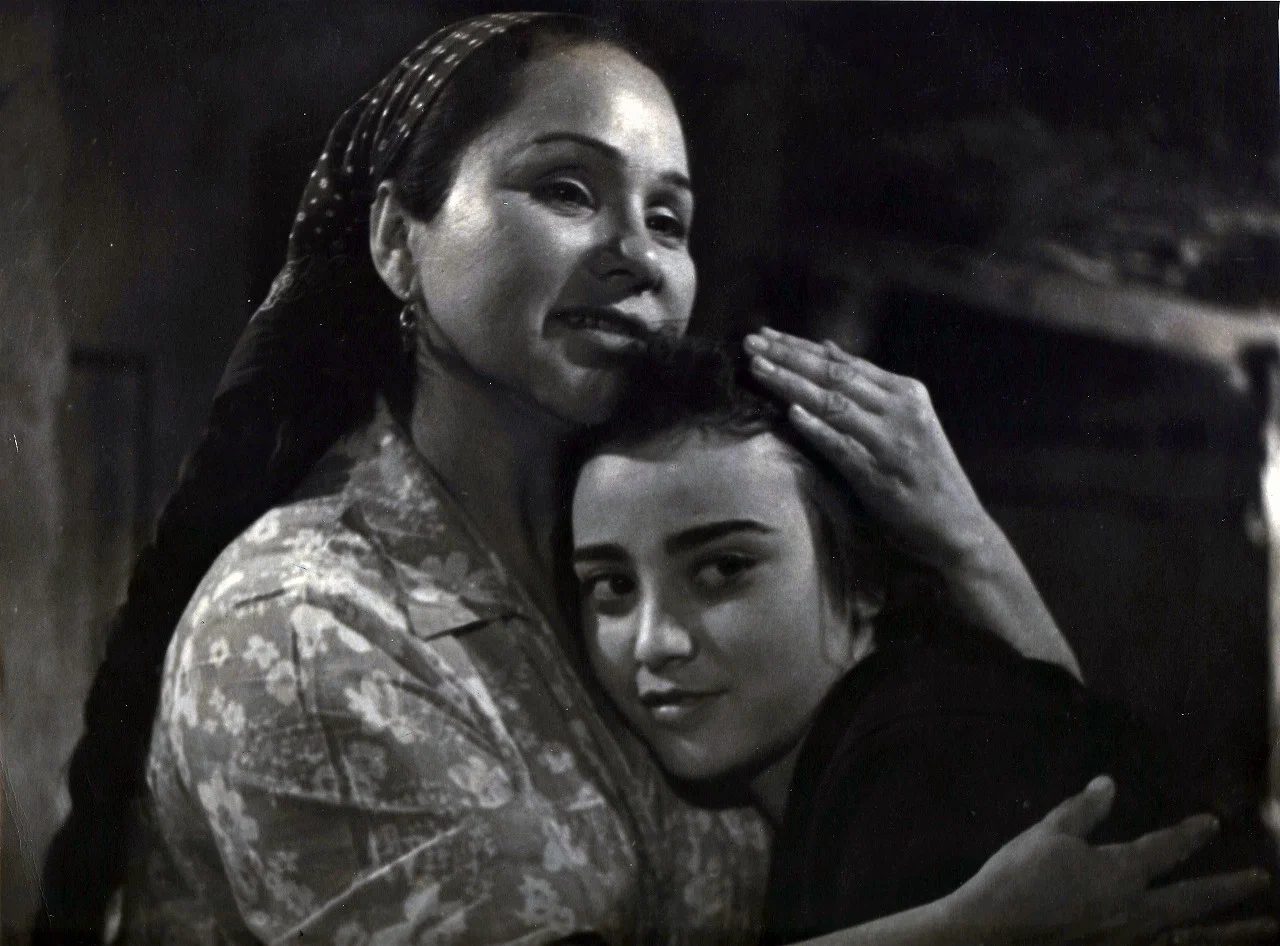
"The Whole Neighborhood is Talking About It" (1960, director — Shukhrat Abbosov)
Heroine Daughters
Alongside the image of the mother, the image of the heroic daughter was also established in Soviet cinema. Her heroism was meant to manifest not only on the front lines: a young woman was obliged to show record-breaking results in labor at the factory or in the field, harvesting crops. Thus, from the 1930s until the 1960s, a young woman with a medal on her chest, picking cotton, personified the ideal image of the Soviet Central Asian girl. In reality, however, the low wages of a cotton picker turned her into a slave. But in the logic of the time, the image of an independent Soviet girl could only be shown through suffering and hard labor.
National cinema inevitably had to produce a national heroine—primarily in epic canvases: fairy tales and film adaptations of folk epics. Thus, vivid examples appeared on screen: "Kyz-Zhibek" (1970) by Sultan-Akhmet Khodzhikov (Kazakhstan), as well as films by Benzion Kimyagarov, produced at the "Tajikfilm" studio: "The Legend of Rustam" (1971), "Rustam and Sukhrab" (1971), and "The Legend of Siyavush" (1976), united into a cinematic trilogy based on the "Shahnameh".
In Uzbek films, this image was embodied by the heroines of the films "Poem of Two Hearts" (1968), "Dilorom" (1967), "Escape from Darkness" (1973). Unafraid of being burned at the stake or exiled from society, they followed their feelings and dreams of a different life, and thus did not fear trials. Such an image of a beloved was necessary so that the national identity of the people would once again be reflected in the female image.
Unruly Wives
Initially, such images were created to portray "liberated" Eastern women escaping from despotic husbands to a bright Soviet future. However, during the "Thaw" period, this theme received a different interpretation from directors.
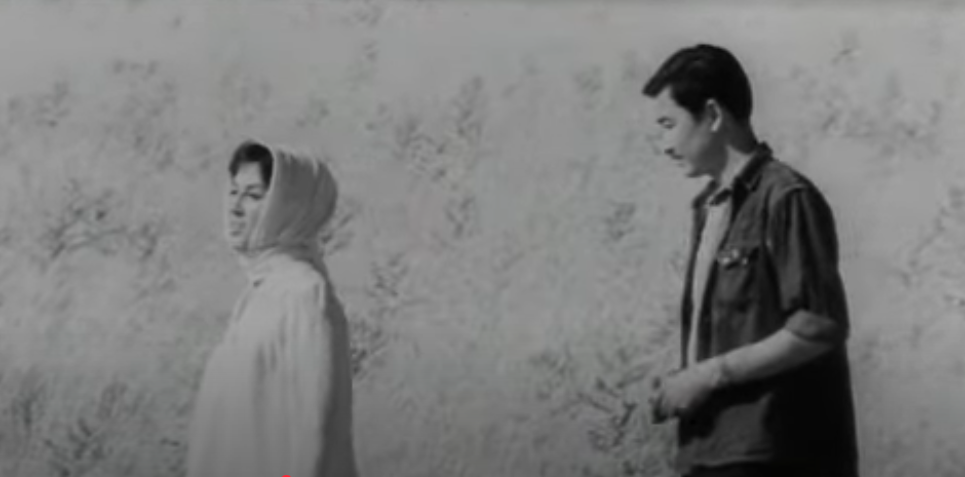
"White, White Storks" (1966, director — Ali Khamraev)
In Ali Khamraev's film "White, White Storks" (1966), the action unfolds in the rural village of White Storks, and the plot touches on the taboo subject of an extramarital affair. Strong-willed Malika, a married but childless woman, openly interacts with another man, with whom she shares what appears to be a tender feeling. It turns out that the heroine decides to leave her husband not for the right to education or work, but because she is deeply unhappy. For her, the established tradition is on a scale equal to a state tragedy.
During that period, established directors — true "pillars" of national cinema — such as Shukhrat Abbasov, Ali Khamraev, Latif Fayziev, and others, were making their films. Alongside them, in 1975, female director and animation master Kamara Kamalova created her first full-length feature film.
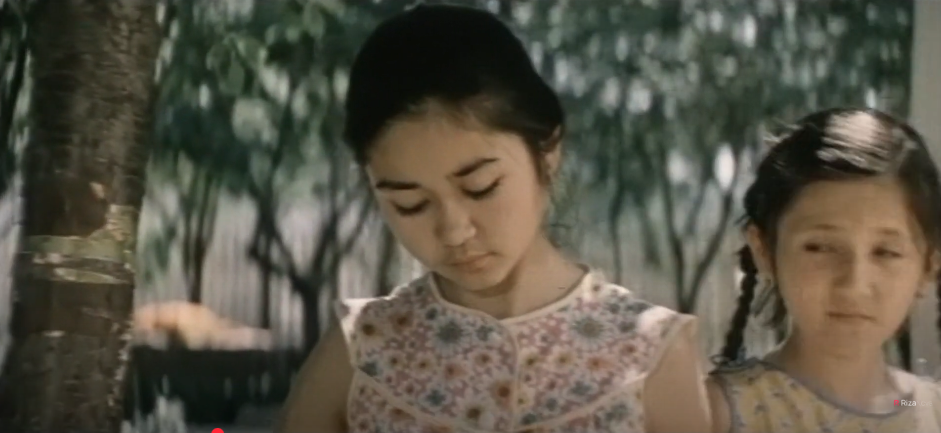
"The Bitter Berry" (1975, directed by — Kamara Kamalova)
The film "Bitter Berry" became an example of cinema that explores the themes of coming of age and saying goodbye to childhood. In this film, the personal experiences of the "little" heroes come to the forefront, proving to be just as significant as the emotions of adults. The main character of "Bitter Berry" is thirteen-year-old dreamer Nargiz. She spends her summer holidays at her grandmother's in the mountains, where she experiences her first feelings of love and then disappointment. The film received various awards, including a special jury diploma at the 10th Moscow International Film Festival in 1977.
Art in Central Asia at that time was becoming an alternative public space for discussing cultural transformations, social and global processes that local societies were facing. "Thaw-era" cinema turned into a kind of renaissance of national cinematography and auteur expression.
READ ON TOPIC:
Только слух и память, только хардкор: как в Ташкенте советское кино учили говорить по-узбекскиУ первой студии озвучивания в Ташкенте не было ни звукоизоляции, ни профессиональных актеров — но была страсть к кино и кучка увлеченных энтузиастов, готовых учиться на ходу. Рассказываем, как в полукустарных условиях создавалась одна из самых уважаемых школ дубляжа в СССР.mag.humodoc.com
Did you like the story? Subscribe to us on Instagram and Telegram — there's even more interesting content there.


Newsletter
A letter from the HD editors
Once a week, we send the best stories, events, and cultural discoveries from Central Asia.