Skatepark at "Blue Domes" filled with concrete
Authorities promise a new park, but residents fear losing yet another public space.
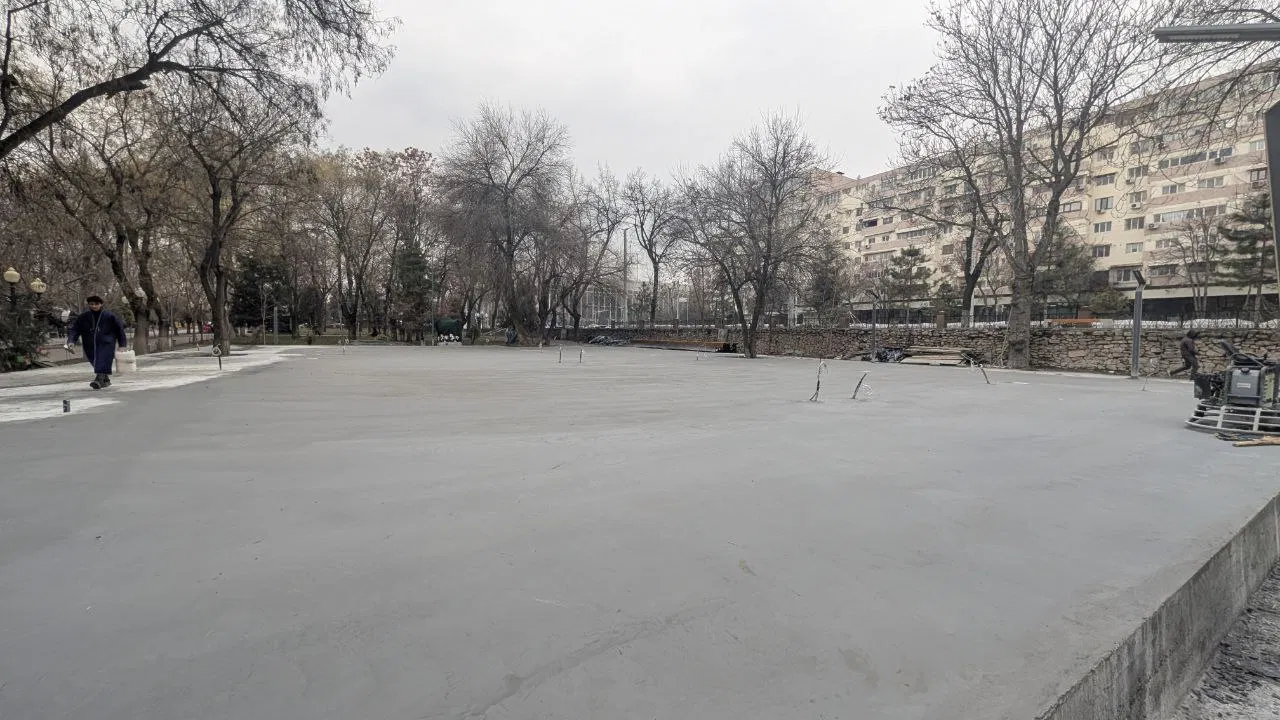
In Tashkent, a conflict has erupted between city authorities and active youth over the skatepark at the "Blue Domes" alley. The skatepark, which for many years served as a hub for skateboarders, BMX riders, and fans of extreme sports, was dismantled, and its surface was covered with concrete. Photos of the updated area spread across social media, sparking a wave of outrage and an open appeal to the Tashkent hokimiyat demanding an explanation of what will happen to this space next.
At the same time, the situation is unfolding against the backdrop of tightening legislation: since January 1, 2025, Uzbekistan has a direct ban on the privatization and alienation of land used for public recreation, the reduction of their territories, as well as the construction of capital buildings and structures on such plots. This has further intensified public resonance around the "Blue Domes."
The "Blue Domes" skatepark was for many years one of the few central locations in Tashkent where a local extreme sports community was formed. Training sessions, informal competitions, and community clean-up days were held here, with the riders themselves investing money and effort into repairing the features and improving the infrastructure.
However, simultaneously, the area gradually became filled with attractions and small-scale commerce. After the reconstruction, the square ended up cluttered with trampolines, carousels, kiosks, and paid entertainment—leaving less and less room for proper skating. Skaters and local residents repeatedly complained about the chaotic development and the "capture" of public space by entrepreneurs, and in 2023–2024, conflicts over the attractions even made it into media reports.
The situation was further exacerbated by the fact that the skate features were not being repaired, some structures had become unsafe, and the responsibility for maintaining the area had effectively been shifted onto the users themselves. Community representatives reported that they installed infrastructure elements themselves, monitored cleanliness and safety, and often received responses from authorities stating that the city "lacks the resources and equipment" for the proper maintenance of such spaces.
Recently, social media users noticed that the remaining structures have been dismantled, and the site itself has been covered with a layer of concrete. Against this backdrop, an open appeal from young people to the Tashkent khokimiyat appeared on Telegram and Facebook, requesting the preservation of the skatepark and demanding transparency: people still haven't been told what exactly is planned for the site of the former skatepark.
What the authorities say: new free skatepark and sports zone instead of the old playground
After the publication of the video appeal from the youth, the capital's authorities did respond. In a comment to Podrobno.uz, the press service of the Tashkent khokimiyat stated that the reason for the dismantling was the old site's non-compliance with safety requirements: essentially, the youth were skating on "an empty area without special equipment and proper infrastructure."
According to the khokimiyat's information, comprehensive landscaping is planned at the site of the dismantled zone: modern paddle tennis courts and lightweight sports pavilions will appear. The main promise for the extreme sports community is the creation of a new free skatepark within the same project, in accordance with modern standards and safety.
The administration emphasizes that no capital construction is planned on the territory of "Blue Domes," and the status of the recreation area will be preserved. According to the city authorities, the project does not involve heavy structures and does not change the land's designated purpose—it is about landscaping and creating more comfortable conditions for active recreation.
Despite official statements from the hokimiyat, many residents and members of the skate community view what is happening with distrust. There are at least two reasons for this.
First, in recent years, Uzbekistan has recorded numerous cases of the de facto "seizure" of parks and squares by commercial entities—from kiosks to illegal attractions—and subsequent attempts at their privatization through changes to cadastral documents. It was precisely such practices that led to the tightening of legislation: starting in 2025, the law explicitly prohibits the privatization or other alienation of state lands used for citizen recreation, as well as the construction of buildings and structures on them (except for lightweight facilities and landscaping).
Secondly, "Blue Domes" already has a history of conflicts over attractions blocking pedestrian walkways and controversial decisions regarding their removal and return. Some residents fear that instead of a proper public space, a collection of disparate commercial entertainment will reappear, and the interests of skaters and BMX riders will become secondary.
The story of "Blue Domes" unfolds against the backdrop of a general shortage of high-quality and well-designed skate parks in Tashkent. Some of the existing concrete facilities in the city were built without adhering to technical standards and are now unsuitable for skating: the height of the features, the quality of the surface, and the drainage do not allow for safe sports practice.
At the same time, in recent years, more successful examples have emerged in the capital — new parks, built with consideration for riders' needs and with the involvement of skateboarders themselves in the design, show that dialogue between the community and developers is possible and yields results. Therefore, activists insist: any changes at "Blue Domes" must occur openly, with the participation of the real skate community, not behind closed doors.


Newsletter
A letter from the HD editors
Once a week, we send the best stories, events, and cultural discoveries from Central Asia.