In Liverpool, the hidden masterpieces of The Beatles' first bassist will be shown for the first time.
This week, an event at The Beatles museum in Liverpool will take place that may cause a reassessment not only of the role of one young artist but also a rethinking of the very history of the legendary band's early days. Four previously unknown works by Stuart Sutcliffe — the first bassist of The Beatles — will emerge from the shadow of nearly 65 years of obscurity.
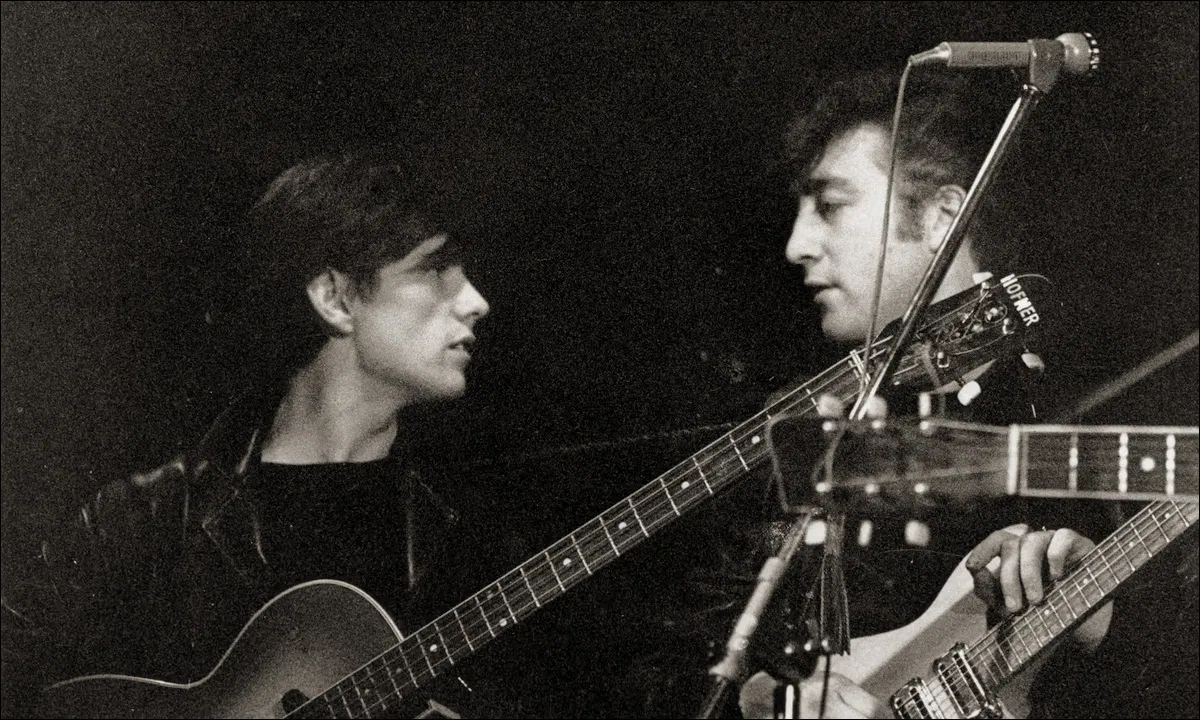
Stuart Sutcliffe met John Lennon in 1957 during classes at the Liverpool College of Art, where both were studying painting. It was a meeting of two young men, each feeling that the world they lived in was too narrow for their dreams. Lennon later told Yoko Ono that there was not a single period in his life when he did not remember Sutcliffe — he considered him his soul.
When the band was being formed, Sutcliffe and Lennon were sitting in a student room, pondering what a group of young men who wanted to play rock and roll should be called. Both were in love with Buddy Holly's band, The Crickets. They liked names with a double meaning—a word that simultaneously means something real and something musical. Sutcliffe and Lennon proposed "Beetles" [the spelling is not a typo]. Lennon later changed one letter—resulting in "The Beatles." Thus, it was Sutcliffe who was at the origin of the name that would become the most recognizable in music history.
But back then, no one asked Sutcliffe to play in the band. He was an artist. He sold his paintings. In 1959, his work "The Summer Painting" was selected for the John Moores Biennial — a prestigious exhibition competition, and John Moores himself, one of England's most influential collectors, bought his painting for £65. For a young artist, this was the beginning of a serious career in fine arts.
Art historian Donald Kuspit noted that Sutcliffe brought a "renewed freshness to European variations of abstract expressionism." His influence on late modernist art of the 20th century remains relevant for artists working today.
But today he is often remembered only as the "fifth Beatle"—an insignificant footnote in the history of the greatest band of all time. His musical career lasted about a year. His life as an artist lasted 21 years. Its last three years—the years in Hamburg—were years of talent crystallizing, skill achieving, vision unfolding.
Herwood Harrison, now aged 82, told the museum something that everyone looking at these canvases should understand: "Many are drawn by the Beatles, and I appreciate The Beatles. But there are two stories here: his belonging to the band and his identity as an artist. He is known because he was a Beatle. But his true gift was in art."



Newsletter
A letter from the HD editors
Once a week, we send the best stories, events, and cultural discoveries from Central Asia.