
Getting to know the city
So, first about the name — it didn't just appear out of nowhere… Chronicles have brought us information that this settlement, known as far back as the 10th century AD, from the time of the rule of the emirs of the Samanid dynasty, was supplied with water from the Kharkan-rud canal and was already known to the geographers of that period. And even then, despite its modest size, it held considerable commercial importance. By the 12th century, the small provincial town had a reputation as a major trading center located six farsakhs from the capital city of Bukhara, that is, about fifty kilometers away.
Abd al-Khaliq al-Ghijduwani
In later life, "Tumen," or "Tuman" — a district in modern terms, where the town was located — was called differently: sometimes Kharkanrud, sometimes Gijduvan. However, the current name eventually prevailed. The settlement was already known at that time, but what made it most famous was the name of Khodja-i Jahan — Abdul al-Kholik Gijduvani, who was born in the glorious town in the distant year 1103. By that time, the Karakhanid dynasty ruled Mawaranahr, and under its rule, various religious currents continued to live and develop; in this case, it was the followers of the Sufi Naqshband. Abdul al-Kholik Gijduvani became one of them, who, according to legend, was a descendant of Imam Malik. The full name of the latter is as follows: Abu Abdullah Malik ibn Anas al-Asbahi — an Islamic theologian, jurist, hadith scholar, and the second of the four imams of the Sunni schools.
Let's not delve too deeply into Islamic studies—it's easy to get lost in this topic and say something incorrect. To put it simply—both Imam Malik and Abdul al-Khaliq al-Ghijduwani were Sufis, preached Islam, became highly respected people, murshids (teachers), and died recognized for their merits. The exact year of Abdul al-Khaliq al-Ghijduwani's death has never been definitively established; it is considered to be either 1179, 1189, 1199, or even 1220—the beginning of the decline of the Karakhanid dynasty's rule.
Mausoleum of Gijduvani
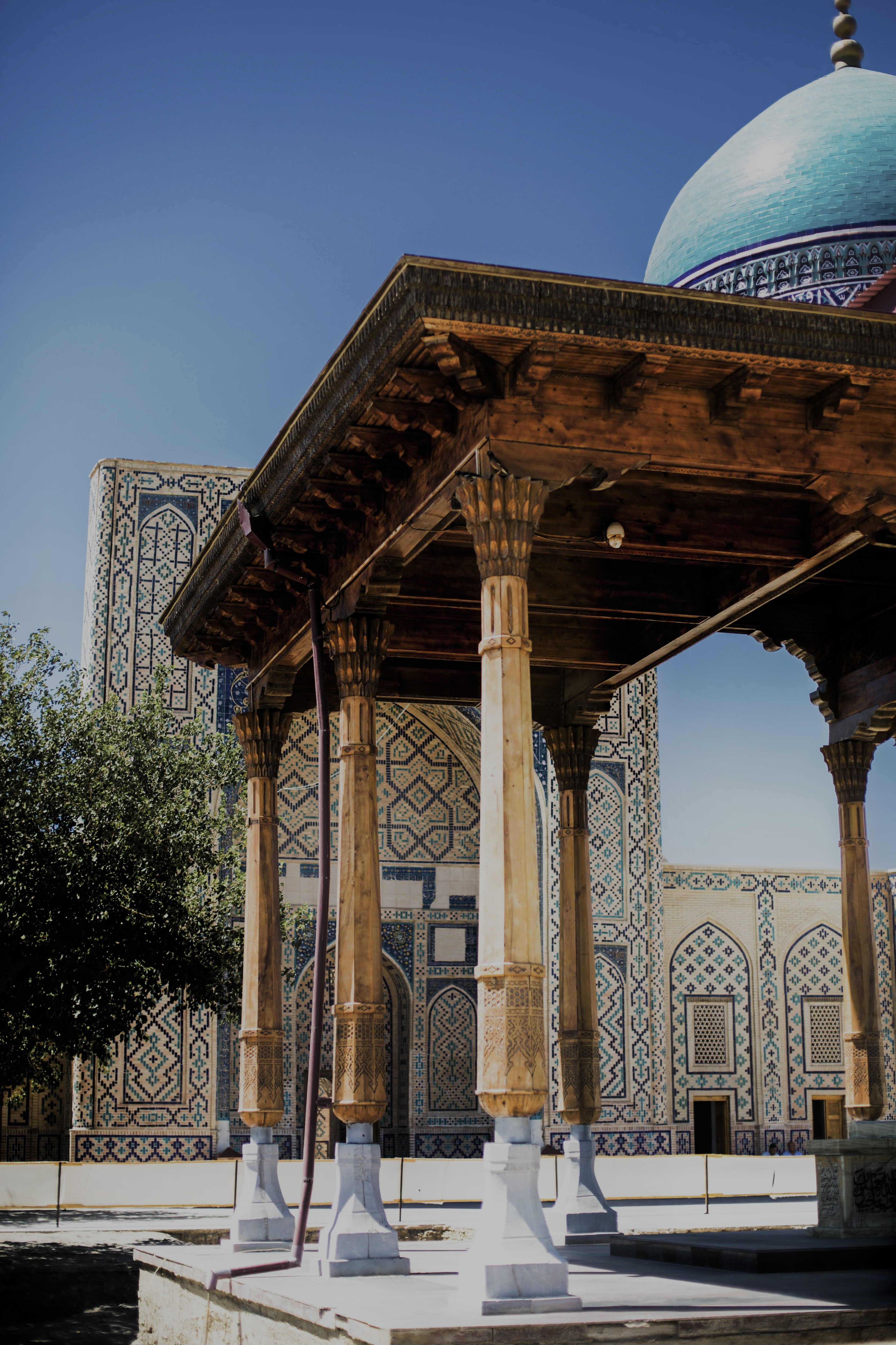
Above his burial site, a tomb was erected, or more precisely, it is essentially a mausoleum, which to this day is lovingly preserved in the Sufi's hometown. It was built in 1547, as indicated by the inscription:
"This blessed building was constructed through the efforts of Hazret-Shah Sultan in the year 947."
True, the inscription is difficult to read — a lot of time has passed, but specialists managed to decipher it. I remind you that in the Muslim world, the calendar is counted from the year of the migration (Hijra) of the Prophet Muhammad (peace and blessings be upon him) from Mecca to Medina, so visually it seems like an error of hundreds of years has crept in. No, everything is fine, don't be alarmed.
Right in front of the mausoleum of the revered Sufi, by order of Mirzo Ulugbek, a madrasah was erected, named after the ruler and great scholar. This educational institution became the third of the same name in sequence, and its construction date can be indicated as the year 863, or 1433 according to the Gregorian (modern) calendar style. The building is significantly reduced in size compared to the Samarkand and Bukharan ones, but it advantageously differs from its counterparts with a continuous facing on the facade of the structure.
The Third Madrasah of Mirzo Ulugbek
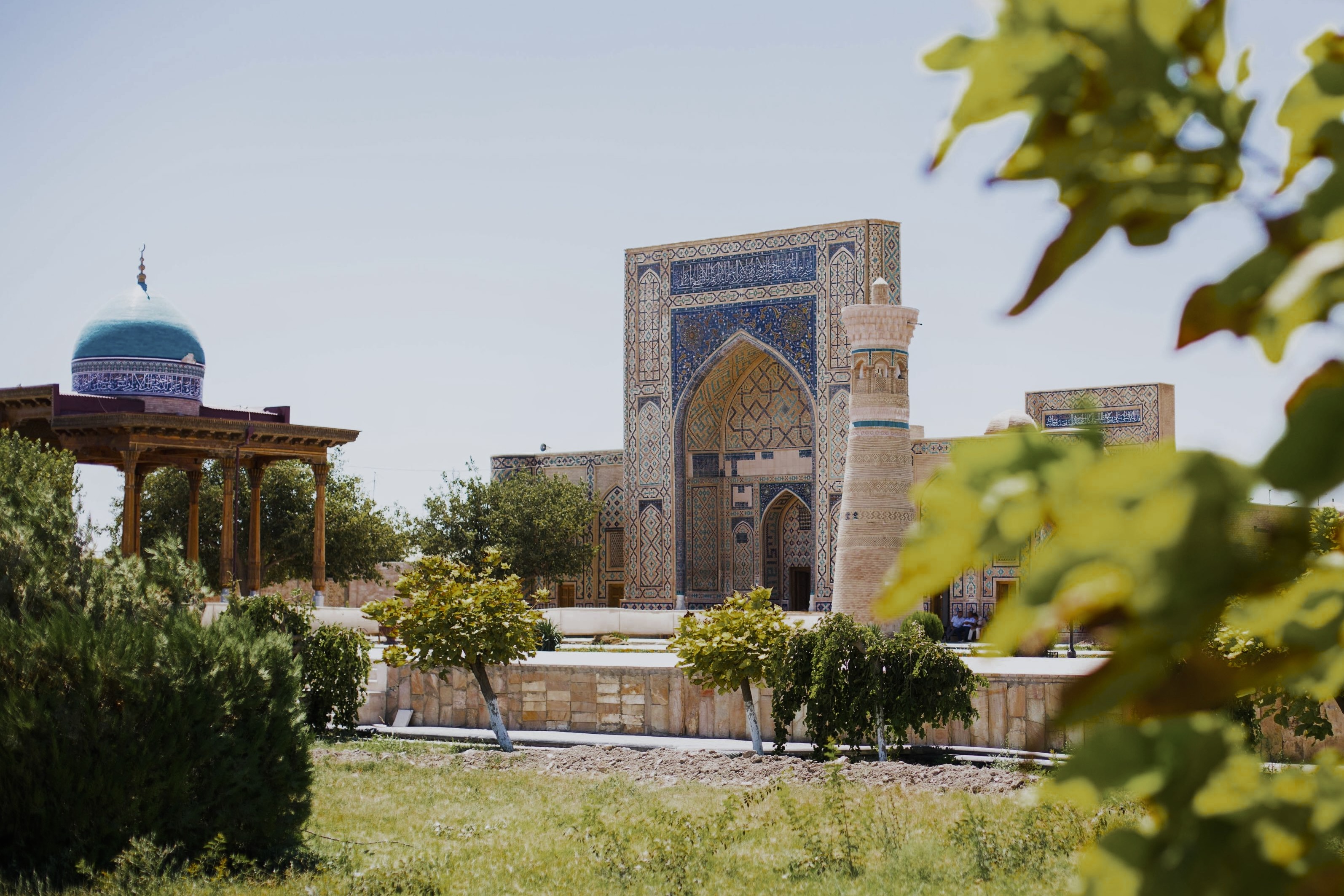
To the right of the entrance portal, a rather low, somewhat reminiscent of Po-i-Kalyan, free-standing minaret was erected, which lacks continuous cladding but is decorated with various types of tiles. On the main part of the facade, inscriptions have also been preserved, for example, one like this:
This is a great place, a dwelling akin to the gardens of paradise… of the greatest sultan, the most merciful khagan… the savior of the world and faith, Ulugh Beg Gurgan, may Allah prolong his reign.
Despite the fact that a repair (apparently both internal and external) was carried out one hundred and fifty years after the madrasa's construction, it is not possible to fully read what the masters intended to convey to us. The issue is that many of the glazed bricks that fell out of their places have simply disappeared over such a long period of time, and finding them today is hardly possible.
Builder from the Shaybanid dynasty
During the reign of Abdullah Khan, under whose rule the repair works were carried out, there was an interesting inscription on the entrance arch, which, albeit fragmentarily, we can read:
Reproduced by the command of His Majesty, exalted like Saturn ... worthy like Solomon, valiant like Alexander ... Nushirvan ... Consolidator of the world and the state and the faith, Abdul-Ghazi Abdullah Bahadur Khan, may Allah prolong his reign.
So, the khan-builder from the Shaybanid dynasty decided to enter history in this way as well, leaving his name on the walls of the madrasah built by order of his predecessor—a Timurid.
What else is this small town famous for, having received this status quite recently - in 1972? Tavvavis (translated from Arabic as "peacocks"), for example, a direct competitor of Gijduvan, which was previously called a city, has become simply a rural settlement - a village located near the ancient settlement of Shahri Vayron. The casual reader will immediately say - Gijduvan shashlik, and will even call it unpleasantly - "chewy". Not "chewy", but minced, although it is prepared in a somewhat special way, but this is not the fact that adds fame to the ancient town. This fact is absolutely inedible - you could break your teeth on it.
Gijduvan Ceramics
Does everyone know Rishatan ceramics? I hope at least one small dish from Rishatan is in someone's possession, even if just for collecting purposes? So, let's talk about Gijduvan ceramics — it also has a centuries-old history and is no less interesting than Fergana ceramics. This type of craft is at least, probably, two hundred years old — because the founder of the dynastic ceramic craft of just one family is Sharifiddin Gijduvani, born in 1790. He lived a long life, passing down the secrets of his craft to his children, and passed away with honor and respect in 1885.
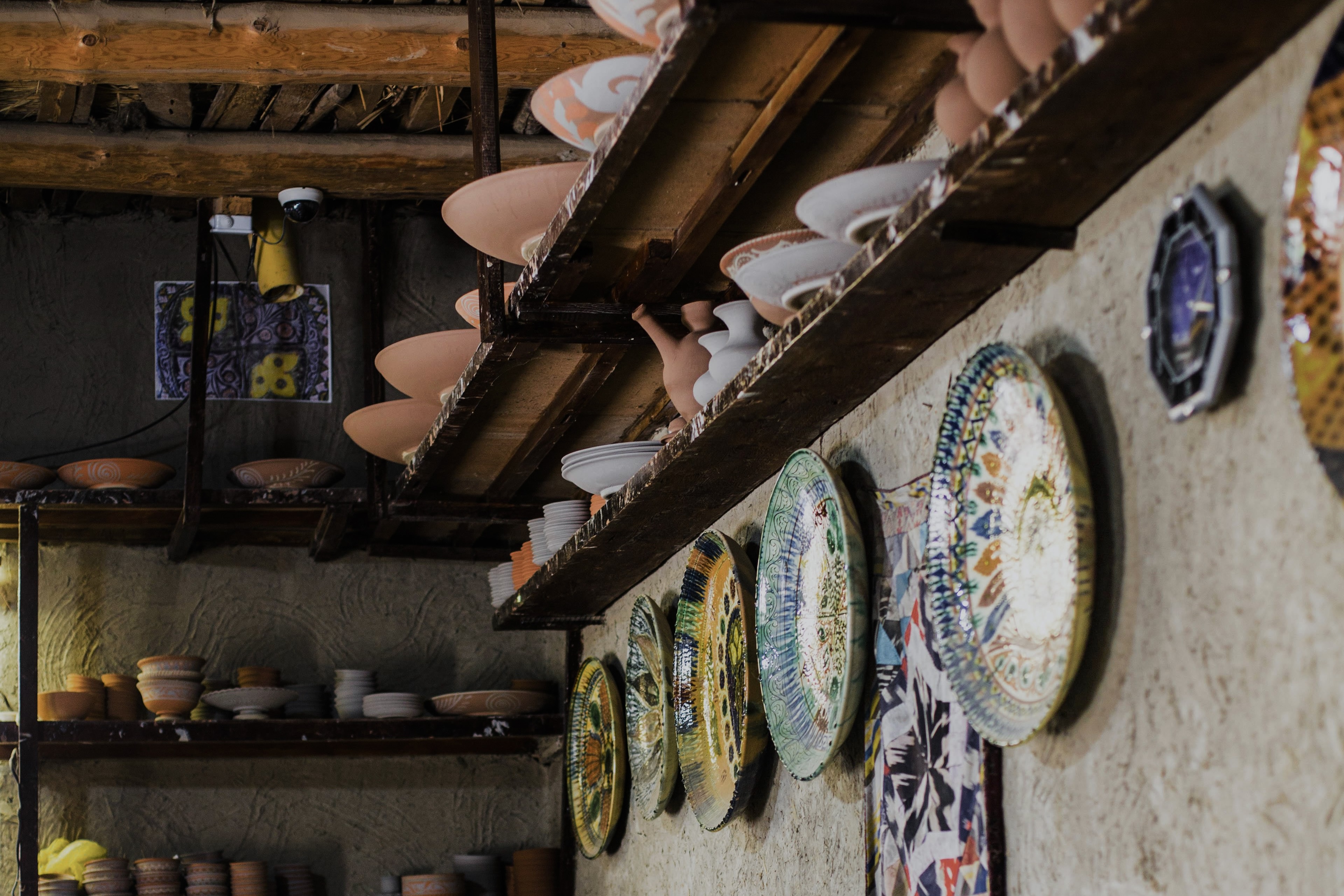
It was he who managed to unite two schools — the art of pottery and the craft of ceramic painting — in ancient times, potters and artists — nakkoshi, "worked" separately. At the same time, if Rishtan ceramics over time became "mass-produced" — produced in large quantities, then Gijduvan ceramics remained at the level of art — it is produced relatively little, because the masters do not chase serial production — to this day they strive to create unique types of tableware.
Be that as it may, this art survived until the thirties of the last century, when it almost perished. There was a period in the country's history when innocent people were arrested, sometimes simply on the denunciation of some envious person. Thus, one of the Narzullaevs — Tosh Ergashevich, vanished in 1937, and his brother — Narzi, died, leaving his five-year-old son in the care of his wife. This ancient craft might have faded into oblivion, but Narzi's widow soon married a representative of their main "competitors" — Usman Umarov, although he preserved his stepson's surname.
Narzullaev Dynasty
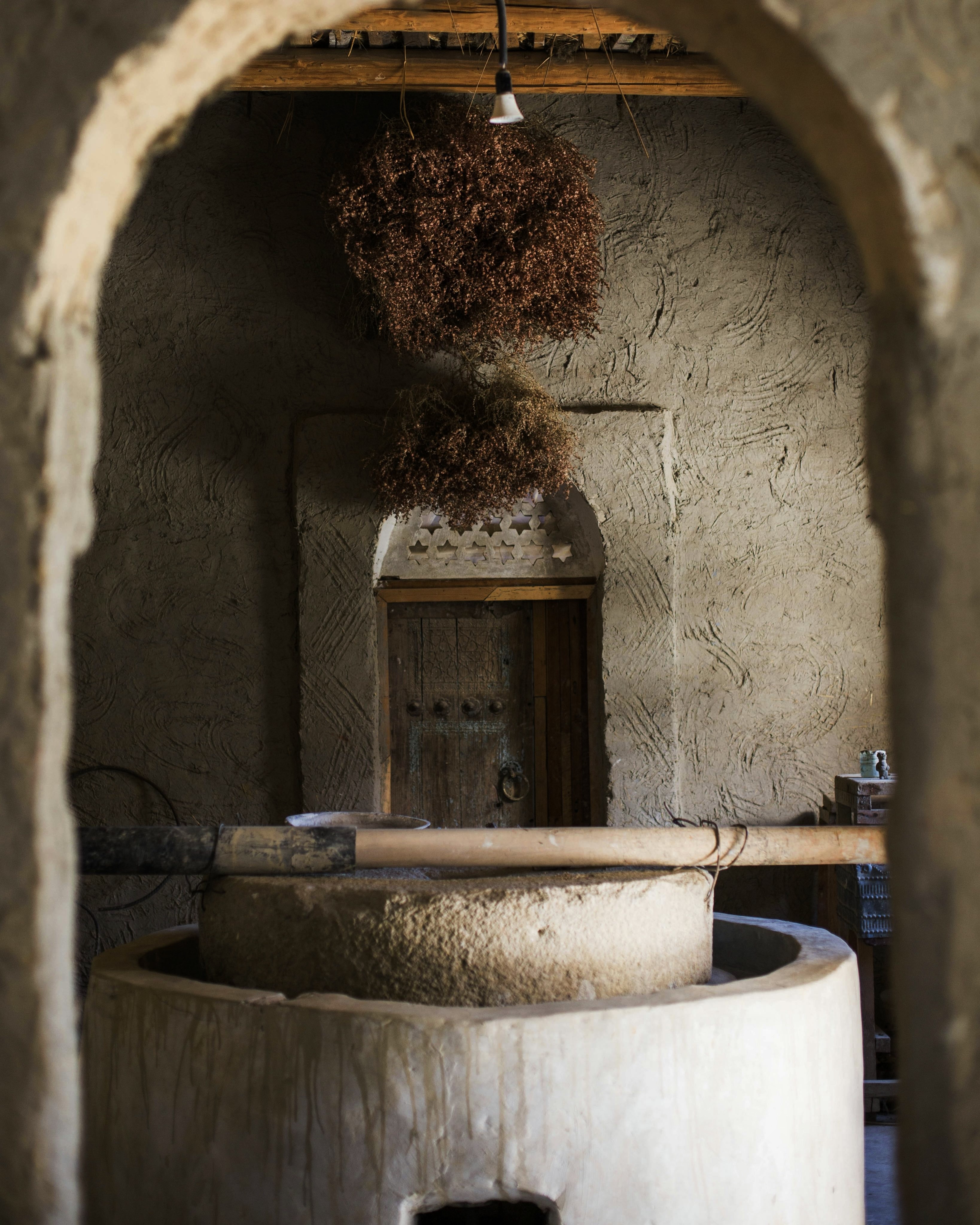
Thus, Ibadullo Narzullaev became the successor to his father and stepfather's work, not only preserving the received secrets but also multiplying them, having once arrived in Riga, at a huge factory founded by the Old Believers, the Kuznetsovs. It was at this old factory, using its capabilities, that the master began to revive the traditions of Gijduvan ceramics. Back home, in Gijduvan, his children — Alisher and Abdullah — joined this noble cause, themselves becoming excellent ustozas (masters), as, indeed, did all his eleven heirs. Perhaps the most remarkable thing is that, despite having modern equipment at their disposal, the masters use the same potter's wheel, rotated by the potter's foot (kuliala). The products themselves are formed from clay extracted from a depth of one and a half meters, and they also add river clay, in a smaller proportion.
As for the paints, or more precisely, the engobe (colored coating) for decorating tableware items, they are sourced from various locations, sometimes quite remote. White clay is brought all the way from near Tashkent, for yellow clay they travel to Gazli (a city located in the Kyzylkum Desert), and red clay is brought from Mount Karnab, which is part of the Nurata Range, in the Navoi region. Then all this clay mass is ground and applied as a colored coating before firing the item. Yes, reed fluff is always added to the clay. Knowledgeable readers will say: "But it will burn during firing!" And they will be right. However, the burnt fluff creates voids in the item, albeit small ones, and they, in turn, change the properties of the items in such a way that even on a hot day, if you pour cold water into the jug, it will not heat up, or rather—it will keep the water just as cold.
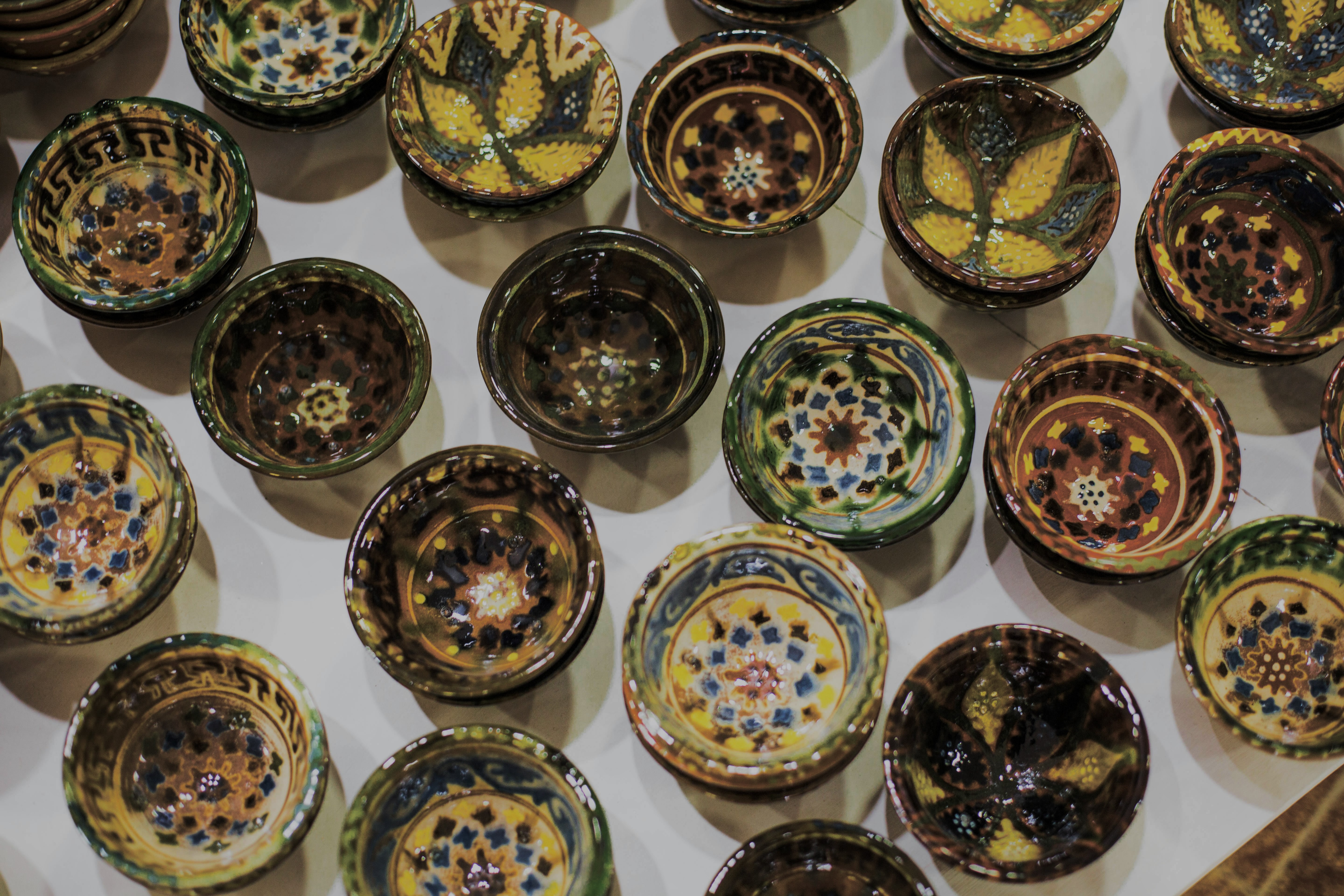
In general, how a particular item is made is better seen than read. I'll say this — before a lagan, jug, or anything else ends up in your hands — from the start of work on it until completion — at least ten days will pass. Because the item, then the engobe (paints), glaze — must dry, and only then is the seemingly finished item subjected to firing in a kiln, the temperature of which reaches 1050 degrees. Yes, the kiln heats up for about twenty hours, and the temperature inside decreases — for about thirty hours. Only after the firing process do those very, covered with more than earthly colors, gorgeous handmade pottery pieces come to light.
Among them, there are some quite unusual items, for example, they make such bowls that could be called "screaming" — a husband came home, his wife took such a bowl in her hands and shook it, and it — rang, "screamed" — there is a cavity inside, and in it, a tiny pebble, and that's what rings because the bowl is empty. So, go, master of the house, buy groceries, the wife will cook and feed you. Such, sometimes unusual things, are made by the masters of Gijduvan.
Narzullaev Museum
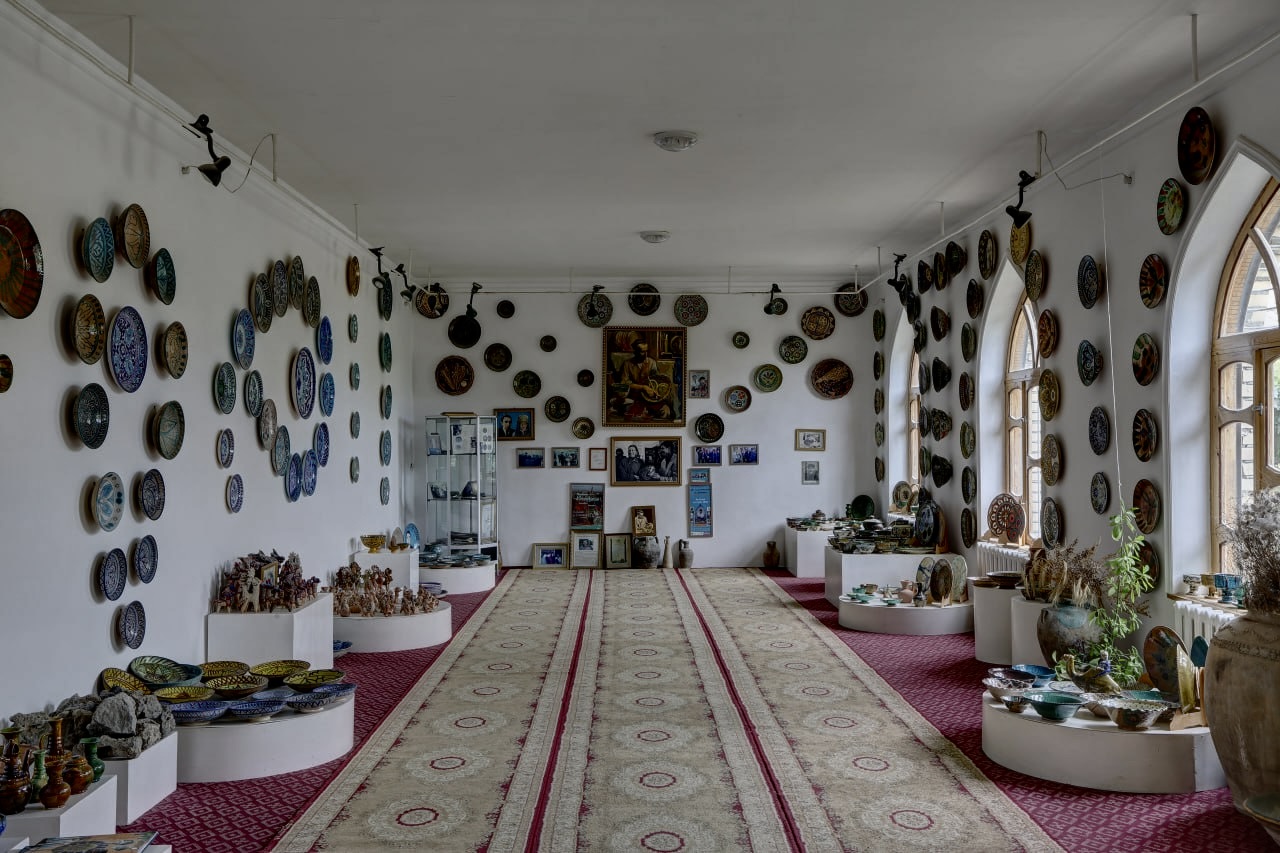 Source: Gijduvan Crafts Center
The Narzullaev household hosts an entire museum, which houses not only their own creations but also the white-and-blue ceramics from Khorezm, though nowadays this pottery is rare and, moreover, fragile—the clay in Khorezm is salty. Nearby are Rishtan pieces, and it is claimed that these are not from a souvenir stall but are the work of true masters—with ancient family names. So, in this small but quite ancient town, there is plenty to see, to photograph, and to purchase on occasion, from those very same ceramic wares. Come—you will NOT regret it!


