
Similar to Armenia
I didn't misspeak; indeed, in one of the very young cities, namely Navoi, there exist rather "aged" historical buildings. How can this be? To miss this remarkable fact, it's enough simply not to read any additional literature... I learned about this city in V. Fedorov's novel "Gulyamy" (The Slaves). It briefly described a city that a troop of horsemen was approaching, and it was called Kermine — "like Armenia." The novel stated that one of the settlers from Armenia, upon seeing the very valley where a village (the future city) was then located, exclaimed: "Ka-Arminiya!" — like Armenia. And so this name remained in the history of the settlement.
Although there are a couple more versions of the origin of the ancient name—supposedly it goes back to the ancient Sogdian language, from which this place was translated as "The Great Palace." A third version, or rather a saying, states that the city of Kermine in deep antiquity bore the name Badgia-i-khurdak—"little jug." Perhaps it looked like that from above, but then how could anyone have seen it from "on high"? There simply were no flying machines—not even hot air balloons—at that time. We will leave this question open, because we simply must tell about one famous person who stood out quite significantly from the Manghit dynasty.
The Wrong Emir Abdulahad Khan
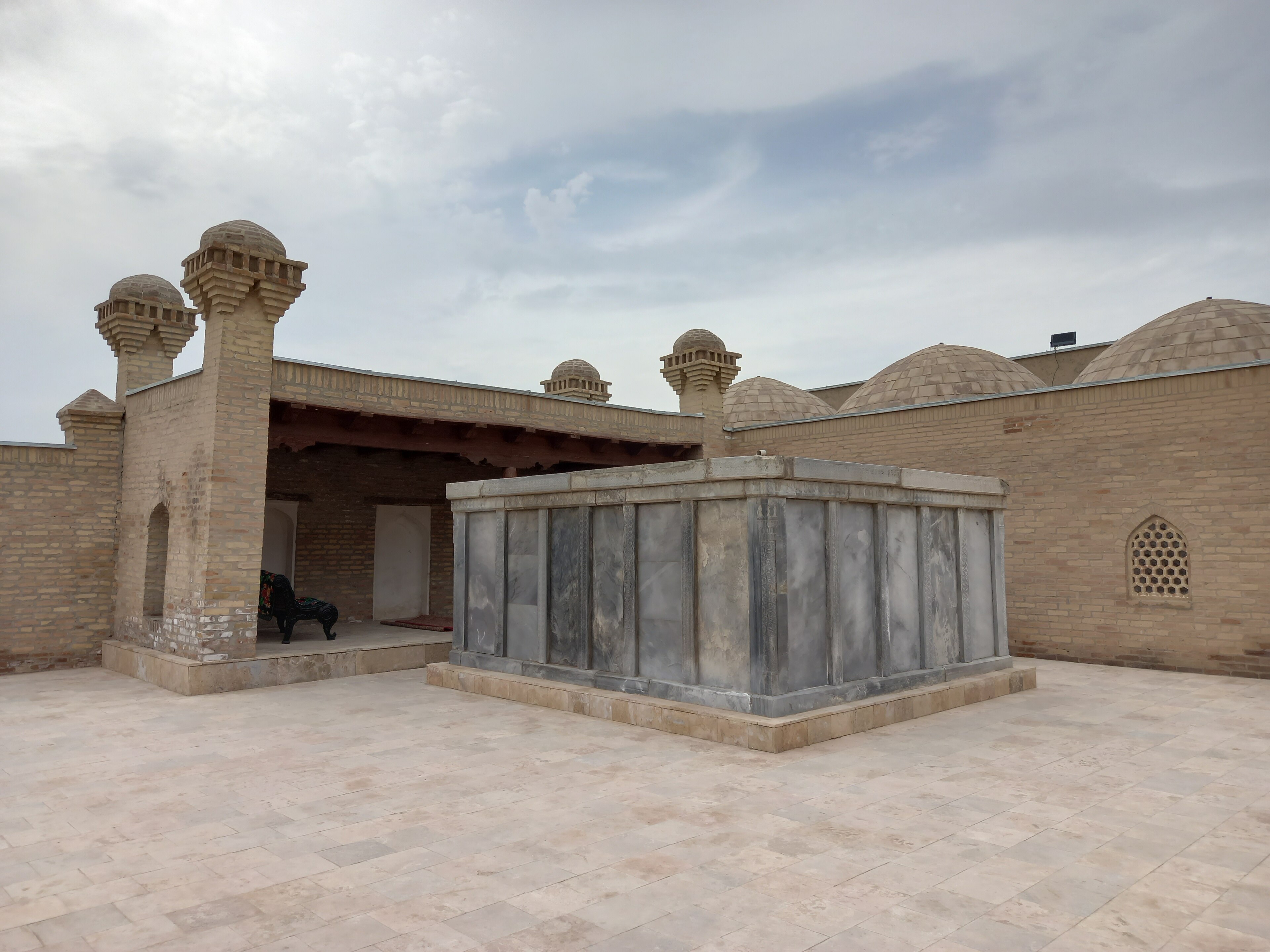
This is necessary because he was born in Kermine, died here, and was buried in his beloved city. This is Seyid Abdulahad Khan, born, according to various sources, on March 14 (27 by the Gregorian calendar) 1859 (according to other sources, in 1857), in the family of the Emir of Bukhara, Sayid Muzaffar Bahadur Khan. He was a most unusual ruler. He corresponded with the Russian Empire, Italy, Tunisia, Persia, France, Bulgaria, Denmark, Montenegro, and Siam (present-day Thailand). He was a patron of the arts, allocating funds for the construction of such famous objects as the main Narzan baths in Kislovodsk designed by architect A. N. Klepinin, the Palace of the Emir of Bukhara in Zheleznovodsk by architects V. N. Semenov and I. I. Baikov, the Palace of the Emir of Bukhara in Yalta by architect N. G. Tarasov, the Palace of the Emir of Bukhara (New Bukhara, also the city of Kagan), designed by A. L. Benois, the former representative office of the Emir of Bukhara in Orenburg, and the house of the Emir of Bukhara in Saint Petersburg designed by S. S. Krichinsky.
Additionally, the Russian Baltic Fleet included a warship — the destroyer "Emir of Bukhara," built with funds from the emir and money collected by his subjects. Furthermore, Tashkent was home to the 5th Cossack Cavalry Regiment, whose patron was also Abdulahad Khan. The regiment was stationed in "Kazachka" (Cossack area), located where we descend from the automobile bridge toward Kuilyuk. After the descent, on the right, is Kushkuprik Street. About two hundred and fifty meters down this street, on the left, was where this regiment was located.
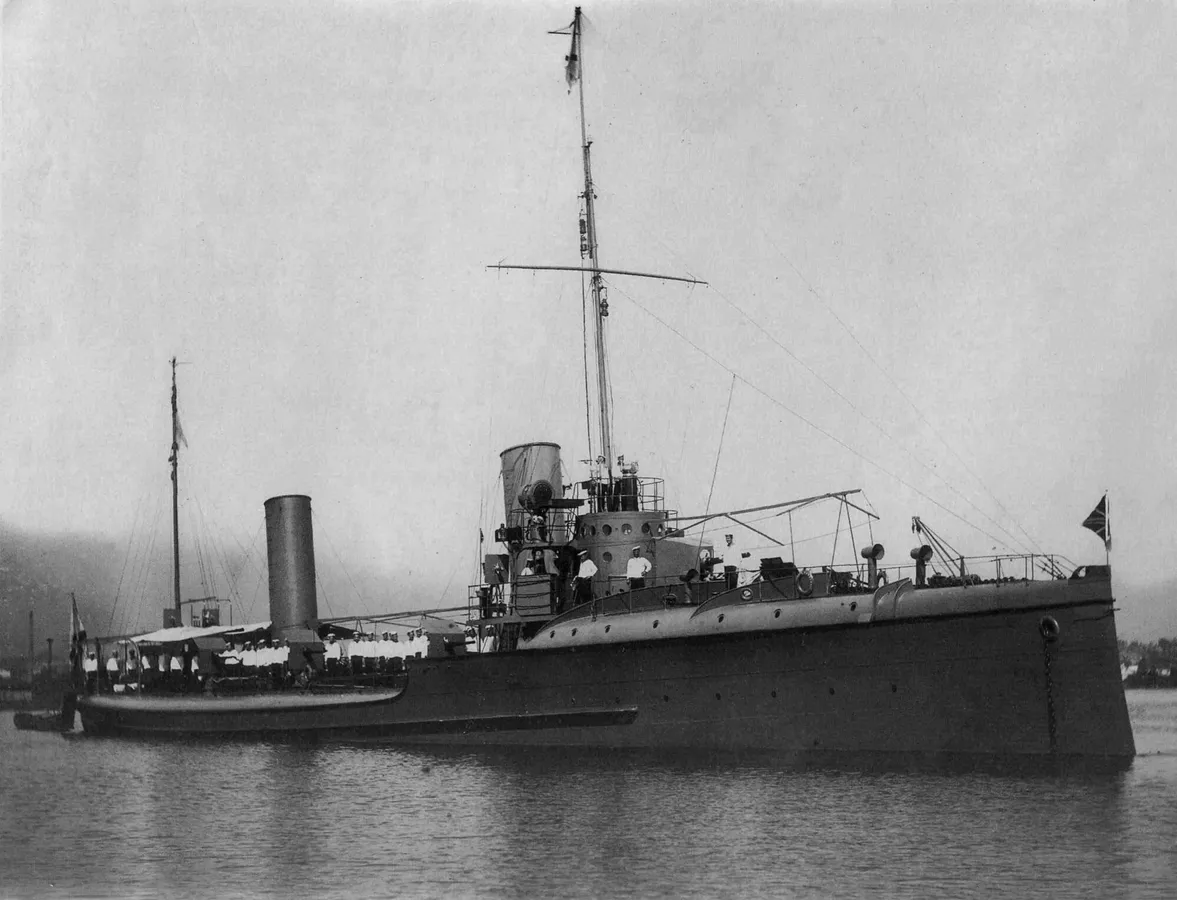 Source: Archive of Russian and Soviet Navy ship photographs
He was not alien to poetry and was not only an admirer of it but also wrote poems himself, compiling a "Divan" — a collection of verses, signing his works with the pseudonym "Ojiz" — meaning weak, helpless. The khan was a good trader of karakul — a valuable fur, and held the third place in trade, keeping about 34 million rubles in various banks. Besides his native Uzbek language, he knew Persian, Arabic, and Russian, which he used during his travels in Crimea and the Ciscaucasia — modern-day, for example, Stavropol Krai.
Moreover, His Highness was an excellent horseman – he skillfully tamed stallions and even participated in equestrian games – kok-buri (buzkashi), in which even staying in the saddle is a considerable challenge. Furthermore, the Emir proved to be a reformer of the Bukharan army, bringing it to a more or less modern state for that time. Why am I telling all this? He was also a builder – of course, he did not build himself, but he took the initiative, allocated funds – without them, nothing can be built. Moreover, the structures he commissioned have survived many historical events and still serve people to this day.
Mirzachorbog
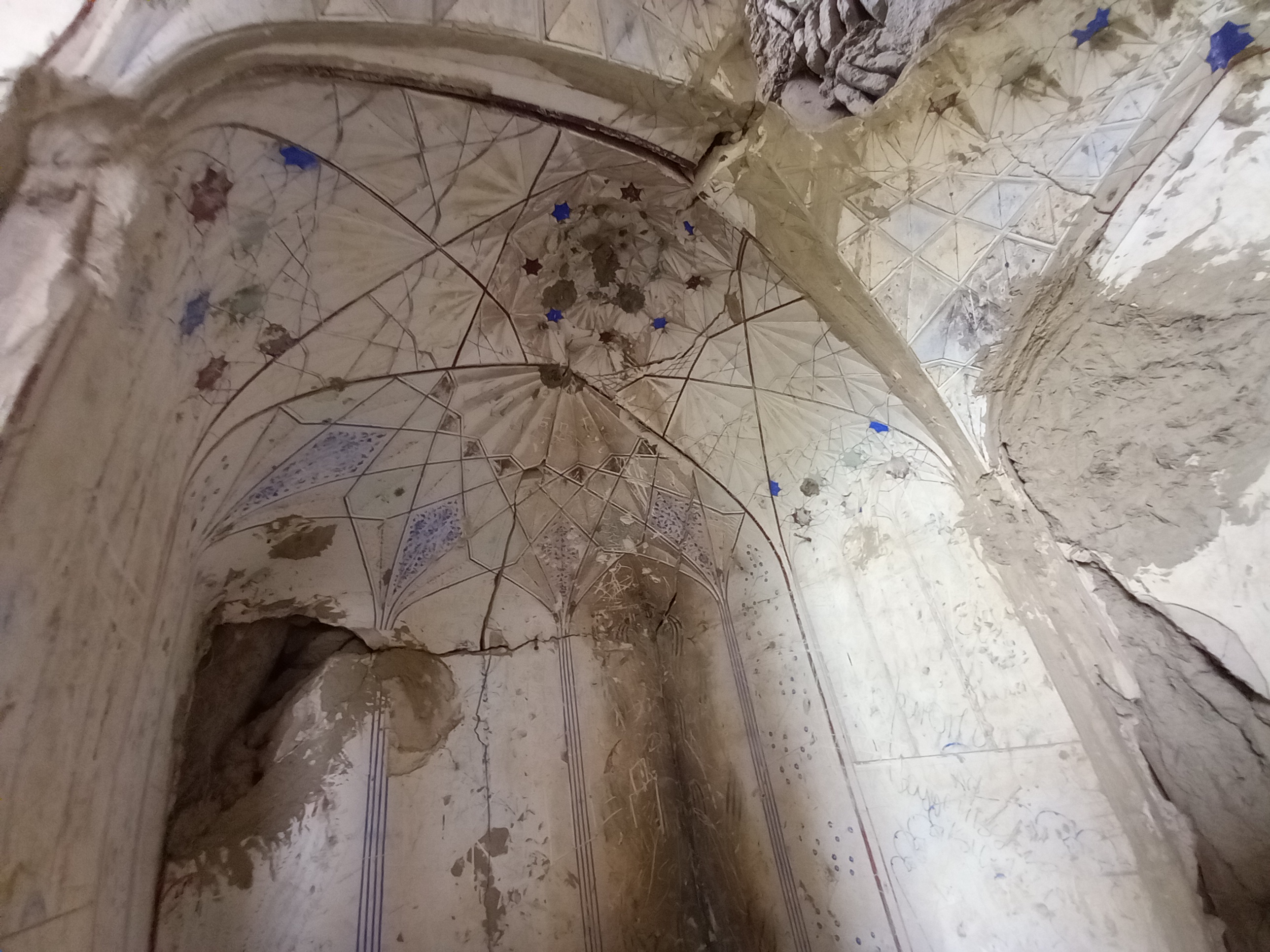
To tell the truth, the summer palace Mirzachorbog, built under his order and located in the northern part of Karmana, has reached our times as picturesque ruins. It was created between 1900–1905 in a magnificent location—it was cool here—near the Zarafshan River, the garden was planted on fertile soil, and during the hot months, coolness was provided by winds from the Nurata mountains. One could also hunt here—the emir was a fan of falconry. The chief builder was appointed as Abdurahim Gazgoni—apparently, originally from the Gazgan settlement—has everyone heard of Gazgan marble? The Navoi Theater is faced with it. This palace was decorated by our famous ganchkor, the future academician—Usto Shirin Muradov.
In total, about a thousand craftsmen—masons, carpenters, and others—participated in the construction of the palace. In various years of its history, already after the client's death, the building was used differently: it served as a barracks and a collective farm office—but after 1975, it became unnecessary to anyone. Despite the fact that back in May 1999, an entire Decree was issued on the reconstruction of the palace and some other facilities in Karman—nothing was ever done. Moreover, the local population contributed—when in 2017-2018 a rumor arose that a chest of gold had been found in the palace, well, things really started happening…
Those eager to get rich "without any problems" rushed to search for gold, in the process digging up the old throne platform, destroying one of the walls and the ghanch decorations, breaking the entrance staircase to the rooms while searching for mythical gold reserves. In 2020, an application was submitted to develop the design and estimate documentation; in 2021, it was announced that Mirzachorbog would be included in the reconstruction program, but... nothing has been done to this day. Today, the beautiful palace is not even surrounded by a flimsy fence, let alone having any security. In short, only ruins remain of the palace...
Mausoleum of Khasym Sheikh
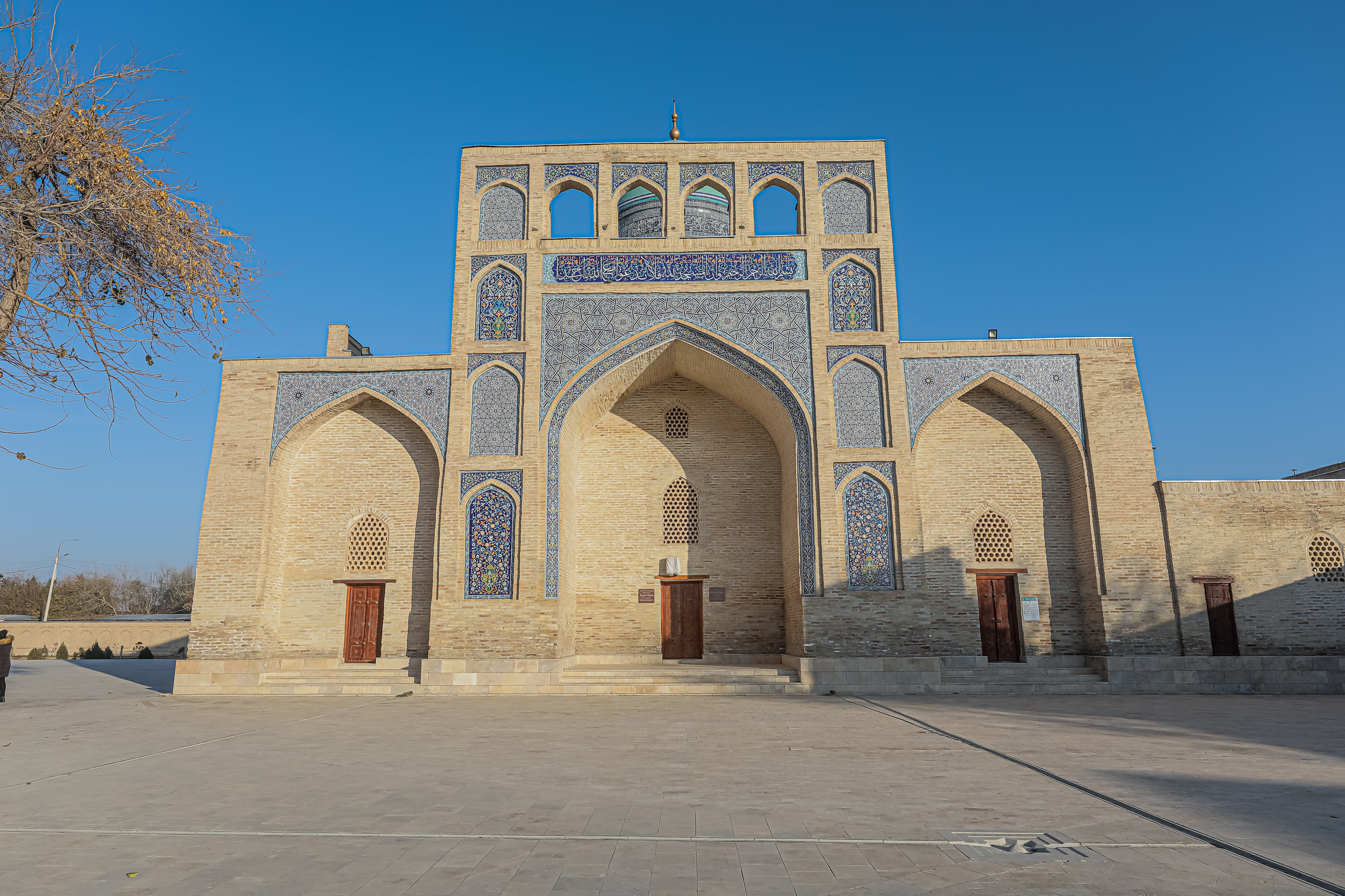
This is a mausoleum of considerable size, also known as the Mausoleum of Qasim Sheikh. His full name is Qasim Sheikh Azizan Karminagi; and his life years are dated from 1500 to 1578 or 1579. He was quite popular in his time as a religious-political figure and represented in his person the dervish order, or the Yassawiya tariqa, which originated as early as the 12th century in the city of Turkistan. The years when Qasim Sheikh was active coincided with the internal power struggle among various branches of the Shaybanids.
Kassym-sheikh, being by nature, let's say, a peacemaker, helped one of the contenders for the throne of Bukhara, Abdullah Khan II, in this struggle. At that time, three rulers—of Samarkand, Turkestan, and Tashkent—had united against Abdullah. The united army was heading to Kermine with the aim of eliminating the newly emerged contender for the throne. Kassym-sheikh, knowing what could follow, hid the future ruler along with his family and servants deep in the city's ark (fortress), while he himself took part in the defense of the city.
 Author: @Ashirbek14
The construction of the mausoleum began, as is commonly believed, in 1571, when Khasym-sheikh himself supervised the erection of the building, which was planned to house a madrasah. This is what local historians claim, stating that the future mausoleum building was used as an educational institution until the death of Khasym-sheikh. But, as is often the case with Kermine, other information has emerged, taken from the works of researchers who claim that initially, a dakhma was erected over the sheikh's burial site. Why exactly a "dakhma" is unclear. This is a Zoroastrian, typically circular tower-like structure. However, our distant ancestors probably knew better.
A year later, Abdullah Khan II arrives at the burial site of Khasym Sheikh. After the memorial ceremonies, he ordered the construction of a khanqah ("khonako" — a dwelling, a guesthouse for pilgrims) next to the sheikh's grave, which was carried out.
Over time, this complex became the burial ground for deceased followers of Khasym Sheikh in various years, and by the end of the 16th century, a mosque was built nearby. Today, the mausoleum ensemble consists of a mosque, a khanqah, and two open-air tombs—they are called hazira. The mosque was built from fired bricks, clearly of local production—it is easier to build a kiln for firing than to travel to an unknown place and buy bricks from an unknown source. A turquoise-colored dome was erected over the mosque building, and the white walls were decorated with ganch carving.
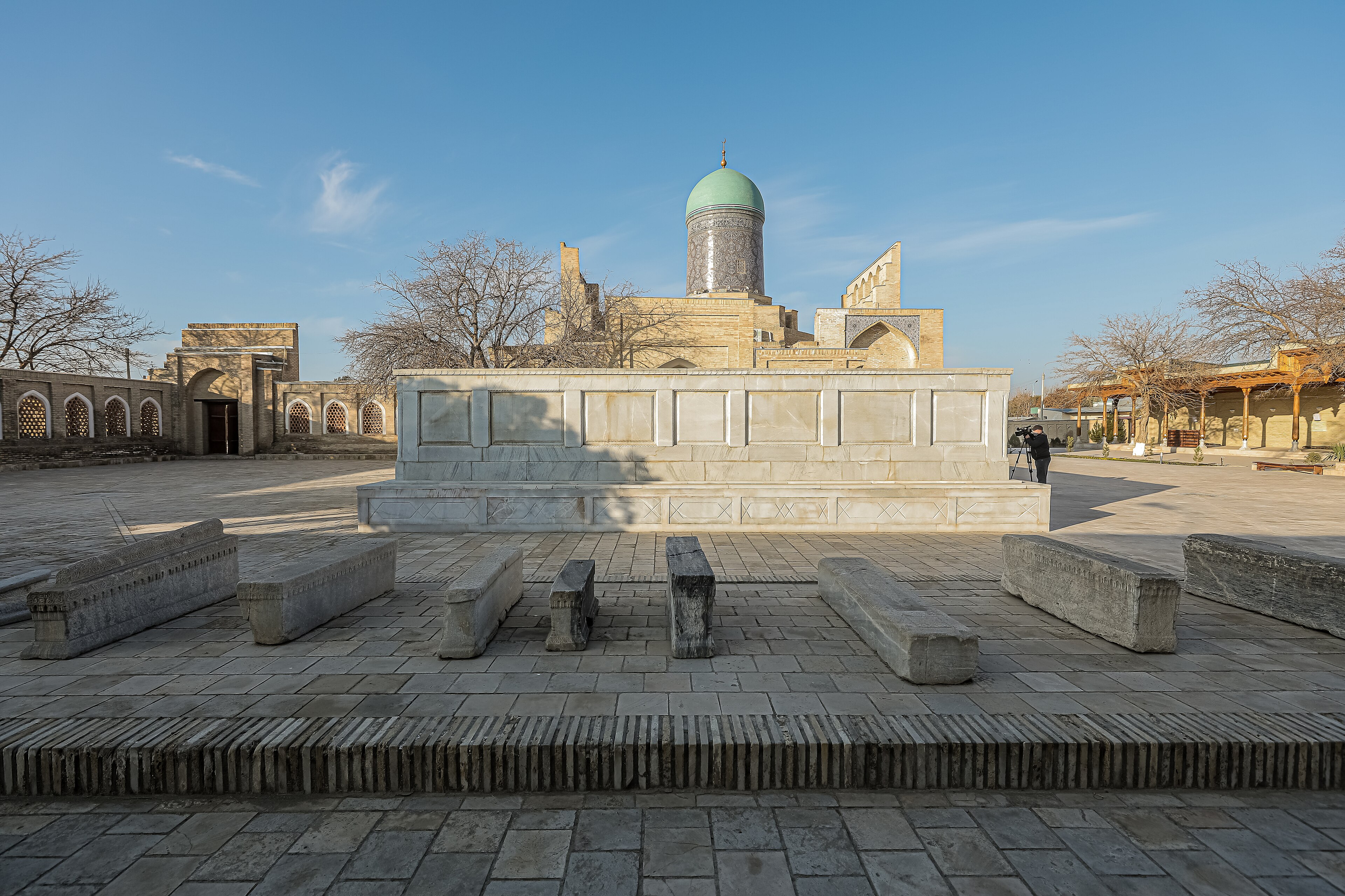 Author: @Ashirbek14
Originally, the building had a square shape, but over the centuries, it has not been possible to preserve it — all due to numerous restoration works. It is noteworthy that our ancestors aimed to restore buildings, that is, to preserve them in their original form or close to it. And this is wonderful. Apparently, the ancestors did not know the modern word "reconstruction," which implies almost mandatory radical changes to the external and internal appearance of a building.
After the death in 1910 of the penultimate ruler of the Bukhara Emirate, Abdulahad Khan, it was decided to bury him next to the mausoleum of Khasym Sheikh and the grave of the saint, to the west of it. Initially, the sagana (tombstone) was made of brick, then a marble tombstone was installed.
Currently, there is also a museum on the complex grounds, which houses over 2,000 various exhibits from different eras. And to the southern side of the mosque adjoins a rather large courtyard that can easily accommodate over a thousand worshippers.
Abdulakhad Khan and Bukhara-i-Sharif
Yes, I forgot to mention another peculiarity of the late Abdulahad Khan — he had been ruling his country for nine years when, in 1894, for some reason, let's say, he had a difference of opinion with the Bukharan clergy. What exactly happened there — I do not know. But Abdulahad Khan left the city of Bukhoro-i-Sharif (as Bukhara was officially called back then), went to the village, the settlement of Kermine, and never appeared in Bukhara again. There must have been a serious reason for the ruler of the state to refuse to visit his capital. However, he surely knew that a similar act had been performed by a ruler of a large country long before the Khan.
And Kermine, this small settlement, which has existed, one can confidently say, since the times of ancient Sogdia, has been the administrative center of the Navoiy District since 1984, now renamed Karmana District. In 1979, it received city status, but held it for a relatively short time—twenty-four years—after which it was returned its previously lost status—that of an urban-type settlement.
In the city of Navoi itself, it is called the "Old City," and although it is indeed old, it still lives today. There are several monuments on its territory that may even remember the times when Mir Alisher Nizametdin al-Navoi "reigned" in the poetry of ancient times. His birthday was recently celebrated in Uzbekistan — on February 9th. Let me remind you — for three years, Alisher Navoi studied in Samarkand, in one of its madrasas. Perhaps that is also why his name was immortalized in the name of this very young city.
He "came into being" quite recently - in 1958.


