
Old Tea House
This is my most beloved district. A huge part of my life is connected to it. That's why its history and its monuments are most dear to me. It was here that I first heard the amazing legend that told people about Chilanzar.
I remember it before it was faced, this old aryk Chaban-ota, where we happily took "water baths" in the scorching heat. After which the adults going about their business had to detour around us, warming ourselves on the hot asphalt. I recall the cozy ancient teahouse under the sprawling walnut trees and the white-haired teahouse keeper, leisurely telling an ancient legend to the respectfully silent visitors, including me, a first-grader, sitting next to my father.
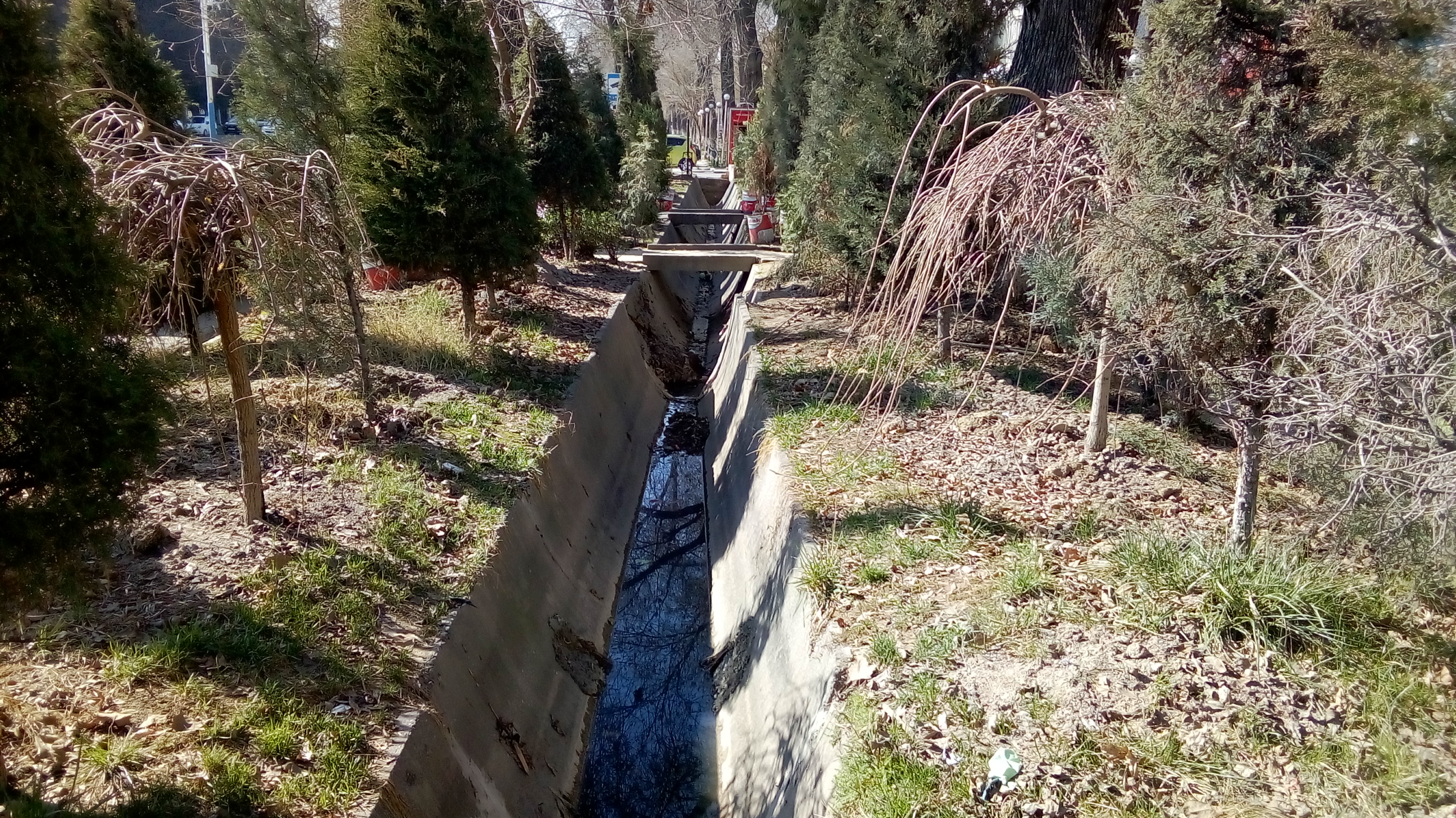
Ancient legend
In ancient times, there lived in the vicinity of the villages of Katartal and Mahalla-tepe a gray-bearded shepherd who tended flocks of sheep. And the flocks were surprisingly numerous, bringing great profit to their owners. But life passes, and when the shepherd passed away, the grateful residents of Mahalla-tepe erected over his grave a small mausoleum—a mazar, unadorned in any way, for during his life the saint had led a simple, worldly life. Gradually, a cemetery grew around the mazar, which to this day exists within the 13th quarter, hidden from view by the surrounding residential houses.
According to another version, the mazar was built by order of Sahibkiran Timur at a site where Kalmyks lived, guarding the holy place—Kadamjoy. Apparently, this structure was erected on the site of an ancient sanctuary, and there may not even be a burial there...
Another version says that the ruler of Samarkand, Mirzo Ulugbek, dreamed of the saint Chaban-ata, who reproached Timur's grandson for neglecting the memory of the saint who guards the sheep flocks.
To correct the mistake, the great scholar immediately ordered a large caravan with construction materials and craftsmen to be sent to Chach. And a mausoleum was built on the very spot where water began to flow from under the staff of the famous Chaban-ata, after whom the modern street is named. Whether this is true or not—no one knows. Archaeologists and architects believe that the complex arose at the end of the 18th — beginning of the 19th century, closing off the poplar alley in the cemetery.
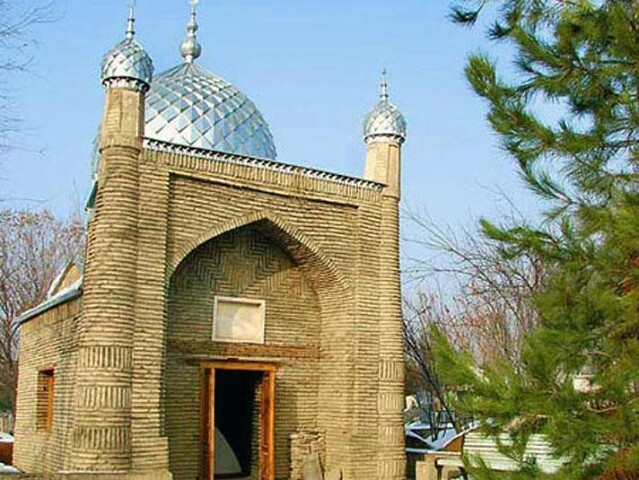
It consists of an entrance structure - a darvozakhona, topped by a small minaret - a mezana, the mausoleum itself, and a mosque with a multi-columned aivan. Silence and tranquility reign around, as befits a resting place. For some reason, tour buses do not stop here. The monument is not mentioned in the guidebooks of travel agencies. Which is a pity, because most residents of even the nearby neighborhood are unaware that they live next to a fascinating historical monument.
It is noteworthy that during my school years, the remains of the ancient Mahalla-tepe settlement still existed, and we often passed by several adobe houses of quite venerable age on our way home.
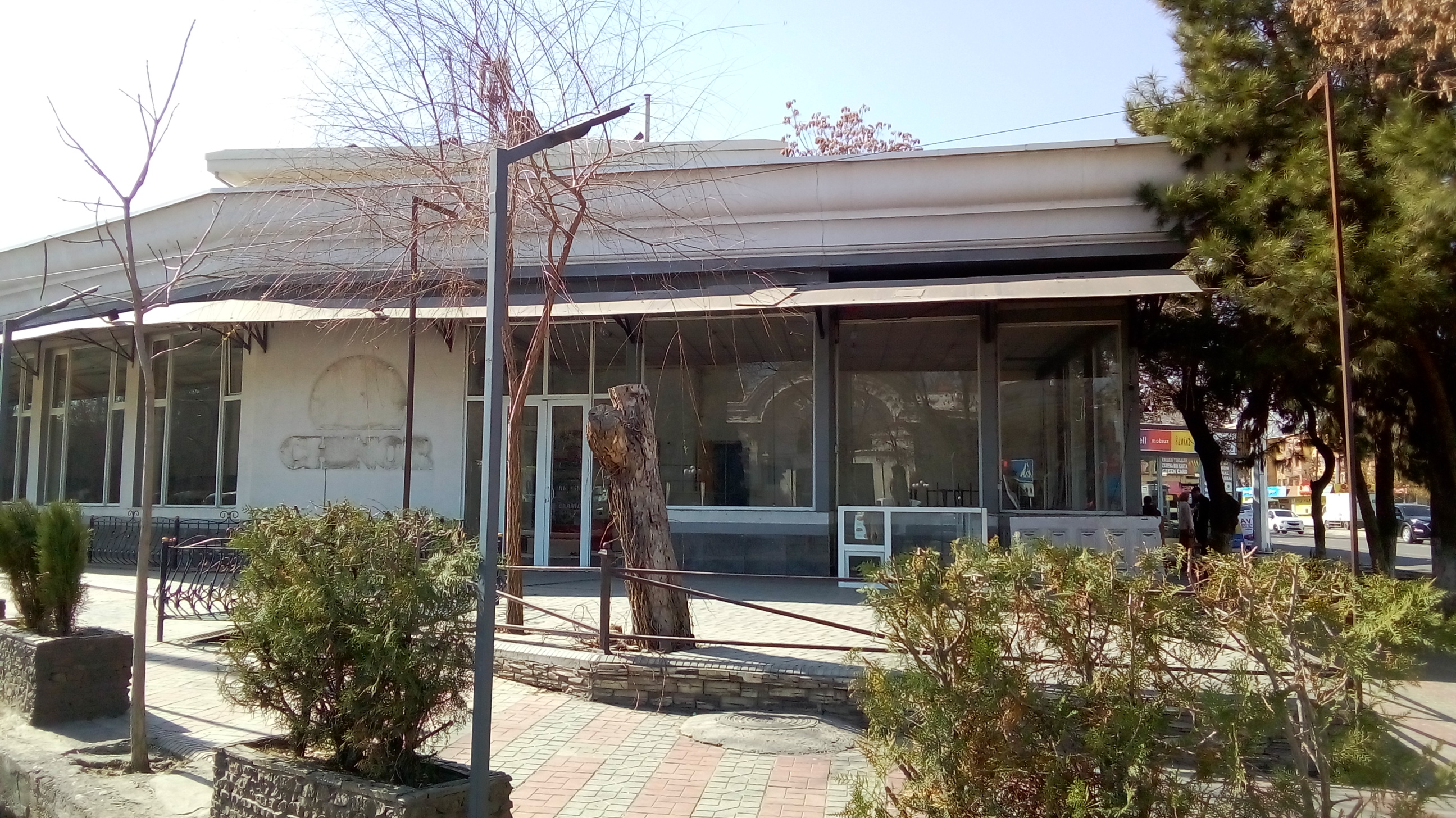
Today, on the site of the old, cozy teahouse, they have built a modern cafe called "Chinor," and the charm is gone, just as those walnut trees are gone, and that friendly, gray-haired teahouse owner who so gladly treated us mischievous kids with caramels and peanuts...
Groves
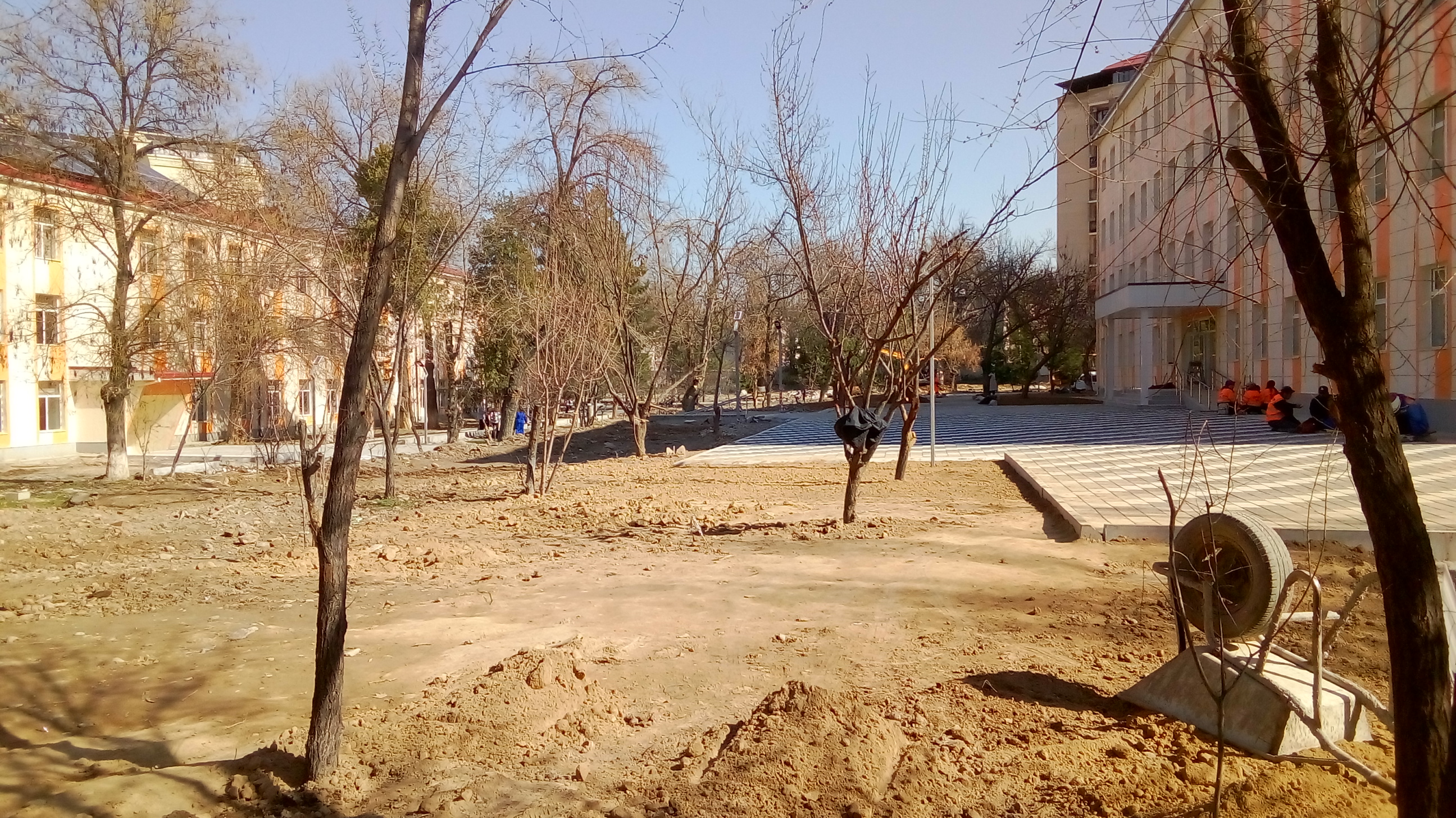
Right there — just nearby, across the road — was a part of the former "grove," where we used to go to collect cherries, apples, plums, quinces, and other things that still remained from the famous suburban gardens in my childhood. And literally next to the "fruit" grove, there were still "representatives" of that very walnut grove, supplying us with their gifts for free. It was precisely through the walnut grove, along a fairly wide path, that one had to walk on foot to reach any pioneer camp for which a ticket had been purchased.
Just recently, I was surprised to see enormous high-rise buildings on the site of a very old walnut grove; they looked especially absurd next to the dear-to-the-heart four-story buildings. The nearby secondary school has now acquired a modern appearance, which did not spare me from the flood of memories — I simply looked back, recalling the housing estate as it was during my childhood.
Kangly-Kurgan
On my beloved "Kama," I often found myself in the area of that very bus station, known by the toponym "Podmoskovnaya" — I enjoyed such bicycle rides. Near this terminal stop for bus routes 2, 8, and others, though already underground, flows the little river Izza-sai. It was precisely in its valley that another archaeological site was located — Fazyl-kurgan, sometimes called Kangly-kurgan. This name goes back to the self-designation of the tribe — kangly-kangar, who lived in this area and trace their history back to the state of Kangju (Kangha). This site is older than the previous ones and dates back to the 4th-6th centuries.
The settlement was surrounded by a fortress wall and stood on an artificial foundation that rose above the surrounding area. Before the Arab conquest, it was part of the district of the Chach region — Ming-Uryuk. Excavations have revealed traces of the violent destruction of the walls and subsequent fires. Apparently, the garrison of the small fortress and the inhabitants of the settlement put up fierce resistance to the invaders, as a result of which it was destroyed, and the village only briefly revived in the 10th-12th centuries.
Ishan Kharobod
From here, it's very convenient to take a seat on the electric bus and head further, to the old "circle" at Katartal, very close to which, in the not-so-distant seventies, a store was built, known to Chilanzar residents as "Shukhrat." By the way, the toponym "Katartal" literally means "willow row (alley)." Willows (tal) are indeed found along this street. There is one very remarkable structure here, which, alas, tourists are also almost never brought to. This is what remains of the once extensive settlement of Nogai-kishlak, often confused with Nogai-kurgan.
An ancient legend claims that about three hundred years ago, a Tatar (Nogai) named Khairabad was told in a dream:
Soon, a white nar (camel) will be at the threshold of your yurt. You will mount it and ride wherever your eyes gaze. And when the nar stops, that will be the place of your happiness.
Allegedly, this prophecy came true, the people brought Hayrabada to the Chilanzar mound, where the mausoleum and mosque now stand. Until recently, there was also a deep khauz (pool) there. Archaeological data confirm the time of the monument's construction—it dates back to the 18th century. Moreover, the low (unlike other structures) quality of the masonry, inaccuracies in the layout, and the squatness of the buildings speak to the decline of construction art and the difficult life of the local population. Most likely, the construction took place during the Tashkent chorkhakimstvo (four hakims)—a very dark page in the history of our city.
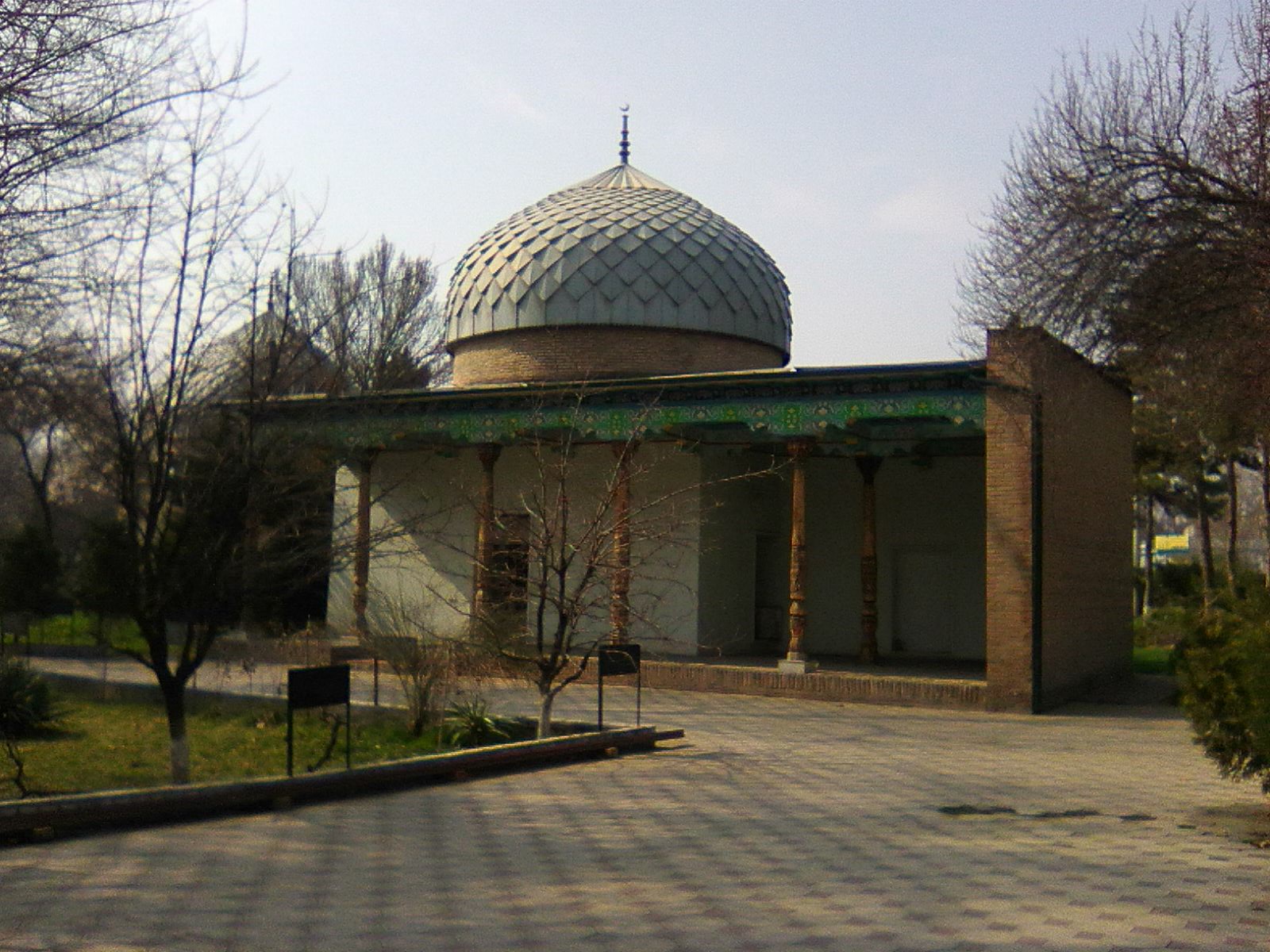
I still remember times when this monument presented a pitiful sight. But thanks to the careful hands of restorers, it has been brought into good condition, and I would like to ask our tour guides to pay as much attention as possible to such small monuments — after all, the large ones are already well-known.
Chilanzar-ota
From the "circle" on Katartal Street, we head to another monument located not far from the famous "Uzbekfilm" studio. And here, too, we will give the floor to an old legend:
In ancient times, there lived a pious Muslim on the outskirts of Shash. For a long time, he led a righteous life, earning the title of sheikh, and towards the end of his life, he became known for his love of the jujube tree and its floury fruits, which possess healing properties. This unpretentious tree sends its roots deep and easily withstands even drought. The sheikh, who loved this creation of nature, diligently planted jujube saplings around his dwelling, so even during his lifetime he was nicknamed Chilonzor-ota, and the area — Chilonzor.
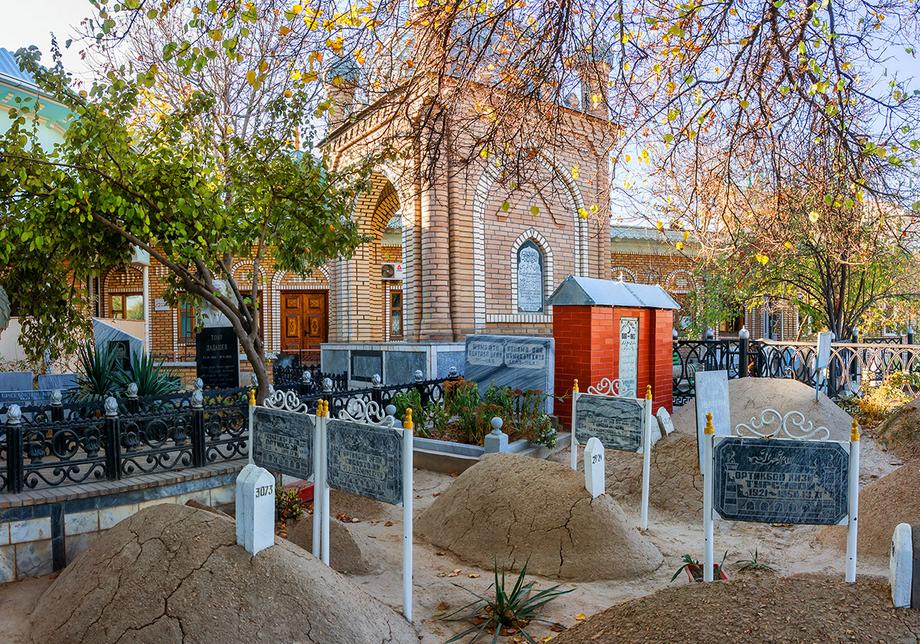
Whether the legend speaks the truth or not, on Chilanzar Street—at the old cemetery—you can see a modest, low mausoleum dedicated to Chilanzar-ota. According to archaeologists, the monument was erected in the early 19th century. The second version belongs to the now-deceased former "city head" of Tashkent, Nikolai Gurievich Mallitsky. Holding his post long before 1917, he specifically studied the history of the city, using for this purpose authentic documents given to him by the Tashkent mingbashi (thousander) in 1907.
He was assisted in this endeavor by aides who conscientiously collected complaints and statements from the population, which typically indicated the name of the locality (mauza) or mahalla. The result of this lengthy work was the appearance of the (now very rare) book "Tashkent Mauza and Mahalla." In it, one can find an explanation of the ethnonym "Chilanzar." However, N. G. Mallitsky interprets this name as Chinorzor, meaning "plane tree garden," which completely refutes the popular rumor.
Holy Standard Bearer
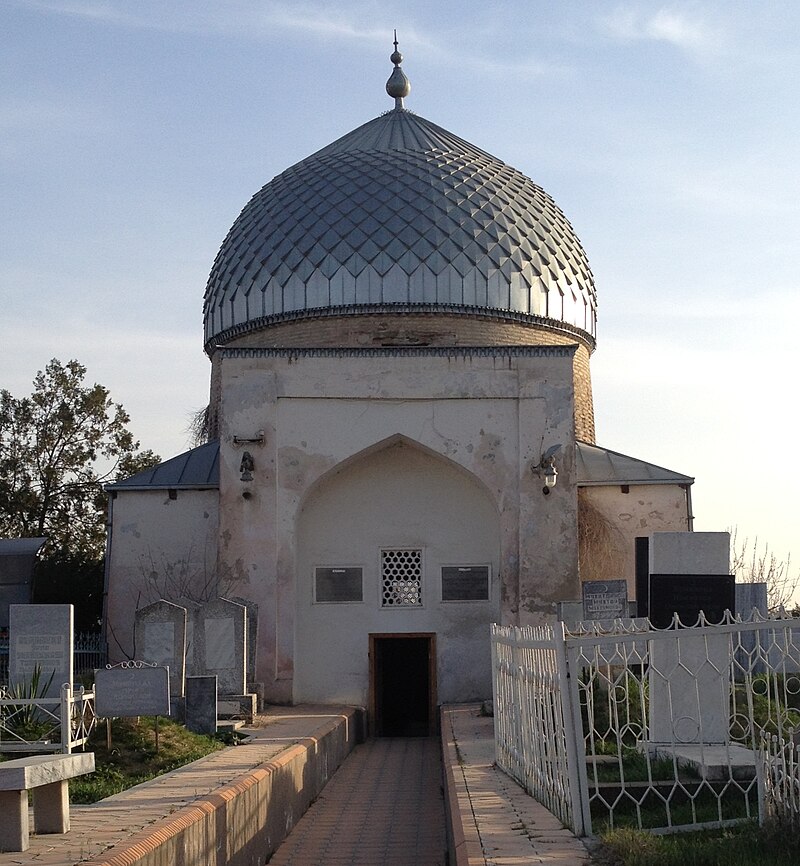
From Chilanzar Street, we proceed to the bridge over the Bozsu Canal, near the "Milliy Bog'" metro station, formerly "Yoshlik". Not far from it were located one of the city's twelve gates — the Kamalon Gate. Near these, as well as the other two southern gates — the Samarkand and Beshagach Gates — extensive cemeteries were situated, within whose territories were mausoleums of revered saints. In the Kamalon cemetery, which has survived to our time, is the mausoleum of Khoja Alamardor-bobo. In history, he is known as a companion of Kaffal al-Shashi.
Both of them spread Islam in the Tashkent region, and both passed away with recognition of their merits. Notably, the name of the first one can be translated as "standard-bearer." According to legend, the mausoleum, which is reached via a poplar alley, was built over the saint's grave 1300 years after his death. However, there is no exact data, and various studies have provided grounds to assert that the monument was erected no earlier than the 18th century. Let it be so, but nevertheless, the mausoleum is one of the most revered shrines in the Muslim world.
Near the "Kamolon Kabristoni" cemetery runs Baynal-Milal Street, which leads to one of Chilanzar's squares — Ak-Tepe. Turning across the bridge, along Sergei Yesenin Street, which smoothly becomes Nurafshon Street, we approach the nearly destroyed archaeological monument Ak-tepe in Chilanzar — here were the remains of an ancient castle, dating from the 4th to 16th centuries. The building was quite tall, situated on a high hill and surrounded by powerful walls, but it had no bastions (they appeared later — in Europe, in the 14th-15th centuries).
Based on the nature of the archaeological finds, this building belonged to the type of protected sanctuaries built in honor of one of the Zoroastrian gods. Its location was within the district of the oasis capital—Ming-Uryuk.
And in the second half of the 20th century, in this same, then still suburban area, children's health camps began to be located, situated between the modern 13th, 14th, and 15th quarters. On my 14th quarter, as I learned a couple of years ago, there was a cornfield, long before 1966.
Recent Past
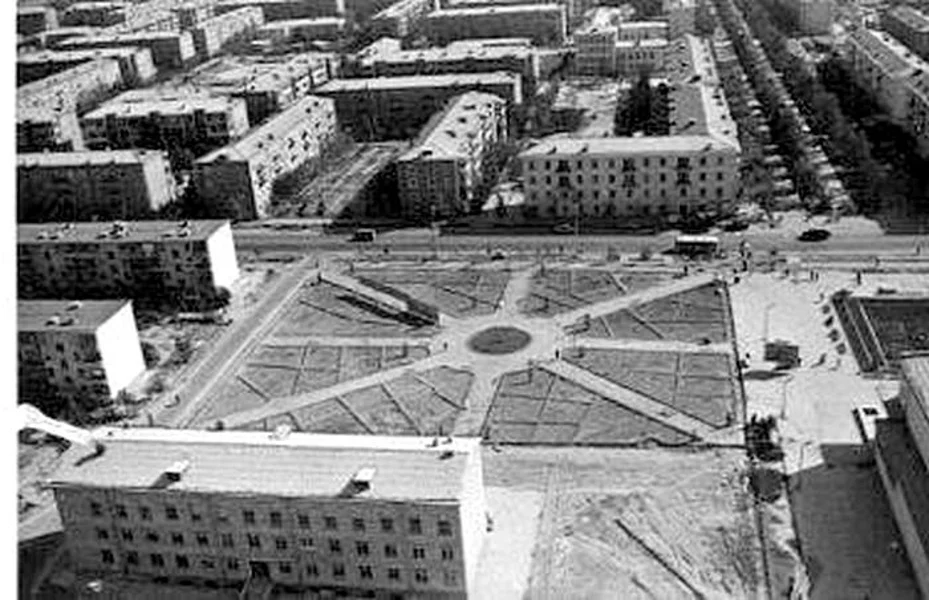
As is known, this residential area began to be developed shortly before the sadly and solemnly famous Tashkent earthquake. On the city map of that time (for 1963), we can see only a small part of the vast future complex of residential buildings and "public" buildings. And Chilanzar Street, together with Pionerskaya Street (modern Arnasaĭskaya), extended only to the current Chilanzar pedestrian zone — Gagarin Street. That is, only the first block of the area had been built, which was destined to accommodate a large number of people already in the first months of the underground element's rampage.
Generally, the construction of new houses "on the undeveloped lands of Chilanzar," according to the 1958 "Tashkent" reference book, began as early as 1956. Therefore, in the seven years before the map-scheme was issued, only fifty-six residential buildings had been built (I wasn't lazy, I counted them on the city's electronic map). I counted only residential buildings, excluding those built later. And what were the plans for developing the territories—those "beyond the boundary line"!
Groups of residential blocks were to be connected by an inter-block garden, have sports grounds and bodies of water (read: swimming pools). And kindergartens and nurseries—precisely like that, separately—were to be located "away from noisy transport arteries." At the same time, these were to be entire complexes of residential buildings surrounding public structures.
Favorite cinema
For example, such as the "Seagull" cinema that opened four years before the start of the "ride on the back of a mad camel," or that very public bathhouse, which a few years ago was replaced by a premium restaurant. Or the cinema that opened two years later, and the shopping center of the same name as the residential complex.
Around residential buildings, trees were required to be planted and recreational areas for both children and adults were to be arranged. Moreover, the project pursued another goal—residents of the area should not have difficulties crossing highways when using the services of various public buildings. That is, if you need to go to the post office—just walk along the block. To the store or kindergarten—and here there are no problems either—there is no need to cross a road with moving traffic and vehicles of all "kinds."
When you are in the first quarter of the residential complex, pay attention to the first floors of the apartment buildings. They are full of shops. No, not the kind you're thinking of — these are not converted apartments, but actual shops, with spaces allocated for them according to a special project. I'll even name the building number where a small shop still exists, with its exterior partially preserved in its original state — that is building No. 14. It stands along Mukimi Street, and it has a shop whose facade is slightly tilted forward and beveled downward. Or the famous book and bread shops, known throughout Chilanzar, which were located in what is now building No. 64, standing along Gagarin Street.
It was in this very bookstore, back in the distant year of 1990, that I purchased a magnificent volume—"Dictionary of Antiquity"—for a whole twenty-five rubles. My mother "nagged" me for a whole week afterwards—it was a very expensive purchase indeed. But to this day, I do not regret that act.
Why was this done? Well, for the same convenience of residents—what if elderly people or young mothers with strollers find it difficult to climb up steep steps?
Chilanzar Shopping Center
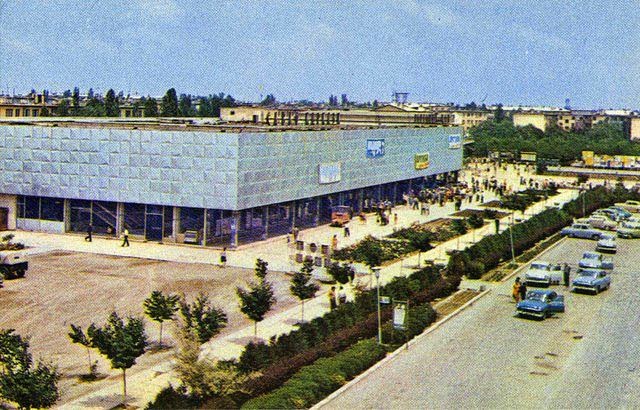
Let's also remember that very "Chilanzar" shopping center. At that time, it was considered the largest in all of Central Asia. Not only did it look quite original in appearance in those years, but it was also originally created as "that very center" where you could buy everything under the sun.
It was here that my father bought me my first and only camera, the "Smena 8M," which I didn't part with for many years. Photo film, developers, fixers, photographic paper, stationery, desk lamps, sconces, furniture of all kinds and varieties, all types of clothing, toys, sports equipment — everything was here! If you wanted a snack or a full meal — no problem, at your service was a buffet or even a whole cafe. And what a milkshake they had here — I still remember its taste! There simply wasn't anything like it in other places in the city that I managed to visit in my childhood.
Often I would simply "extract" from my parents a trip to "Torgoshka," as we inelegantly called it, precisely because of this drink. Drink a couple of glasses—and you're full until evening. And if it's with raspberry syrup...
My father and I often went to the Chaika cinema — it had a wide screen and a splendid buffet where before the show we would buy tomato or apple juice and corn sticks. The ticket queue would sometimes stretch for a hundred meters, depending on the film's "rating."
And after the movies — we always went to the "torgoshka," from which we never left without at least some small purchases. What a record department they had here! Most of my music collection was bought right here: long-playing records, EPs, recordings of foreign celebrities. The only department that could have been richer was the store near the Khamza metro station, which had its own name — "Melodiya."
Even the "Disk" store, built later on the former "Broadway," couldn't boast such a rich selection of records. To this day, this huge complex still houses a barbershop, a watch and glasses repair shop, and, remarkably, a post office. The authors of this remarkable, interesting, and complex architectural structure were, at that time, our young Tashkent architects V. L. Spivak, A. B. Kryukov, A. A. Sidelnikov, and E. F. Yasnogorskaya. This is the kind of intangible monument they erected for themselves. I would even suggest installing a small, modest commemorative plaque with the names of the project's authors engraved on it.
Lyabi-Hauz
Let's walk back towards Mukimi Street, and we'll see a small lane on the right, seemingly stretching into the distance. This is modern Lyabi-khauz Street, which once bore the name of a visiting political figure from the last century, who left almost no mark on our ancient land. There is a suggestion that it was laid out specifically for the passage of the "horned ones" — for the trolleybuses of the not-so-distant past. It's quite possible that this was indeed the case. Because the lane ended directly at the gates of the former second trolleybus depot.
Both on it and on the then still narrow Pionerskaya Street, I used to see "overnight" trolleybuses, which apparently didn't have enough space in the depot, and drivers finishing their shifts late would leave them literally on the street.
Alas, much has changed on Chilanzar now — there is no longer a trolleybus or tram depot, but for me, it remains that very young Chilanzar, when its trees were tall. And finally, I will tell you about one historical case that is hard to believe, but it is true.
Tigers on Chilanzar
The entire area of Chilanzar was covered with orchards, and the canals were overgrown with impenetrable tugai forests, home to the now-extinct Turanian tigers. By the mid-1870s, they felt quite at ease even near the villages of Zangi-ota and Nogai-kurgan, close to the 54th siding. Sometimes they would wander almost into the very streets of the settlements, causing residents to fear leaving their homes even during the day.
In January 1879, snow fell in Tashkent, which two hunters from a village and a Zangiata biy took advantage of. Armed with multuks (an old muzzle-loading rifle), the three of them decided to destroy a particularly ferocious predator that was terrorizing the area. The details of the fight are unknown, but its consequences were tragic. They managed to rouse the tiger from its lair, but it apparently attacked first, mortally wounded the biy, mauled the other participants of the hunt, and escaped with impunity into the tugai thickets.
According to the testimony of the famous Turkestan hunter E. T. Smirnov, this was the last case of a tiger appearing in the Tashkent suburbs. That may be so, but one of my good acquaintances told me that even at the end of the 1950s, his father, returning from his post armed with his service 'Mauser', killed a tiger, though in the area of the modern Karasu residential district.


