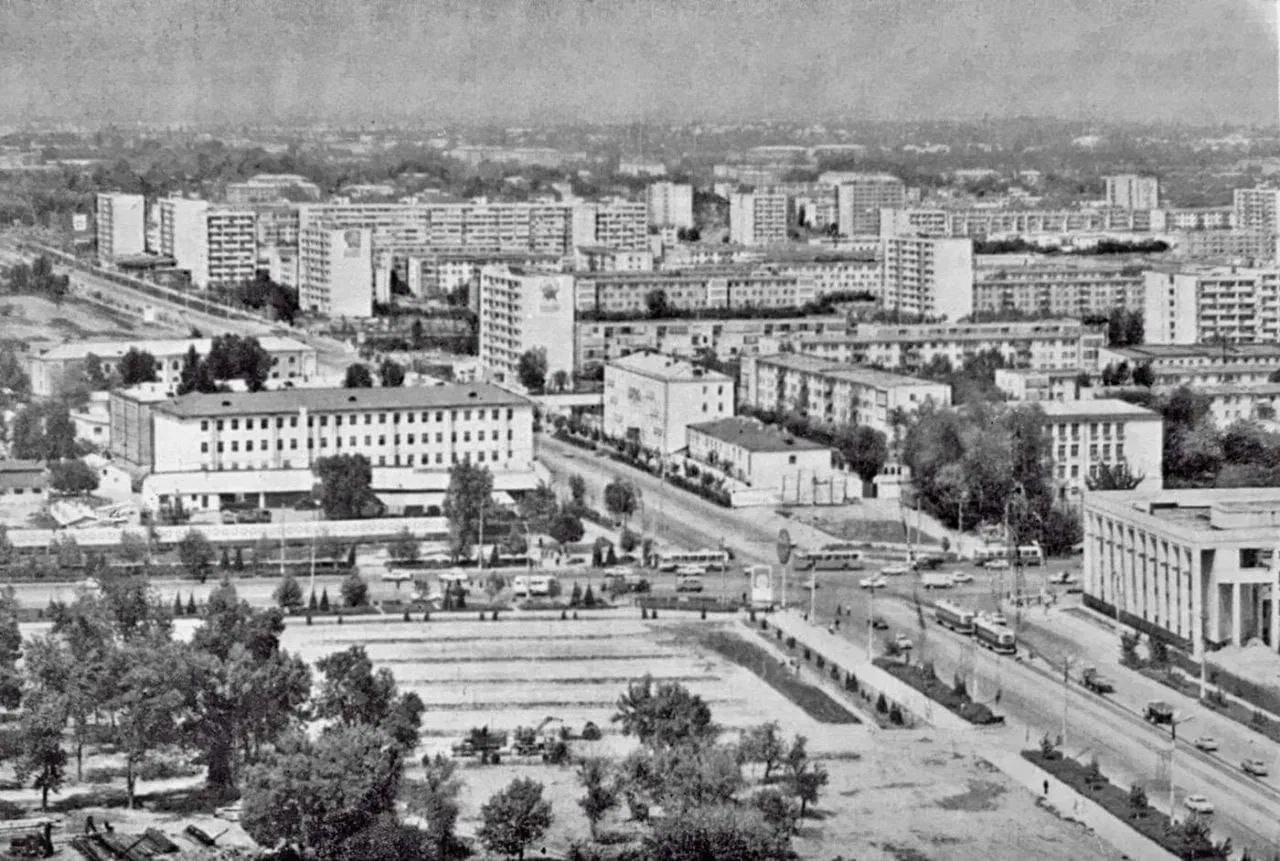
Almost every resident of the capital has walked along this street, and it remains one of the best-known in the city. It was once even the subject of a local riddle: “How do you get from the bald man to the shaggy one? Just walk straight down the street!” Today, it is quiet and calm, although near “Zarik” (the Zarafshan shopping centre) artists can still be found sketching portraits in twenty minutes, while nearby stretches an entire open-air “passage” on the pavement where paintings and antiques are sold at astonishing prices. In this piece, we take a walk along what is perhaps the city’s most famous street, colloquially known as “Broadway”, and attempt to uncover what once stood here in both the distant and more recent past.
Today, the street falls within the Kashgar mahalla, although at the time we begin with, there was nothing here but wasteland. It emerged around 150 years ago and was originally called Salarskaya. It lead to an old “military” canal. Why “military”? The name comes from salar, meaning a military commander, roughly equivalent to a general commanding ten thousand men. Over time, the street changed names several times before receiving its current name, Sayilgoh, in 1993. However, our focus here is on its earlier identity as Sobornaya Street.
Sobornaya
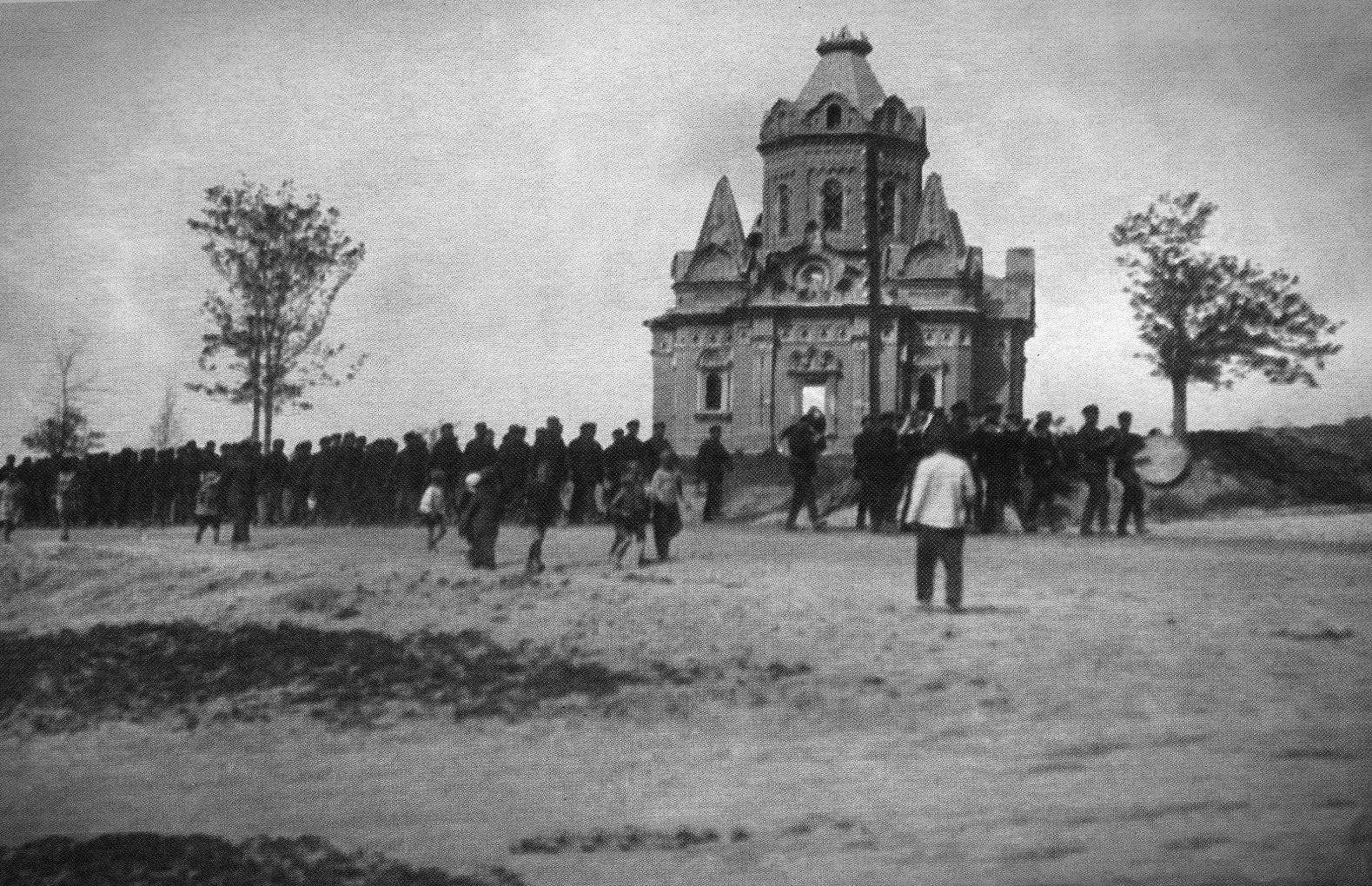
Sobornaya originally began on the left bank of the Bozsu Canal, often mistakenly called Ankhor, and extended as far as the cadet corps, better known today as the old TashMI (Tashkent Medical Institution). The street was named after the Transfiguration Cathedral, built in 1888 in Byzantine style at its beginning, on the site where a recently restored fountain now stands. The adjacent square, initially used as a parade ground, also bore the same name. Military drills and parades were held there. A well-known photograph from 1913 captures one such event.
Twenty years earlier, a smaller St Joseph–St George Cathedral had been built nearby, opposite what would later become the parade ground. It remained standing until 1995, serving various purposes over the years. Today, a modest square occupies its site.
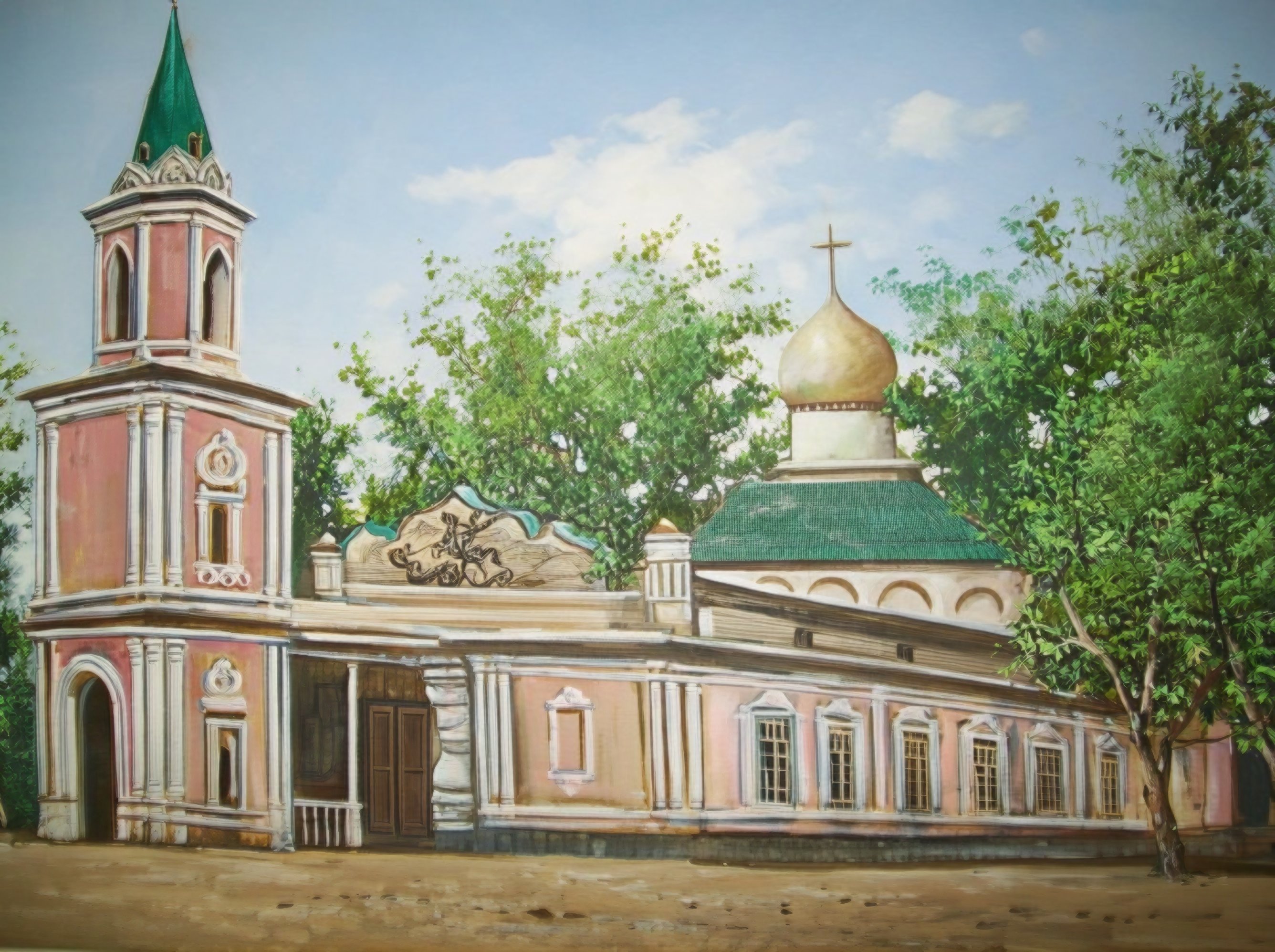
Like many architectural monuments of the time, the cathedral did not survive the anti-religious campaigns of the 1930s. An attempt to demolish it in 1935 failed multiple times, eventually requiring direct artillery fire in the city centre.
The Hunting Lodge
Fortunately, the nearby palace, originally designed as a hunting lodge for Grand Duke Nikolai Konstantinovich Romanov, survived. Built in 1891 by architects Wilhelm Heinzelmann and Alexey Benois, its layout resembles a double-headed eagle when viewed from above.
This is not a legend but a scaled-down version of the Russian embassy building in Japan. The surrounding grounds, once much larger than today, were landscaped by the Tashkent botanist and pharmacist I. I. Krause. Only a few of a wide variety of trees planted there survive today. The palace itself has endured, which is a rare piece of good fortune.
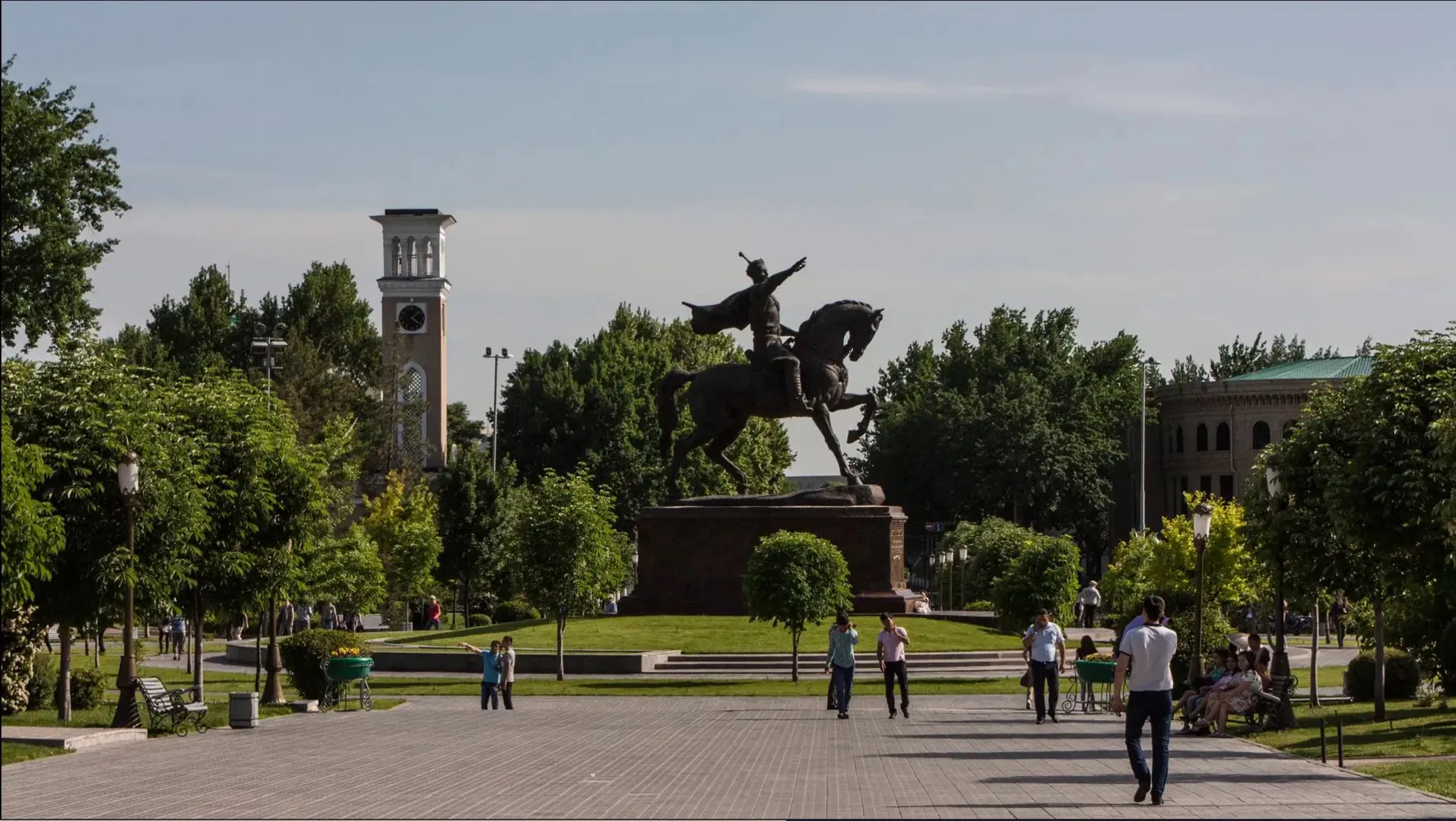
Directly opposite stood the St Joseph–St George Church, remembered by older residents as having housed, at various times, a puppet theatre, an ice cream café, and even a dumpling restaurant. Today, its location can be identified as the paved area and lawn between the monument to Sharaf Rashidov and the palace fence. Having previously been under the jurisdiction of the Ministry of Foreign Affairs of the Republic, the palace has now been returned to the city administration, which has pledged to carry out another restoration to the highest standards and open it to the public.
We pass between the Grand Duke’s palace and the St Joseph–St George Church, often mistakenly referred to as the Grand Duke’s “house church”, and head towards another remarkable building that once stood on the site of a former government security structure. It occupied an entire city block and, quite recently, only a couple of years ago, met the same fate: it was demolished, despite effectively being an architectural monument and listed among protected buildings.
The “Treugolnik”
This two-storey building belonged to the Russian-American Rubber Manufactory Partnership “Treugolnik” (Triangle). Its products, according to exhibition records, appeared in the city as early as 1865. Although the company had no production facilities in Tashkent, it imported its famous galoshes. And not only from St Petersburg. This form of trade, based on imported goods, qualified it to participate in exhibitions.
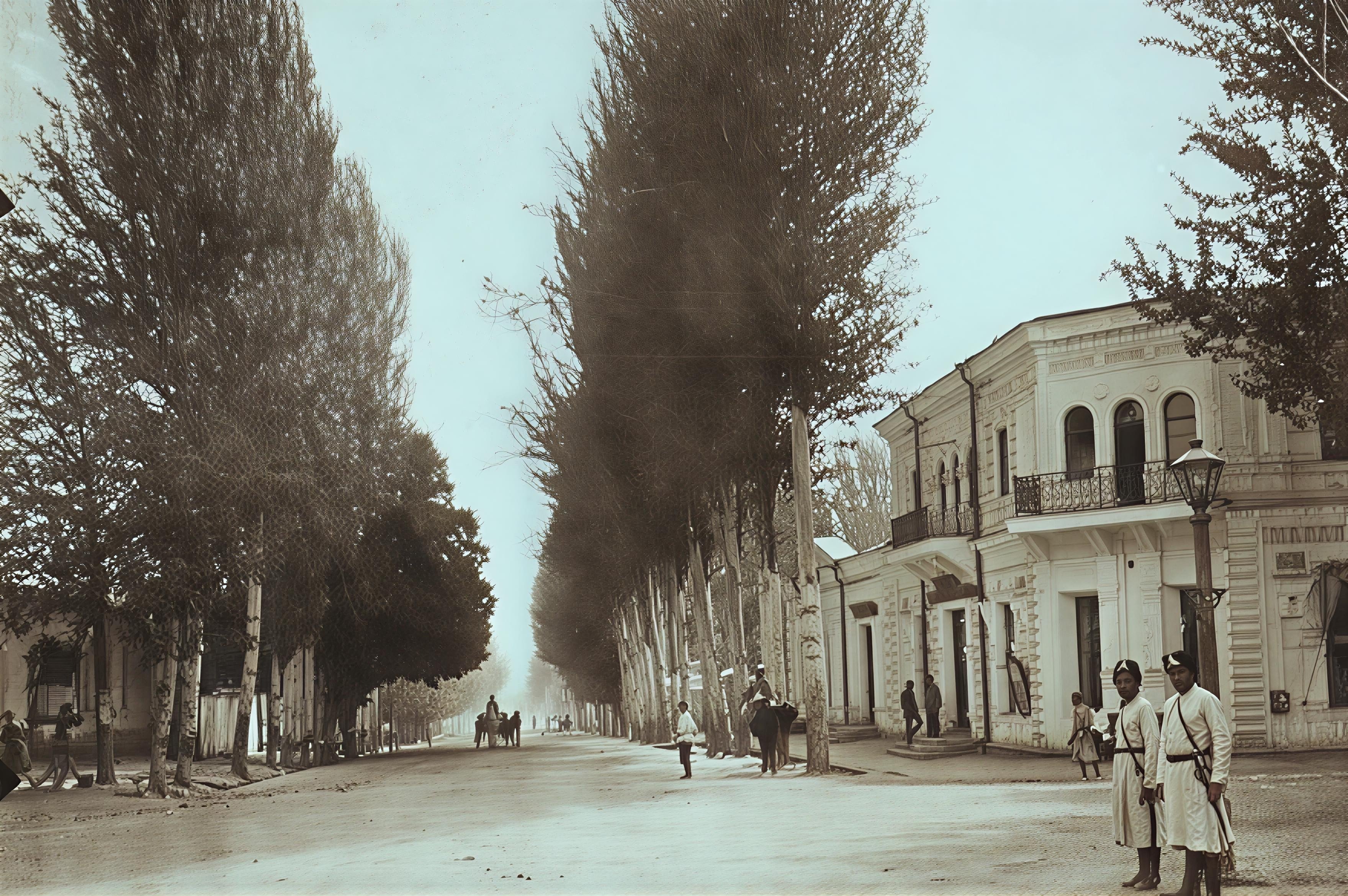
One of the largest exhibitions took place in 1890, occupying both the city park (now Bolajon Park) and the central square. The “Flowers” pavilion is one of the few surviving structures from that event. Nearby stood the region’s oldest printing house, which published the region’s main newspaper, Turkestanskie Vedomosti.
In 1919, the building housed the Turkestan Oriental Institute, later incorporated into Central Asian State University in 1925. Directly opposite, on the site of today’s fountains, an “electric theatre”, or early cinema, named Khiva was built in 1910, designed by architect G. M. Svarichevsky and commissioned by Grand Duke Nikolai Konstantinovich Romanov. Why “electric”? Quite simply because a pole stood right beside the building, fitted with electric lamps.
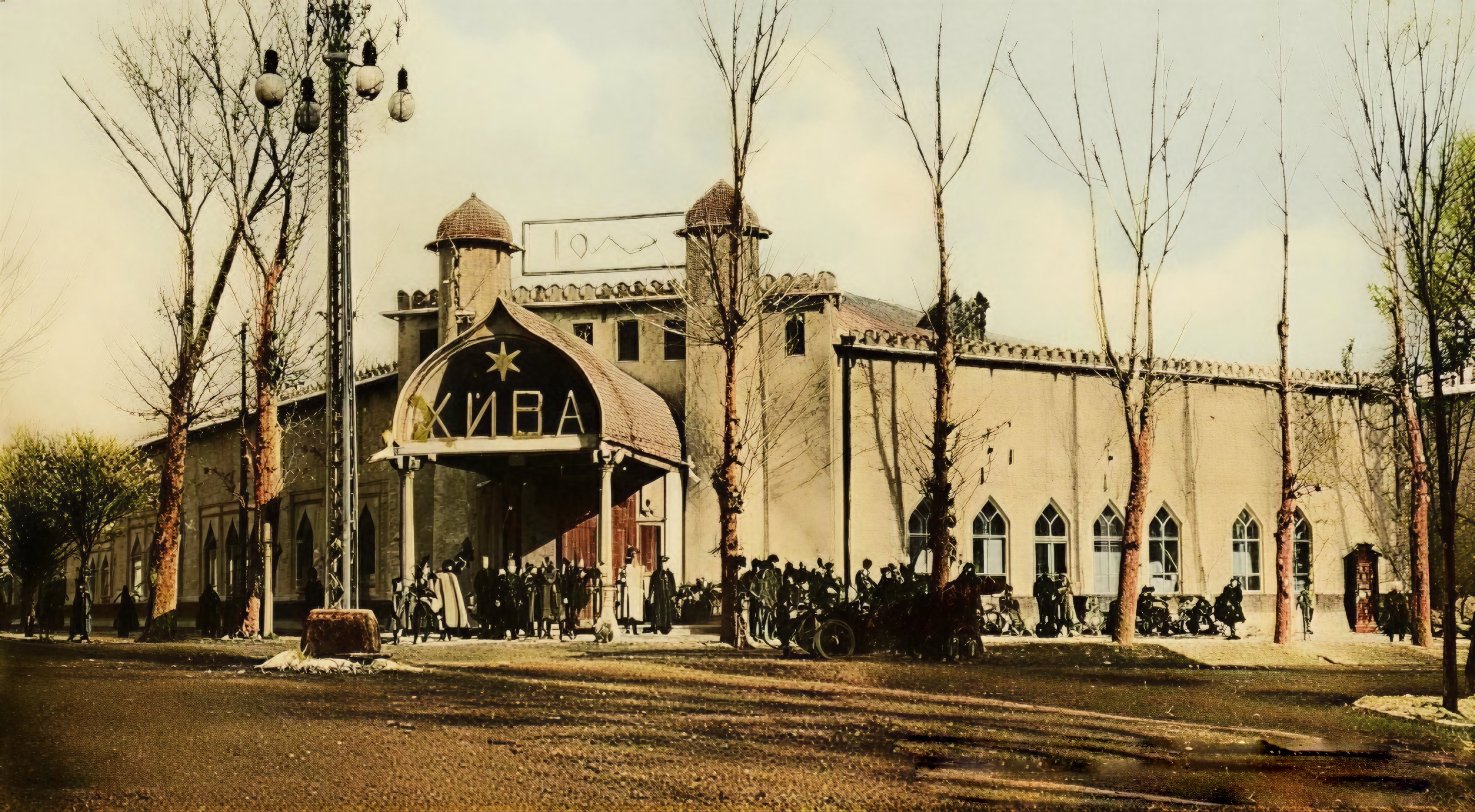 Photo: Sergey Nasledov
The building had a dramatic history: a fire in 1915 nearly destroyed it, but it was rebuilt by the same architect and remained in use for another fifty years under a new name, Molodaya Gvardiya. It was eventually demolished after being damaged in the 1966 earthquake.
Dmitry Zakho
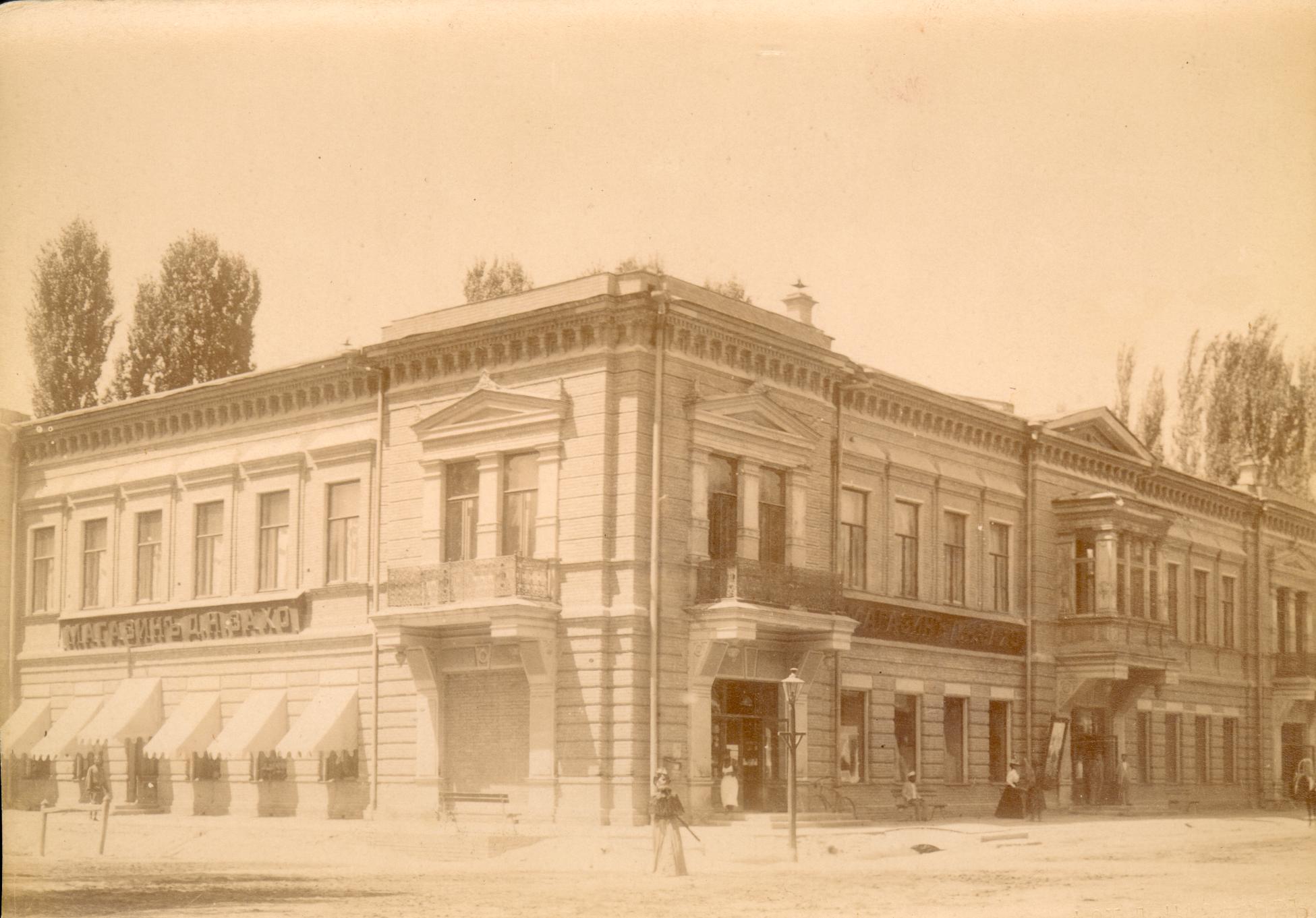
The street was also home to the residence of merchant and philanthropist Dmitry Zakho, a prominent merchant, philanthropist, and a church elder of the Church of St Panteleimon (the Hospital Church), once widely known not only in the city but far beyond it. We will not attempt to recount all his contributions to the city here, but will mention just two facts. First, arriving in Tashkent with almost nothing, the future benefactor managed to open a small stationery shop within a year and began supplying goods to the military administration of the Turkestan region.
A second detail speaks to his character. Dmitry Nikolaevich was a generous and hospitable host, and not averse to a game of cards, a pastime that wealthy men of the time generally considered almost obligatory. On one occasion, however, he invited guests to dinner who proved far more skilled at the game than he was. The situation was heading towards his complete financial ruin when his relatives urgently called upon the well-known winemaker Dmitry Lvovich Filatov, whose house can be seen in a 1975 photograph taken during the construction of the Uzbekistan Hotel. Filatov managed to remove the host from the game and win back everything that had been lost.
 Source: "Letters about Tashkent"
After this harsh lesson, card games were banished from Zakho’s home forever. Following the well-known events of the early twentieth century, the ground floor of Dmitry Zakho’s house was occupied by a Gastronom grocery store, which remained there until 1966, while the upper floor housed the republic’s trade union officials. Had it not been for the earthquake, they might well have remained there to this day. Today, on the site of the once-prosperous merchant’s house stands what is perhaps the most famous restaurant in the city, Zarafshan.
The Arifkhoja Trading Passage
Another key figure was Arifkhoja Azizkhojinov, a wealthy merchant and benefactor, whose name has become firmly embedded in the history of the city, and whose descendants still live in Tashkent today. He served as a member (deputy) of the City Duma and owned the slaughterhouse building in Beshagach, constructed to the design of Wilhelm Solomonovich Heinzelmann (it has not survived to the present day), which cost its owner half a million roubles, a staggering sum at the time. Together with the first-guild merchant Nikolai Ivanovich Ivanov, he founded the so-called so-called House of Diligence, which provided shelter, food, and work for the unemployed who had fallen into desperate circumstances.
It was located on the site of present-day Building No. 11 in Block C-4, and was donated to the city by our protagonist free of charge. Finally, it was also at his expense that a single-storey trading passage was constructed in the 1880s. An immense structure stretching 120 metres in length remains impressive even today. Even if modern photographic technology had existed at the time, it would have been impossible to capture the entire façade in a single shot, as it was simply too large, and the buildings on the opposite side of the street would have obstructed the view.
Arifkhoja Azizkhojinov was a successful merchant who travelled to Paris and London in 1894 and also visited Moscow and St Petersburg. The honorific in his name suggests that he had performed the Hajj to Mecca. He was a philanthropist and, by all accounts, a decent and unassuming man, unlikely to have been arrogant despite his considerable wealth. He also owned several income-generating apartment houses, something akin to early hotels, which were rented out to those unable or unwilling to build homes of their own. He built his own residence somewhere near the new city centre, which made it easier for him to travel around the expanding “New City”. Looking ahead, I must admit that I do not know what happened to him after 20 January 1918. However, the passage outlived its owner, remaining in place until 1966. In its early years, it housed an astonishing variety of establishments. There were no fewer than four music shops alone: Mironov’s music store (next to his transport and insurance office), the merchant Larkin’s music shop, Gloria, and Ilyin’s. In each of them, customers could not only purchase sheet music but also try it out immediately, as every shop had a piano or grand piano available.
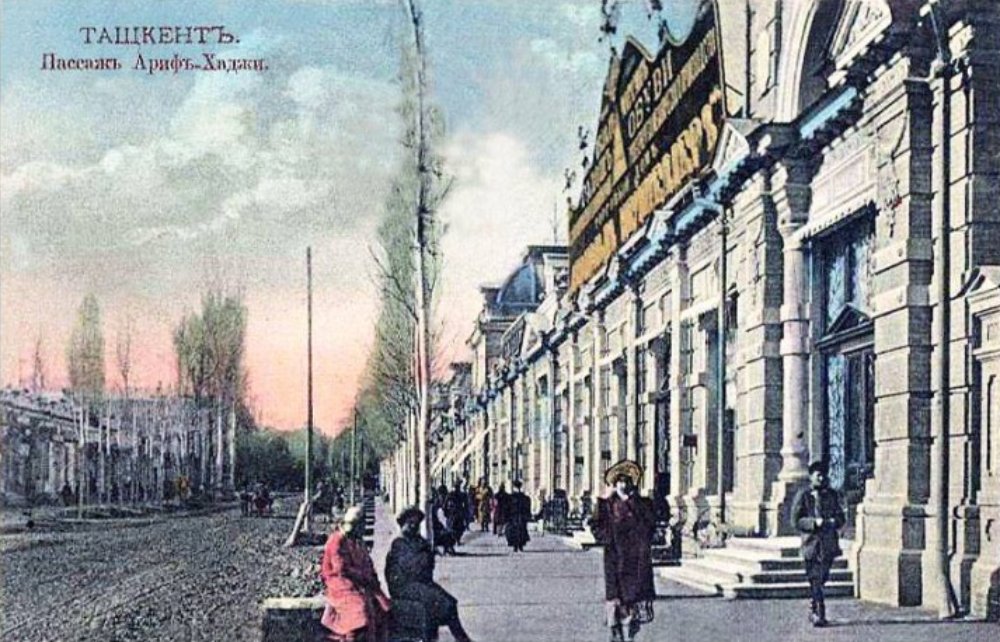
At P. S. Dorozhnoy's shop, one could always purchase textiles and manufactured goods to suit every taste; at Leopold Neishler’s, footwear was available. He maintained an entire shoe warehouse here; and at the merchant Shepelev’s, customers could find watches of all kinds and brands. There was also a ready-to-wear clothing shop owned by a German named Wald, where women could choose dresses of any colour and style, while men could select jackets or overcoats.
For book lovers, M. I. Svishulsky’s Book Trade store offered a selection of literature of any genre available in Tashkent at the time. At the pharmacy owned by the city’s first apothecary, I. I. Krause, customers could not only purchase the medicines they needed but also receive detailed instructions on their use. Over time, the pharmacy itself evolved into a meeting place, a kind of social club where people exchanged opinions, sought advice, or even shared recipes.
Merchant Khartov offered a variety of gastronomic delicacies and the finest wines and spirits, both local and imported, while at the premises of the Russo-Chinese Bank one could obtain credit, transfer money, or pay for major purchases.
Everything changed with the transformation of the socio-political system in the Turkestan region. Many wealthy people emigrated, leaving not only their shops but often entire businesses behind. The former Grand Duke’s palace was turned into a museum of fine arts, drawing on the late Grand Duke’s extensive collection of paintings and sculptures, while the shops themselves continued to operate, albeit under a new system.
The building underwent significant alterations: in time, a second floor was added to house various state offices, while the ground floor retained its commercial function. Another department store was established there, and later a shop with children’s goods, Detsky Mir.
In 1927, in front of the historic buildings of the Men’s Gymnasium (there were three, as there were for the women’s), an interesting constructivist structure was built to the design of architect G. Bauer. It was intended for a higher agricultural school, part of which served as a dormitory. During the 1941–1945 war, the building housed one of Tashkent’s evacuation hospitals, frequently visited by the renowned physician Moisey Ilyich Slonim. Today, this building, having recently undergone another renovation that disrupted the architect's original vision, has belonged to the Ministry of Justice of Uzbekistan for many years and is protected as an architectural monument.
Here it's worth mentioning another well-known building that I personally remember.
The Russian Drama Theatre
On October 21, 1934, a modest yet memorable, for many Tashkent residents, building of the Russian Drama Theatre opened on the right-hand side of the street. From the recollections of a local resident:
The main entrance was originally located at the centre of the façade, as seen in the photograph. Behind it was a dark vestibule (which also served as the ticket hall). By the autumn of 1955, a new foyer had been added along the service courtyard, and the entrance was moved to the left side of the building. The former vestibule was converted into a buffet.
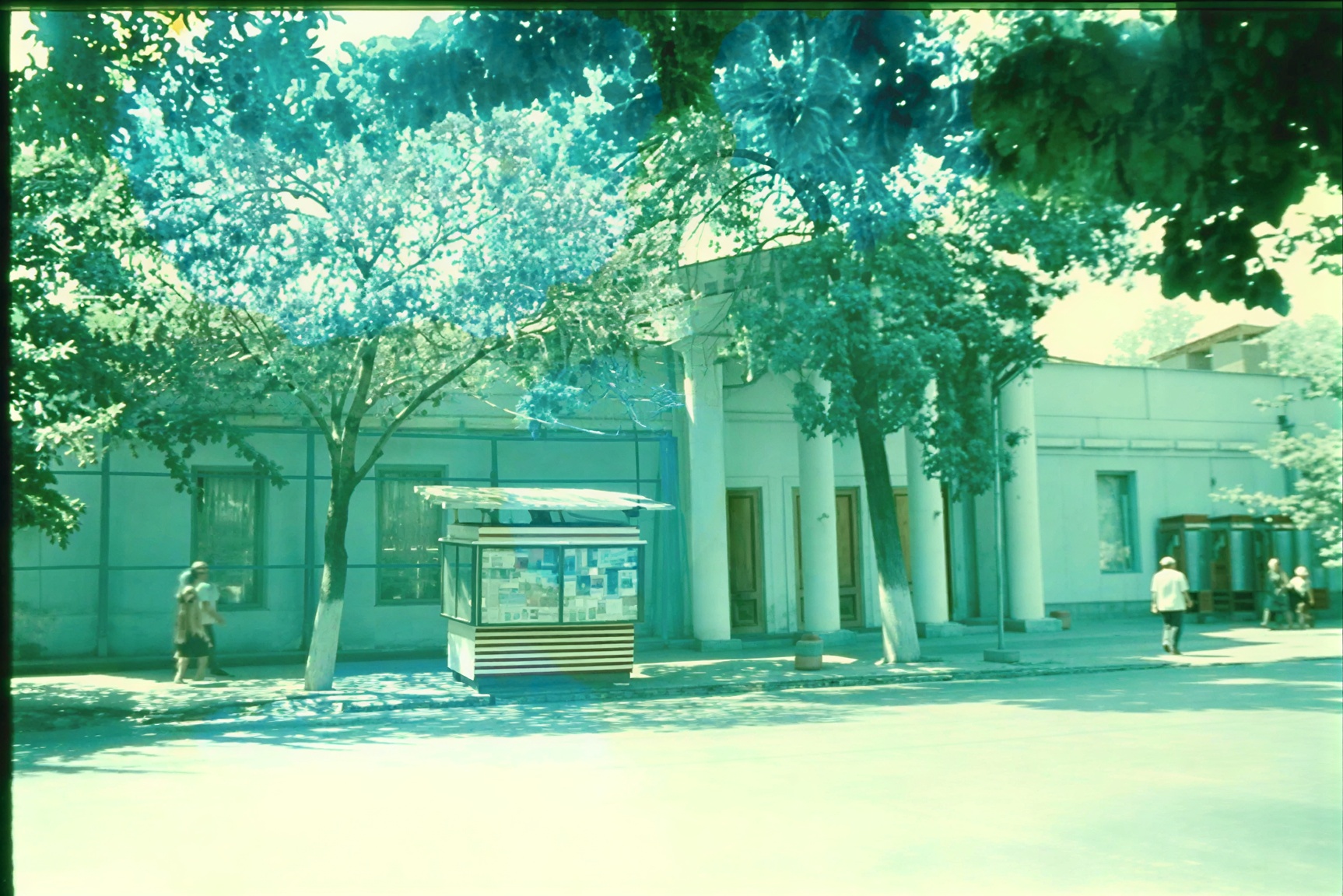
This site is associated with a still unsolved mystery. Both the new theatre and the already existing buildings, such as the houses of Zakho and Arifkhoja Azizkhojinov, were supplied with electricity. But where did it come from? The question remains unanswered. Davydov's power plant? It was in a completely different place, providing power to the merchant's brewery. Pavlov's power plant? It was in the Old City. Could the diesel engines, located on Dizelnaya Street (the name of the stop to this day) and intended to supply power to the Tashkent tram, supply electricity on a considerable scale to Sobornaya?
No definitive answer has yet been found. Perhaps the archives will one day provide one, once I manage to reach them.
The Cadet Corps
This section of the street does not lie entirely within Yunusabad District: parts of it belong to Mirzo-Ulugbek and Yashnabad districts, where the street changes its name to Makhtumkuli. Nevertheless, historically it remains the same Sobornaya Street.
In 1901, the main building was constructed to house students transferred from the preparatory school of the Second Orenburg Cadet Corps. From then on, it became known as the Tashkent Cadet Corps, distinguished by black shoulder boards bearing the initials T.K.K. The building was designed and constructed under the supervision of military engineer Colonel M. N. Yermolaev. Additional wings were later added.
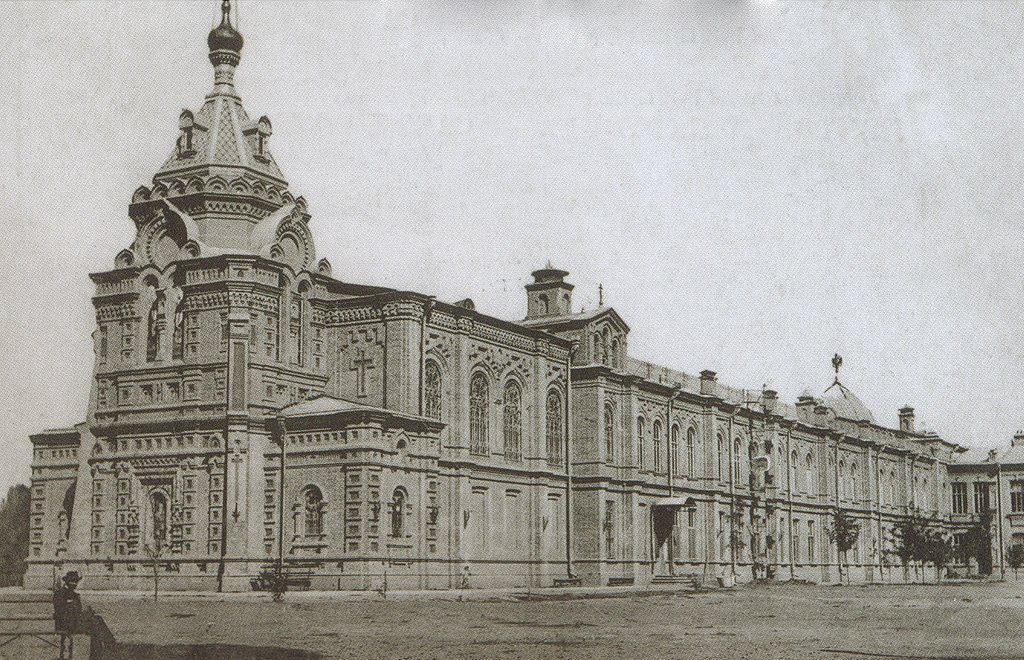
The corps occupied a vast territory, which included vegetable plots, groves, and gardens, as well as a residential area with apartments for officers, teaching staff, and their families, along with outbuildings for service personnel. It had its own shooting range, a large parade ground for drills, and even an observatory with a tower and an excellent telescope also used by students from local gymnasiums.
The complex had central heating and its own power station, making it independent from the city’s main electricity supply. Today, regardless of official name changes, any native resident of Tashkent will still refer to it as TashMI, the Tashkent Medical Institute. It is worth noting that the original building continues to be used for medical purposes as part of Maternity Hospital No. 6.
The Birth of "Broadway"
Over the years, the street now known as Sayilgoh alternated between being a pedestrian zone and a route open to public transport. The same was true of the central square, which would be opened to traffic and then closed again. This uncertainty lasted until my youth, when the city authorities finally decided to make it fully pedestrian, allowing access only for emergency vehicles such as ambulances.
It was during this time that the now-iconic street artists appeared, sketching portraits in twenty minutes, as well as vendors selling antiques at astonishing prices. Numerous cafés also began to open, offering hearty meals. After all, what else would bring families here? Street performers would gather crowds, leaving onlookers transfixed in silent admiration.
Some shops survived until 1995, when Tashkent’s “Broadway” underwent reconstruction. Today, it is a spacious pedestrian zone, no longer lined with the old oaks and plane trees that might once have told the story of the city’s past.
Newsletter
A letter from the HD editors
Once a week, we send the best stories, events, and cultural discoveries from Central Asia.