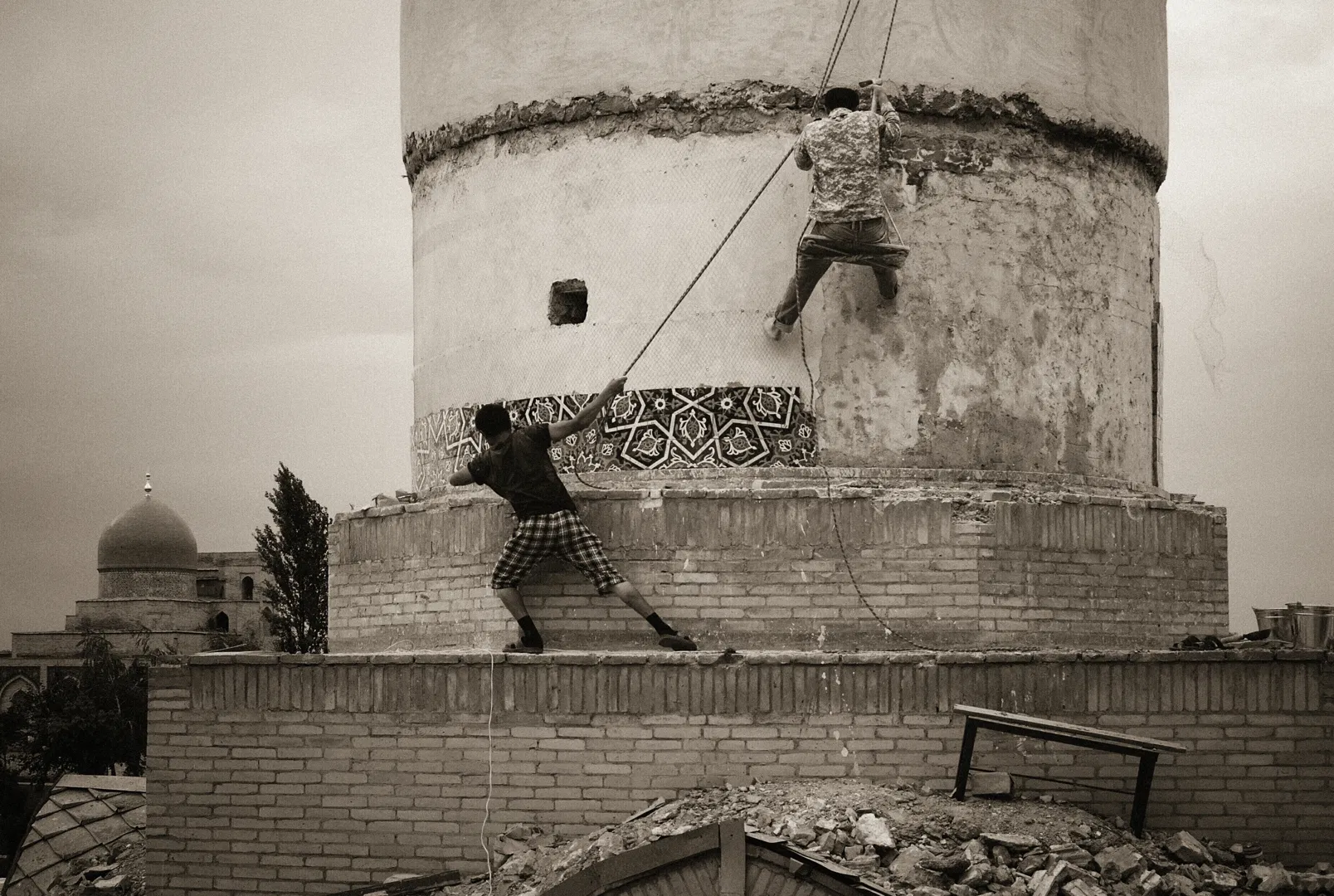
Uzbekistan today faces a rather non-trivial task—to reinterpret its own cultural identity. This equation contains several variables at once: the distant shared past of the various peoples and cultures that shaped the modern territory of the republic, the Soviet legacy, and the new reality that has brought borderless digital freedom, and with it a multitude of styles, genres, and ideas from all over the world.
The result of all this rethinking should be a new cultural code for modern Uzbekistan. Previously, even despite its stereotypical nature, it was more or less decipherable: Uzbek culture was associated with specific images that even an unprepared person could understand: intricate embroidery, ceramics with cotton motifs, recognizable melismas in songs.
Over the past three decades, the situation has changed, as remnants of the past have receded into the background, so that even stereotypes are losing their relevance. The country is in a constant search for a new self, and this applies not least to the arts. Today, in the cultural sphere, traditional Turkic elements, Soviet heritage, borrowings from the West, and still relatively few original new approaches coexist simultaneously.
The process of self-identification and the search for one's uniqueness is, expectedly, a long one. We spoke with prominent figures in Uzbekistan's culture and arts to learn their views on what is going well in this process today, what is currently lacking, and what is hindering it.
For more details on the origins of International Day of Culture, read the article by Tigran Mkrtchev:
Alexey Ulko
Cultural scholar and linguist Alexei Ulko believes that Uzbek culture is stuck in a conceptual dead end. In his view, the main problem is the obsessive need to define a "true national culture" instead of acknowledging the country's actual cultural diversity.
Culture in Uzbekistan today finds itself at the same point of conceptual tension that I wrote about back in 2015, even though the political context has since changed.
The era of Karimov has ended, regional dynamics have shifted, but the key questions remain the same. We still cannot not only decide what exactly constitutes a "national culture," but the very need for an exhaustive definition prevents us from moving forward. Although within intellectual circles there is a gradually growing understanding that national identities are constructed, that the link between the modern state and the ethnic cultures of the past is always politically mediated, this understanding is developing painfully slowly. Soviet colonial concepts are not fading as quickly as one might wish, leading to constant confusion between ethnic, territorial, and state-based conceptions of culture.
When someone claims that "Uzbek culture is...", an immediate question arises: are they referring to what is, or what should be, and who has the right to define the set of characteristics that will be declared "authentic". Any attempt to codify a list of essential qualities immediately leads to the question of who holds the right to make this decision: is it the President, the academies, the ministries, the foundations, the kurultais, or someone else? On what basis is this decision even made? The problem is that any affirmative answer only highlights the artificiality of the culture being created.
If we acknowledge that cultural forms are born within the communities themselves, the need for a central arbiter disappears. The contradiction between what culture is and what we want it to be will not be resolved until we accept a simple thing: culture is everything that actually happens within a country's territory, with all its hybridity, inconsistency, and internal contradictions. Ancient monuments, pop culture, contemporary experiments, and borrowings are not equal in value, but they are equally real. No one is a more "authentic" bearer of culture than anyone else. The pursuit of uniqueness as a desirable goal is itself logically flawed.
All countries are already unique: Uganda, Uruguay, Ukraine, Uzbekistan—each in its own way. The desire to become "more unique" than we are usually conceals dissatisfaction with one's own reality and a rush to become someone else without addressing the underlying problem. Hence the attempts to build giant monuments and symbols that are supposed to "represent" the country to the world. But such constructs quickly become outdated because situations change, and with them names, flags, political regimes, and meanings. The only sensible path is to finally abandon the Soviet administrative practice of constructing cultural purity and uniqueness. The fact that this practice is now called "branding" and its goal is commerce does not change the mechanism.
Campaigns to attract attention don't last longer than the journey from the airport to the neighborhood where you encounter real life, not curated showcase images. Culture doesn't need management from above; it needs freedom. Bureaucracy can only help by ceasing to hinder. In countries known for their cultural distinctiveness, they are not afraid of experimentation and do not try to predetermine what will "make history." That choice is made by history itself, not by ministries. Genuine distinctiveness arises only where culture is not constructed according to a template handed down from above, but is allowed to grow.
Farrukh Zakirov
The opinion of People's Artist Farrukh Zakirov differs somewhat. He believes that "top-down management" should not be absent entirely; it simply must be competent and consistent, take past experience into account, and leave room for self-expression.
The issue of self-determination is extremely complex. Our culture truly must be unique, because our very roots are incredibly deep and powerful in all directions: literature, music, cinema, and so on. The particular skill in these circumstances is to continue this school of thought, to pass on centuries of knowledge and skills to the next generations. This is a very difficult task.
One solution is to establish a series of academies dedicated to passing on cultural and spiritual values to the youth. This would be unique in any case. For example, in the early 20th century in Uzbekistan, those who organized the Alisher Navoi Bolshoi Academic Theatre of Opera and Ballet received an excellent education. Among them was my father.
At the Moscow Conservatory, mind you, there was an Uzbek faculty. Young people received a classical foundation here and then developed further, passing on their skills to the next generations: ballet art, maqoms, all other national art forms.
That is why it is particularly valuable to me that in our country, the President personally attaches great importance to this. For instance, a new higher education institution is currently being established — the Batyr Zakirov Institute of Pop Art. This is doubly pleasing for me, as I am part of this family. What is especially important is that in Central Asia, and indeed in Asia as a whole, I believe there has never been such a thing — a university specifically for pop art. I say this with pride because in the past, for example, during the Soviet era, pop art was considered too lightweight a genre and was not taken seriously. Although in reality, it is a very responsible form of art, as it has a very large audience.
Show business is one of the foundations for shaping a country's uniqueness. And we have every opportunity to achieve it.
Igor Pinkhasov
Composer and member of the Union of Composers and Bastaqors of Uzbekistan Igor Pinkhasov voices another unconventional perspective on the question of finding oneself in matters of culture and art. In his opinion, it is more logical to focus on creating the groundwork for nurturing and developing talents, who will ultimately form a unique language in art, rather than on cultural distinctiveness, within which its own 'stars' would then have to emerge.
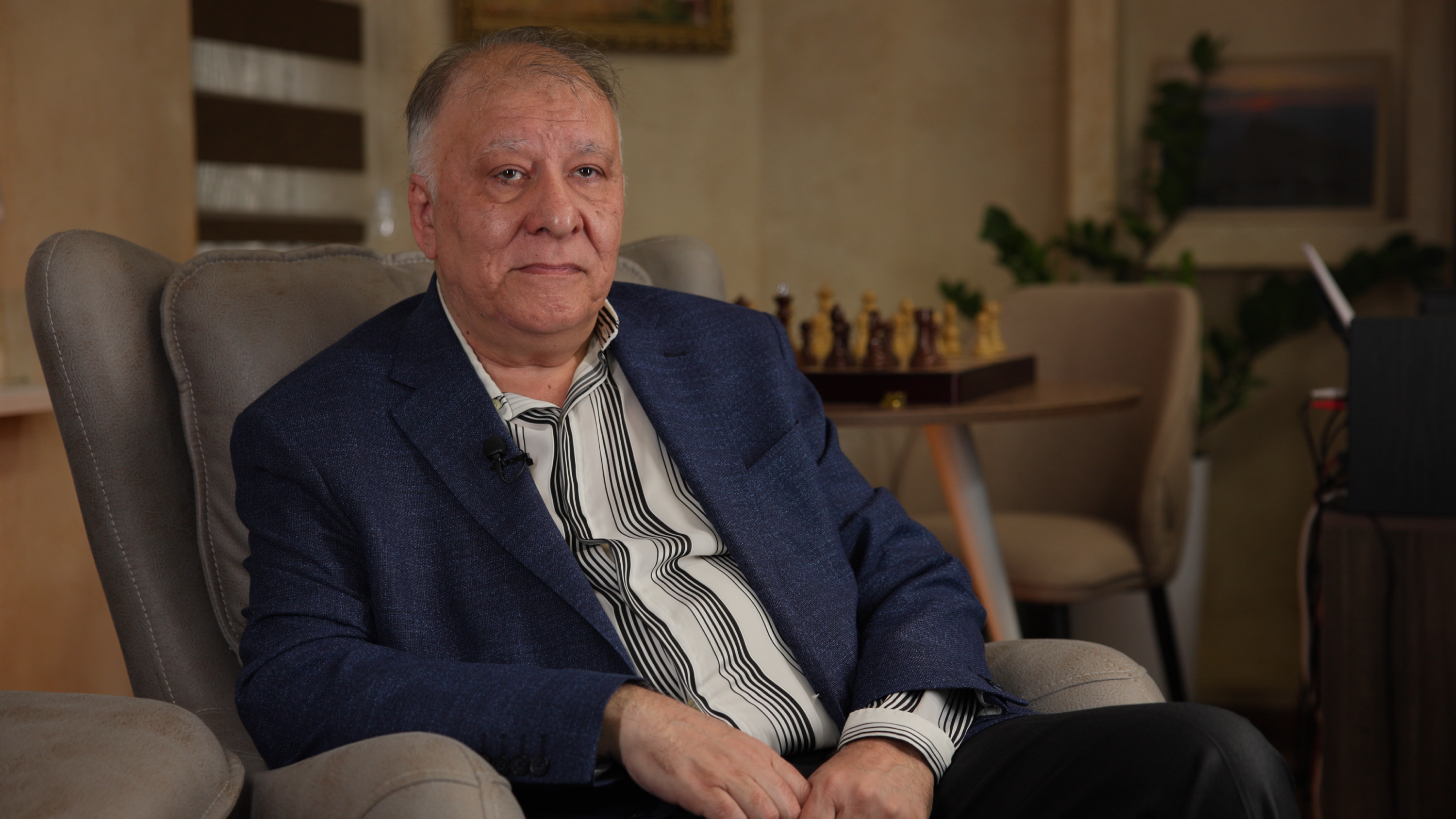
I am not convinced that academic art should actively seek its own uniqueness or be divided by regions. I will focus on music, as it is my element. Concepts like "Russian music," "German music," "Uzbek music"—in my view, they are highly conditional. What is called German music? The works of Bach, Beethoven, Schumann, Wagner. Are they German composers? Of course, but they are all completely different! Their melodies, sonorities, compositional methods differ so substantially that it is impossible to say it all belongs to the same regional school.
Pyotr Tchaikovsky, for example, is universally recognized as a great Russian composer. Yet, he drew inspiration from French literature and culture as a whole and also worked on commissions from France. It's simply that there are universal, global values that are appreciated regardless of country, region, or other such factors.
Therefore, I believe that first and foremost, the country must foster the emergence and development of unique artists in their own right. It is they who will then shape the culture and art of the state and the entire region through their creative work.
And here I can already share some thoughts on how to create the groundwork for the development of such artists and composers. We could start with new full-scale music festivals. Primarily festivals of symphonic music, chamber music—that is, specifically composer-driven music.
We have the wonderful Sharq Taronalari festival, but firstly, it is primarily associated with folk art and folklore, not academic art, and secondly, it is held every two years. Yet such festivals are extremely important: people from different countries come to Uzbekistan, listen to our art, and we listen to what they bring here.
There are currently no festivals of original music, especially large international ones, but they could become an excellent resource for supporting and developing domestic talent.
Bella Sabirova
Art historian Bella Sabirova draws attention to the state of affairs in the visual arts and—despite all the significant successes and achievements on this front—to its not entirely candid perception.
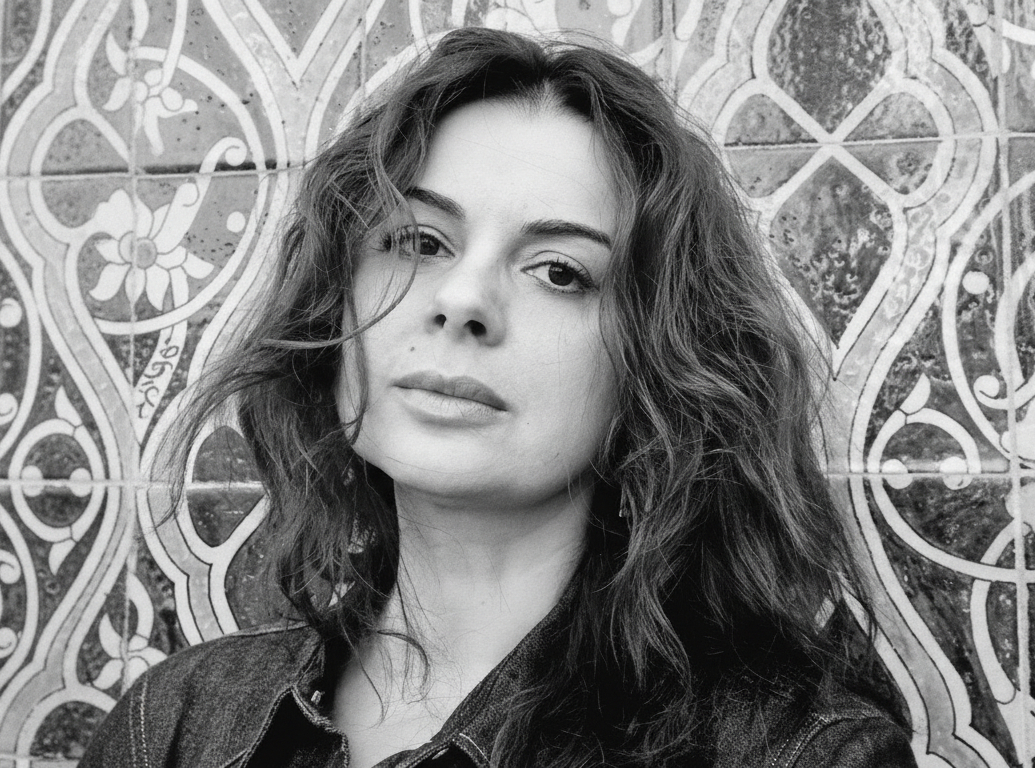
Uzbek culture is transitioning from a phase of "self-preservation" following independence to a stage of "self-presentation" on the global stage. There is, of course, a profound sense of historical continuity, where elements of the national code are actively integrated into daily life—in design, fashion, music—but now in contemporary formats.
Uzbekistan is currently literally repackaging its heritage, making it relevant and understandable for a new generation. Here, it is essential to ensure that culture ceases to be "exotic for tourists" and becomes a natural language of self-expression for Uzbeks themselves.
Contemporary art in Uzbekistan is currently experiencing a boom in institutionalization and a large-scale entry onto the international stage. Efforts are being made to move it beyond being a niche, "local" phenomenon and transform it into a powerful tool for artists' self-expression, enabling them to discuss pressing global issues through visual exchange with the entire world.
However, to present an honest and comprehensive picture of contemporary art in Uzbekistan, it is important to highlight not only the successes but also the pain points that prevent it from becoming a fully-fledged language of self-expression for participants in the art scene:
- There are many institutions, but in-depth analysis of artists' work is almost non-existent. Exhibition reviews often boil down to complimentary press releases. Without sharp-toothed criticism, it is difficult for artists to grow, and for the audience to learn to distinguish profound statements from decorative fluff.
- Artists often face the temptation (or market demand) to present "exoticism" as a unique statement. Here lies a great risk of getting stuck in the self-repetition of the "orientalism trap," where a national code is used not as meaning, but as decorative packaging for a Western buyer. This hinders the search for genuinely new, non-formulaic meanings.
- There is a vast gap between the capital and the regions. The art boom is currently localized in Tashkent, Samarkand, and Bukhara. Outside these centers, contemporary art barely exists as a systemic phenomenon. Talented youth from the regions often lack exposure and access to contemporary materials and libraries.
- An underdeveloped private art market. Despite the presence of galleries, the culture of private individuals collecting contemporary (especially conceptual) art is still poorly developed in the country. Artists are heavily dependent either on state commissions and foundations or on rare foreign buyers, which limits their creative activity.
- The issue of conservatism in academic education. Specialized universities often remain within the bounds of academicism, steeped in the practices of early 20th-century avant-garde art or decorative arts. Young artists are forced to teach themselves performance art, video art, and installation art, as the official education system is slow to adapt to new media.
- The Fragility of Self-Censorship. Discussions of "pressing global issues" often run up against unspoken boundaries of what is permissible. Artists are not always willing to touch on acute social or environmental themes due to the risk of losing support from institutional platforms.
Thus, to prevent an ambitious cultural revival project from turning into "exoticism for export," the community must build a living ecosystem—from education reform and support for regional talents to the creation of independent art criticism and a civilized art market. Only by acknowledging these internal barriers can contemporary art in Uzbekistan finally cease to be an object of external observation and become an objective mirror for itself, a voice that will be genuinely heard throughout the world.
Vyacheslav Akhunov
Philosopher and conceptual artist Vyacheslav Akhunov shares the view on the difficulties facing culture and art in Uzbekistan today and emphasizes the conditions that need to be created for artists.
It appears that attempts to find new, contemporary forms of national culture and art are currently in their initial stages, progressing with great difficulty, inertia, and more slowly than they should. Without a cultural revolution, without overcoming colonial mentality and neo-orientalism, without reforming the education system—which today exemplifies conformist thinking—all efforts to discover new artistic forms and modern ways of thinking (the creative aspect) for Uzbekistan’s culture are doomed to failure, masked by various kinds of simulations. Nevertheless, clear breakthroughs are visible—I am referring to the activities of the Center for Contemporary Art and the Foundation for the Support of Culture and Art under the President of Uzbekistan.
When it comes to the distinctiveness and uniqueness of Uzbekistan's traditional national culture, it has long secured its stable niche in the global cultural space alongside other outstanding cultures of the world's peoples.
It is still too early to speak of the distinctiveness and uniqueness of the new modern culture due to the ongoing process of its formation. This distinctiveness and uniqueness must still be forged, step by step, by accumulating creative potential. This means devoting enormous attention to cultural figures and the related infrastructures, investing generous funding in their activities when their work becomes competitive and vividly memorable not only on a regional scale but also globally. This, in turn, becomes a characteristic hallmark of a state on a path of renewal and radical reforms, extending beyond just the sphere of culture and art.
Lola Saifi
Designer and art director Lola Saifi concludes the discussion by formulating the conclusion about the choice Uzbekistan faces today.
I believe Uzbek art today is at a very rare and crucial juncture. We are all at a crossroads right now, between memory and the formation of a new creative language. On one hand, we have an incredibly strong tradition: craftsmanship, ornamentation, architecture, textiles, the rhythm of life. On the other — a generation has already grown up that wants not just to preserve, but to reinterpret culture and then live within it. And this state I would call not a 'search for oneself,' but rather, a moment of choice.
Because today there are two scenarios. The first is the safe one, where culture becomes a decorative element: recognizable, beautiful, but in a sense, frozen. The second is more complex but alive, where culture becomes material for a new statement. And then things emerge that continue the past instead of copying it.
And it seems to me that we are precisely at the boundary between these two approaches right now.
What will help?
- respect for roots without fear of reinterpreting them.
- embracing new ideas and even criticism.
- strong local communities where craftsmen, designers, and artists work together.
- and, importantly for the entire creative community, entering the international context without losing its uniqueness.
What could get in the way?
- the desire to "please everyone" and dissolve into global trends.
- interference and censorship by people far removed from the art in addressing the problems of that art.
- the transformation of culture into a decorative tourist product.
- the absence of a sustainable economy around art.
Because, paradoxically, distinctiveness is best preserved where it becomes a value, including an economic one.
And in short:
Uzbek art today is not searching for itself. It is deciding whether it will be alive.