Guide
B is for Bedlam: A Survival Guide to Filmmaking Without Budget or Safety Net
The journey of the B-movie, from the double bills of the Great Depression to the Uzbek mahalla, has taken just under a century. Yet while some see in this kind of cinema nothing more than cheapness, others recognise a stripped-down form of expression in the spirit of David Lynch. In Central Asia, this mode of survival gives rise to everything from aliens in the Kazakh steppe to would-be playboys on tractors. Here, we explore how the absence of resources pushes filmmakers to the edge, forcing them to work at the limits of what is possible.
From A to B: The Hierarchy of Cinematic Potential
The term B-movie originally had nothing to do with quality. It was simply a production label. Hollywood’s Golden Age coincided with the Great Depression. Although audiences sought escapism, even escapism was not always affordable. In the struggle for viewers and their money, cinemas realised that offering people a way to save was a direct path to their attention and loyalty. This is how the double feature emerged.
Cinemas screened two films for the price of one ticket (not counting cartoons, newsreels, or trailers). The first was often the B-picture, produced on what would today barely cover catering on an Avatar set. The second was the A-picture, the main attraction. The A-film drew audiences in; the B-film filled the evening.
But this did not mean it was deliberately made “bad.” It simply reflected a different mode of production: fast, efficient, and strictly formula-driven. Horror required blood. Science fiction required aliens (as far as the budget allowed). Action required fists in motion, before, during, and after the fight.
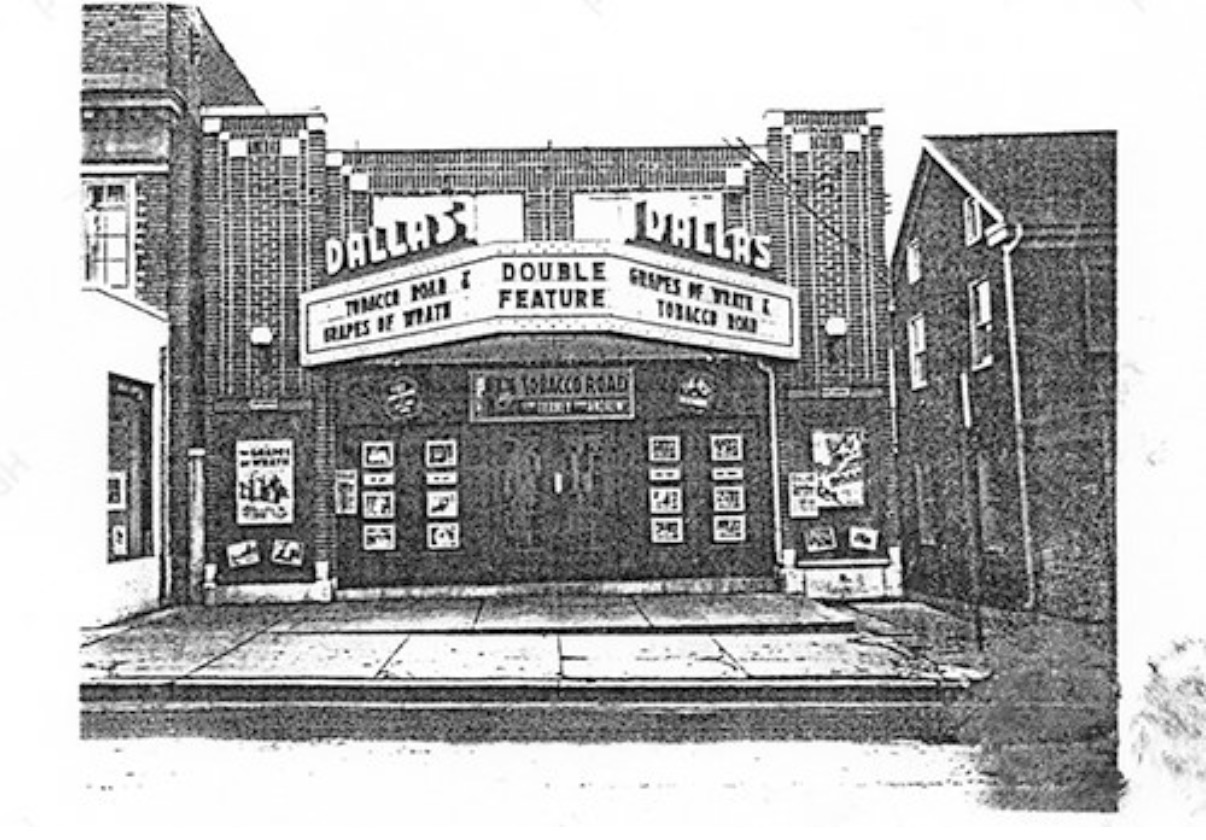
Today, “B-movie” is often used as shorthand for cheap cinema. Yet the original term carried no judgment. There was no “category” at all, only a mode of production. The distortion of meaning has obscured the essential point: B-cinema is not a measure of quality, but a condition of making films. No safety net of producers. No digital correction of failure in post-production. No time for hesitation, as many of these films were shot in weeks. A B-movie is a tightrope walk between skyscrapers without a harness. And this is precisely where its value lies.
 Poster for an American International Pictures double bill: Die, Monster, Die! and Planet of the Vampires.
Janet! Dr. Scott! Janet! Brad! Rocky! And also Roger, Lynch, and Wiseau
Before attempting to define the boundaries of the B-movie in Central Asian cinema, it helps to look beyond the region to where the genre first took shape, in Western, more specifically American, filmmaking. On closer inspection, what appears to be a single category reveals itself, despite shared characteristics, as remarkably heterogeneous: a space where a fully developed industry coexists with accident, and where projects that may have begun as something of a joke can grow into cult phenomena, even when no humour was originally intended.
Roger Corman: The Assembly Line
If B-cinema has a godfather, it is undoubtedly Roger Corman. At first glance, his methods seem less creative than industrial: shoot as much as possible, as quickly as possible; reuse sets from one production to the next; adjust scripts to fit whatever budget is available. But this impression is misleading. These constraints did not suffocate Corman ; on the contrary, they motivated him. In circumstances that left no time for doubt and no resources for revision, he worked entirely in the immediacy of production, always, quite literally, in the moment.
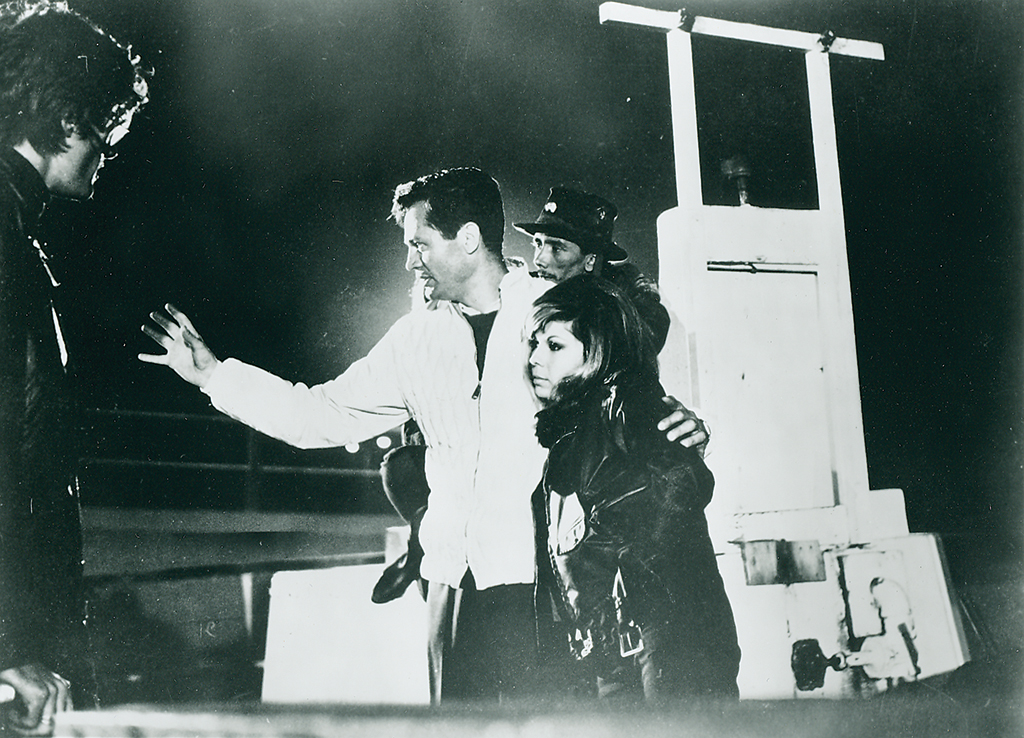
A number of major filmmakers passed through Corman’s demanding creative and production school, including Francis Ford Coppola, Martin Scorsese, and Peter Bogdanovich. Jack Nicholson worked with him as both actor and writer, while James Cameron learned the craft from the ground up, building sets in Corman’s studio.
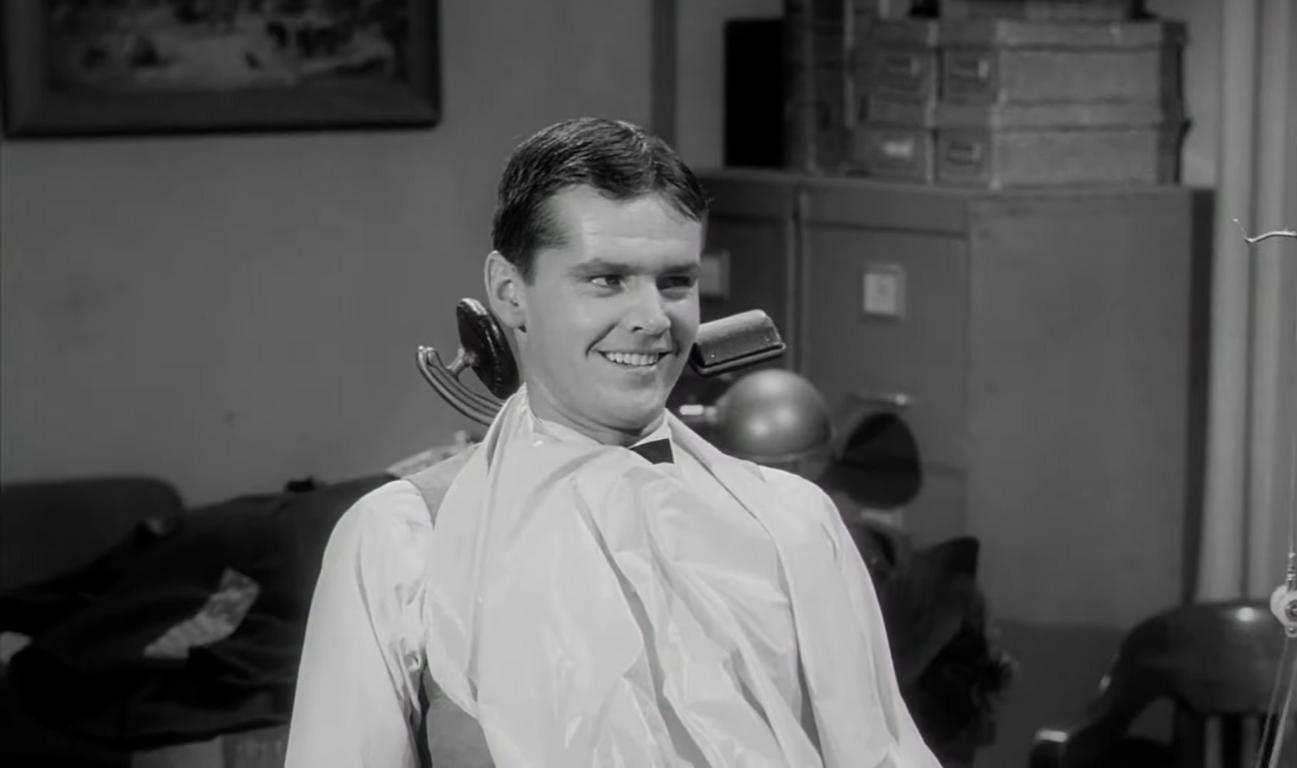 One of Jack Nicholson’s early roles in Roger Corman’s Little Shop of Horrors. His character, Wilbur Force, is obsessed with dental treatment and takes pleasure in the pain inflicted by a sadistic dentist. One of Jack Nicholson's early roles was in Roger C
This was the paradox of Corman. He built his system on speed and economy, yet it was precisely these conditions that fostered a way of thinking that would later reshape Hollywood. He did not stifle creativity; he simply stripped it of comfort.
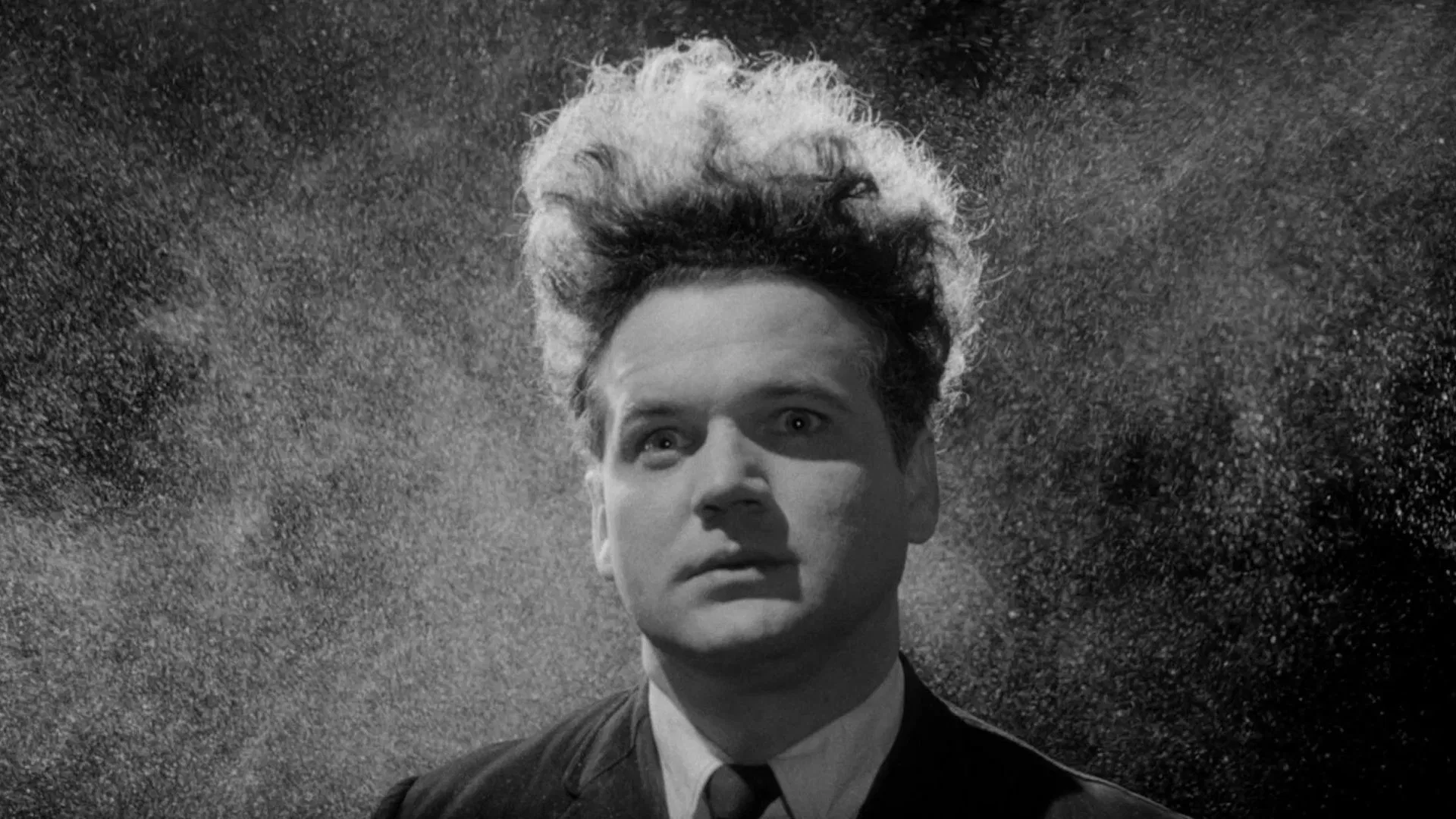
David Lynch: The Starving Artist and Eraserhead
During the making of his surreal nightmare, Lynch was constantly short of money. The five-year production ordeal of Eraserhead drained him of both finances and energy. At times, in order to feed the insatiable little mutant of a project, he worked night shifts delivering newspapers, and, unable to afford stable housing, lived in abandoned AFI stables where the film was being shot, sleeping in the set of Henry Spencer’s room. The entire production was sustained by grants from the American Film Institute, donations from Jack Fisk and Sissy Spacek, and the income of Lynch’s first wife.
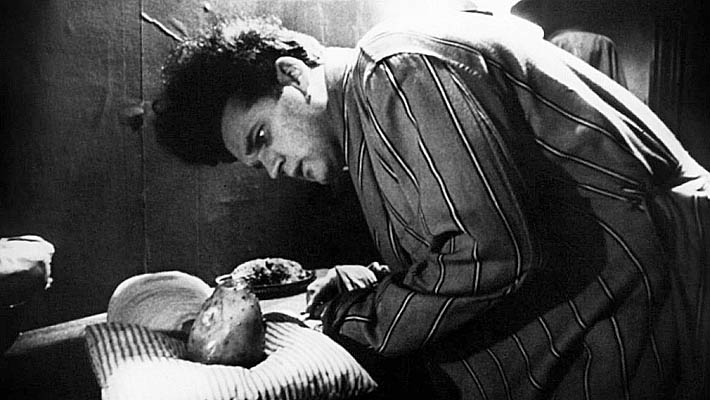 Henry Spencer and "Spike" (the nickname the film crew gave to the baby doll)
Formally, Eraserhead is not a B-movie. It was not made for quick theatrical release as the second feature in a double bill, nor was it a studio product. And yet, on closer inspection, its internal logic reveals the same essence. Pushed-to-the-limit constraints, the absence of major stars, and the stark exposure of authorship all place Lynch's film outside B-cinema by origin, but squarely within it in spirit.
Don't Leave The Room, or the Secret Genius of Tommy Wiseau
If, within the B-movie paradigm, Corman represents a system and Lynch an auteur, then Tommy Wiseau is a glitch. What was meant to be a serious drama about a love triangle involving betrayal and tragic death collapses into a disjointed farce where everything misfires: the script, the acting, even the camera angles. And yet the film does not simply fail. It fails and becomes a cult phenomenon.
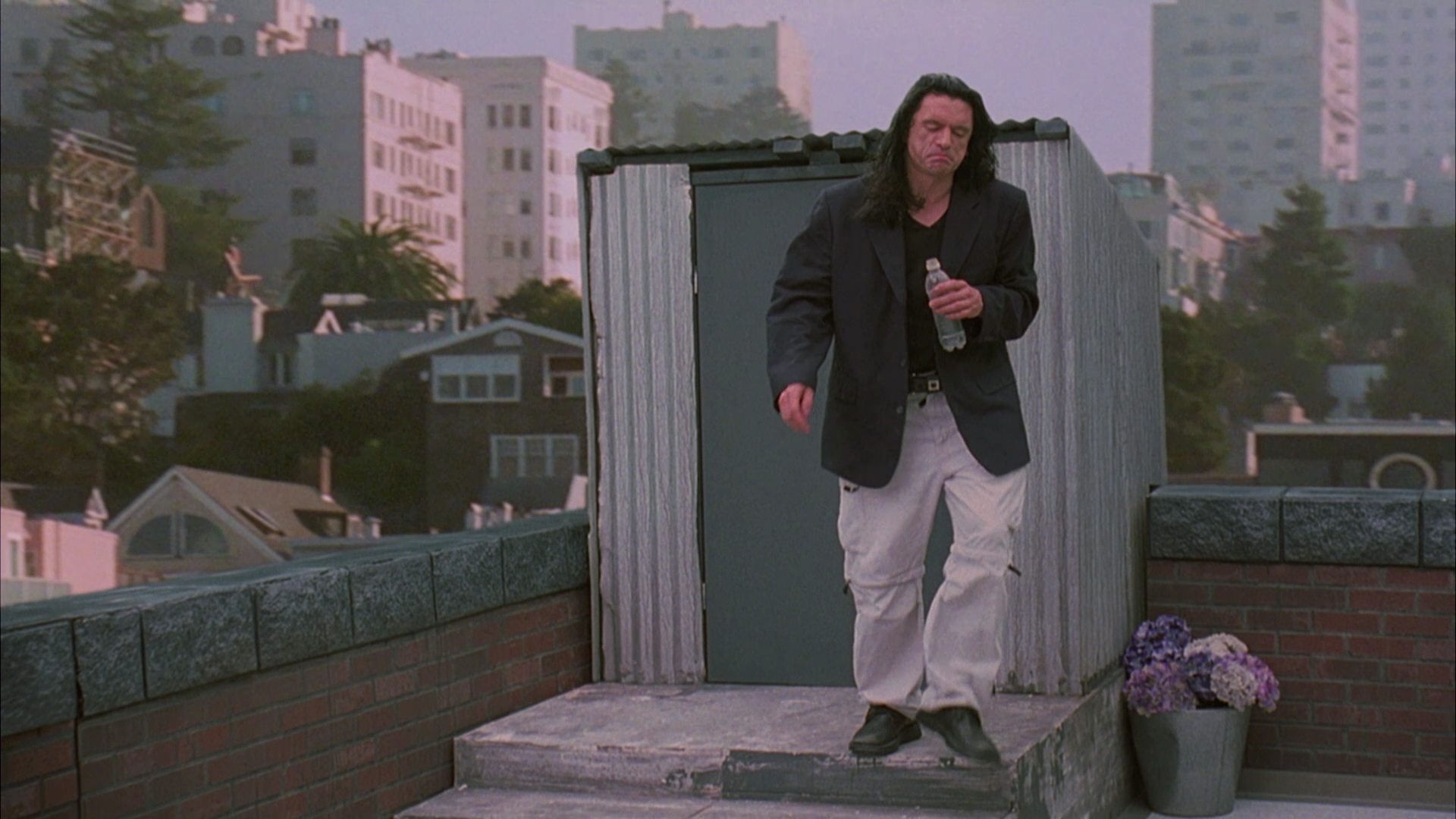 Johnny (Tommy Wiseau) in the most famous scene from The Room (2003). That very moment, a split second before the most deadpan "Hi" in cinema history
Audiences eventually came to love The Room so much that they continue to return to it to this day. Not only in private screenings: repeated theatrical showings, audience call-and-response rituals, and spoons thrown at the screen have turned this “Citizen Kane of bad movies” into a full-scale cinematic attraction.
The Rocky Horror Show: Frankenstein in Heels Against the Rules of the Industry
In 1975, Jim Sharman's The Rocky Horror Picture Show was released to immediate commercial failure. A kitsch horror-inflected musical that did not align with audience expectations quickly disappeared from cinemas, only to return triumphantly through midnight screenings distributed by 20th Century Fox. Audiences began returning to the film in large numbers, many watching it dozens of times. Standard projection was no longer enough. Fans were no longer passive viewers: they entered Dr Frank-N-Furter's laboratory themselves, shouting lines, re-enacting scenes, throwing rice at the newlyweds, and turning each screening into a collective performance.
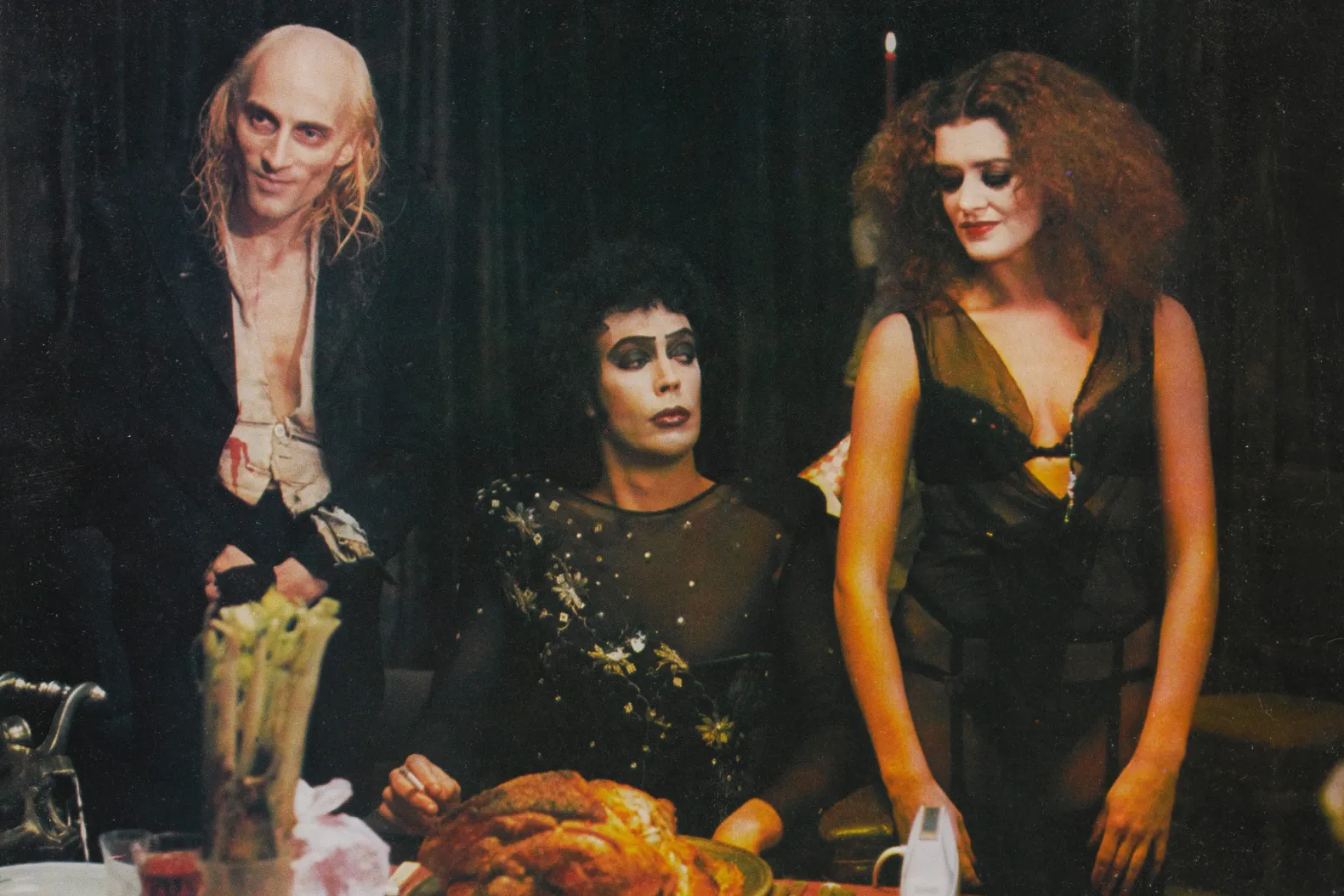 Richard O'Brien, Tim Curry, and Patricia Quinn (left to right) as Riff Raff, Dr. Frank-N-Furter, and Mag
Over time, the film became one of the longest-running releases in cinema history, while the image of the eccentric scientist in heels and stockings turned into a cultural icon. None of this, of course, had been planned, just as the film's eventual success had not been. It proves that box-office failure is not always an end point; sometimes it is the beginning of a more durable cinematic afterlife.
Central Asia: the B-movie as a Mode of Survival
It is worth stating the obvious: in Central Asia, there is no B-category. Nor is there an A-category. There is no Corman figure announcing, “This week we release three mutant horror films set in the steppe.” Here, the B-movie exists less as a category than as a condition, a necessity and the natural habitat of most filmmakers.
Films are made against the odds: against the absence of sustained investment, against weak technical infrastructure, against limited audience interest in local production. And yet it is precisely in this environment that films watched by millions take shape, while more rarefied arthouse gathers dust on shelves or, at best, circulates on the festival circuit.
If this cinema were to rest on three pillars, they would be Genre Hunger, Bare Necessity, and Popular Reach. The first speaks to what audiences actually want: horror, action and comedy that are not about “them out there” but about “us right here”. The second comes into play when a film’s budget barely matches the price of a second-hand car, forcing ingenuity into action. The third bypasses conventional distribution altogether. Just as foreign B-movies once relied on midnight screenings, double bills, and private clubs, today they move through Telegram channels, YouTube, and half-empty cinemas.
Tajikistan: Mirror Without Reflection (dir. Nosir Saidov)
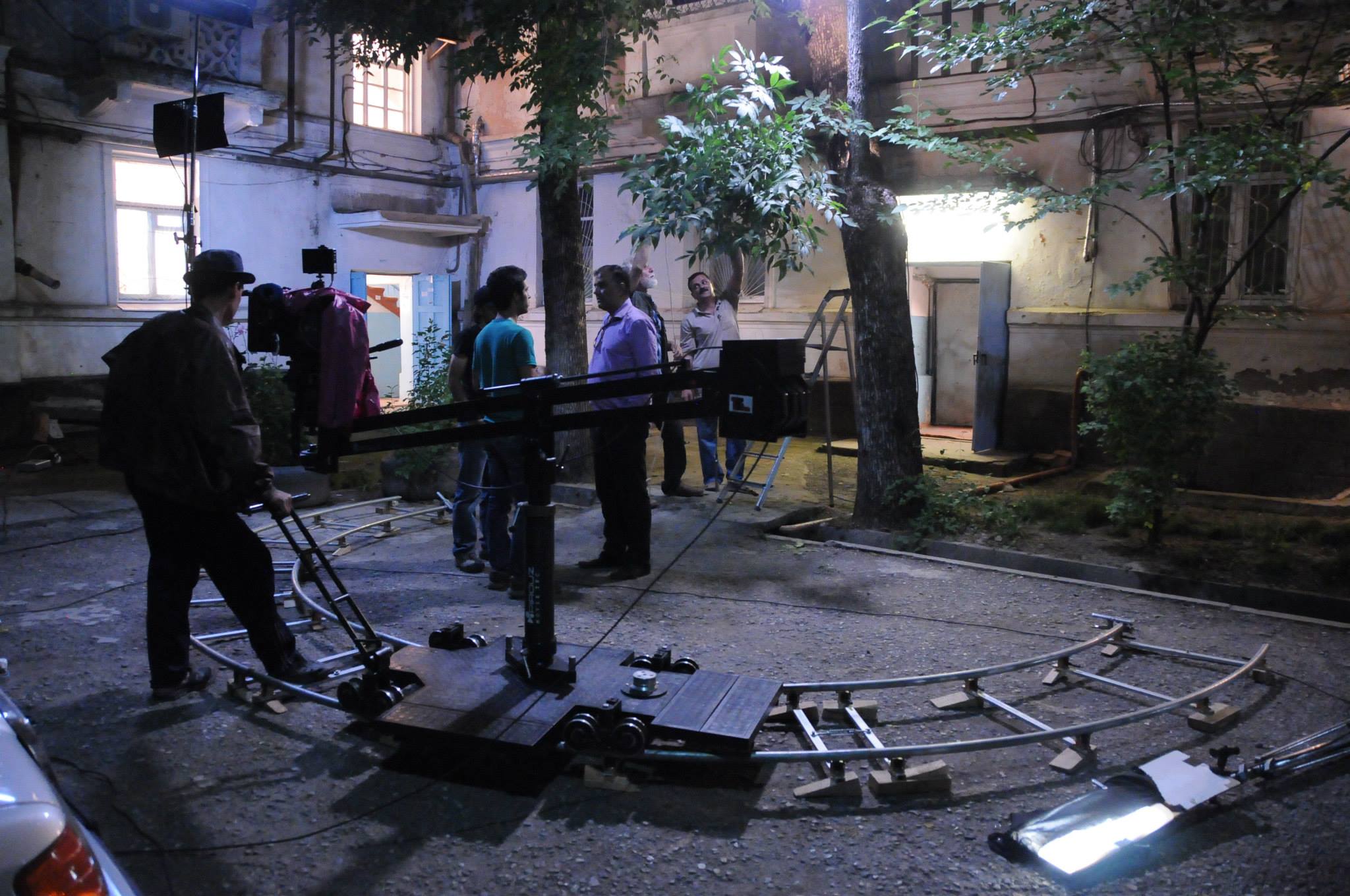 On the set of Mirror Without Reflection
As is so often the case, the path of genre cinema in Tajikistan is a rocky one, and B-movie conditions frequently intersect with auteurist exploration (a nod to Lynch.) This film shows how, even with minimal resources, a slow-burning and tense atmosphere can be created. Its B-movie quality lies not in trash aesthetics but in the spirit of its making, where the idea takes precedence over set design.
Kyrgyzstan: Albarsty (dir. Bakyt Askeevich)
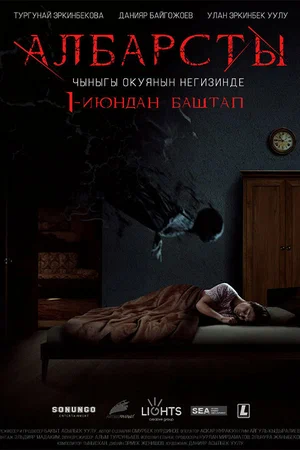 Poster for Albarsty, Kinopoisk
A classic B-horror film that draws on local fears. A nocturnal demon, modest yet effective special effects, and a strong emphasis on atmosphere. It is cinema made by insiders, for insiders, and that is precisely where its strength lies.
Kazakhstan: Kazakhs vs. Aliens (dir. Alen Niyazbekov) and Claustro (dir. Olzhas Bayalbayev)
In Kazakhstan, the backbone of B-movie cinema rests on outright parody and genre spectacle.
 Still from Kazakhs vs Aliens
The first film could earn its B-movie status on the strength of its title alone. It is pure genre exploitation, a playful take on clichés and, at the same time, a “local answer” to everything at once. Cheap, cheerful, and gloriously absurd.
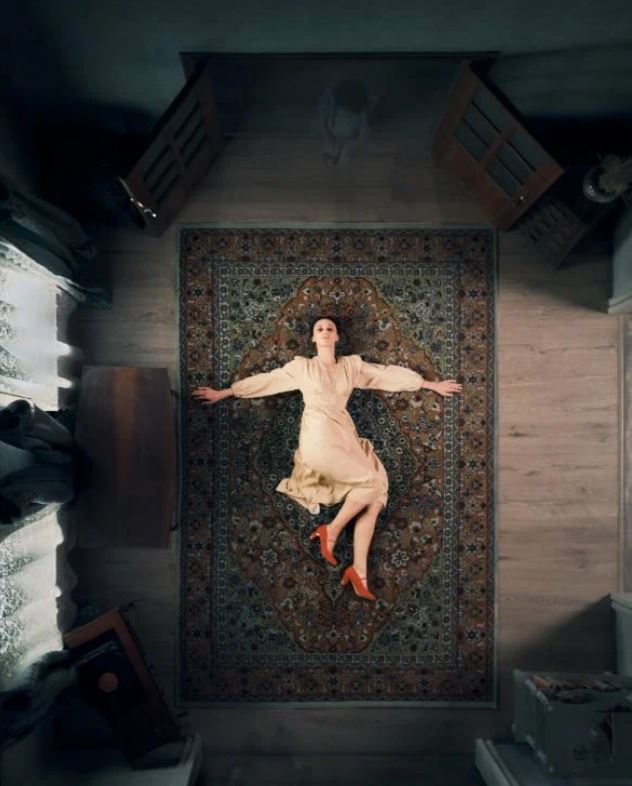 Claustro
The second film moves in the opposite direction. Minimalism and enclosed space define its world, whether born of artistic intention or budget constraints, the question remains open. In any case, watching this attempt to escape a mysterious Soviet apartment proves unexpectedly compelling.
Uzbekistan: Boyvachcha (dir. Jakhongir Poziljanov, Yodgor Nosirov) and Super Kelinchak (dir. Bakhrom Yakubov, Tamara Moiseeva, Khatam Khamroev)
In Uzbekistan, B-movie cinema has effectively become mainstream: in the 2000s, dozens of films were produced that did not qualify as high art, yet went on to shape the cultural code of entire generations.
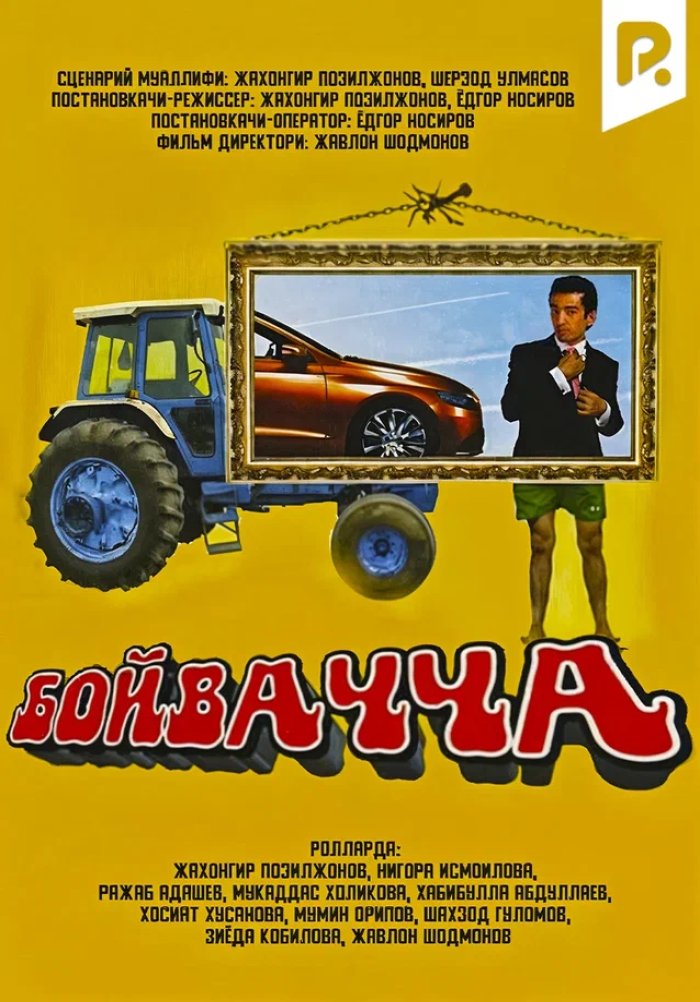 Poster of Boyvachcha
A benchmark of commercial cinema was this coming-of-age story about Tuhtasin, who pretends to be a wealthy “boyvachcha”. A simple plot, shot quickly in recognisable locations, became a textbook example of commercially viable B-cinema.
 A still from Superkelinchak
Bahrom Yakubov directed a hit that is still widely quoted today. The simplicity of its production did not prevent the film from striking a nerve within society, speaking to its audience in a direct, unmediated voice.
In broader terms, B-movies in Central Asia perform their function with remarkable efficiency. While cultural elites debate “high” aesthetics, aliens and brides entertain the audience, filling a vacuum. This is precisely what B-cinema was originally designed to do. This is precisely what B-cinema was originally designed to do. These films were expected to exist in the present tense, without requiring preparation from the viewer, but instead offering recognizable faces and familiar situations. And no awards can replace that.
The Aesthetics of Scarcity in Central Asian Cinema
For Central Asian filmmakers, B-cinema is not a manifesto but a condition of circumstance. When you are working with a budget that, in Hollywood terms, would barely cover feeding a film’s background extras, there are only two options: give up or turn on the camera and imagination. And those committed to the craft choose the latter.
The dictatorship of an empty wallet can sometimes become the best editor. If there is no budget for visual effects, the void is filled with dialogue. No money for studio rentals or set construction? You go to the steppe or to a real mahalla. Cinema sustained by whatever is at hand becomes more alive. Its rhythm aligns with the pace of contemporary life. Fast-form filmmaking leaves no space for reflection and moves in step with its audience. While auteur cinema competes for grants, Central Asian B-movies compete for the attention of the neighbour next door.
Love for this kind of cinema is a love of imperfection. It is like an old cassette tape or vinyl record, hissing, crackling, but carrying a raw authenticity that stands in contrast to polished digital remasters. As the saying goes, I Am Cringe But I Am Free.
Ultimately, B-cinema in Central Asia is not a genre or an industry, but a mode of existence. A space of absolute sincerity, where talent becomes immediately visible in stripped-down filmmaking, and so does its absence. As Murtas Kazhgaleyev once said about his theatre “Drugie Zvery” (lit. "Other Beasts"): “We are financially sustainable — we have almost no money.” And as long as cinema, despite everything, can still make the viewer laugh or cry, all it needs is a camera and a story.



Newsletter
A letter from the HD editors
Once a week, we send the best stories, events, and cultural discoveries from Central Asia.