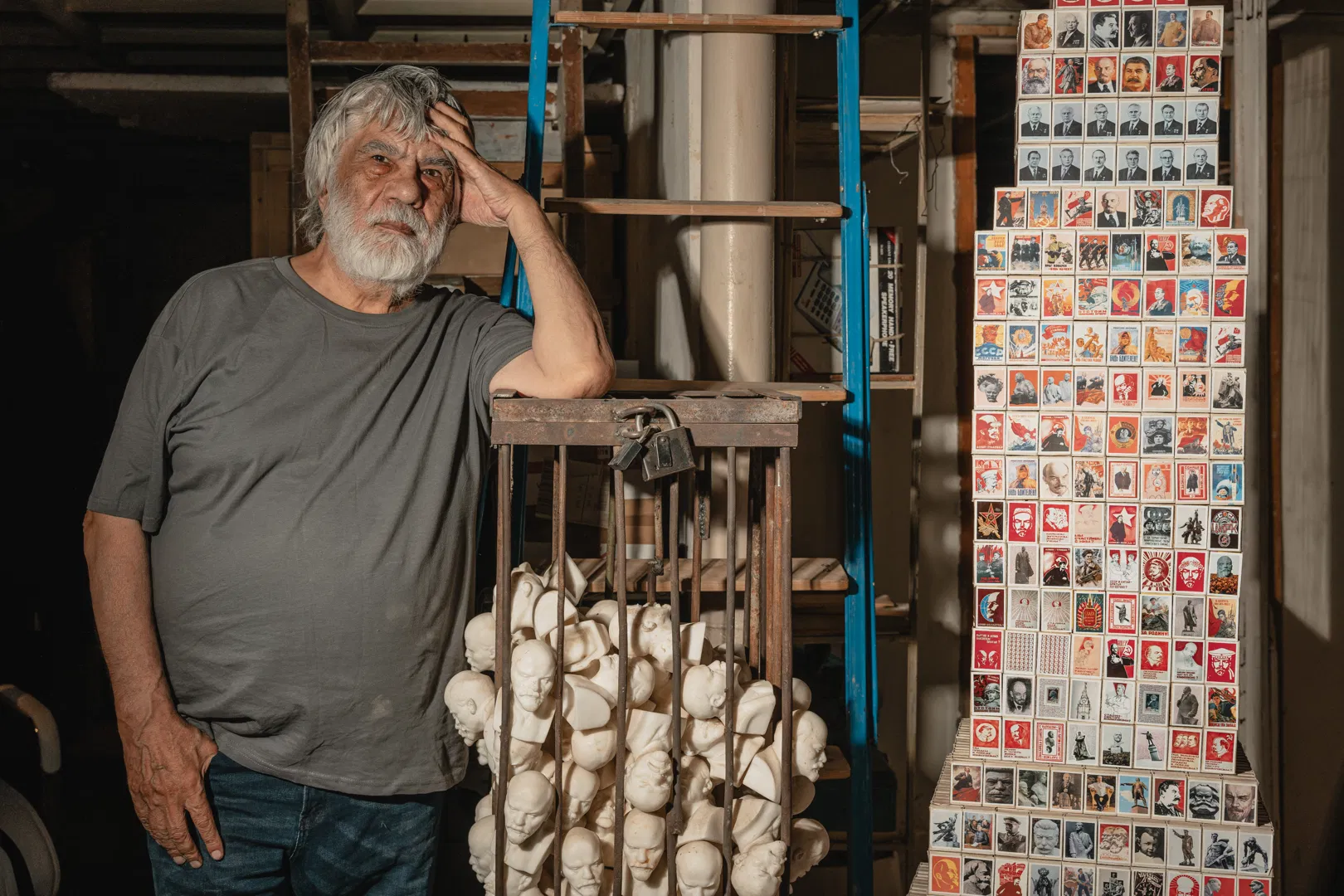
For most of the 20th century, the art of Central Asia existed on the periphery of the global artistic process. Soviet cultural policy was structured so that Moscow determined the language of art, the permissible forms of expression, and decided which works would be seen. Anything that fell outside the bounds of socialist realism and ideologically sanctioned aesthetics was either driven underground or disappeared from the public space entirely.
It was in this historical rift that a generation of nonconformist artists took shape. In Uzbekistan, the foremost figure, without exaggeration, is Vyacheslav Akhunov. He is a personality without whom it is impossible today to imagine the history of contemporary art in Uzbekistan and all of Central Asia.
The Venice Biennale and Central Asia’s Place
To understand the significance of Akhunov's exhibition, it is important to remember what the Venice Biennale represents for the global art world. Founded in 1895, it is today a global artistic forum that shapes the intellectual and aesthetic processes of our time.
For Central Asian countries, the path to Venice was long and arduous. After the collapse of the USSR, the region's art scene became free but isolated: there were no institutions, international connections, contemporary art museums, or infrastructure to support artists. In the 1990s and early 2000s, artists from Uzbekistan, Kazakhstan, Kyrgyzstan, and Tajikistan more often appeared as part of joint "Central Asian" projects rather than as representatives of independent national scenes.
It was during this period that the international community gradually began to discover the art of the region. Curators, researchers, and independent artists played a key role in this, many of whom had worked for decades with virtually no institutional support. One such artist was Vyacheslav Akhunov.
An Artist Outside the System
Vyacheslav Akhunov was born in 1948 in Osh, Kyrgyzstan, but his artistic biography is inextricably linked to Tashkent. He belongs to the generation of Soviet nonconformists—artists who refused to submit to the official language of art.
But unlike the Moscow conceptualists, who existed in an underground yet still active intellectual environment, Akhunov worked in near-total isolation. Tashkent in the 1970s was far from being a center of contemporary art. There were no institutions supporting experimental practice, no market, no independent galleries, and no international contacts. The artist created his own artistic system practically alone.
That is precisely why themes of internal dialogue, memory, and hidden resistance are so important in Akhunov’s works. His art has always been built around the impossibility of speaking openly, while Soviet ideology appeared not as an object of criticism, but rather of deconstruction.
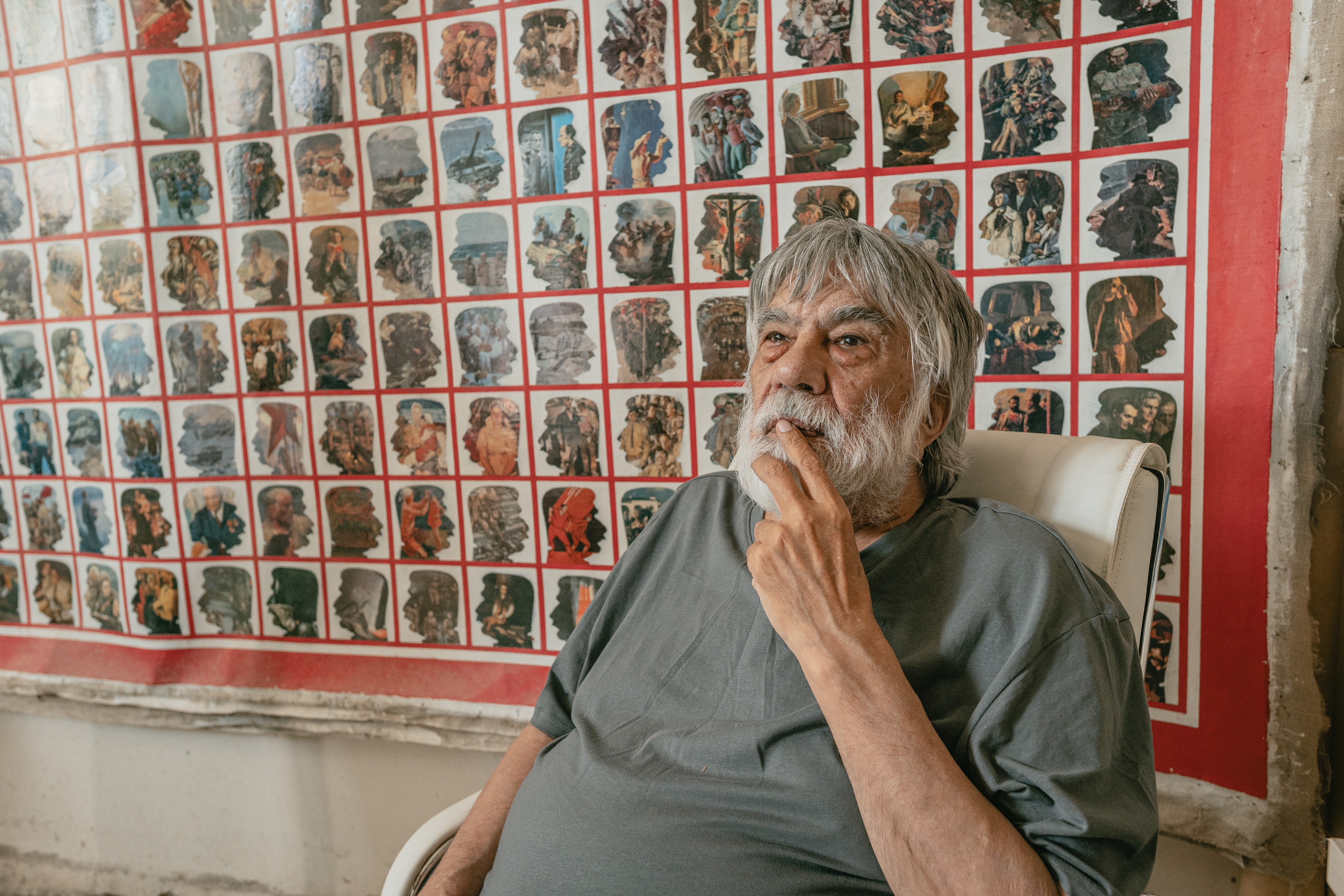
From the mid-1970s, Akhunov began working with text, slogans, newspapers, and Soviet symbolism, turning propaganda images into a tool for conceptual analysis. He explores the nature of power through repetition, bureaucratic language, and the endless reproduction of ideological constructs. In many ways, his practice is close to Moscow conceptualism, yet Akhunov always maintained a distinctive style tied to the cultural space of the East.
In his works, the Soviet system appears as a machine for suppressing memory, individuality, and spirituality.
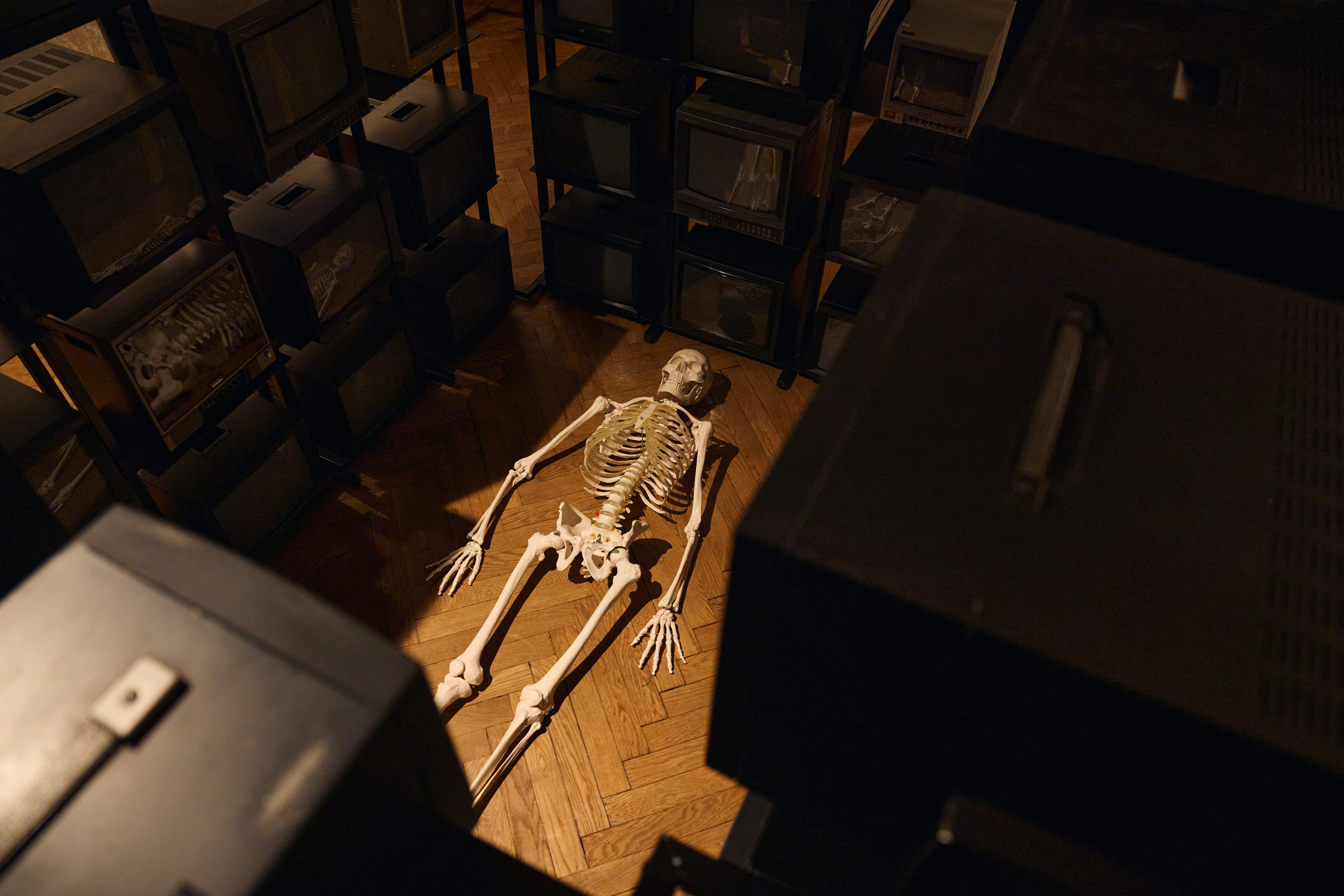
"Tools of the Mind" Exhibition: Spring 2026
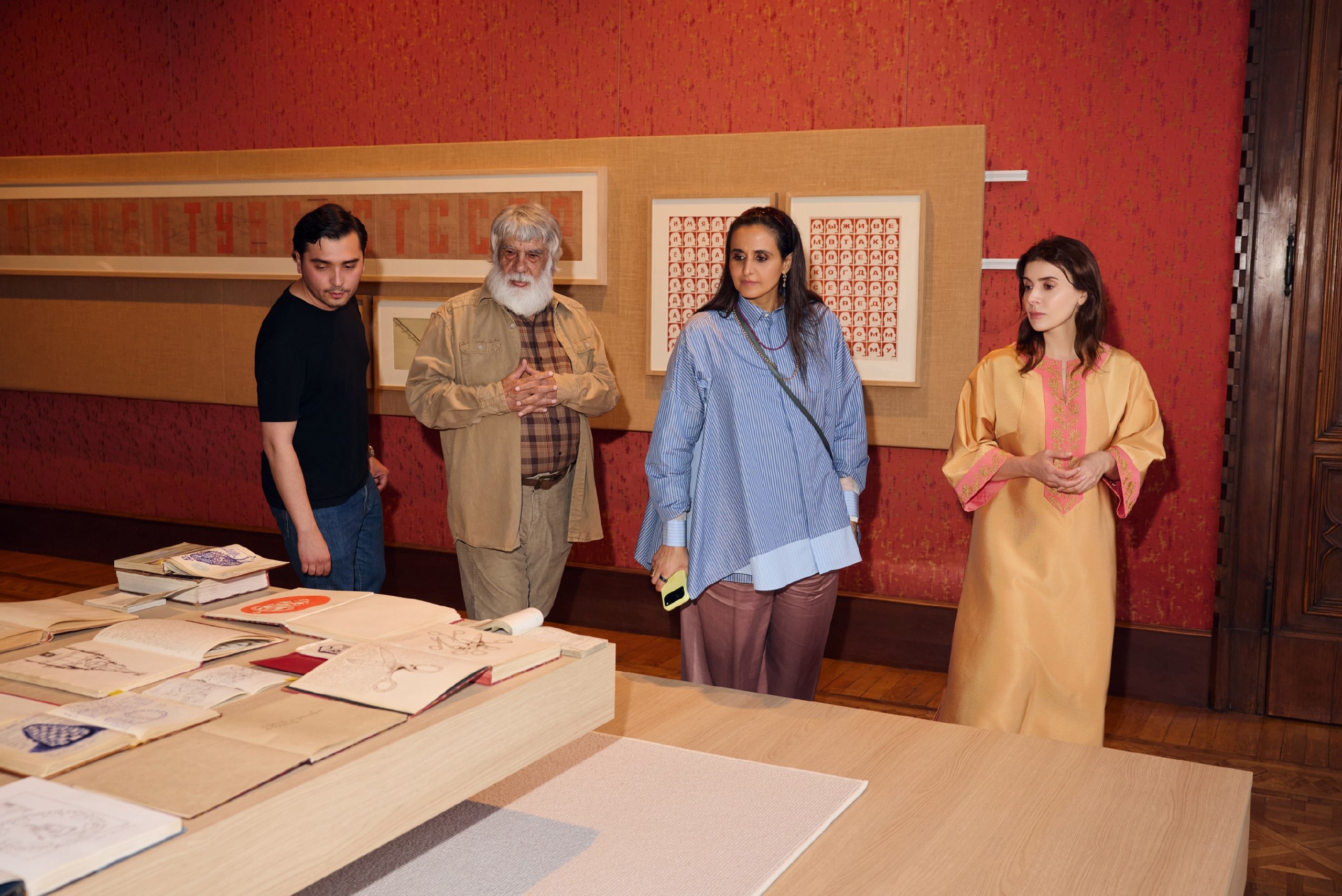
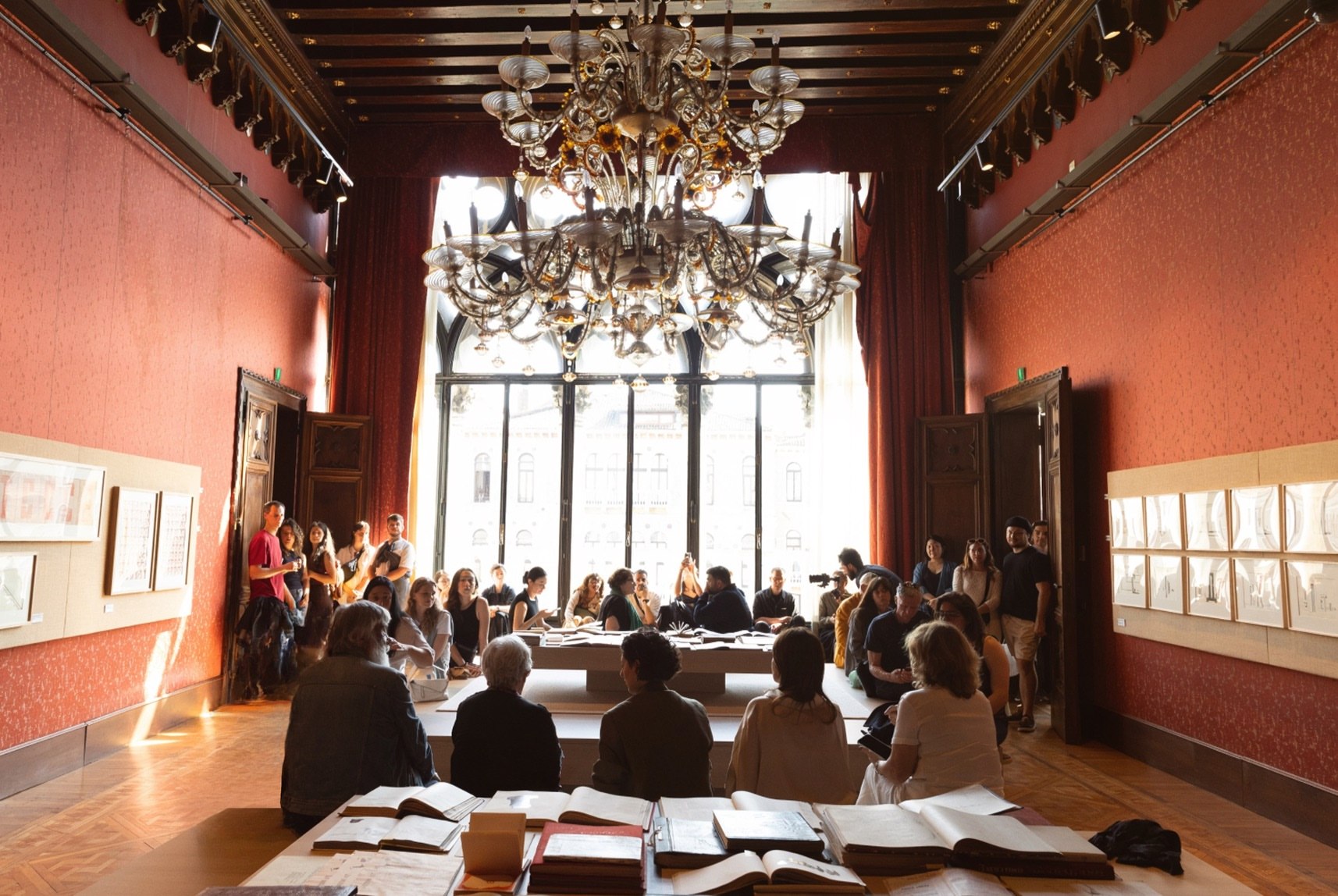
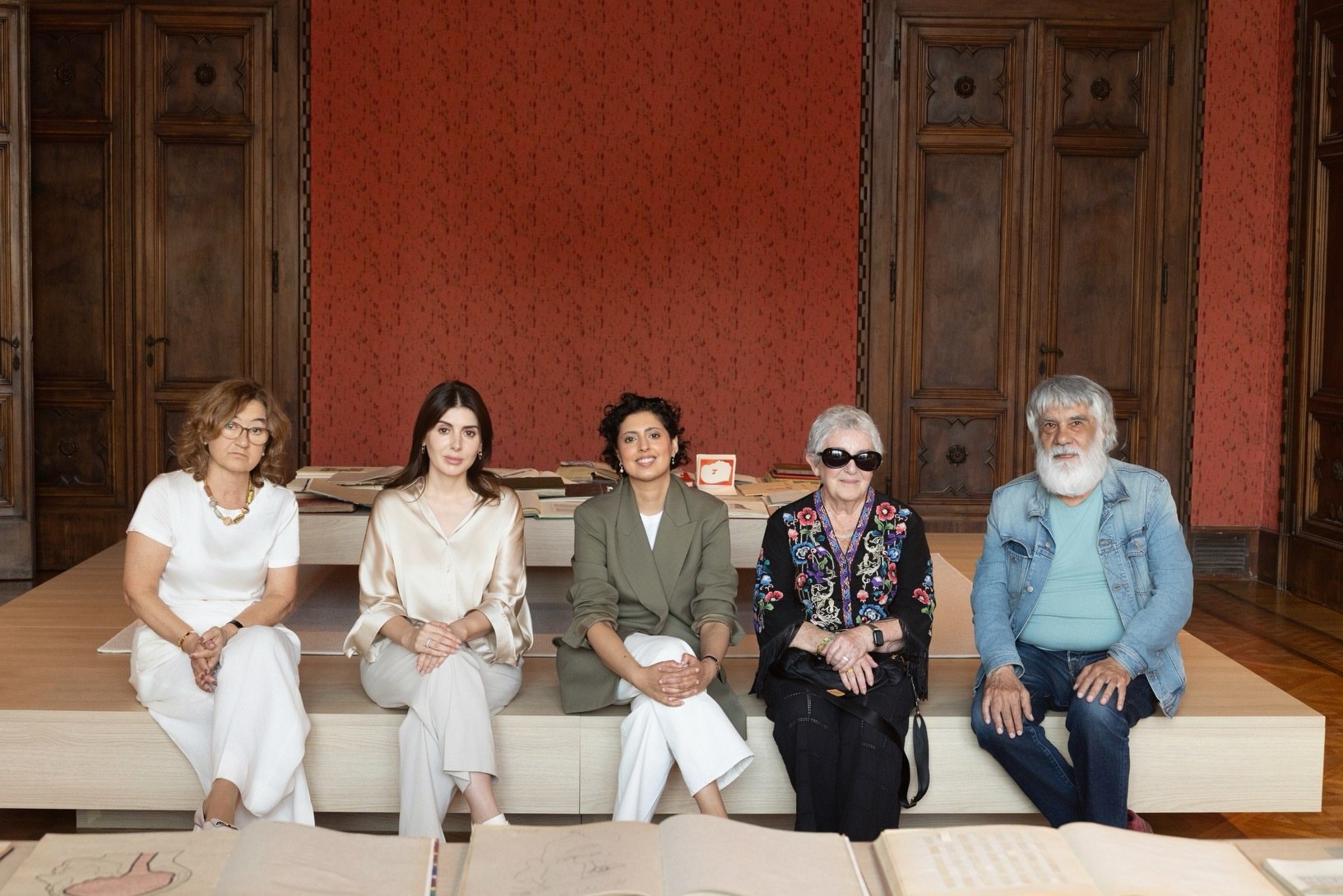
The project was included in the official parallel program of the 61st Venice Biennale of Contemporary Art and became the first major international project of the Center for Contemporary Art in Tashkent (CCA Tashkent), which opened the same year.
The project's title — "Tools of the Mind" — alludes to the Sanskrit origin of the word "mantra," derived from manas ("mind") and tra ("tool"). This etymology becomes the key to the entire exhibition. Akhunov is interested in language — as a mechanism of power, as a form of internal resistance, and as a way of preserving memory. The exhibition is structured not chronologically, but around themes of censorship, stalled projects, ideological pressure, and a lack of institutional support, due to which many of the artist's works were never realized in their time.
Many of these works were conceived as early as the 1970s — a time when ideas often had to be nurtured quietly, with no opportunity for realization.
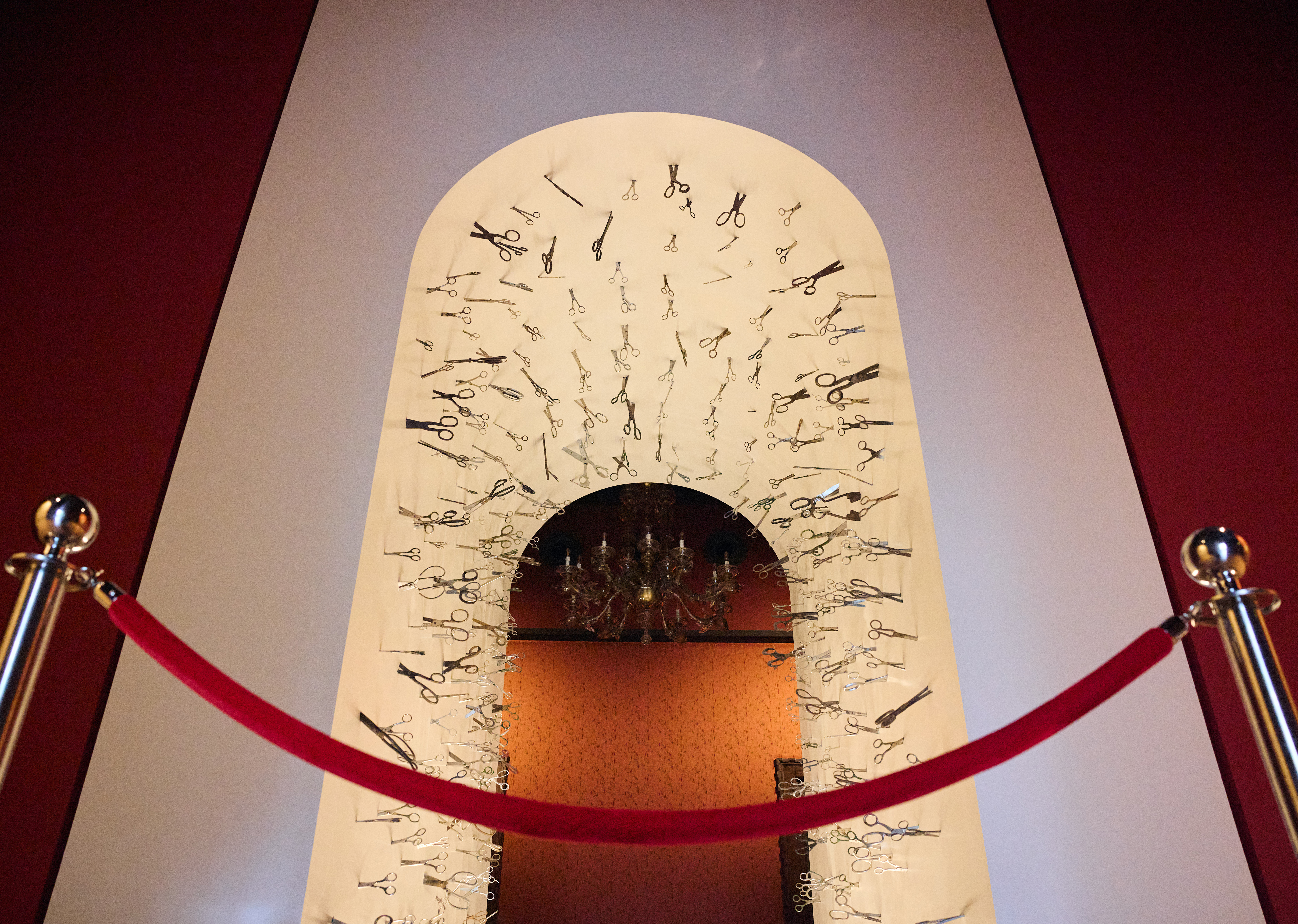
The exhibition opens with the monumental work "Triumphal Arch" (1979/2026) — a four-meter structure made of 365 metal scissors. Outwardly reminiscent of the ceremonial architecture of Soviet holidays and official openings, the work can be seen as both unsettling and ironic. Here, scissors become a symbol of constant severance — censorship, bureaucratic control, and violence against free expression. The recurring motif of everyday pressure becomes one of the main nerve centers of the entire exhibition.
Many works in the project were realized for the first time based on the artist’s archival sketches. Among them are the neon installation "What Am I Doing Here?" (1979/2026), where the theme of personal reflection becomes a political statement, and "House of Infinity / Sarcophagus" (1986/2026)—an architectural structure that simultaneously evokes a mausoleum, an archaeological site, and a repository of memory.
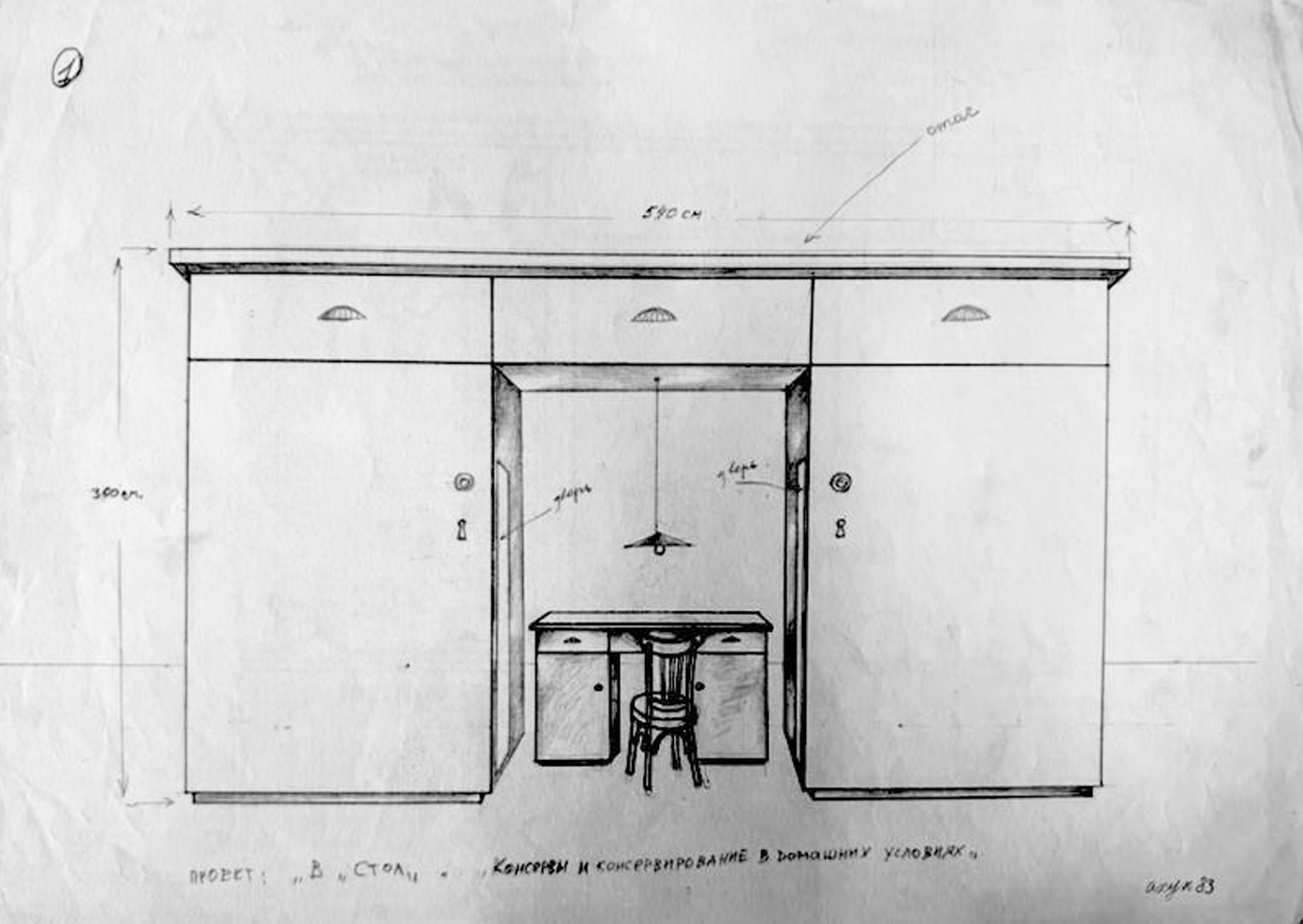
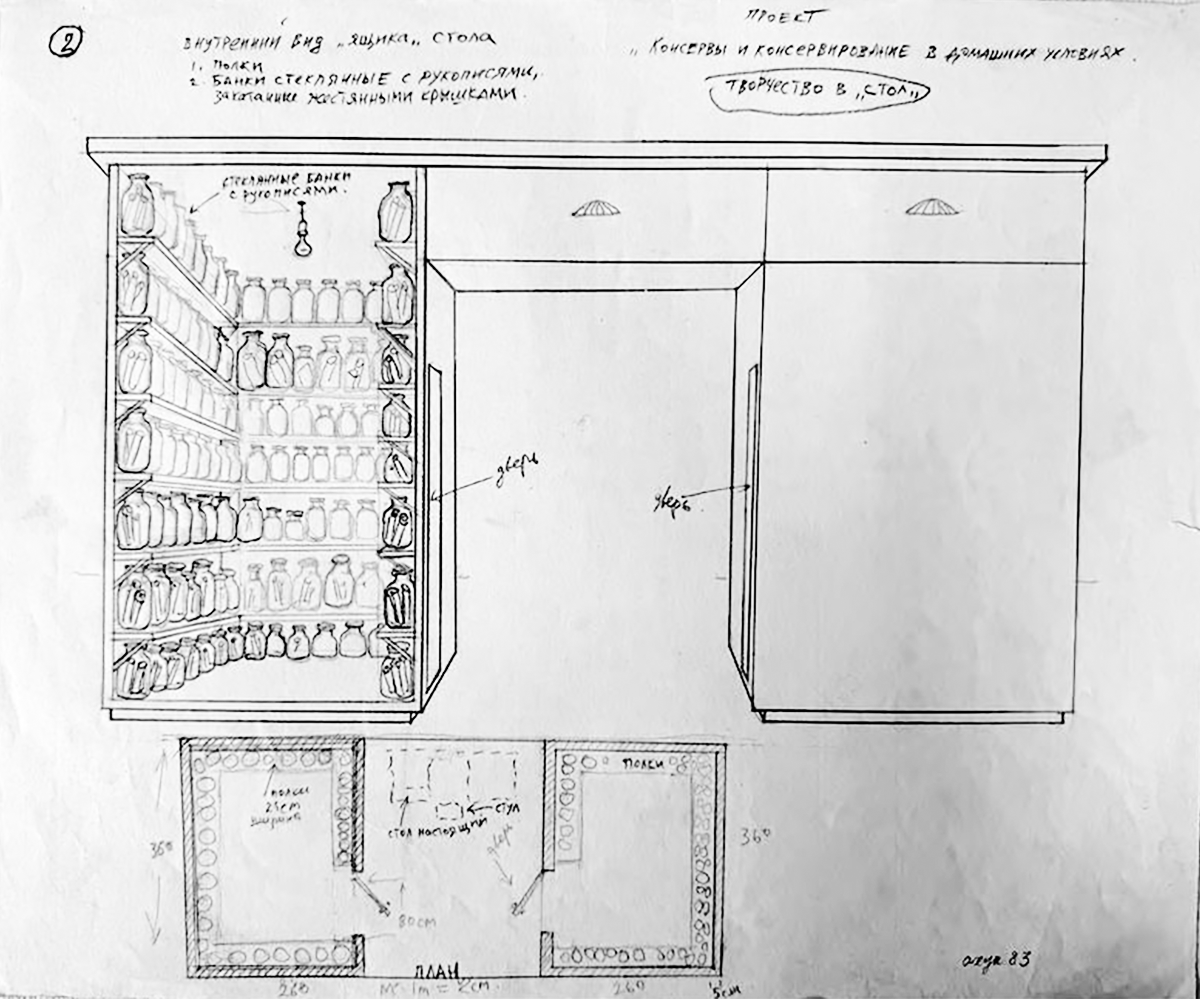
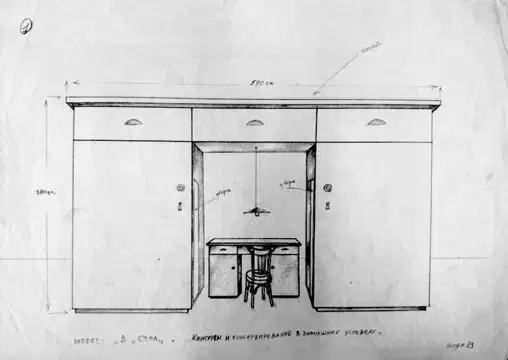
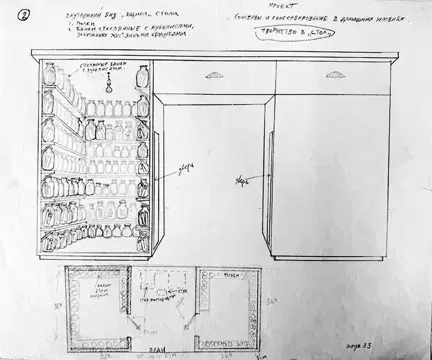
One of the key works is "Work for the Drawer" (1978/2026).
Italian craftsmen built a writing desk over three meters high, with a regular-sized table and chair placed underneath it. The drawers of the large desk house a storage compartment with jars for canning. And below are my works, for which one could have been sent to Mordovian labor camps in Soviet times. All nonconformists—poets, writers, artists—created for the desk drawer during the Soviet era, since censorship blocked their work and the KGB persecuted them.
Vyacheslav Akhunov
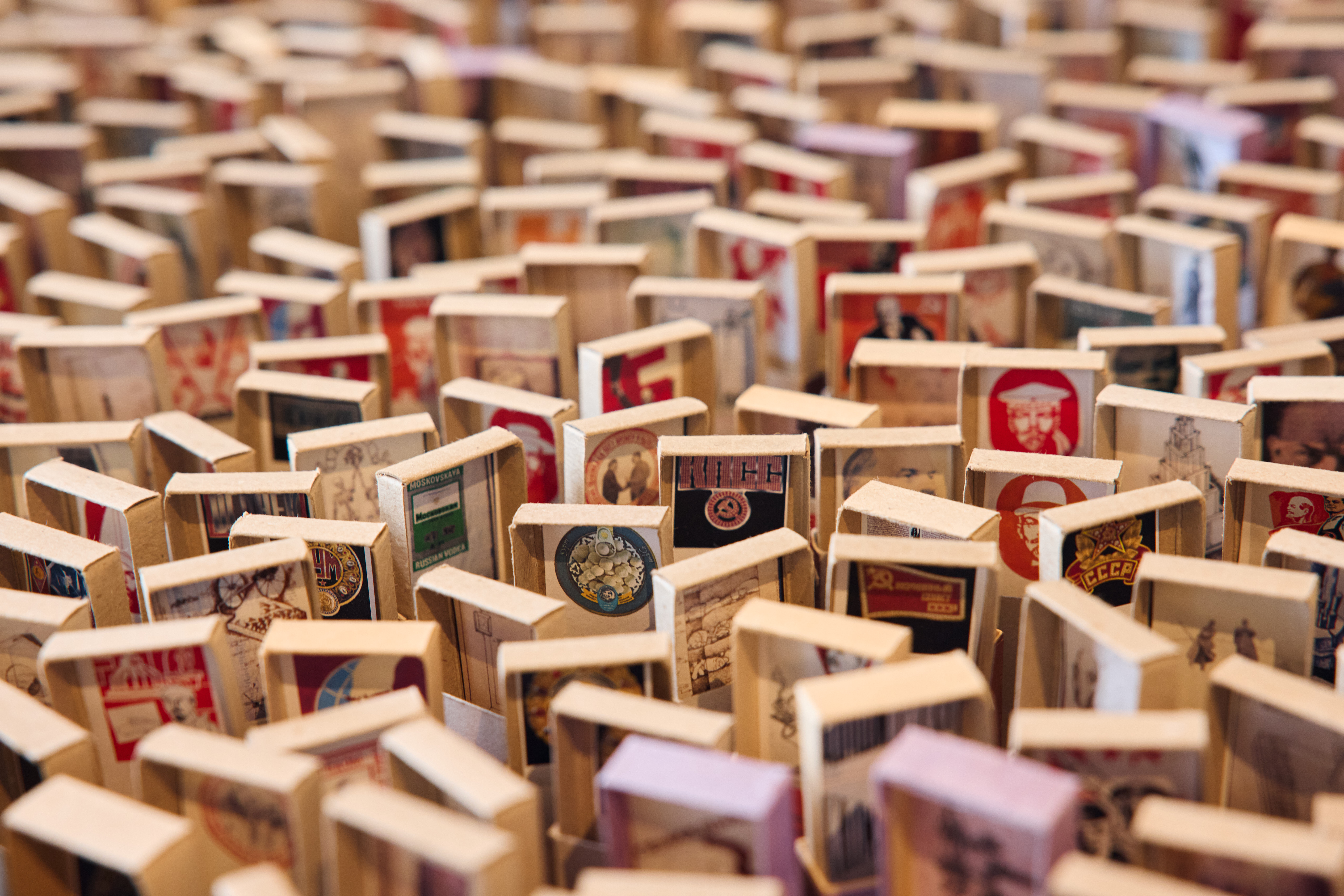
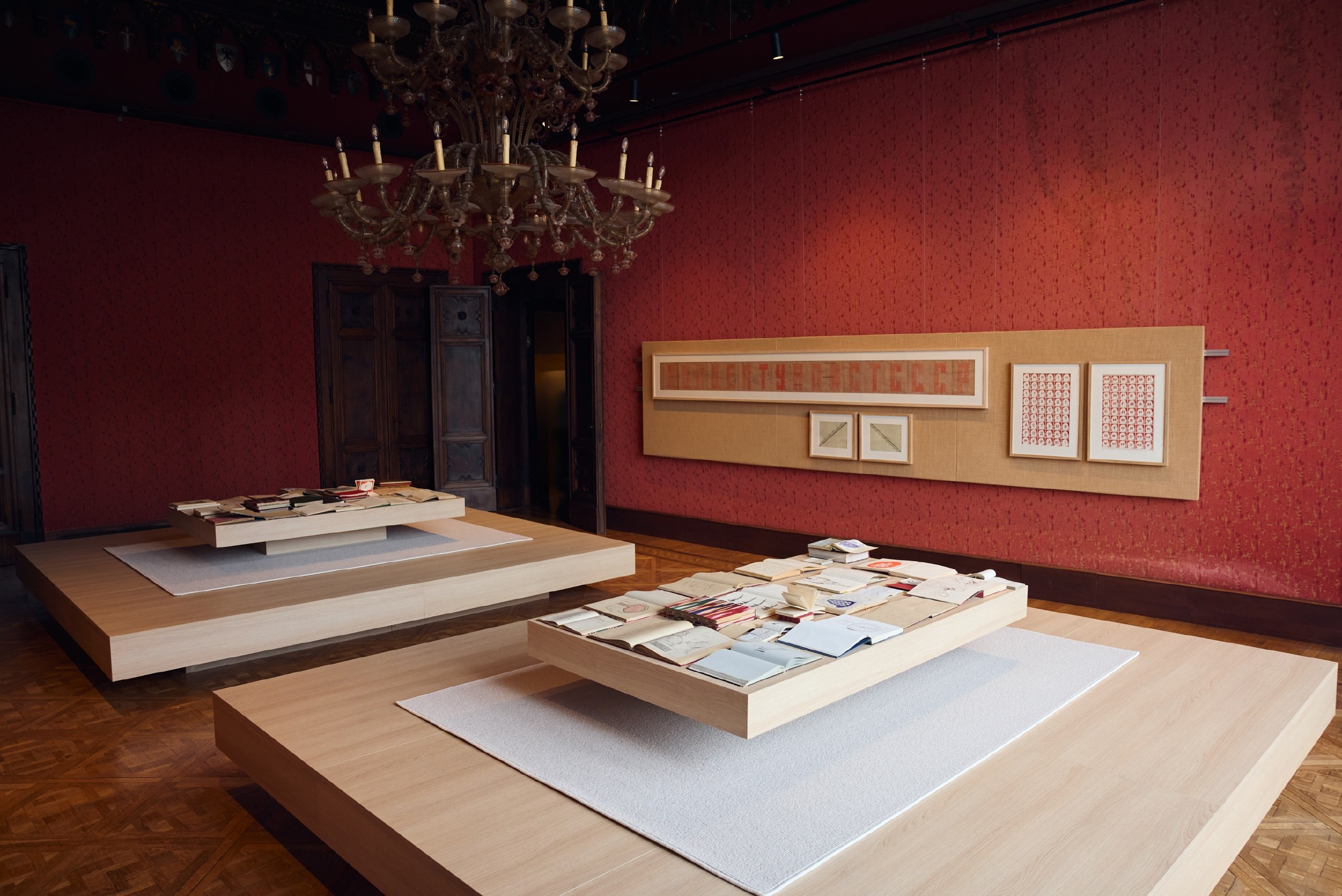
A significant place in the exhibition is occupied by Akhunov’s long-term study of the Soviet slogan as a form of secular “mantra.” Starting in the 1970s, the artist worked with newspapers, patterns, magazines, and books, applying repetitive textual interventions to them. In the series “Modeling,” “Rupture,” and “The Red Line of the Party,” the language of Soviet ideology undergoes a peculiar dismantling: the repetition and mechanical reproduction of slogans gradually expose their inner emptiness and latent violence.
Yet the exhibition is not limited solely to political commentary. Throughout the display, themes of memory, internal migration, and spiritual resilience emerge. Recurring images of the desert, a suitcase, and a nightingale become, for Akhunov, distinctive symbols of fragility and survival. In the work "The Nightingale" (1977), inspired by the poetry of Saadi Shirazi, dozens of bird images are encased in glass jars—preserved yet isolated memories of the world.
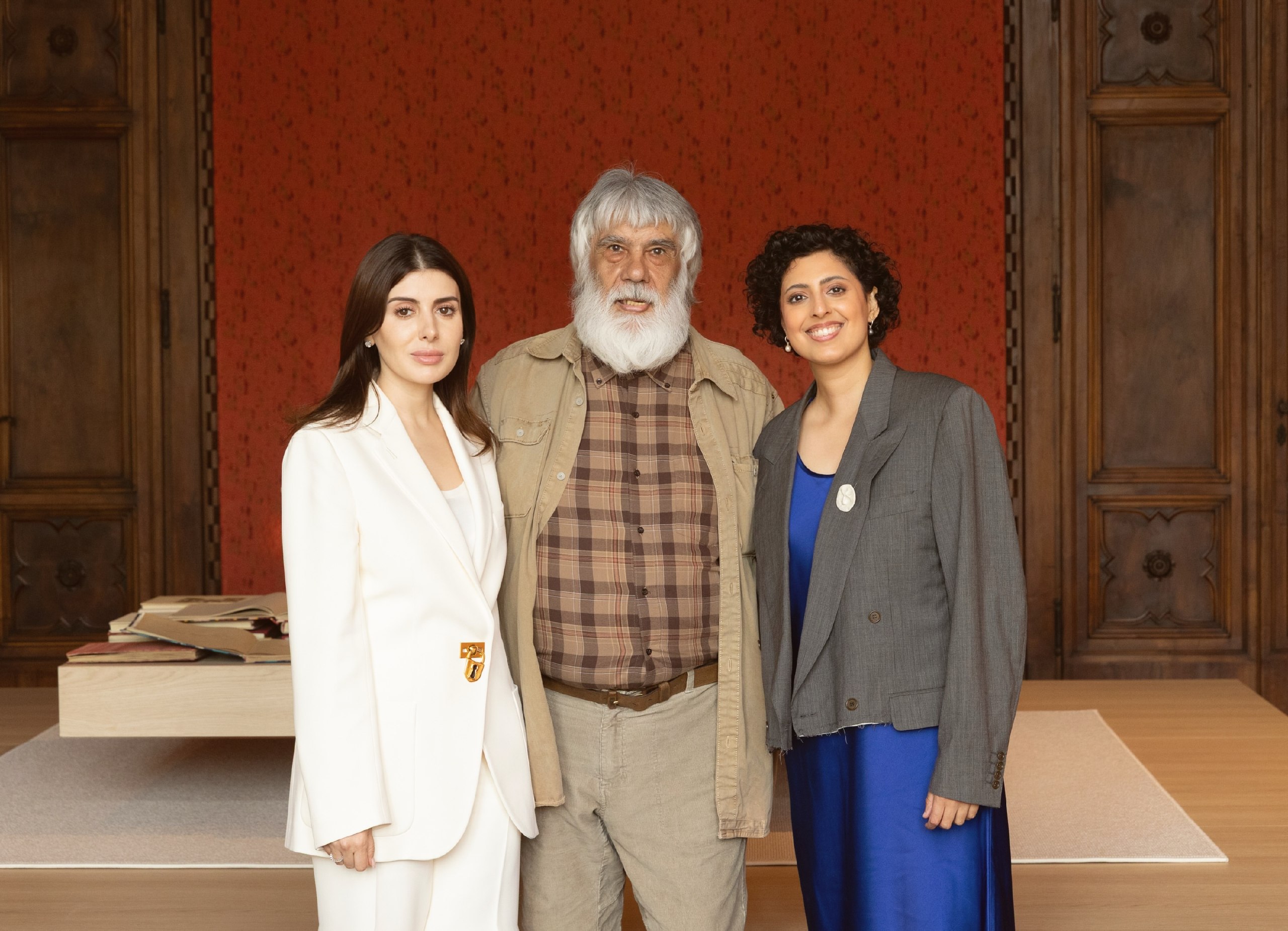
For project curator Sarah Raza, the exhibition symbolizes not only the artist's personal history but also the very nature of conceptual art in Central Asia. According to her, Akhunov's practice is built on "self-analysis and spiritual resilience," and the meaning of his works unfolds through repetition, return, and the slow accumulation of visual and textual layers.
Akhunov's project opens the program of the Center for Contemporary Art in Tashkent — the first institution of its kind in the country, established by the Uzbekistan Art and Culture Development Foundation.
How Uzbekistan Developed Its Own Cultural Strategy
If just ten years ago the country’s participation in international artistic life was sporadic, today Uzbekistan is consistently building its own cultural infrastructure. A key role in this is played by the Uzbekistan Art and Culture Development Foundation, which in recent years has initiated large-scale international projects, exhibitions, restoration programs, and institutional initiatives.
Uzbekistan's Previous Projects in Venice
Uzbekistan’s history of participation in the Venice Biennale is relatively short but intriguing. For a long time, the country’s artists took part as part of Central Asian initiatives. The national pavilion as an independent platform emerged only in recent years.
A true breakthrough came in 2022, when Uzbekistan presented a full-fledged national pavilion for the first time at the 59th Venice Biennale. The project "Dixit Algorizmi: The Garden of Knowledge" was dedicated to the legacy of the medieval scholar al-Khwarizmi and explored the connection between the history of knowledge, algorithms, and modern technologies.
The next step came in 2024 at the 60th Venice Biennale. The pavilion "Don’t Miss the Cue" by artist Aziza Kadyri explored themes of migration, labor, female identity, and digital control.
Why This Exhibition Matters Today
The main quality of Akhunov’s project is its remarkable modernity. Although most of the works are based on ideas from the 1970s and 1980s, the exhibition feels far from being a historical archive. The themes of censorship, ideological pressure, bureaucratic violence, and the impossibility of free expression remain universal, strikingly resilient, and relevant. That is why Akhunov’s art extends far beyond the post-Soviet context.
But there is another important aspect. For Central Asia, this exhibition becomes an act of restoring its own artistic history. For a long time, the region’s art existed in fragments, without institutional memory, museums, archives, or international recognition. Today, works that were stored for decades in an artist’s studio find themselves at the center of the global art scene. There is an almost historical justice in this.
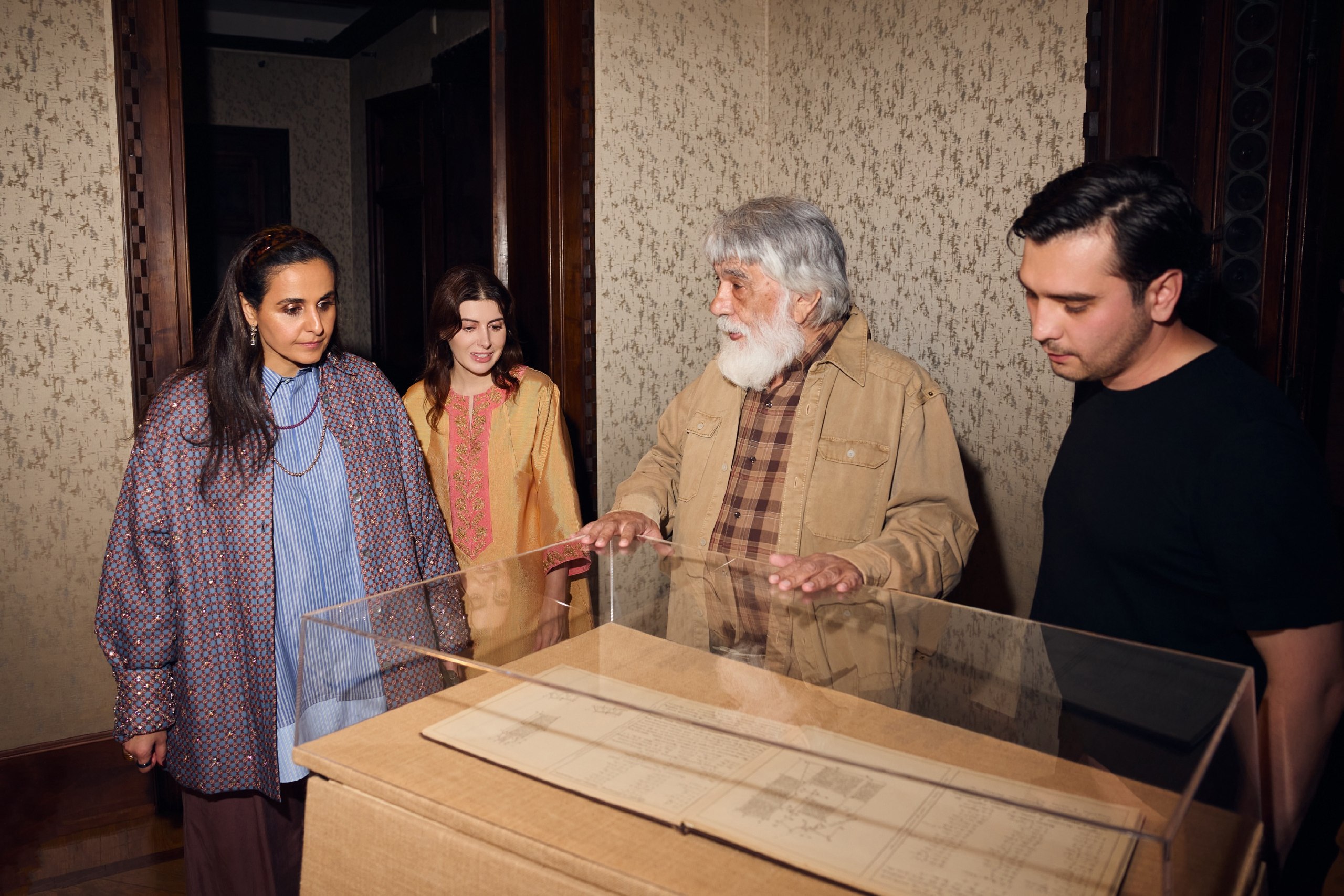
When Akhunov created these works, he understood that they might never be shown to the public. Today, they occupy the space of Palazzo Franchetti—one of the key venues of the Venice Biennale.
And perhaps this is the main point of the "Tools of the Mind" exhibition: a thought can be hidden, set aside, forgotten for decades, but it still continues to exist.