History and Cultural Heritage
In Kyzylorda, the evolution of women's headwear from the white headscarf to the kimeshek was showcased
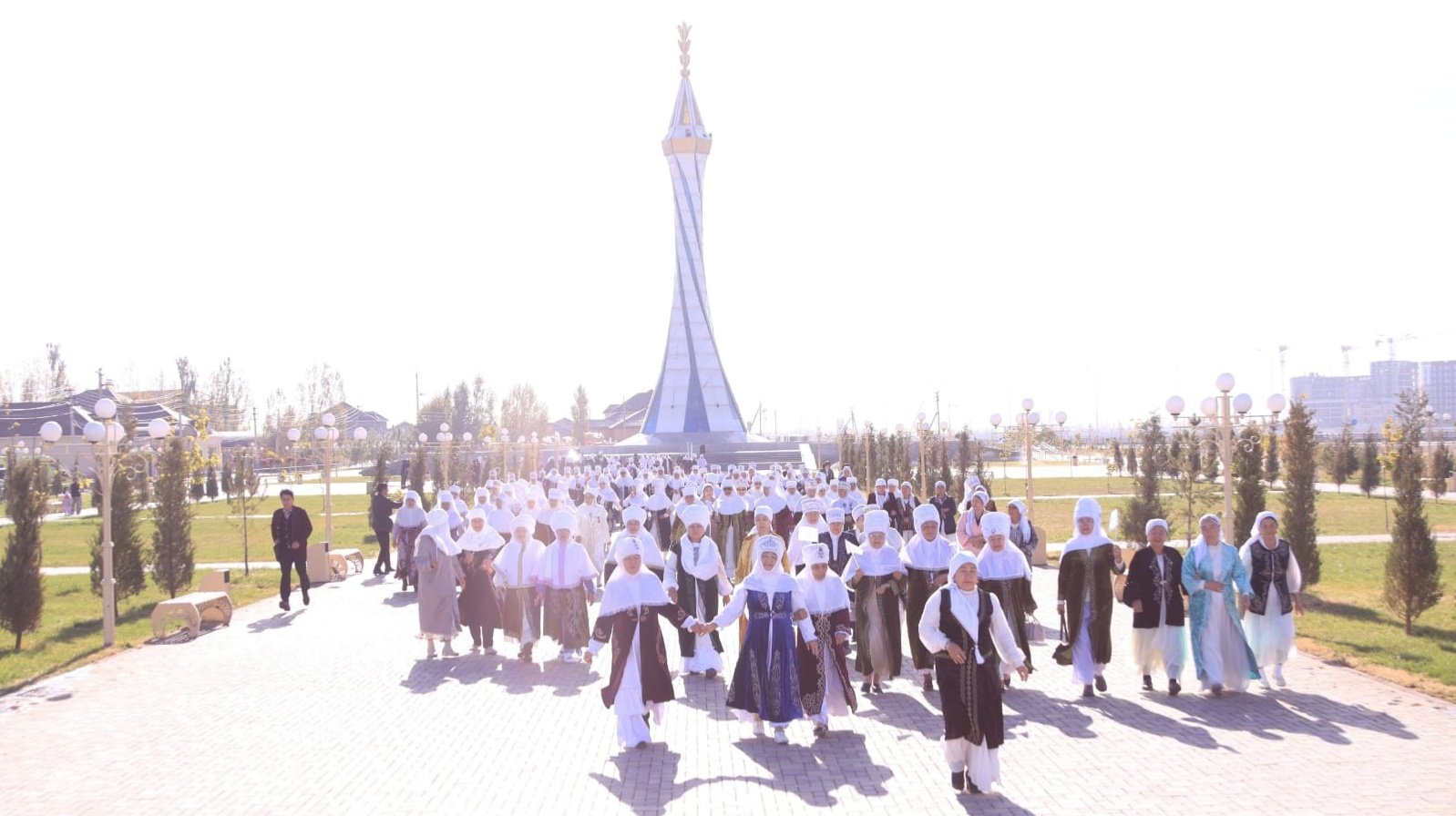
An regional ethnocultural festival titled "From the White Shawl to the Kimeshek" was held in Kyzylorda, dedicated to the history and symbolic significance of traditional Kazakh women's headwear. The event was organized at the "Anaga Tagzym" center with the aim of popularizing cultural heritage and strengthening continuity between generations.
The festival began with a demonstration of the tradition of wrapping the kündik headdress with a 21-meter white cloth, which is worn over the kimeshek. A thematic performance revealed the historical and cultural significance of these items of clothing in the lives of Kazakh women. The main event was a procession of about 200 participants — mothers in white headscarves and grandmothers in traditional kimesheks, which started at the Syr Bolashagy competence center and ended at the Anaga Tagzym center. The column included representatives of folklore ensembles, figures from education and culture, mothers of many children, and public activists.
The festival curator, Galiya Baisynova, deputy head of the regional department of culture, archives and documentation, emphasized the role of mothers as guardians of national values and the importance of the older generation's example.
As part of the program, the center's masters presented four versions of the kimeshek, differing in trim: with linen fringe, sheep's wool edging, patterns made of textile threads, and without ornament. Three styles of zhaulyk were also demonstrated, reflecting the features of traditional women's attire depending on the stage of family life and the number of children. Participants who contributed to the organization were presented with letters of appreciation and commemorative gifts.
Read also
Newsletter
A letter from the HD editors
Once a week, we send the best stories, events, and cultural discoveries from Central Asia.