Origins
Cathedral of the Sacred Heart of Jesus: The Main Landmark of the Toytepa Mahalla
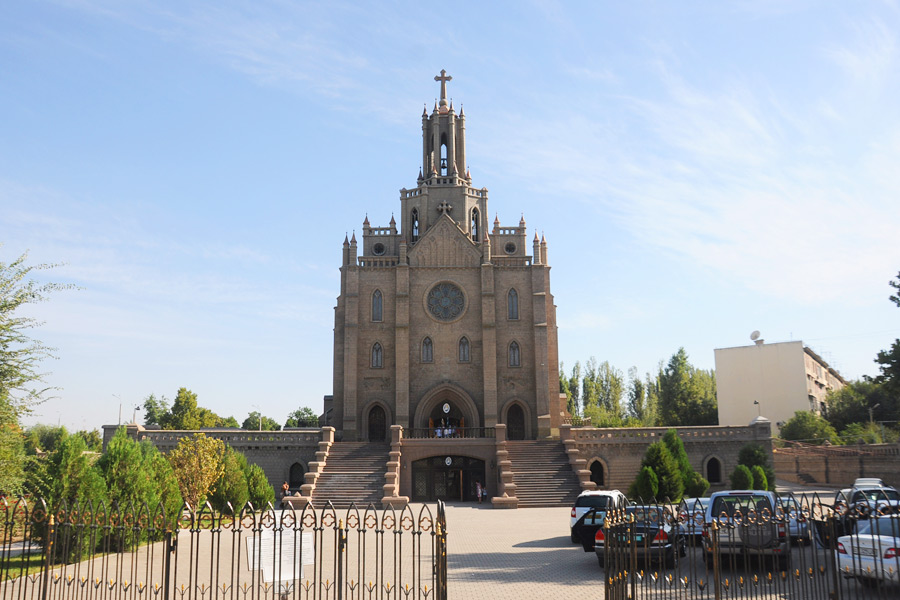
Toytepa Mahalla is well known for its embassies, cafés, and promenades. Yet its most striking landmark is undoubtedly the venerable Catholic church, officially called the Cathedral of the Sacred Heart of Jesus and colloquially known as the “Kostel.”
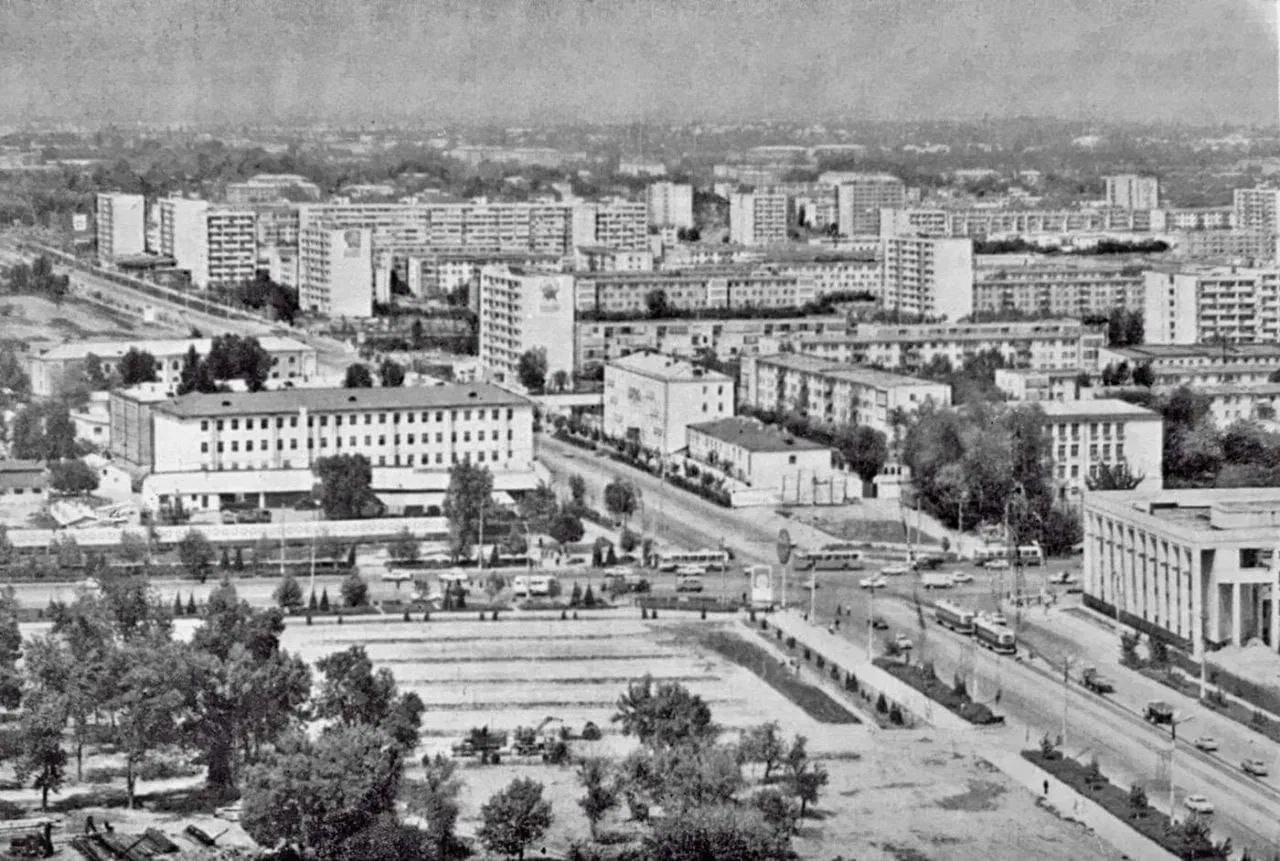
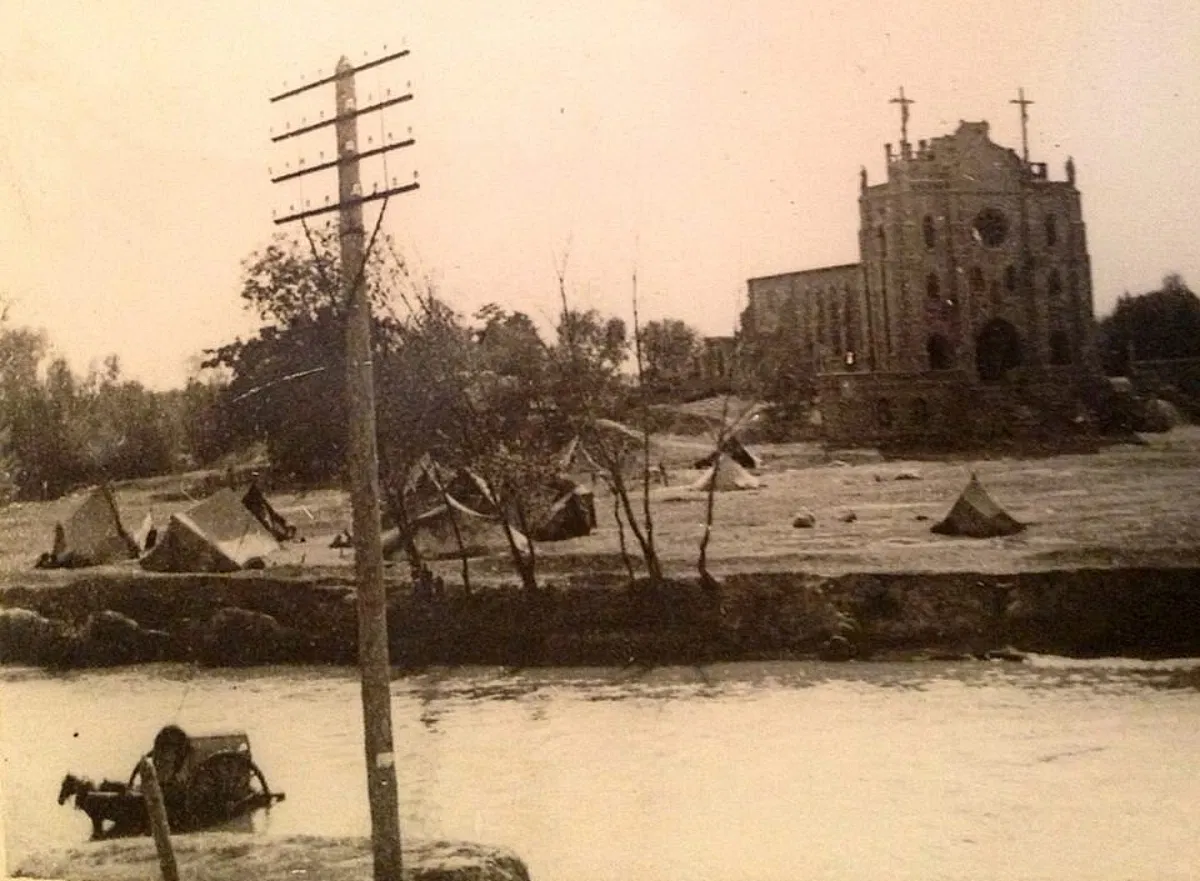
The building at the centre of our today's story was, until quite recently, abandoned and forgotten, even though it has always stood almost in the very heart of the city. How it came to be neglected remains something of a mystery. One thing is certain: since independence, this architectural and cultural gem has undergone many remarkable changes and is now fully restored. Today it is far more than just a century-old building; it is a highlight of the mahalla, the street it faces and the historic river that runs alongside. It is another Tashkent landmark that, if you take the time to listen, has plenty of stories to tell...
Childhood Memories
About forty-seven or forty-eight years ago, when I was riding down this very street with my father in his lorry, I noticed an abandoned building of curious design standing on the bank of the canal. When I asked my father about it, he said, “That’s the Polish kostel; well, a foreign church, you understand?”
Many years have passed since then. I graduated from the History Department of Tashkent State University, yet one question always gnawed at me: where did this kostol come from, how was it built, and who created it? It was only relatively recently, some twenty-five to thirty years ago, that I finally found the answer.
I happened to be on that same "Broadway" in the city centre when I came across a reproduction of an early 20th-century postcard. It showed the kostol in its original glory, complete with sculptures, bas-reliefs, niches and stained-glass windows. In the corner of the postcard, in something resembling a photomontage, a man in a cassock leaps from a boat onto a riverbank. A short caption read: "Ksiądz Pranaitis on the Salar." On the reverse, an inscription called for donations towards the construction of a Catholic church in Tashkent. Around the edge ran a clear inscription in Latin: Sigillum Curati Taskententis — "Seal of the Curate of Tashkent." Alongside it was an impression of a seal bearing a map of the Turkestan region, with faint outlines of a crescent, a sun, and what appeared to be a crucifix.
How It All Began
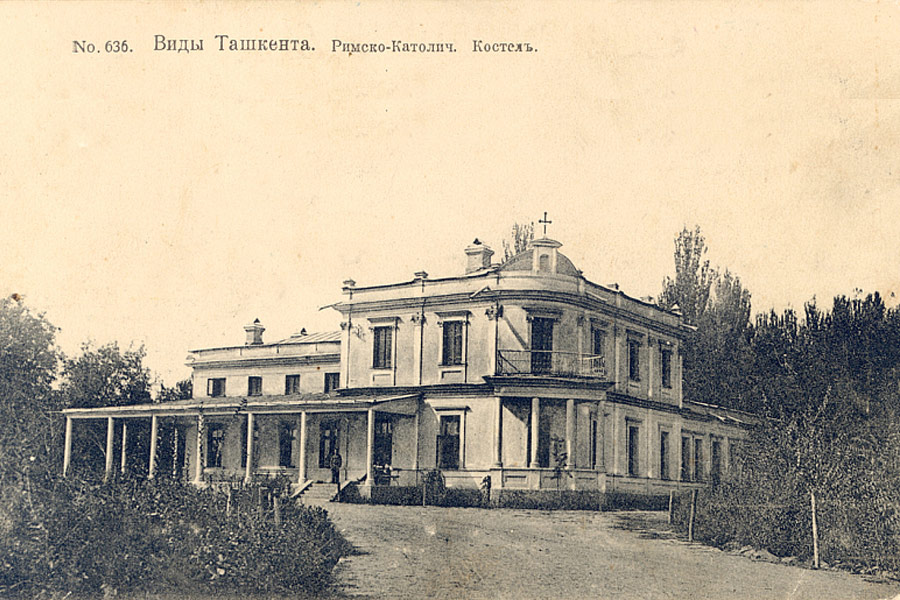
The idea of building a Catholic church first arose in 1875, though the number of Catholics in the city was still quite small at the time. The project only gained momentum in 1902, when Justin Bonaventure Pranaitiss, a Master of Theology, was appointed representative of the Roman Catholic Church in Tashkent. Having purchased a small plot of land in Kryuchkovsky Lane (also known as Kolarovsky Lane) from a certain widow, Bibi Mariam Narbayeva, the priest built a modest structure in 1905, known as the "old kostol" and often referred to as the “House of the Polish Society.”
This building housed not only the chapel but also an orphanage, a school, and the priest’s residence. Architecturally, it looked like an ordinary two-storey house, distinguished only by the Catholic cross perched above the attic’s dormer window.
 Source: Minzifa Travel
The Pervushin Plot
By 1913, Padre Pranaitis had managed to purchase a plot of land from the Pervushin wine merchants in the same area, between the “old kostol” and the Salar canal. It was here that the construction of a new Catholic church was planned. The initial design was prepared by the architect L. Pavlovsky.
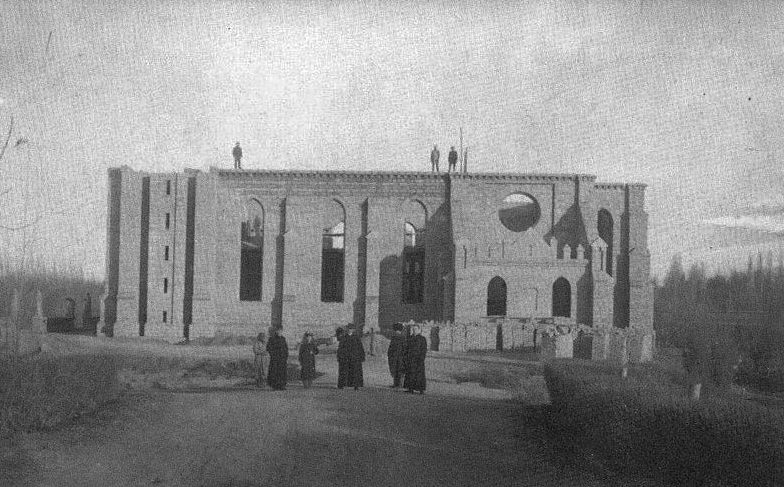
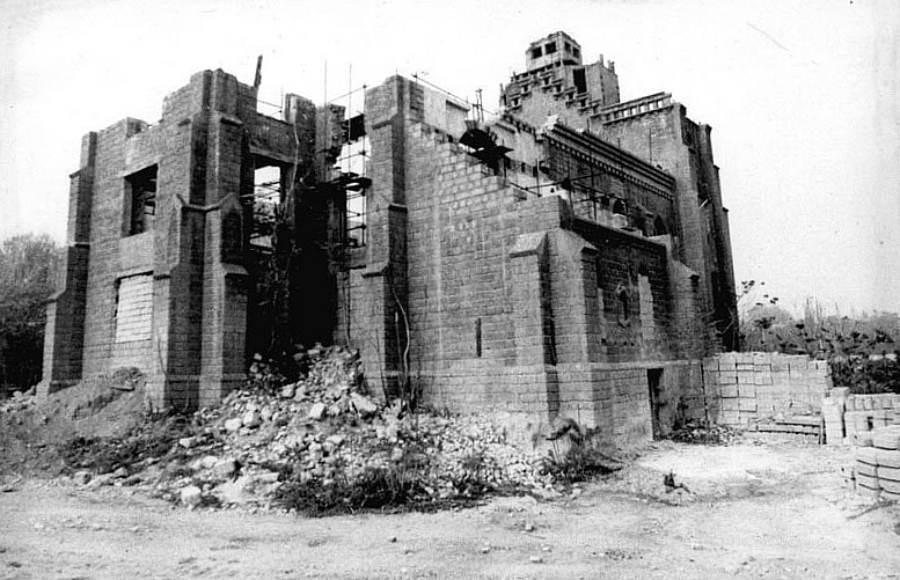
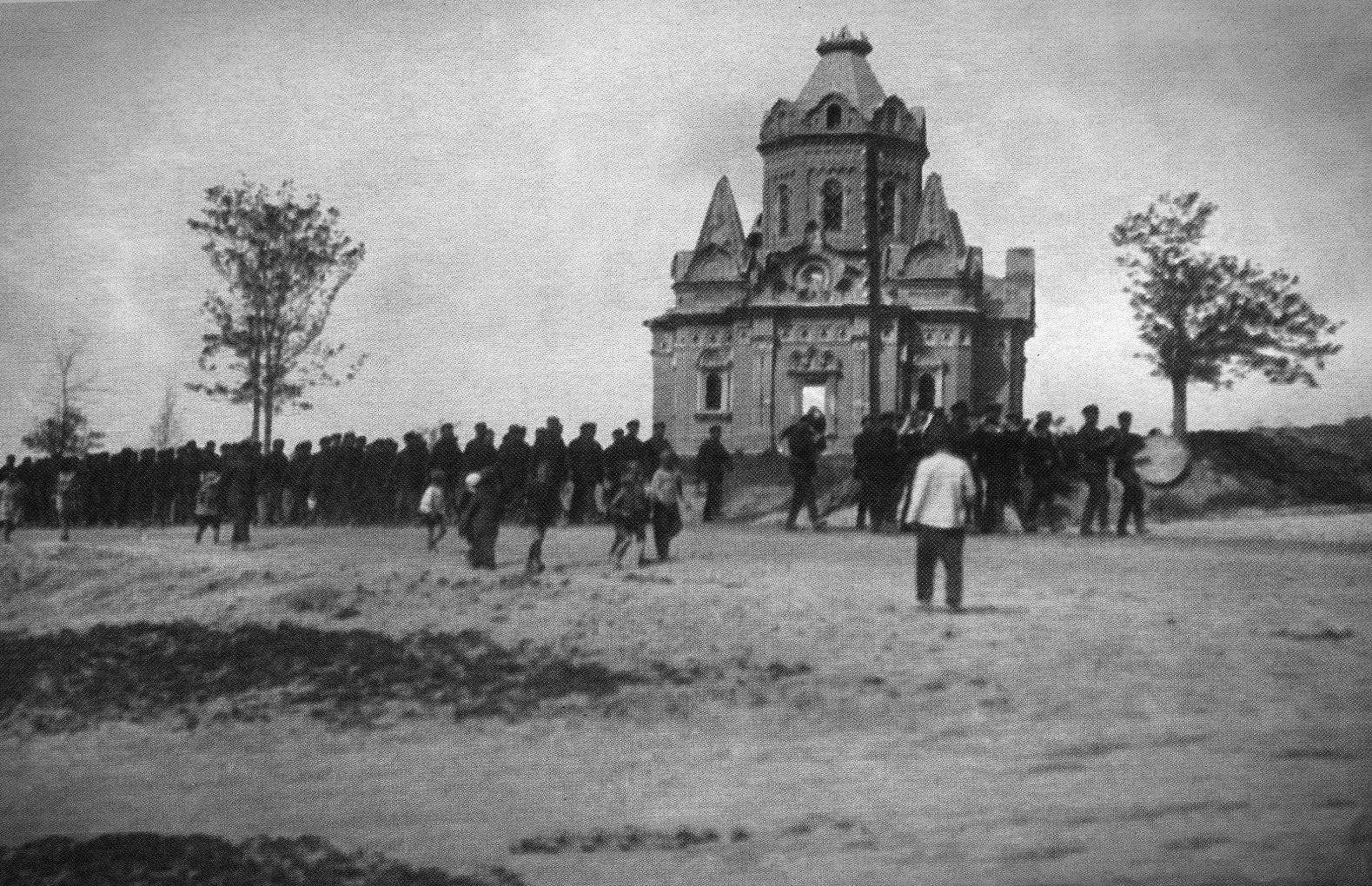
The building itself was ultimately carried out to the final design of the Polish architect Ludwik Panchakevich. Construction began in 1914, on the eve of the First World War, and progressed rather slowly. In an effort to speed things up, a group of Catholic prisoners of war brought from the front to Turkestan was assigned to the site at the curate’s request. The officers in charge of the camp were far from pleased with this arrangement. As they reportedly complained, the soldiers were returned to the camp each day utterly exhausted.
According to the design, the kostol was to feature a three-aisled hall, rise to a height of 25 metres and measure 42 by 32 metres. The construction was nearing completion when, in February 1917, Justinas Bonaventura Pranaitis passed away. In recognition of his service, the late pastor was laid to rest directly beneath the church. However, not long afterwards, the new authorities compelled the still-functioning church leadership to rebury his remains in the Catholic section of Botkin Cemetery, where his grave was eventually lost over time.
The Cathedral’s Architecture
The church building was founded and constructed in the so-called neo-Gothic style, which immediately made it unique for the entire region. Arches stretching upward, tall spires, stained-glass windows depicting scenes from the Bible—these features were characteristic of the European Catholic tradition. Especially the arches, which serve as additional decorations for the cathedral and recall the serious fates of all the predecessors of the Tashkent cathedral.
The kostol was designed and built in the Neo-Gothic style, immediately setting it apart in the region. Its soaring arches, tall spires and stained-glass windows depicting biblical scenes reflect the traditions of European Catholic architecture. The arches, in particular, serve as decorative elements of the cathedral and reflect the eventful history of its predecessors.
In earlier centuries, similar forms were used in fortifications as narrow openings for archers, combining strength with defence. The main façade was designed to feature a rose window, pointed arches and twenty-three sculptures depicting Catholic saints. The side façades incorporated construction techniques to enhance the building’s earthquake resistance, namely buttresses, which also contribute to its visual character.
Interior Decoration
The interior was conceived in light tones, achieved through the use of natural granite and marble. At the time, imitation materials were simply not an option. All the furnishings, from benches to doors, were handcrafted from fine wood.
The church consists of several rooms and halls, each serving its own purpose. All metal elements, including grilles, candelabra and wall sconces, were produced by the blacksmith Vasily Pilipyuk.
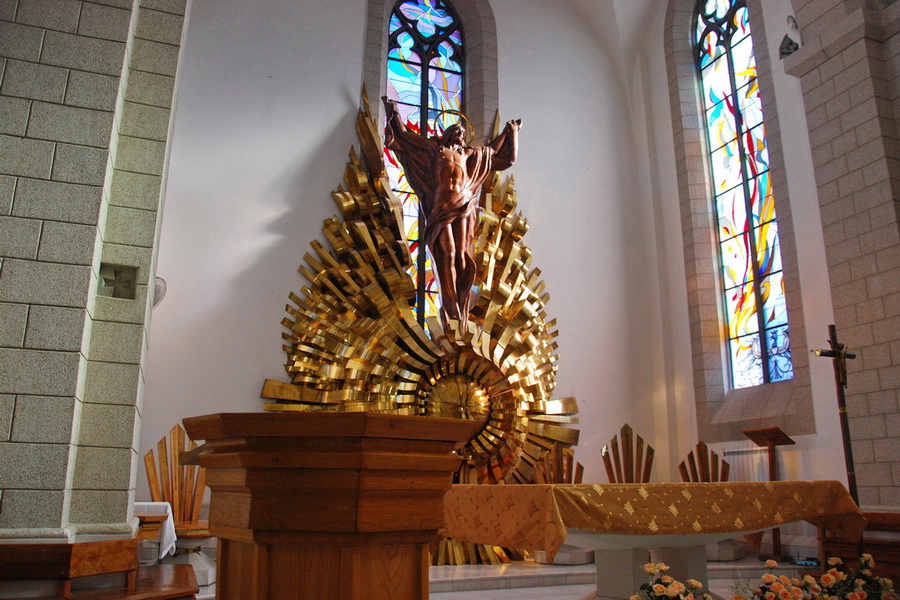
One of the bas-reliefs depicts a mourning woman dressed in traditional Uzbek attire. This specially commissioned image highlights the respect shown by the Catholic community for the national identity of the Turkestan region. A particularly notable feature of the kostol is its twenty-six-rank organ, donated by a parish in Germany before the outbreak of the First World War.
The Beginning of Decline
Those who succeeded the late priest were unable to continue his work in the same spirit, not least because of the upheavals of 1917. In October 1917, and again in January 1919, several artillery shells struck the kostel, marking the beginning of its gradual decline. Decorative elements were destroyed, statues disappeared, and the so-called nationalisation of 1925 only added further difficulties to a building that, although largely constructed, had never been fully completed.
Over the years, the building passed through the hands of numerous temporary owners, or, more accurately, tenants, who set about altering it, often without any formal plans. Almost anything had been considered for the space. At one point it served as a warehouse for medical equipment, at another even as a dormitory. How anyone managed to fit it into the unfinished building without heating is anyone’s guess. In this condition, the kostyol stood for several decades, silently lamenting its fate and the indifference of those around it.
Revival
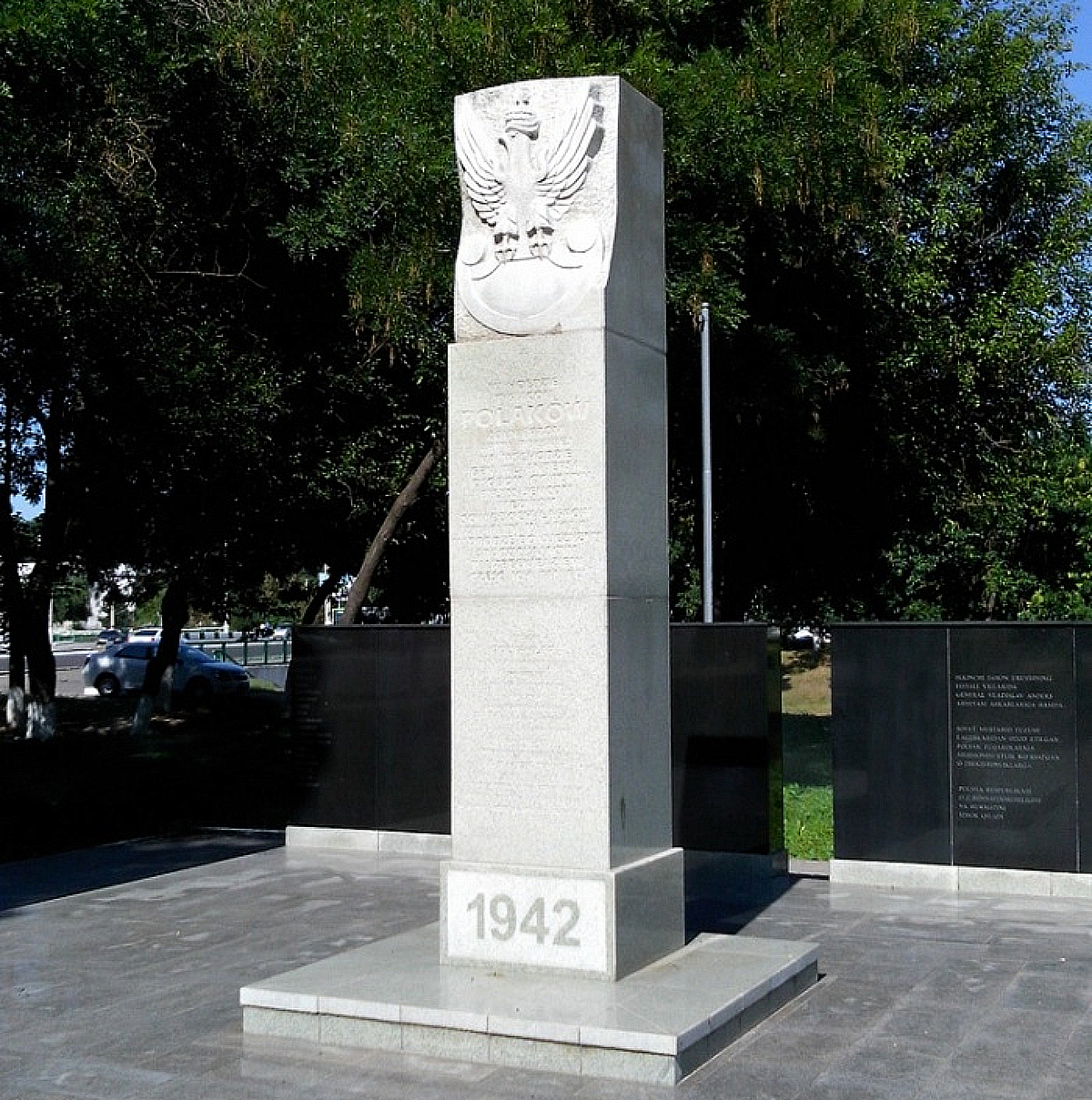
It was not until 1981, when the ageing building finally received attention, that restoration work began, transforming the kostel into an exceptional organ hall. More recently, a monument was placed near the main entrance to honour the Polish soldiers of General Władysław Anders’ army. This unit had been reorganised in Uzbekistan before being deployed, by order of the Polish government-in-exile in London, to the Middle East, where it took part in military operations.
 Source: shukach.com
The Church Today
Today, the church bears the name of the Sacred Heart of Jesus, though it is unlikely that this name was intended at the time of its construction. The kostel now hosts outstanding organ and choral concerts, Christmas gatherings, and Catholic services. Simple and unassuming in appearance yet majestic in presence, the building graces the corner of Makhtumkuli and Tarakkiyot streets, its reflection shimmering in the waters of the ancient Salar “military” canal, and stands as another unique landmark of the city. Within the Toytepa mahalla, and in full view of the church, lies another notable site, which I will tell you about on another occasion.
Newsletter
A letter from the HD editors
Once a week, we send the best stories, events, and cultural discoveries from Central Asia.