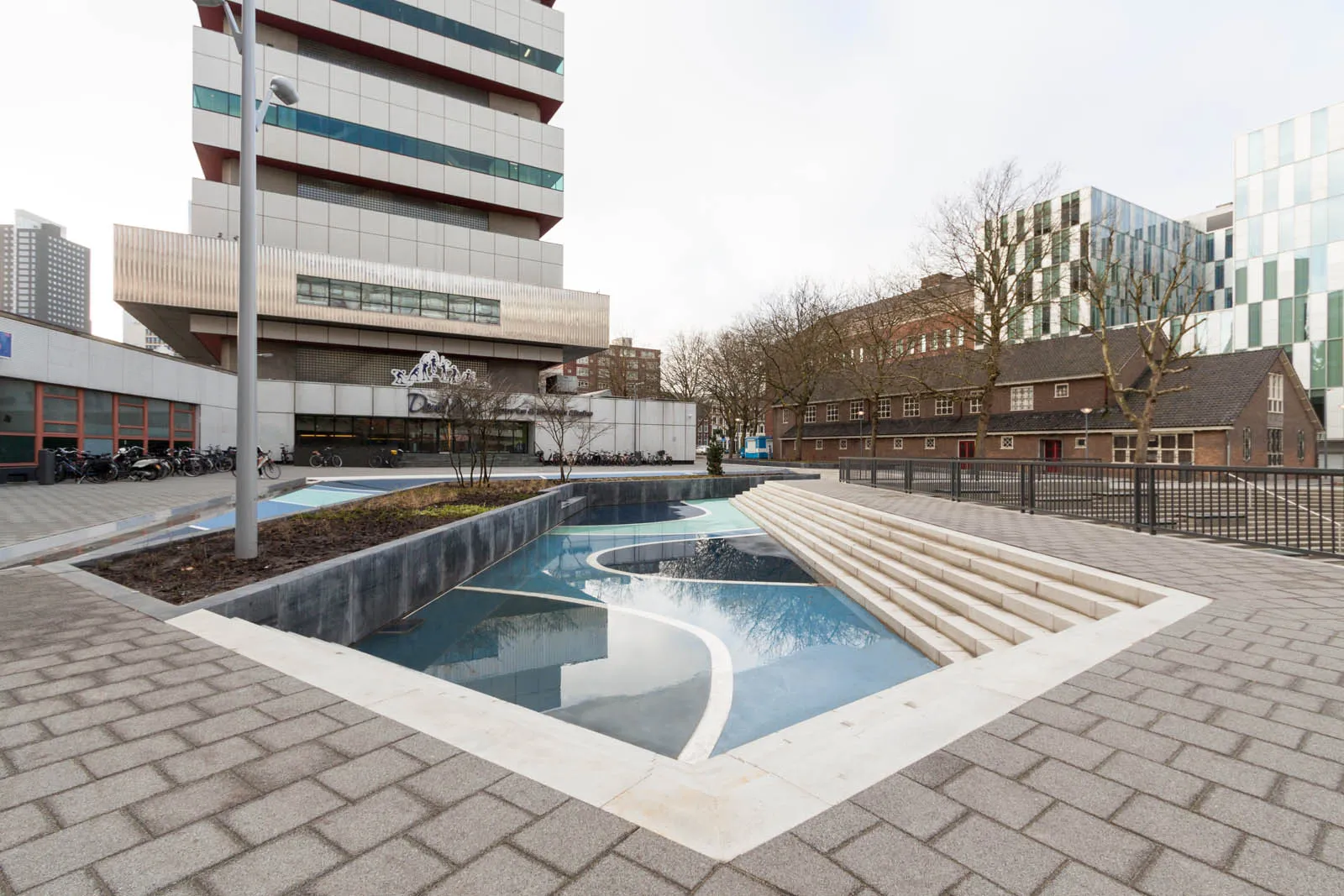
Let us explore why climate resilience is becoming an integral part of the urban environment economy.
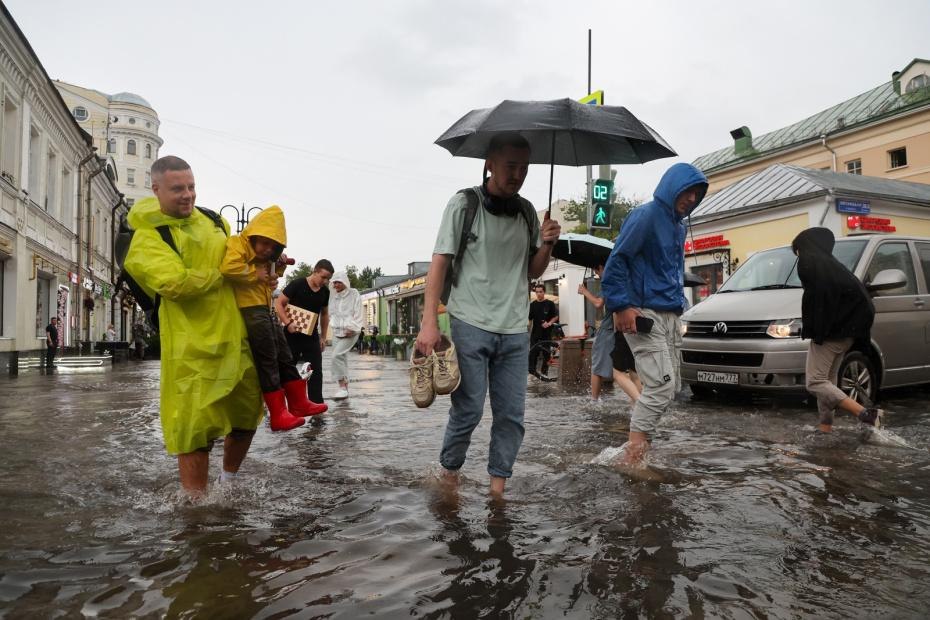
After heavy rainfall, a familiar route home can turn into an urban obstacle course. In some places it becomes impossible to cross the street; in others, drivers are forced to seek diversions; elsewhere, water blocks access to courtyards, and a habitual path through a public space simply ceases to exist. For the resident, this is an inconvenience — for the city, it is already a matter of economics.
When thousands of people spend additional time commuting, personal inconvenience translates into cumulative losses for the urban economy. Stalled traffic, lost productivity.
Flooded businesses, foregone revenue.
Damaged surfaces, future repair costs.
Overburdened engineering systems, additional operational expenditure.
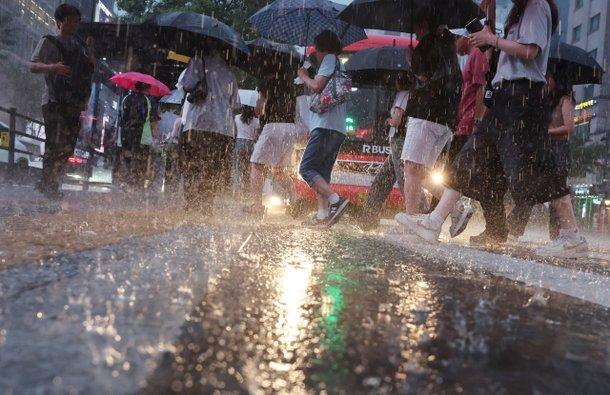
Rain itself carries no economic price. But one emerges the moment a city is unprepared for it. The cost of rain to a city comprises at least five categories of loss: direct physical damage, operational expenditure, transport and time losses, business losses, and the functional degradation of urban territory. The intense spring rains in Tashkent invite us to consider water from precisely this angle — not merely as a climatic factor or an engineering problem, but as an integral part of the city's economy.
A territory's capacity to receive, retain, and distribute water is gradually becoming as meaningful an indicator of its quality as transport accessibility, public amenity, or engineering provision. The scale of this economy is already measurable.
According to World Bank estimates, annual urban losses from flooding could reach approximately 50 billion dollars by 2050. Up to 10 per cent of urban jobs may be directly affected by flooding. Water impacts not only infrastructure but also mobility, employment, and a city's ability to sustain normal economic life.
A closer look at the distribution of flooding reveals that in some areas water drains away quickly, in others it lingers, and in others still it accumulates in courtyards and access roads. The difference is determined not only by the intensity of the rainfall but by the way the territory has been designed. This is already observable in a number of new residential developments.
A recurring pattern emerges: in certain projects, water becomes trapped within the courtyard, entrance points are overwhelmed, and local drainage systems do not always cope with peak loads. This does not always appear in official statistics, yet it forms part of residents' daily experience and serves as a telling indicator of how a territory actually functions in practice.
The problem begins not when water remains on a site, but when the site lacks the means to manage it. Development is no longer neutral — a new project either intensifies the burden or becomes part of the solution.
The majority of projects still operate according to an older logic: dense construction, hard surfaces, rapid water run-off. Water does not remain within the site but flows outward — onto roads, into urban infrastructure, including the very metro stations that prove vulnerable at peak moments.
The root cause is established at the design stage. A flooded courtyard, an overwhelmed entrance, or a surface in perpetual need of repair represent operational costs, resident dissatisfaction, and a gradual erosion of a project's quality. Whatever is not accounted for at the design stage must later be paid for by the management company, the city, or the residents themselves.
A territory's capacity to manage water is becoming part of its long-term value. In this sense, water is emerging as one of the indicators of a territory's economic resilience. While the system functions, the cost of its operation is barely perceptible. At the moment of failure, it manifests through repairs, damage to surfaces and engineering infrastructure, restrictions on movement, additional operational expenditure, and a decline in the quality of everyday life.
Environmental sustainability here ceases to be a separate "green" agenda and becomes a means of reducing future losses while preserving the value of what has been created.
In international practice, this threshold has already been crossed. Following the floods in Copenhagen, districts began to be designed so that water is distributed through parks, lower-lying areas, and streets, gradually entering the drainage system.
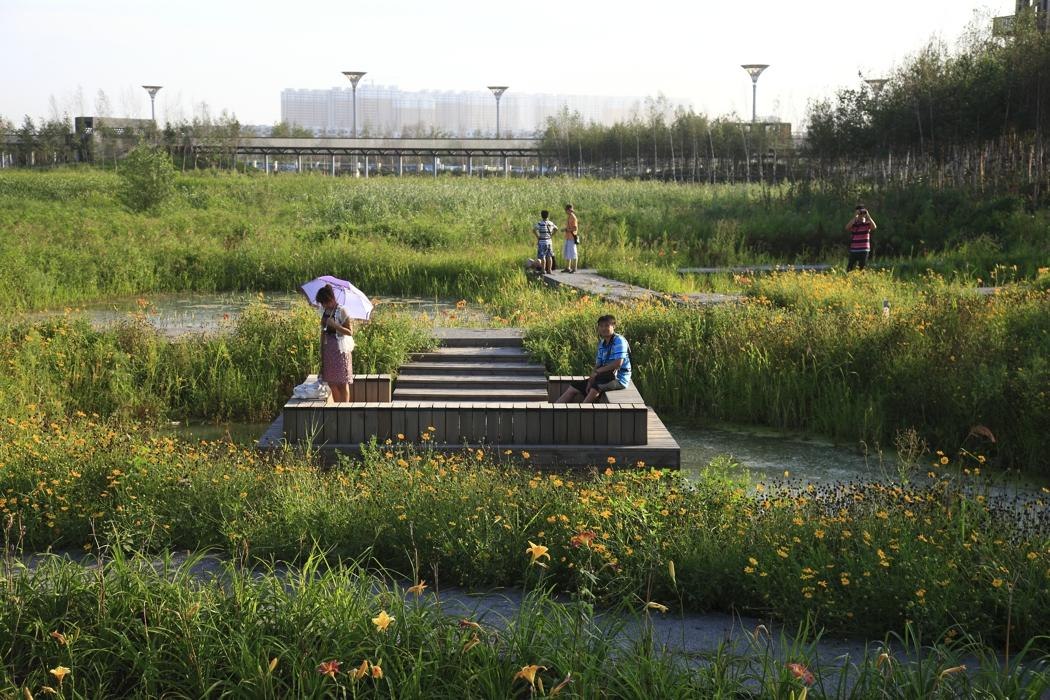
In the Netherlands, residential quarters are conceived from the outset with water in mind — water that may flow into canals and green zones — and this is not regarded as an emergency. In China, the concept of the "sponge city" has enshrined the principle that a city should absorb, retain, and cleanse water rather than simply divert it.
What these examples share is a single underlying logic: water remains within the city and becomes part of it. For Tashkent, this means that the solution lies not only in the stormwater system but in the way new territories are designed. In international practice, this approach is increasingly understood as part of blue-green infrastructure — a system in which water and greenery function not separately from the city but as a fully integrated engineering network.
A park can simultaneously serve as a public space and a zone for the temporary retention of water. A tree-lined street can be both a thoroughfare and an element of drainage. A courtyard can be a place of everyday life and part of a local precipitation management system. A single site begins to fulfil several functions at once, and it is precisely this multifunctionality that transforms the economics of a territory.
To put it simply, a project must be capable of slowing water down, retaining it, and distributing it.
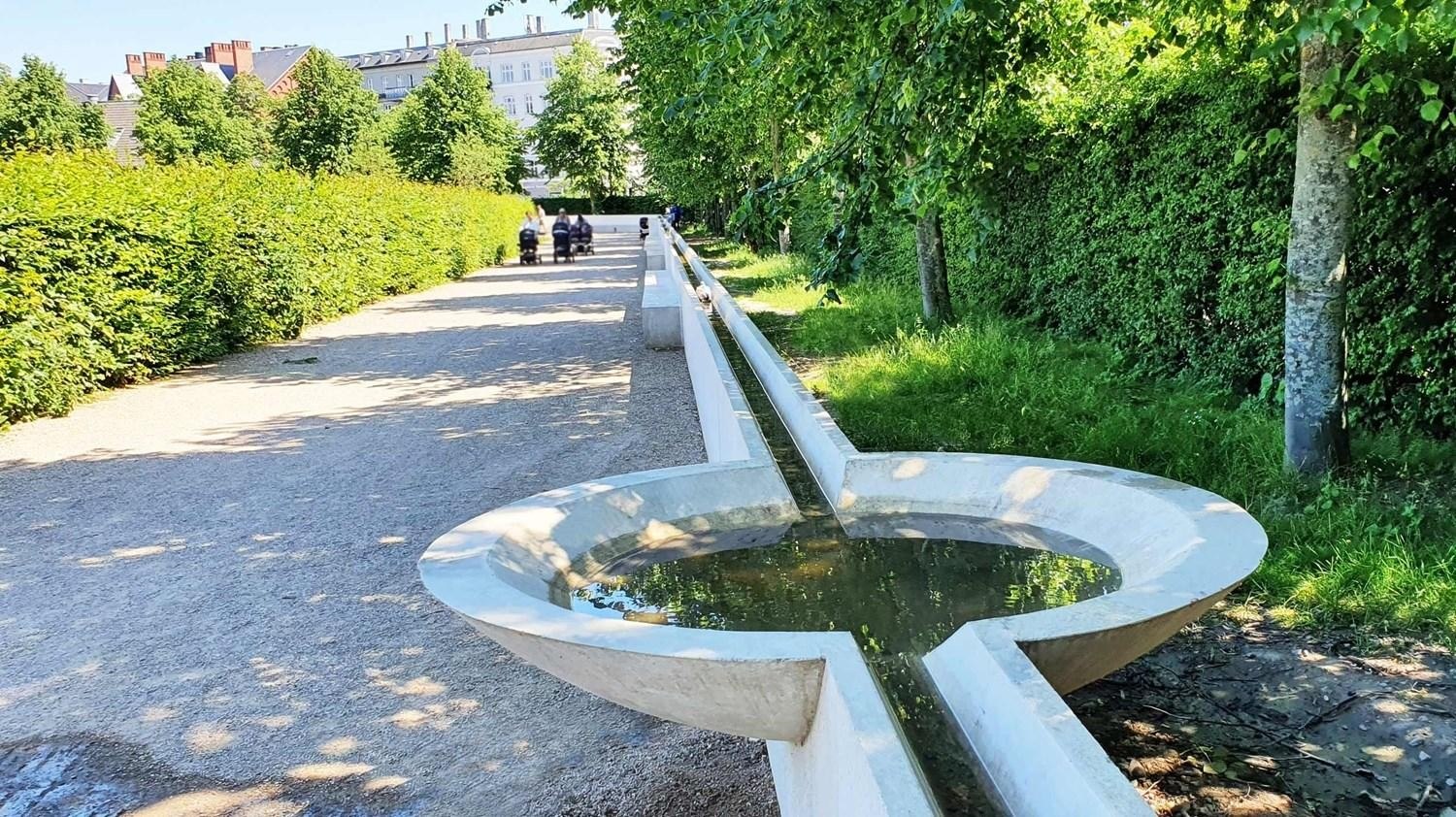
This is not solely a matter of sophisticated engineering technologies, but above all of a fundamental shift in the approach to territory:
- permeable surfaces in place of unbroken asphalt;
- green zones that actively engage with water;
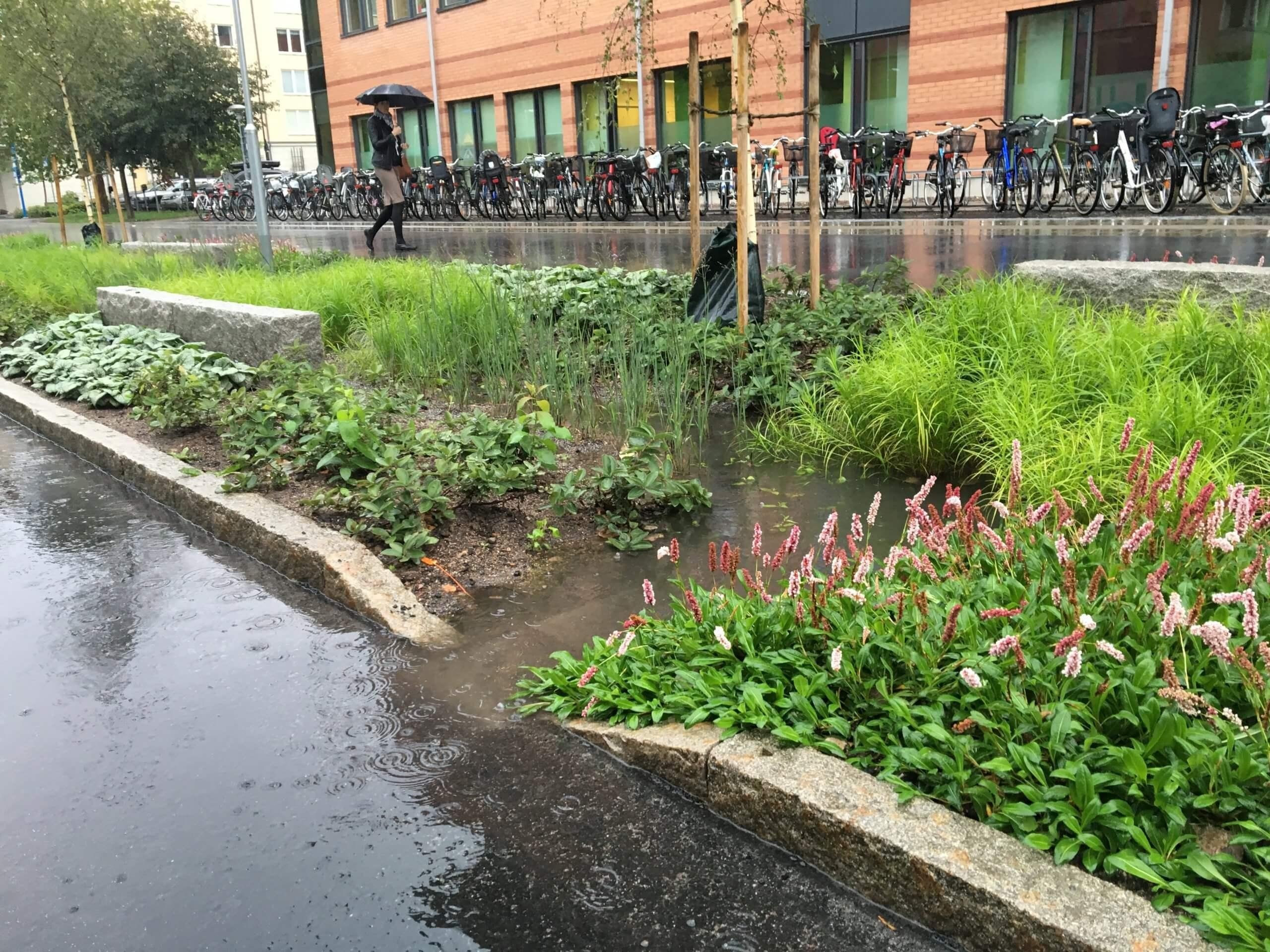
- channels with soil, planting, and softened banks that receive the flow;
- spaces through which water can move freely within the territory.
The economic impact of such infrastructure is already measurable. In Cần Thơ, Vietnam, for instance, a flood protection system combining engineered infrastructure with green corridors shields more than 422,000 residents and, according to World Bank data, prevents approximately 10.7 million dollars' worth of damage annually.
The role of development is shifting as well. It is no longer simply a matter of constructing a building; it is about shaping how a territory functions across its entire lifecycle. A green zone, a permeable surface, or an area capable of absorbing water ceases to be an additional landscaping expense and becomes infrastructure that mitigates future risks whilst simultaneously enhancing the quality of the environment.
For the developer, this represents a transition from construction cost to lifecycle cost — from how much it takes to create a project to how much it takes to sustain its quality over many years.
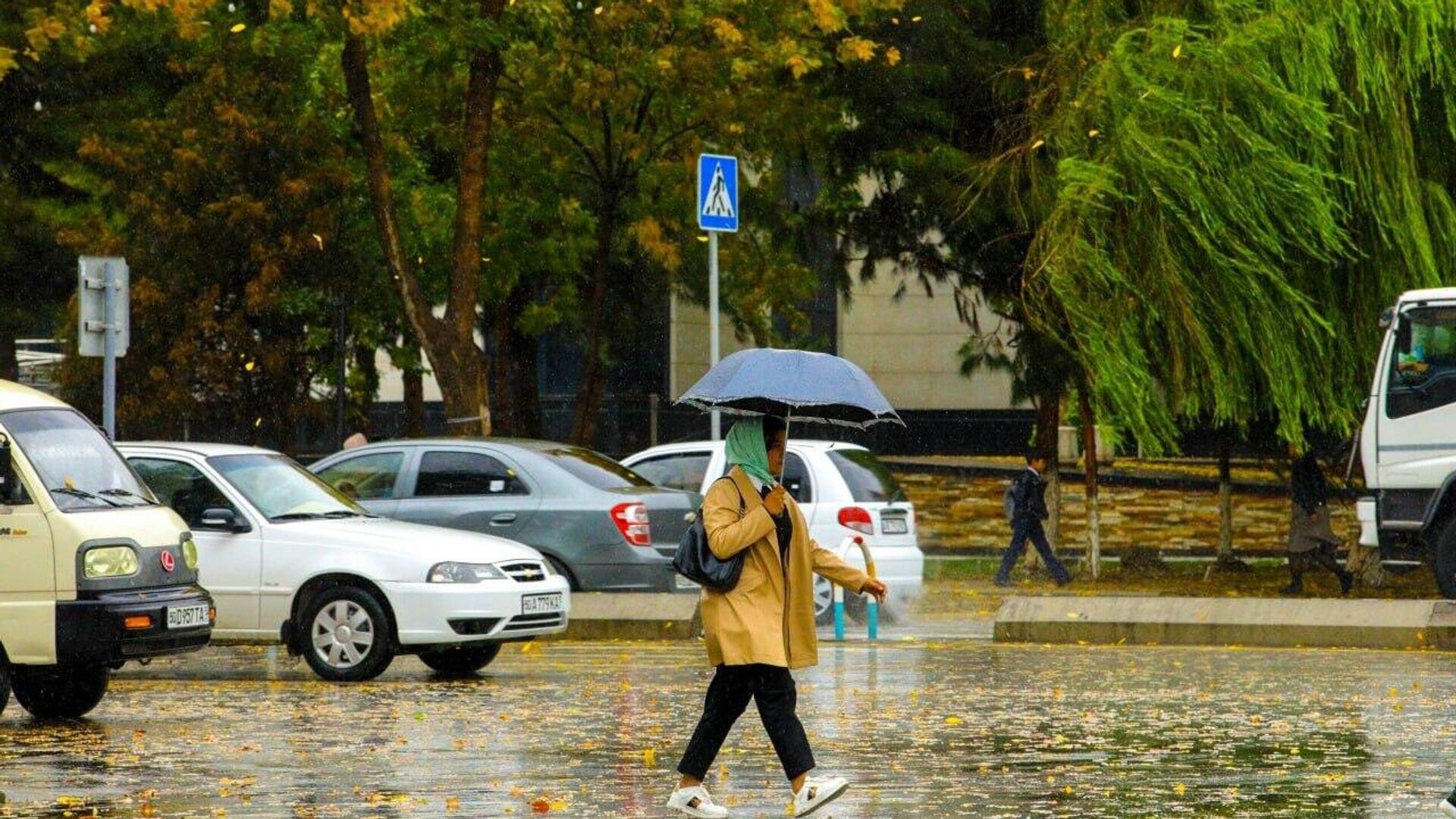
A further category of loss emerges — one that is functional in nature. A space may be built and landscaped, yet cease to fulfil its primary functions in the event of rain: a courtyard becomes impassable, an entrance is blocked by water, a public space grows inaccessible, and a person's route is severed.
I refer to these as the functional losses of a territory. For the urban economy, this is a distinction of fundamental importance: the value of the asset has already been created, yet its functional worth becomes, at a given moment, unreachable. The capacity of an environment to retain its functions under climatic stress becomes yet another criterion of its quality and long-term value.
The next heavy downpour can once again be regarded as an extraordinary event — or it can be seen as a stress test of the urban economy. Within the space of a few hours, it reveals where a territory is functioning, where it is losing its capacity, and where today's savings on design are transformed into tomorrow's expenditure.
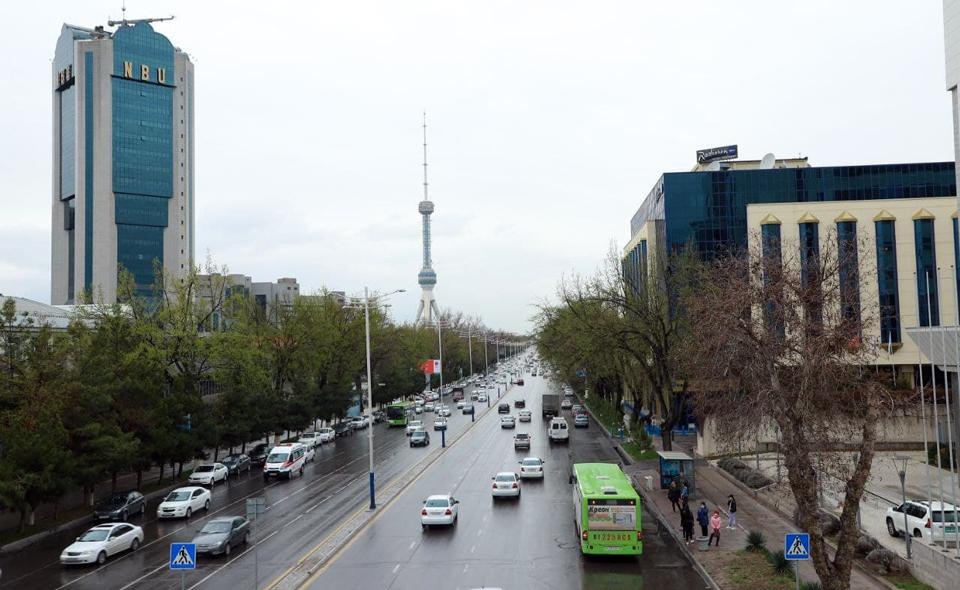
It is absurd to ask whether Tashkent will experience another heavy downpour. The question that must be posed is a different one: how much will the next rainfall cost the city, and what portion of that cost need never have been paid?
Newsletter
A letter from the HD editors
Once a week, we send the best stories, events, and cultural discoveries from Central Asia.