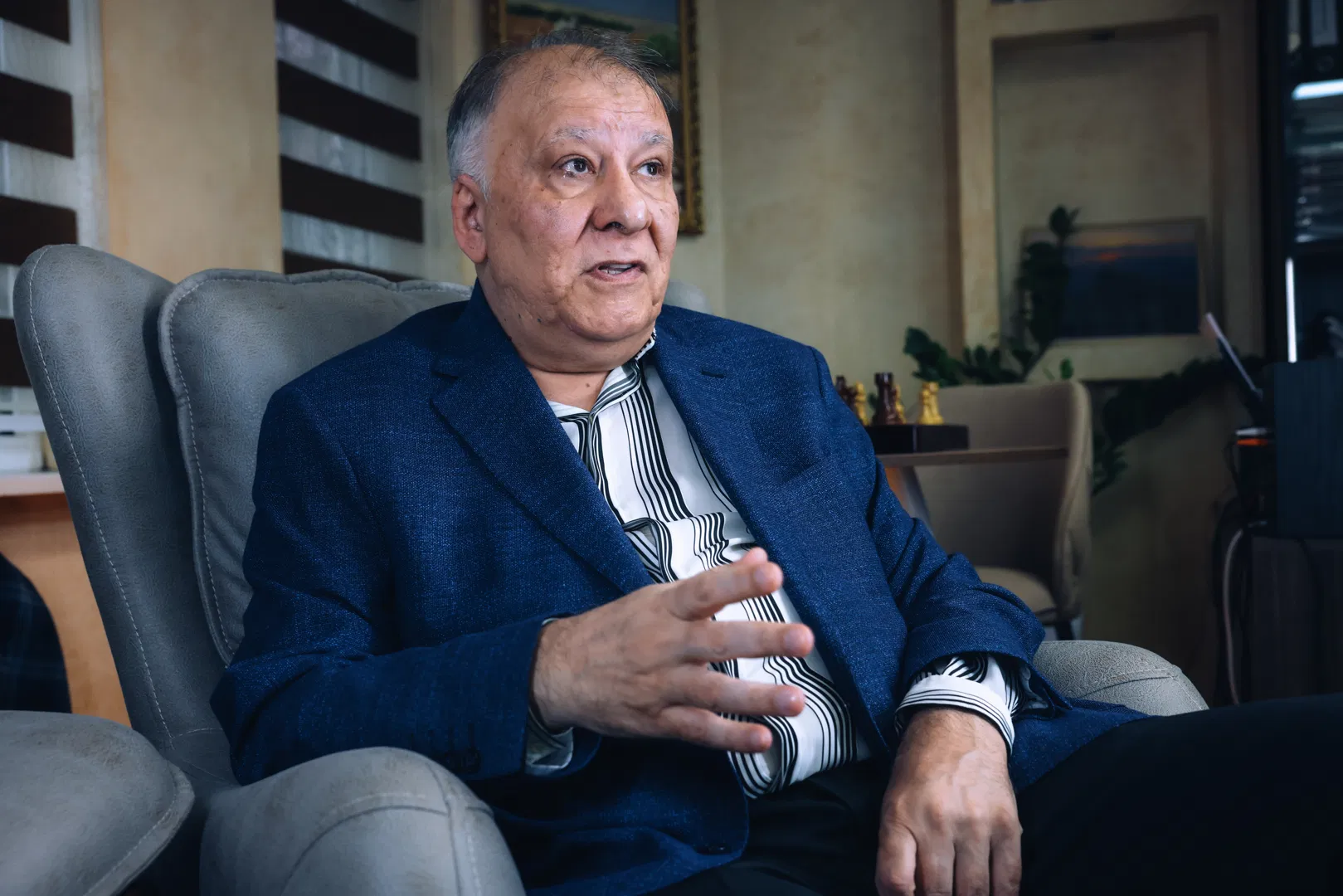
Interview with composer Igor Pinkhasov.
Music as an art in its academic form, musicologists believe, has existed for barely four centuries. The symphony orchestra took shape only 200 years ago. The improvement of instruments and the creation of new ones continues constantly.
Electronic music as a specific direction took shape in the second half of the 20th century and by the beginning of the 21st century had spread widely in academic and mass culture. The first electronic instrument is generally considered to be the theremin.
The theremin was created by the Russian inventor Léon Theremin around 1919–1920. It is an instrument in which sound is produced by the movement of the performer's hands in the electromagnetic field of two metal antennas. The Italian composer Ferruccio Busoni suggested that thanks to electronic instruments the octave would be divided into a greater number of semitones than the classical tuning offers, in which an octave consists of 12 semitones. The theremin allows the sound to be changed with extraordinary smoothness. The viewer can see that the sound is literally drawn out of the air.
Only a lengthy and carefully executed series of experiments and constant training of the ear will help the new generation make this unfamiliar material suitable for work and art.
The art of music is still a child, made of resounding air. This child is free! Freedom beckons and frightens.
In the first half of the 20th century the first works for theremin were written. This instrument gained wide popularity when music for a number of 1950s science-fiction films was written with its help. In the late 1960s the first commercial synthesiser appeared.
Astrophysicists 'heard' the music of the Universe only in the 1980s, when they managed to convert data on the oscillations and waves of outer space into the audible range, raising the sound by almost 60 octaves. And it turned out that the composers' foresight is very close to the actual sound of space.
In the capital of Uzbekistan, Tashkent, as is well known, more than three million people live. Unfortunately, not too many of them know that an organ has been installed at the Tashkent Conservatory and that there is a special hall for performing organ music. However, an even smaller number of people are aware that we also have a theremin. Moreover — a composer lives in our city, Igor Rakhmanovich Pinkhasov, who writes compositions for it.
Igor Pinkhasov received his initial musical education in Ashgabat, studied at the Moscow State Tchaikovsky Conservatory, and currently teaches in Tashkent at the Uspensky Republican Specialised Music School and at the Batyr Zakirov Institute of National Variety Art. His portfolio includes three symphonies, music for 35 films, chamber-instrumental and electronic music, and songs.
Igor Pinkhasov was a participant in the New Music festival in Florida in 2020.
The composer is always open to communication. Because enlightenment is the education of listeners. Because it is readers, viewers and listeners who create art. And music is not written for empty halls.
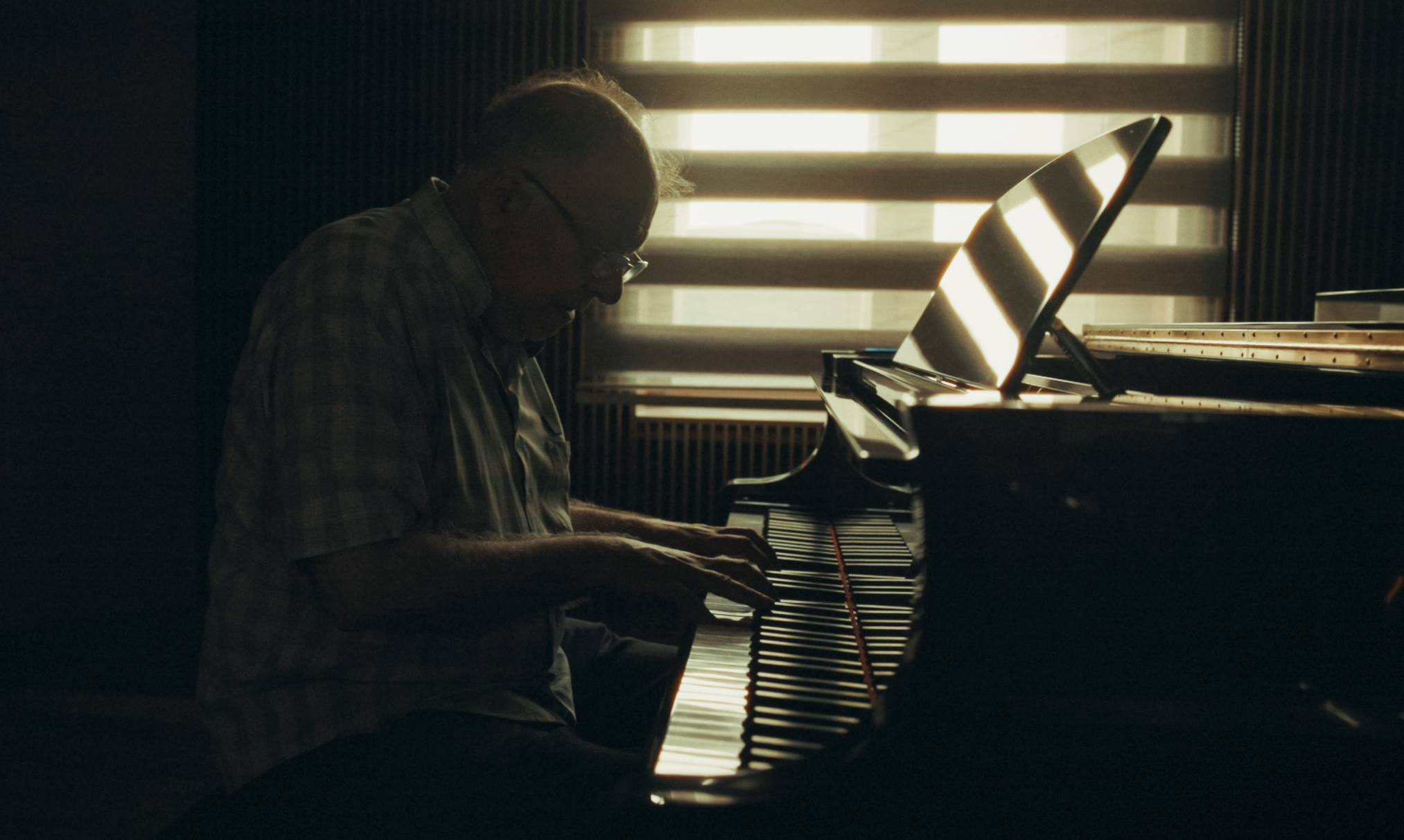 Photo: Igor Mazurkevich
— As a composer you experiment a great deal with combining different styles and approaches. What, in your view, is the fundamental difference between academic electronic music and club and producer electronics?
— Electronic music is just as much a means of expression as acoustic music. A composer is a transmitter of certain ideas, a storyteller — only by means of music. In this context — with the help of electronic music.
It is impossible to retell music in words. I can only suggest listening. In 2025 the premiere of one of my latest works took place — 'Energy of Space'. Four movements combining organ, piano, synthesiser and string orchestra: 'Vibrations', 'Impulses', 'Silence' and 'Planet Earth'. I tried to invest in the sounds the main problems of our time, which race through space, changing life on Earth through Vibrations and Impulses. To plug one's ears with earplugs and find oneself in Silence, hearing nothing — that is not a solution.
In commercial electronic music the principle of an instinctive reaction to rhythm is more at work. Such music is more intended for entertainment.
— What, generally, is 'electronic music' for you? Is it merely a technical approach, or something more?
— There is different electronic music — club, dance. There is a lot of it. Every DJ is to some extent an author of the sound on the dance floor.
What I write is closer to academic than to entertainment popular music. For example, in 2015 the London company EmuBands released my electronic album Igor Pinkhas. Time Helix. You certainly won't dance to this music, nor will it play as background on a bus. In the composition Theremin VOX the melody had technically already been written and was heard in the recording, but when Lidia Kavina — a remarkable musician and master of theremin playing — joined the performance, the part sounded many times more alive. I can say the same about the visuals.
Visually, the execution of the composition already looked good from the point of view of technical presentation. But then Darina Bolgova joined the creation of the video for Theremin VOX and created a special visual sequence using computer graphics that complemented the piece. So — yes, electronic music is both a technical approach and the ability to give it an artistic form.
— How do you build a balance between electronic sound and live instruments, so that the orchestra does not sound secondary in relation to the synthesiser, or vice versa?
— A synthesiser is just as much an instrument as a violin, an oboe or any other. A synthesiser is tuned to a specific timbre that is needed in a particular musical context.
Composing music, like any art, is divided into creativity and the technical part. Just as, for example, an artist needs to provide a canvas, brushes or other technical implements. Creativity is the overall concept, the answer to the question of why I am creating this work at all.
In this case, the ratio of synthesiser to orchestra is a technical question, a craft. In the concept in your head, everything is perfect. You sit down to write — and the work begins. As Tchaikovsky said, creativity is 10 per cent inspiration and 90 per cent compass and ruler. It is painstaking work, when at every moment you verify the balance of all the instruments, including the synthesiser. These are the torments of creativity.
— Your music has been performed many times in live orchestral settings. But any live performance has its limitations. Does your approach change when you write music that will be performed live, compared with music that will remain only in a recording?
— Of course, the approach to computer music that is destined to exist only in a recording differs from the approach to creating music that an orchestra or a musical ensemble will later play live. First of all, the style differs. Or, as it is now customary to say, the 'sound'. Secondly, the applications in which the music is created differ: Pro Tools and Vienna Pro, for example, are excellent for a 'computer' sound, whereas for 'live' music you will need a programme like Sibelius.
However, there are still common tendencies. These include the presentation of the main idea, the compositional principles of development, and shaping.
Of course, one could object to this statement — the principle that 'the computer will put up with anything' has not been abolished. Whatever you write, it will perform it all. But this works only if live instruments — violins, guitars and others — are being imitated. Yet here I want to note that in my electronic music I do not use imitation of live instruments. If I need an acoustic instrument, I would rather invite such a musician into the studio.
To avoid being unfounded, let me cite as an example my electronic album Igor Pinkhas. Time Helix, released in 2015 by the English company EmuBands — in it I used Uzbek folk instruments, played by 'live' musicians alongside computer electronics.
Even the very best synthesisers imitate the sounds of a symphony orchestra in such a way that an experienced ear can still hear that it is not an orchestra. One must endlessly experiment and learn how to get around these limitations of technology. But technology is improving; perhaps one day the computer will sound like real instruments. But we have not yet reached that point.
— Uzbekistan is now widely introducing support for artists. Appraisers of works are operating fully, galleries accept works and act as intermediaries in sales. Are there similar institutions in the musical field?
— I would like our works to be heard all over the world, bringing income both to the authors and to the relevant production companies. But for the promotion and development of the sale of musical products in Uzbekistan, there is as yet no institution of 'producing' as such. We are only at the beginning of this path. There are not yet professional producers capable of promoting our musical products within the country and, all the more, beyond its borders. Things go no further than the development of the song industry.
Yes, my works have been performed in Italy, in the USA, in Belarus, in Turkmenistan. But this is more the exception than the general rule.
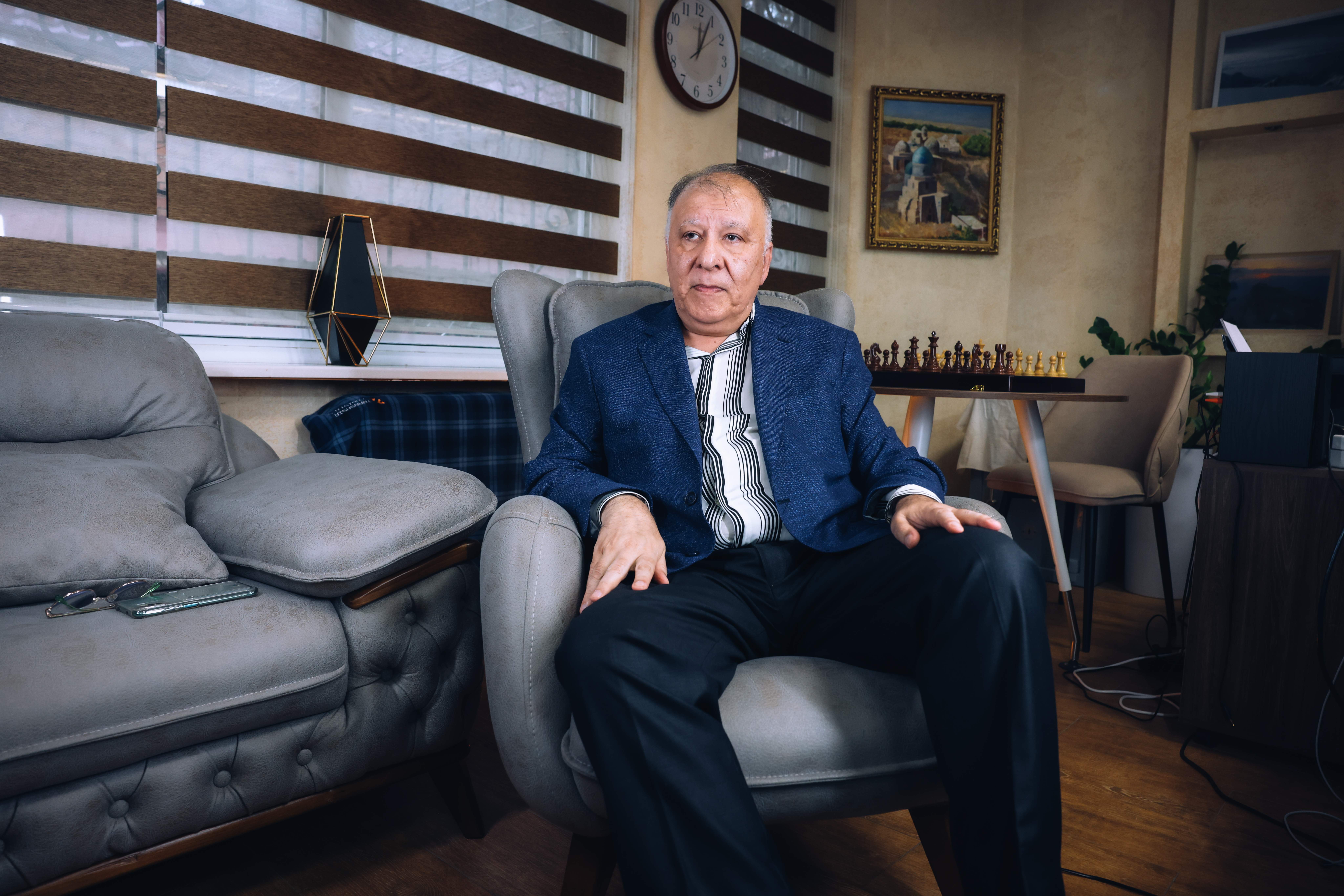 Photo: Ildar Sadykov
Is it realistic to change this? Of course it is realistic. To do so, a production company must conclude contracts with authors on a commercial basis and promote our works beyond the borders of Uzbekistan and, if interest is shown in a particular musical product, conduct negotiations on joint commercial use. This is standard global practice, and I hope that in the coming years we will see movement in this direction.
There are few authors interested in writing academic music. They exist. But there are few of them. They do what is in demand, for example songs — a genre in which one can earn. The state system for stimulating the creation of academic music alone is not enough. Yes, there is an audience of listeners. And, it must be said, it is growing every year. Orchestras are actively working, halls are filling up. But what is heard more is foreign classical music. We have two symphony orchestras: the State Symphony Orchestra and the National Symphony Orchestra. Their repertoire contains extremely few works by composers of Uzbekistan. Perhaps we do not compose well enough?
Chamber music by Uzbekistanis is heard more often. This is partly because the Composers' Union can provide premises for small ensembles. A very cosy, beautiful concert hall. It is imbued with the spirit of the greats: Shostakovich, Khachaturian, Burkhanov, Yudakov and many others have been there. Performing in this hall is a great responsibility. But the performers are sought by the composer himself, tickets for these concerts are not sold, and there is nothing with which to pay the musicians.
Although, of course, we composers find it incomprehensible why the power of the word or of a pictorial image is valued more highly than music. Although I believe that music is the most mass art form, one that has no borders and is understandable to everyone without translation.
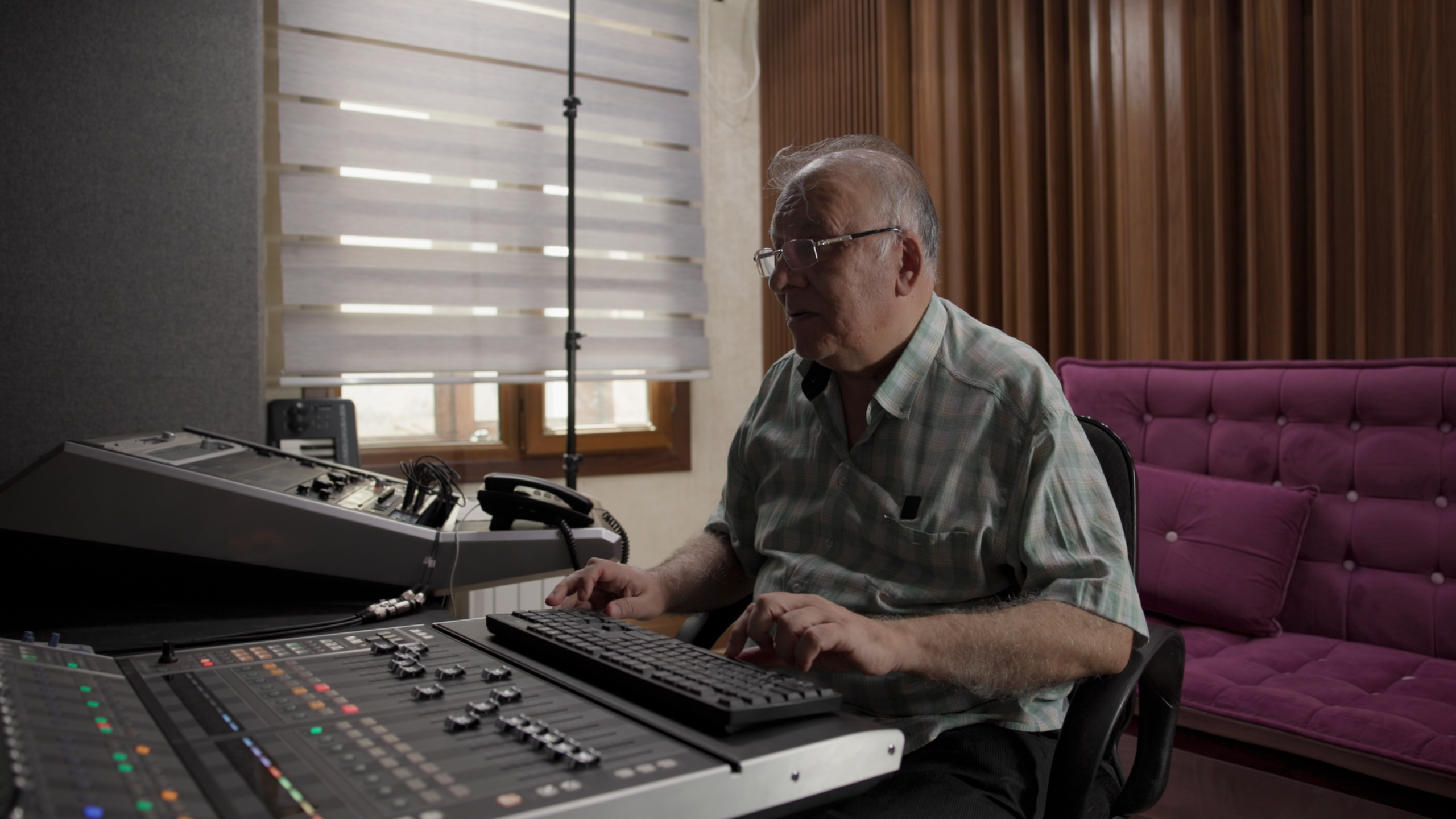 Photo: Igor Mazurkevich
— When, in your opinion, might the situation change, and what is needed for that?
— An international festival of contemporary music could serve as a stimulus for creating works. The last such event was several years ago. It has not yet been possible to repeat it.
Recently, a young teacher and doctoral student at the State Conservatory of Uzbekistan, Nikita Stetsenko, performed the work "Aral" by Uzbek composer M. Atazhanov at an international competition in Al-Fujairah. This is the kind of promotion of Uzbekistan's art that we expect from all performers.
Of course, it would be good to hold an international competition of contemporary composers in our country. And with blind auditions, too. But now I'm really dreaming!
— Is it possible today in Uzbekistan to be a composer of academic music and survive solely on that?
— It is equally difficult all over the world. If there were publishing houses, if our composers' scores were printed and sold worldwide, it would be not just good. It would be simply wonderful! The globalisation that is so much talked about and discussed exists only in manufacturing, perhaps in science, and to a lesser extent in art. Orchestras are harder to transport. A painting can simply be hung. A symphony must be rehearsed for a long time. It is easier to transport the audience. And this is happening. People travel to other countries for popular concerts, crossing more than one border. Perhaps such tours should be organised, at least for students, on the basis of exchange.
It is essential that musical ensembles and theatres be able to commission music from our composers. This would contribute to the growth of professionalism.
Take my authorial album "Time Helix" — it is still available on all internet portals. But even this international project must be constantly promoted, with time and money invested in it. Since I do not do this, there are very few listens. If we had electronic music festivals, this genre would move off dead centre. In "Time Helix" you can hear Uzbek folk instruments: tambur, nai, doira, oud and, of course, the theremin was used.
Specifically to expand the audience, I often conduct masterclasses, introducing people to the sound of electronic instruments. We shall wait for the results.
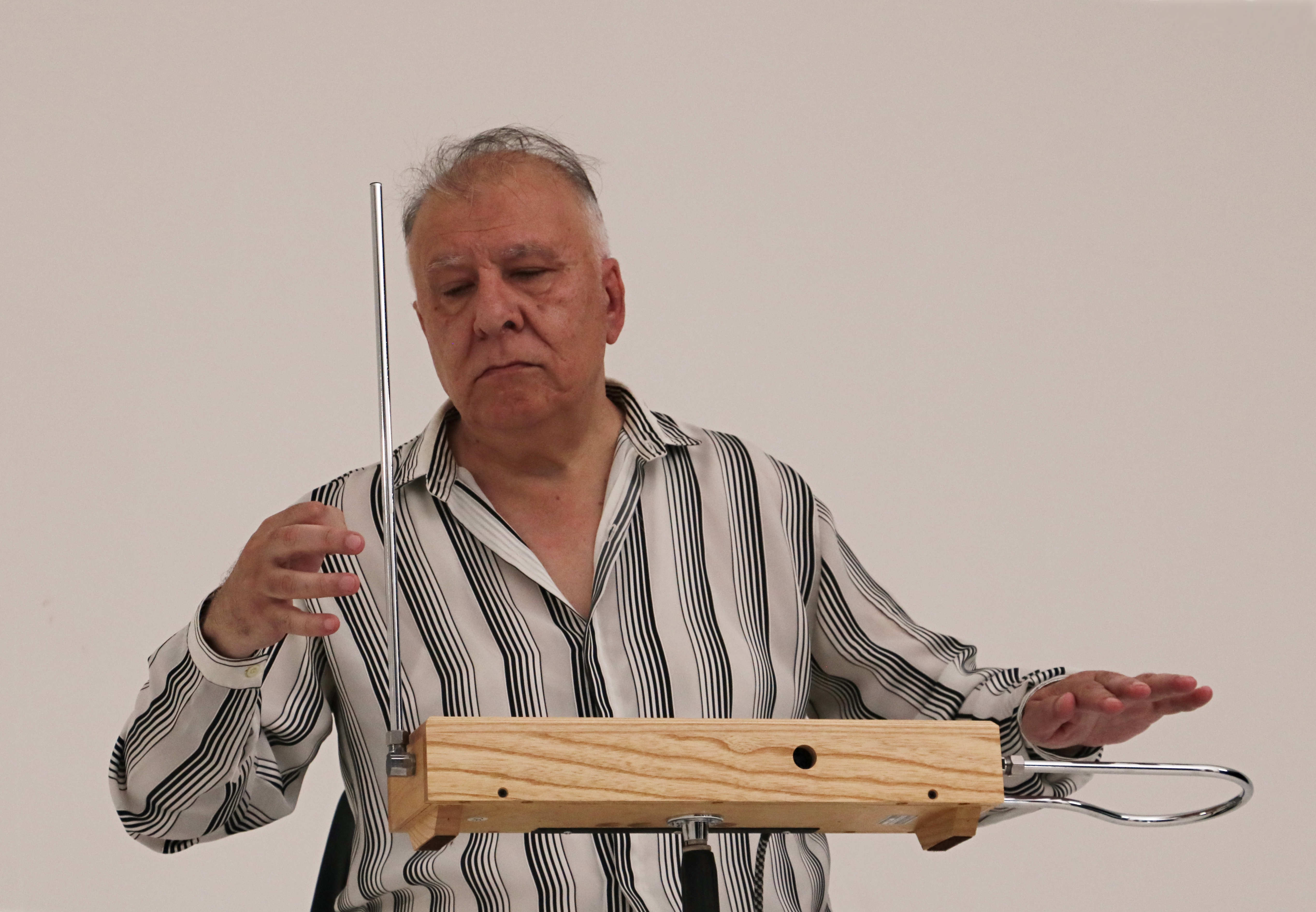 Photo: Cyrill Grishin
— You work with students who write music for film and games. Based on your experience, how is the industry of creating music for film and computer games changing, and how is its audience changing?
— The industry is advancing by leaps and bounds. More and more virtual instruments are appearing, and the process of creating computer music is becoming simpler in some ways (and more complex in others). But the main core of computer composition — as of composition in general — has been and remains the central idea of the work, the dramatic moves, the concept of developing the musical material. And virtual instruments are like paints for an artist. From the same sets one can create completely different musical canvases.
Incidentally, the great artists of past centuries created their own paints based on the technologies of their time. Similarly in music, I prefer not to use ready-made sound sets offered by music software developers, but try to create my own. This creates one's own "sound", signature, style. There is not always a need for it, but if the situation arises — I do it. And I teach my students to do the same.
There is a composition department at the Conservatory, at the Rajabi Institute of Maqom, but applied media composition exists only with us — at the Batyr Zakirov Institute of National Variety Art. It is very young, and this year it is graduating its first bachelors. The students are only just touching this genre: film music, computer game music — so it is premature to draw conclusions about how this will affect the local industry.
Meanwhile, audience demands are becoming increasingly polarised. On the one hand, more and more comments from IT specialists are appearing on my YouTube and Facebook pages; on the other, many people far removed from music have mastered the capabilities of AI and learned to "write music" to any poetry. Such amusement is very popular now. But, you know, to fall in love with books, one must read them. To hear the difference between authorial music and the work of AI, one must, above all, listen to a great deal of quality sound.
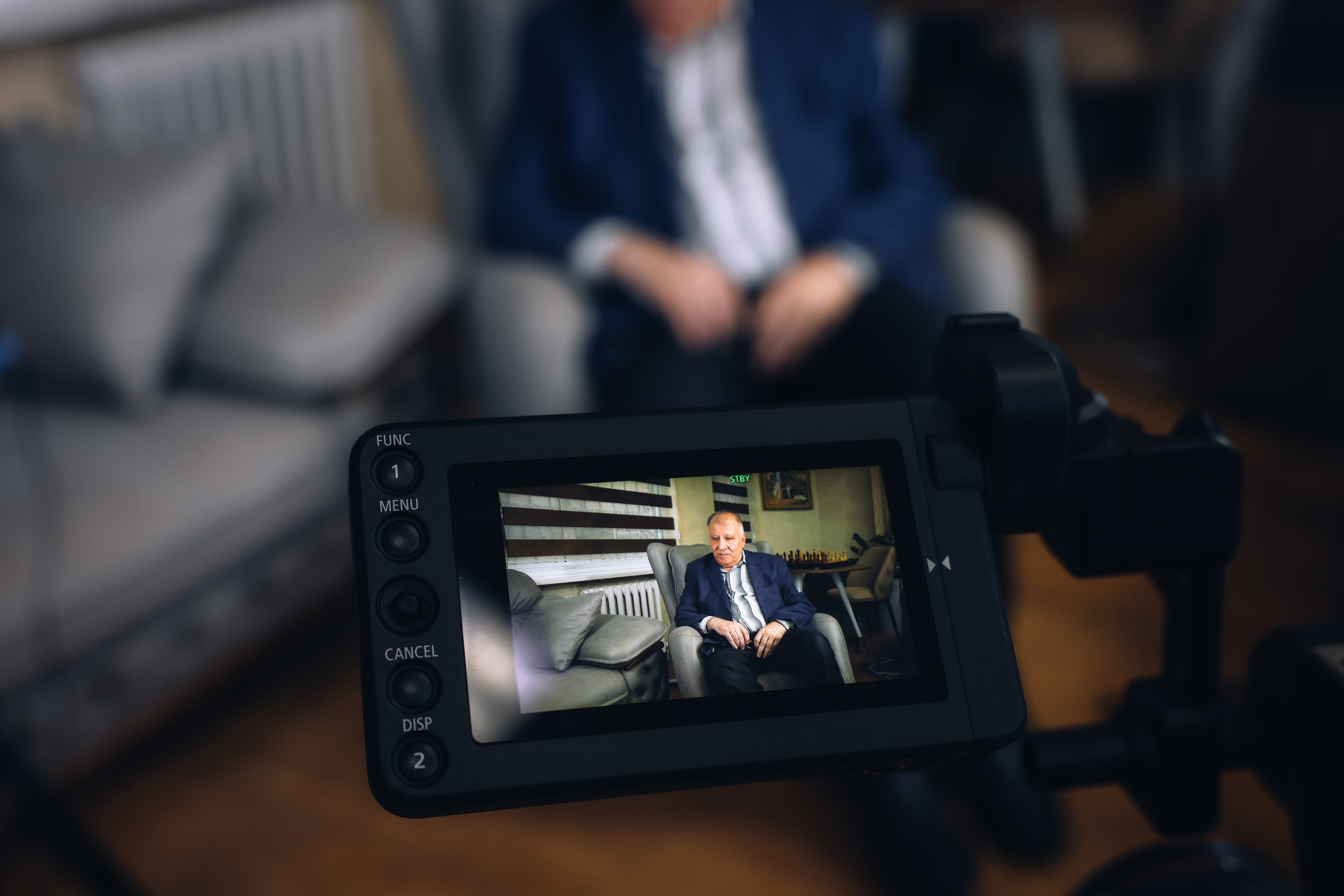 Photo: Ildar Sadykov
— What would you like the new generation of composers working at the intersection of academic and electronic music to be like?
— In my view, the younger generation can hardly be called hard-working; they do not want to work — as economists call this process — for "slow money". Some, seeing no prospects, leave the profession. But I would like young people to become truly professional. And, speaking of professionalism, I want to clarify.
Once, at a professional forum of composers, arrangers and sound engineers, we had a big discussion about what makes a composer a professional. And long heated debates led to a conclusion which, though not my own personal one, I fully share.
What makes a composer a professional is the ability to write music to a specific commission and within a specific deadline. Why is that so?
Not everyone knows this or even thinks about it, but almost all outstanding works in the world's musical history were written precisely on commission. Take any opera by Mozart or his "Requiem", take any ballet by Tchaikovsky, take Bizet's "Carmen" or any sonata by Beethoven — they were all written on commission, and the composers were paid for them. Put simply, they had to write in such a way that they would be paid for it.
Imagine if a composer were told: "Write me a sonata," — and he replied: "I cannot write sonatas, I only write little three-minute pieces." That is already unprofessionalism.
A professional, though, must be able to create in any genre. The other question is how well he does in this or that genre. But if there is a commission, a professional fulfils it. And fulfils it on time. Because if you fail to deliver on time, that is your problem. And next time they will not come to you, but to someone else.
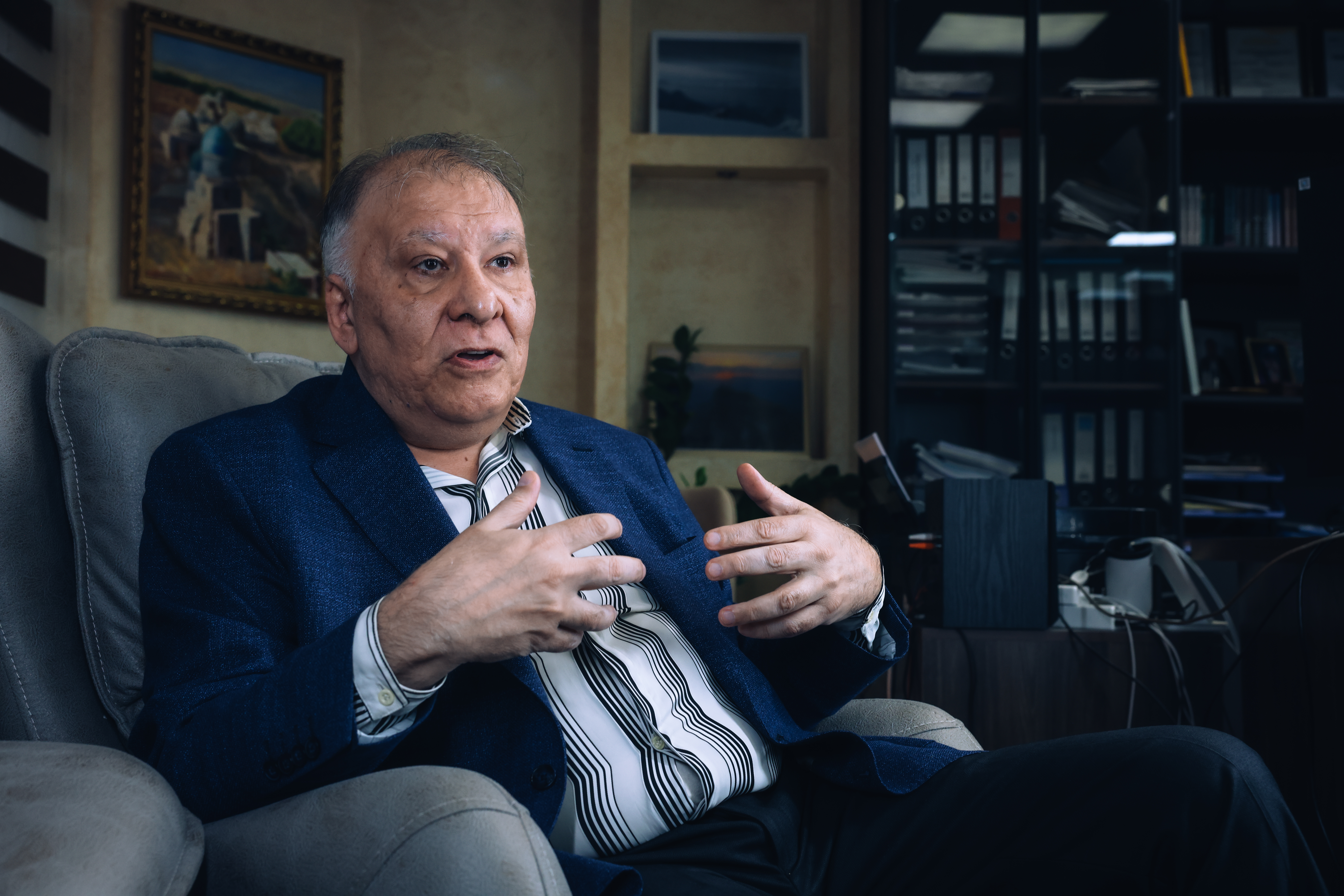 Photo: Ildar Sadykov
Inspiration is a good thing. Even wonderful. But if you rely only on it in your work, nothing worthwhile will come of it. People joke that Beethoven has only three symphonies. Because, although there are nine, only the third, fifth and ninth are considered the height of professionalism. And they were created on commission. Perhaps it was precisely these three symphonies that were written under inspiration. But the other six were also created.
And it is this attitude to creating music that I miss in students today. Of course, in four years of a bachelor's degree and two years of a master's it is impossible to teach everything. But my task as a composition teacher is to show the path, to guide a person. And then... as my teacher from the Moscow Conservatory used to say, a composer is not someone who wants to write music. It is someone who cannot not write it.
He goes out of his mind, suffers, takes no joy in life, if he does not write. That is from God. And if you can go a year without writing, two years without writing, you are a random person in this profession.
But I understand the young people and I sympathise with them. I studied for free, my parents helped. And now students have to support themselves. They do not even have time to sleep. As a result, professionalism is not developed. A general university education is lacking. People of art should not be simple people. And you do not become a complex, thoughtful, substantial personality just like that, in the snap of a finger, in a minute, in a day, in a year.
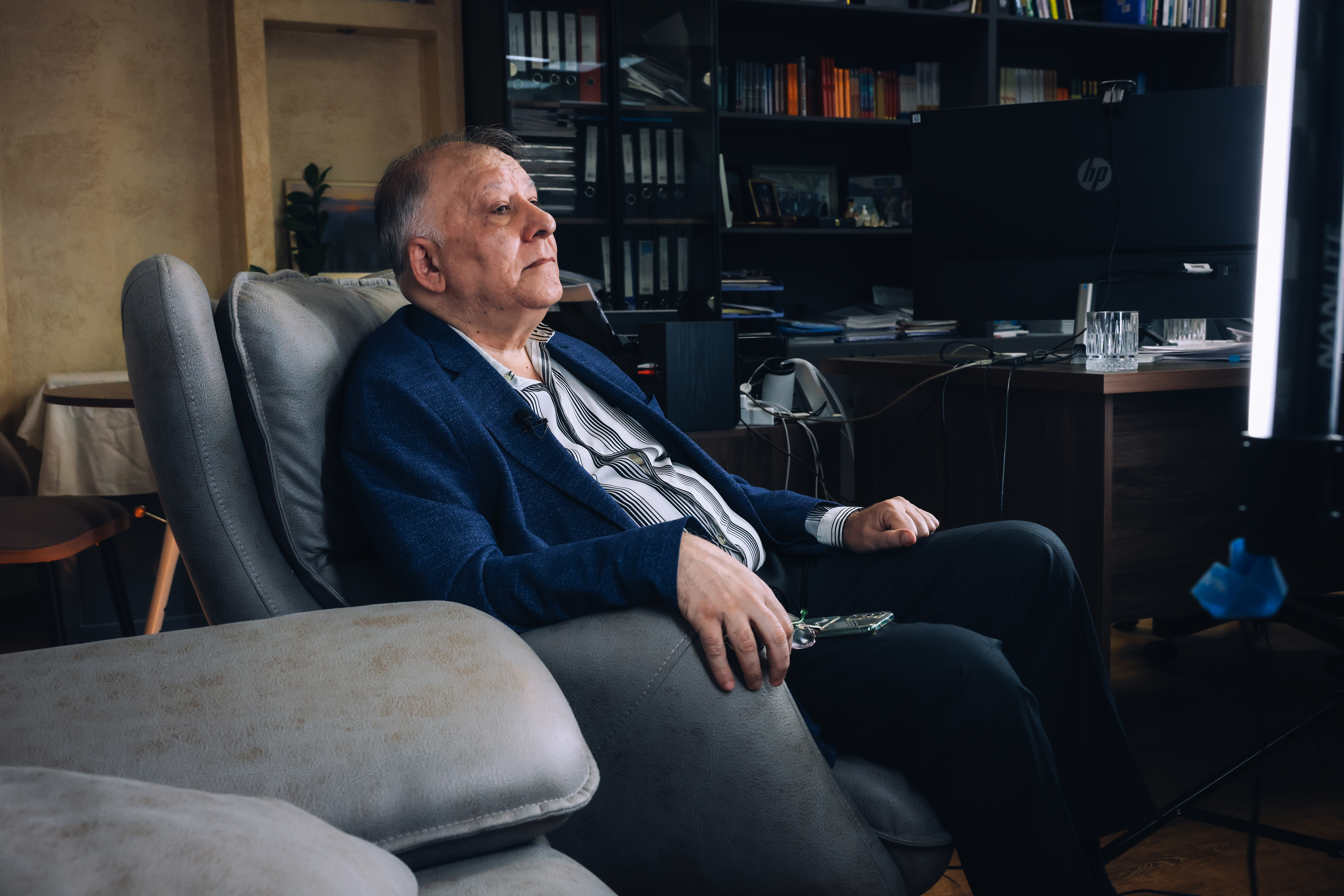 Photo: Ildar Sadykov
— Let us talk about something pleasant and unproblematic. You have many honours and achievements, your music is known far beyond Uzbekistan, but far from everyone knows not simply the composer Igor Pinkhasov, but the man Igor Pinkhasov. Tell us about yourself beyond your creative work.
— Whatever we do, it all goes into the treasury of the personality; observations and imagination are constantly building something in the mind. I enjoy video filming. Mostly these are clips about my concerts.
I love cooking. I find interesting dishes on the internet or recall that I once ate something somewhere, and I try to cook it. They say it is tasty...
I fulfil childhood dreams. For example, I very much love driving my car. I simply want to go for a drive.
And if I need to calm my nerves, I draw something with paints. True, it turns out at the level of a third-grade pupil. And not of an art school, but of an ordinary one. But my family are still surprised. And I am pleased!
I love drawing trees, a field, the moon against a lake, something like that. It is like my therapy.
— You deliberately stayed to work in Tashkent, having international contacts. What does it mean to you to be an Uzbekistani or a Tashkent resident?
— Yes. I deliberately stayed in Tashkent. I am very comfortable working here. Moreover, in the age of the internet, isolation does not exist. Of course, one has to spend a lot of time on one's presence in the networks. I have a YouTube channel, a Facebook page. Such connection gave me the opportunity to receive a commission from Belarus. I collaborate with the orchestra of the Sonorus musical chapel (conductor — Vyacheslav Larin).
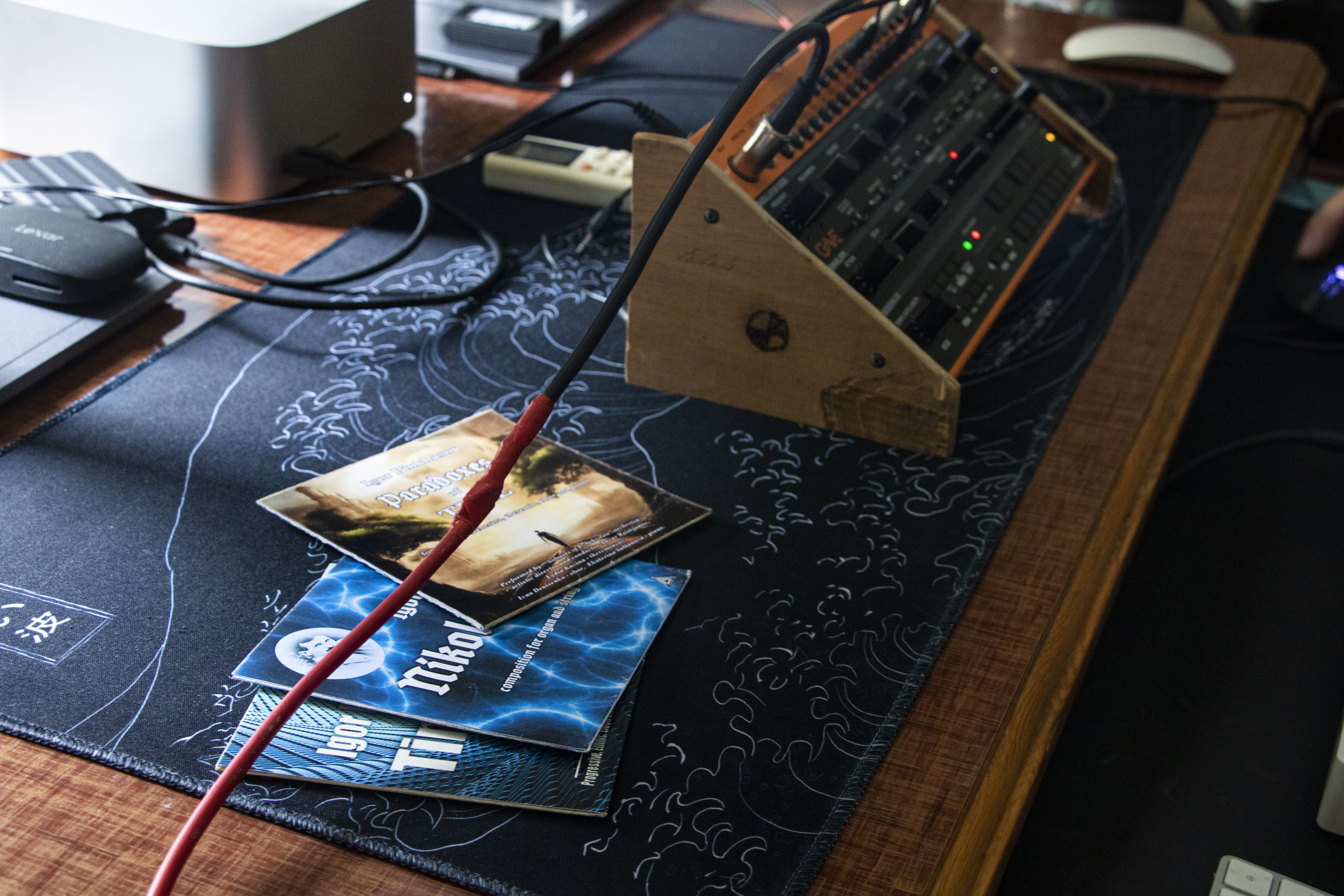 Photo: Cyrill Grishin
I think young people understand better how to advertise themselves in the virtual space.
When I finished the Moscow Conservatory and returned to Tashkent, we organised a recording studio, I worked with well-known artists such as Sherali Dzhuraev, Rustam Gaipov, Ilkhom Ibragimov, Okhundzhon Madaliev. These are true artists. We made many recordings of Uzbek folk music.
I adore Uzbek folk music, I simply love it very much. Evidently this happens on a genetic level. Among my ancestors there are Bukharan Jews, among them there were also musicians, and they are considered among the best performers of maqoms. This is a very ancient culture. I do not simply understand it. I feel it. I am interested in doing this. That is why I am here, in Tashkent.
Newsletter
A letter from the HD editors
Once a week, we send the best stories, events, and cultural discoveries from Central Asia.