Overviews
This Is Halloween: The History of Halloween and Why It Is Not Celebrated in Uzbekistan
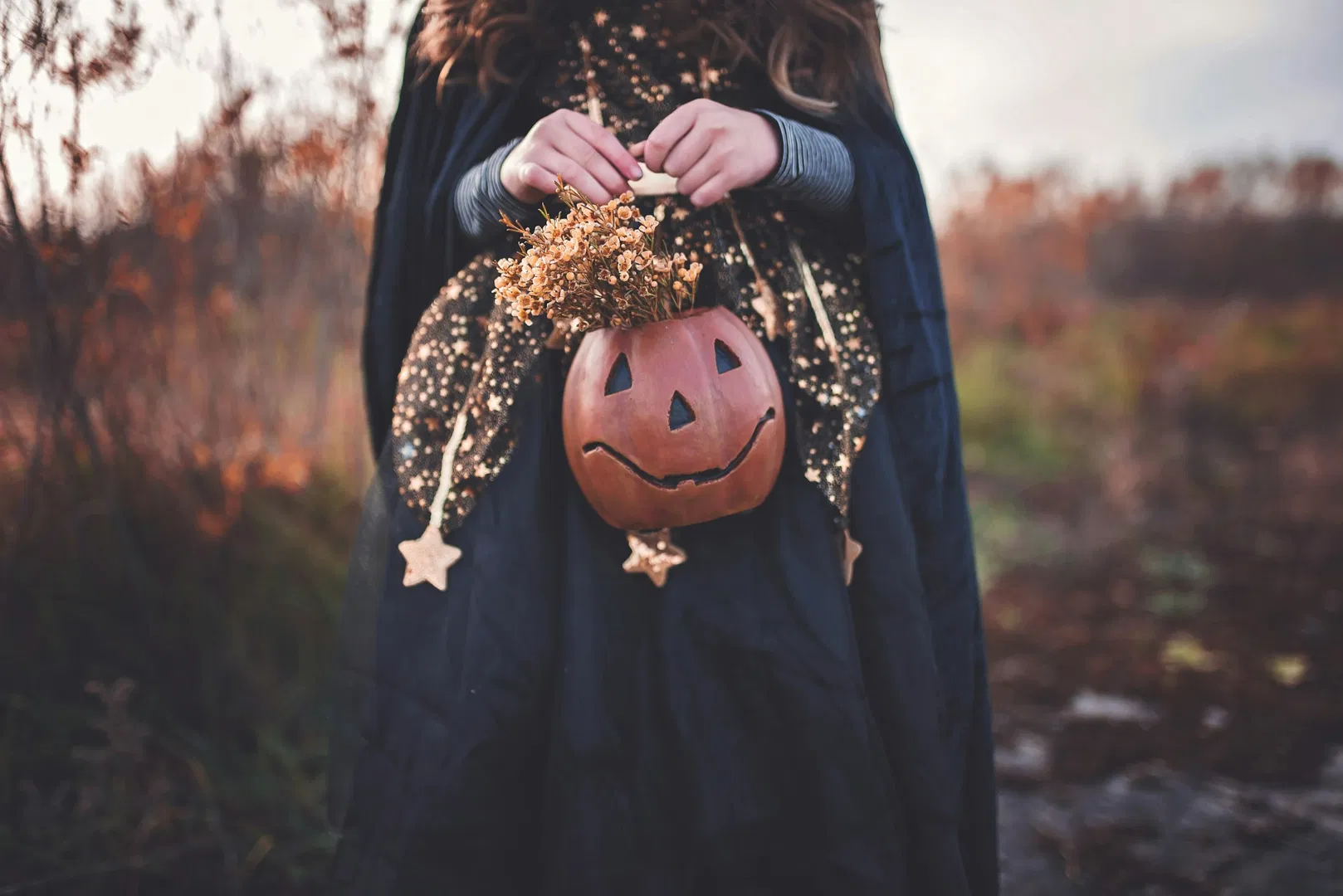
Every year on 31 October, Halloween is celebrated on a grand scale in America. The holiday is also widespread in some other Western countries. Thanks to cinema, the whole world learned about it. On this day people decorate their homes, come up with great outfits for parties, ask for sweets and have fun. The holiday has reached Uzbekistan too. Let us find out how it is celebrated here.
Halloween in Uzbekistan
In Uzbekistan, Halloween is traditionally seen as a foreign holiday at odds with the cultural values of society. The publication Podrobno.uz (in a 2017 article) drew attention to the fact that this celebration is accompanied by a rise in disorder, and its frightening atmosphere is met with disapproval by adults and children alike.
On social media, one commentator answered the question of why Halloween is not celebrated in Uzbekistan as follows:
Some time ago there was an unofficial ban on celebrating Halloween, as a holiday that does not correspond to our values. Parties planned by venues were cancelled at the last day and so on. I do not know how it is now, maybe it is easier already, but a few years ago this was watched quite strictly. Because of that it did not catch on. And now, with the growth of religiosity among the population, demand for this event is falling altogether.
The publication Plov also notes in its article that the holiday was banned because it does not correspond to the Uzbek “mentality”.
In 2024 there was also news about the tightening of security measures by the internal affairs bodies, especially among young people.
Although many residents of Uzbekistan find the holiday alien, many venues organise themed parties. The holiday has its own long and interesting history, which spans 2000 years. Let us delve into the traditions of Halloween and find out what really lies behind all these “horrors”.
Halloween, Samhain or All Saints' Day: the history of the holiday
 Photo: Pexels/ Damir K
The roots of Halloween go back to Celtic culture. The word Halloween itself - is the Scottish shortening of the phrase All-Hallows-Even (“Evening of All Saints”). According to 16th-century references, this was the name then given to the night before “All Saints' Day”. It was celebrated on 31 October. Samhain was also celebrated on this day.
Samhain - or Samoniоs - is another ancient Celtic festival that marked the end of the harvest. The Celtic calendar was divided into two periods: dark and light. The dark half of the year began in late October - early November, and the light half in March-April. It was with the arrival of the dark time that the Celts welcomed the new year, whose celebration lasted for the first three days of November.
In Scotland and Ireland, Samhain was sometimes called the “festival of the dead”. According to legend, on this night people who have broken geasa (prohibitions) die.
After the adoption of Christianity, Samhain merged with “All Saints' Day”, which was celebrated on 1 November.
How Samhain became “All Saints' Day”
In 609, Pope Boniface IV decided to remake the pagan holiday in a Christian way and to honour not the dead but the saints. And Gregory III declared the celebration of “All Saints' Day” to be 1 November. On this day it was permitted to communicate with the departed.
Thus the change of traditions, as well as the similarity in sound of the phrase All Hallows' Eve, led to the appearance of the name Halloween, which combined Celtic and Christian motifs. With the mass emigration of Scots and Irish to America, the holiday gained enormous popularity and became firmly established as a specifically American celebration.
Traditionally Halloween is celebrated from 31 October to 1 November, and the main festivities begin on the evening of 31 October. On this day it is customary to beg for sweets and to light Jack-o’-lantern - a pumpkin with carved eyes, mouth and nose, with a candle burning inside.
The very tradition of collecting sweets goes back to the custom of baking spiced cakes with raisins, which were called “soul cakes”. In exchange for the treat, people promised to pray for the souls of the departed, so that they would not end up in purgatory or somewhere even worse.
The traditions do not end there: it was in the 19th and 20th centuries that the custom took shape of dressing up in various costumes, walking around with “Jack's lanterns” and saying the famous phrase trick-or-treat (“sweet or nasty”). If the owner of the house refused to share treats, the askers played a merry prank on him.
There is also a legend that costumes used to ward off evil spirits. According to other beliefs, clothes worn inside out confused evil spirits.
The Jack-o'-lantern as the main symbol of Halloween
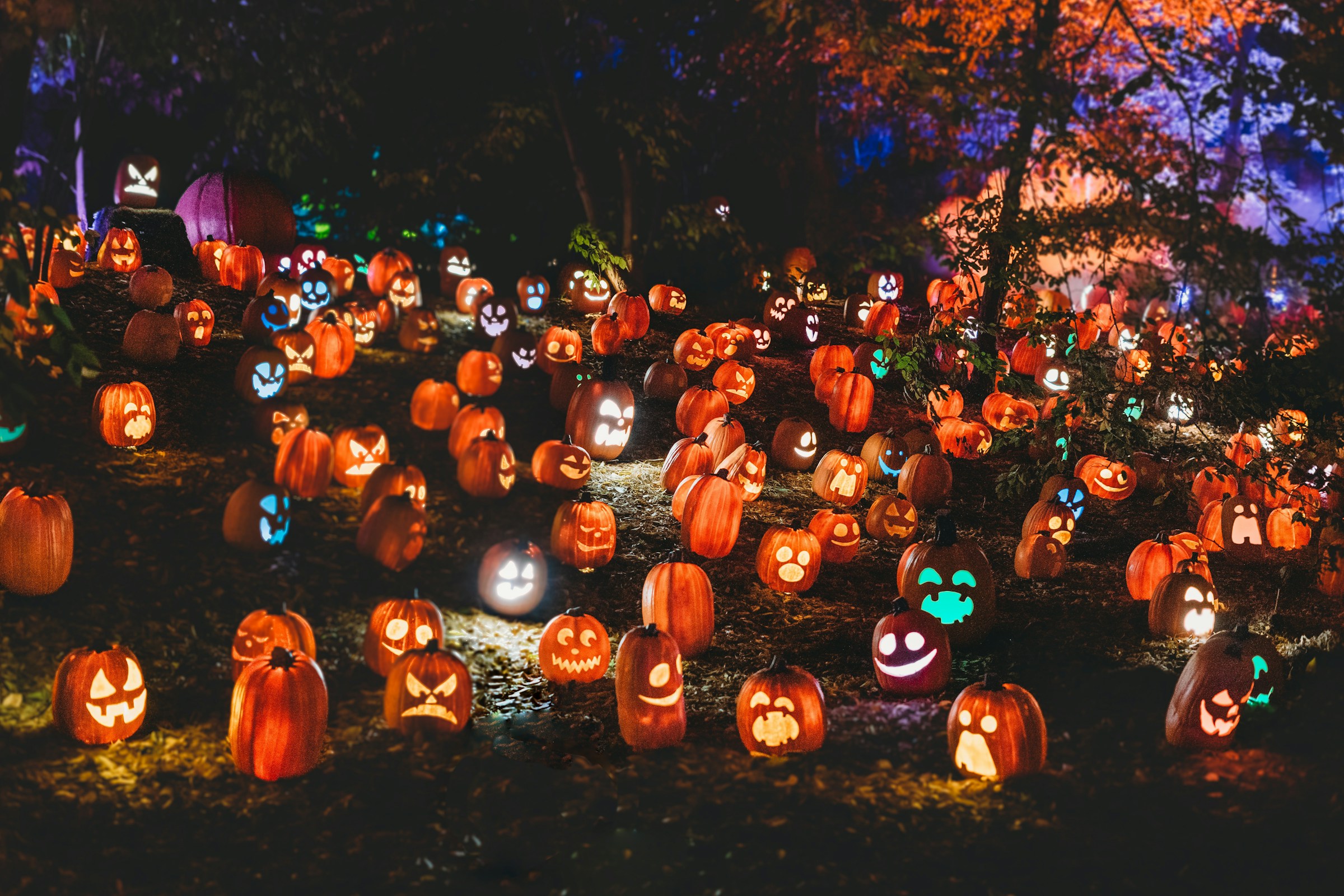 Photo: Unsplash/ Steven Van Elk
There are many legends about how the Jack-o'-lantern came about and why it is so called. One legend tells of a drunkard named Jack who managed to deceive the Devil himself. As a punishment, the Devil cursed Jack to wander the world with a single smouldering ember in an empty turnip, which lit his way.
In Ireland and Scotland, lanterns were once made from turnips. They were sturdy enough, but harder to carve than pumpkins. So the pumpkin, being a more readily available vegetable, gradually replaced the turnip over time. Traditionally, all sorts of grimaces are carved into pumpkins for Halloween. They are scooped out and a candle is placed inside. The lantern is believed to ward off evil spirits.
In the US, Halloween has gone far beyond an ordinary celebration. People prepare for the day very meticulously: they buy decorations in advance and create real masterpieces outside their homes. You often come across buildings that resemble scenes from The Walking Dead, with figures of witches, skeletons, cauldrons and characters from cult horror films such as Friday the 13th and Halloween.
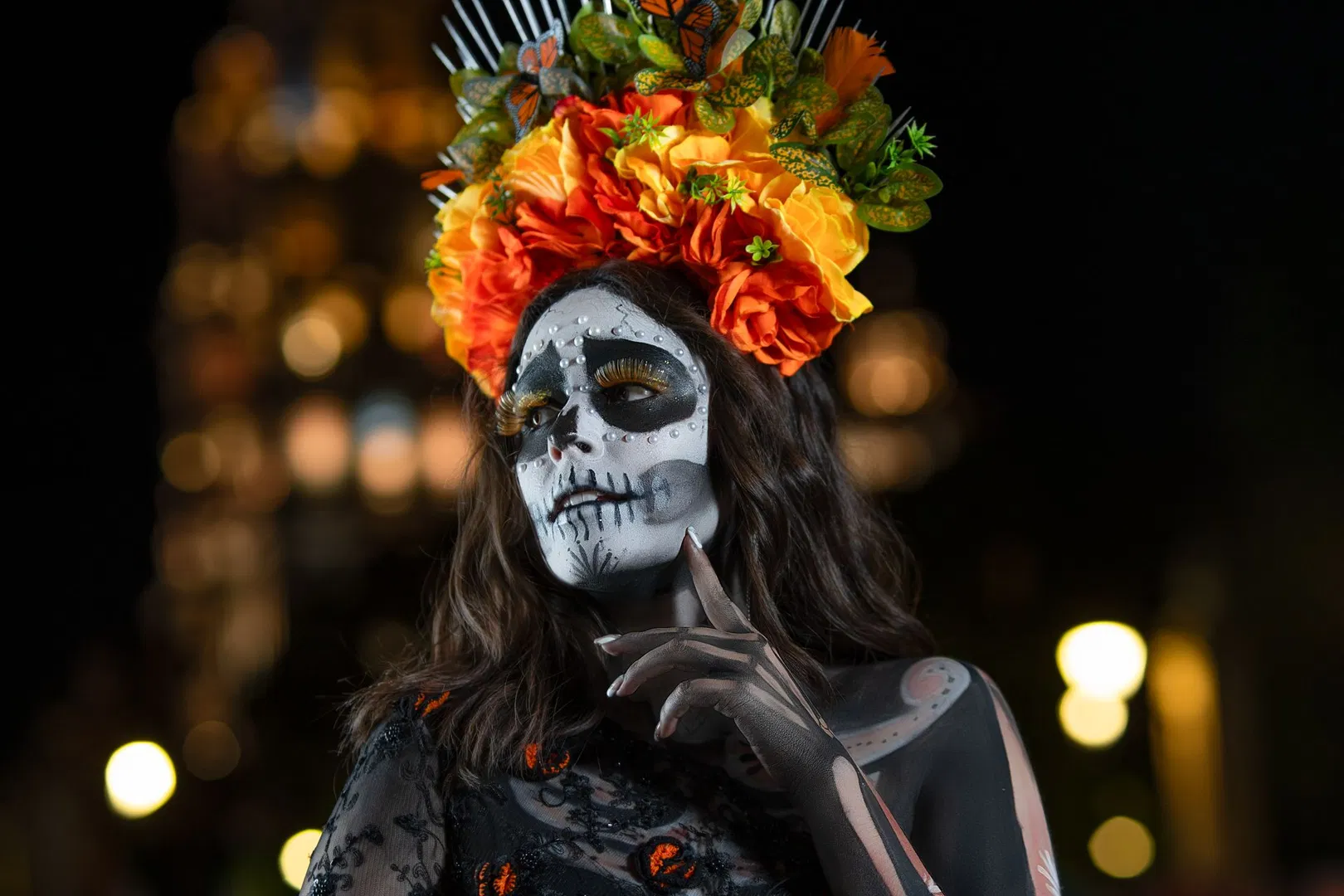
Halloween itself is not a negative holiday. There is nothing bad about it; on the contrary, it is a day of fun, big parties with friends or elsewhere, and film-watching, for example the cult Hocus Pocus. However, the day is also confused with the Mexican Day of the Dead, and the image of Catrina has slowly migrated into one of the costume options for the day.
Day of the Dead in Mexico
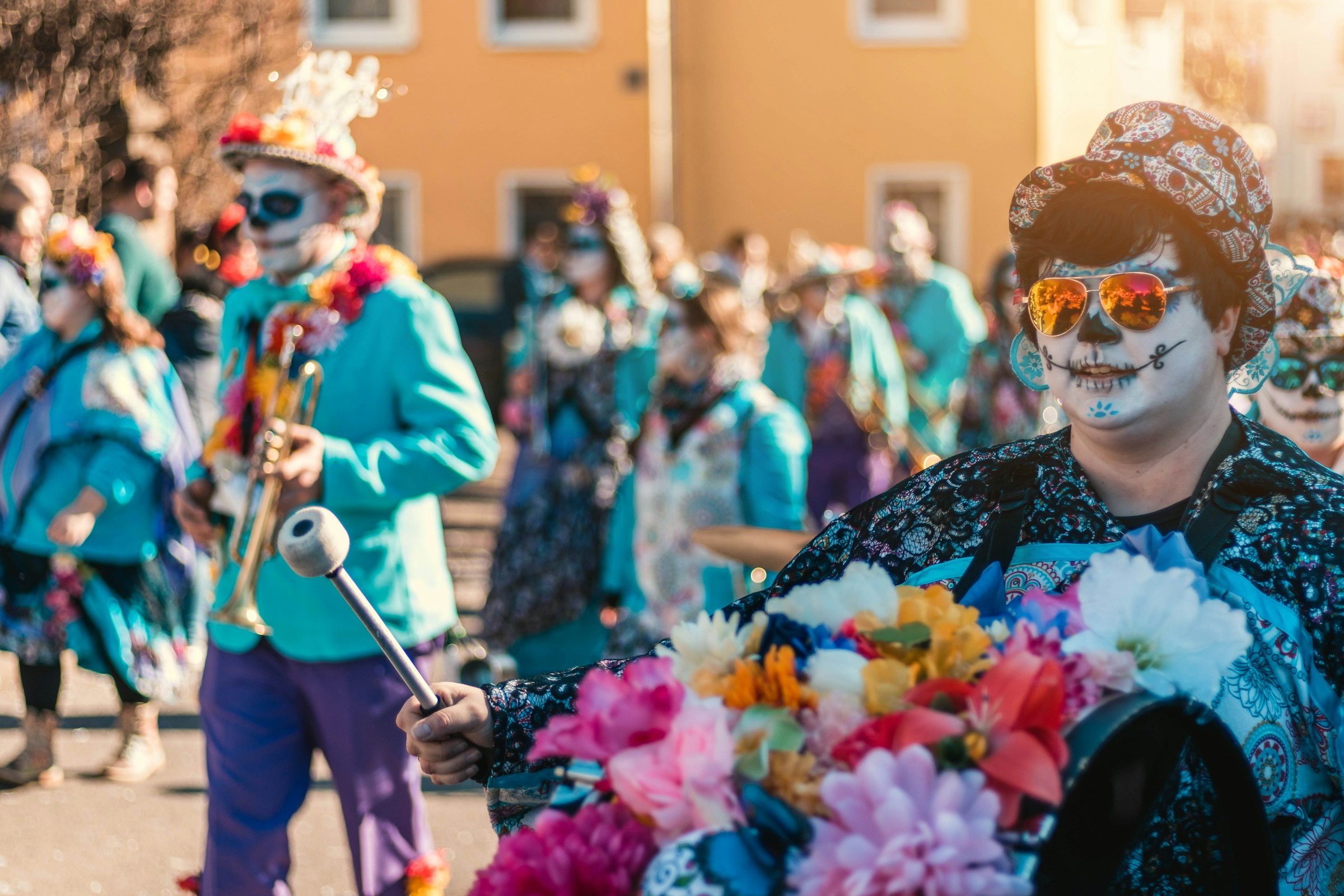 Photo: Unsplash/ Christian Wiediger
Dia de los Muertos, or the “Day of the Dead” - a traditional holiday honouring the deceased in Mexico. It is celebrated on 1-2 November, but preparations begin on 31 October. On this day it is customary to decorate homes and cemeteries. The decorations are artificial flowers, skeletons and bright outfits.
In CIS countries, such a celebration is often seen as ambiguous, since it concerns the commemoration of the deceased. In Mexico, however, it is more than a tribute to memory: on this day large-scale carnivals and street festivals are held, traditional treats are prepared and family altars are built. The dead are believed to need to be shown not grief but joy that life goes on and people move forward.
The main and most recognisable symbol of the holiday is considered to be Catrina. This image is very familiar to us: a skeleton in a bright dress, with a lush wreath of flowers on its head and a colourful pattern on its skull (or with vivid make-up on its face).
The history of the holiday goes back to the Aztecs, Maya and Purépecha. These ancient tribes performed certain rituals honouring the dead. For example, the Aztecs honoured the goddess Mictecacihuatl (also called the “Lady of Death”). The celebrations lasted about a month. However, with the arrival of the Spanish and Christianity, the traditions began to change. Thus, 1 November was celebrated as All Saints' Day, and 2 November became All Souls' Day.
The main elements of the holiday - skulls and skeletons - migrated into Halloween costumes thanks to cinema. Perhaps the most popular animated film that vividly shows these elements is Coco. Most people certainly became acquainted with a piece of Mexican culture thanks to the film.
So what is Halloween?
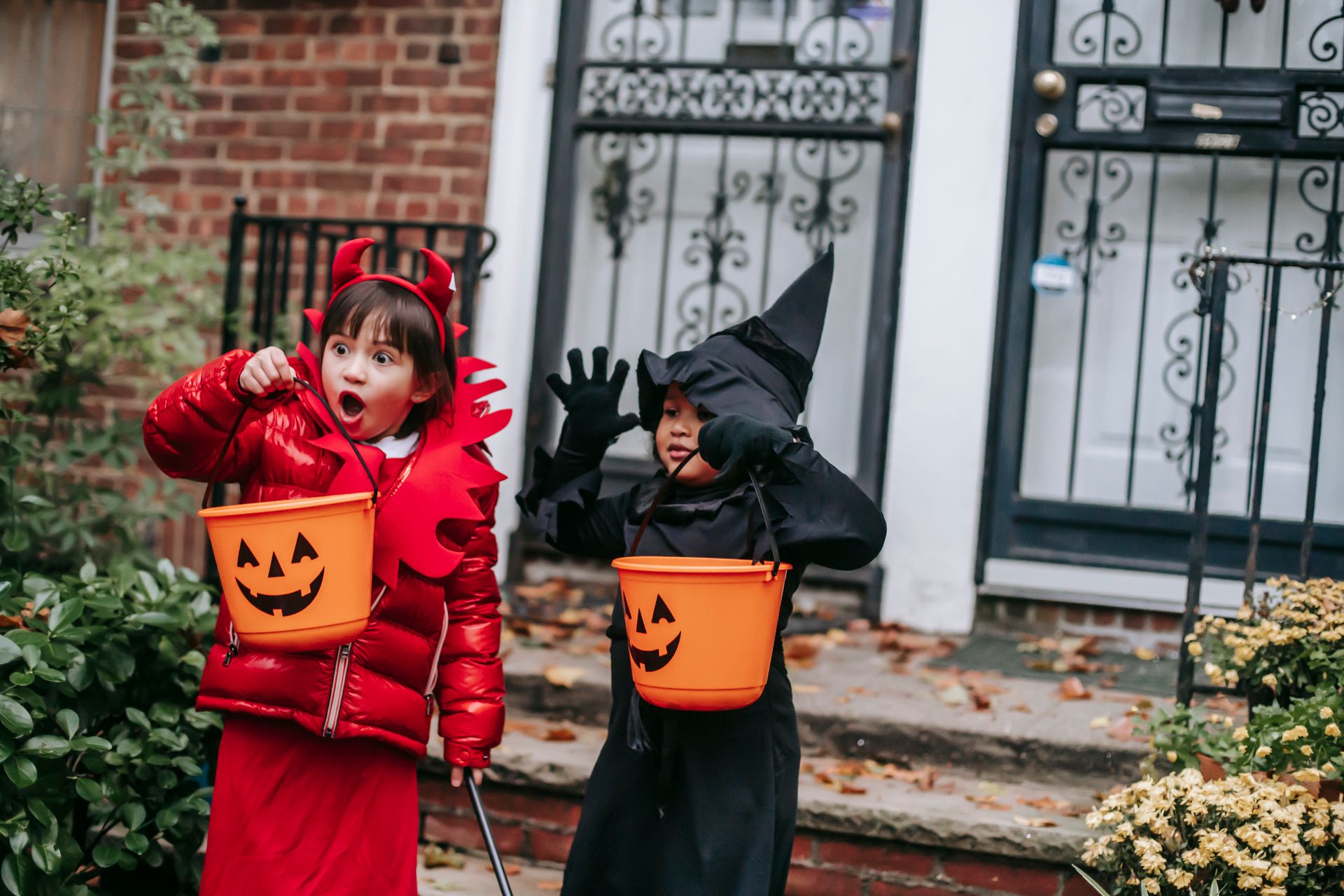 Photo: Pexels/ Charles Parker
In the US, 31 October is not an official day off. It is an ordinary day on which you can become anyone, ask for sweets, play a harmless prank or decorate your home brightly. And also take part in competitions run by cosmetics brands for the best Halloween make-up.
And although today no one celebrates the end of the harvest any more, and All Saints' Day itself long ago outgrew religious traditions, the holiday is still customarily spent with family and friends, attending parties and fun events. Cinema added an atmosphere of mysticism and mystery to the image of Halloween. So a holiday with a centuries-long history has transformed and adapted to modern realities.
Halloween should not be treated as a satanic or demonic manifestation. It is just one day, or rather one night a year, when you can try on the role of a character from a film, TV series or cartoon and go out to have fun. In Tashkent on this day there are many events: masterclasses for children and adults (painting gingerbread and boxes), parties in restaurants and bars. And many venues give prizes for wearing a costume. Halloween - is such an ancient holiday that over the centuries, from a celebration marking the end of the harvest, it has turned into a costume party with fun competitions, becoming an excellent occasion for creativity and self-expression.
Read also
Newsletter
A letter from the HD editors
Once a week, we send the best stories, events, and cultural discoveries from Central Asia.