Literature and Storytelling
Yulia Drobova: A City Is Not a Collection of Monuments
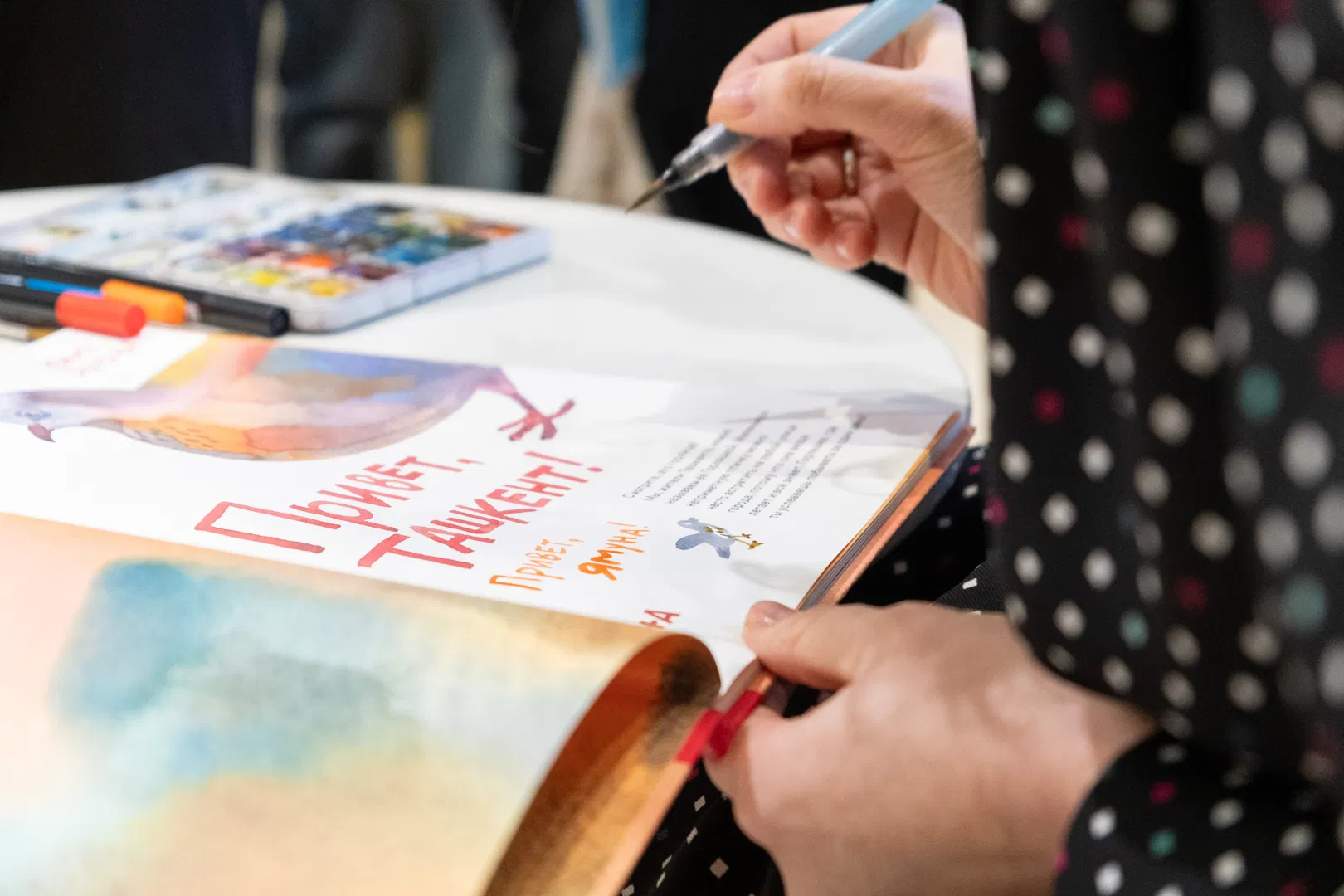
The artist and author of Hello, Tashkent! talks about a city bird’s journey, Tashkent modernism and the art of noticing the little things.
On one of the book’s double-page spreads, a grandfather is having tea on a topchan in his courtyard. A lepeshka lies on the table, and his galoshes have been left beside the topchan. The text does not mention them, but it is precisely these little details that make a Tashkent courtyard instantly recognisable. They are what Yulia Drobova’s book Hello, Tashkent! is made of.
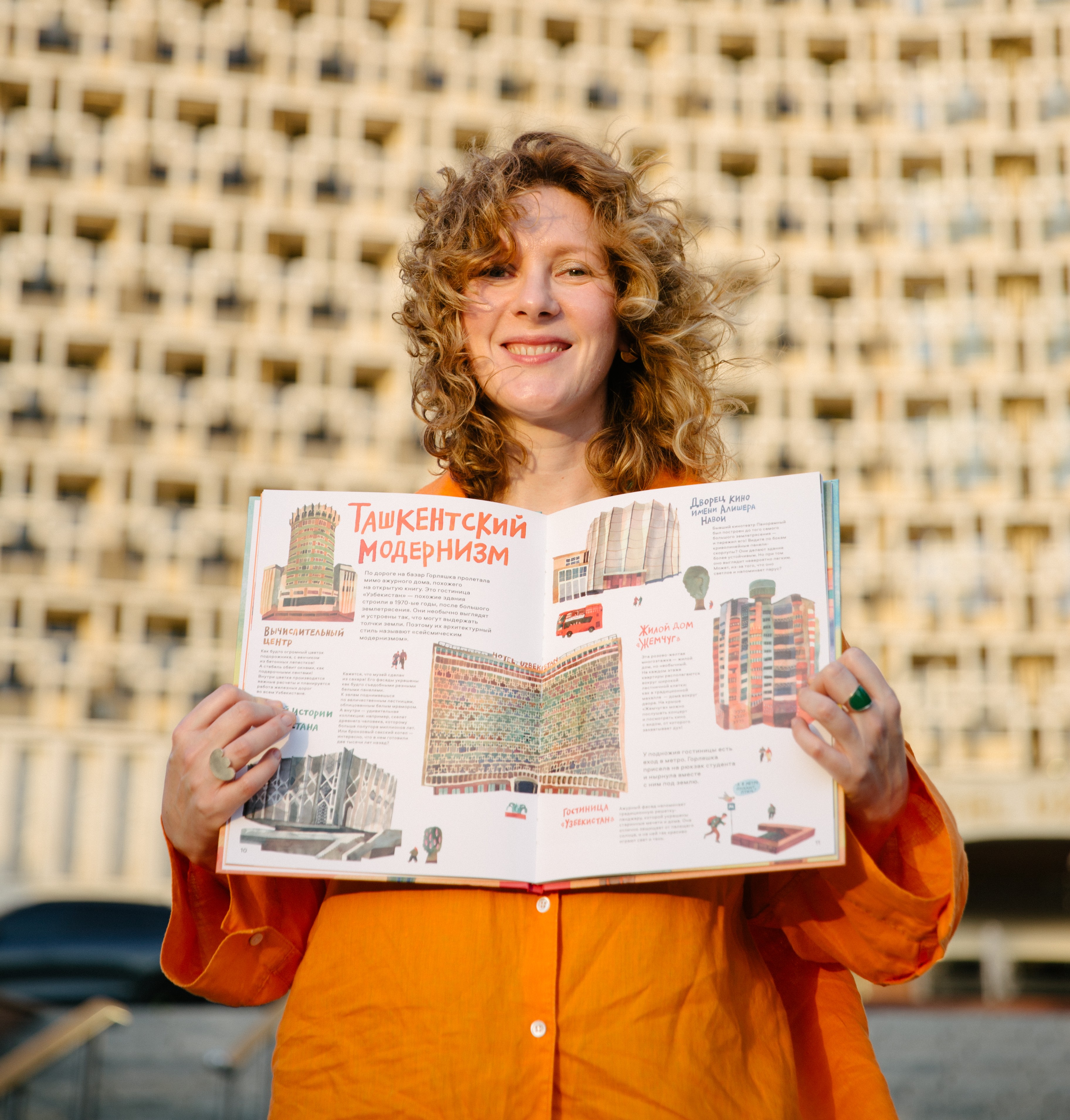 Photo: press service of the Republican Children’s Library
Published in 2025 in Russian, Uzbek and English, the book was created with the support of the Art and Culture Development Foundation of Uzbekistan and the Republican Children’s Library. Its heroine, a little bird called Gorlyashka, spends a day exploring the city, flying from the children’s library to Amir Temur Square, the Anhor Canal, Chorsu Bazaar and a park as evening falls. Intended for readers aged six and over, the book has just as much to offer adults, who will recognise their own city in its pages.
We spoke to Yulia Drobova about how she devised the route, why a drawing can tell us something a Wikipedia entry cannot, and how looking at familiar things with fresh eyes can bring so much joy.
The Bird’s Route
— Your book takes in mahallas, courtyards, the Anhor Canal, the metro and the bazaar, alongside Tashkent’s best-known landmarks. What guided your choice of places for the route?
— My own experience. I was born in Tashkent, and I have spent a large part of my life here. There are far more places I know well and love than could fit into a single book, so I had to choose. In the end, I kept the places that mean the most to me and could be linked into a single route. They are my memories, the things I can tell a story about.
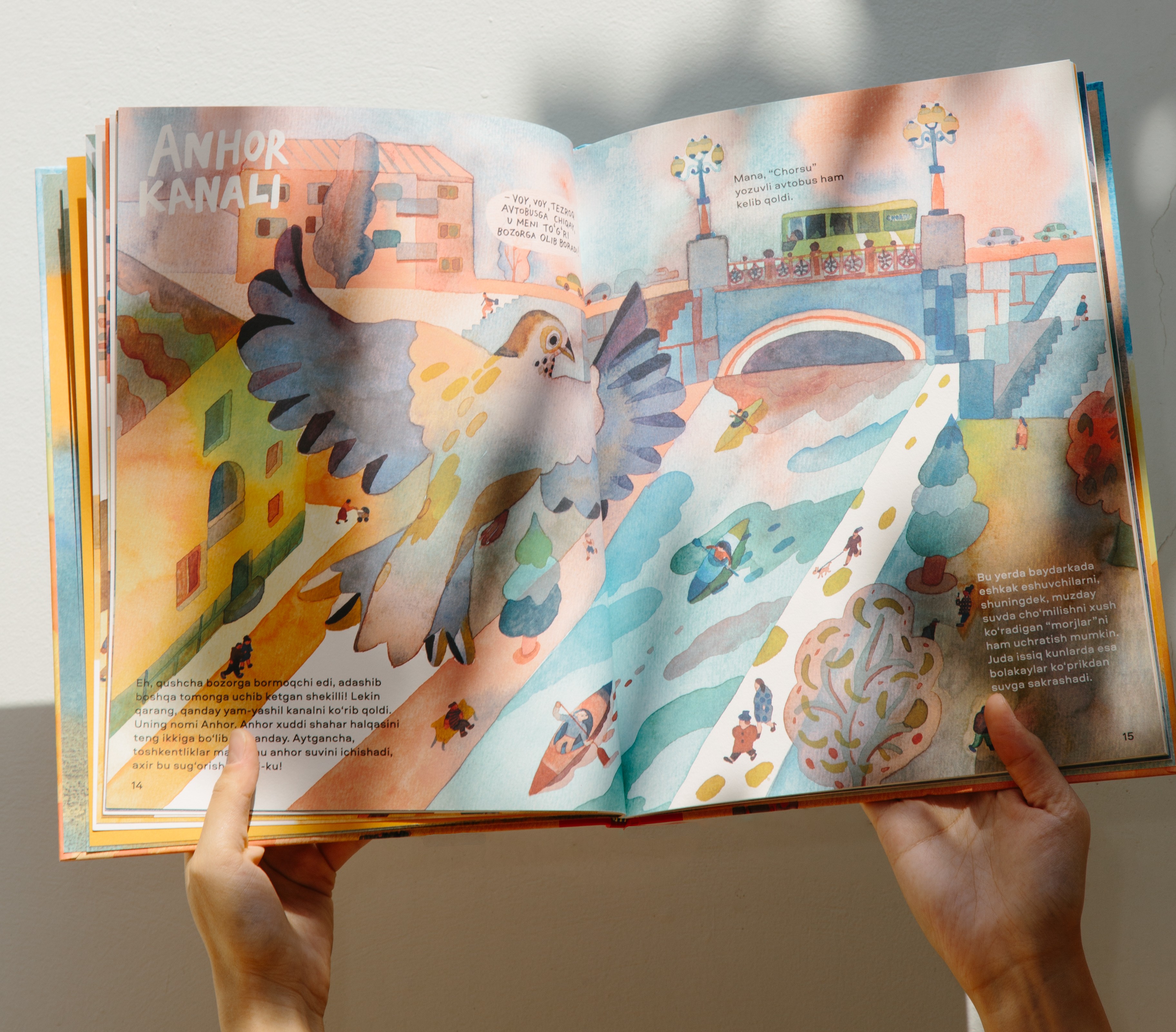 Photo: press service of the Republican Children’s Library
The first place the little bird visits is the children’s library, almost opposite the house where I was born. From there, she takes the metro to Pakhtakor station, then a bus along the Anhor Canal, before reaching Chorsu. The bazaar is enormous, like a miniature universe. You could devote an entire book to it. These are all routes I know well and love.
— Were there any places you wanted to include but had to leave out of the book?
Once the list of places, traditions and people had been finalised, I was happy with it. But after the book had gone to print, I remembered Ming Urik, an archaeological site in the city centre, near the railway station. It is an extraordinary place, and one I had very much wanted to tell people about.
— Is Gorlyashka’s route something readers could follow on a map, or is it more of a journey through your memories and associations? How did you build the sequence of the pages?
You can follow it, but not all the way: at one point, we make a leap. The day begins at the library and in the courtyard of a private house, where a traditional way of life still prevails. Then Gorlyashka flies into Amir Temur Square, admiring the Hotel Uzbekistan along the way, one of the landmarks of Tashkent modernism. She takes the metro to Pakhtakor, then a bus along the Anhor embankment to Chorsu and the mahallas of the old city. From there, she flies to the Museum of Applied Arts, and the Alisher Navoi Theatre is just a short distance away. The day ends in a park as evening falls and the coloured lights come on.
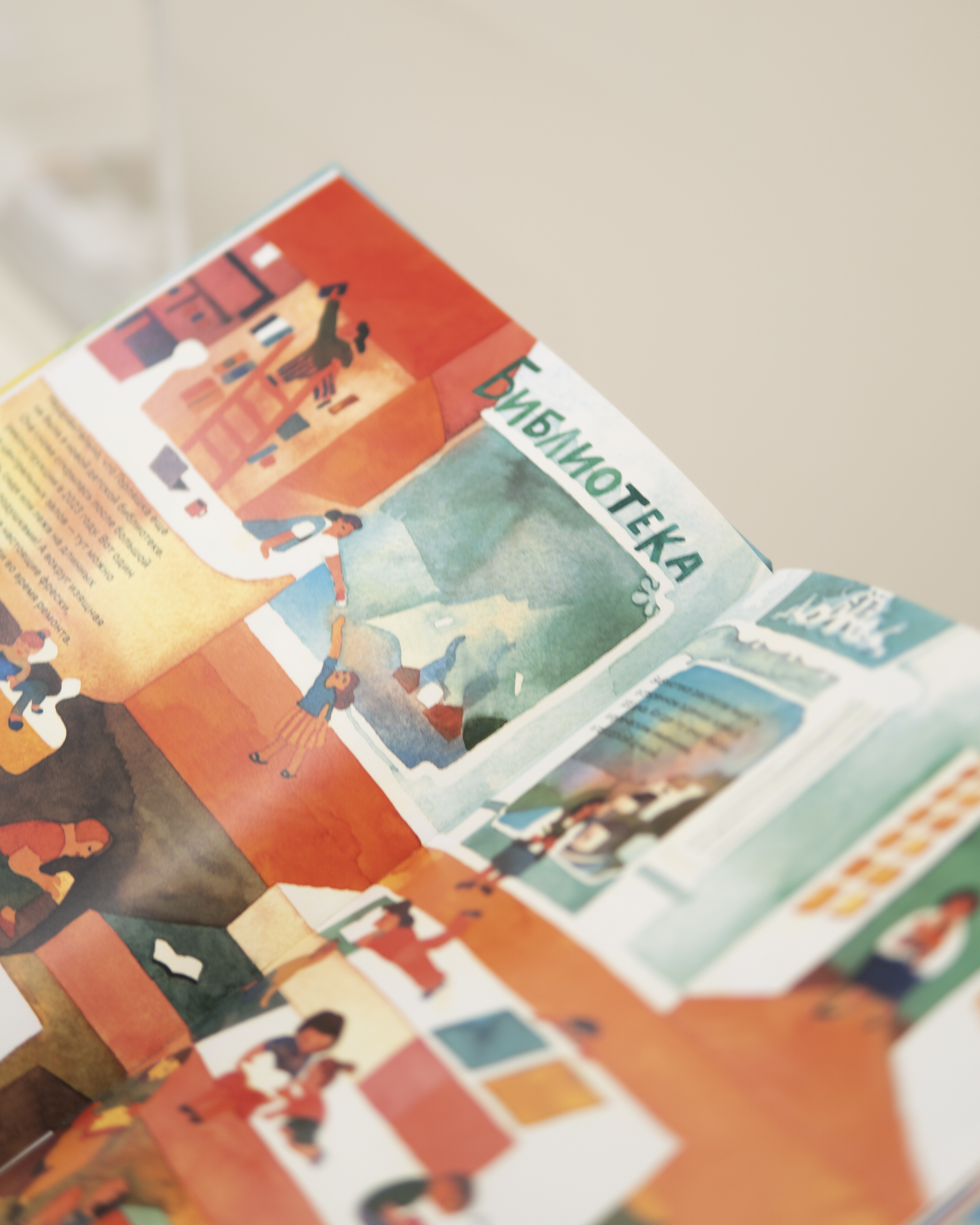 Photo: press service of the Republican Children’s Library
A bird can make leaps like that, and she can see the city from above, too. Along the way, her journey brings her into contact with the city’s inhabitants: animals, birds and people. The main storyline is interspersed with comic strips and stories about local figures and traditions. The result is a lively, coherent journey rather than a monotonous one.
The TV Tower Without Wikipedia
— How did you strike a balance between the Tashkent usually shown to tourists and the city of everyday life?
This is not a tourist guide, although the book can serve that purpose, too. It is the story of a little bird spending a day in the city, and that day is shaped by her habits and abilities: she can walk along the ground or take to the air. My own way of looking at things comes through in Gorlyashka’s character: noticing little details, letting some things pass her by and lingering over what matters to me. That is an artistic choice. We never set out to tell readers about every single landmark.
— What can a child discover about the city through a courtyard, a canal or a metro station that the TV tower or a museum alone cannot convey?
The TV tower has its functions and specifications: its weight, the number of supports, its height and its weather station. It is easy to read about all that on Wikipedia. What I try to do instead is give the structure a more inviting, human feel. There is a restaurant at the top, where you can look out over the city, listen to a violinist and have a pastry. A detail like that sparks curiosity, and to me, as an artist, it is no less important than the facts a tour guide might share.
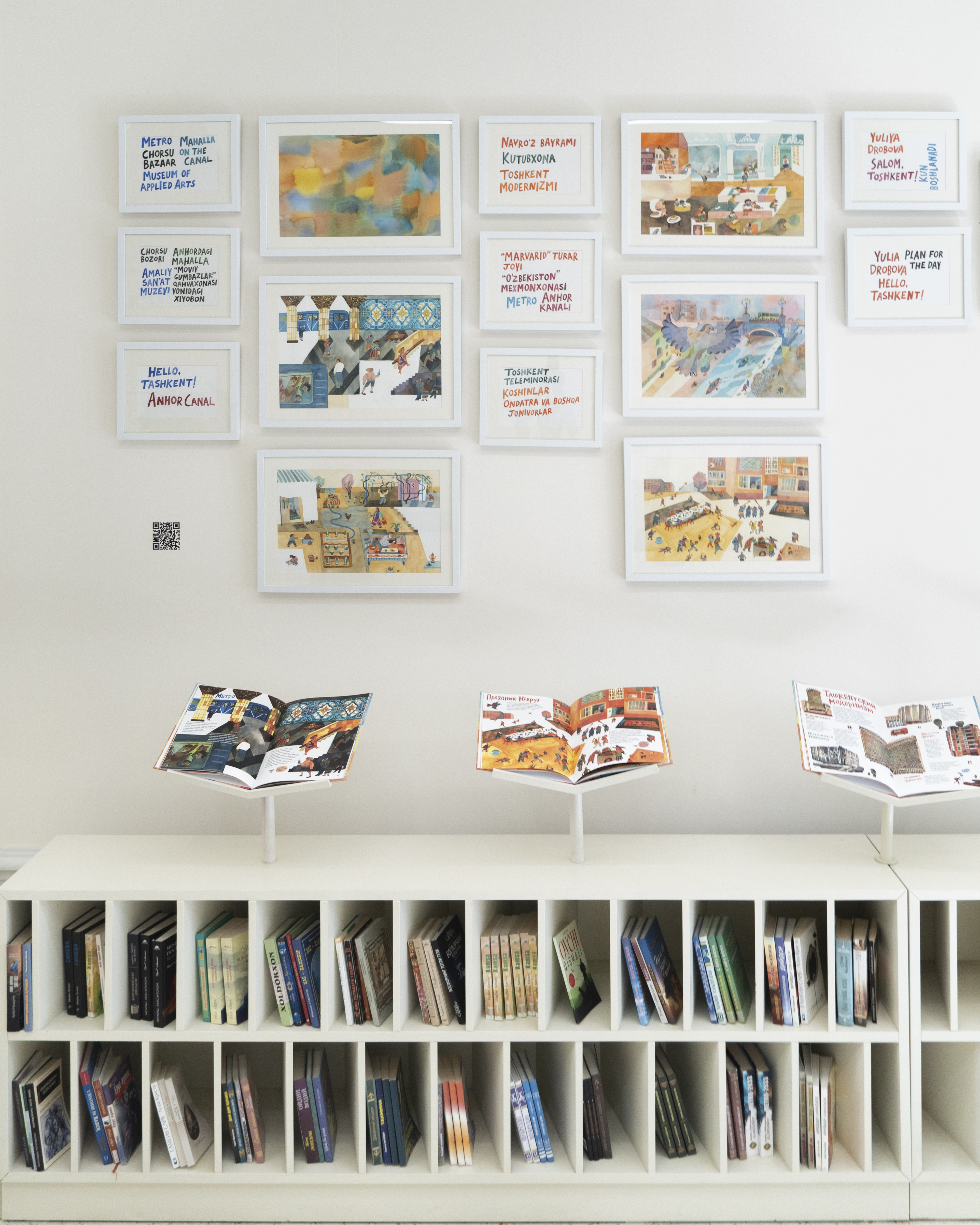 Photo: press service of the Republican Children’s Library
A city is not a collection of monuments, but a place shaped by the people, animals and famous figures who lived here in the past and those who live here today.
Take the mosaic by the Zharsky brothers on the end wall of a high-rise building. It is a work of monumental art. Nearby, we meet some of the wildlife that can be found beneath the building. A city is not a collection of monuments, but a place shaped by the people, animals and famous figures who lived here in the past and those who live here today. The book is my way of awakening people’s interest. There is a double-page spread devoted to the museum, too. It is a fascinating place to visit.
— How did you decide which architectural details to retain in your drawings so that a building would remain recognisable, and which to simplify for young readers? I’m particularly interested in how you depicted Tashkent modernism, for example, the Hotel Uzbekistan and the Zhemchug residential building.
I did not adapt anything to the reader’s age. The task was an artistic one, and it was rather my style that adjusted to the buildings themselves. Drawn, they had to remain recognisable and convey the features that matter to me. I worked in my own manner and did not set out to document every detail.
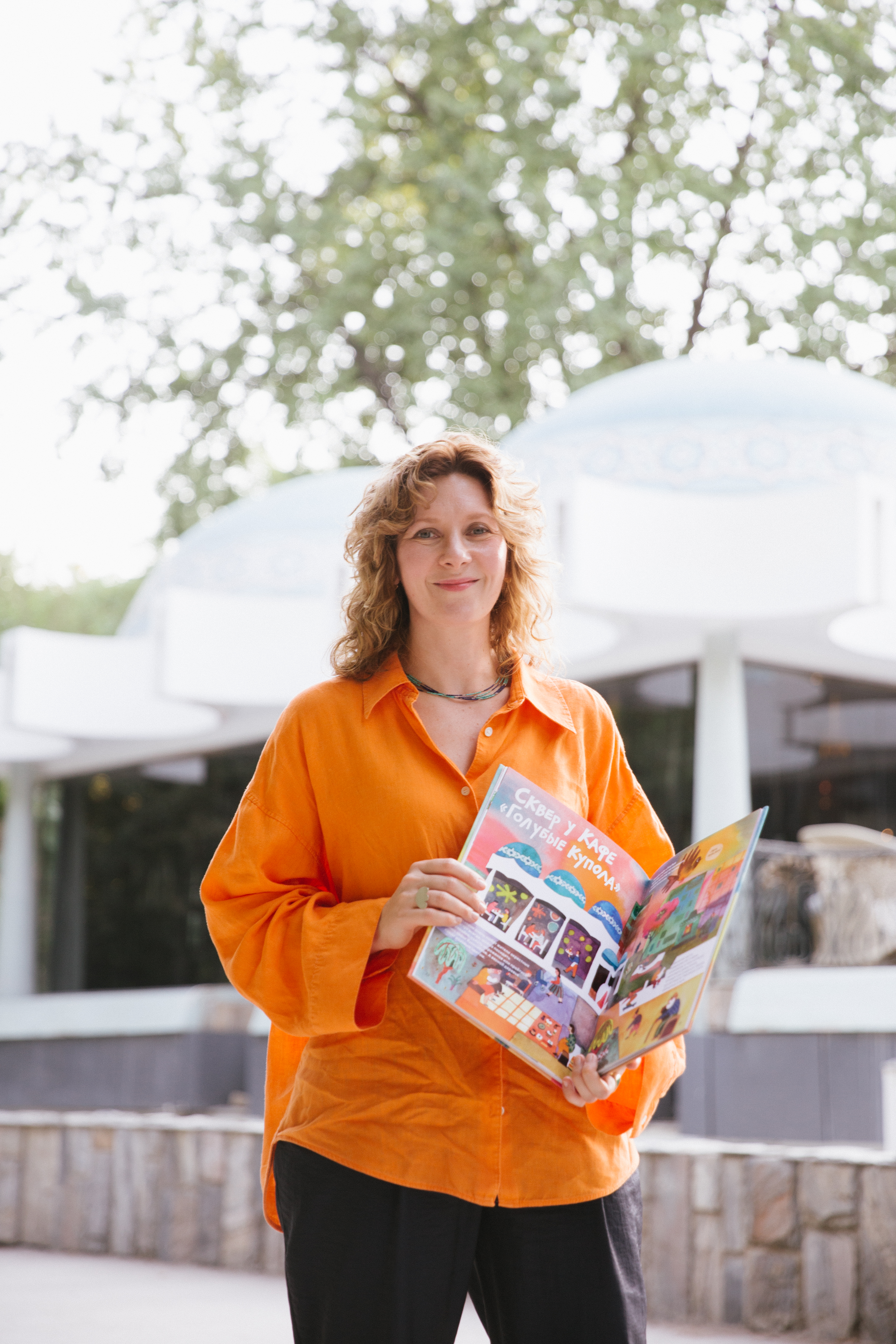 Photo: press service of the Republican Children’s Library
How the Book Is Put Together
— The book combines watercolour, hand lettering and carefully composed double-page spreads. How did you and the editor and designer work out the visual rhythm? What was meant to catch a child’s eye, and what was meant to guide them further through the book?
Before we start work on an individual spread, we plan the narrative and draw a storyboard. This gives us an immediate sense of how full and varied the spreads are, how the book is structured and how it all fits together.
There are no hard-and-fast rules, but the book uses two graphic styles, which helps keep the reader engaged. The comic strips and notes about famous Tashkent residents are rendered in two colours, black and ochre, with the white of the paper as a third. When readers reach a comic strip, their attention naturally sharpens, so the narrative never becomes monotonous. The name of the location usually appears at the top of the spread. These little devices work together as a system, making the book enjoyable to explore.
I like to think that adults find it just as interesting, especially those who already know these places. My own enthusiasm for and affection for what I draw are passed on to whoever holds the book.
- The book is intended for readers aged six and over. How did you divide the material between text and illustrations?
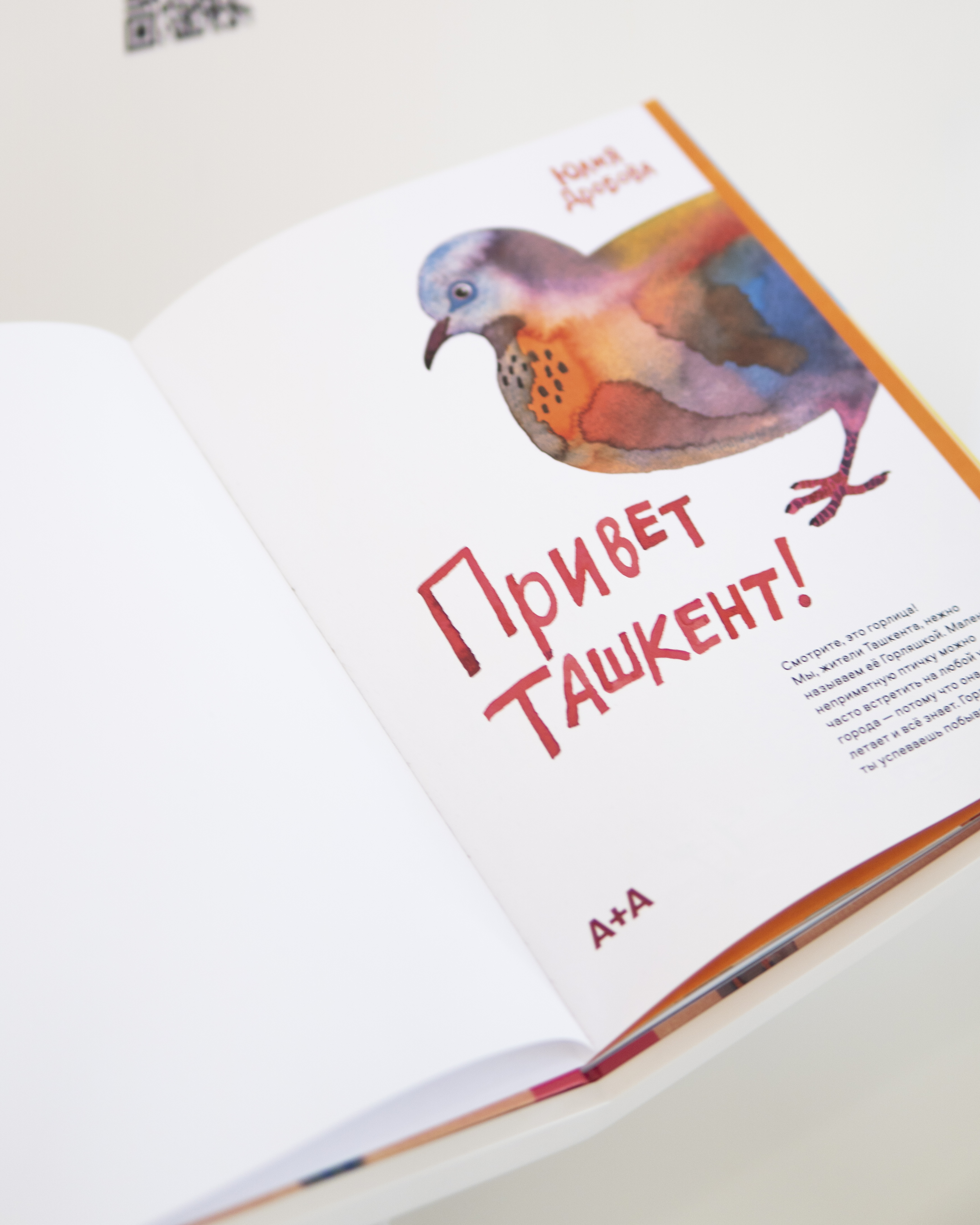 Photo: press service of the Republican Children's Library
Everything has to be clear to children who have only just learnt to read. The illustrations are the main focus; there is little text, and it is simple. I chose the facts I found most intriguing. For example, the Museum of the History of Uzbekistan houses an ancient Saka cauldron and a skeleton more than one and a half million years old. The pictures always take precedence, and there is plenty of clear space around the text to make it easy to read.
A book has a kind of magic: every time you look at it, you notice something new. Perhaps you recognise a squirrel that has just darted past you in your own courtyard. Or perhaps you start wondering why something is missing from its pages. Everyone reads it in their own way.
- The book has been published in Russian, Uzbek and English. How did you preserve local names and words that capture what makes Tashkent distinctive in the different versions?
I wrote the book in Russian, and then two wonderful translators worked on it, translating and adapting the text. I liked all the different versions of Gorlyashka’s name. I am not really qualified to comment on the linguistic nuances.
The text should contain nothing that is not supported by the illustration. But the illustration can include things that are not mentioned in the text.
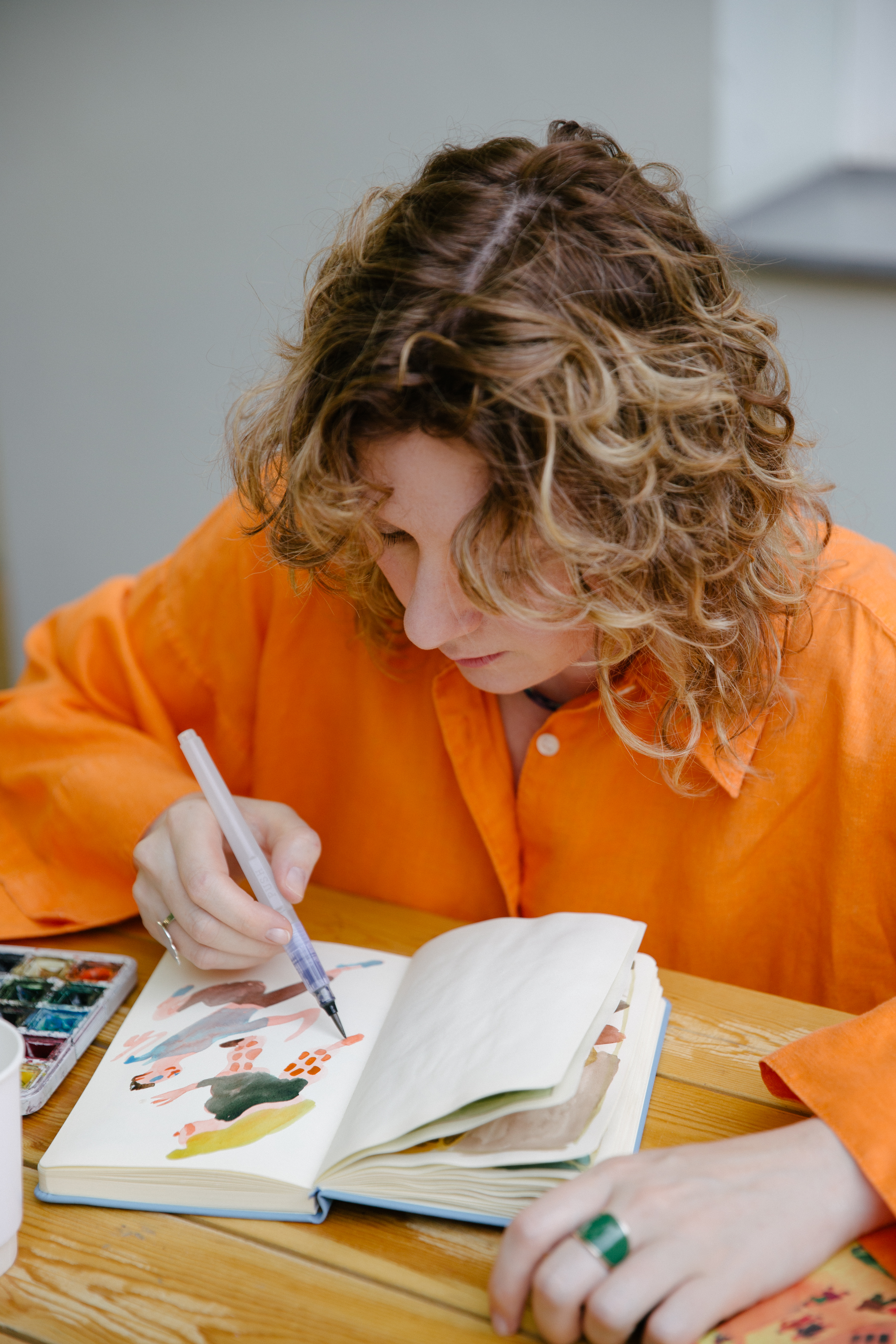 Photo: press service of the Republican Children's Library
- What is easier to show in a drawing than to explain in words?
It is essential to me that nothing appears in the text that is not supported by the illustration. But a drawing can certainly include things that are not mentioned in the text: they complement it and make it richer. There are many examples of this in the book. When describing the courtyard, I mention the topchan, the little table and the fruit trees. The lepeshka is not mentioned in the text, but we see it on the table, and the tea scene immediately becomes recognisable. I have also “left” a pair of galoshes beside the topchan. I hope details like these will amuse some readers.
An Artist’s Perspective
- What does making a book like this accessible to children mean to you? Is it about clear language, the chance to explore it independently, its price or its availability in libraries?
I hope the language really is accessible. As the author, that is my responsibility. I wanted to make sure children would not be overwhelmed by historical facts, but would still discover both the big picture and the little details. The price and availability in libraries are the publisher’s responsibility; those are not things I deal with.
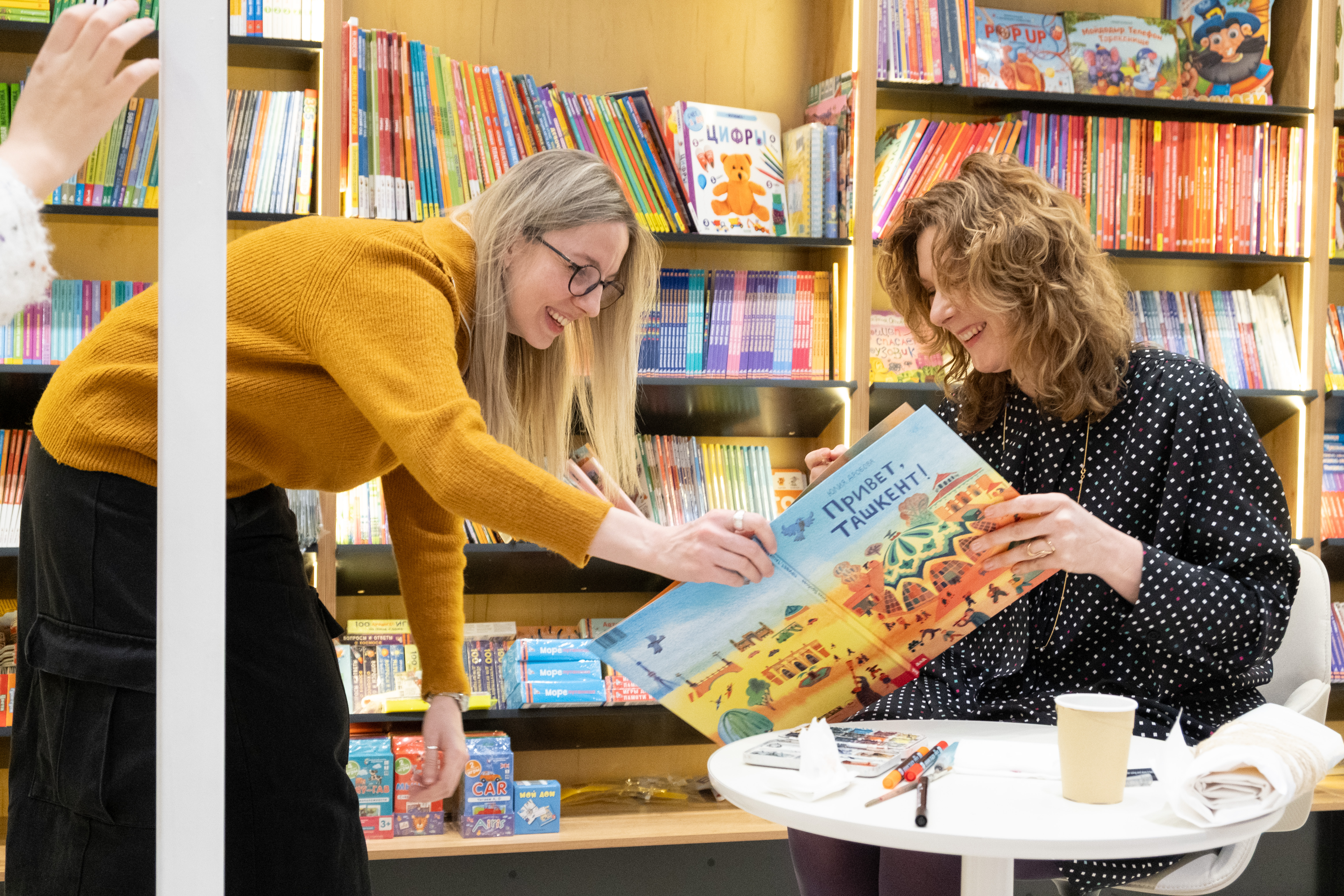 Photo: press service of the Republican Children's Library
- If a child goes out to explore Tashkent with a camera or a sketchbook after reading your book, what would you suggest they pay attention to?
If reading the book makes a child curious about even one place in the city, then it has done its job. And if they also pick up a camera or a voice recorder to capture their thoughts, so much the better.
My advice is to notice things that do not immediately catch the eye, things that interest you personally. That is a source of great joy.
You can simply take a walk around your home, looking at familiar things with curiosity rather than taking them for granted. Write something or create a photo essay about your street or neighbourhood. There is bound to be plenty of interest there.
We grow accustomed to the everyday scenes around us. But if we learn to look at them through an artist’s eyes, see them from different angles and pay attention to the little things, perhaps other people will want to see the city through our eyes, too.
Read also
 Literature and Storytelling
Kazakhstan announces a hunt for readers. Read 15 books and get 10 million tenge
Kairat Baltabai
 Literature and Storytelling
"Days Gone By" Today: Cinema, Theatre and the Living Legacy of Abdulla Qadiri
Christina Inyakina
 Literature and Storytelling
The Doctor Who Changed Literature: Anton Chekhov
Christina Inyakina
Newsletter
A letter from the HD editors
Once a week, we send the best stories, events, and cultural discoveries from Central Asia.