Literature and Storytelling
Kazakhstan announces a hunt for readers. Read 15 books and get 10 million tenge
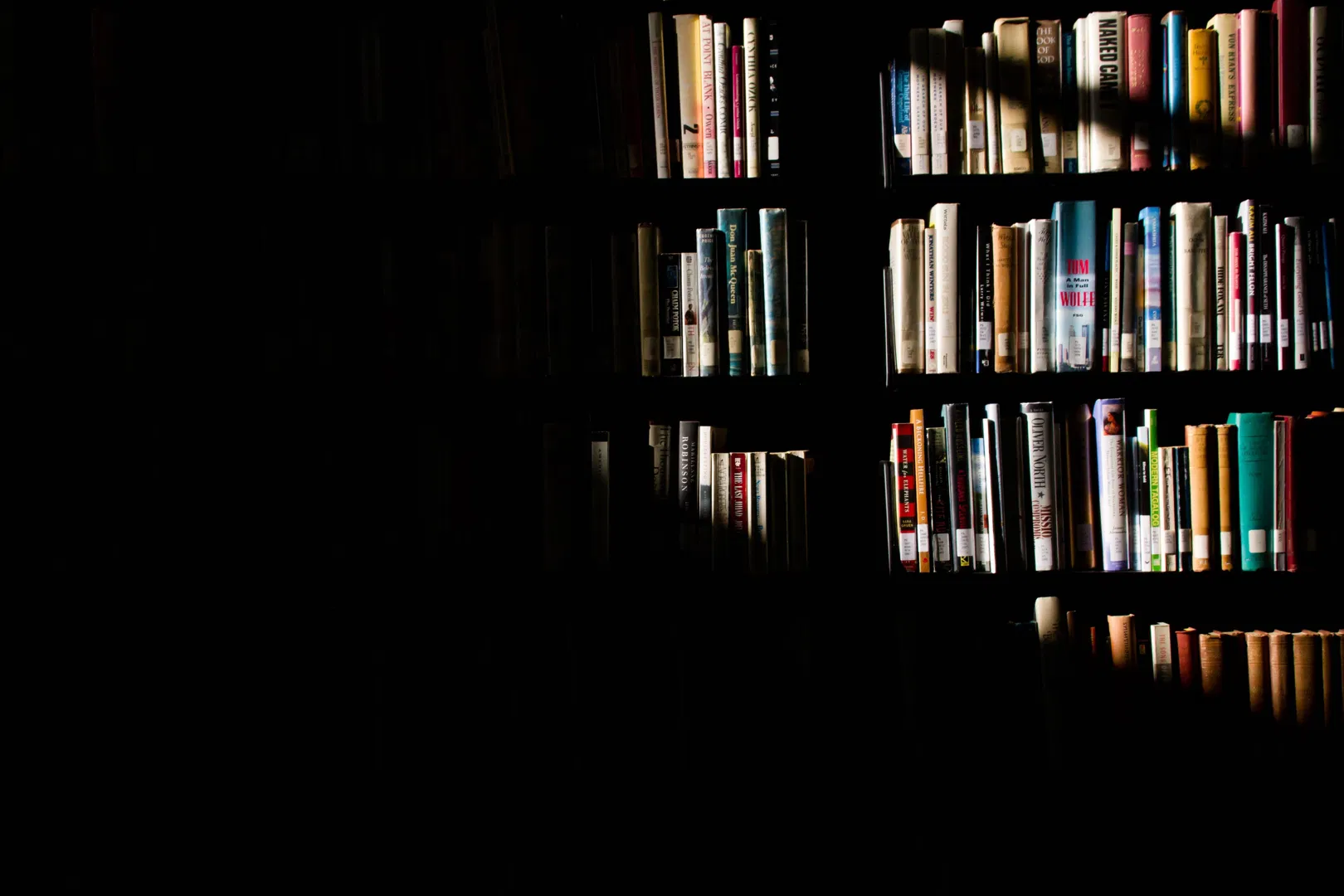
Kazakhstan has decided to get people into reading with a marathon, book festivals, modern libraries and, just in case, 10 million tenge. Even Dimash Kudaibergen was mobilized for the intellectual race.
What will happen, if people are not just urged to read more, but given a certain motivation to do so? Offer a list of books, hold a marathon and its regional stages, bring in famous people, and pay the most active participants quite tangible cash prizes. And here is what happened - this is how the first national marathon "Reading Nation" came about, which will run until April 2027.
And, judging by what is happening, the book really is gradually coming back. True, it looks now quite different from before. Now beside it are TikTok and bloggers, book festivals and coffee shops, electronic catalogs and smartphones.
Trcman: how a nomadic library from Almaty collects knowledge about Central Asia — and for Central AsiaIn Kazakhstan, at the beginning of July 2025, a mobile library began its work, which will be dedicated to Central Asia and regions culturally and linguistically connected to it. We tell about a research project whose founders are inspired by the legacy of the Jadids, local intellectual history, and the cosmologies of the region’s indigenous peoples.mag.humodoc.com
There is motivation, what is needed is desire
The project started with a Decree of the President of the Republic of Kazakhstan Kassym-Jomart Tokayev dated 16 May 2026. On the official website the marathon is presented as a large-scale intellectual-educational initiative, designed to form in citizens a lasting habit of reading and to bring the country into the ranks of the ten most reading nations in the world. The document concerns not only the marathon itself, but also a broader program for developing a culture of reading. One of the most notable initiatives has been named "10 readers of the year": ten winners are promised 10 million tenge each. At the regional stages prizes of up to 600 thousand tenge are provided.
To reach the coveted finish line and a pleasant financial bonus, you need to register on the portal https://reading-nation.kz and read 15 books in six months - a task, frankly speaking, quite doable. However just getting acquainted with the works is not enough: you also need to write a review of what you have read and pass the qualifying rounds.
If people used to read books because it was useful, interesting and generally made life richer, then now to this argument has been added another one - reading can turn out to be profitable.
Of course, money alone won't create a reader . You can register a person for a marathon, offer them to take a test or write a review, but to force someone to love a particular novel is impossible.
Even the "stars" read
The most famous participant of the marathon - Dimash Kudaibergen - joined the project in the category "Parasat" outside the competition, rather as a public example.
To take part in the marathon, you could choose 15 books from 345 works by Abai Kunanbayev, Chingiz Aitmatov, Jules Verne, Antoine de Saint-Exupery, Daniel Kahneman and others. Dimash is reading the autobiographical work of the Kazakh artist and anti-nuclear activist Karipbek Kuyukov "Life Without Hands".
Kuyukov was born without arms. His parents were exposed to radiation at the Semipalatinsk nuclear test site. Despite his physical limitation, he became an artist and painted pictures, holding the brush with his lips or feet. His works are held in private and state collections of various countries, including the US, Germany and Japan, and most of them are connected with the theme of the nuclear threat.
Such a recommendation really can prove more effective than an ordinary social video.
A person, who previously had never heard about Kuyukov's book, after seeing Dimash's post, may well one day walk into a bookstore and ask: "Do you have "Life Without Arms" ?"
For the book market this is already a quite concrete result.
Who is Writing Kazakhstan TodayKazakhstani literature is experiencing a moment when the old literary canon can no longer keep pace with the new reality. While some authors are gathering millions of readers online, others are publishing books in the US and Europe, and still others are transforming Kazakh mythology into fantasy and horror. Who are they — the writers of Kazakhstan who are read today, and not merely studied at school? We have compiled a TOP-10 of contemporary authors through whom the country can be read anew.mag.humodoc.com
A coincidence? I don't think so
Almost simultaneously with the launch of the republican marathon in Almaty the autumn KitapFest took place. The coincidence turned out quite symbolic: 19 and 20 September Arbat for two days turned into a large book fair. More than 60 domestic publishers presented here their products, the festival was visited by around 50 thousand people, more than15 thousand books were sold.
And this is not an isolated case. The spring KitapFest in Almaty, timed to Nauryz, drew about 40 thousand people. Visitors bought roughly the same number - 15 thousand books, and their publications were presented by more than 40 publishers. It turns out, that the book is gradually becoming a significant element of urban life. Not necessarily the main one, but already quite noticeable.
Invasion of a book store
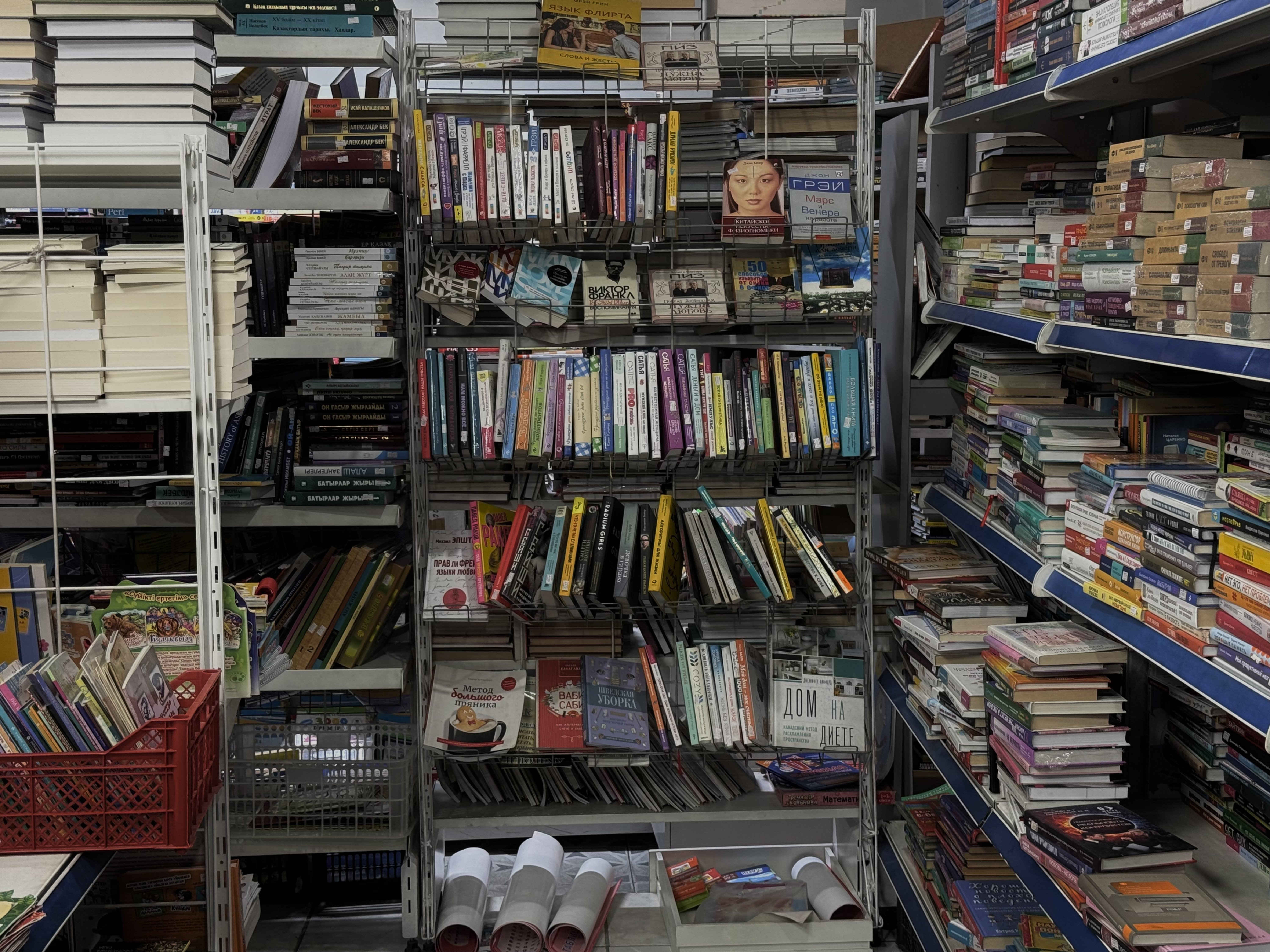 Photo by the author
Galina Shinaylova has worked for many years in an Almaty store with the unassuming name "Kitap". She does not complain about the lack of customers, but after the start of the marathon she noticed one curious detail: people began asking for works, included in the recommended list.
It turns out, that the marathon is capable of creating demand not only for reading in general, but also for quite specific books.
At the same time interest in Kazakh literature, judging by the observations of sellers, existed even before the start of the project. Buyers are looking for works by Mukhtar Magauin and Dulat Isabekov, books on the history of the country, materials about the activities of the Alash Orda and the national-liberation uprisings.
The interest of young people in literature in the Kazakh language is especially noticeable. Here, perhaps, one of the most important shifts is taking place: for a portion of young urban Kazakhstanis the Kazakh book is gradually ceasing to be exclusively a school subject or a mandatory component of national upbringing. It is becoming part of contemporary culture - much the same way, as music, cinema or social networks. And even fashion plays its role here. Reading in Kazakh is gradually becoming prestigious, and fashion, strange as it may seem, can sometimes do more for culture than dozens of well-crafted slogans.
Russian-language literature still occupies a significant share: classics sell well, detective novels, contemporary novels, motivational literature, books on psychology and self-development.
The Kazakhstani reader in general is quite eclectic. They may well spend the day searching for a book about the history of Alash, in the evening read a Russian detective novel, and at night listen to an audiobook by an American author. Therefore what is happening is better perceived not as a simple displacement of one book space by another, but as its gradual expansion.
Mo Yan spoke in Kazakh
Against this backdrop it looks quite symbolic that the marathon program includes the novel by Chinese writer and Nobel laureate Mo Yan "Garlic Ballads" in the Kazakh language.
Mo Yan recorded a message to Kazakh readers, speaking about the resonance between certain historical hardships, described in his work, and the experience of the Kazakh people. At first glance this is a minor episode. But for the book market it is quite telling. For many years a significant portion of foreign literature reached the Kazakh reader through the Russian language. Now other routes are gradually emerging. Chinese literature is translated directly into Kazakh, Turkish literature is gaining its own distribution channels, and interest in Korean, Japanese and other Asian literature is growing.
The difference may seem small to some, but for the cultural space it is significant. The language of translation determines not only the accessibility of a work, but also the cultural context in which it will be perceived.
Who is the average reader of Kazakhstan?
Alongside festivals, bookstores and queues for new editions there is another set of statistics. According to a CEOWORLD study, Kazakhstan is among the countries with low book reading rates: the average figure is about 2.8 books per year per person.
Differences are also noticeable across age groups. Reading is mainly done by older people and young people, while those roughly between 30 and 45 years old read little. This generation has work, children, a mortgage, traffic jams, endless meetings and a phone that, it seems, has no intention of letting go of its owner.
For young readers a book increasingly turns out to be not only entertainment, but also a tool for self-education, professional development, language learning or understanding one's own history. For some it becomes a way to make sense of their own identity. At the same time, a young Kazakhstani reader does not face a choice between domestic and foreign literature. They can read both, at the same time taking an interest in the history of Kazakhstan, contemporary Korean prose, a Russian detective novel or an American popular science book.
Perhaps, it is precisely this model that will determine the further development of reading: not closing off from the outside world, but talking to it in one's own language.
The library no longer wants to be quiet
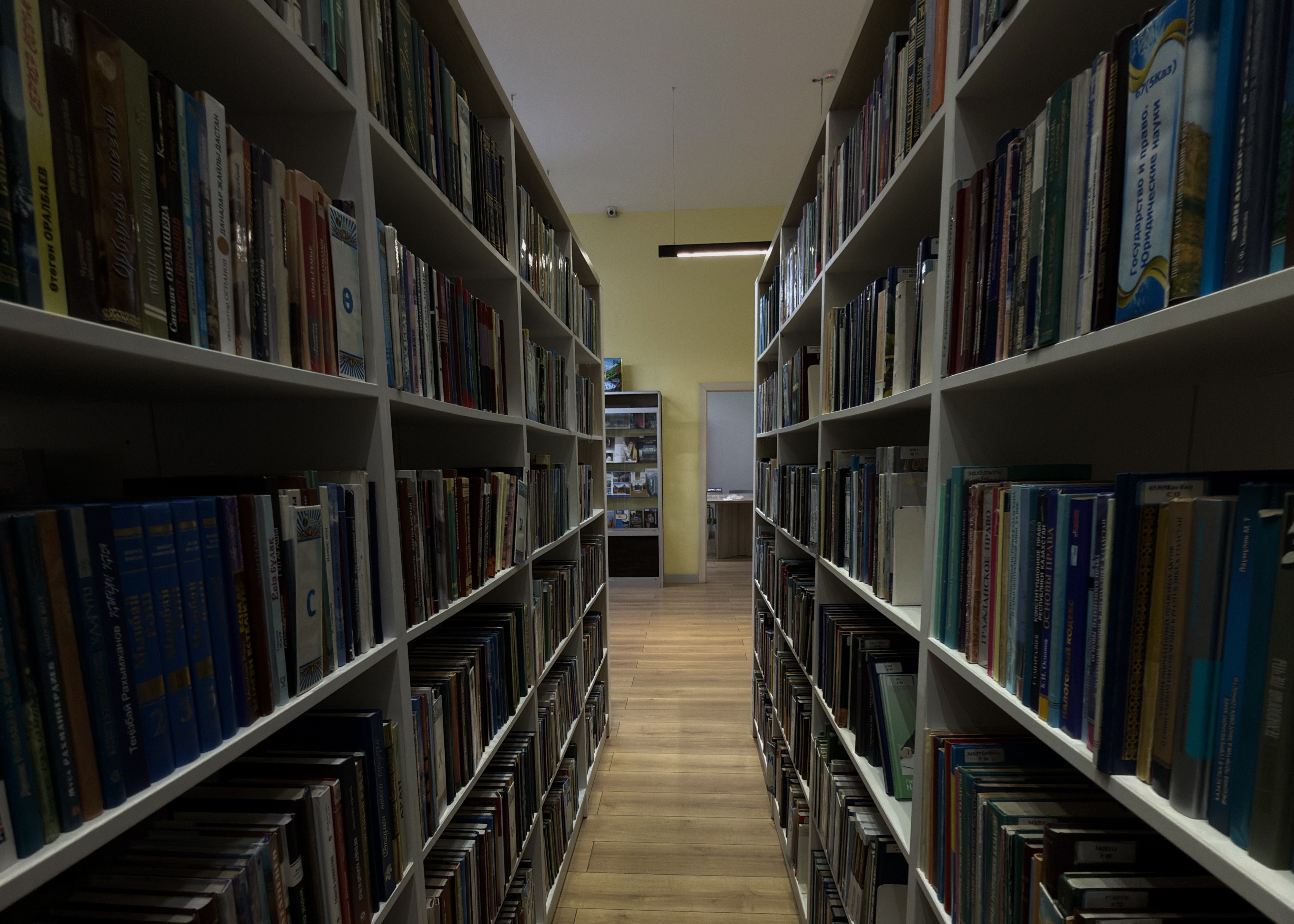 Photo by the author
What is changing here is not only the reader, but also the library itself. Not long ago it was associated with long rows of shelves, silence, library cards and a librarian who could give a stern look at a person if they turned a page too loudly.
Today the situation is changing. In Almaty modernized libraries are turning into spaces where you can come with a laptop, get some work done, use Wi-Fi or take part in an educational and cultural event. Some libraries are open around the clock.
Library named after Mukhtar Auezov is one example of this approach. Students, schoolchildren and older people come here. Some work with books, others prepare for exams, and still others use the library as a convenient place to work. And there is nothing wrong with that.
The library as a third place
In urban studies there is a concept of the "third place". Home is considered the first, work or study is the second, and the third place is a space where a person can stay without having to buy anything or explain every time why they came there.
This could be a cafe, a park, a coworking space or a public space. A modern library is gradually becoming such a place too.
What They Read in Uzbekistan: A Book Review and Reader PreferencesFrom contemporary Turkish literature to fantasy genre works — HD magazine discovered which books in the Uzbek language are becoming popular and how reading preferences are being shaped in the country.mag.humodoc.com
The book has learned to be friends with the phone
In discussions about reading the phone is often perceived as the main enemy of the book. But it may well turn out to be its mediator.
Electronic catalogs, audiobooks, electronic libraries, mobile apps, QR codes, online clubs, BookTok, book Telegram channels and recommendations from bloggers are gradually changing the very path of the reader to the book.
A person can learn about a novel from a short video, find it in an electronic catalog, read a few pages on a smartphone, and then buy a paper edition.
The boundary between the "paper" and "digital" reader is gradually becoming less noticeable.
RFID, self-service and a library without queues
Technology is gradually making its way into the everyday work of libraries. In modernized institutions RFID systems, electronic catalogs and self-service stations are used, thanks to which a reader can independently borrow or return a book through a terminal.
In this respect the library is starting to work in much the same way as many modern services: a person gets the service they need quickly and without unnecessary bureaucracy. But this does not at all mean that the librarian becomes unnecessary, rather the opposite. If a specialist spends less time on forms and checkout registration, they gain the opportunity to focus directly on the reader - helping them find literature, holding events, recommending books.
Digitalization does not replace people, but rather frees up their time for working with people.
BookTok comes to the library
A few years ago a librarian, probably, would have had to explain, what is TikTok. Now the situation has changed so much, that the library itself is coming to TikTok.
Modern libraries run social media accounts, shoot short videos, recommend books, invite bloggers and create spaces, that look good on camera.
At first glance all this may seem frivolous. Well how can TikTok be a tool for popularizing Dulat Isabekov?
But the path to a book today really can look exactly like that.
A person watches a fifteen-second clip, remembers the title, after some time sees this book in a store and buys it. Not the most academic path, but quite modern.
The most important reader will appear after the marathon
The "Reading Nation" has one goal, which cannot be achieved neither by decree, nor by a prize of 10 million tenge: a person in the end must want to read himself. Not for the sake of a competition and not for the sake of a diploma, not for a photo with the organizers and not even because it is the done thing. He must open a book simply because he finds it interesting, the book must become for him not a museum piece and not a symbol of intellectualism, not a mandatory school curriculum and not exclusively a patriotic attribute, but a part of ordinary modern life.
Read also
 Literature and Storytelling
"Days Gone By" Today: Cinema, Theatre and the Living Legacy of Abdulla Qadiri
Christina Inyakina
 Literature and Storytelling
The Doctor Who Changed Literature: Anton Chekhov
Christina Inyakina
 Literature and Storytelling
Human rights in culture: from Greek philosophers to Instagram bloggers
Ezoza Akhmedova
Newsletter
A letter from the HD editors
Once a week, we send the best stories, events, and cultural discoveries from Central Asia.